
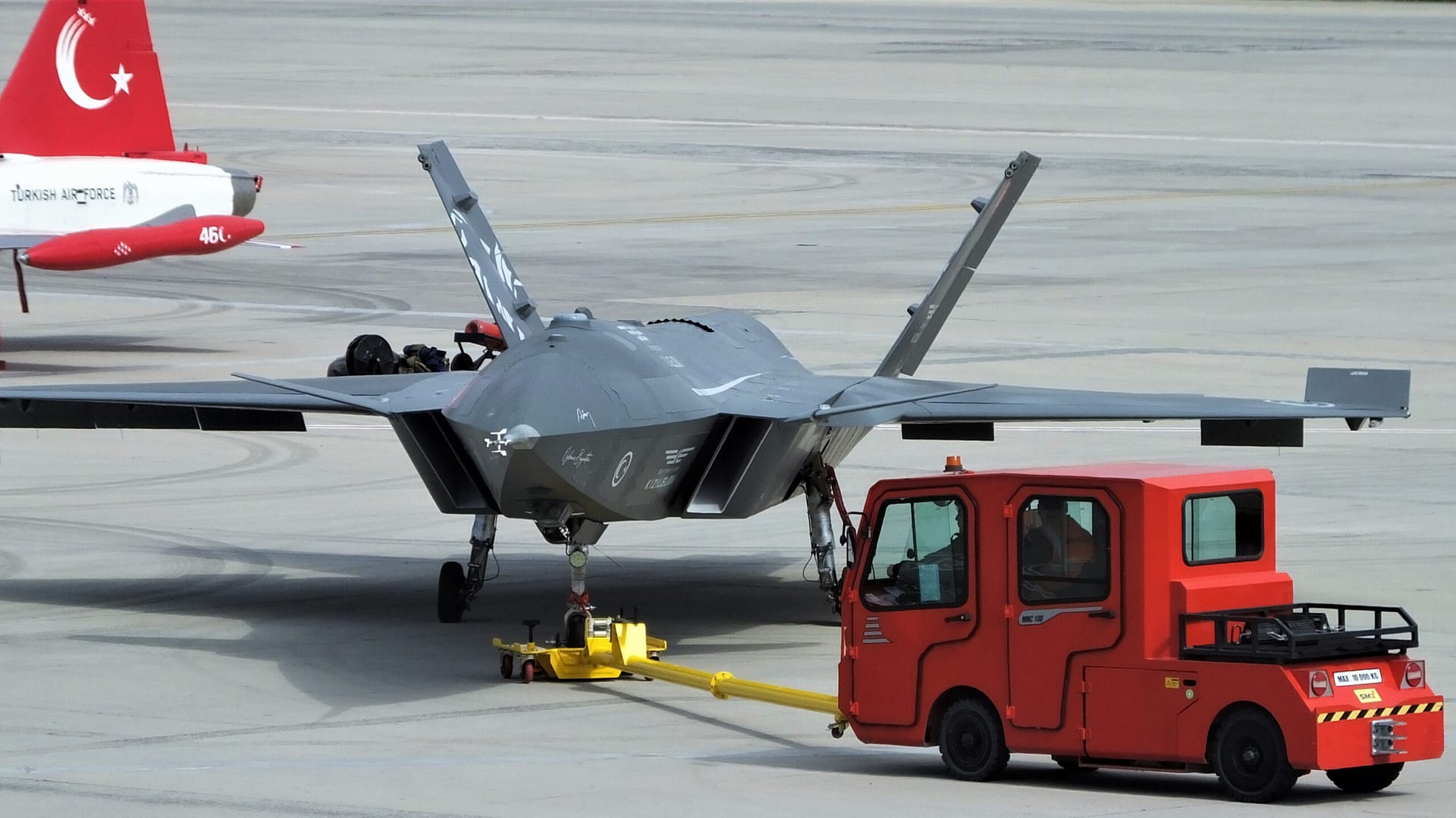
Over the flat plains of Çorlu in north-western Turkey this spring, a jet trainer and a tailless black drone flew in tight formation. Nothing unusual in that — except that no one was flying the drone. The pilot doing the commanding sat in the other aircraft entirely, telling the uncrewed machine where to go with a few inputs while it taxied, took off, and slotted into formation on its own.
On 22 June 2026, Italy's Leonardo and Turkey's Baykar revealed what they had pulled off: the first live flight trials of a programme called K-SWARM, in which a crewed Leonardo M-346 jet took direct control of Baykar's KIZILELMA unmanned fighter in the air. It is one of the clearest demonstrations yet of the "loyal wingman" idea that every major air force is now chasing.
And it is a striking pairing — a European trainer manufacturer and a Turkish drone champion, together building the command link for tomorrow's robot combat jets.
QUICK FACTS
What: First live K-SWARM crewed-uncrewed teaming (CUC-T) flight trials
Who: Leonardo (M-346 Fighter Attack) and Baykar (Bayraktar KIZILELMA)
When: Campaign flown in May 2026; announced 22 June 2026
Where: Baykar's flight and test centre, Çorlu, Turkey
The trick: KIZILELMA autonomously taxied, took off and joined formation; the M-346 then took full command
A trainer that became a flying command post
The star of the show was not really the drone — it was the relationship between the two aircraft. A Leonardo-owned M-346 in its Fighter Attack configuration acted as the command platform, while an Italian Air Force T-346A flew chase to monitor the mission and gather data.
After the KIZILELMA got airborne on its own, the M-346 assumed full control and began issuing orders. The drone executed position changes, separations and rejoins, responding to the pilot's commands through a dedicated crewed-uncrewed computing system. Baykar's "smart fleet autonomy" algorithms handled the flying; the human handled the decisions.

Why the cybersecurity matters as much as the flying
Handing a pilot control of a separate, weapon-capable aircraft only works if the data link between them cannot be jammed, spoofed or hijacked. That is why a big part of this trial was not aerodynamics at all, but the radio between the two machines.
Leonardo's Global Cybersecurity Center supplied an encrypted radio-frequency architecture that kept communications between the M-346 and KIZILELMA synchronised in real time — and continuously watched for interference. In a future war, that protected link is the difference between a loyal wingman and a captured one.
The companies were careful to call this a first phase. The harder problems — larger formations, multiple drones under one pilot, and eventually genuine swarm tactics — are still ahead. But moving from simulation to real aircraft flying real formations is the milestone that separates a slide deck from a weapons programme.
A new club, and Europe wants in
The United States is pouring money into its Collaborative Combat Aircraft programme; Australia has its Ghost Bat; Turkey already flies the KIZILELMA solo. What K-SWARM does is fuse a proven European training jet — flown by air forces across the continent — with a combat drone that has already taken off and landed by itself dozens of times.
For Leonardo, it repositions the humble M-346 from a machine that teaches young pilots to fly into a node that could one day lead a pack of robots into battle. For Baykar, it is another step in turning the KIZILELMA from a national showpiece into an exportable system with a NATO pedigree. The age of the loyal wingman is no longer a concept video. It is flying.
Sources: Leonardo; Baykar; Defense News; The War Zone; Aerotime.
Related Questions
What is K-SWARM?
K-SWARM is a joint Italian-Turkish programme demonstrating crewed-uncrewed teaming, in which a piloted jet directly commands a combat drone in flight. In trials announced on 22 June 2026, a Leonardo M-346 took full control of Baykar’s KIZILELMA drone after it autonomously taxied, took off and joined formation.
What is a “loyal wingman” drone?
A loyal wingman is an uncrewed combat aircraft that flies alongside crewed fighters, taking orders from a human pilot to scout, jam or strike. Nearly every major air force is pursuing the idea, including Europe’s new combat drones and America’s mass-produced robot fighters.
What is the Baykar KIZILELMA?
The KIZILELMA is a jet-powered unmanned fighter built by Turkey’s Baykar, maker of the Bayraktar drones. In the K-SWARM trials it autonomously took off and then followed commands from a crewed M-346, performing position changes, separations and rejoins in formation.
Which aircraft controlled the drone in the K-SWARM trials?
A Leonardo-owned M-346 in its Fighter Attack configuration acted as the airborne command post, while an Italian Air Force T-346A flew chase to monitor and record the mission. The M-346 is the same advanced trainer Canada is negotiating to buy.
Who developed the K-SWARM system?
Italy’s Leonardo and Turkey’s Baykar jointly developed it — a notable pairing of a European trainer manufacturer and a leading Turkish drone maker, together building the command link for crewed-uncrewed combat teaming.
When were the K-SWARM trials flown?
The flight campaign was flown in May 2026 and publicly announced on 22 June 2026, at Baykar’s flight and test centre in Çorlu, north-western Turkey.
0 Comments