
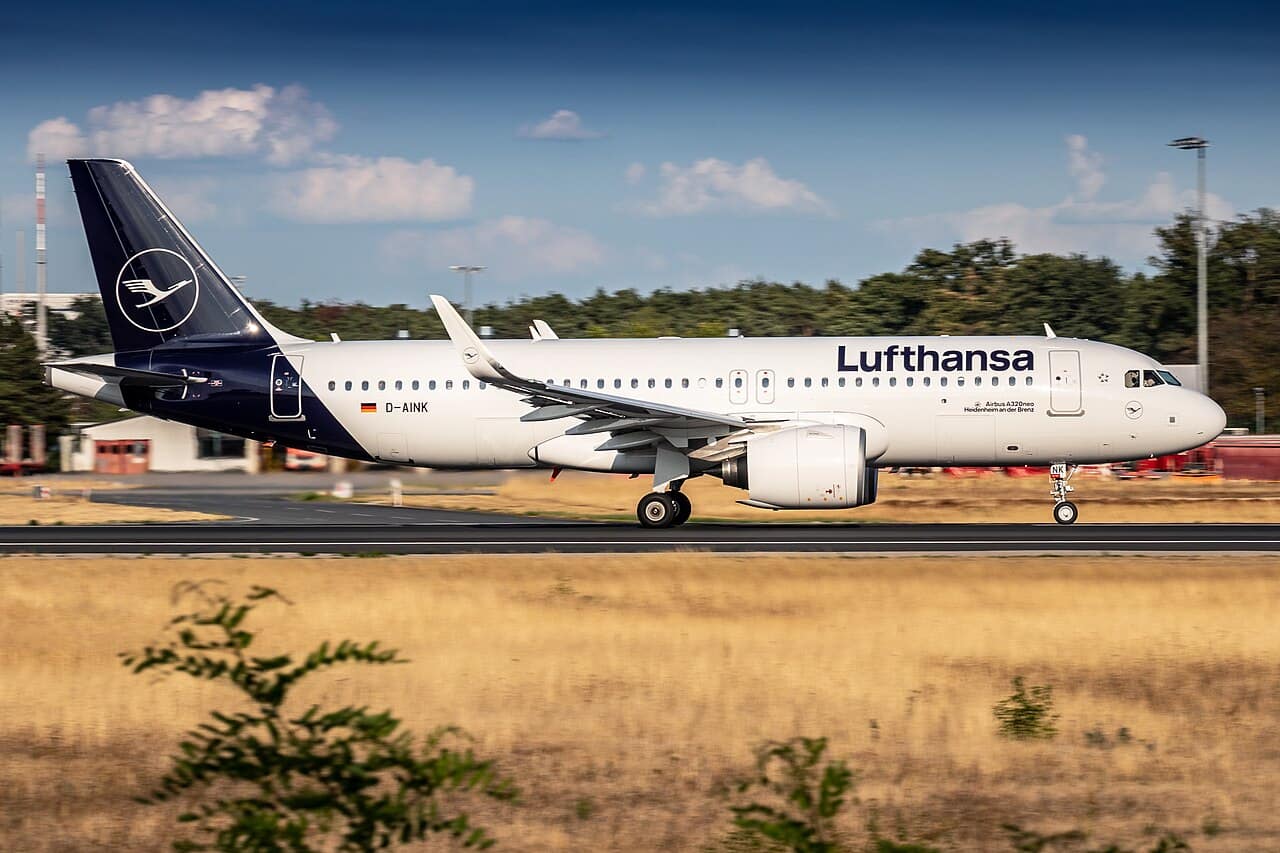
At 10,000 metres somewhere between Frankfurt and Rome, Jens Ritter reached up and switched on the internet.
The gesture, aboard an Airbus A320neo named “November Mike,” marked the first Lufthansa passenger flight flying with Wi-Fi powered by Starlink — and the opening move in what will become the largest low-earth-orbit connectivity rollout by any airline group in Europe. Flight LH234 left Frankfurt at 12:15 p.m. on 19 August 2026. By the time it reached Italy, Lufthansa had quietly rewritten its passengers' expectations of what a short-haul cabin should offer.
Quick Facts
- First flight: 19 August 2026, LH234 Frankfurt–Rome
- Aircraft: Airbus A320neo, registration D-AINM
- Technology: Starlink low-earth-orbit satellite Wi-Fi
- Cost to passengers: Free for Miles & More and Travel ID users
- Rollout: Up to 10 more A320s in 2026; ~850 aircraft by 2029
- Installation: Primarily at Lufthansa Technik, Berlin
Why low-earth orbit changes the game
Traditional in-flight Wi-Fi has leaned on geostationary satellites parked some 36,000 kilometres above the equator. The physics of that distance imposes a stubborn lag and modest bandwidth — fine for a boarding pass, painful for a video call. Starlink's constellation sits a few hundred kilometres up, collapsing the round-trip and delivering speeds Lufthansa says are, in many cases, faster than a passenger's connection at home.
That is the difference between tolerating the internet at altitude and actually using it: streaming, cloud work, video calls over oceans and deserts alike. For a flag carrier that trades on the word “premium,” the appeal is obvious.
How Starlink's satellite Wi-Fi is arriving on European airline fleets.
One jet today, 850 by 2029
D-AINM is the first of many. Before the end of 2026, up to ten more A320-family aircraft at Lufthansa and Lufthansa City Airlines are due to receive the system, with the hardware fitted mainly at Lufthansa Technik in Berlin during scheduled maintenance downtime. The other airlines in the group follow from there.
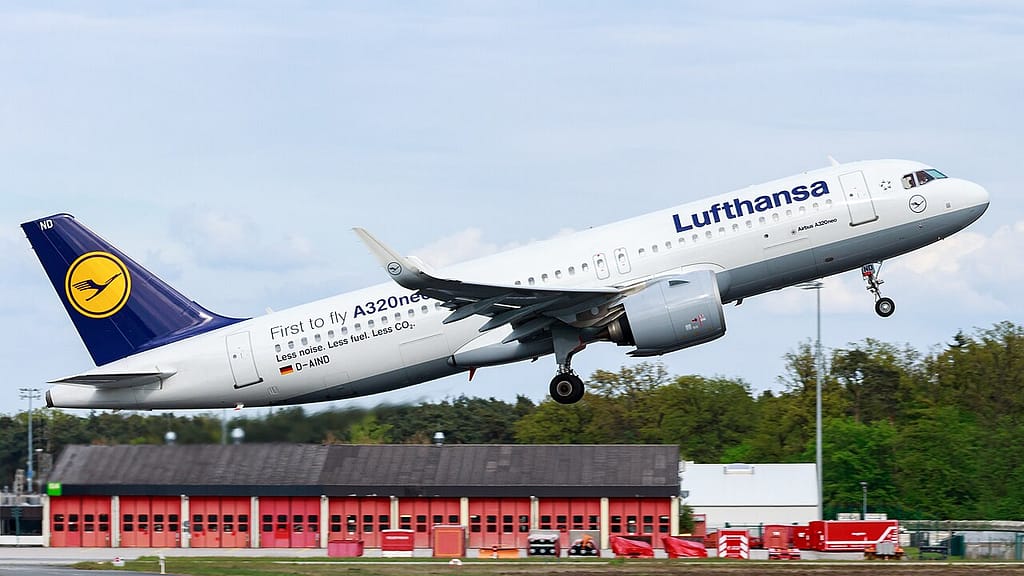
By 2029, the Lufthansa Group expects roughly 850 aircraft across all its airlines to carry Starlink, making it the largest airline group in Europe to offer the technology. The service is free for Miles & More members and Travel ID users regardless of cabin, with Mastercard as sponsor of the new “Lufthansa Group Wi-Fi” portal.
For years, connectivity was the one part of the premium promise airlines struggled to keep. If the speeds match the marketing, Lufthansa has just turned a long-standing weakness into a selling point — and put every rival in Europe on notice.
Sources: Lufthansa Group Newsroom; Simple Flying; Runway Girl Network; One Mile at a Time.
Related Posts

0 Comments