
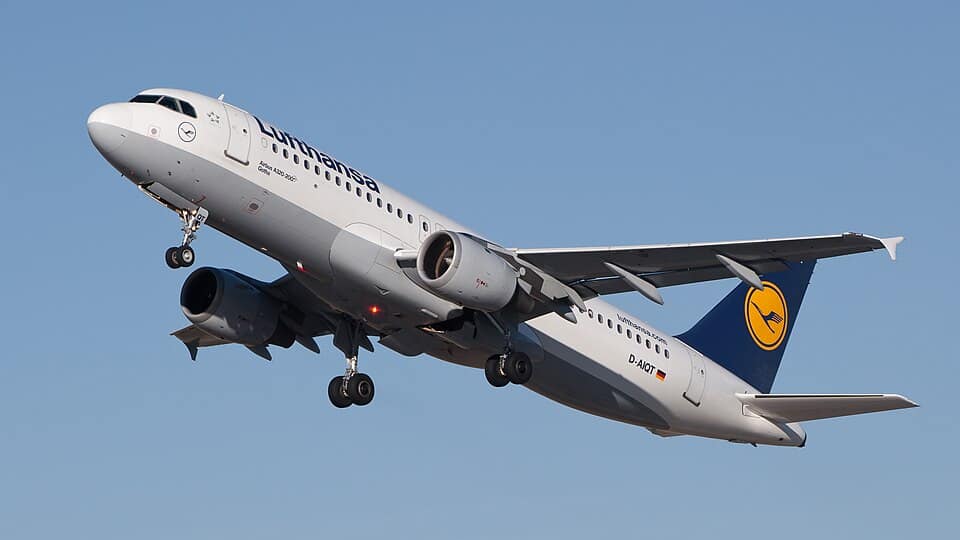
Quick Facts
- Flights cut: 20,000 (through October 2026)
- Fuel saved: 40,000 metric tonnes
- Hubs affected: Frankfurt and Munich (short-haul routes)
- Scale: Less than 1% of available seat kilometres
- Trigger: Jet fuel prices doubled since Iran war began Feb 28
- Record price: $1,840/tonne (European jet fuel, early April 2026)
- First cancellations: April 20, 2026 (120 daily flights removed)
Le prix de la guerre
The numbers tell the story. Before the Iran conflict erupted on February 28 — when the United States and Israel launched air strikes against Iranian military infrastructure — European jet fuel traded around $900 per metric tonne. Within six weeks, it had doubled. The cause is straightforward: Iran’s closure of the Strait of Hormuz cut off roughly 20 percent of the world’s oil supply from its primary transit route, and Gulf refinery shutdowns further constrained jet fuel production. Lufthansa’s response targets the lowest-hanging fruit: unprofitable short-haul routes at Frankfurt and Munich, where regional jets compete against high-speed rail and low-cost carriers. The 120 daily flights removed since April 20 represent the first wave; additional cuts will roll through the summer schedule.Europe’s Airlines Under Pressure
Lufthansa is not alone. Airlines across Europe are scrambling to reduce fuel consumption as hedging contracts — which lock in fuel prices months in advance — expire and airlines face spot-market prices that obliterate profit margins. United Airlines has already warned that second-quarter profits will fall below Wall Street expectations. The IATA warned last week that global airline profitability could turn negative for the first time since the pandemic if fuel prices remain above $1,500 per tonne through the summer. The Lufthansa Group operates six European hubs: Frankfurt, Munich, Zurich, Vienna, Brussels, and Rome. Capacity at Zurich, Vienna, and Brussels will be expanded on existing routes to partially offset the Frankfurt and Munich cuts. Rome remains untouched — for now.The Strait That Controls the Sky
It is a remarkable chain of causation. A military conflict in the Persian Gulf closes a maritime chokepoint. Oil prices spike. Jet fuel costs double. And a grandmother in Stuttgart loses her weekend flight to Barcelona. The Strait of Hormuz is only 34 miles wide at its narrowest point. Yet its closure has rippled through the global economy with a force that no sanctions package or trade war has matched. For the airline industry — which consumes roughly 8 percent of global oil production as jet fuel — the strait is not an abstract geopolitical concept. It is the single most important geographic feature on the planet. Until the strait reopens, the calculus is brutal: burn less fuel or burn through cash. Lufthansa chose the former. Others will follow.Sources: Bloomberg, AeroTime, Euronews, Washington Post, RTE
Related Posts

 English
0 Comments