On June 9, 2011, a Hellenic Air Force Mirage 2000-5 Mk.2 suffered a catastrophic engine failure during a training flight near the island of Samos in the eastern Aegean Sea. The two-person crew — pilot and navigator — ejected successfully and were recovered by Greek search and rescue helicopters within minutes. The fighter itself plunged into the Aegean and came to rest on the seabed.
What followed was a remarkable recovery operation: military divers located the wreckage, and the aircraft was eventually raised from the depths — a process that yielded extraordinary underwater images of a modern fighter jet resting on the ocean floor, its delta wings and distinctive Dassault silhouette eerily intact beneath the Mediterranean waters.
Quick Facts
Aircraft: Dassault Mirage 2000-5 Mk.2, Hellenic Air Force
Date: June 9, 2011
Location: Aegean Sea, near Samos, Greece
Cause: Engine failure during training flight
Crew: Two crew members ejected safely — both rescued
Recovery: Aircraft located by military divers and raised from the seabed
Engine Failure Over the Aegean
The Mirage 2000-5 Mk.2 is a single-engine delta-wing fighter — which means that when that single SNECMA M53-P2 turbofan fails, there is no backup. Unlike twin-engine fighters such as the F-15 or Rafale, which can limp home on one engine, a Mirage 2000 pilot who loses power has exactly one option: eject.
The crew of the Samos incident executed their ejection flawlessly. The Martin-Baker Mk.10 ejection seats — standard equipment on the Mirage 2000 — fired cleanly, separating both crew members from the stricken aircraft. Parachutes deployed, the crew splashed down in the warm Aegean waters, and rescue helicopters were on scene within minutes.
The professionalism of the ejection and rescue sequence was a testament to the training standards of the Hellenic Air Force, which operates in one of the most demanding tactical environments in NATO. Greek pilots fly daily training missions over the Aegean, often at low altitude above water — an environment that leaves zero margin for error.
Fishing a Fighter From the Sea
Recovering a sunken military aircraft is a complex and delicate operation. The wreckage must first be located using sonar and remotely operated vehicles, then assessed for structural integrity — a fighter that broke apart on impact presents different challenges from one that entered the water relatively intact. Ordnance must be accounted for and made safe. Environmental contamination from fuel, hydraulic fluid, and battery acids must be managed.
In the case of the Samos Mirage, military divers from the Hellenic Navy conducted the initial survey and confirmed that the aircraft was largely intact on the seabed. The images they captured were striking: a modern combat aircraft, paint still visible, national insignia legible, resting upright on sand and rock as if it had been carefully parked beneath 50 metres of turquoise water.
The recovery itself involved specialised lifting equipment, carefully rigged slings, and a slow ascent to avoid further structural damage. The aircraft was eventually brought to the surface and transported for investigation — the engine failure analysis being the primary objective.
Greece and the Mirage
Greece has been one of the most loyal European operators of the Dassault Mirage family. The Hellenic Air Force acquired Mirage 2000EG and 2000-5 Mk.2 variants to defend its airspace — particularly over the Aegean, where tensions with Turkey have driven one of the most intense peacetime air confrontation environments in the world. Greek and Turkish fighters have engaged in mock dogfights over the Aegean for decades, and the Mirage 2000 has been at the heart of that mission.
The loss of a Mirage 2000 to engine failure was a painful reminder of the single-engine fighter’s fundamental vulnerability. But the successful ejection of both crew members and the recovery of the airframe demonstrated the resilience of the system — both human and mechanical — that surrounds these machines.
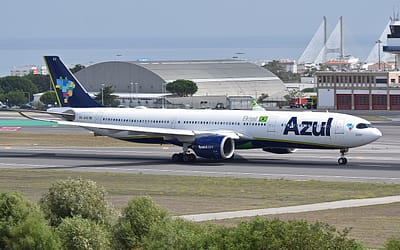
While American carriers agonise over whether to order Airbus widebodies, a Brazilian airline has quietly answered the question for itself. Azul has signed for four more Airbus A330-900neos — doubling down on the jet that has become the backbone of its long-haul...
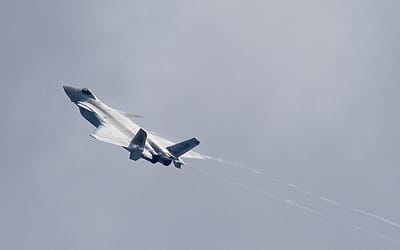
A stealth fighter is only as good as the radar in its nose. China appears to have just made the J-20’s a great deal better — not with a bigger dish, but with a different kind of crystal. Reports from Chinese researchers describe a leap in semiconductor material that,...
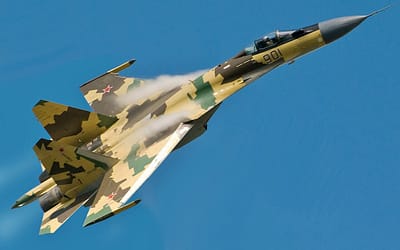
Somewhere over the Sumy region, near the seam where Ukraine meets Russia, a Ukrainian F-16 may have been lost in a way none had been lost before — not to a missile fired from the ground, not to an accident, but to another fighter. Russian sources say a Su-35 did it,...


 English
0 Comments