
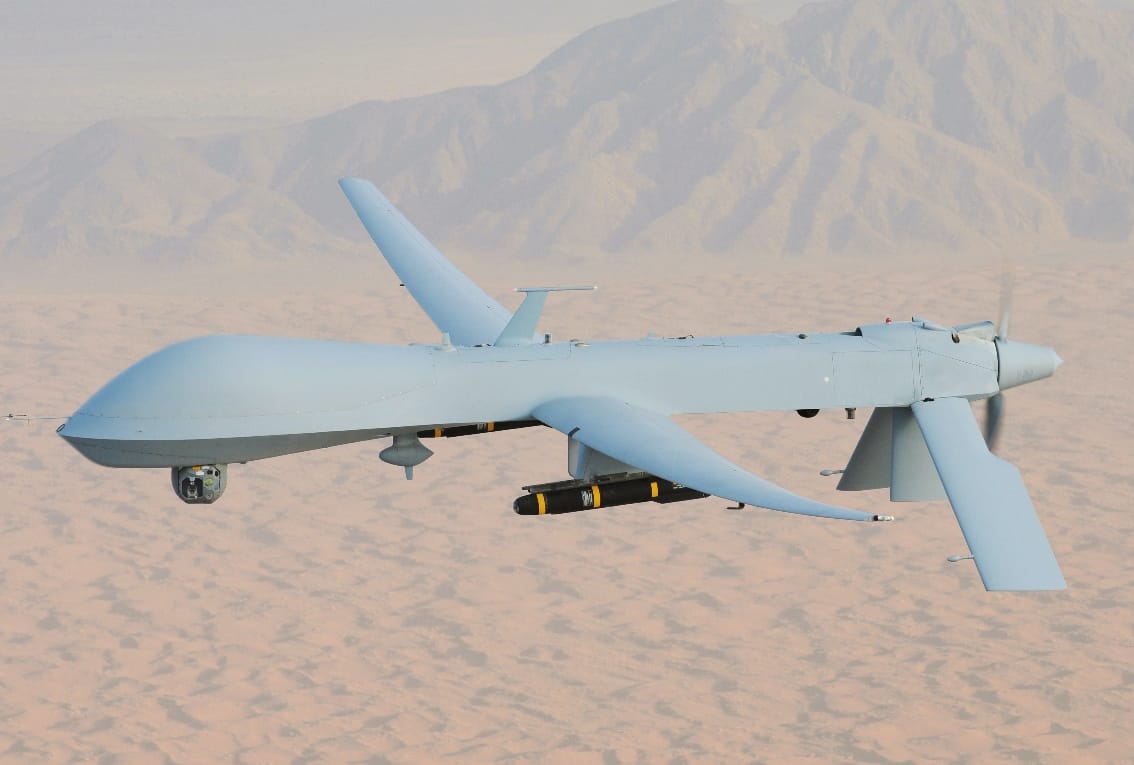
On May 31, 2026, CENTCOM issued a terse statement: Iran had shot down a "U.S. MQ-1 drone" over international waters. The U.S. responded with strikes on Iranian radar and drone command sites on Goruk and Qeshm Island.
The internet immediately lost its mind. The MQ-1 Predator was officially retired in 2018. So either the Pentagon pulled mothballed drones out of storage — or someone at CENTCOM is very bad at nomenclature.
Quick Facts
- Aircraft: General Atomics MQ-1 Predator (RPA)
- First flight: 1994
- Retired: March 9, 2018
- Wingspan: 14.8 m (48.7 ft)
- Engine: Rotax 914F (115 hp)
- Endurance: 24 hours
- Key stat: 2+ million flight hours in combat
- Successor: MQ-9 Reaper / MQ-1C Gray Eagle
The Retirement That Wasn't Supposed to Have a Sequel
On March 9, 2018, the Air Force held a formal retirement ceremony for the MQ-1 Predator at Creech Air Force Base, Nevada. Abraham Karem — the man who built the drone's ancestor in his garage in the 1980s — gave a eulogy. The 489th Attack Squadron flew the final local flight. The last combat line was flown by the 15th Expeditionary Attack Squadron somewhere in the Middle East, with the crew arriving at 4:45 AM for the honor.
The Predator's career was extraordinary: over two million flight hours across 24 years of service. It went from an unarmed surveillance platform to a Hellfire-slinging hunter-killer that fundamentally changed how America wages war.
It was supposed to be over.
Enter the Gray Eagle
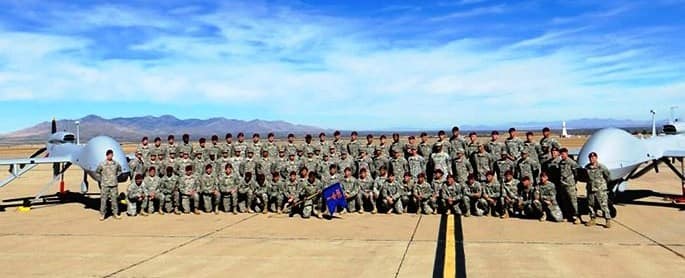
Here's where the naming gets treacherous. The U.S. Army operates the MQ-1C Gray Eagle, built by the same company — General Atomics — on the same Predator lineage. It's bigger, with 48-hour endurance versus the original's 24 hours, a top speed of 192 mph, and fully automated takeoff and landing. The Army uses it extensively in the Middle East.
The critical detail: it shares the MQ-1 designation prefix. When CENTCOM says "MQ-1," they could mean either aircraft. And CENTCOM has pointedly declined to clarify which one Iran actually shot down.
Why It Might Actually Be the Predator
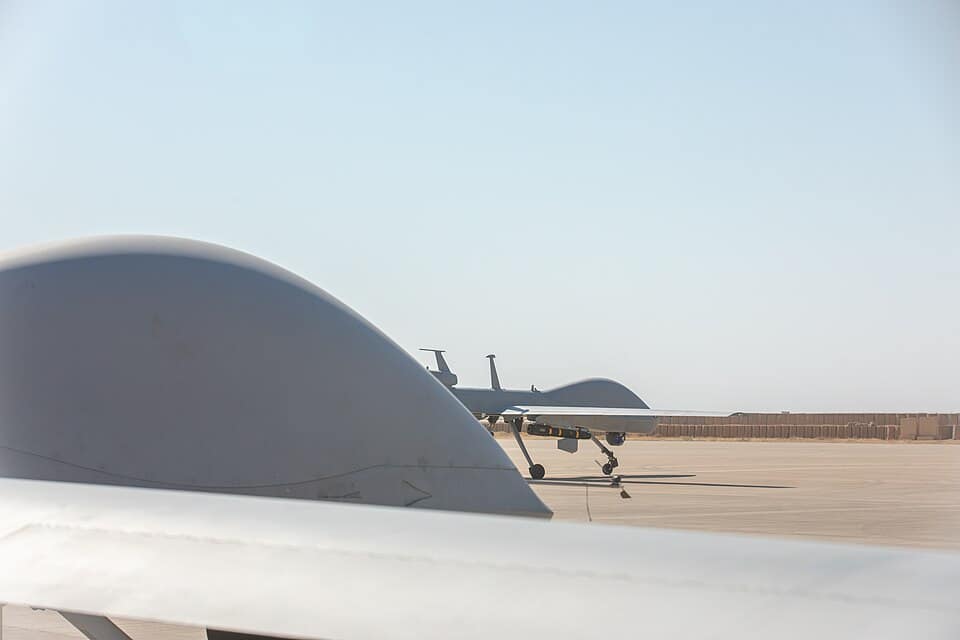
The most compelling argument for a Predator resurrection comes from simple arithmetic. The MQ-9 Reaper — the Predator's bigger, faster, more capable successor — has been taking devastating losses. The Reaper inventory has dropped from 231 aircraft at the start of FY2025 to just 135, losing nearly 100 airframes in 18 months of operations over the Middle East.
That's an attrition rate that makes pulling mothballed Predators out of desert storage start to look rational. They're cheap, the crews already know how to fly them, and losing one to an Iranian SAM stings a lot less than losing a $32 million Reaper.
From Garage Project to Global Game-Changer
The Predator's origin story is one of aviation's greatest underdog tales. Abraham Karem, an Israeli aerospace engineer, built the prototype of what would become the Predator in his Los Angeles garage in the 1980s. His Amber program led to the GNAT 750, which the CIA used for surveillance over Yugoslavia in the 1990s.
The GNAT evolved into the MQ-1 Predator, first flown in 1994 and operational by 1995. After September 11, 2001, someone had the idea of strapping AGM-114 Hellfire missiles to it — and the armed drone era was born. The MQ-9 Reaper, first flown in 2001 and operational by 2007, carried 15 times the ordnance at three times the speed.
The Question That Won't Go Away
CENTCOM's silence is telling. If the shootdown involved a routine Gray Eagle loss, there would be no reason for ambiguity — the Army loses drones regularly and says so. The deliberate refusal to specify suggests either an operational security concern about Gray Eagle deployments, or something more interesting: that the Air Force has quietly reactivated Predators as expendable surveillance platforms in a high-threat environment.
Either way, the MQ-1 designation is flying combat missions again in 2026. Whether it's the original Predator back from retirement or its Army cousin carrying the family name, the drone that changed warfare refuses to stay grounded.
Sources: Air & Space Forces Magazine, Defense News, Smithsonian Air & Space, CENTCOM, Imperial War Museums, General Atomics
Related Questions
What is the MQ-1 Predator?
The General Atomics MQ-1 Predator is a remotely piloted aircraft that became the iconic armed drone of the early War on Terror. First flown in 1994, it could stay airborne for about 24 hours, carrying out surveillance and, later, precision strikes with Hellfire missiles over conflict zones worldwide.
When was the MQ-1 Predator retired?
The U.S. Air Force formally retired the MQ-1 Predator on 9 March 2018 in a ceremony at Creech Air Force Base, Nevada. By then the type had flown more than two million combat flight hours, but newer, more capable drones had taken over its missions.
What replaced the MQ-1 Predator?
The Predator was succeeded by the larger, faster and more heavily armed MQ-9 Reaper, along with the Army's MQ-1C Gray Eagle. These successors carry more sensors and weapons while keeping the long endurance that made the original Predator so influential. Today even autonomous robot fighters are entering production.
When did the Predator first fly?
The MQ-1 Predator first flew in 1994. Its lineage traces back to designer Abraham Karem, who built the drone's ancestor in his garage in the 1980s, pioneering the long-endurance unmanned aircraft that would reshape modern warfare.
How long can the MQ-1 Predator stay in the air?
The Predator could remain airborne for roughly 24 hours on a single sortie, powered by a small Rotax 914F engine of about 115 horsepower. That endurance let a single aircraft loiter over a target for a full day, a capability that transformed surveillance and strike operations.
Who invented the Predator drone?
The Predator's design lineage comes from Abraham Karem, an Israeli-American engineer often called the founding father of UAV technology. He built early long-endurance drones in his garage in the 1980s, and his work led directly to the General Atomics Predator family.
Is the MQ-1 Predator still flying?
Although retired from U.S. service in 2018, the Predator family lives on through exports, derivatives and continued unmanned development. Predators have also been lost in action — for instance when Iran shot one down — and the broader drone field keeps expanding into civilian delivery roles.
Related Posts
How AESA Radar Changed Air Combat
Dark Merlin: The Robot Wingman
0 Comments