
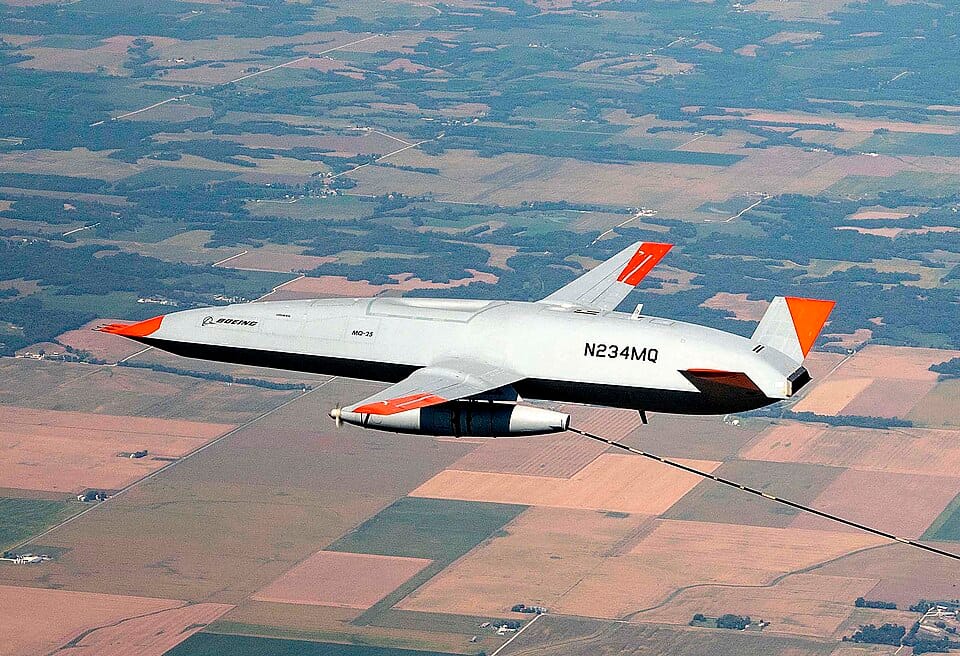
Aircraft Boeing MQ-25A Stingray
Type Carrier-based autonomous aerial refuelling drone
Milestone Completed autonomous taxi tests at MidAmerica Airport (January 29, 2026)
Next Step First flight of production-representative aircraft (2026)
Operational Target Initial operational capability by 2027
Fuel Offload ~15,000 lbs (6,800 kg) at 500 nm from the carrier
Impact Extends F/A-18E/F and F-35C combat radius by 300+ nautical miles
Replaces Super Hornet buddy tanking (frees ~$30M fighters for combat)

On January 29, 2026, an unmanned aircraft taxied itself across a runway in Illinois with nobody at the controls. No remote pilot with a joystick. No safety driver. The Boeing MQ-25A Stingray — the Navy's first carrier-based drone designed for operational service — navigated the tarmac autonomously, executing pre-programmed manoeuvres that validated its ground-handling systems ahead of first flight.
It sounds mundane. It isn't. Carrier flight decks are the most dangerous workplaces on Earth — a choreographed chaos of jet blast, spinning propellers, arresting cables, and personnel moving in precise patterns at all hours. Putting an autonomous aircraft into that environment requires absolute confidence in its ability to move itself safely. The taxi tests at MidAmerica Airport were the first proof that the production Stingray can do exactly that.
First flight is expected later this year. Operational deployment on carrier decks by 2027. When it arrives, it will fundamentally change how the Navy projects power from the sea.
The Tanker Problem Nobody Talks About
Right now, when a carrier air wing needs to refuel fighters in mid-air, it uses Super Hornets. Not dedicated tankers — front-line F/A-18E/F fighters strapped with buddy refuelling pods. Every Super Hornet flying as a tanker is a Super Hornet not flying combat missions. The Navy estimates that up to 30% of Super Hornet sorties on a typical deployment are tanking missions. That's billions of dollars' worth of combat aircraft being used as flying gas stations.
The MQ-25 ends this absurdity. A drone that costs a fraction of a Super Hornet, doesn't need a pilot, and can loiter at a refuelling track for hours takes over the tanking mission entirely. Every Super Hornet currently burning its hours as a tanker goes back to its actual job: killing things and breaking things.
But the impact goes beyond freeing up fighters. The Stingray extends the combat radius of the entire air wing. An F/A-18E/F that currently turns back at 450 nautical miles from the carrier can now fly 700 or more. An F-35C can push even further. In a Pacific conflict where distances are measured in thousands of miles, that extra range isn't a nice-to-have. It's the difference between striking the target and turning around empty-handed.

Robots on the Flight Deck
The Stingray will be the first operational unmanned aircraft to launch and recover from a carrier using the catapult and arresting wire system. The X-47B demonstrated this was possible back in 2013, but that was a technology demonstrator with no operational mission. The MQ-25 is the real thing — a fleet aircraft that will deploy with carrier air wings, operate in combat conditions, and share the deck with manned fighters day after day.
The autonomous taxi capability proven in January is a critical building block. On a carrier deck, aircraft don't have the luxury of wide taxiways and calm conditions. They fold their wings, thread between parked jets, dodge ordnance carts, and navigate a space roughly the size of three football fields while the ship moves underneath them. The MQ-25 has to do all of this without a human in the cockpit, using sensors and algorithms to avoid obstacles and follow the precise choreography of deck operations.
If the Navy pulls this off — and the taxi tests suggest they will — the MQ-25 opens the door to a carrier air wing where unmanned aircraft are routine, not experimental. Today it's a tanker. Tomorrow it could be a surveillance platform, an electronic warfare jammer, or an autonomous strike aircraft. The Stingray is the thin end of a very large wedge, and it just took its first steps on its own.
Sources: Boeing, U.S. Naval Air Systems Command, The War Zone, Naval Aviation News
Related Questions
What is the MQ-25 Stingray?
The Boeing MQ-25A Stingray is the US Navy's first carrier-based autonomous aerial-refuelling drone. Operating from aircraft carrier decks, it is designed to refuel fighters like the F/A-18E/F and F-35C in flight. On January 29, 2026, it completed autonomous taxi tests, moving across a runway with no pilot at the controls.
What does the MQ-25 do?
The MQ-25 carries fuel aloft and transfers it to other aircraft, extending their combat reach. It can offload roughly 15,000 pounds of fuel at 500 nautical miles from the carrier, adding more than 300 nautical miles to the combat radius of fighters like the F/A-18 Super Hornet and the F-35C.
Why does the Navy need a refuelling drone?
Today Super Hornets often perform buddy tanking, refuelling each other, which ties up expensive fighters worth around 30 million dollars in a support role. The MQ-25 frees those jets for combat by handling refuelling itself. It is targeted to reach initial operational capability by 2027.
How does an autonomous drone taxi without a pilot?
Autonomous taxiing relies on onboard software, sensors and precise navigation to steer the aircraft on the ground without a remote pilot or safety driver. The MQ-25 demonstrated this at MidAmerica Airport in Illinois in January 2026. Similar autonomy is reshaping naval aviation, including carrier drones that need no catapult.
How do aircraft launch from carriers?
Carrier aircraft are flung into the air by catapults, which accelerate a jet from zero to flying speed in a couple of seconds. Modern supercarriers use electromagnetic systems explained in our look at EMALS and arresting gear. The MQ-25 is designed to operate within this demanding carrier environment.
When will the MQ-25 enter service?
Boeing is targeting the first flight of a production-representative MQ-25 in 2026, with initial operational capability planned for 2027. The January 2026 autonomous taxi tests were a key milestone, demonstrating the ground autonomy needed before the drone can routinely operate from carrier decks.
0 Comments