

On the night of April 14–15, 1986, the United States Air Force and Navy launched one of the most audacious air strikes of the Cold War. Eighteen F-111F Aardvarks, supported by dozens of tankers, jammers, and Navy attack aircraft, flew a 6,400-mile round trip from England to bomb five targets in Libya — a mission born from terrorism, shaped by diplomacy, and executed in twelve furious minutes over Tripoli and Benghazi.
Operation El Dorado Canyon was meant to kill Muammar Gaddafi. It didn’t. What it did was demonstrate America’s willingness to strike from impossible distances, expose the fragility of NATO solidarity, and set the template for long-range punitive strikes that the U.S. would refine over the next four decades.
✈ Quick Facts
- Date: April 14–15, 1986
- Mission duration: ~13 hours round trip (12 minutes over target)
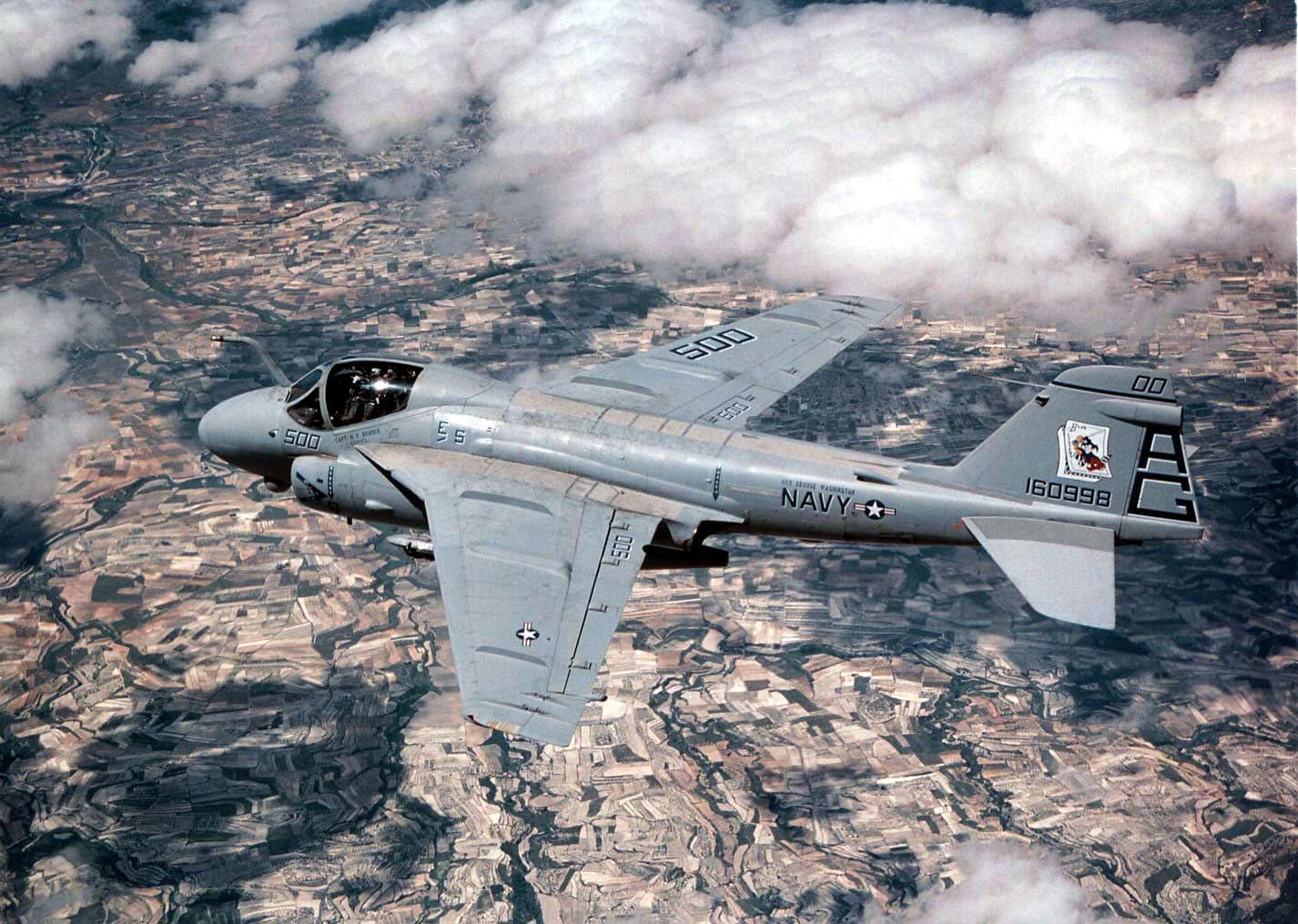
- Aircraft: 18× F-111F, 15× A-6E/EA-6B, 14× A-7E, 28× KC-10/KC-135 tankers, EF-111A Ravens
- Distance: 6,400 miles (5,600 nautical miles) round trip from RAF Lakenheath
- Targets: Bab al-Azizia compound, Tripoli airport, Sidi Bilal naval base, Benina airfield, Jamahiriya barracks
- U.S. losses: 1 F-111F (callsign KARMA 52), 2 crew killed — Capt. Fernando Ribas-Dominicci and WSO Capt. Paul Lorence
- Reason for route: France and Spain denied overflight rights, forcing the massive detour over the Atlantic and through the Strait of Gibraltar

The Provocation
The immediate trigger was the April 5, 1986 bombing of La Belle discotheque in West Berlin — a nightclub popular with American soldiers. The blast killed three people (two of them U.S. servicemen) and injured 229. NSA intercepts traced the attack directly to the Libyan embassy in East Berlin. President Reagan had been looking for a reason to strike. Gaddafi handed him one.
The deeper context was years of Libyan-sponsored terrorism. Gaddafi’s regime had been linked to attacks on Rome and Vienna airports in December 1985, the hijacking of TWA Flight 847, and the murder of a U.S. diplomat in Khartoum. The CIA had identified Libya as the most active state sponsor of terrorism in the world.
“We have done what we had to do. If necessary, we shall do it again.”
President Ronald Reagan — Address to the nation, April 14, 1986
The Long Way Around

The original plan was a direct route south from England over France and across the Mediterranean. But French President François Mitterrand refused overflight clearance, citing concerns about retaliation. Spain followed suit. Italy distanced itself. Of the European NATO allies, only Margaret Thatcher’s Britain said yes — and even she imposed conditions.
The refusal forced the strike package to fly west from England, south over the Bay of Biscay, through the Strait of Gibraltar, and east across the entire Mediterranean. Each F-111F required four to six aerial refuelings. The tanker plan alone involved 28 KC-10 Extenders and KC-135 Stratotankers flying a carefully choreographed aerial ballet in complete radio silence.
Twelve Minutes Over Libya
The F-111Fs hit Tripoli at 2:00 AM local time — simultaneous with Navy A-6E Intruders and A-7E Corsairs hitting Benghazi from the aircraft carriers USS Coral Sea and USS America. The Navy aircraft suppressed Libyan SAM sites while the F-111Fs went after the high-value targets: Gaddafi’s Bab al-Azizia compound, the Tripoli military side of the airport, and the Sidi Bilal commando training facility.
Of the 18 F-111Fs that took off from Lakenheath, only nine actually dropped ordnance. Six aborted with equipment malfunctions. Three were diverted to alternate targets. One — callsign KARMA 52, crewed by Captain Fernando Ribas-Dominicci and Captain Paul Lorence — was shot down over the Gulf of Sidra by a Libyan SA-5 missile. Both men were killed. Their remains were not returned for years.
“We launched from Lakenheath knowing that if France had just let us cross their airspace, the mission would have been three hours shorter. Instead, we flew fourteen hours round trip. Four refuelings in the dark, complete radio silence. The mission was the easy part — getting there was the nightmare.”
F-111 pilot, 48th Tactical Fighter Wing — Post-mission debrief, 1986
The Aftermath
The raid did not kill Gaddafi, though bombs struck his compound and reportedly killed his adopted daughter. Libya initially went quiet — then doubled down on terrorism. In December 1988, Libyan agents bombed Pan Am Flight 103 over Lockerbie, Scotland, killing 270 people. The connection between El Dorado Canyon and Lockerbie remains one of the most debated cause-and-effect chains in counterterrorism history.
Tactically, the raid proved that the United States could project lethal force across intercontinental distances with conventional aircraft. The F-111’s Pave Tack targeting pod delivered unprecedented precision for 1986 — though the collateral damage from errant bombs hitting a residential neighborhood in Tripoli drew international condemnation.
Legacy
El Dorado Canyon changed how America fights. The tanker-dependent, long-range strike model it pioneered became standard doctrine — visible in the 1998 cruise missile strikes on Sudan and Afghanistan, the opening nights of both Gulf Wars, and the B-2 missions flown from Missouri to Belgrade in 1999. The political lesson was equally lasting: when allies say no, fly around them.
For the F-111 community, the raid was the aircraft’s finest hour — a vindication of the swing-wing bomber’s range, payload, and all-weather attack capability. For Ribas-Dominicci and Lorence, it was the price of that demonstration.
Sources: Air Force Historical Research Agency, Ward Carroll / The Hustle, GlobalSecurity.org, National Security Archive, “El Dorado Canyon: Reagan’s Undeclared War with Libya” (Joseph T. Stanik)


 English
0 Comments