
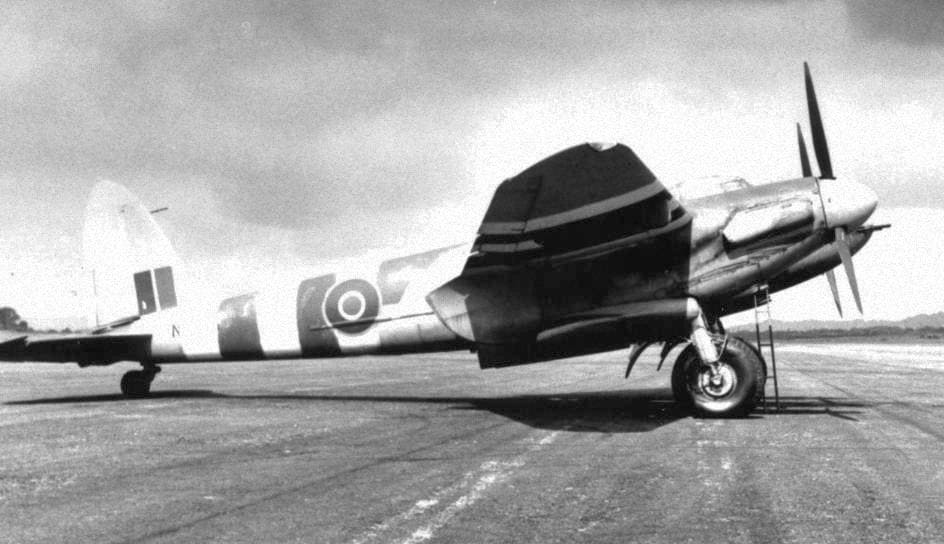
The snow was falling hard across the flat farmland of Picardy on the morning of 18 February 1944. Inside Amiens Prison — a grim, cross-shaped building surrounded by walls six metres high and a metre thick — more than 700 men sat in their cells. Among them were dozens of members of the French Resistance, many of whom had been told they would face a German firing squad within days. At that very moment, 130 miles to the northwest, nineteen de Havilland Mosquitoes were warming their Merlin engines on airfields in southern England, preparing for one of the most audacious and controversial missions of the Second World War.
Quick Facts: Operation Jericho
The Plan: Blow Open the Walls at Rooftop Height
Operation Jericho — named after the biblical city whose walls fell to Joshua’s trumpets — was built around a deceptively simple idea: breach the prison walls with bombs, destroy the guards’ quarters, and let the prisoners run for their lives into the snowy countryside where Resistance networks would be waiting to spirit them away.
The attack force was drawn from 140 Wing RAF, comprising three squadrons: No. 487 Squadron (Royal New Zealand Air Force), No. 464 Squadron (Royal Australian Air Force), and No. 21 Squadron RAF. Each carried 500-pound bombs fitted with 11-second delay fuses — long enough for the aircraft to clear the blast zone, short enough to prevent the Germans from defusing them. A 19th Mosquito from the RAAF Film Production Unit would circle above, recording everything. Hawker Typhoons from Nos. 174, 245 and 198 Squadrons were assigned as fighter escort, though the snowstorm kept many from reaching the target.
The attack would come in three waves. The first six Mosquitoes from 487 Squadron would breach the outer walls at the eastern and northern ends. The second wave, six aircraft from 464 Squadron, would target the prison buildings and the German guards’ mess hall. The third wave — six more from 21 Squadron — was held in reserve, to be called in only if the first two waves failed. Group Captain Percy Charles “Pick” Pickard, one of the most decorated bomber commanders in the RAF, would fly at the rear of the second wave to assess the damage and make the call.
Into the Snow: The Attack
The Mosquitoes crossed the English Channel at wave-top height to avoid German radar, then descended even lower over the frozen French countryside, navigating by roads, railways, and church steeples. The snow was so heavy that navigation was extremely difficult, and the formation had to divert around unexpected weather. At approximately 12:03 pm, the first Mosquitoes screamed over the outskirts of Amiens at rooftop height — literally at the same altitude as the prison walls themselves.
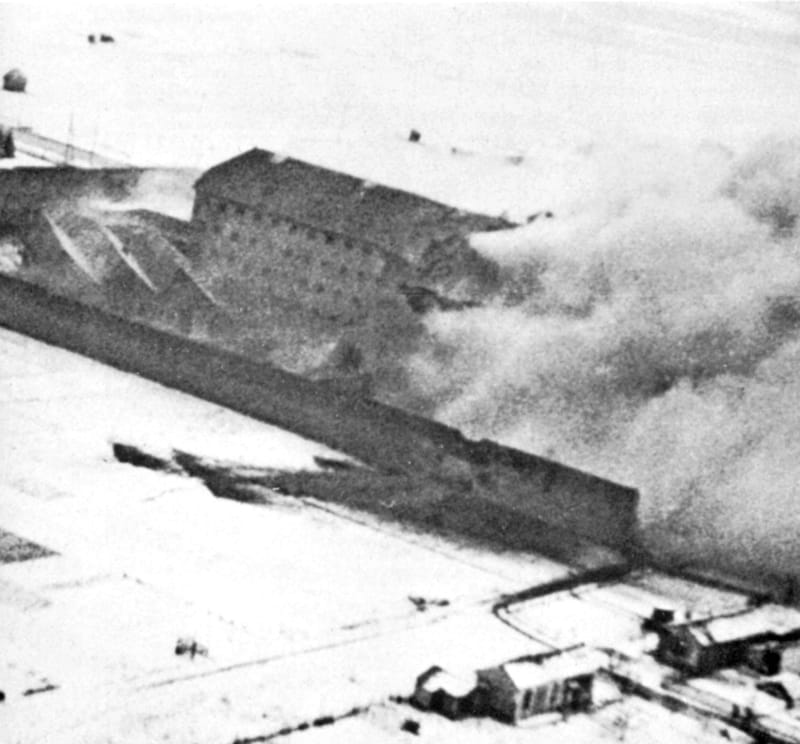
The bombing was devastating in its precision. The first wave punched two massive breaches in the outer walls. The second wave hit the guards’ quarters and the main building. The 11-second delay fuses worked exactly as designed — the bombs slammed through walls and floors before detonating inside. The shock waves blew cell doors open throughout the prison. Within minutes, prisoners were pouring through the gaps in the walls and running across the snow-covered fields.
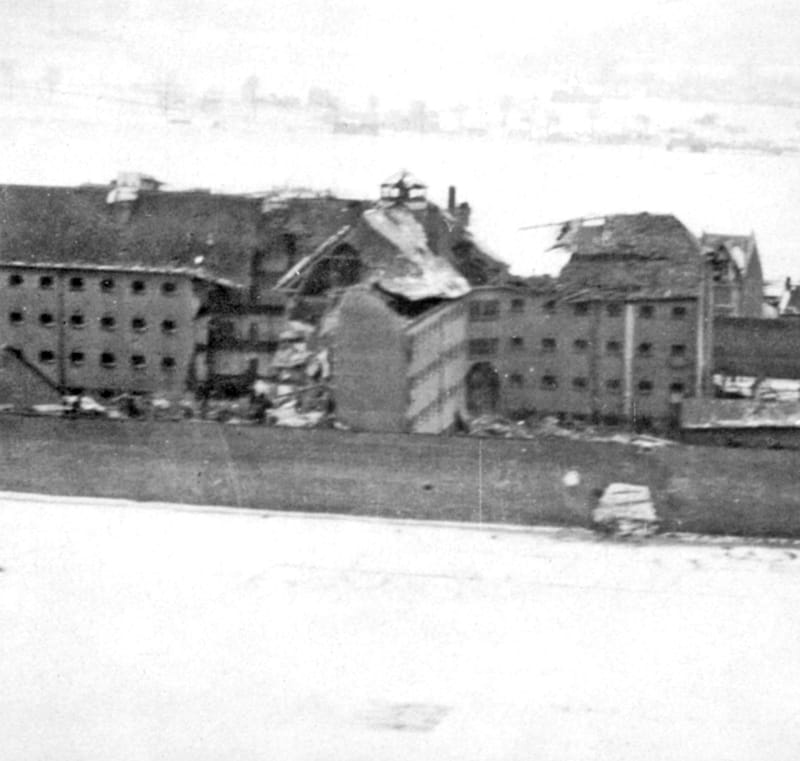
Of the 717 prisoners in Amiens that morning, 258 escaped through the breaches, including 79 Resistance members and political prisoners. But the cost was staggering: 102 prisoners were killed by the bombing itself, and 74 were wounded. Two-thirds of the escapees were eventually recaptured. Yet the 79 Resistance fighters who made it to freedom provided intelligence that damaged German operations in the crucial months before D-Day.
The Death of “Pick” Pickard
Group Captain Pickard — already famous as the pilot of “F for Freddie” in the 1941 propaganda film Target for Tonight, a holder of the DSO and two Bars plus the DFC — did not survive the mission. After confirming the first two waves had succeeded and signalling the reserve wave to stand down, Pickard’s Mosquito was bounced by a pair of Focke-Wulf Fw 190s from 7./JG 26. Feldwebel Wilhelm Mayer’s cannon fire severed the tail from Pickard’s aircraft. The Mosquito slammed into the ground near Saint-Gratien, north of Amiens, killing both Pickard and his navigator, Flight Lieutenant John Alan Broadley DSO, DFC, DFM. Pickard was 28 years old.
They were buried with full military honours in the Saint-Pierre Cemetery in Amiens, where their graves remain to this day — a lasting reminder of the price paid for the mission.
The Enduring Controversy
In the decades since the raid, a persistent and troubling question has shadowed Operation Jericho: was the raid really requested by the French Resistance, or was it an intelligence operation with a different purpose entirely?
A post-war RAF investigation revealed that French Resistance leaders had not been aware of the raid until the RAF approached them for a description of the prison layout. When Maurice Buckmaster, head of the SOE’s French section, was confronted with a letter signed by “C” (the head of MI6) thanking the RAF for the operation, he stated he had never seen it and had not requested the raid. It has never been satisfactorily established who actually ordered Operation Jericho.
Some historians believe the raid was a cover operation — perhaps to eliminate specific prisoners who held sensitive intelligence, or to divert German attention from other clandestine activities in the run-up to D-Day. Others argue the raid was genuine but poorly coordinated through intelligence channels. Whatever the truth, the courage of the crews who flew at wall height through a snowstorm to breach a prison remains beyond question.
Sources
- Fishman, Jack. And the Walls Came Tumbling Down. Souvenir Press, 1982.
- Ducellier, Jean-Pierre. Amiens Raid: Secrets Revealed.
- Warfare History Network. “Operation Jericho: Mosquito Raid on Amiens Prison”
- The People’s Mosquito. “Operation Jericho — Mosquito Attack on Amiens Prison”
- Operation Jericho — Wikipedia
- Australian War Memorial. “Amiens Raid”

 English
0 Comments