

On Friday, April 11, 2026, the FAA and Pentagon quietly shook hands on something unprecedented: a federal framework allowing the U.S. military to operate high-energy laser weapons against drones in civilian airspace without forcing emergency airport closures. It sounds clinical, bureaucratic even. It is neither. Two months ago, the mere whisper of a laser test over El Paso forced the FAA to shut down airspace up to 18,000 feet. Now? The gloves are off, and lasers are coming to the continental United States.
This is the moment the aerospace world has been dreading—and the Pentagon has been waiting for. Directed-energy weapons, long confined to military bases and overseas operations, are now certified as safe for use near civilian flight corridors. What changed? The FAA and DoD hashed out rules, risk thresholds, and safety protocols. What didn’t change? The fundamental physics of a 50-kilowatt laser burning through drone electronics at the speed of light.
For the first time in U.S. history, America’s laser defenses can now defend American military installations without shutting down American airports. The implications ripple far beyond the border.
System: DE M-SHORAD (Directed Energy Maneuver-Short Range Air Defense)
Manufacturer: Lockheed Martin / U.S. Army Rapid Capabilities Office
Power Class: 50 kilowatts
Platform: Stryker A1 8×8 armored vehicle
Effective Range: ~2 km (optimized for short-range air defense)
Kill Mechanism: Concentrated high-energy laser beam damages drone avionics, sensors, and propulsion systems instantaneously
FAA Framework Approval: April 11, 2026
Previous Allowance: Military operations only; civilian airspace prohibited
Catalyst for Approval: Two-month standoff following Feb. 10 El Paso airspace closure; FAA safety assessment completed
Deployment Intent: U.S.-Mexico border installations; stateside military bases at heightened counter-UAS alert
The February 2026 Crisis That Changed Everything
On February 10, 2026, Customs and Border Protection agents operating under Pentagon loan authority fired AeroVironment’s LOCUST laser counter-drone system at an object over El Paso, Texas. The object? A metallic balloon. The result? An 18,000-foot airspace closure that cascaded into hours of flight disruptions, White House pressure, and a furious FAA demanding answers. The military had tested a directed-energy weapon in a civilian airspace zone without coordinating a single detail with the regulator responsible for preventing those weapons from frying avionics in commercial aircraft.
Two weeks later, on February 26, soldiers used the same system to shoot down an actual CBP drone over Fort Hancock—yet another unforced error, since CBP hadn’t told the Pentagon it was flying a drone there. The Pentagon, it seemed, was winging it.
Those two incidents exposed a vacuum: the U.S. military had directed-energy weapons fielded and operational, but no formal FAA safety protocol existed for their use in civilian airspace. Either shut down the airspace entirely, or don’t fire the laser. Those were the two options. The FAA chose option one. The Pentagon chose to escalate.

The DE M-SHORAD: America’s New Laser Sentinel
The DE M-SHORAD (Directed Energy Maneuver-Short Range Air Defense) is not a theoretical lab prototype. It is a battlefield-hardened, 50-kilowatt-class high-energy laser system built by Lockheed Martin and the Army Rapid Capabilities Office, mounted on the proven Stryker A1 8×8 armored vehicle. The system integrates a solid-state laser, adaptive optics, and targeting algorithms to engage unmanned aircraft systems, rotary and fixed-wing threats, rockets, artillery, and mortars across ranges up to approximately 2 kilometers.
The weapon works by concentrating a coherent beam of light energy onto a target, causing thermal and structural damage to critical components—avionics, sensor packages, propulsion systems—in milliseconds. A single pulse can disable multiple targets if they’re clustered, and there is no collateral blast radius; the laser’s effects are confined to the beam path.
The system has been tested extensively in Europe and at White Sands Missile Range. It represents the Army’s pivot away from kinetic air defense (guns, missiles) toward directed-energy solutions that are cheaper per shot, faster to retarget, and scalable across a network of vehicles.
Why the FAA’s Clearance Matters
The FAA’s April 11 approval was not a blanket license to zap drones anywhere. Rather, it is a formal safety framework that defines allowable operational zones, visibility requirements, collision-avoidance protocols, and eye-safety thresholds. The framework allows the Pentagon to deploy DE M-SHORAD and similar systems at military installations near or under civilian flight corridors—provided those installations operate under specific FAA-approved containment rules.
What this enables: stateside military bases can now defend against hostile or rogue drones without forcing emergency airspace closures. Fort Bliss, Fort Hancock, and other southwestern installations can integrate laser air defense into their counter-UAS posture. Airports and commercial operators no longer face the binary choice of “accept drone risk or shut down airspace.”
The approval also signals Pentagon intent to accelerate directed-energy deployment across other service branches. If the Army’s laser passes civilian-airspace safety tests, the Navy’s naval laser systems (Layered Laser Defense, Tactical Laser System) are likely not far behind in gaining similar clearance.

The Civilian Airspace Elephant: What Could Go Wrong
The FAA’s safety assessment concluded that high-energy laser systems pose no unreasonable risk to civilian aircraft or personnel—but three categories of concern linger in the aerospace community:
Eye Safety. A stray beam or misdirection of a 50-kilowatt laser could cause permanent blindness to pilots, cabin crew, or ground personnel within line-of-sight. The FAA framework likely requires laser operators to verify visual clearance before firing and to adhere to beam-containment zones. But humans make errors, and targeting systems misfire. One incident could reshape public perception of laser weapons overnight.
False Targeting. How does the DE M-SHORAD distinguish between a hostile drone, a commercial DJI quadcopter flown by a farmer, and a civilian model aircraft? The system relies on trajectory analysis, electromagnetic signature, and operator judgment. A cooperative identification system (like IFF/Identification Friend or Foe) does not yet exist for small drones. The risk of shooting down a friendly or civilian platform is non-trivial.
Wake Hazards and Secondary Debris. A laser strike on a drone can cause it to tumble, fragment, or fall in unpredictable vectors. Debris from a large military drone struck over an urban area or near an airport could pose hazards to manned aircraft or persons on the ground. Containment and impact zones are critical but difficult to guarantee in dynamic operational environments.
The FAA’s framework presumably addresses these concerns through operational restrictions (geographic zones, altitude limits, flight-corridor buffers). But the approval is only as robust as the compliance mechanisms that enforce it.
Operation Epic Fury and the Counter-UAS Imperative
The timing of the FAA’s approval is not coincidental. On February 28, 2026, Operation Epic Fury—a joint U.S.-Israeli offensive against Iran—commenced. Within hours, small unmanned aircraft systems appeared over strategic U.S. installations, including reports of drone incursions at Fort McNair in Washington, D.C., and Barksdale Air Force Base in Louisiana. The Pentagon’s counter-UAS challenge, long confined to overseas theaters, has arrived on American soil.
The Joint Interagency Task Force 401 (JIATF-401), the Pentagon’s lead counter-UAS command, committed over $600 million in unmanned-aircraft-system defenses in the first month of Epic Fury operations alone. Directed-energy weapons, with their speed-of-light engagement, zero-miss-distance accuracy, and low per-shot cost, fit the Pentagon’s urgent requirement perfectly.
The FAA’s green light to the DE M-SHORAD is thus not a policy victory for laser enthusiasts; it is a tactical necessity for a military racing to defend home-base installations against a new threat. The Pentagon had to either wait for procedural approval or face the political (and military) cost of another El Paso-style airspace closure. It chose approval. The FAA chose to make it happen.
What Comes Next
The DE M-SHORAD’s civilian-airspace clearance opens the door to a wider directed-energy arsenal. The Air Force’s HELIOS (High Energy Laser on Operational Stryker) system, the Navy’s Layered Laser Defense (LLD), and experimental microwave-based counter-UAS platforms like Epirus Leonidas will likely follow similar approval pathways. The Pentagon is betting that lasers and high-power microwave systems, once proven safe in civilian airspace, will become the backbone of U.S. air defense.
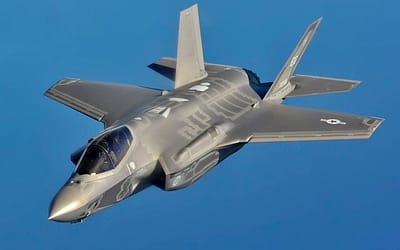
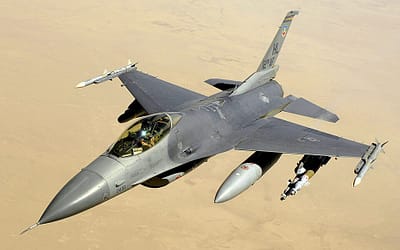
For migflug.com readers and fighter-jet enthusiasts, the real question is operational: how will manned military aircraft coexist with laser defenses fielded across U.S. bases? Friendly-fire incidents between fighter jets and DE M-SHORAD systems, though unlikely given current rules of engagement, would require new air-traffic deconfliction protocols. The FAA and Air Force will have to dance a careful waltz to ensure that the very air-defense systems meant to protect American bases do not become hazards to American combat aircraft.
For now, the Pentagon has won. Lasers are cleared for civilian skies. The age of directed-energy warfare, once a science-fiction fever dream, has arrived on the continental United States. The real test will be in the first deployment, the first close call, the first moment a laser system is forced to make a split-second targeting decision in contested airspace.
Sources: DefenseScoop, FLYING Magazine, CNN Politics, Washington Times, DVIDS, Defense Post, Army Recognition, Substack Defense Forum, Military Times, Common Defense

 English
0 Comments