
Quick Facts
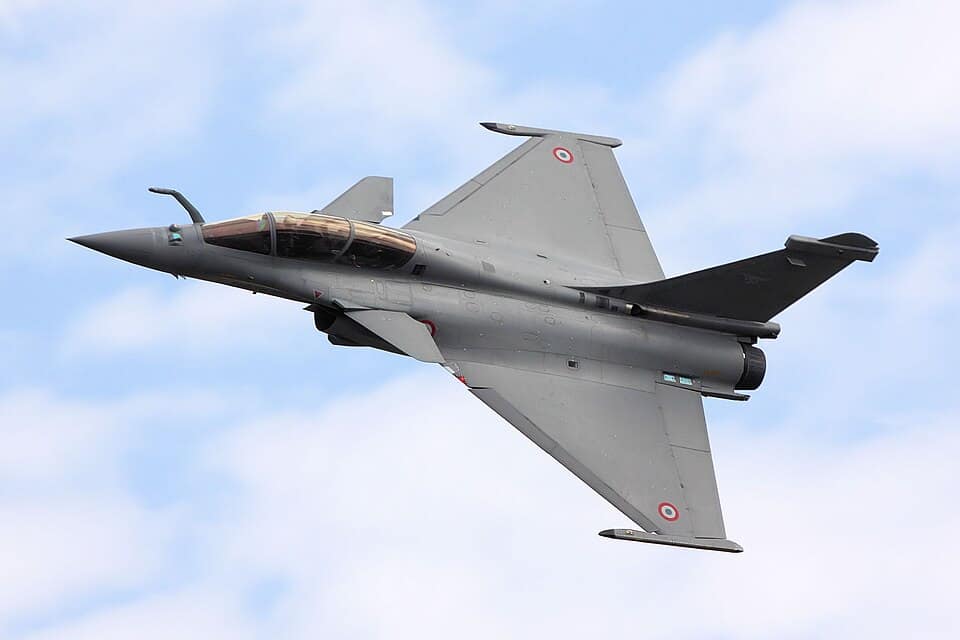
- What: First supersonic launch of MICA NG missile from a Dassault Rafale
- When: 1 June 2026, DGA missile test range, France
- Variant tested: MICA IR NG (imaging infrared seeker by Safran)
- Developer: MBDA, with Thales (RF seeker) and Safran (IR seeker)
- Range improvement: Up to 40% greater than legacy MICA (~150 km estimated)
- Key innovation: Dual-pulse rocket motor for terminal-phase energy
Why Supersonic Matters
At subsonic speeds, an air-to-air missile launch is relatively benign. The seeker dome heats moderately, the infrared contrast between target and background stays high, and the missile’s guidance algorithms operate well within their design envelope. Push past Mach 1 and everything changes. The boundary layer around the missile nose compresses violently, generating temperatures that can blind an infrared sensor or degrade its sensitivity at the exact moment it needs to acquire a target. Proving that the MICA NG’s new focal-plane-array seeker — a matrix sensor replacing the legacy linear detector — can see through that thermal wall is not a marketing exercise. It is the difference between a missile that works in a textbook and one that works in combat. The DGA confirmed that the test validated seeker acquisition, target tracking, missile guidance, and aircraft-weapon integration under supersonic launch conditions. Every box checked.Two Seekers, One Airframe
The MICA NG comes in two interchangeable variants on a common 112-kilogram airframe. The IR version, tested on 1 June, carries Safran’s new imaging infrared seeker — a quantum leap from the legacy spinning-reticle sensor. The EM version mounts Thales’s active electronically scanned array radar seeker, making it the first European air-to-air missile with an AESA nose. Both variants fit the same Rafale pylons interchangeably, giving a pilot the tactical flexibility to mix and match based on the threat.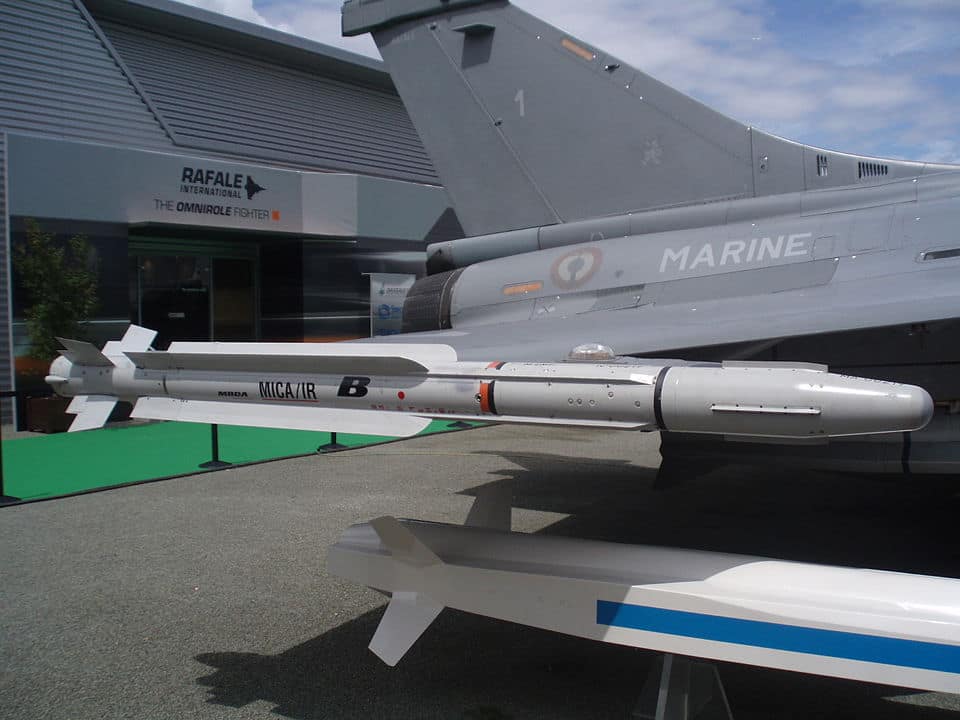
The Qualification Road Ahead
This was not the programme’s first firing. In June 2025, the DGA conducted the first guided MICA NG launch from a Rafale, validating the infrared guidance chain against a target at subsonic speed. The supersonic test on 1 June 2026 raises the stakes: it proves the weapon under conditions closer to real combat, where a pilot engaging a threat at altitude and high speed cannot slow down to launch.“By 2030, this next-generation air-to-air missile will equip our Rafales to ensure their superiority in increasingly contested airspace.”
Sébastien Lecornu — French Minister of the Armed Forces
What It Means for Rafale Operators
For nations that have bet on the Rafale, the MICA NG transforms the aircraft’s air-to-air proposition. The legacy MICA was already respected — it brought genuine fire-and-forget BVR capability to an agile platform — but it was a 1990s missile competing in a 2020s threat environment. Stealth fighters, hypersonic cruise missiles, and advanced electronic warfare demanded a response with a modern seeker, longer legs, and better resistance to countermeasures. The MICA NG is that response. India, which ordered 36 Rafales and is negotiating a follow-on batch, stands to benefit directly. So does Greece, whose Rafale F4s will arrive MICA NG-ready. And for Ukraine, which has signed a deal for up to 100 Rafale F4s, the missile could eventually give the Ukrainian Air Force a beyond-visual-range weapon competitive with anything Russia fields. The supersonic test on 1 June 2026 is not the end of the road — but it is the moment the MICA NG stopped being a PowerPoint missile and became a proven weapon. Every Rafale operator just got a reason to smile. Sources: DGA (Direction générale de l’armement), MBDA, Armyrecognition.com, AeroTime, Aviation WeekRelated Posts

 English
0 Comments