Two lieutenant colonels at Joint Base San Antonio just became the most important instructor pilots in the U.S. Air Force. On 4 June 2026, Lt. Col. Michael Trott and Lt. Col. Phillip Bourquin of the 99th Flying Training Squadron qualified as the first Air Education and Training Command pilots on the T-7A Red Hawk — the advanced trainer that will teach every future American fighter pilot how to fly.
It is a milestone that sounds administrative and is anything but. Until this week, every T-7A flight at Randolph required borrowed test pilots or contractor support. Now the 99th FTS has “operational independence.” The Air Force can train its own people on its own jet, in its own squadron, on its own schedule. The T-38 Talon replacement programme just stopped being theoretical.
Quick Facts
What: First AETC instructor pilots qualified on T-7A Red Hawk
Who: Lt. Col. Michael Trott (99th FTS commander) and Lt. Col. Phillip Bourquin (director of operations)
Where: 99th Flying Training Squadron, JBSA-Randolph, Texas
Significance: Gives 99th FTS operational independence to train squadron pilots internally
The End of the T-38 Era
The T-38 Talon has been training American pilots since 1961. Sixty-five years. Every F-22 pilot, every F-35 pilot, every B-2 pilot learned advanced flying in a T-38. It is one of the most successful training aircraft in history — and it is exhausted. Airframes are cracking. Maintenance hours per flight hour have been climbing for decades. The avionics belong to a different century.
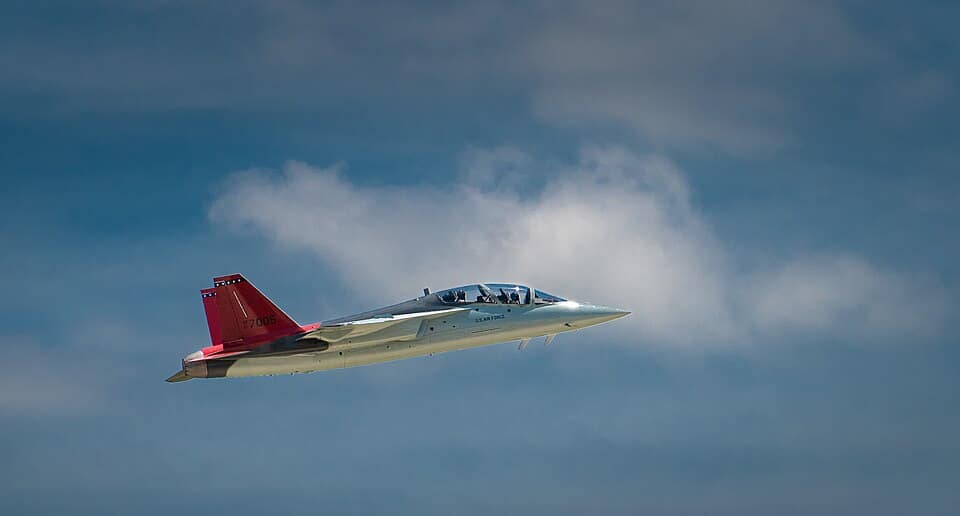
A T-7A Red Hawk at Joint Base San Antonio-Randolph — AETC has now qualified its first instructor pilots on the type. U.S. Air Force photo
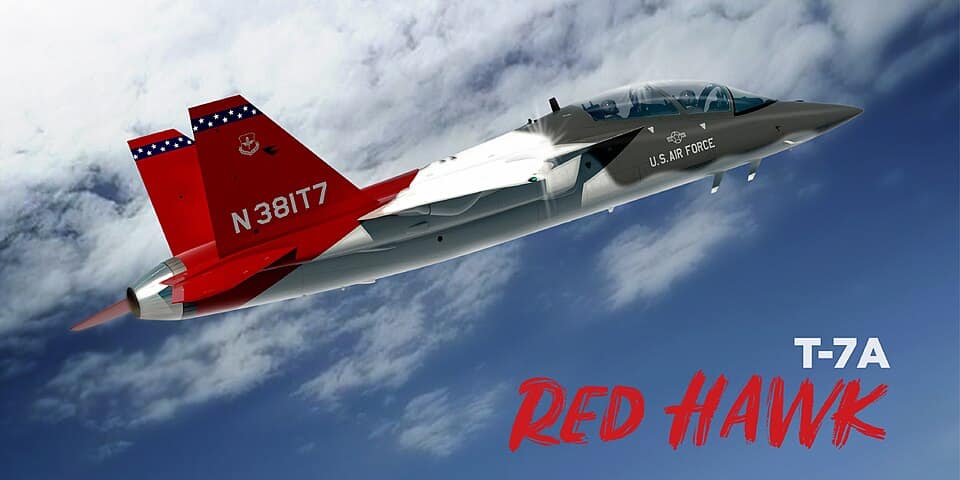
The T-7A Red Hawk is Boeing’s answer: a twin-seat, single-engine supersonic trainer with a glass cockpit, embedded training systems, and — crucially — the ability to simulate fifth-generation fighter handling characteristics that the T-38 cannot replicate. A student pilot stepping from the T-7A into an F-35 will recognise the displays, the sensor fusion logic, and the fly-by-wire feel. A student stepping from the T-38 into an F-35 faces a generational culture shock.
What Comes Next
Trott and Bourquin qualified through Type-1 sorties — the initial familiarisation flights that cover takeoffs, landings, navigation, instrument approaches, and system familiarisation. Both said they intend to complete additional “seasoning” sorties before taking students. This is standard procedure: you do not put a student in the back seat until the instructor knows the aircraft cold.
“This qualification gives us operational independence. We can now train our squadron-mates without relying on outside support.”
Lt. Col. Michael Trott — Commander, 99th Flying Training Squadron, JBSA-Randolph
The 99th FTS will now build its instructor cadre internally, qualifying additional pilots through the syllabus that Trott and Bourquin have pioneered. Once the cadre is large enough, student pilot training will begin — the moment the T-7A stops being a test programme and starts being a training programme. That transition is expected within months, not years.
The Troubled Path Here
The T-7A programme has not been without turbulence. Boeing’s “digital twin” manufacturing approach — designed to accelerate production — ran into real-world problems. Delivery delays, software issues, and structural concerns pushed the timeline right. But the aircraft itself has consistently impressed pilots who have flown it, and the core promise — a modern trainer that prepares students for fifth-gen cockpits — remains intact.
AETC received its first production T-7A in late 2025, with a second following in early 2026. The small fleet at Randolph is the nucleus of what will eventually be the Air Force’s primary advanced training platform, replacing hundreds of T-38s across multiple bases.
Two instructor pilots, qualified in a new jet, at a single base in Texas. It does not sound like a revolution. But every F-22 pilot, every F-35 pilot, every future fighter aviator in the United States Air Force will trace their training lineage back to what happened at Randolph this week.
Sources: Air & Space Forces Magazine, Defence-industry.eu, FlightGlobal, MirageNews
For decades, the global fighter market had two aisles: American and Russian. You bought F-16s or you bought MiG-29s. China was a buyer, not a seller — importing Russian engines, Israeli avionics, and Western design philosophy to build aircraft it could not yet export....
France's ambassador to Sweden has confirmed what defence analysts suspected and Kyiv desperately hoped: Dassault Rafale F4 fighters will join the Ukrainian Air Force. The announcement, made by Ambassador Thierry Carlier in early June 2026, places the most capable...
In a closed-door meeting at NATO headquarters in Brussels, a senior Pentagon official told European allies what many had feared but few expected so bluntly: the United States is pulling a third of its fighter jets out of NATO's crisis-response pool, withdrawing every...


 English
0 Comments