
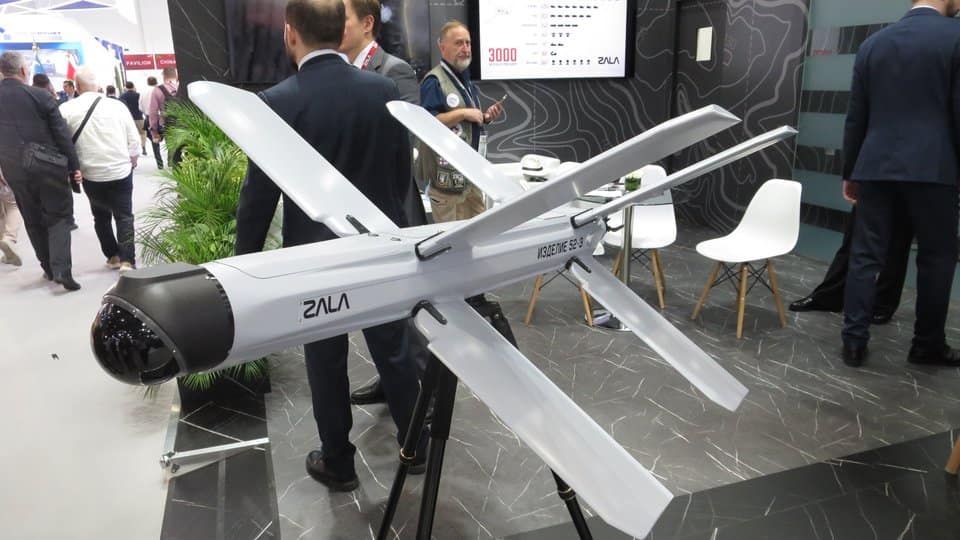
The skies over Ukraine have become the world’s most consequential laboratory for unmanned warfare, and the numbers emerging from both sides of the conflict are staggering. A senior Ukrainian military commander has issued a stark warning: Russia is scaling its first-person-view drone production to an industrial juggernaut capable of churning out seven million FPV drones in 2026 alone. The figure represents a quantum leap in autonomous and semi-autonomous battlefield capability that is reshaping how modern wars are fought, supplied, and survived.
Quick Facts
- Russian FPV target: 7 million drones projected for 2026 production
- Ukraine response: More drones purchased in 3 months than all of the previous year
- Robotic missions: 22,000+ unmanned missions completed in 3 months by Ukrainian forces
- Drone operators: Ukraine actively recruiting 15,000 new drone pilots
- Key phrase: “Robots don’t bleed” — CNN headline on Ukraine’s unmanned push
Industrial-Scale Drone Warfare: Russia’s 7-Million-Unit Gambit
The sheer volume of Russia’s planned FPV drone output dwarfs anything previously seen in modern conflict. Seven million first-person-view drones in a single calendar year amounts to roughly 19,000 units rolling off production lines every day. These are not large, expensive Predator-style platforms; they are small, cheap, expendable quadcopters fitted with warheads and guided by operators wearing VR-style goggles. Each unit costs a fraction of a conventional munition, yet can destroy armoured vehicles, bunkers, and infantry positions with devastating precision.

Russia’s industrial base has pivoted hard toward drone manufacturing. Factories that once produced consumer electronics and automotive components have been retooled for military drone assembly. The Kremlin has poured resources into simplifying designs, sourcing components domestically or from allied nations, and establishing parallel supply chains that can withstand Western sanctions. The result is an assembly-line approach to warfare where quantity has a quality all its own.
Military analysts note that at seven million units, Russia would have enough FPV drones to launch more than 580,000 attacks per month, assuming even modest operational readiness and deployment rates. The implications for Ukrainian frontline troops are sobering: constant aerial harassment from swarms of inexpensive but lethal drones that can appear from any direction, at any time, day or night.
Ukraine’s Counter-Surge: Robots, Recruitment, and Rapid Procurement
Kyiv has not stood idle in the face of Moscow’s drone avalanche. In a dramatic acceleration of its own unmanned programmes, Ukraine purchased more drones in the first three months of 2026 than in the entirety of the previous year. The procurement surge reflects a fundamental strategic decision: if Russia intends to drown the battlefield in cheap flying munitions, Ukraine must match and exceed that output or find asymmetric counters.

The numbers behind Ukraine’s robotic push are equally striking. Ukrainian unmanned ground and aerial systems have conducted more than 22,000 missions in just three months, ranging from reconnaissance and logistics delivery to direct combat engagements. These robots are clearing minefields, evacuating wounded, delivering ammunition to forward positions, and engaging enemy targets without risking human lives.

CNN reported extensively on Ukraine’s pivot, running segments under the now-iconic headline “Robots don’t bleed” that captured the brutal calculus of this new era of warfare. The network documented Ukrainian units sending machines into the battlefield in place of human soldiers, a transformation driven by both technological capability and the grim arithmetic of attrition. After years of gruelling losses, Ukraine’s leadership has embraced a doctrine that prioritises silicon and carbon fibre over flesh and blood wherever possible.
The 15,000 Drone Operators: Building a New Military Specialty
To keep pace with the flood of unmanned systems entering service, Ukraine is actively recruiting 15,000 new drone operators. This is not a casual call for volunteers; it represents the creation of an entirely new military specialty at scale. Recruits undergo intensive training in FPV piloting, electronic warfare countermeasures, swarm coordination, and battlefield integration with conventional forces.
The training pipeline draws from Ukraine’s deep pool of civilian drone enthusiasts, gamers, and tech professionals. Many recruits arrive with hundreds of hours of stick time on racing drones or flight simulators, skills that translate directly to combat FPV operation. The military has partnered with civilian drone racing organisations and tech companies to accelerate the training cycle, compressing what once took months into weeks of focused instruction.
Each operator is expected to manage multiple drones simultaneously, using relay systems and AI-assisted targeting to maximise their combat output. The goal is a force structure where a single operator can project lethal capability across a wide frontage, acting as a one-person fire support team that can strike targets kilometres away while remaining safely behind cover.
Strategic Implications: The Dawn of Industrial Drone Warfare
The race to seven million drones marks a watershed moment in military history. For the first time, a major power is mass-producing precision-guided munitions at a scale and cost that rivals conventional ammunition. The strategic implications extend far beyond Ukraine. Every military on earth is watching the production figures, the tactics, and the counter-tactics with intense interest.
Air defences designed to intercept manned aircraft or large missiles are poorly suited to stopping swarms of small, fast, low-flying FPV drones. Electronic warfare can disrupt some attacks, but operators are constantly adapting with frequency-hopping radios, fibre-optic control links, and increasingly autonomous navigation that reduces reliance on GPS or radio signals. The cat-and-mouse game between drone and counter-drone technology is evolving at a pace that outstrips traditional defence procurement cycles.
For NATO planners and defence ministries worldwide, the lesson is unmistakable: future conflicts will be defined by whoever can produce, deploy, and sustain the largest fleets of expendable unmanned systems. The age of industrial drone warfare has arrived, and it is being stress-tested in the skies over Ukraine every single day.
Sources: Ukrainian Armed Forces briefings, CNN reporting on Ukraine’s unmanned warfare programme, open-source intelligence on Russian drone production, defence industry analysis.


 English
0 Comments