
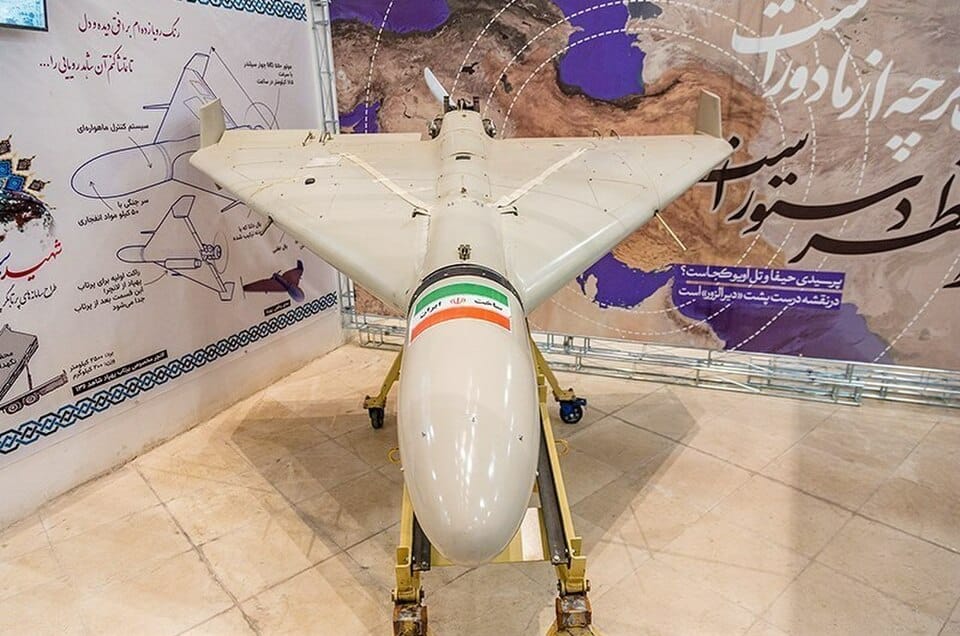
At precisely the moment Bucharest was hoping the war next door would stay next door, a Russian Geran-2 — the Tehran-designed Shahed-136 rebadged in Cyrillic — drifted some four minutes through Romanian airspace and detonated on the roof of an apartment block in Galați. Two civilians injured, one residential building scarred, and the uncomfortable reality that for the first time a Russian drone has caused damage to a populated urban area inside NATO territory.
The strike came overnight on 29 May 2026, woven into a 232-drone Russian salvo aimed at Ukraine. Kyiv’s air defences brought down 217. Fifteen got through. One of them, by accident or by drift, crossed the Prut and found its way to a apartment block roughly sixteen kilometres from the Ukrainian border.
That distance is the entire point. Galați is not a border post. It is a city of roughly 250,000 people, with hospitals and schools and supermarkets. And the Shahed, however cheap, however imprecise, however de série, just announced that the alliance’s eastern flank is no longer merely a transit corridor for spillover — it is an impact zone.
Quick Facts
- Date: Night of 28-29 May 2026
- Location: Galați, eastern Romania, ~16 km from Ukrainian border
- Drone type: Geran-2 (Russian-built Shahed-136 derivative)
- Time in Romanian airspace: approximately 4 minutes
- Damage: apartment block roof fire, two civilians injured
- Wider raid: 232 drones launched at Ukraine; 217 shot down
- NATO response: “absolute solidarity” from Sec-Gen Mark Rutte
Four Minutes That Should Have Been Zero
Four minutes is a long time to watch a known threat on radar before deciding what to do. Romanian defence minister Radu Miruță confirmed the Geran-2 was tracked from the moment it entered national airspace. No interceptor was launched. No surface-to-air round was fired. The drone reached its target by the simple expedient of nobody stopping it.
This is not, in fairness, a Romanian failure of nerve. Engaging a low-altitude, low-signature aerial vehicle over populated terrain is a procedural nightmare — collateral damage from a missed Sidewinder is arguably worse than collateral damage from the drone itself. NATO doctrine in such cases tends toward caution. But the caution has now produced its first real casualty list, and it will produce more if the doctrine doesn’t move.
Bucharest knows this. Within hours of the impact, the Romanian foreign ministry escalated to a formal statement calling the strike “a serious and irresponsible escalation” and “a serious violation of international law.” Translation: we are done absorbing this quietly.
Romania’s NATO Demand: Anti-Drone Capability, Maintenant
The diplomatic posture in Bucharest has shifted from grievance to procurement. Romania is now asking NATO for an accelerated transfer of anti-drone systems — counter-UAS radar, low-cost interceptors, electronic warfare kit — and to be honest, the alliance has been slow on this file. Most NATO members are still calibrating between the cheap Russian threat (a Shahed costs perhaps $20,000) and the expensive Western answer (a Patriot round costs perhaps $4 million). The asymmetry is not sustainable.
Mark Rutte, the alliance’s Dutch Secretary-General, was on the phone to Romanian president Nicușor Dan within the morning. The statement that followed used the words “absolute solidarity” — which in Brussels parlance means something between “we hear you” and “we will write a strongly worded memo.” Whether it translates into hardware on a Galați-bound transport is a different question entirely.
The Wider Pattern: Western Drift
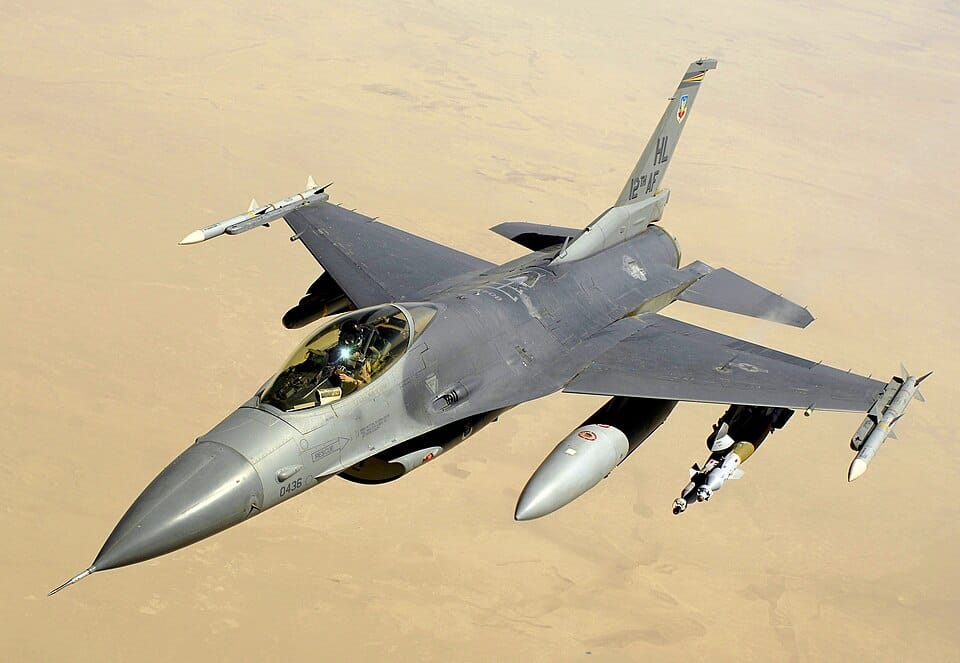
This is not an isolated incident. The Shahed campaign has been drifting steadily west for months. Just on 19 May, a Romanian F-16 on Baltic Air Policing duty over Estonia shot down a stray drone that had crossed in from Russian airspace (likely a Ukrainian drone thrown off course by jamming) — the first NATO kinetic engagement of its kind. Ten days later, Romania itself is on the receiving end. The geometry of the war keeps expanding, and the alliance’s eastern flank keeps absorbing the elasticity.
Poland has had Shaheds cross its airspace. Latvia recently went through a domestic political crisis over a stray Ukrainian drone in Rēzekne. Now Romania, the alliance’s southeastern anchor and one of the more credible airpower contributors on the eastern flank, has had a Russian drone land on civilian housing. The pattern is not subtle.
What happens next is partly diplomatic and partly industrial. NATO will, presumably, formally invoke Article 4 consultations if Bucharest pushes for it. There will be a flurry of press releases about “enhanced air defence.” But the real test is whether Western capitals are now finally willing to fund the unsexy, unglamorous counter-drone systems — the radar arcs, the laser-based interceptors, the Coyote-class kinetic kill vehicles — that the eastern frontier has been quietly requesting for two years. The Shahed in Galați is, if nothing else, an effective lobbying instrument.
Sources: Euronews, Washington Post, NPR, Al Jazeera, Reuters, The War Zone.


 English
0 Comments