
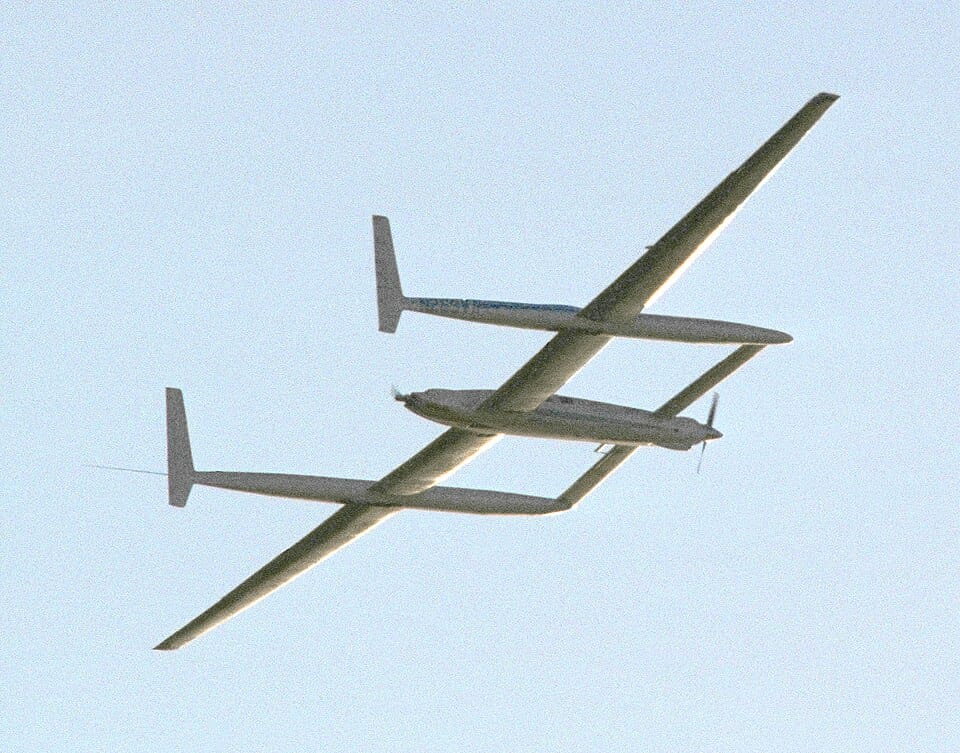
Quick Facts
- Departure: 14 December 1986, Edwards AFB, California
- Landing: 23 December 1986, Edwards AFB
- Duration: 9 days, 3 minutes, 44 seconds
- Distance: 42,432 km (26,366 miles) — non-stop, unrefuelled
- Crew: Dick Rutan (pilot) and Jeana Yeager (co-pilot)
- Designer: Burt Rutan
- Construction: Carbon fibre, fiberglass, Kevlar composites
- Fuel capacity: 3,181 kg (7,011 lb) — 72% of gross weight
- Current location: National Air and Space Museum, Washington D.C.
The Impossible Machine
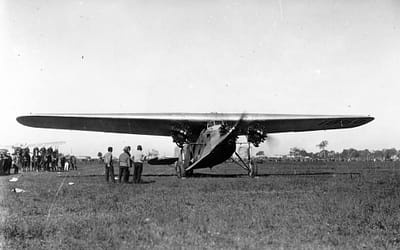
The Voyager looked like nothing that had ever flown. Twin booms connected the front and rear engines. The main wing spanned 33.8 metres — wider than a 737 — but weighed almost nothing. The entire airframe was built from composite materials: layers of carbon fibre and fiberglass bonded with epoxy resin, wrapped around honeycomb cores. The airframe alone weighed just 426 kilograms — 939 pounds. The fuel it carried weighed 3,181 kilograms — more than three times the weight of the aircraft itself.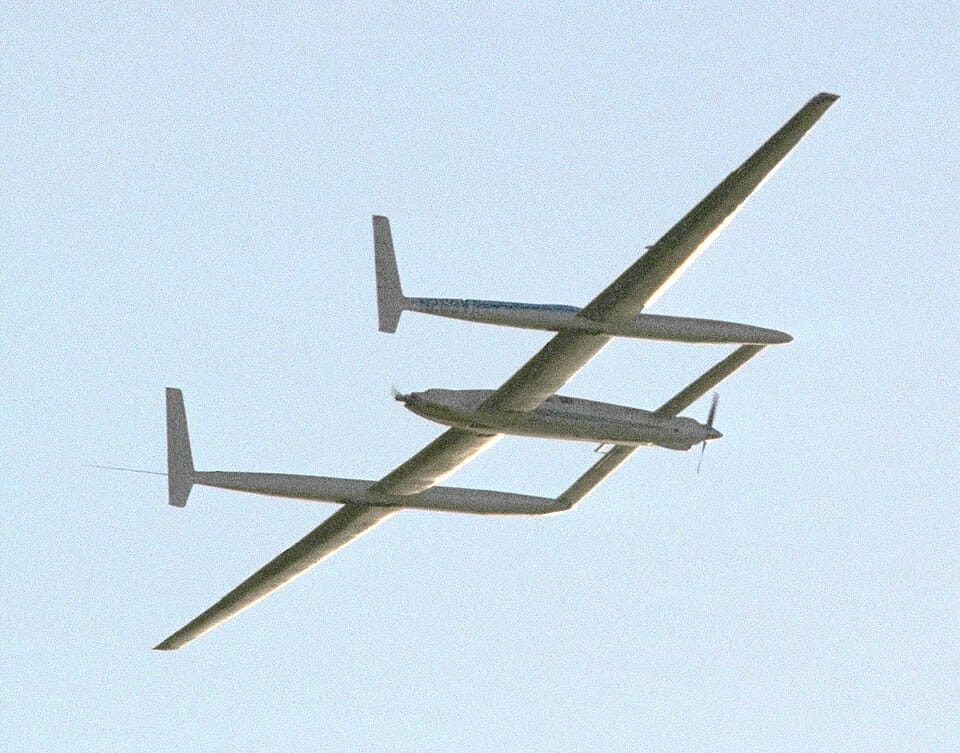
Nine Days of Terror
The takeoff nearly ended the flight before it began. Loaded to maximum weight, the Voyager needed every metre of Edwards' 4.6-kilometre runway. The wingtips, bowed under the fuel load, scraped the runway on takeoff and damaged the winglets; Dick Rutan later shook them off deliberately in flight with a sideslip. Rutan and Yeager had to make an instant decision: abort or continue. They continued. The lost winglets were non-structural. Over the Atlantic off Brazil, a violent night storm rolled the aircraft into a 90-degree bank. Over Africa, unexpected headwinds ate into their fuel margin until they had almost nothing left. On the final morning, off Mexico's Pacific coast, a fuel-pump failure starved the rear engine and it stopped; the aircraft fell thousands of feet before the front engine caught. Sleep deprivation hallucinations plagued both crew members. By the seventh day, they were running on caffeine, adrenaline, and the knowledge that turning back was not an option — there was nowhere to land.The Landing
On 23 December 1986, the Voyager crossed the California coastline with 48 kilograms of fuel remaining — less than two hours' worth. Dick Rutan brought it down at Edwards while thousands of spectators cheered. They had flown around the world in nine days without touching the ground. The Voyager now hangs in the Smithsonian's National Air and Space Museum, alongside the Wright Flyer and the Spirit of St. Louis. It was not a military aircraft. It was not a commercial aircraft. It was a pure expression of what two pilots, one designer, and a garage full of volunteers could achieve when the goal was simply to prove it was possible. Nine days, 42,432 kilometres, and a fuel margin measured in minutes. The Voyager is the most audacious flight in aviation history. Sources: Smithsonian National Air and Space Museum, NASA, Scaled Composites, WikipediaRelated Questions
What was the first plane to fly around the world without refueling?
The Rutan Voyager was the first aircraft to fly non-stop around the world without refuelling. Between 14 and 23 December 1986 it circled the globe in 9 days — a feat many had thought impossible for a piloted aircraft.
How long did the Rutan Voyager's round-the-world flight take?
It lasted 9 days, 3 minutes and 44 seconds, covering 42,432 km (26,366 miles) non-stop and unrefuelled. The aircraft took off and landed at Edwards Air Force Base in California.
Who flew the Rutan Voyager?
It was flown by pilot Dick Rutan and co-pilot Jeana Yeager, crammed into a tiny cabin for the entire nine-day flight. The aircraft was designed by Dick's brother, the renowned aircraft designer Burt Rutan.
How far did the Rutan Voyager fly?
The Voyager flew 42,432 km (26,366 miles) in a single non-stop, unrefuelled circuit of the globe — the longest such flight ever made at the time, achieved by carrying enormous quantities of fuel in an ultralight composite airframe.
How did the Voyager fly so far without refueling?
Designer Burt Rutan built it from lightweight composites with an extremely efficient long, thin wing, and packed most of its structure with fuel — at takeoff it was essentially a flying fuel tank. That mix of low weight and huge fuel load made the circumnavigation possible.
0 Comments