

When Singapore Airlines goes shopping for aircraft, the rest of the industry leans in to watch. The Changi-based carrier has spent decades building a reputation as a benchmark for premium long-haul flying, and the jets it chooses tend to become the jets everyone else wants. So when reports surfaced in early June 2026 that SIA is in talks for one of the largest widebody orders of the decade, the news landed with real weight.
According to reporting by Reuters, picked up across the aviation trade press, the airline is in early-stage discussions with both Boeing and Airbus for at least 50 of the biggest passenger jets in production — with the door open to options for dozens more. The shortlist is a heavyweight title fight: the roughly 400-seat Boeing 777-9 versus the Airbus A350-1000.
Nothing is signed. SIA, asked directly, said only that it “regularly reviews” its fleet renewal plans and declined to comment on confidential discussions. But the contours of the decision tell you a lot about where the widebody market is heading.
Quick Facts
- What: Singapore Airlines reportedly in early talks for at least 50 large widebodies (Reuters, June 2026)
- The choice: Boeing 777-9 vs Airbus A350-1000
- Status: Early-stage talks — not a firm order; options for dozens more possible
- 777-9: World’s largest twin-engine jet, GE9X engines, ~400+ seats, first delivery now expected 2027
- A350-1000: Rolls-Royce Trent XWB-97 engines, in service since 2018, ~375–400 seats, 9,000 nm range
- Current SIA fleet: 65 A350-900s, 22 Boeing 777-300ERs, 12 A380s
Why SIA’s Fleet Picks Move the Market
Singapore Airlines is not the biggest airline in the world, nor the one with the largest order book. What it has is influence. The carrier was the launch customer for the Airbus A380 in 2007 and an early, high-profile operator of the A350. It flies the longest commercial route on the planet — Singapore to New York, a journey of over 18 hours — and does so with a cabin product that routinely tops industry awards.
That track record matters. When a carrier with SIA’s reputation commits to an airframe, it sends a signal to leasing companies, rival airlines, and the manufacturers themselves about which way the premium long-haul market is leaning. A big SIA order is, in effect, a stamp of approval.
It also comes at a telling moment. SIA’s 22 Boeing 777-300ERs — long the backbone of its long-haul fleet — now average more than 16 years in service. Replacing them while adding capacity for growth into the 2030s is exactly the kind of generational decision that shapes a fleet for twenty years.
The 777-9: Boeing’s Biggest Twin
The Boeing 777-9 is, simply put, the largest twin-engine jet ever built. Stretched well beyond the already-large 777-300ER, it is designed to seat more than 400 passengers in a typical layout and is powered by the GE9X — the most powerful commercial jet engine in the world, with a folding wingtip clever enough to let the enormous wingspan fit standard airport gates.
For an airline chasing capacity on dense, high-demand routes, the 777-9 is a compelling proposition: more seats per flight, strong cargo capability, and the kind of headline presence that suits a flagship carrier. There is, however, a significant caveat — the program has been hit by years of delays. First delivery is now expected in 2027, with certification flight testing still underway. SIA would be buying into an aircraft that, as of mid-2026, has yet to enter commercial service.
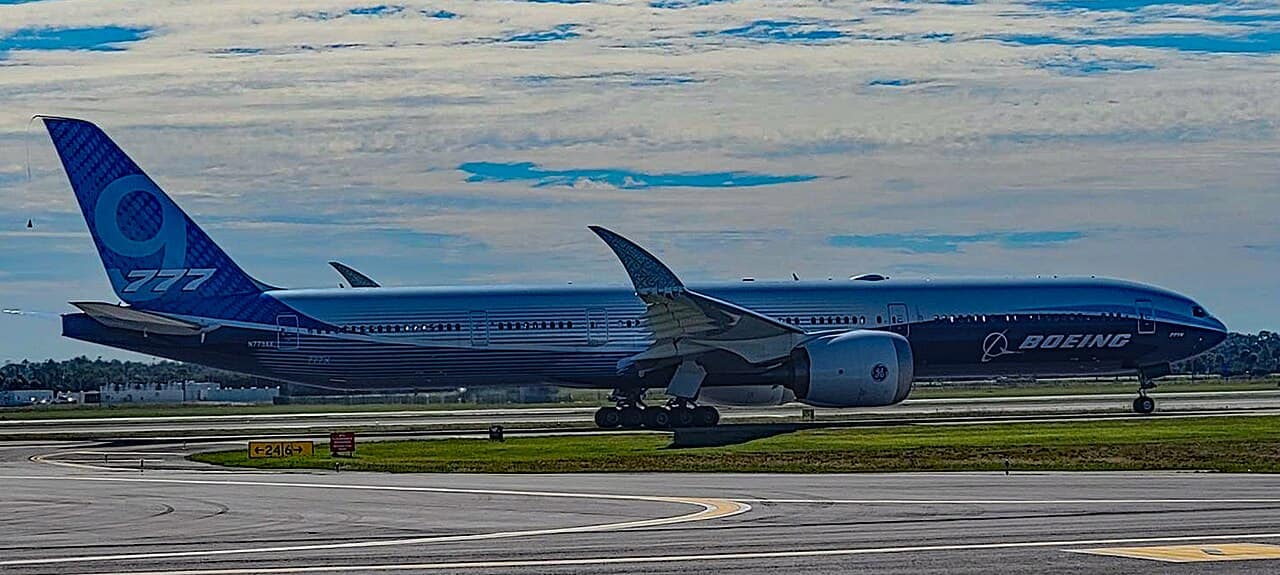
That timing cuts both ways. The delays have frustrated launch customers, but they also mean the 777-9 arrives as a genuinely new-generation aircraft just as airlines plan their next growth wave. For SIA, the question is whether the extra capacity and cargo muscle justify the wait — and the risk of an unproven type.
The A350-1000: Efficiency and Commonality
The Airbus A350-1000 takes the opposite approach. Slightly smaller than the 777-9, it seats roughly 375 to 400 in a standard three-class layout, but it has two advantages that matter enormously to an operator like SIA. First, it is already in service and proven, flying with carriers worldwide since 2018. Second, it shares deep commonality with the airline’s existing fleet of 65 A350-900s — the same cockpit, similar systems, and a largely shared maintenance base.
Powered by the Rolls-Royce Trent XWB-97, the A350-1000 offers a range of around 9,000 nautical miles and, by Airbus’s figures, burns about 25% less fuel than the previous generation of widebodies. For ultra-long-haul flying — SIA’s signature — that efficiency is the whole ballgame.
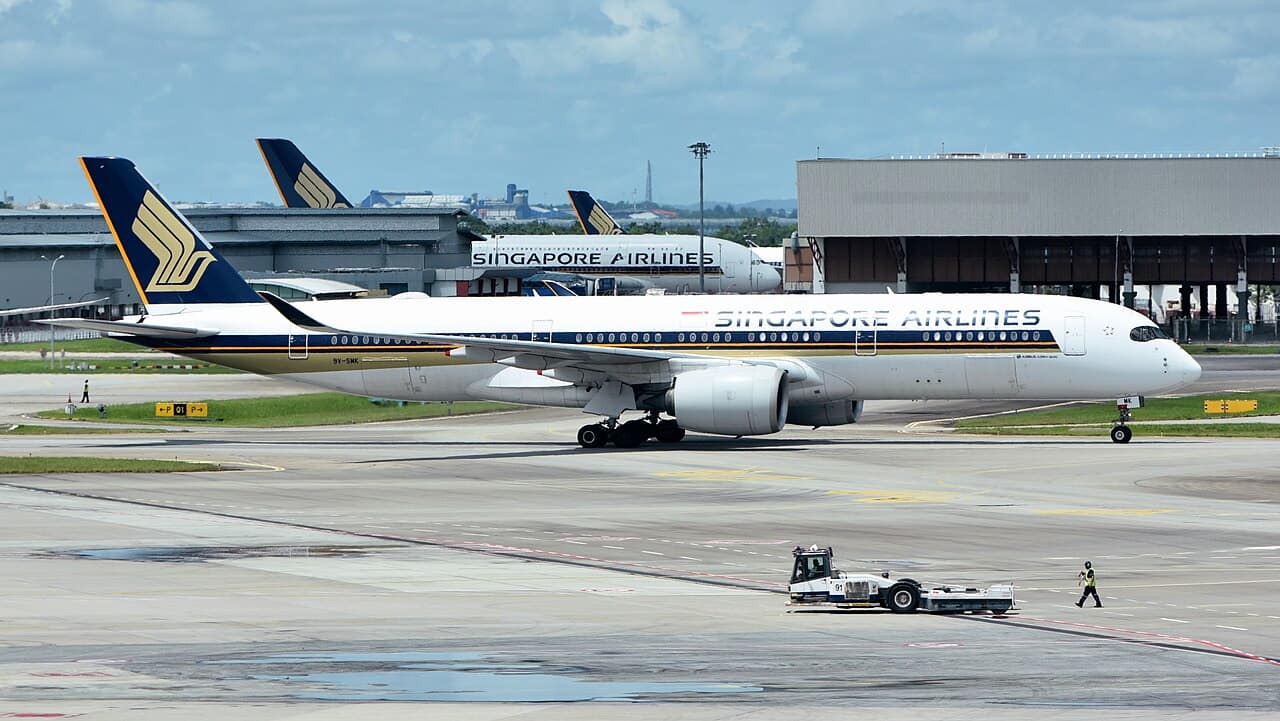
SIA already runs a specialised sub-fleet of ultra-long-range A350-900ULRs on its flagship Singapore–New York services, so the airline knows the family intimately. Choosing the A350-1000 would be the low-risk, high-commonality play — less spectacular than the 777-9, but operationally seamless.
A Reputation Built on Getting It Right
Whatever SIA decides, the choice will be made under a microscope — because the carrier’s premium standing is hard-won. In the 2025 Skytrax World Airline Awards, Singapore Airlines was named the World’s Best Cabin Crew and won the World’s Best First Class award, finishing second overall and retaining its long-held title as the best airline in Asia.
That reputation is built on consistency, and consistency starts with the metal. The aircraft an airline flies dictate the cabins it can offer, the routes it can open, and the economics that fund everything else. A 50-jet order is not just a purchasing decision; it is a bet on what premium long-haul travel will look like in the 2030s.
Boeing’s own footage of a 777-9 first flight — the larger contender in Singapore Airlines’ reported widebody decision.
What It Signals for the Widebody Market
Beyond Singapore Airlines itself, the talks are a strong signal that the widebody market — battered during the pandemic, slow to recover — is firmly back. Carriers are once again planning for long-haul growth on a grand scale, and the two manufacturers are competing fiercely for every flagship customer. Emirates has poured fresh orders into the 777X; airlines across Asia and the Gulf are reshaping their long-haul fleets.
For now, the SIA order remains in the realm of reports and unconfirmed talks. But the very fact that one of the world’s most admired airlines is shopping for 50 of the biggest jets in the sky tells you the appetite for long-haul flying is healthier than it has been in years. When the decision comes, expect the industry to follow Singapore’s lead — just as it has so many times before.
Sources: Reuters; Bloomberg; U.S. News & World Report; Airbus; Boeing; Rolls-Royce; GE Aerospace; Skytrax World Airline Awards 2025.
Related Questions
Is Singapore Airlines ordering new widebodies?
According to a June 2026 Reuters report, Singapore Airlines is in early-stage talks for at least 50 large widebody jets, choosing between the Boeing 777-9 and the Airbus A350-1000. It is not yet a firm order, and options for dozens more are possible.
What is the Boeing 777-9?
The Boeing 777-9 is the world’s largest twin-engine jet, powered by GE9X engines and seating more than 400 passengers. Part of the 777X family, its first delivery is now expected in 2027 after lengthy certification delays.
Boeing 777-9 versus Airbus A350-1000 — what’s the difference?
The 777-9 is larger, with 400-plus seats and GE9X engines, but is still awaiting entry into service. The A350-1000, powered by Rolls-Royce Trent XWB-97 engines, has flown since 2018, seats about 375–400 and offers around 9,000 nm of range — a proven option versus a bigger newcomer.
What aircraft does Singapore Airlines fly now?
Singapore Airlines currently operates 65 Airbus A350-900s, 22 Boeing 777-300ERs and 12 Airbus A380 superjumbos. The carrier flies the world’s longest commercial route, Singapore to New York, with its long-range A350-900s.
Was Singapore Airlines the first A380 operator?
Yes. Singapore Airlines was the launch customer for the Airbus A380, putting the superjumbo into service in 2007. That history of being an early adopter is why its fleet decisions, including the value of aging A380s, are closely watched across the industry.
Why do Singapore Airlines’ fleet choices matter?
Singapore Airlines is not the largest carrier, but it wields outsized influence as a launch customer and trend-setter — it pioneered the A380 and was an early A350 operator. A 50-jet order between the Boeing 777-9 and A350-1000 would send a strong signal to both manufacturers.
0 Comments