
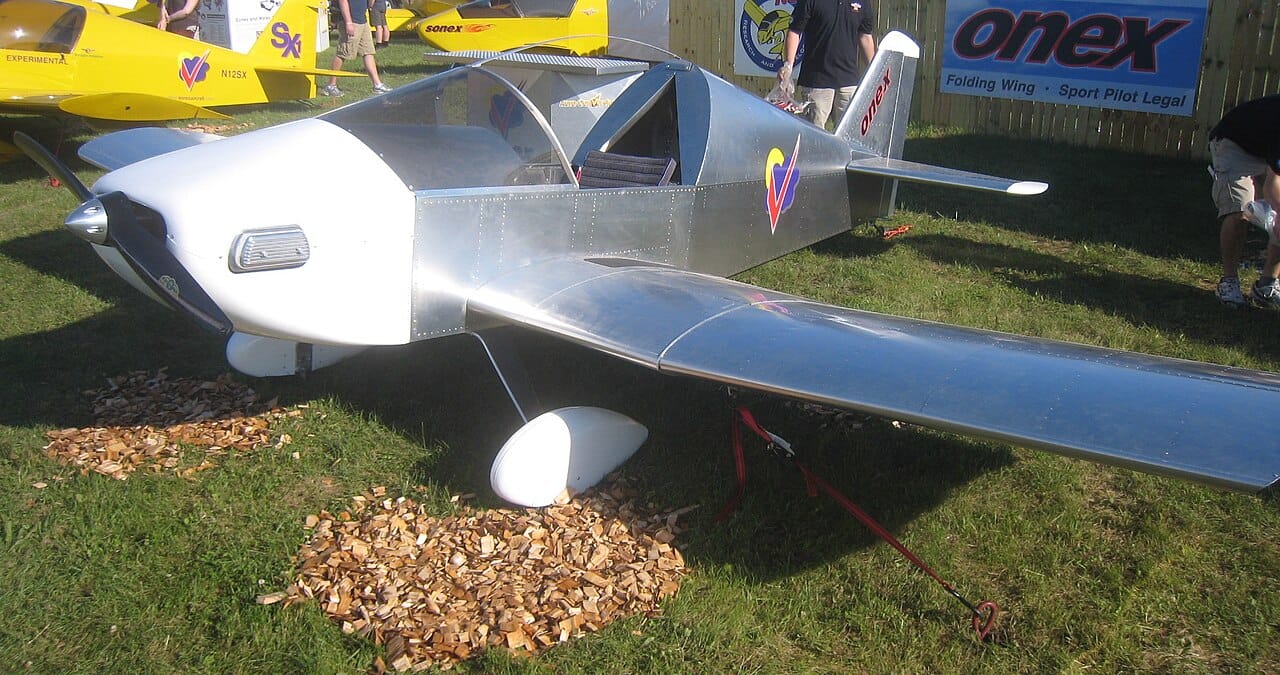
Quick Facts: Sonex Closure
| Closure Date | Late March 2026, effective immediately |
| Aircraft Affected | ~700 Sonex, Waiex, and Onex aircraft worldwide |
| Location | Oshkosh, Wisconsin |
| Owner | Mark Schaible (purchased 2022) |
| Founded | John Monnett (1990s), Oshkosh, WI |
| Reason | "Perfect storm"—bank pressure, sales decline, used aircraft competition |
| Personal Impact | Owner and wife filed personal bankruptcy |
One day you're a homebuilt aircraft manufacturer with two decades of history. The next day, you're a memory.
Sonex Aircraft shut down in late March 2026 with zero forewarning. No gradual wind-down. No farewell tour. Just an announcement that the factory—a pillar of Oshkosh's experimental aviation community since the 1990s—would no longer exist. Owner Mark Schaible posted an emotional video explaining the closure, his voice carrying the weight of a man watching his dream burn.
The numbers tell a devastating story. Roughly 700 Sonex aircraft are flying today. Waiex models. Onex single-seaters. Each one represents a builder's dream: budget-conscious, kit-based, attainable performance. Now, every single one of those aircraft is orphaned. No factory support. No parts pipeline. No engineering team to troubleshoot issues. Just silence.
## The Perfect Storm Schaible's explanation was brutally honest. He called it a "perfect storm"—and he wasn't exaggerating. The economic pressures hit from all directions at once. Bank pressure was intense. Capital requirements for manufacturing never stop. Tooling, materials, labor, facility costs. Every month you operate, the debt servicing demands mount. And banks don't care about emotional attachment to dreams. They care about return on investment.Then came the market collapse. Orders plummeted. Aircraft buyers, it turns out, get cautious when recessions loom. The experimental aviation market contracted sharply. Fewer people could justify spending $40,000 to $60,000 on a kit when job security felt uncertain.
But there was another factor Schaible couldn't control: competition from his own product. The used aircraft market flooded with Sonex airframes built over the previous decades. Why buy a new kit for $50,000 when you could buy a completed, flown-in Sonex for $35,000? Schaible was, in effect, competing against his own legacy.

And it flew exceptionally well. Cruise speeds around 120 mph. Burn rate near 4 gallons per hour. Range to make meaningful cross-country trips. The Sonex became a cult favorite among a certain breed of aviator—the kind who valued simplicity and performance over complexity and cost.
Many of those builders were military veterans. Retired pilots from the Air Force, Navy, and Marines who understood aircraft systems, precision work, and the discipline required to build something that won't kill you when you fly it. The experimental aviation community has deep military roots, and the Sonex attracted people who saw building an airplane as a final independent project—a way to create something entirely their own.
Oshkosh itself was built on this ethos. EAA's Paul Poberezny famously said, "The spirit of EAA is experimentation and freedom." Sonex embodied that. For decades, it represented what was possible when you had a blueprint, grit, and the freedom to build.
## The Silence After Here's what's brutal about a sudden closure: there's no transition. No knowledge transfer. No final Q&A session where founders and new stewards pass the torch. Just a video. A farewell. And then—nothing. For 700 aircraft owners, the closure creates existential questions. What happens if your Waiex develops a structural issue and you need engineering guidance? What if you need replacement wingtip fairings? What happens when you want to upgrade your panel and need someone to verify the CG changes won't affect certification?The good news: John Monnett and Mark Schaible are reportedly looking for someone to continue supporting the fleet. The aircraft designs are solid. The community is passionate. There's a chance—not guaranteed, but possible—that someone with capital and vision steps in to preserve the legacy.
But that's future talk. Today, right now, 700 aircraft sit at airports across North America and beyond. Their builders are processing what happened. Some feel abandoned. Some are angry. Others are simply sad that something beautiful ended so abruptly.

The experimental aviation community will remember Sonex. The aircraft will fly for another 30, 40, 50 years if their owners maintain them with care. But the dream of buying a kit, building it with friends, and knowing the creator was there if you needed guidance—that dream is now in someone else's hands.
If you fly a Sonex today, treasure it. The factory is gone, but the airplane is forever.
Related Questions
What happened to Sonex Aircraft?
Sonex Aircraft, a homebuilt-aircraft manufacturer in Oshkosh, Wisconsin, shut down in late March 2026 with no warning, effective immediately. Owner Mark Schaible cited a perfect storm of bank pressure, declining sales, and competition from used aircraft, and he and his wife filed for personal bankruptcy.
What is Sonex Aircraft known for?
Sonex built popular kit aircraft for the homebuilt and experimental aviation community, including the Sonex, Waiex, and Onex designs. Founded by John Monnett in the 1990s in Oshkosh, Wisconsin, the company put roughly 700 of its aircraft into the skies worldwide before closing in 2026.
How many Sonex aircraft are flying?
Roughly 700 Sonex, Waiex, and Onex aircraft are flying worldwide. Because they are owner-built kit planes, they remain airworthy even though the company has closed, though builders lose factory support, a blow felt across the experimental aviation community.
Why do aircraft manufacturers go out of business?
Aircraft makers often fail from a mix of weak sales, financing pressure, and tough competition, the perfect storm Sonex described. Even billion-dollar programs collapse, as with the Mitsubishi SpaceJet that burned through $9 billion without carrying a passenger.
What is a homebuilt or experimental aircraft?
A homebuilt or experimental aircraft is one assembled by an individual from a kit or plans rather than a factory line, certified in the experimental category. Sonex was a leading kit supplier; the category has long attracted innovators, from backyard builders to oddities like the Stipa-Caproni flying barrel.
0 Comments