

It is a Saturday morning over the East Sea, and on a Korean radar screen the blips appear early — a cluster of them, more than ten military aircraft, Chinese and Russian, moving in sequence toward the edge of the country’s watch. Inside an air operations center the call goes out. Within minutes, Republic of Korea Air Force fighters are airborne, climbing to put themselves alongside the visitors, eyes on every tail number.
Nobody is shot at. No border is crossed in the legal sense. And yet this is the kind of morning — 27 June 2026 — that tells you a great deal about how the most militarized corner of the planet keeps its uneasy peace. According to South Korea’s Joint Chiefs of Staff, the aircraft entered and left the Korea Air Defense Identification Zone, or KADIZ, over the East Sea and the waters off the country’s south, and did not violate South Korean airspace.
That distinction — between a defense zone and sovereign airspace — is the whole story. It is also the part most easily lost in the headlines. So let us slow down and walk through what actually happened, who flew, and why South Korean pilots strap in for this again and again.
Quick Facts
- When: Saturday, 27 June 2026
- What: More than 10 Chinese and Russian military aircraft entered the KADIZ in sequence, then left
- Where: Over the East Sea and waters off South Korea’s south
- Response: ROK Air Force fighters scrambled to take tactical measures
- Airspace: No South Korean airspace was violated, per the ROK Joint Chiefs of Staff
- Likely cause: A joint China–Russia air exercise, a JCS official said
- Source: Republic of Korea Joint Chiefs of Staff (via Korea Herald)
A Zone Is Not a Border
Start with the word that does the heavy lifting: identification. An air defense identification zone is not territorial airspace. It is a buffer — a band of sky stretching well beyond a country’s actual borders, in which a nation asks foreign aircraft to identify themselves so it can tell a routine flight from a threat before that aircraft gets close to anything that matters.
Sovereign airspace, by contrast, is the real legal boundary: the column of air directly above a country’s land and territorial waters. Cross that without permission and you have committed a genuine violation under international law. An ADIZ has no such status. As South Korea’s own military noted, foreign aircraft are generally expected to notify the relevant country before entering such a zone — but the concept appears in no international treaty.
So when Chinese and Russian aircraft fly through the KADIZ without notice, they are doing something provocative but not, strictly speaking, illegal. That is precisely what makes these encounters so frequent, and so carefully choreographed. Both sides know the rules of a game that has no referee.

What Seoul Said, Word for Word
The ROK Joint Chiefs of Staff did not leave much to interpretation. South Korea’s military picked up the formation before it ever reached the zone and put fighters in the air to be ready for whatever came next.
A JCS official added that the entry appeared to have taken place during a joint air exercise by China and Russia — the kind of drill the two militaries have been running together with growing regularity. Some accounts of the day put the number at eleven aircraft, split between Chinese and Russian flights. The exact tally matters less than the pattern: this was a coordinated, deliberate flight, watched the entire way.
A Pattern, Not a One-Off
If this felt familiar to Korean and Japanese controllers, that is because it was. Chinese and Russian military aircraft entered and left the KADIZ in December 2025 and again in November 2024. Since 2019, the two countries have flown regular joint patrols near South Korean and Japanese airspace, citing combined exercises rather than offering advance notice.
The December 2025 flight is a useful snapshot of what these patrols can look like. Russian Tu-95MS strategic bombers and Chinese H-6 bombers flew a long mission over the Sea of Japan, the East China Sea and the western Pacific. Russian nuclear-capable Tu-95 bombers were joined by Chinese aircraft, with fighters and a Russian A-50 radar plane in support. Both Seoul and Tokyo scrambled jets. Beijing later described it as the tenth such joint strategic air patrol since the program began — a count that, by itself, tells you how routine the extraordinary has become.
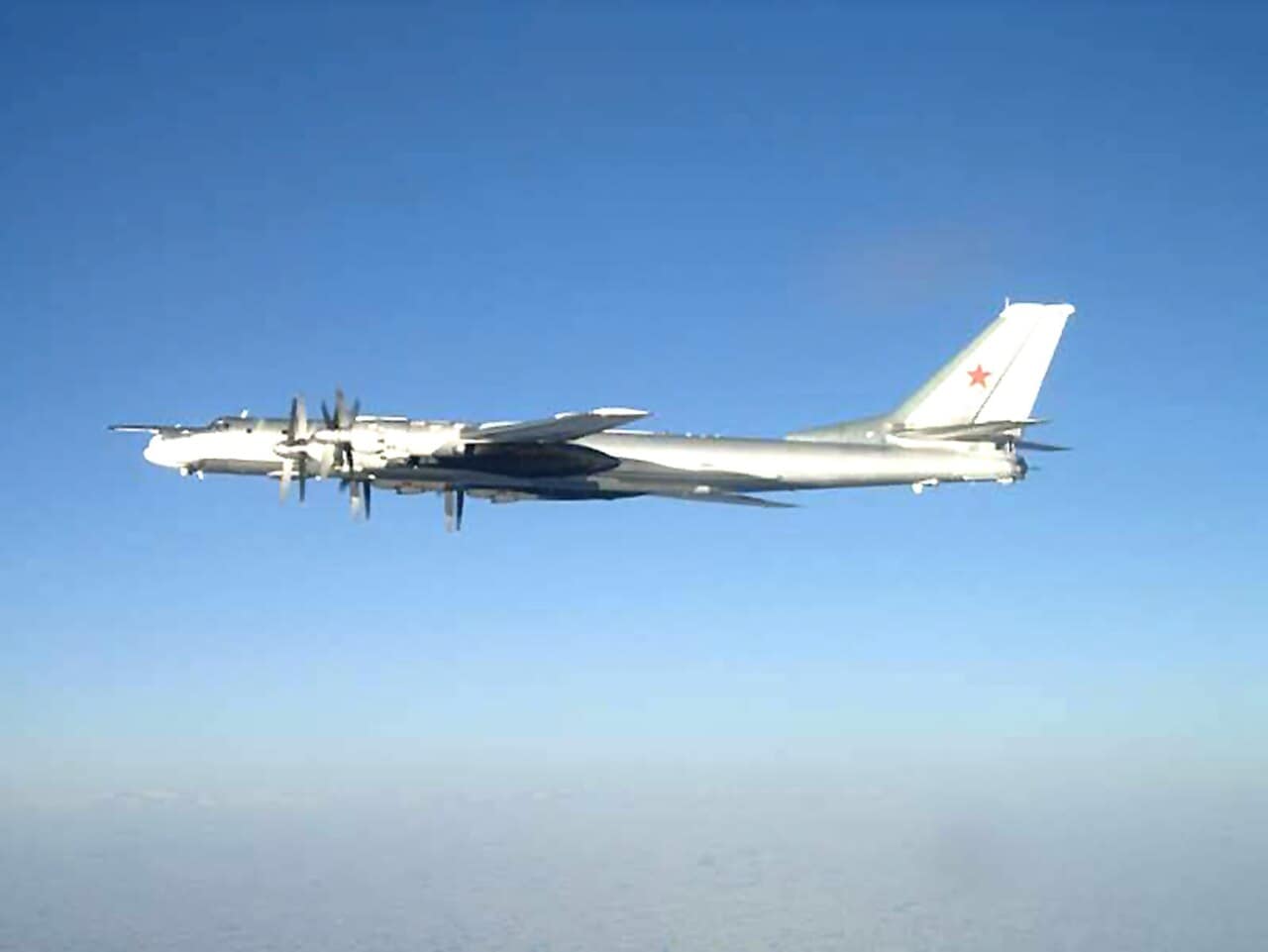
For the pilots who answer these calls, the repetition is its own kind of pressure. Each intercept is flown as if it could be the one that goes wrong — a closing formation of unfamiliar aircraft, a language barrier, the constant arithmetic of distance and intent. The point of an ADIZ is to push all of that decision-making out over the water, far from anything fragile, so that a misread never becomes a missile.
It is a rhythm that plays out on the other side of the Pacific too. North American air defenders track and intercept Russian aircraft in their own identification zones off Alaska on a regular basis, narrating each encounter in near-real time:
Why South Korea Always Goes Up
South Korea does not have the luxury of treating any of this as background noise. It lives between a nuclear-armed North, a rising China, and a Russia that has drawn ever closer to Beijing. The KADIZ also overlaps awkwardly with Japan’s own zone near Jeju Island, which means a single formation can set two allied air forces scrambling at once.
So the ROK Air Force goes up every time — KF-16s, F-15K Slam Eagles, and increasingly its homegrown KF-21 Boramae — not because it expects a battle, but because presence is the message. A fighter flying wing on a bomber says, calmly and without firing a shot: we see you, we are here, and we are not surprised. Defense analysts have long read these China-Russia patrols as exactly that kind of signaling — a demonstration of partnership aimed at testing how quickly Washington’s allies in the region respond.
Strip away the geopolitics, though, and what remains is intensely human. Somewhere over the East Sea on 27 June, a handful of young Korean pilots accelerated into a clear morning to look strangers in the eye at 30,000 feet, hold steady, and bring everyone home. They did their job so well that the rest of us barely noticed. That is what a quiet sky over a tense sea actually costs — and who pays for it.
News coverage of the 27 June incursion lays out the sequence and the all-important airspace distinction:
Sources: Republic of Korea Joint Chiefs of Staff (via Korea Herald); CBS News; Malay Mail / AFP; Seoul Economic Daily; Al Jazeera; USNI News; Global Times.
Related Questions
What is the KADIZ?
The KADIZ is the Korea Air Defense Identification Zone, a band of airspace extending beyond South Korea’s actual borders. Within it, South Korea asks foreign aircraft to identify themselves so it can distinguish routine traffic from a potential threat before that aircraft nears sovereign airspace. It is a security buffer, not a legal border.
Is entering an air defense identification zone illegal?
No. An air defense identification zone has no status under international law and appears in no treaty. Foreign aircraft are generally expected to notify the country before entering, but flying through a zone without notice is not a violation of sovereign airspace. That is why such incursions are provocative yet not, strictly speaking, illegal.
What is the difference between an ADIZ and sovereign airspace?
Sovereign airspace is the column of air directly above a country’s land and territorial waters, and entering it without permission is a genuine violation under international law. An ADIZ is a much larger buffer zone beyond those borders, used only for early identification of aircraft. One is a legal boundary; the other is a security precaution.
How many aircraft entered the KADIZ on 27 June 2026?
South Korea’s Joint Chiefs of Staff said more than 10 Chinese and Russian military aircraft entered the KADIZ on 27 June 2026, flying in over the East Sea and waters off the country’s south before leaving. Some accounts put the total at eleven, split between Chinese and Russian flights.
Did the Chinese and Russian aircraft violate South Korean airspace?
No. The Republic of Korea Joint Chiefs of Staff stated clearly that the aircraft entered and left the KADIZ but did not violate South Korean sovereign airspace. South Korea identified the aircraft before they entered the zone and scrambled fighters to take tactical measures as a precaution.
Why do China and Russia fly joint patrols near Korea and Japan?
China and Russia have flown joint air patrols near South Korean and Japanese airspace since 2019, usually citing combined military exercises. Analysts read the flights as strategic signaling — a show of partnership that tests how quickly the United States’ regional allies detect and respond to incursions.
0 Comments