In 1991, during the opening night of Desert Storm, F-111F Aardvarks streaked across the Iraqi desert at 200 feet and 500 knots — in total darkness. The pilots were not flying the aircraft. The terrain-following radar was. A computer scanned the ground ahead, calculated the safe flight path, and commanded the autopilot to follow the terrain’s contours at treetop height, pulling up over ridgelines and diving into valleys automatically. The crew’s job was to trust the system and deliver weapons on target.
Terrain-following radar (TFR) is one of the most consequential and least celebrated technologies in military aviation. It turned the ground from an obstacle into a shield, allowing strike aircraft to hide beneath radar coverage and survive in air defense environments that would shred anything flying at medium or high altitude.
✈ Quick Facts
- Concept: Radar scans terrain ahead; autopilot maintains set clearance altitude
- First operational TFR aircraft: General Dynamics F-111 (AN/APQ-110, 1967)
- How it works: Forward-looking radar maps terrain profile; computer commands pitch inputs to maintain selected ride height (typically 200–500 ft AGL)
- Key TFR aircraft: F-111, Tornado IDS, B-1B Lancer, Su-24 Fencer
- Ride modes: Soft (gentle maneuvers, higher clearance), Medium, Hard (aggressive, minimum clearance)
- Speed range: Typically 480–600 knots at low level
- Superseded by: GPS/DSMAC terrain-matching, FLIR systems, stealth technology
The Problem: Radar Sees Everything Above the Horizon
Ground-based radar works by line of sight. A radar antenna on a tower can see aircraft at medium and high altitude for hundreds of kilometers. But the Earth curves, terrain creates shadows, and at very low altitude — below 200 feet — an aircraft can hide beneath the radar’s coverage.
The catch: flying at 200 feet above the ground at 500 knots is suicidal in anything but perfectly flat terrain. A pilot manually flying at that altitude at night has a reaction time of roughly one second before hitting a ridgeline, power line, or terrain feature that is not on the map. The cognitive load is crushing, the fatigue is immediate, and the margin for error is zero.
Terrain-following radar automated this impossible task.
How TFR Works
A terrain-following radar transmits a narrow beam forward and downward, scanning the terrain ahead of the aircraft. The return signals create a profile of the ground — hills, valleys, ridgelines, obstacles — which a computer processes in real time.
The computer then generates autopilot commands: pull up before a hill, push over after the crest, follow the valley floor, maintain the selected clearance height. The pilot selects a “ride height” — typically 200, 300, or 500 feet above ground level — and a “ride mode” that determines how aggressively the system maneuvers.
In “hard ride” mode, the system flies the aircraft to minimum clearance with maximum G-loading, hugging the terrain as tightly as possible. This provides the best protection against radar detection but is physically punishing — crews sustained bruises and back injuries from the continuous high-G maneuvering. In “soft ride” mode, the system provides more clearance and gentler transitions, trading some concealment for crew comfort and safety margin.
The system operated in what engineers call “fly-up” logic: if the radar lost contact with the terrain, or if any malfunction was detected, the aircraft would automatically command a climb to safe altitude. This fail-safe design meant that system failures resulted in exposure to enemy radar rather than impact with terrain — an acceptable trade-off when the alternative was a controlled flight into the ground.
The F-111: Where It All Began
The General Dynamics F-111 Aardvark was the first aircraft designed from the outset for automatic terrain following. Its AN/APQ-110 terrain-following radar, paired with the aircraft’s variable-sweep wings and two-seat crew arrangement (pilot and weapon systems officer), created the first true all-weather, day/night, low-level strike platform.
The F-111’s first combat deployment — in Vietnam in 1968 under the codename “Combat Lancer” — was troubled, with three aircraft lost in the first weeks. But the problems were addressed, and by the end of the Vietnam War, the F-111 was conducting deep-strike missions at night and in weather conditions that grounded every other aircraft in the theater.
By Desert Storm in 1991, the F-111F had become the coalition’s premier precision strike platform. Flying at 200 feet on TFR in “hard ride” mode, F-111 crews delivered laser-guided bombs on Iraqi armor with devastating accuracy. The “Tank Plinking” campaign — F-111s destroying individual Iraqi tanks with GBU-12 Paveway II bombs — became one of the war’s signature operations.
The Tornado: Europe’s Low-Level Specialist
The Panavia Tornado IDS (Interdictor/Strike) was designed around the same concept for NATO’s European theater. Its mission was to penetrate Soviet air defenses at low level, deliver weapons on Warsaw Pact airfields, and survive to return. The Tornado’s terrain-following radar and autopilot were central to this mission.
RAF and Luftwaffe Tornado crews trained extensively over the hills of Scotland, Wales, and the German countryside, flying at 200 feet in all weather conditions. The Low-Level Tactical Navigation competitions (known colloquially as the “Low-Level Olympics”) pushed crews to fly precise routes through mountainous terrain at speeds exceeding 500 knots.
In Desert Storm, RAF Tornados flew some of the most dangerous missions of the war: ultra-low-level attacks on Iraqi airfields using JP233 runway-denial munitions. The low-level profile — necessary for the JP233 delivery mode — exposed the aircraft to intense anti-aircraft fire. Six Tornados were lost in combat, prompting a shift to medium-altitude bombing with precision-guided munitions for the remainder of the war.
The B-1B: Nuclear Penetrator Turned Conventional Bomber
The Rockwell B-1B Lancer was designed to penetrate Soviet air defenses at low level and high subsonic speed to deliver nuclear weapons. Its AN/APQ-164 terrain-following radar — integrated with a comprehensive electronic warfare suite — was the most sophisticated TFR system ever deployed on a bomber.
The B-1B could fly automatic terrain following at 200 feet and Mach 0.85 (approximately 600 knots), even in mountainous terrain. The system’s reliability was exceptional: in thousands of training sorties through the Rocky Mountains and the Welsh valleys (RAF Fairford deployments), the B-1B’s TFR maintained a safety record that gave crews genuine confidence in the system.
After the Cold War, the B-1B was converted to conventional roles and its nuclear capability was removed. But the low-level penetration capability remained central to its mission until the shift toward standoff weapons and precision-guided munitions at medium altitude made the hair-raising TFR rides less operationally necessary.
Legacy: The Technology That Made Itself Obsolete
Terrain-following radar solved a specific problem: surviving in an environment where enemy radar could see everything above 200 feet. But two developments have reduced the need for TFR.
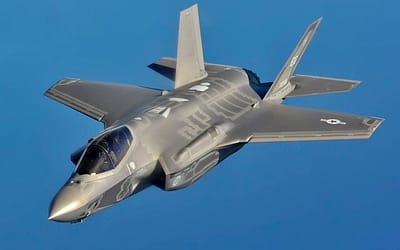
First, stealth technology. Aircraft like the B-2 Spirit and F-35 Lightning II can fly at medium altitude and remain undetected — no need to hide behind terrain when the radar cannot see you regardless.
Second, standoff weapons. Cruise missiles and long-range precision munitions allow aircraft to attack from distances and altitudes that keep them outside the lethal envelope of air defenses. Why fly at 200 feet over the target when you can launch a JDAM from 20,000 feet?
But the technology has not disappeared entirely. The B-1B retains its TFR capability. The Russian Su-24 uses terrain following in active combat. And the fundamental principle — using the ground to hide from radar — remains relevant for any aircraft without stealth, in any future conflict where the air defense environment is too dense for medium-altitude operations.
Sources: “Aardvark to Bone” by Peter E. Davies, RAF Tornado GR.1 operations history, USAF B-1B flight manuals (declassified), General Dynamics F-111 program records


 English
0 Comments