On January 25, 1966, test pilot Bill Weaver was flying an SR-71 Blackbird at 78,000 feet over New Mexico at Mach 3.18. Behind him sat reconnaissance systems officer Jim Zwayer. They were testing a new navigation system when the aircraft’s right engine suffered a catastrophic inlet unstart — and in the thin air at the edge of space, the Blackbird tore itself apart.
What happened next defies belief. Bill Weaver survived. The aircraft did not.
Quick Facts
Date: January 25, 1966
Aircraft: Lockheed SR-71 Blackbird (Article 2003)
Altitude: 78,000 feet (~23,800 m)
Speed: Mach 3.18 (~3,900 km/h)
Pilot: Bill Weaver (survived)
RSO: Jim Zwayer (killed)
Cause: Right engine inlet unstart leading to structural breakup
When the Inlet Unstarted
At Mach 3, the SR-71’s engines did not simply suck in air. Each engine was fed by a complex inlet system with a moveable spike cone that precisely managed the supersonic shockwave entering the nacelle. When the shock wave positioning was disrupted — an event called an “unstart” — the result was instantaneous and violent: a massive asymmetric thrust imbalance that slammed the aircraft sideways with forces no pilot could overcome.
Weaver felt the unstart hit like a sledgehammer. The right nacelle lost its airflow; the left engine continued producing full thrust. The resulting yaw was so savage that the Blackbird pitched up violently and broke apart around the two crew members. At Mach 3.18 and 78,000 feet, there was nothing either man could do.
Torn Free by the Airstream
Weaver never ejected. He did not have time. The aircraft disintegrated around him, and the force of the airstream — at more than three times the speed of sound — ripped him free of the cockpit. His pressure suit inflated automatically, becoming his only protection against the near-vacuum conditions at 78,000 feet. Without the suit, his blood would have boiled. The temperature outside was approximately minus 70 degrees Celsius.
Weaver tumbled through the stratosphere, unconscious. His parachute deployed automatically by the barometric pressure system in his harness. He regained consciousness hanging beneath his canopy, drifting through clear blue sky over the New Mexico desert, with no aircraft in sight. He was alive, though he did not yet know if Jim Zwayer had survived.
Zwayer had not. His pressure suit had been compromised during the breakup, and he died before his parachute could deploy. He was 39 years old.
Surviving the Unsurvivable
The physics of Weaver’s survival are extraordinary. No crew member had ever survived the in-flight breakup of a Mach 3+ aircraft. The forces involved — deceleration from Mach 3 to zero in seconds, exposure to near-vacuum and extreme cold, tumbling through the atmosphere at terminal velocity — should have killed him outright.
The SR-71’s pressure suit, manufactured by the David Clark Company, saved his life. Designed for exactly this scenario, it maintained pressure around his body, prevented his blood from boiling, and provided breathing oxygen during the uncontrolled descent. The automatic parachute deployment system ensured that even an unconscious crew member would have a functioning canopy.
Weaver returned to flight status and continued flying the SR-71 for Lockheed. He later described the experience with the understated calm that characterised test pilots of his era. The accident report led to design improvements in the SR-71’s inlet system, reducing the severity and frequency of unstarts on later flights.
The SR-71 pilot who free-fell from the edge of space
Fall from an SR-71 — the Bill Weaver storySources: Historyfeels (Instagram), Lockheed Martin, Air & Space Quarterly
On November 1, 1952, the world's first hydrogen bomb vaporized the island of Elugelab in the Marshall Islands. The explosion — designated Ivy Mike — produced a fireball three miles wide and a mushroom cloud that punched into the stratosphere. And while most sane...
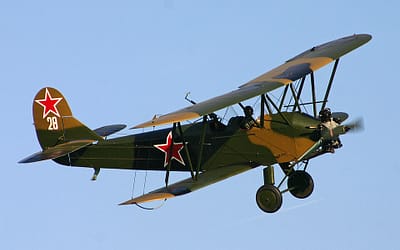
It sounds like the setup for a joke: what happens when a biplane from the 1920s fights jet fighters from the 1950s? The answer, it turns out, is that the biplane wins more often than anyone would like to admit. During the Korean War, North Korean pilots flying...
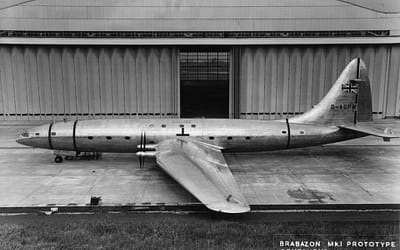
In September 1949, the largest land-based aircraft in the world took to the skies over southwest England. The Bristol Brabazon was a colossus — its 230-foot wingspan exceeded that of a modern Boeing 747. It was powered by eight radial engines coupled in pairs to drive...



 English
0 Comments