
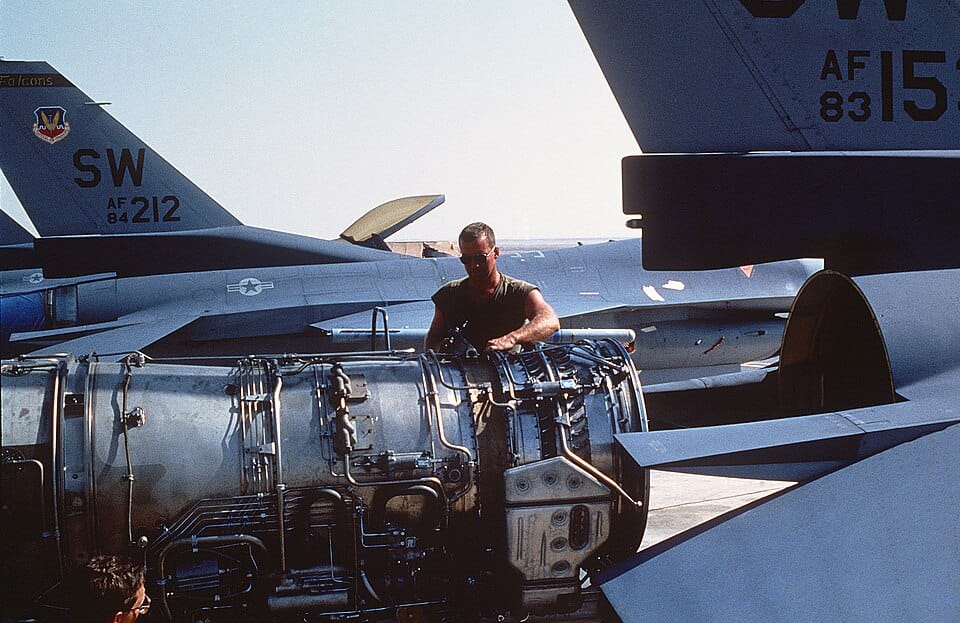
Aircraft mechanics see things that the travelling public never hears about. Behind the polished cabin walls and beneath the gleaming fuselage panels lies a hidden world where forgotten sandwiches fossilize in inaccessible corners, wildlife takes up residence in avionics bays, and tools that went missing three maintenance checks ago suddenly reappear in places they have no business being.
These are the MRO stories that don't make the safety briefings — the bizarre, the baffling, and the occasionally terrifying discoveries that happen when you start opening up an aircraft that's been flying for months without a deep inspection.
- Most Common Foreign Object: Forgotten tools — the aviation industry spends an estimated $4 billion annually on FOD damage
- Most Popular Unwanted Tenant: Birds nesting in wheel wells and engine nacelles
- Infamous Maintenance Error: Continental Express Flight 2574 (1991) — 47 missing screws caused a crash, 14 killed
- Most Patient Stowaway: Snakes found in avionics bays, sometimes after crossing multiple continents
The Tool That Went for a Ride

Forgotten tools are the aviation maintenance industry's dirty secret — and its most expensive one. The broader industry estimates that Foreign Object Damage (FOD) costs airlines and military operators roughly $4 billion per year, and a significant portion of that comes from tools left inside aircraft during maintenance.
The stories from the shop floor are equal parts alarming and absurd. Mechanics have reported finding torque wrenches wedged between hydraulic lines, flashlights rolling around inside wing fuel tanks, and in one widely circulated account, a full socket set that had reportedly been riding along inside a wing root through multiple maintenance cycles before being discovered during a heavy check.
The consequences can be catastrophic. In 1991, Continental Express Flight 2574, an Embraer 120 Brasilia, crashed in Texas after maintenance crews failed to reinstall the 47 screws securing the left horizontal stabilizer's upper leading edge skin. A shift change had occurred mid-task, and the incoming crew didn't realize the work was incomplete. All 14 people on board died. The accident led to sweeping reforms in maintenance handover procedures across the industry.
Wildlife: Snakes, Bees, and Everything in Between
The movie may have been fiction, but snakes on planes are depressingly real. Mechanics working in tropical and subtropical regions routinely find reptiles in wheel wells, avionics bays, and cargo compartments. Snakes are attracted to the warmth of electronics and the shelter of enclosed spaces, and a small snake that slithers into a wheel well in Singapore can emerge — or more commonly, not emerge — in London.
Bees present a different challenge entirely. A Delta flight from Pittsburgh to New York was delayed when thousands of bees colonized the aircraft's wing, requiring a professional beekeeper to be called to the airport. Bee colonies have been found inside wing roots, in unpressurized baggage compartments, and occasionally inside the aircraft's air conditioning ducting — where they make their presence known through both sound and smell.
Scorpions are another recurring find, particularly on aircraft that operate in the American Southwest, the Middle East, and Central America. A JetBlue flight from San Juan to Orlando was taken out of service after a scorpion was reported among the 148 passengers. And birds regularly build nests in engine nacelles, pitot tubes, and any crevice that offers shelter — leading to the aviation maintenance axiom that if an opening is bigger than a sparrow, a sparrow will find it.
The Archaeological Layer

Heavy maintenance checks — the deep inspections that happen every few years and involve stripping an aircraft down to its structural bones — often reveal what mechanics call "the archaeological layer." This is the accumulation of small items that have fallen behind panels, into cavities, and under floor sections over years of operation.
The findings read like the manifest of a very peculiar time capsule. Mechanics have reported discovering passenger items including phones, wallets, jewelry, and in one case a full set of dentures wedged between floor panels. Food items achieve impressive states of preservation in the dry, pressurized environment of aircraft cavities — a lunch bag allegedly dating to the 1980s was found during a heavy check on an aging 737, its contents mummified but recognizable.
More concerning are the maintenance-related items: forgotten rags that had been living inside wing structures, safety wire clippings that accumulated like metallic tumbleweeds in inaccessible corners, and in several documented cases, entire panels that had been installed with temporary fasteners that were never replaced with permanent ones — sometimes for years.
The Bogus Parts Problem
Perhaps the most unsettling discovery category is counterfeit aircraft parts. During inspections, maintenance crews have occasionally found components that don't match the aircraft's records — parts with incorrect serial numbers, forged certification paperwork, or in some cases, parts that were clearly manufactured to look like the genuine article but were made from inferior materials.
The problem was significant enough that in the 1990s, a major engine overhaul facility was indicted for supplying bogus parts to commuter airlines, commercial helicopter operators, and U.S. Air Force cargo aircraft. The FAA estimates that at any given time, approximately 2% of the 26 million aircraft parts in the supply chain may be unapproved or counterfeit — a number that keeps quality inspectors awake at night and explains why paperwork trails in aviation are measured in pounds rather than pages.
Why You Never Hear About It
The reason these stories don't make headlines is that the maintenance system, despite its occasional surprises, works. The layered inspection process is designed to catch exactly these kinds of anomalies — one mechanic's oversight is another inspector's discovery. The industry's safety record, particularly in commercial aviation, is built on the assumption that things will go wrong and that multiple safeguards exist to catch them.
But the next time you board a flight and notice how clean and orderly everything looks, spare a thought for the mechanics who made it that way — and what they might have found behind the panels before putting everything back together.
Related Questions
What strange things are found inside aircraft during maintenance?
Mechanics regularly discover forgotten tools, fossilised food and wildlife — birds nesting in wheel wells, insects in avionics bays — tucked into the hidden spaces behind cabin walls and panels. Most are harmless curiosities, but some, like loose tools, pose real safety risks if left undetected.
What is FOD in aviation?
FOD stands for Foreign Object Debris (or Damage) — any stray item, from a dropped tool to a loose bolt, that can damage an aircraft or its engines. It is a costly problem: the aviation industry spends an estimated $4 billion a year dealing with FOD-related damage.
What is the most common foreign object found in aircraft?
Forgotten tools are among the most common foreign objects discovered during maintenance — wrenches, sockets and rags left behind after earlier work. Because a loose tool near flight controls or in an engine can be dangerous, strict tool-control procedures are a cornerstone of aircraft maintenance.
Do animals get inside aircraft?
Yes. Birds are the most frequent unwanted tenants, nesting in wheel wells and other sheltered cavities, while insects and even rodents occasionally turn up in avionics bays. Mechanics find these surprises when opening up aircraft that have been flying for months between deep inspections.
Why do maintenance crews find so many odd items?
Modern aircraft have countless enclosed spaces that are only opened during deep inspections, so objects can hide for months. The mix of human error and wildlife produces the bizarre discoveries crews swap stories about — much like the famously dry humour in pilot and engineer logbook entries.
0 Comments