
Aerodynamics is supposed to be a meritocracy. Sleek wins. Streamlined survives. The laws of physics are ruthless and impartial judges. And yet — throughout aviation history — engineers kept building aircraft that looked like they were assembled by committee at midnight, and the things flew anyway. Some flew quite well. Some even made history. All of them made people stop and stare, mouths open, for entirely the wrong reasons.
From Italy’s barrel-shaped flying prediction of the jet engine to America’s egg-shaped parasite fighter, here are ten aircraft that aerodynamics apparently forgot — and the fascinating stories of why they exist.
Quick Facts
- Time span covered: 1921–2001
- Countries represented: USA, Italy, Australia, Soviet Union
- Purpose range: Transatlantic airliner to carrier-launched parasite fighter
- Common thread: Every aircraft on this list actually flew — no paper planes allowed
- Surprising fact: Several of these ugly designs were technically ahead of their time
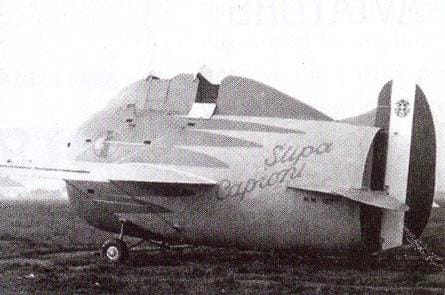
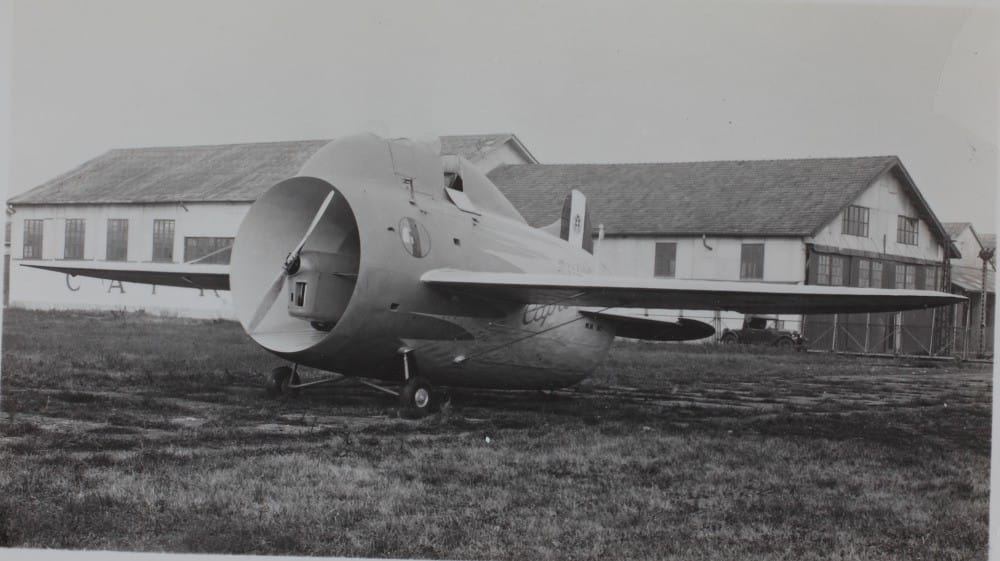
1 Stipa-Caproni (1932) — Italy’s Flying Barrel

If you asked a child to draw an airplane after being told only that it needed wings and an engine, you might get something close to the Stipa-Caproni. Luigi Stipa’s “intubed propeller” concept enclosed the engine and propeller inside a stubby barrel-shaped fuselage that itself formed a giant venturi tube. The result: a machine that was just 19 feet long but nearly 10 feet tall, with a wingspan wider than its length. It looked less like an aircraft and more like a flying toilet paper roll.
Here’s the twist: Stipa was onto something real. The design genuinely increased propulsive efficiency, and its extremely low landing speed of just 42 mph was remarkable for 1932. The Italian Air Force wasn’t impressed enough to fund further development, but the aerodynamic principles Stipa demonstrated quietly found their way into later jet engine ducted-fan designs. The ugliest plane of 1932 was, in a sense, predicting the turbofan. You’re welcome, aviation.
2 Caproni Ca.60 Transaereo (1921) — Nine Wings, Zero Shame
The Caproni Ca.60 was either visionary genius or the world’s most expensive fever dream, depending on your tolerance for architectural excess. Gianni Caproni wanted a 100-passenger transatlantic flying boat. His solution: mount three sets of triple wings — nine wings in total — on a massive hull, drive it with eight engines, and point it at New York. The result looked like someone had stacked three biplanes on top of a houseboat.
It flew exactly twice. On March 4, 1921, during its second flight over Lake Maggiore, the Transaereo climbed sharply, stalled, and pancaked into the water. It was destroyed. Caproni reportedly had it rebuilt, but a fire finished the job for good. The age of nine-winged transatlantic ocean liners died that afternoon. Aviation history occasionally makes the right call.
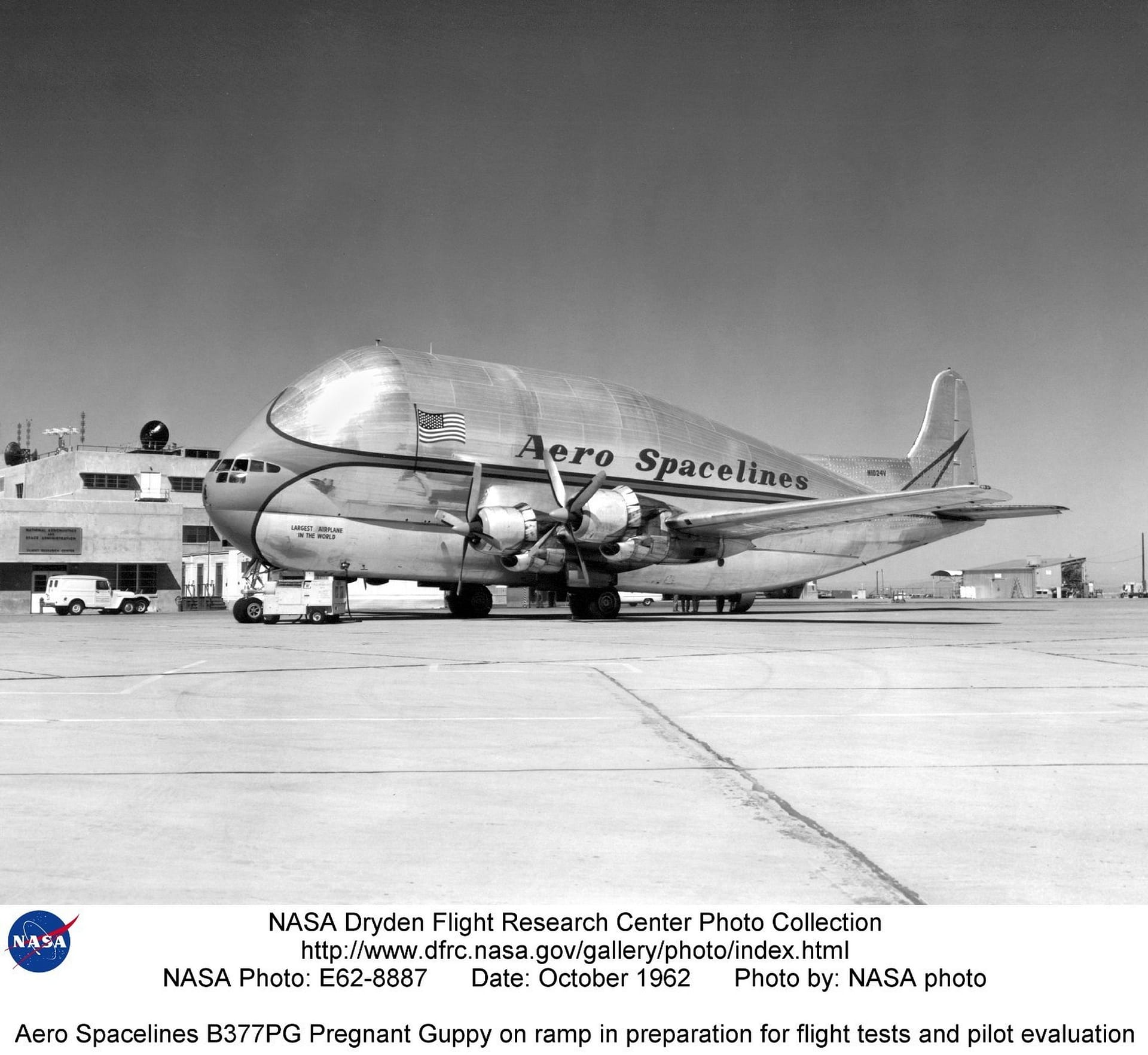
3 Pregnant Guppy (1962) — A Boeing with a Tumor
The Aero Spacelines Pregnant Guppy was born from a very specific 1960s problem: how do you move Saturn rocket stages from the factory to Cape Canaveral when they’re too big for any road, train, or existing aircraft? Answer: you take a Boeing 377 Stratocruiser and surgically implant an enormous bulbous upper fuselage section that makes the plane look like it swallowed a blimp. The upper lobe was 20 feet in diameter. The name was not a suggestion — it was a clinical diagnosis.
The Pregnant Guppy first flew on September 19, 1962, and became absolutely indispensable to NASA’s Apollo program, ferrying Gemini and Saturn rocket components across the country. It was so useful that its offspring — the Super Guppy — is still flying today, hauling Artemis hardware for NASA more than six decades later. Aesthetically catastrophic. Functionally irreplaceable. That’s the Guppy story.
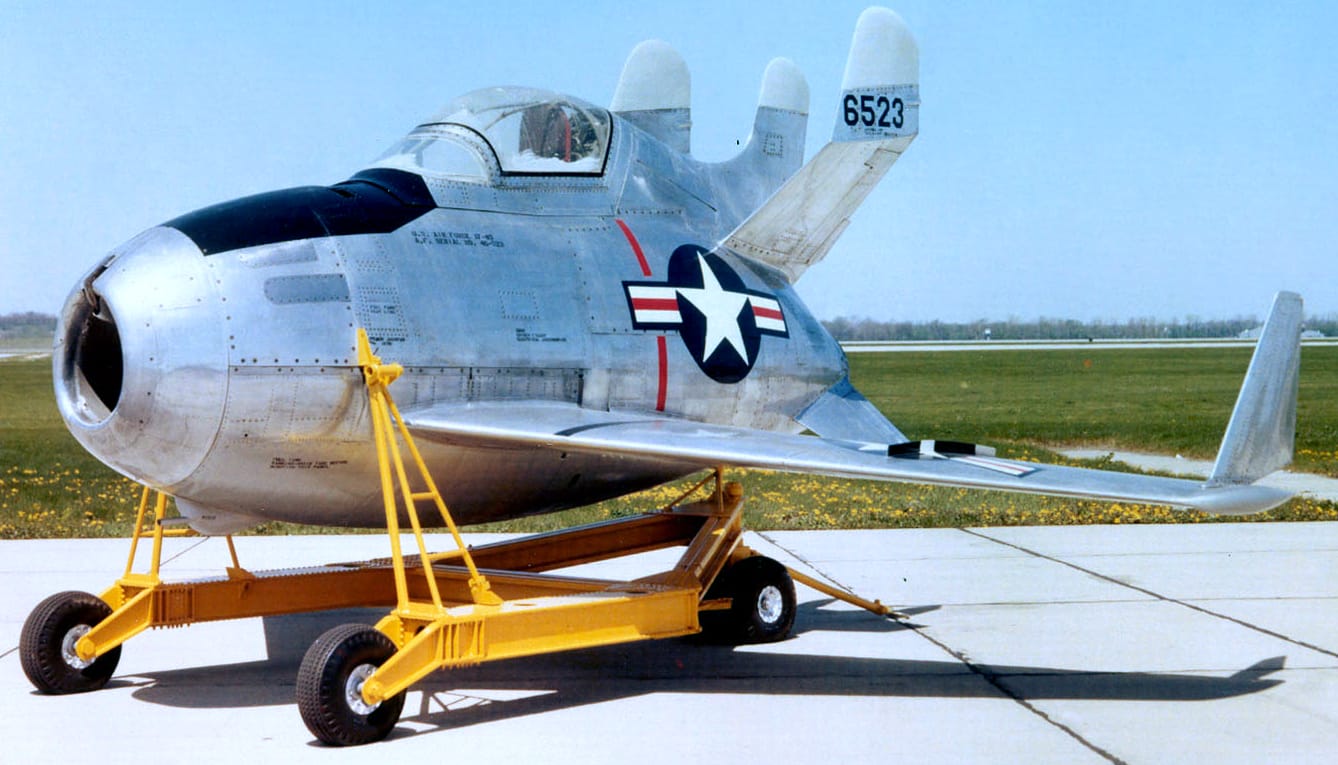
4 McDonnell XF-85 Goblin (1948) — The Jet-Powered Egg
The concept sounded reasonable enough at the Pentagon: long-range bombers need fighter escorts, so why not carry the fighters inside the bomber and deploy them mid-flight? The execution was where things went sideways — specifically in the shape of the XF-85 Goblin, a tiny jet fighter with a bloated egg-shaped fuselage, three sets of folding tail fins, and a trapeze hook on its nose for re-docking with the mothership B-36 Peacemaker. It was 15 feet long. It looked like a flying potato someone had fitted with wings as a dare.
The Goblin flew exactly seven times, with a combined total flight time of 2 hours and 19 minutes. Docking with the bomber proved fantastically difficult — turbulence from the B-36’s engines tossed the little Goblin around like a kite in a hurricane. Of those seven flights, only three ended with a successful hook-up. The other four ended with the test pilot belly-landing on a conventional runway, still strapped to a plane that looked like it had escaped from an aeronautical cartoon. Both surviving aircraft are in museums. The parasite fighter concept is not.
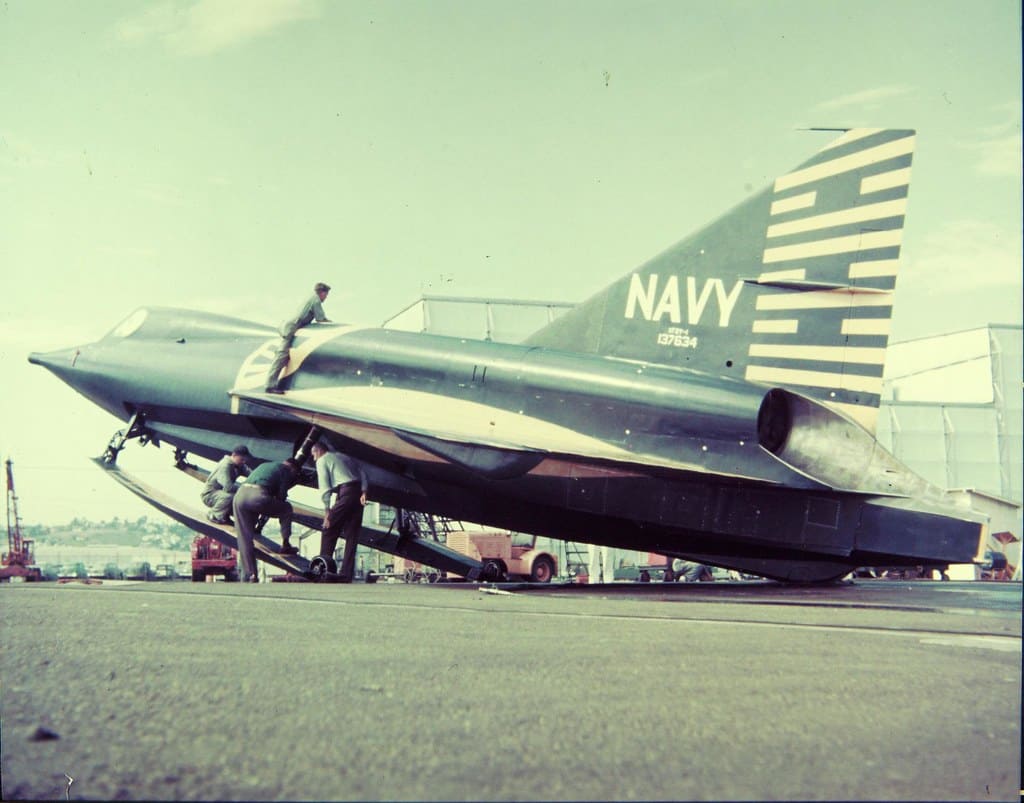
5 Convair F2Y Sea Dart (1953) — The Supersonic Water Skier

The Cold War produced some genuinely strange strategic logic, and the Sea Dart was a product of it. The Navy briefly worried that Soviet bombers might destroy all land-based runways, so Convair proposed a fighter that could take off from and land on the open ocean using retractable hydro-skis instead of wheels. What could go wrong? The Sea Dart looked like a conventional delta-wing fighter that had somehow acquired water skis and an identity crisis.
Against all odds, it actually went supersonic — the only seaplane ever to do so. But the hydro-ski system caused brutal vibrations on takeoff, and the whole program ended in disaster on November 4, 1954, when the second prototype disintegrated in midair over San Diego Bay during a press demonstration, killing test pilot Charles Richbourg. The Navy quietly went back to carriers. The era of supersonic water-skiing fighters lasted approximately one tragic afternoon.
Good to Know: Why Ugly Planes Can Still Fly
Aerodynamic beauty is a function of one thing: drag reduction for a specific mission profile. But many of these aircraft had missions so specialized that conventional beauty was never on the table. The Pregnant Guppy needed a massive internal volume — streamlining was secondary. The Stipa-Caproni was testing a theoretical concept, not winning an air show. The Sea Dart needed water-compatible landing gear, full stop. The lesson: an aircraft’s appearance tells you about its constraints and its compromises, not about its engineering ambition. Some of the strangest-looking planes on this list were flown by engineers who knew exactly what they were doing. The aesthetics were just collateral damage.
6 Lockheed XFV-1 Salmon (1954) — The Pogo Stick That Couldn’t
The Navy in the early 1950s had a neat idea: a fighter that could take off vertically from the deck of any ship, not just carriers. Lockheed’s answer was the XFV-1 “Salmon” — a tail-sitting aircraft that would launch straight up, rotate 90 degrees, fly conventionally, then rotate back and land vertically on its tail fins. On the ground, it sat like a prehistoric bird that had forgotten how to stand, propped up on ungainly fixed landing gear attached to the fuselage at completely wrong-looking angles.
Chief test pilot Herman “Fish” Salmon (the plane’s nickname was his surname, not an aspiration) made 32 flights, but the XFV-1 never achieved a full vertical takeoff or landing under controlled conditions. The engine simply wasn’t powerful enough. The plane that looked like it was balancing on a stick also turned out to be balancing on a very thin margin of feasibility. The Navy canceled the program in 1955. The rival Convair XFY Pogo, which actually managed vertical takeoffs and landings, didn’t survive much longer.
7 Transavia Airtruk (1965) — Australian Agricultural Nightmare
Australia has produced many fine things. The Airtruk is not among them, aesthetically speaking. Built for crop-dusting, the Transavia Airtruk placed a massive chemical hopper directly over the center of gravity (sensible engineering), then arranged the rest of the aircraft around it with what appears to have been minimal concern for appearance. The result: a boxy, high-sitting fuselage perched above twin tail booms, with a recessed cockpit that made the pilot look like they were driving a forklift that had learned to fly.
And yet it entered series production. Farmers loved it. The ugly layout kept the corrosive agricultural chemicals far from the tail control surfaces, the view from the cockpit was excellent for low-altitude agricultural work, and the whole machine was rugged enough to survive Australian outback conditions. Beauty, the Airtruk teaches us, is entirely in the eye of the person who needs their wheat dusted.

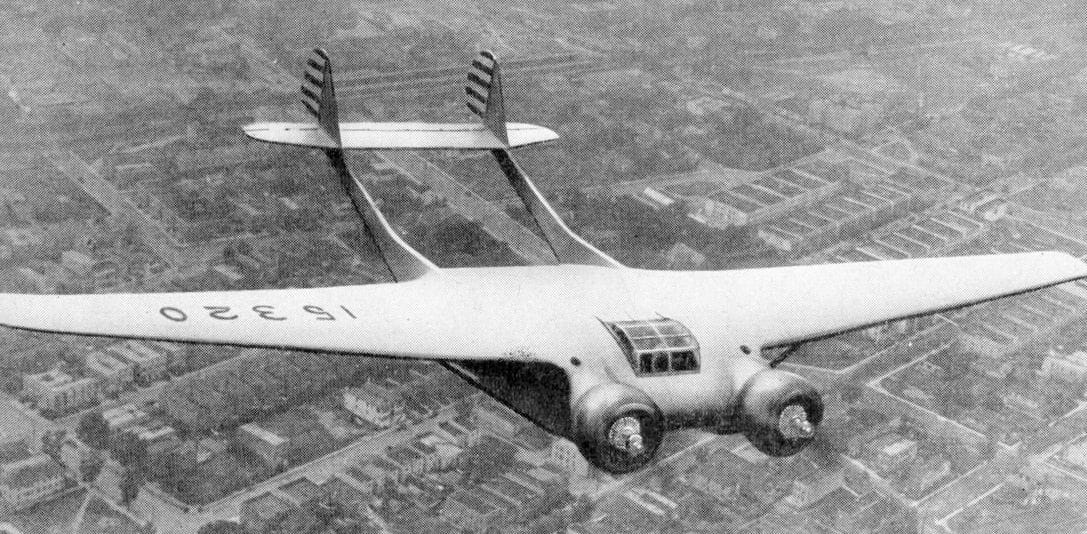
8 Burnelli UB-14 (1934) — The Flying Harmonica
Vincent Burnelli was a genuine aeronautical visionary. His insight was that a wide, airfoil-shaped fuselage could generate significant lift — reducing the wing loading and making the whole aircraft more efficient. His execution gave us the UB-14, which looked, as one aviation writer memorably put it, like “a giant harmonica held between a set of barbecue tongs.” The fuselage was a thick, rounded lifting body; twin tail booms stretched rearward like robotic arms; twin fin-and-rudder assemblies completed the impression of a machine that had been designed by someone who had never seen an aircraft, only read a description of one.
Burnelli’s lifting fuselage concept was technically sound — modern blended-wing-body research validates his basic principles — but he spent decades in a legal and commercial battle to get it accepted by the aviation industry. Several serious accidents didn’t help the PR. The UB-14 survives as a reminder that being right and looking right are two very different problems.
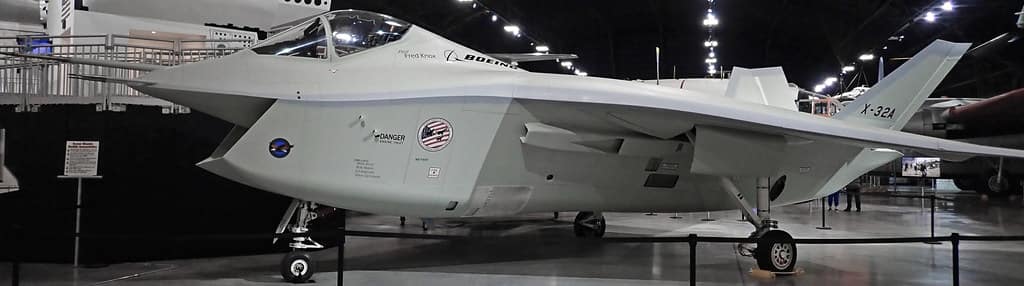
9 Boeing X-32 (2000) — The Chin That Lost a War
In 2001, Boeing and Lockheed Martin faced off in the Joint Strike Fighter competition. Both companies built and flew their concept demonstrators. One of those aircraft became the F-35, the most expensive weapons program in history. The other was the Boeing X-32, and it lost. Looking at it, you understand why. The X-32 featured a massive, gaping chin air intake that dominated the aircraft’s profile — a single large mouth beneath the cockpit that made it look perpetually surprised, or possibly like it was attempting to swallow a small car.
Boeing’s engineers had reasons for the design choice: the direct-lift system for the STOVL variant required a specific airflow geometry. But the final demonstrator, modified late in the competition, ended up with a fixed, non-functional chin intake grafted onto the production-representative design. The result was an aircraft that looked unfinished, overfed, and vaguely apologetic. The X-32 lost to Lockheed’s considerably more photogenic X-35. When you’re competing for a $300 billion contract, looking the part matters.
10 Convair XFY Pogo (1954) — Standing Ovation, Wrong Direction
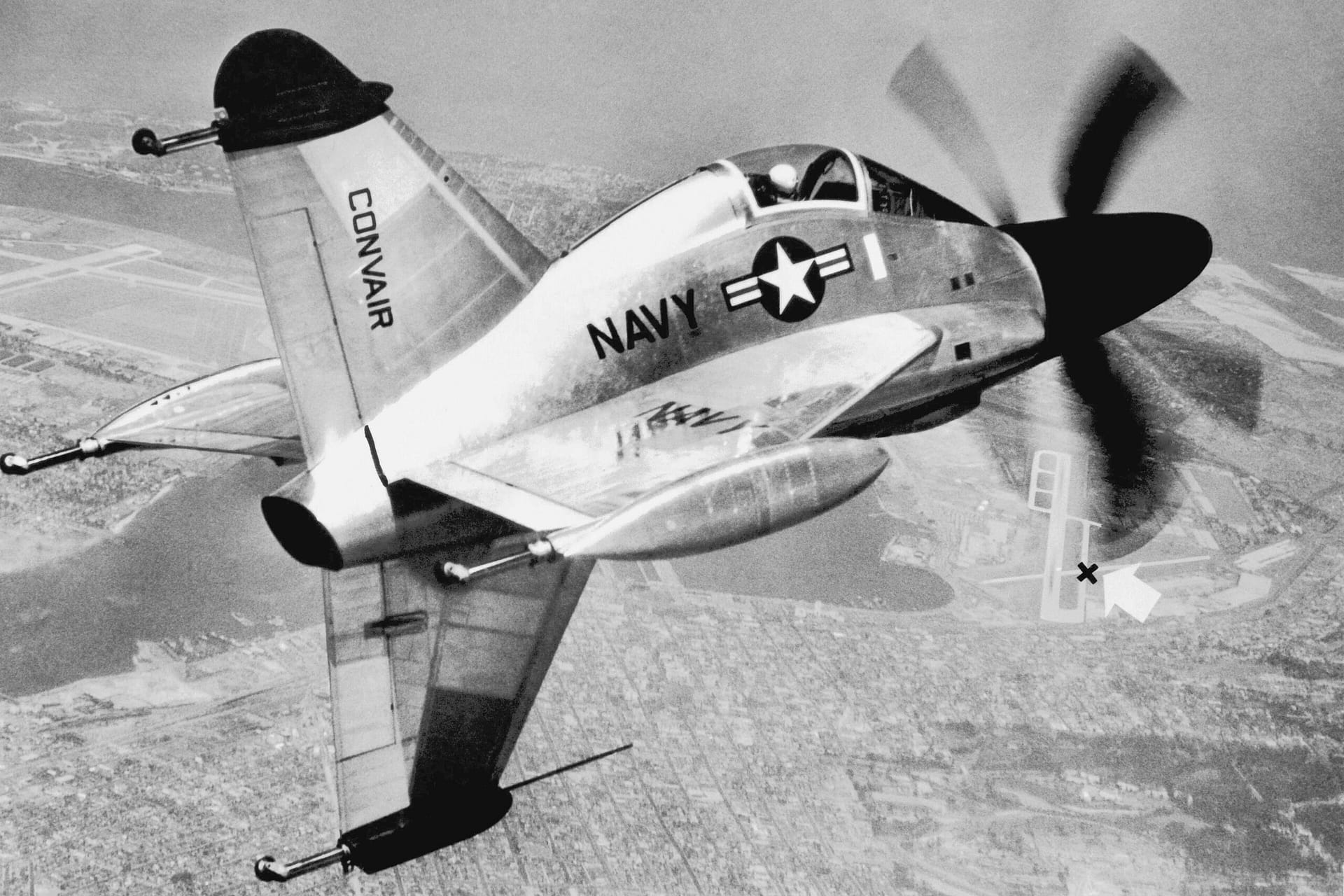
Where the Lockheed Salmon failed to actually take off and land vertically, the Convair XFY Pogo succeeded — and that made it considerably more terrifying. The Pogo was another tail-sitter, balancing on four small castoring wheels attached to the tips of its massive delta wings and cruciform tail. To take off, the pilot sat nearly flat on his back, staring straight up at the sky, and trusted physics to handle the rest. To land, he hovered above the deck and lowered himself backward and downward until the tail touched — a maneuver that required staring over his shoulder at the ground receding beneath him, fighting turbulence the whole way.
Test pilot James “Skeets” Coleman managed the world’s first complete transition from vertical to horizontal flight and back again in November 1954. The Navy was impressed but not impressed enough to put sailors through the terror of landing these things on ship decks in the North Atlantic at night. The program was canceled in 1956. The sole surviving XFY Pogo now lives in the Smithsonian, where it continues to baffle schoolchildren and alarm adults in equal measure.
Sources: Wikipedia — Stipa-Caproni; Wikipedia — Caproni Ca.60; Wikipedia — Aero Spacelines Pregnant Guppy; National Interest — Boeing X-32; Wikipedia — Convair F2Y Sea Dart; Wikipedia — Lockheed XFV; Wikipedia — McDonnell XF-85 Goblin; Simple Flying — Convair XFY Pogo; Smithsonian Air & Space Magazine; AeroCorner — 12 Ugliest Aircraft Ever Built

 English
0 Comments