
Quick Facts
Altitude effect: Cabin pressure equivalent to 6,000–8,000 ft reduces taste sensitivity by up to 30%
Sweet and salty: Perception drops 20–30% at cruise altitude
Umami: One of the few flavours that remains stable or increases at altitude
Humidity: Cabin air humidity drops to 10–15% (Sahara Desert: ~25%)
Noise effect: Engine noise above 85 dB suppresses sweet perception and enhances umami
Annual spend: Major airlines spend $5–8 per meal in economy, $30–60+ in business/first
The Physics of Bad Taste
At cruise altitude, the cabin is pressurised to the equivalent of 6,000 to 8,000 feet above sea level. This is enough to change how your body perceives flavour. A landmark 2010 study by the Fraunhofer Institute in Germany — commissioned by Lufthansa — tested passengers in a pressurised cabin simulator and found that sensitivity to sweet and salty flavours dropped by 20 to 30 percent.
How Airlines Fight Physics
Airlines and their catering partners have developed an arsenal of techniques to compensate for altitude’s assault on flavour. Dishes are seasoned 15–20 percent more aggressively than their ground-level equivalents. Umami-rich ingredients — soy sauce, mushrooms, Parmesan, cooked tomatoes — feature heavily. Curries, stews, and braised dishes travel better than grilled or roasted items because their moisture content survives the dry cabin air. Some airlines have gone further. Singapore Airlines operates a dedicated culinary panel that tests every new dish in a pressurised simulator at 35,000-foot-equivalent conditions. Lufthansa developed a “flying food lab” — a converted A310 interior where chefs taste and adjust recipes at altitude before they enter the menu rotation.The First Class Arms Race
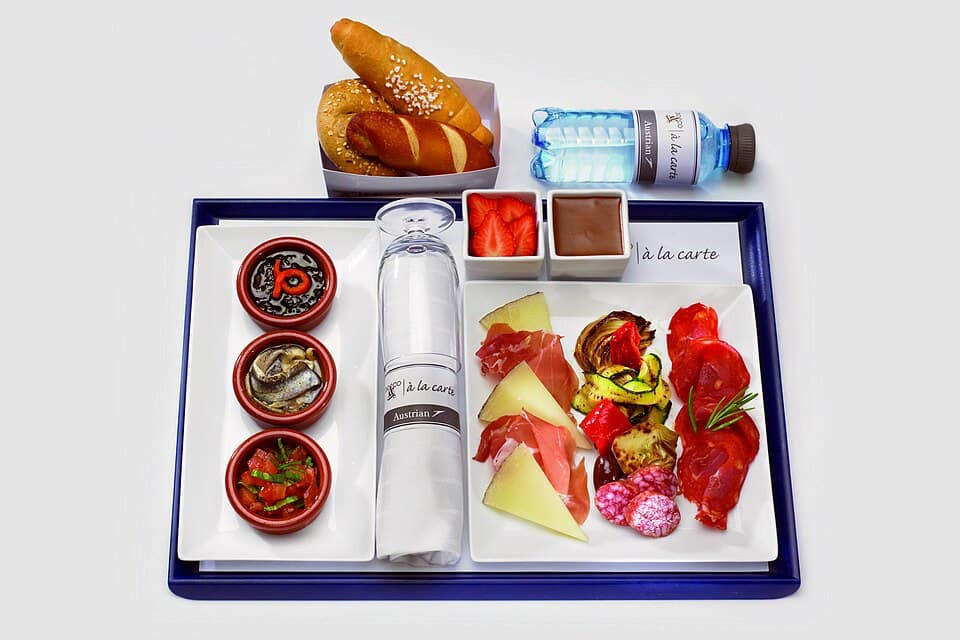
At the front of the plane, airline food becomes an entirely different proposition. Emirates flies lobster and Dom Pérignon. Singapore Airlines serves multi-course degustation menus created by Michelin-starred chefs. Qatar Airways employs an on-board chef in first class who cooks to order. The economics are staggering. A first-class meal on a long-haul flight can cost the airline $100 or more per passenger — and the passenger may not even eat it if they slept through dinner. Economy meals, by contrast, are engineered to a budget of $5–8, including packaging, cutlery, and logistics. The entire global airline catering industry is worth approximately $18 billion per year.The Unsolvable Problem
No amount of culinary genius can fully overcome the physics of high-altitude dining. The dry air, low pressure, and relentless noise are permanent constraints. The best airline meals in the world — served on bone china in a lie-flat suite — still taste measurably different from the same dishes served at sea level. But that difference is the point. Food at altitude is not worse. It is different — shaped by forces that are invisible to the passenger but ruthlessly precise in their effects. The next time you peel back the foil on a lukewarm mystery protein, remember: your meal was engineered by people who understand atmospheric physics better than most pilots. It just happens to look like it was engineered by committee.Sources: Fraunhofer Institute, Food Quality and Preference journal, Lufthansa, Singapore Airlines


 English
0 Comments