
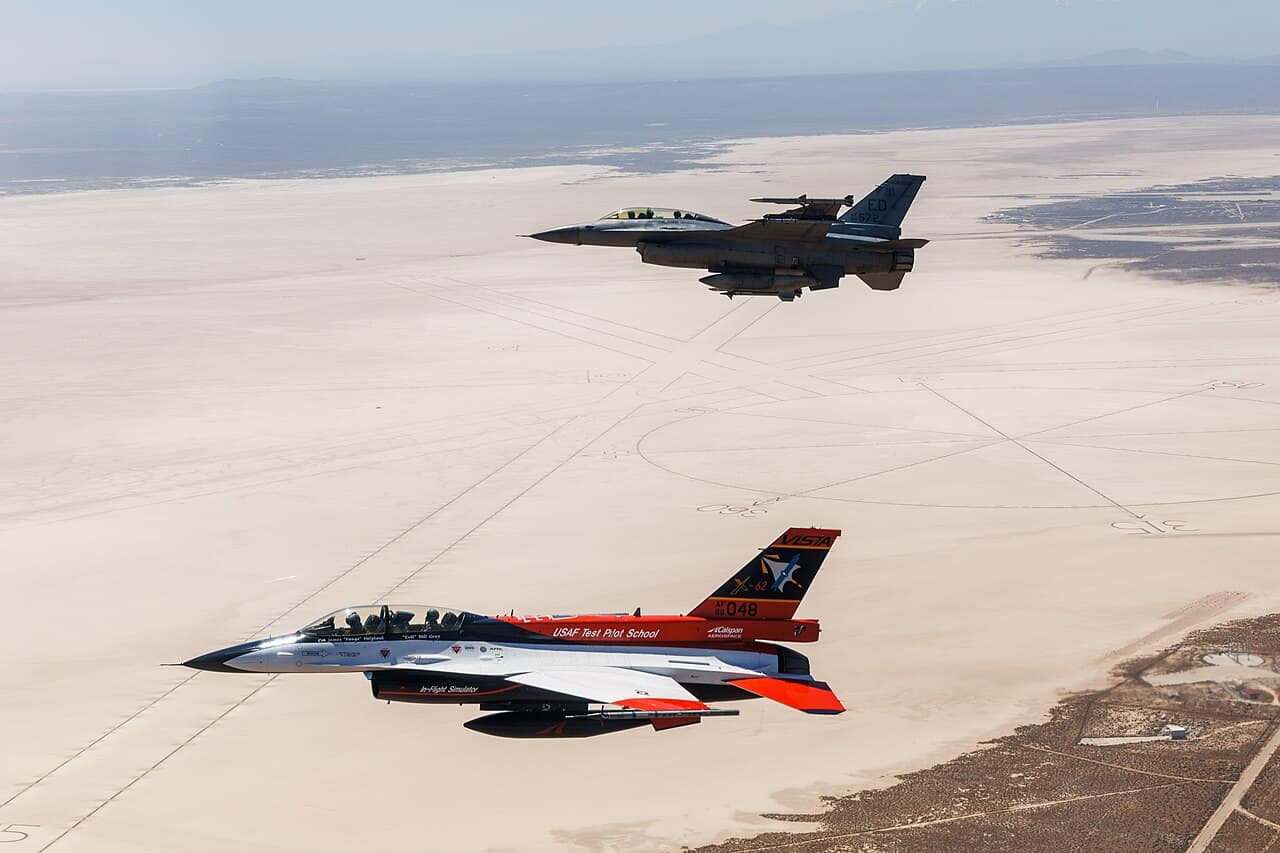
An artificial-intelligence agent just strapped into a fighter, stared at an enemy jet through an infrared eye, and ran it down twenty-seven times — and no human touched the stick.
Lockheed Martin Skunk Works pulled the curtain back on August 4, 2026, revealing that its autonomous flight-control software had flown the F-16-derived X-62A VISTA through 27 tactical intercepts against a live T-38 Talon. The flights happened back in April, across eight sorties, under two crisply named test programs: HAVE HEAT and HAVE HOLIDAYS.
What makes this one different from the AI dogfighting demos that came before it is where the machine was looking. This time it flew on real sensor data, gathered in the air, in real time — not a simulated target fed to it by a computer.
Quick Facts
- Aircraft: X-62A VISTA (a heavily modified NF-16D)
- What happened: An AI agent flew 27 autonomous intercepts across 8 sorties
- Target: A live T-38 Talon acting as the "enemy"
- Sensor: Legion Pod infrared search-and-track (IRST) — passive, jam-resistant
- Programs: HAVE HEAT and HAVE HOLIDAYS, flown April 2026
- Revealed: August 4, 2026, by Lockheed Martin Skunk Works
- Partner: U.S. Air Force Test Pilot School, Edwards AFB
A passive eye instead of a radar
The X-62A carried a Legion Pod, an infrared search-and-track system that hunts by heat rather than by pinging the sky with radar energy. That matters. A radar shouts; an IRST listens. It cannot be jammed the way a radar can, and it does not announce your position to everyone with a warning receiver.
The AI agent took the raw infrared feed straight from the pod, worked out where the T-38 was, and steered the fighter into a firing position on its own. Skunk Works calls the software behind it a "Supermassive" agent-generation capability, and says it integrated and ground-tested the agents with the X-62 in just three months.
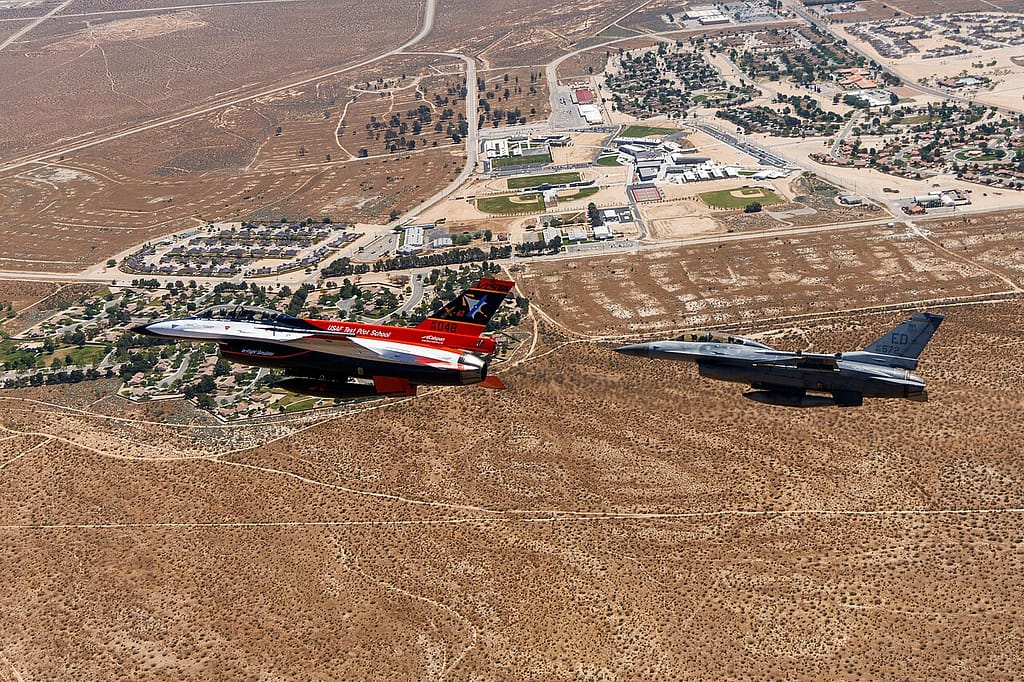
Closing what engineers call the "sensor-to-action loop" — see the target, decide, maneuver — entirely inside the airplane, with no ground station in the chain, is the whole point. It is the difference between a science project and something you could bolt onto a real combat aircraft.
What Skunk Works is claiming
The company frames the work as a building block for future crewed-uncrewed teaming — the "loyal wingman" drones meant to fly alongside the next generation of fighters. The sensor half of the house is just as pleased.
Why the T-38 mattered
Using a real, human-flown T-38 as the target — rather than a tidy simulated blip — forced the AI to deal with an actual airplane doing actual airplane things: real motion, real infrared signature, real timing. That is the messy, unscripted world a combat agent has to survive in.
The X-62A itself is the perfect lab for this. It is a single, priceless NF-16D rebuilt to imitate the flying qualities of almost any aircraft, and it flies with the U.S. Air Force Test Pilot School at Edwards. Handing its controls to software is exactly the kind of high-wire test it was born for.
Twenty-seven intercepts is not a war. But it is a machine finding a target with its own eyes and running it down, over and over, without a single input from the cockpit. A few years ago that was a slide in a briefing. Now it is a logbook entry.
Sources: Lockheed Martin Skunk Works press release (Aug 4, 2026); DVIDS; Aviation Week; The War Zone; AeroTime.

0 Comments