
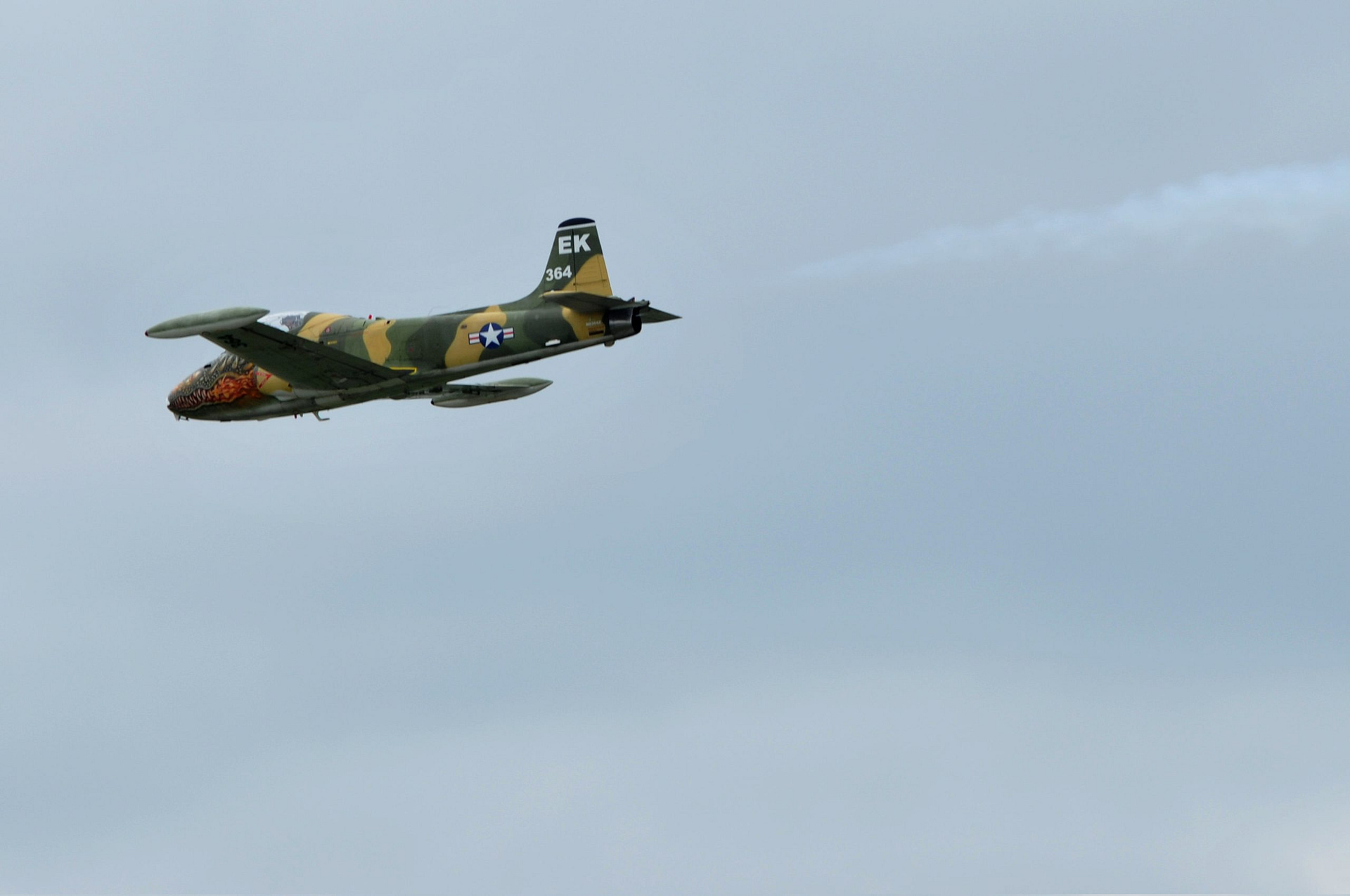
BAC 167
Strikemaster
A jet trainer turned into a cut-price warplane — Britain’s armed development of the Jet Provost, sold to a dozen air forces and flown in anger from the mountains of Oman to the jungles of the Andes.
The trainer that went to war
By the mid-1960s the British Aircraft Corporation had a proven jet trainer on its hands: the Джет Провост, a docile side-by-side two-seater that had taught a generation of RAF pilots. What BAC did next was quietly shrewd. Newly independent nations and small air forces wanted air power they could actually afford — something to patrol borders, chase insurgents and train pilots, without the cost of a supersonic fighter. So BAC took the Jet Provost T.5, gave it an up-rated engine, a strengthened airframe, wing hardpoints, an armoured cockpit and simple gunsights, and called it the Model 167 Strikemaster.
It first flew on 26 October 1967, and it was almost entirely an export product — the RAF never bought it. Powered by a single Rolls-Royce Viper turbojet, it was subsonic, rugged and cheap, able to lift a useful load of rockets, bombs and gun pods from short, rough strips. Two 7.62 mm machine guns were built in; underwing pylons carried the rest. It was never fast or glamorous, but it was reliable, easy to fly and easy to maintain — and it sold. Saudi Arabia, Oman, Kuwait, Singapore, New Zealand, South Yemen, Ecuador, Kenya, Sudan and Botswana all bought the type, and repeat orders came in numbers unusual for a light jet.
Where it earned its name was in combat. The Sultan of Oman’s Air Force flew Strikemasters hard throughout the Dhofar War of the 1970s, strafing and rocketing guerrillas across the jebel — most famously providing decisive air support at the Battle of Mirbat on 19 July 1972. Decades later, on the far side of the world, Ecuadorian Strikemasters were bombing Peruvian positions in the 1995 Cenepa War. When military fleets finally retired, the type found a thriving second life: dozens survive today as privately owned warbirds on the airshow circuits of Britain, the United States and Australia.
01The BAC Strikemaster’s origins: how a British trainer became an export warplane
The Strikemaster’s lineage runs straight back to the piston-engined Percival Provost of the early 1950s, which became the jet-powered Hunting Jet Provost, in turn absorbed into BAC. The definitive Jet Provost T.5 gained a pressurised cockpit and more power; the Strikemaster was its weaponised cousin. BAC read the market correctly: in the 1960s and 70s a wave of newly independent states and Gulf monarchies needed affordable, multi-role air power. A jet that could train pilots on Monday and fly a counter-insurgency strike on Tuesday — from a dirt strip, on a modest budget — was exactly what they wanted. GlobalSecurity notes the type went on to set what was described as a record for repeat export orders, a testament to how well it fitted that niche.
What makes the Strikemaster special
A trainer’s airframe, toughened for war
The Strikemaster kept the Jet Provost’s layout but added muscle: a strengthened airframe, an up-rated engine, an armoured cockpit and hardpoints under each wing. It could carry rockets, bombs, napalm and gun pods — up to around 1,360 kg (3,000 lb) of external stores — plus two built-in 7.62 mm machine guns, all from short and unpaved airstrips.
The unusual side-by-side cockpit
Almost every dedicated strike aircraft seats its crew in tandem. The Strikemaster, inherited from its trainer roots, sits them side by side on two ejection seats. It made the aircraft a superb dual-role machine — instructor and student, or pilot and observer, shoulder to shoulder — blurring the line between advanced trainer and light attack jet.
Cheap, rugged and simple to keep flying
A single Rolls-Royce Viper turbojet, straightforward systems and a period unit price reportedly under US$500,000 made the Strikemaster affordable to buy and to operate. That simplicity is why small air forces ordered it in numbers — and why so many still fly today in private hands.
02The BAC Strikemaster’s engine: the rugged Rolls-Royce Viper
Power came from a single Rolls-Royce Viper Mk 535 turbojet of about 3,410 lbf (15.2 kN) thrust — a development of an engine originally designed as an expendable powerplant for target drones. That heritage made the Viper simple, robust and cheap to run, if unremarkable in output. It gave the Strikemaster a top speed around 450 knots (roughly 834 km/h, comfortably subsonic) and the ability to loiter over a battlefield and make repeated firing passes — exactly what a counter-insurgency aircraft needs, and a very different priority from raw speed.
03The BAC Strikemaster’s wing: the fatigue that grounded fleets
The Strikemaster’s wing carried its fuel and its weapons, and years of low-level, high-g strike flying took a toll. The Royal New Zealand Air Force, which operated 16 Mk 88s, retired its fleet around 1992 in part because of wing-fatigue cracking — a common issue for hard-worked light-attack jets. Those same airframes, refurbished, went on to become prized warbirds in Australia and elsewhere. Warbird operators today watch wing life carefully; it is one of the defining maintenance considerations of owning the type.
Full BAC Strikemaster specifications
Airframe & Performance
- Экипаж
- 2 (side-by-side, ejection seats)
- Длина
- ~10.3 m (33 ft 10 in)
- Размах крыльев
- ~11.2 m (36 ft 10 in)
- Высота
- ~3.1 m (10 ft 2 in)
- Пустой вес
- ~2,810 kg (6,195 lb)
- Max takeoff weight
- ~5,210 kg (11,500 lb)
- Max speed
- ~450 kn · ~834 km/h (subsonic)
- Служебный потолок
- ~40,000 ft (~12,200 m)
- Ferry range
- ~2,200 km (~1,380 mi)
- Скорость подъема
- ~5,250 ft/min
Powerplant, Armament & Cost
- Двигатель
- 1 × Rolls-Royce Viper Mk 535
- Толкать
- ~15.2 kN (3,410 lbf)
- Guns
- 2 × FN 7.62 mm machine guns
- Точки крепления
- Underwing pylons (commonly cited as four; some sources say up to eight)
- External load
- Up to ~1,360 kg (3,000 lb): rockets, bombs, gun pods
- First flight
- 26 October 1967
- Built
- ~146 (estimate; one source cites ~155)
- Unit cost
- Reportedly under US$500,000 (period estimate)
- Cost per flight hour
- No reliable public figure
04The BAC Strikemaster’s operating costs: what a cut-price warplane cost
The Strikemaster’s entire selling point was affordability. Period sources put its flyaway price at under US$500,000 in the late 1960s and 70s — a fraction of a supersonic fighter — which is precisely why small air forces bought it in quantity. That figure should be read as an approximate, era-dependent estimate rather than a firm catalogue price, and it varied with mark and customer. No reliable public cost-per-flight-hour figure exists for the type; warbird owners today report their own running costs anecdotally, and second-hand airframes have changed hands remarkably cheaply — one UK dealer once offered two complete ex-RNZAF examples, with a spare engine and spares, for around £130,000. Any precise dollar figure attached to a Strikemaster is, in practice, an estimate.
From drawing board to airshow warbird
An armed Jet Provost
BAC develops the Model 167 as a strengthened, weaponised combat derivative of the Jet Provost T.5, aimed squarely at the export market.
First flight
The Strikemaster prototype flies on 26 October 1967, powered by a single Rolls-Royce Viper turbojet.
First customers
Deliveries begin to Saudi Arabia and to Singapore, whose air force adopts the type as its very first jet.
First combat
Saudi Strikemasters are used against incursions along the Yemen border — the type’s baptism of fire.
The Battle of Mirbat
Sultan of Oman’s Air Force Strikemasters strafe attacking guerrillas through low cloud at Mirbat, helping a tiny garrison hold out in the Dhofar War.
The Dhofar campaign
Omani Strikemasters fly relentless close-support strikes across the jebel; rebel SA-7 missiles later make low-level attacks far more dangerous.
War in the Andes
Ecuadorian Strikemasters bomb Peruvian positions in the Cenepa War — combat use nearly three decades after the type first flew.
Retirement and rebirth
Military operators retire the type (Singapore 1984, New Zealand ~1992 over wing fatigue), feeding a thriving civilian warbird market and display teams such as Team Viper.
From the flight line: twelve Strikemaster stories
From classroom to cockpit of war
The Strikemaster began life as the RAF’s side-by-side Jet Provost trainer.
Read the full story
The side-by-side warplane
Unusually for a strike jet, crew sit shoulder to shoulder rather than in tandem.
Read the full story
Britain’s jet the RAF never flew
The Strikemaster was built almost entirely for export customers.
Read the full story
Air support at Mirbat
SOAF Strikemasters helped save a tiny garrison during the Dhofar War.
Read the full story
Flying low against the Strela
Rebel SA-7 missiles turned the Dhofar sky deadly for low-level jets.
Read the full story
A warplane in the Andes
Ecuadorian Strikemasters bombed Peruvian positions in the 1995 Cenepa War.
Read the full story
“Blunty”
The RNZAF’s crews gave their Strikemasters an affectionate nickname.
Read the full story
A young air force’s first jet
The Strikemaster was the Republic of Singapore Air Force’s very first jet aircraft.
Read the full story
Baptism over the border
Saudi Strikemasters saw the type’s first combat in 1969.
Read the full story
A second life on the airshow circuit
Retired Strikemasters became some of the more affordable classic jets to own.
Read the full story
Four jets in formation
A British display team keeps a formation of Strikemasters on the airshow circuit.
Read the full story
The cut-price warplane that endured
Cheap, simple and tough, the Strikemaster outlasted flashier contemporaries.
Read the full story
The Strikemaster in pictures
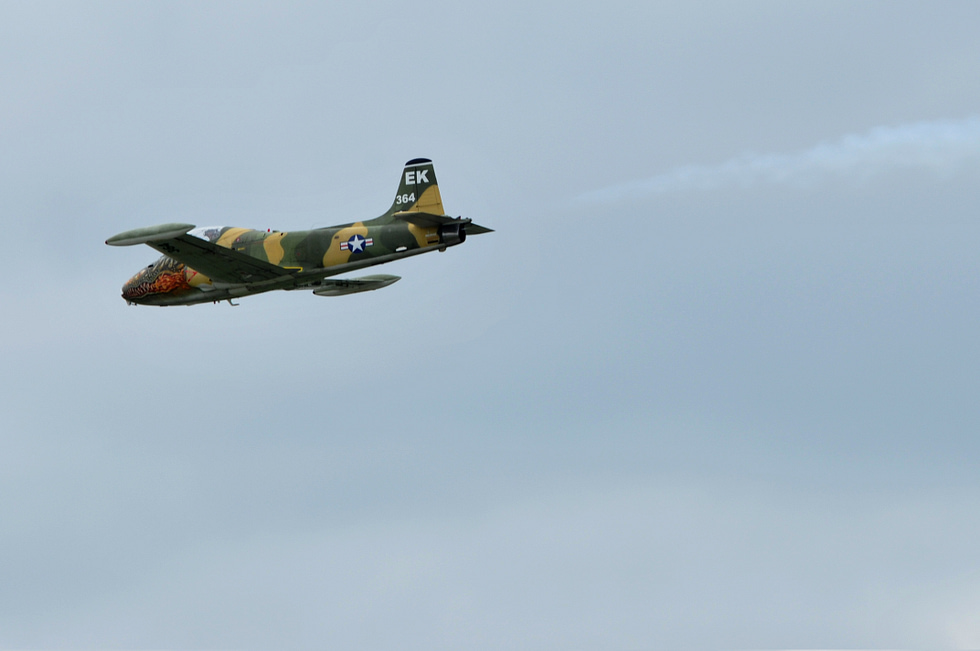
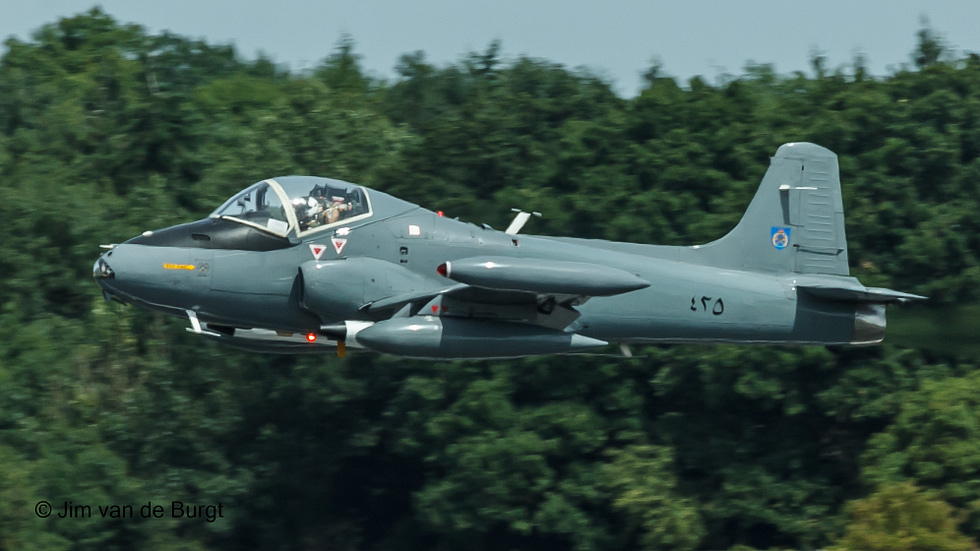
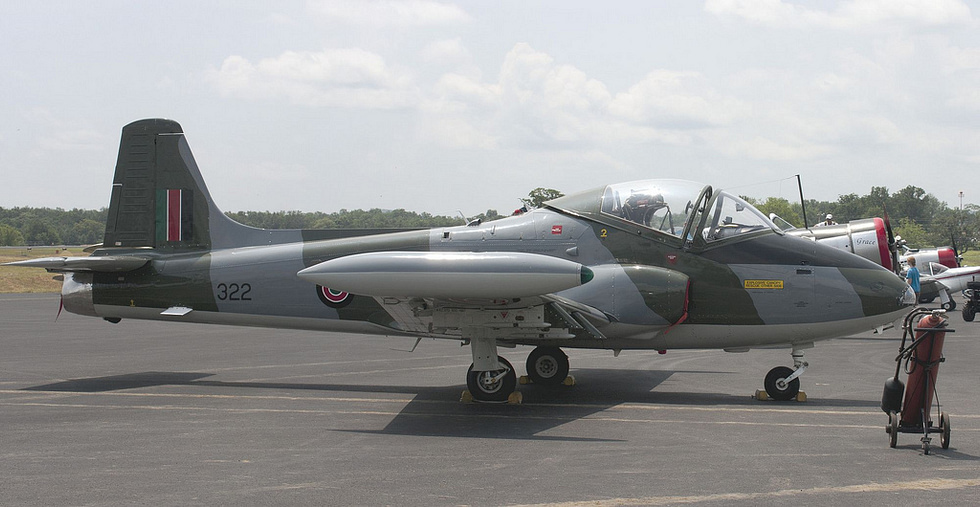
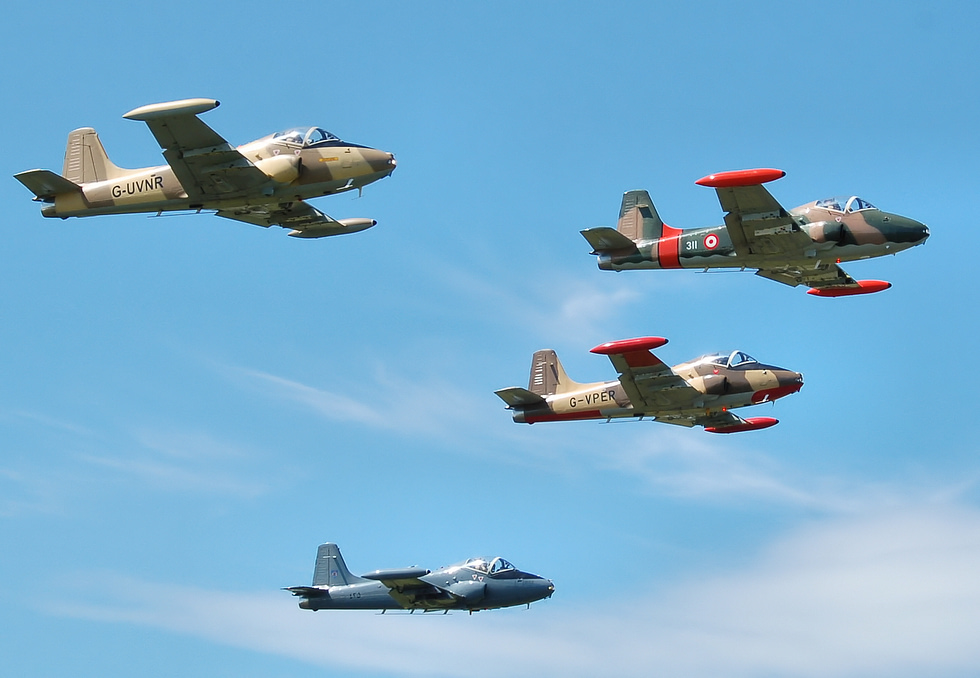
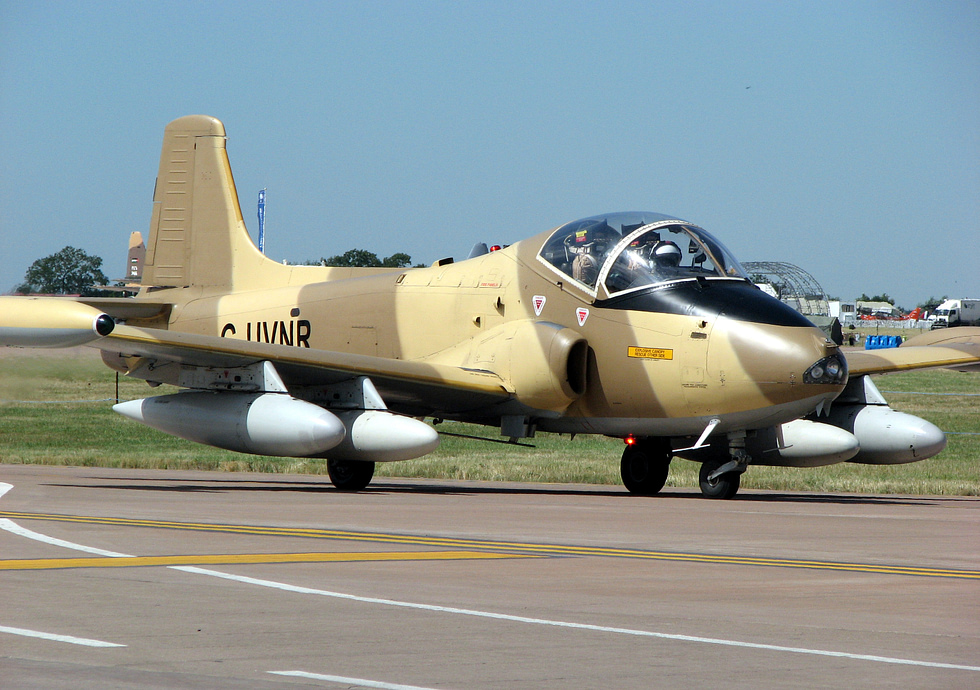
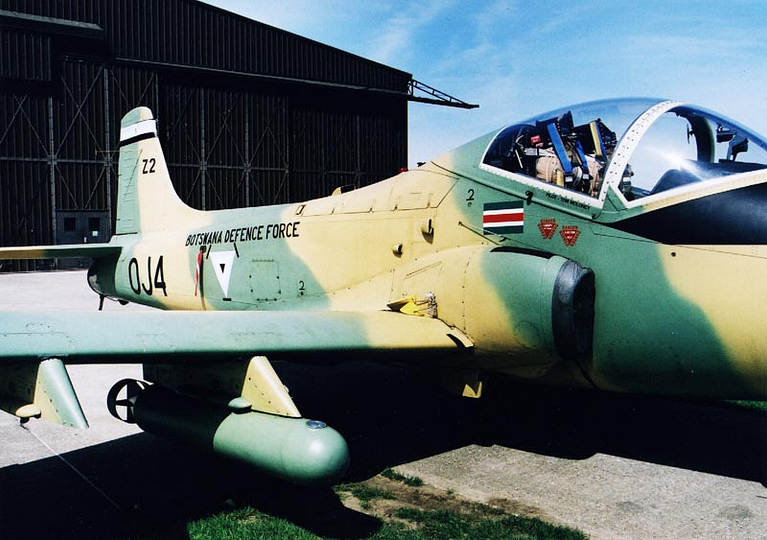
The Strikemaster in motion
Historical Aviation Film Unit: a well-shot display flight of a civilian-operated Strikemaster, including in-cockpit views. A specialist aviation channel; this is a niche type, so views are modest rather than millions.
Where the Strikemaster flew
The Strikemaster in action
The Strikemaster never fought other aircraft — that was never its job. Its record is written in ground-attack: patient, low-level strikes in support of troops, from the mountains of Dhofar to the jungles of the Cenepa. It is a record of a cheap aircraft doing hard, unglamorous work over three decades and three continents.
Compare the combat record of every military aircraft. Figures as of August 2026.
Everything people ask about the BAC Strikemaster
Can I fly in a BAC Strikemaster?
What is the BAC Strikemaster?
How fast is the Strikemaster?
Did the Strikemaster ever see combat?
How many Strikemasters were built?
Why does the Strikemaster have side-by-side seats?
Are any Strikemasters still flying?
You can’t fly the BAC Strikemaster.
These, you can.
Some legends only live in museums — others are fuelled and waiting. MiGFlug has put civilians in real military jet cockpits since 2004.
 Fly the L-39 AlbatrosThe world’s most-flown jet trainer — aerobatics included
 Fly the F-104 Starfighter“The missile with a man in it”
 Fly the MiG-21The Cold War’s most-produced jet
 Управляйте самолетом T-33 Shooting Star.America’s first jet trainer
 Fly the DH VampireA piece of early jet history
 Fly the S.211Agile Italian jet trainer
 Fly the MB-326The classic Aermacchi jet
 Fly the MiG-15The Soviet legend of the Korean War
Continue the tour
Every fact, checked
- GlobalSecurity.org — BAC 167 StrikemasterOrigins, the Jet Provost lineage, export record and combat use.
- Royal Air Force MuseumReference for the Jet Provost family and preserved airframes.
- Imperial War MuseumsBackground on the Dhofar War and the Battle of Mirbat.
- BAE Systems HeritageCorporate heritage of the British Aircraft Corporation and its aircraft.
- AirVectors (Greg Goebel)Technical development history of the Jet Provost and Strikemaster.
- Air Combat Information GroupAccounts of the Strikemaster’s use in the 1995 Cenepa War.
- Thunder & LightningsBritish military aircraft reference, including surviving Strikemasters.
- New Zealand Defence ForceReference for RNZAF Strikemaster service and retirement.