
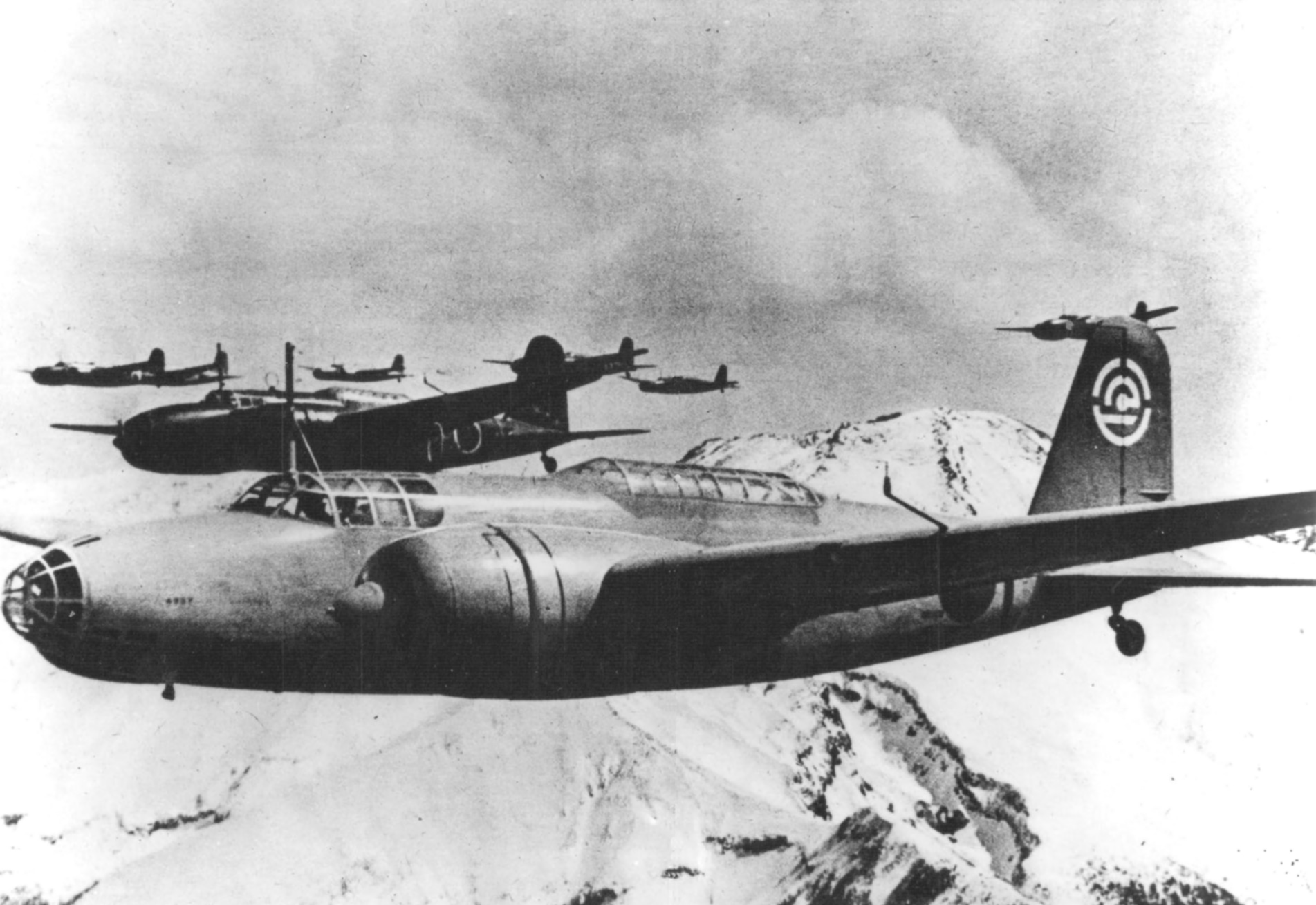
Mitsubishi Ki-21
“Sally”
The Imperial Japanese Army’s standard heavy bomber of the early Pacific War — fast and far-ranging in 1938, but sent into 1945 under-armed and under-armoured, and finally flung at Okinawa as a commando assault glider.
The bomber that opened Japan’s war
In 1936 the Imperial Japanese Army wanted a modern heavy bomber that could reach deep into China, and it ran a rare head-to-head competition between Mitsubishi and Nakajima. Mitsubishi’s design won, and the aircraft entered service in 1938 as the Army Type 97 Heavy Bomber — the Ki-21. By the standards of the late 1930s it was a genuinely capable machine: an all-metal monoplane with retractable gear, a clean twin-radial layout and, in its later forms, the range to strike targets hundreds of kilometres inland.
When Japan went to war with the Western Allies in December 1941, the Ki-21 was the backbone of the Army’s bomber force. It flew over Malaya, the Philippines, Burma and the Dutch East Indies, hammering airfields, ports and troop concentrations during the astonishing run of Japanese victories in the war’s first six months. To Allied crews it became known by the reporting name “Sally” — and for a while it seemed almost untouchable.
It did not stay that way. The Ki-21 had been designed in an era that prized range and speed over survivability, and it went to war lightly armed and almost unprotected — thin defensive guns, no meaningful crew armour and unprotected fuel tanks that caught fire easily. As Allied fighters improved — the P-38 Lightning, the Spitfire, the Hellcat — the “Sally” became dangerously vulnerable in daylight. Mitsubishi tried to patch the gaps: the Ki-21-II got much more powerful Ha-101 engines and, in the Ki-21-IIb, a proper dorsal turret with a heavy 12.7 mm gun. But no re-engining could hide the fact that the design was ageing.
By 1944 the newer Ki-49 “Helen” was meant to replace it, and many Ki-21s were pushed into transport and training work. Yet the type had one last, extraordinary mission left in it. On the night of 24–25 May 1945, in Operation Giretsu, a handful of Ki-21s deliberately belly-landed airborne commandos onto the American-held airfield at Yontan on Okinawa — a one-way raid that destroyed and damaged dozens of parked aircraft before the raiders were wiped out. It was a fittingly desperate end for a bomber that had opened Japan’s war and was still fighting at its close.
Around 2,064 were built before production ended, making the Ki-21 one of the most numerous Japanese bombers of the war. None survives intact today.
01The Mitsubishi Ki-21 “Sally”: how a 1936 winner became obsolete by 1943
The Ki-21 was born of a 1936 Army specification that demanded long range and a good bomb load, and it delivered both — at a price. Japanese doctrine of the day assumed that fast, high-flying bombers could largely outrun interception, so designers traded protection for performance: defensive armament was light, fuel tanks were unprotected and there was little armour for the crew. That gamble worked spectacularly in China and in the opening Pacific offensives, when Allied fighter defences were thin or obsolete.
Once the Allies fielded fast, heavily-armed fighters and organised radar-directed defences, the same design choices turned deadly. “Sally” formations that had roamed almost freely in 1942 were being cut apart by 1943–44. Mitsubishi’s upgrades — the 1,500 hp Ha-101 engines, a heavier dorsal turret, extra guns — improved the aircraft but could not change its fundamentals. The Ki-21 is a textbook case of a competitive early-war design overtaken by the brutal pace of wartime fighter development.
What defined the Ki-21
Range first, armour last
The Ki-21 was optimised for reach. Clean aerodynamics and a large fuel load gave it the legs to strike deep into China and across the East Indies — a normal range around 2,700 km. The cost was protection: early aircraft carried only light 7.7 mm guns, no self-sealing tanks and little crew armour, a trade-off that looked brilliant in 1938 and lethal by 1943.
Two engines, two generations
The first Ki-21-I used twin Nakajima Ha-5 radials of about 950 hp. As performance demands grew, the Ki-21-II switched to the far stronger Mitsubishi Ha-101 14-cylinder radial of roughly 1,500 hp each, lifting top speed to about 486 km/h and pushing the service ceiling near 10,000 m.
The dorsal “dustbin” turret
Combat exposed how weak the “Sally’s” defensive fire was. The definitive Ki-21-IIb answered with a raised dorsal turret mounting a single 12.7 mm machine gun in place of the earlier low-set position — a visible bulge that gave the late model its distinctive profile and briefly earned it the separate Allied name “Gwen.”
02The Ki-21’s engines: from the Nakajima Ha-5 to the Mitsubishi Ha-101
The Ki-21-I entered service on two Nakajima Ha-5 Kai radials rated near 950 hp for take-off — adequate for the loads and speeds of 1938. As Allied fighters closed the gap, the type needed more power. The Ki-21-II re-engined the airframe with the Mitsubishi Ha-101 (Army Type 100), a 14-cylinder air-cooled radial of about 1,500 hp at take-off. The change raised maximum speed to roughly 486 km/h at altitude and improved climb and ceiling, but the extra weight and drag of later defensive additions ate into the gains. By the standards of 1944 the “Sally” was still under-powered for the threat it faced.
03The Ki-21’s defensive armament: why the “Sally” burned so easily
Early Ki-21s carried a scattering of hand-aimed 7.7 mm machine guns in the nose, dorsal, ventral, tail and beam positions — enough to worry a lone biplane, far too little against modern monoplane fighters attacking in numbers. Worse, the aircraft had unprotected fuel tanks. A few incendiary rounds in the wing could turn a “Sally” into a torch. The Ki-21-IIb’s dorsal turret and heavier 12.7 mm gun helped, but the fundamental vulnerability — no self-sealing tanks, minimal armour — was never fully cured. It is the single biggest reason the type’s loss rate climbed so steeply from 1943.
Mitsubishi Ki-21-IIb full specifications
Airframe & Performance
- Экипаж
- 5 to 7
- Длина
- 16.0 m
- Размах крыльев
- 22.5 m
- Высота
- 4.85 m
- Max takeoff weight
- ~10,610 kg
- Max speed
- ~486 km/h at 4,720 m
- Cruising speed
- ~380 km/h
- Служебный потолок
- ~10,000 m
- Normal range
- ~2,700 km
- Bomb load
- ~1,000 kg
Propulsion, Armament & Production
- Engines
- 2 × Mitsubishi Ha-101 radial
- Power (each)
- ~1,500 hp at take-off
- Defensive guns
- 5 × 7.7 mm + 1 × 12.7 mm (dorsal turret)
- First flight
- 18 December 1936
- Introduced
- 1938
- Built
- ~2,064 (1938–1944)
- Unit cost
- No reliable public figure
- Cost per flight hour
- No reliable public figure exists
04The Ki-21’s operating costs: why no reliable price exists
The Ki-21 was a wartime product of the Imperial Japanese state, built for the Army and never sold on any open market. As a result no credible flyaway unit price and no cost-per-flight-hour figure exist in the public record — not in period Japanese documents that survive in translation, nor in the standard post-war references. Any specific dollar or yen figure attached to a Ki-21 should be treated as guesswork. What can be said is comparative: the “Sally” was a mainstream twin-engine bomber produced in the thousands, so its unit cost sat well below Japan’s larger four-engine and naval types but above single-engine fighters of the same era.
From China skies to the Okinawa raid
Competition & first flight
Mitsubishi beats Nakajima in an Army fly-off; the winning prototype makes its maiden flight on 18 December 1936.
Enters service over China
Adopted as the Army Type 97 Heavy Bomber, the Ki-21 is blooded in the Second Sino-Japanese War, striking targets deep inland.
The Pacific offensive
At the outbreak of the Pacific War the “Sally” is the Army’s main bomber, hitting Malaya, the Philippines and beyond.
Ki-21-II and the Ha-101
The more powerful Ha-101-engined Ki-21-II enters service; the IIb adds a dorsal turret with a heavy 12.7 mm gun.
Losses mount
Against improved Allied fighters and radar defences the lightly-protected “Sally” suffers steeply rising losses in daylight.
Pushed to second line
Production ends after about 2,064 aircraft; many survivors shift to transport, training and special-mission duties.
Operation Giretsu
On 24–25 May, Ki-21s belly-land commandos on Yontan airfield, Okinawa, wrecking dozens of US aircraft before the raiders are killed.
End of the line
With Japan’s surrender the type is scrapped or abandoned across Asia and the Pacific. No complete Ki-21 survives today.
Twelve stories of the Ki-21 “Sally”
The bomber that won a fly-off
A rare Army competition pitted Mitsubishi against Nakajima — and Mitsubishi won.
Read the full story
Sally, not Jane
The Allied code name “Sally” came with a famous but doubtful backstory.
Read the full story
Blooded over the mainland
The Ki-21 first went to war in the vast skies of China.
Read the full story
The unstoppable months
In the war’s opening offensive the “Sally” seemed almost untouchable.
Read the full story
A bomber that burned
The Ki-21’s unprotected tanks made it fatally easy to set alight.
Read the full story
More power, more guns
The Ki-21-II tried to claw back the advantage with the Ha-101 engine.
Read the full story
Raids toward Calcutta
From Burma the “Sally” struck at the gateway to India.
Read the full story
The Sally’s only export
Japan’s ally Thailand flew a small fleet of Ki-21s.
Read the full story
Overtaken by the fighters
The pace of Allied fighter development left the “Sally” behind.
Read the full story
The commando crash-landing
In its last great mission the Ki-21 became a one-way assault transport.
Read the full story
From bomber to freighter
Retired “Sallys” found a second life hauling cargo.
Read the full story
The bomber with no survivors
So many were built — yet not one complete Ki-21 remains.
Read the full story
The Ki-21 “Sally” in pictures
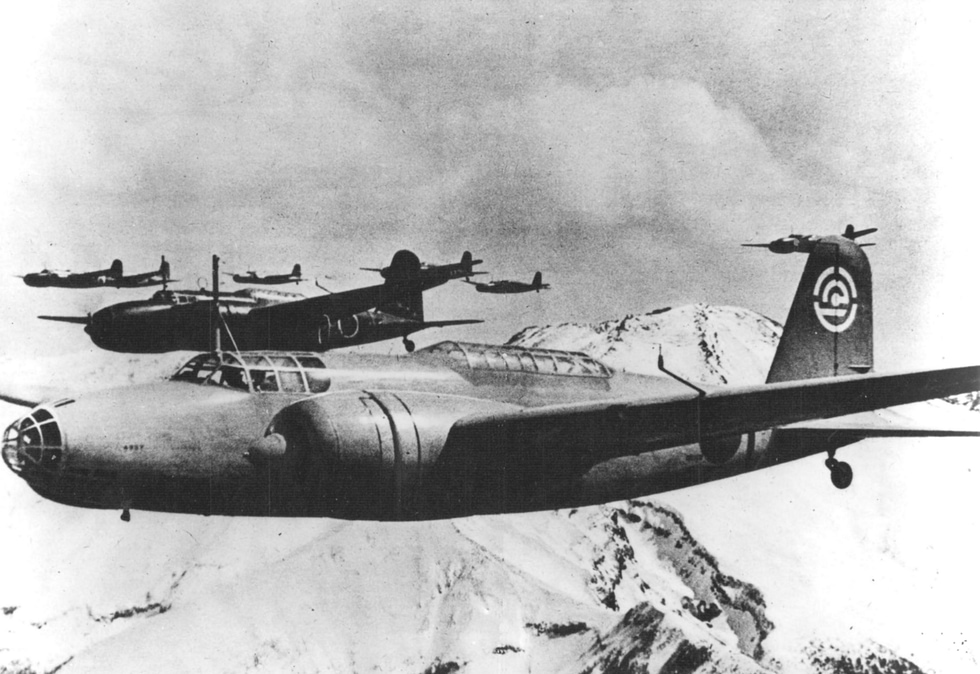
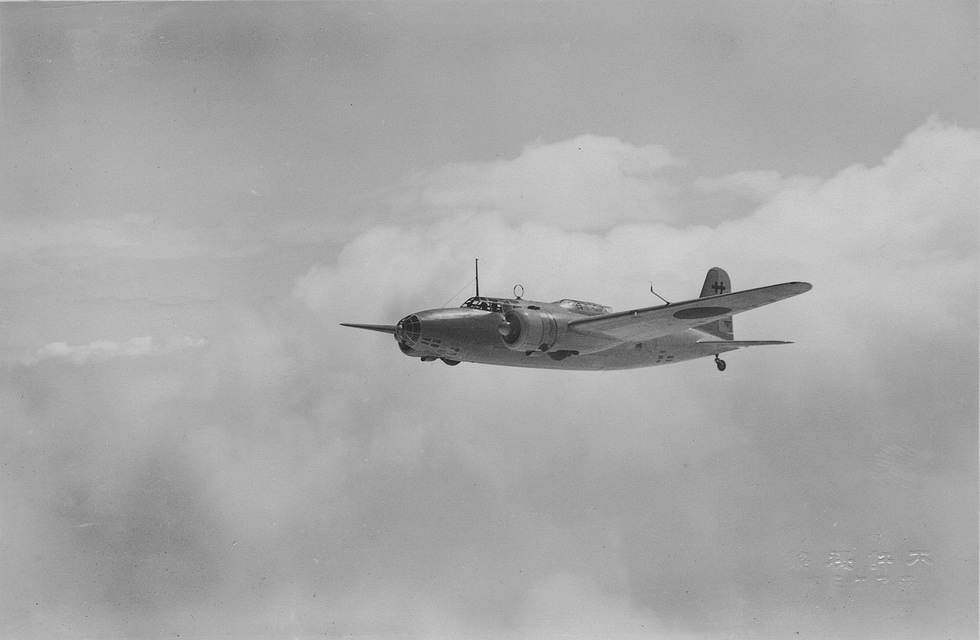
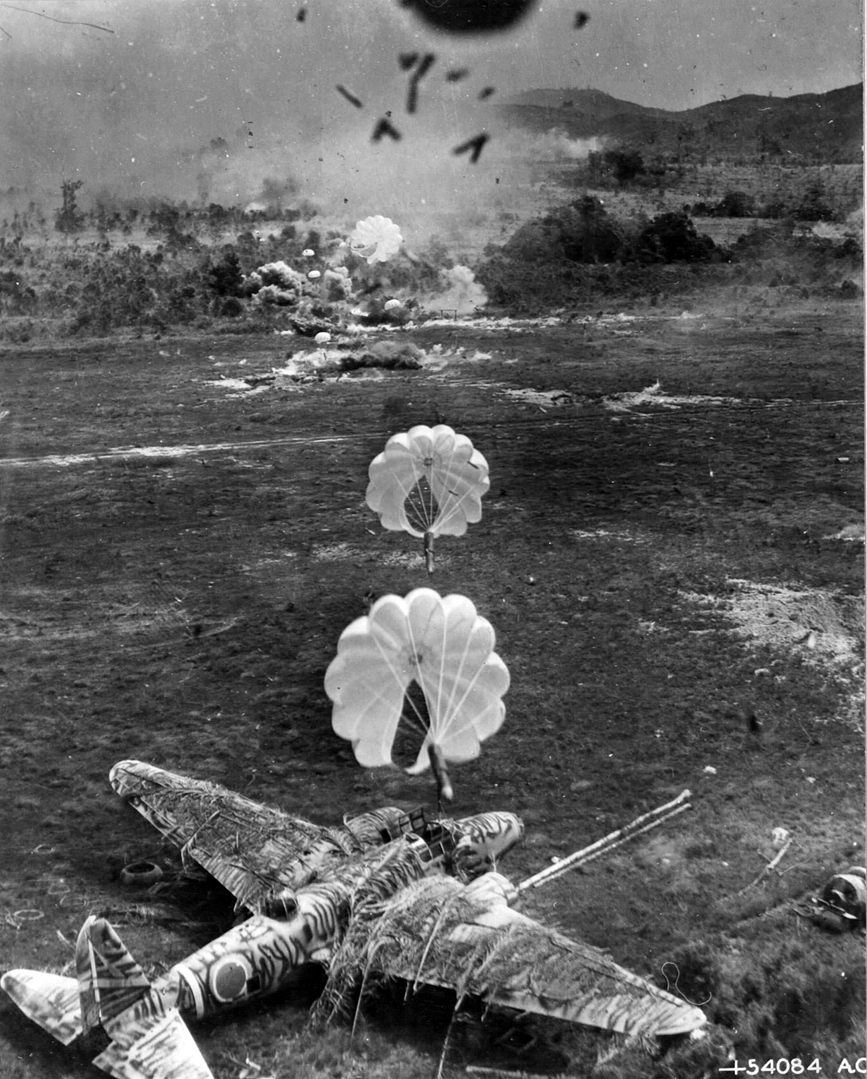
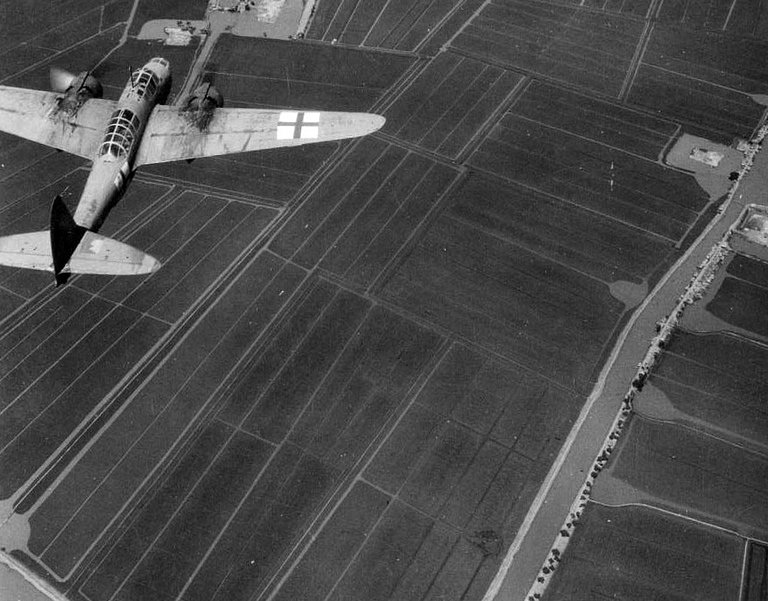
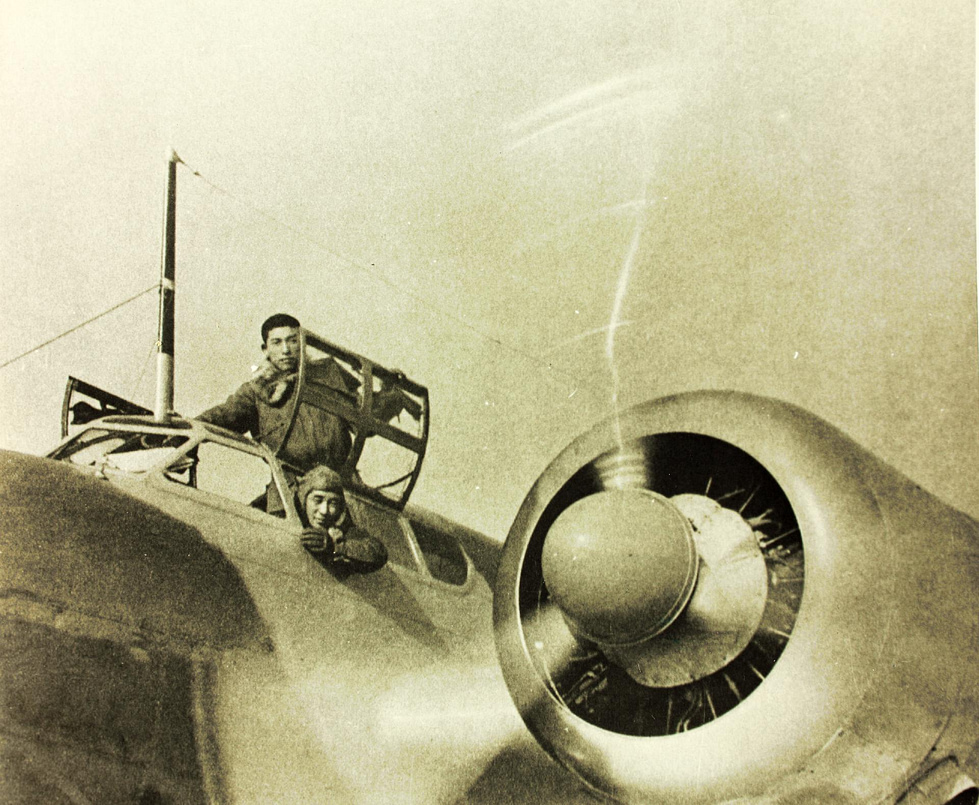
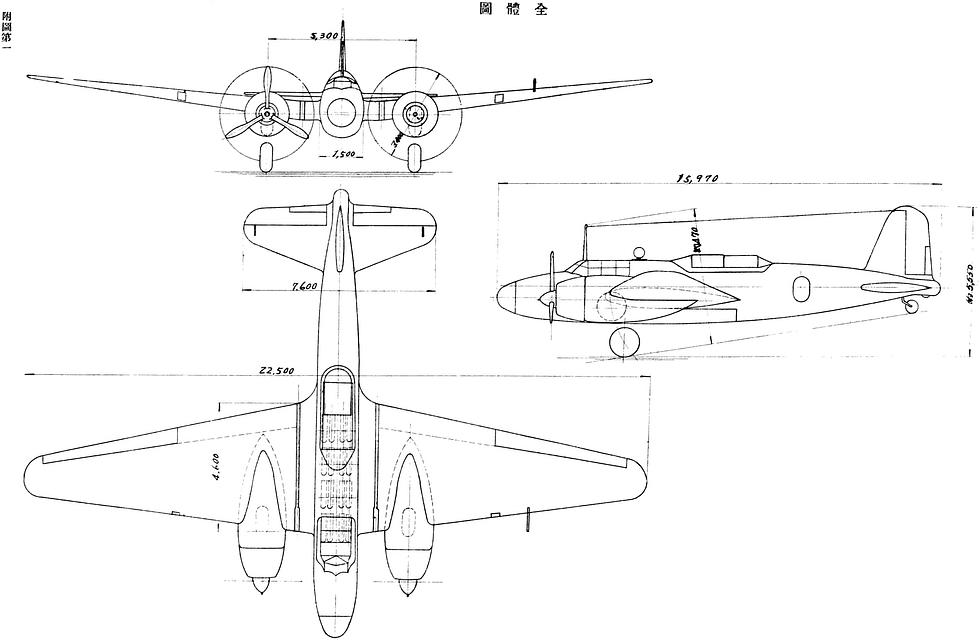
The Ki-21 “Sally” in motion
The Grand Archive: Mitsubishi Ki-21 “Sally” — The Complete History. A detailed documentary walk through the type’s development, variants and combat career, from China to the Giretsu raid.
Where the Ki-21 flew and fought
The Ki-21’s war, in three numbers
The Ki-21 was a bomber, not a dogfighter, and its record is measured in campaigns flown and losses taken rather than air-to-air kills. It opened Japan’s war as an almost untouchable long-range striker and ended it as a vulnerable relic — and as the improvised assault transport of the Giretsu raid.
Compare the combat record of every military aircraft.
Everything people ask about the Mitsubishi Ki-21
Can I fly in a Mitsubishi Ki-21?
What was the Mitsubishi Ki-21?
Why was the Ki-21 called “Sally”?
How fast was the Ki-21 and how far could it fly?
Why was the Ki-21 so vulnerable later in the war?
What was the Ki-21’s role in Operation Giretsu?
How many Ki-21s were built?
Are there any surviving Ki-21s?
You can’t fly the Ki-21.
These, you can.
Some legends only live in museums — others are fuelled and waiting. MiGFlug has put civilians in real military jet cockpits since 2004.
 Fly the L-39 AlbatrosThe world’s most-flown jet trainer — aerobatics included
 Fly the F-104 Starfighter“The missile with a man in it”
 Fly the MiG-21The Cold War’s most-produced jet
 Управляйте самолетом T-33 Shooting Star.America’s first jet trainer
 Fly the DH VampireA piece of early jet history
 Fly the S.211Agile Italian jet trainer
 Fly the MB-326The classic Aermacchi jet
 Fly the MiG-15The Soviet legend of the Korean War
Continue the tour
Every fact, checked
- Pacific Wrecks — Mitsubishi Ki-21 (Sally)Surviving relics and wrecks, unit histories and the fate of individual airframes.
- History of War — Mitsubishi Ki-21 “Sally”Production totals, variant history, engines and full specifications.
- Pacific Eagles — Mitsubishi Ki-21 Type 97Design, combat career and the truth behind the “Sally/Gwen” naming.
- U.S. Naval Institute — The Giretsu AttackThe 24–25 May 1945 Ki-21 commando raid on Yontan airfield, Okinawa.
- Military Factory — Mitsubishi Ki-21Cross-reference for dimensions, weights and performance figures.
- Aeropedia — Mitsubishi Ki-21 “Sally”Development background and service overview of the Army Type 97 bomber.
- National Museum of the U.S. Air ForceReference collection and wartime imagery of Japanese Army aircraft.
- AeroScale — Ki-21-Ia in Royal Thai Air Force serviceThailand’s small Ki-21 fleet, the type’s only significant foreign operator.