
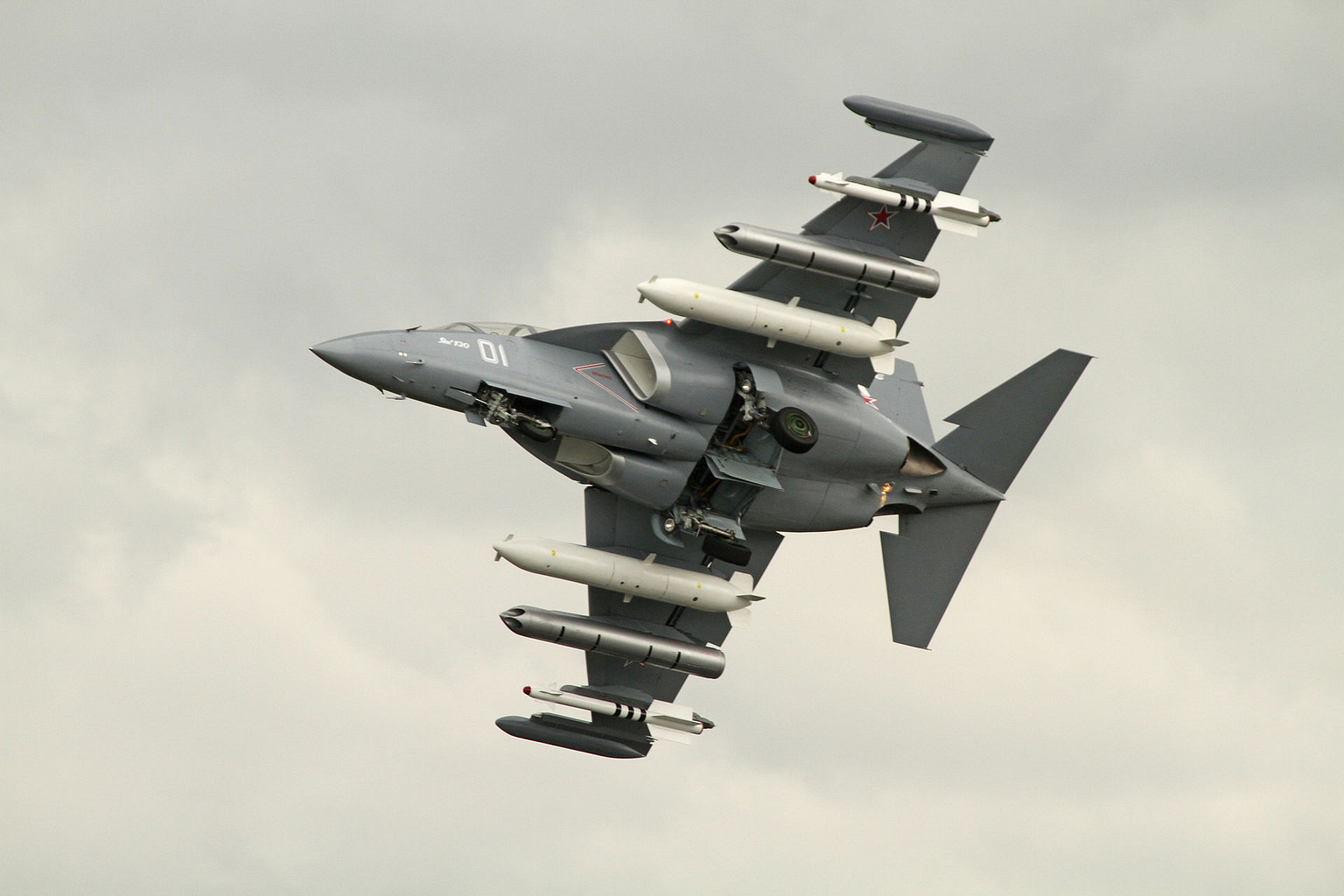
Yakovlev Yak-130
“Mitten”
A modern Russian advanced jet trainer and light-attack aircraft — digital fly-by-wire, designed to mimic the handling of fourth- and fifth-generation fighters, and now exported across three continents.
A modern trainer built to teach the fighters of today
By the early 1990s the Soviet, and then Russian, air force faced a training problem. Its cadets learned on the Czechoslovak Л-29 и Л-39 Альбатрос, subsonic jets designed decades earlier, while the fighters they would go on to fly — the MiG-29, Su-27 and their descendants — were digitally controlled, relaxed-stability machines that flew nothing like the old trainers. The Yakovlev design bureau set out to build a replacement: an advanced jet trainer whose flight controls could be tuned to imitate the behaviour of modern combat aircraft, so that much of a pilot’s conversion could happen in a cheaper, safer jet.
The programme began in 1993 as a partnership with Italy’s Aermacchi. Together they built the Yak/AEM-130 demonstrator, which first flew in 1996. The collaboration did not last: around the turn of the century the two companies parted ways and split the design, each taking the shared aerodynamic layout in its own direction. Aermacchi (later Leonardo) developed the closely related M-346 Master with Western engines and avionics, while Yakovlev produced the Russian Yak-130. The redesigned production aircraft flew in the mid-2000s and entered Russian service in 2010.
What emerged is a two-seat jet with a genuinely digital, quadruplex fly-by-wire control system — unusual for a trainer — that can be reprogrammed to mimic the handling of different fighter types. It is also a capable light-attack platform: with up to nine hardpoints it can carry guided and unguided weapons, and several export operators have used it in that armed role. It has become one of Russia’s more successful recent aircraft exports, sold to operators across the former Soviet space, the Middle East, Africa and South-East Asia.
01The Yakovlev Yak-130’s origins: the shared programme that also produced the M-346
The Yak-130 and the Italian M-346 share a common ancestor. From 1993 Yakovlev and Aermacchi jointly developed the Yak/AEM-130 demonstrator, which first flew in 1996. When the partnership ended around 1999–2000, the two firms divided the intellectual property and pursued separate aircraft from the same basic aerodynamic design.
Aermacchi went on to build the M-346 Master, fitted with Western (Honeywell/ITEC F124) engines and NATO-standard avionics, which serves as a trainer with Italy, Israel, Poland, Singapore and others. Yakovlev developed the Yak-130 around Russian systems and Ukrainian-designed AI-222 engines. The two aircraft look similar and share a lineage, but they are distinct programmes built for different markets — a point often blurred in casual descriptions.
What makes it special
Reprogrammable digital fly-by-wire
The Yak-130’s defining feature is its digital fly-by-wire control system, which can be tuned to change how the aircraft responds. By adjusting the control laws, instructors can make it behave like different combat types — giving it the heavier, relaxed-stability feel of a modern fighter, or a docile response for early students. The idea is to let cadets rehearse the handling of aircraft such as the MiG-29 or Su-30 in a cheaper, more forgiving jet.
High angle-of-attack, departure-resistant flying
Wide leading-edge root extensions and the fly-by-wire system let the Yak-130 fly controllably at very high angles of attack — commonly cited up to around 40 degrees — without departing into a spin. That envelope is useful both for teaching students where the edges are safely and for the aerobatic and combat manoeuvres its graduates will need, making it one of the more agile aircraft in its class.
Trainer by day, light attacker by need
Beyond training, the Yak-130 is a genuine light-attack aircraft. With up to nine hardpoints and a reported external load of about 3,000 kg, it can carry guided bombs, rockets, air-to-air missiles and a gun pod. Several export customers bought it partly for that secondary strike role, and it has been used operationally as a light striker — a flexibility that helps explain its export success.
02The Yak-130’s cockpit and avionics: the first all-digital Russian production trainer
The Yak-130 was described by its makers as the first Russian series-production aircraft built around an all-digital avionics suite, with multi-function glass displays in both cockpits rather than analogue dials. Embedded simulation lets the aircraft generate synthetic radar contacts, targets and weapon effects in the cockpit, so students can practise sensor and weapons work without any of it being real. Combined with the reprogrammable flight controls, this is what lets one airframe stand in for several more expensive fighters during training.
03The Yak-130’s engines: the AI-222-25 and its Russian-Ukrainian roots
Production Yak-130s are powered by two Ivchenko-Progress AI-222-25 non-afterburning turbofans, each in the region of 2,500 kgf (about 24.5 kN) of thrust. The engine was designed by the Ukrainian Ivchenko-Progress bureau and built with Russian partners (Salut/Motor Sich), a cross-border arrangement that later became complicated by the deterioration of Russian-Ukrainian relations. Russia has since worked to produce the engine domestically. The twin-engine layout gives redundancy and the roughly 1,060 km/h top speed, though the Yak-130 remains subsonic.
Full specifications
Figures are for the production Yak-130 and are drawn from manufacturer and reference sources. Values vary slightly between sources and configurations, so treat them as representative rather than exact.
Airframe & Performance
- Экипаж
- 2 (tandem, dual controls)
- Длина
- ~11.5 m
- Размах крыльев
- ~9.7 m
- Высота
- ~4.76 m
- Пустой вес
- ~4,600 kg
- Max takeoff weight
- ~10,290 kg
- Max speed
- ~1,060 km/h (about Mach 0.93)
- Служебный потолок
- ~12,500 m
- Ferry range
- ~2,100 km
- Max angle of attack
- ~40° (controlled)
Propulsion, Armament & Cost
- Engines
- 2 × Ivchenko-Progress AI-222-25
- Thrust (each)
- ~2,500 kgf (~24.5 kN)
- Avionics
- All-digital glass cockpit; fly-by-wire
- Точки крепления
- Up to 9 · ~3,000 kg external load
- First flight
- 1996 (demonstrator)
- Built
- ~200+ (in production)
- Unit cost
- ~US$15–25 million (estimate)
- Cost per flight hour
- No reliable public figure
04The Yak-130’s cost: why a trainer is a bargain next to a fighter
Part of the Yak-130’s appeal is economic. Published export prices have generally fallen in the region of US$15–25 million per aircraft depending on package and customer, a fraction of the cost of a front-line fighter, and its running costs per hour are far lower than those of the jets it trains pilots for. Exact figures are commercially sensitive and vary by contract, so any single number should be read as an estimate.
No reliable, independently verified cost-per-flight-hour figure exists in open sources for the Yak-130. The economic case made for the type — that hours flown on it are much cheaper than hours on a fighter — is widely repeated but rarely accompanied by audited numbers.
From joint prototype to global export
Programme begins
Yakovlev partners with Italy’s Aermacchi to develop a new advanced jet trainer for a post-Cold-War market.
First flight
The joint Yak/AEM-130 demonstrator makes its maiden flight, proving the shared aerodynamic design.
The partners split
Yakovlev and Aermacchi part ways and divide the design; it becomes the Russian Yak-130 and the Italian M-346 Master.
Redesigned prototype flies
The definitive production-standard Yak-130, built around Russian systems, begins its own flight-test programme.
Enters Russian service
The Yak-130 formally enters service with the Russian Air Force as its standard advanced trainer, replacing older types.
First export
Algeria becomes the first export customer, beginning the type’s spread beyond Russia.
Widening export
Belarus, Bangladesh, Myanmar, Laos and others take delivery; several operators use the jet in a light-attack role.
Upgrades and combat use
An upgraded Yak-130M is developed for export, while operators such as Myanmar reportedly employ the type in combat.
Twelve Yak-130 stories
A Cold War training gap
Russia needed a jet that flew like its new fighters, not like the ageing L-39.
Read the full story
An Italian collaboration
The Yak-130 began as a joint project with Aermacchi, and shares its shape with the M-346.
Read the full story
1996
The joint demonstrator first flew in 1996, proving the aerodynamic concept.
Read the full story
A trainer that pretends
The Yak-130’s digital controls can be reprogrammed to mimic other aircraft.
Read the full story
On the edge, on purpose
Big root extensions let the Yak-130 fly controllably at very high angles of attack.
Read the full story
Glass and simulation
Digital displays and embedded simulation let one jet stand in for several.
Read the full story
A cross-border powerplant
Its AI-222-25 engines were designed in Ukraine and built with Russian partners.
Read the full story
More than a trainer
With up to nine hardpoints, the Yak-130 doubles as a light striker.
Read the full story
Algeria goes first
Algeria became the first foreign buyer, opening the export account in 2011.
Read the full story
A wide customer list
Belarus, Bangladesh, Myanmar, Vietnam, Laos and Iran have all bought the jet.
Read the full story
Used in anger
Some operators have flown the Yak-130 as a light attacker, Myanmar most visibly.
Read the full story
The Yak-130M
An upgraded export variant aims to keep the design competitive.
Read the full story
The Yak-130 in pictures
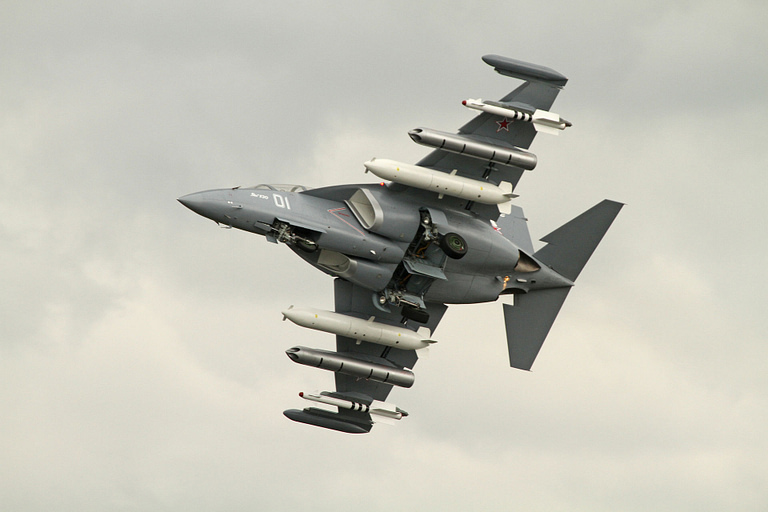
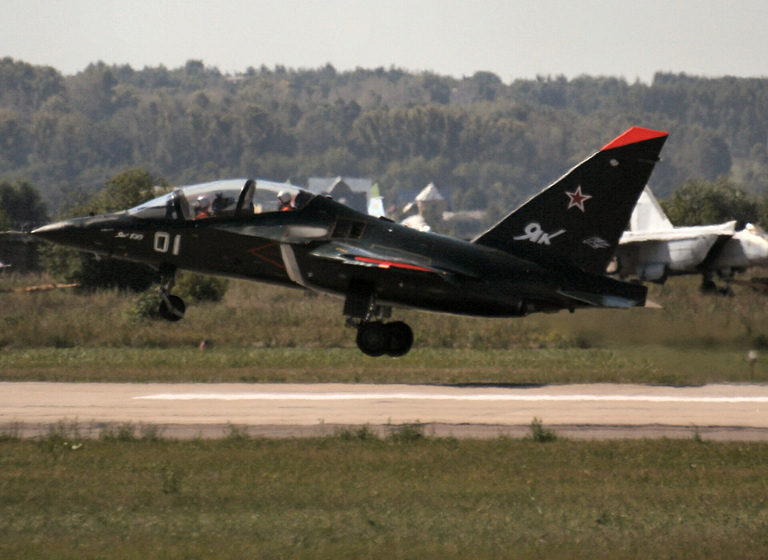
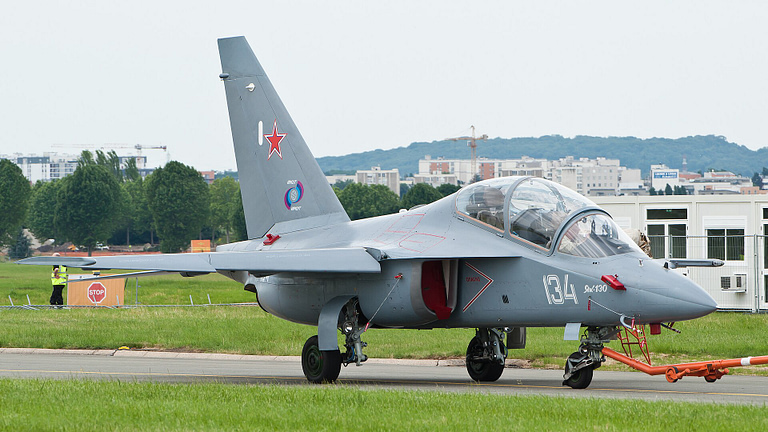
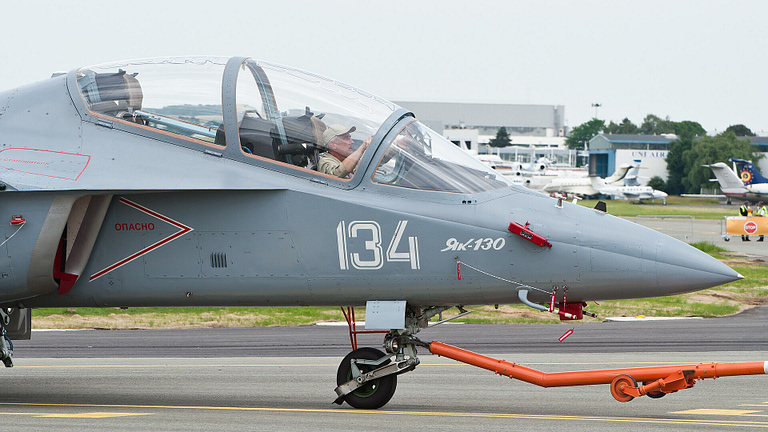
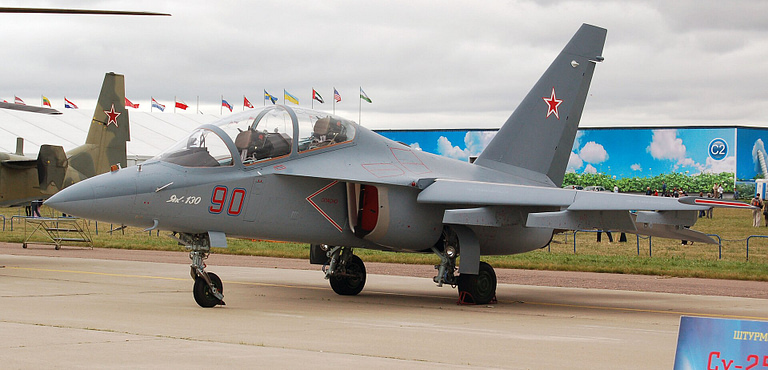
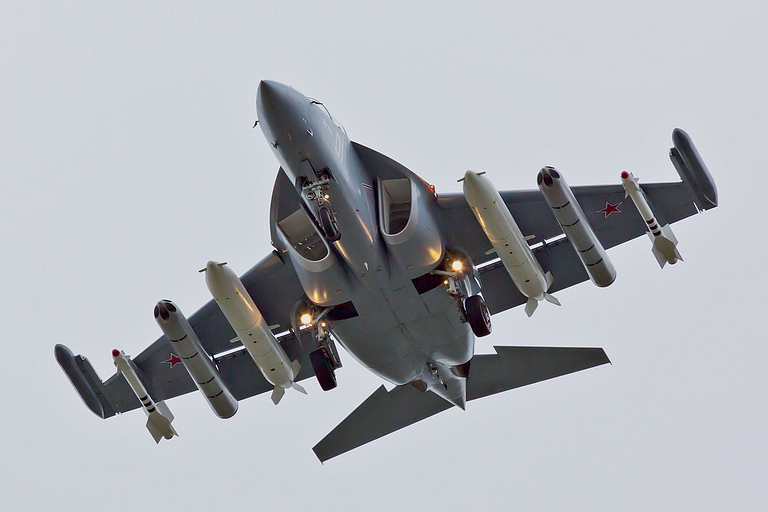
The Yak-130 in motion
A curated video feature for the Yakovlev Yak-130 is coming soon. In the meantime, explore the photo gallery above and the operator map below.
Where the Yak-130 operates
Where the record stands
The Yak-130 is first and foremost a trainer, so its story is written mostly in flying hours and pilots produced rather than air-to-air kills. It has, however, been used in anger: several operators employ it as a light attacker, and Myanmar’s air force has — according to open-source investigations and news reporting — used the type in air strikes during that country’s internal conflict. Those accounts are contested and hard to verify independently, and are presented here with caution.
Compare the combat record of every military aircraft. Figures as of July 2026.
Everything people ask about the Yak-130
Can I fly in a Yak-130?
What is the Yak-130 used for?
How is the Yak-130 related to the M-346?
Is the Yak-130 supersonic?
Which countries operate the Yak-130?
Has the Yak-130 been used in combat?
Who makes the Yak-130?
You can’t fly the Yak-130.
These, you can.
Some legends only live in museums — others are fuelled and waiting. MiGFlug has put civilians in real military jet cockpits since 2004.
 Fly the L-39 AlbatrosThe world’s most-flown jet trainer — aerobatics included
 Fly the F-104 Starfighter“The missile with a man in it”
 Fly the MiG-21The Cold War’s most-produced jet
 Управляйте самолетом T-33 Shooting Star.America’s first jet trainer
 Fly the DH VampireA piece of early jet history
 Fly the S.211Agile Italian jet trainer
 Fly the MB-326The classic Aermacchi jet
 Fly the MiG-15The Soviet legend of the Korean War
Continue the tour
Every fact, checked
- Airforce Technology — Yak-130 project profileDevelopment history, the Aermacchi split, dimensions, engines and avionics baseline.
- Military Factory — Yakovlev Yak-130 (Mitten)Weights, performance, hardpoints, operator list and production figures.
- Centre for Information Resilience — Myanmar Witness Yak-130 investigationOpen-source investigation into Myanmar’s Yak-130s and their reported use in air strikes.
- Al Jazeera — Myanmar used Russian-made aircraft in attacksReporting on the Yak-130 in Myanmar’s internal conflict; treated here as contested.
- Army Recognition — Yak-130M enters trialsThe upgraded export variant and its expanded light-attack ambitions.
- Flugzeuginfo.net — Yak-130 technical dataIndependent specification sheet used to cross-check dimensions and performance.
- AeroCorner — Yakovlev Yak-130General reference on the type’s role, engines and operators.
- The National Interest — the Yak-130’s light-attack potentialAnalysis of the trainer’s secondary combat role and export appeal.