
Britain’s 1918 day bomber was meant to improve on the superb DH.4 — but a de-rated, unreliable engine left it slower, lower-flying and terribly vulnerable, and its crews paid for it over Germany. Re-engined as the DH.9A, the very same design became one of the finest bombers of its age.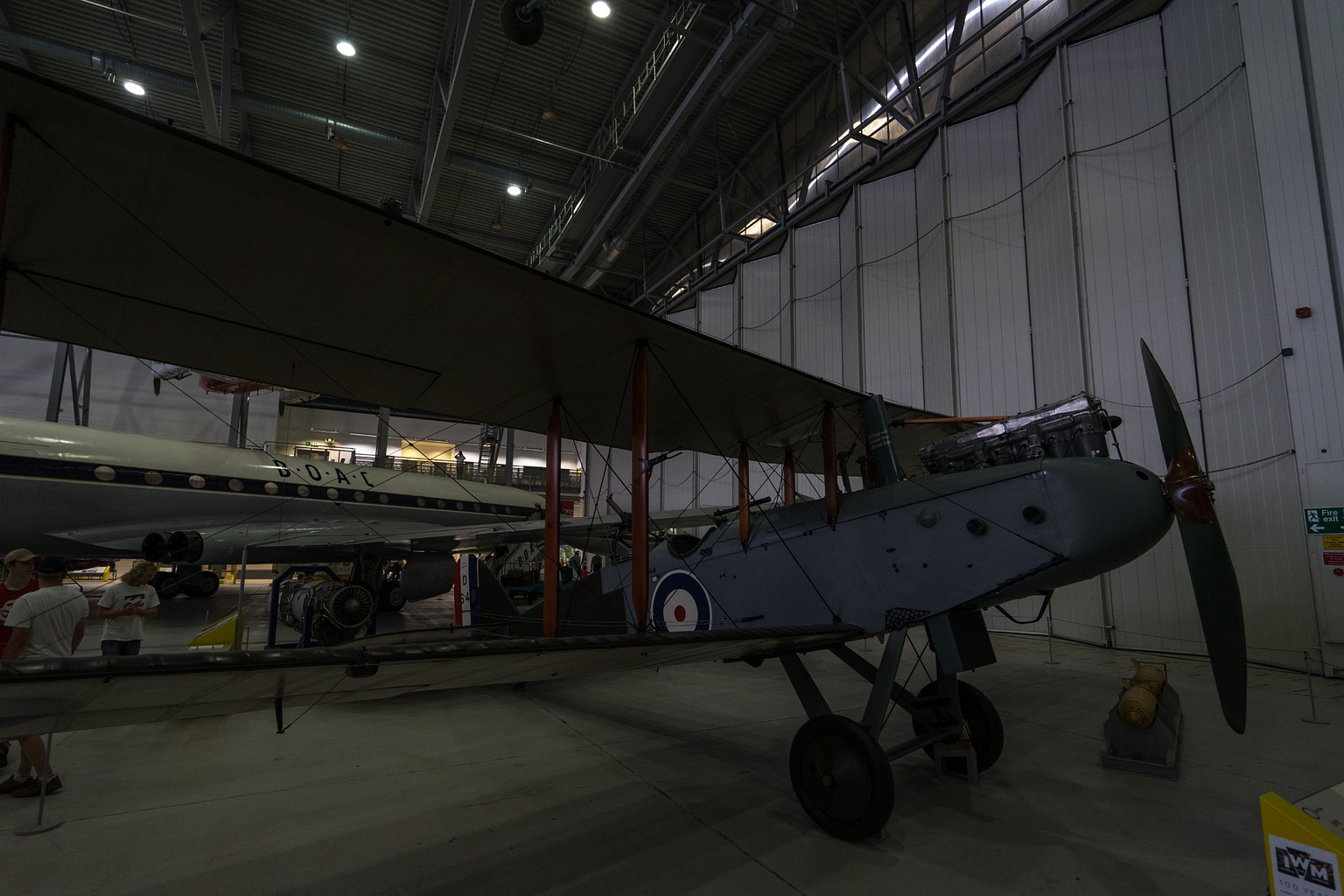
Airco DH.9
the bomber that went backwards
The Airco DH.9: how engine politics turned a great bomber into a death-trap — and back again
By 1917 the British had, in the Airco DH.4, one of the best day bombers of the First World War: fast, high-flying and, with the Rolls-Royce Eagle, blessed with a superb engine. So when the Aircraft Manufacturing Company and its brilliant designer Geoffrey de Havilland set out to build a successor, expectations were high. The new DH.9 reused much of the DH.4’s proven airframe but moved the pilot back next to the observer for better teamwork, and — crucially — was designed around a promising new engine that was supposed to be cheaper and available in huge numbers.
That engine was the problem. The Rolls-Royce Eagle was magnificent but hand-built and scarce, so the DH.9 was designed around the new BHP / Siddeley Puma inline six, expected to give around 300 hp and to be mass-produced. It never delivered. To make it reliable at all the Puma had to be de-rated to about 230 hp, and even then it was chronically unreliable and underpowered. The result was one of the cruellest ironies in aviation procurement: the DH.9 that was meant to improve on the DH.4 actually performed worse than the aircraft it replaced — slower, and with a markedly lower service ceiling.
For a day bomber, height and speed were life. The DH.4 could often climb above the German fighters; the DH.9 could not. Trials reportedly showed the new bomber to be inferior, and senior officers protested, but with production already tooled and the air service desperate for aircraft the DH.9 went to the front anyway. Through the summer and autumn of 1918 the day-bomber squadrons of the Independent Air Force — the RAF’s strategic bombing arm — flew deep raids against targets in Germany in DH.9s that could neither outrun nor outclimb the defenders. The losses were savage. In one commonly cited period two squadrons lost dozens of aircraft to enemy action and even more to engine failure and accidents. It was, in the plainest terms, a step backwards forced by engine politics — a cautionary tale about betting a war machine on an engine that isn’t ready.
And yet the story does not end in failure, because the airframe underneath was sound. The redemption came from across the Atlantic. Re-engined with the reliable American 400 hp Liberty L-12 and given a strengthened, enlarged airframe, the design was reborn as the DH.9A — universally nicknamed the “Ninak” (from “nine-ack”). With power to match its ambitions the Ninak was everything the DH.9 should have been: strong, dependable and long-legged. It arrived only in the last weeks of the war, but its real career came afterwards.
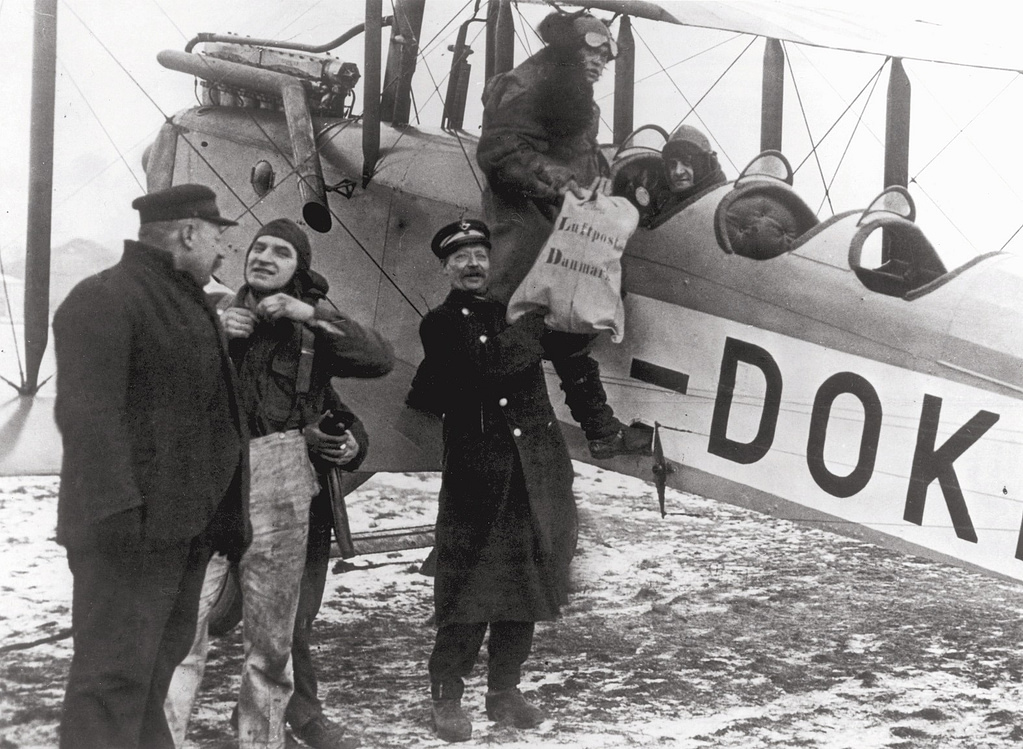
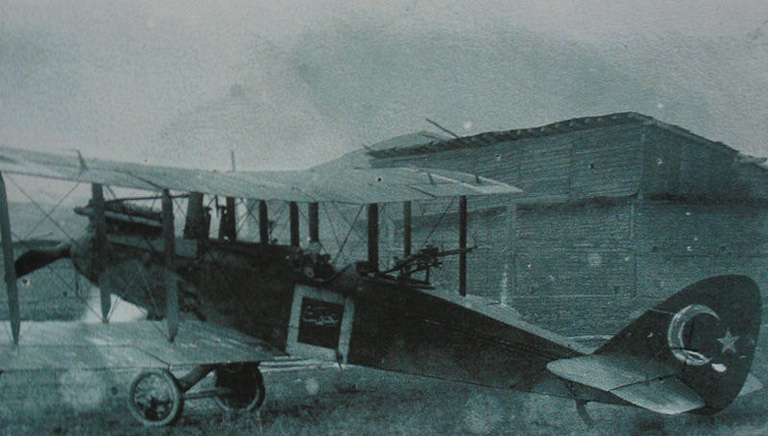
Through the 1920s the DH.9A became a mainstay of the peacetime RAF, and in particular the workhorse of Britain’s policy of colonial “air control” — policing the vast territories of Iraq, India and the Middle East from the air. Rugged and easy to maintain in the field, the Ninak soldiered on in RAF service until around 1931. The wider DH.9 family, meanwhile, spread across the world: it was hugely exported and licence-built. Spain built hundreds with Hispano-Suiza engines; South Africa flew it as a founding type of its air force; and the Soviet Union produced over 2,400 unlicensed copies as the Polikarpov R-1, making a de Havilland design the standard Soviet light bomber of the decade. Surplus DH.9s also had a long civil career as early airliners, mail-planes and joy-riding machines.
The DH.9’s honest legacy is therefore two-sided. As first built it is a textbook example of how a single bad component — forced through for reasons of production politics rather than merit — can undo an otherwise good aeroplane and cost the lives of the men who fly it. As the DH.9A it is proof that the same airframe, given the engine it always deserved, could become a genuinely great and long-serving bomber. Few aircraft carry both lessons at once. Note: production totals, loss figures and performance numbers vary between sources and are hedged throughout this page.
01Why the Airco DH.9 was worse than the DH.4 it replaced
The DH.9 kept much of the DH.4’s aerodynamics but swapped its superb Rolls-Royce Eagle for the new BHP/Siddeley Puma, expected to be more powerful and far easier to mass-produce. When the Puma proved unreliable it was de-rated to roughly 230 hp — well short of the Eagle’s output in a heavier aircraft. The consequence was lower speed and, more dangerously, a much reduced service ceiling. For a daylight bomber that had to reach and hold high altitude to survive, losing height meant losing lives. Comparative trials are said to have shown the DH.9 inferior to the DH.4, and its introduction was opposed — but production was already committed. Hedge: exact trial figures vary by source.
02The Independent Air Force raids and the DH.9’s heavy losses of 1918
In the summer of 1918 the DH.9 equipped several day-bomber squadrons of the Independent Air Force, the RAF’s strategic bombing force tasked with hitting German industry and railways. Flying by day, low and slow, they were badly exposed to German fighters and to their own failing engines. Contemporary accounts and later histories record very heavy losses — a substantial share of them from engine failure rather than enemy fire, with crews sometimes forced down over hostile territory. It remains one of the clearest cautionary tales of fielding an under-developed powerplant in wartime. Hedge: precise squadron-by-squadron loss totals differ between sources.
03From DH.9 to DH.9A “Ninak”: the Liberty engine and redemption
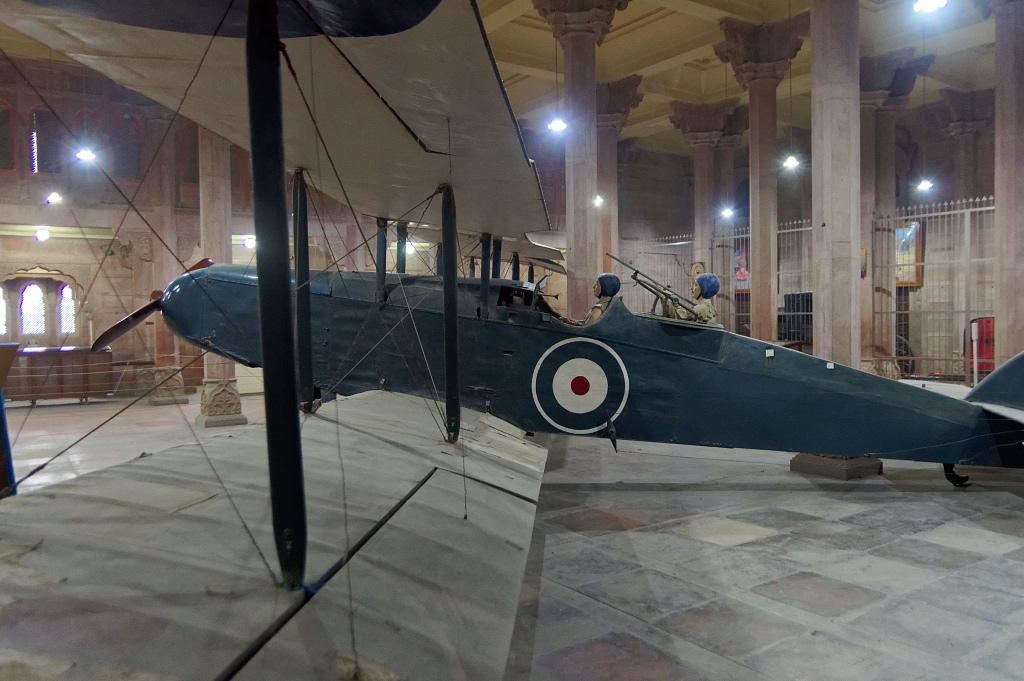
The fix was more power and a stronger structure. Fitted with the American 400 hp Liberty L-12 V-12 and a redesigned, enlarged airframe, the aircraft became the DH.9A, nicknamed the “Ninak.” It reached the front only in the final weeks of the war, but proved so capable and dependable that it became a standard RAF type into the 1930s. The same basic de Havilland design that had failed as the DH.9 succeeded completely once it finally had the engine it needed — a rare and instructive reversal.
How the Airco DH.9 was built: a sound airframe, a fatal engine, and the Liberty cure
A refined DH.4 airframe with the crew together
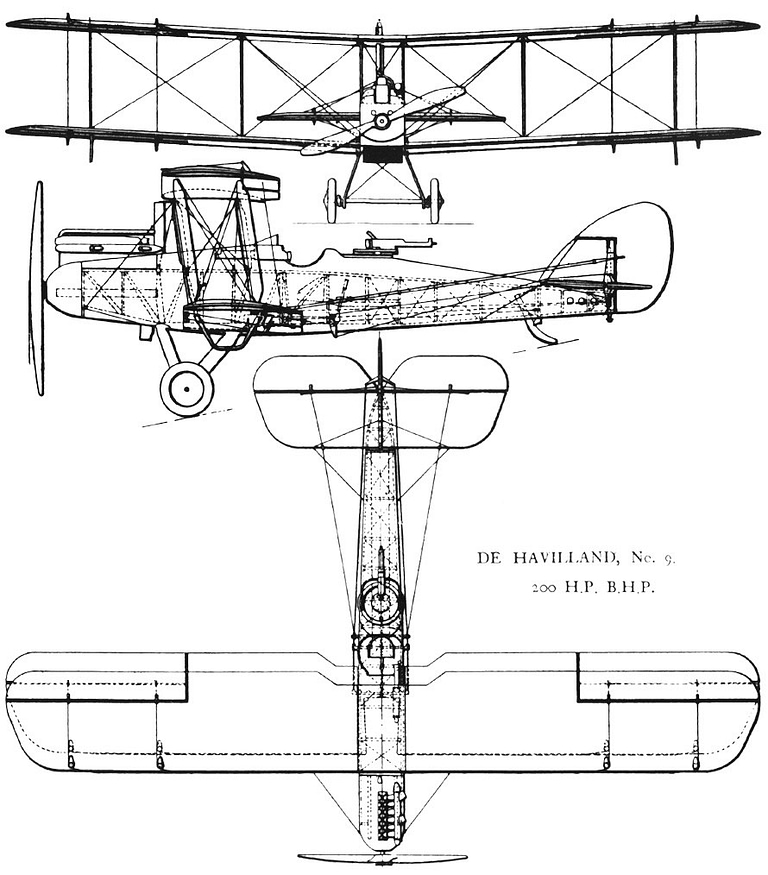
De Havilland reused much of the excellent DH.4’s wooden, wire-braced two-bay biplane structure but moved the pilot aft, seating him and the observer back-to-back. That improved crew communication and defensive coordination — a genuine step forward that the engine would sadly negate.
The Siddeley Puma: the flaw at the heart of it
The DH.9 was built around the BHP/Siddeley Puma inline six, meant to give ~300 hp and mass production. De-rated to ~230 hp for reliability it still ran hot and failed often, leaving the bomber underpowered, low-flying and slower than the DH.4 — the single decision that defined the aircraft.
Two guns, a useful bomb load — and the Liberty answer
Armament was a fixed forward Vickers .303 for the pilot and one or two Lewis guns on the observer’s Scarff ring, with up to ~460 lb of bombs. The DH.9A answered the power problem with the 400 hp Liberty L-12 and a strengthened airframe, roughly doubling the installed power.
04The engine question: BHP, Puma, Eagle and Liberty
The DH.9’s troubles trace to a supply decision. The Rolls-Royce Eagle that made the DH.4 so good was hand-built and scarce, so planners chose the new BHP (Beardmore-Halford-Pullinger) engine, developed by Siddeley-Deasy as the Puma, because it promised more power and far greater output. In service the Puma could not reliably deliver its rated power and was de-rated to about 230 hp. Only the American Liberty L-12 of ~400 hp, fitted to the DH.9A, finally gave the design a dependable, powerful engine. Hedge: some DH.9s also flew with other engines (e.g. the Fiat A.12), and figures vary.
05How many were built — DH.9 and DH.9A
Figures vary between sources. The DH.9 was produced in very large numbers — commonly cited as around 3,000–4,000 built across many British contractors (roughly 3,200 is a typical figure). The DH.9A added on the order of 1,700–2,000 more from British production, and the Soviet Union built over 2,400 further copies as the Polikarpov R-1. Spain and others licence-built still more. Hedge: totals differ widely; treat any single number as approximate.
06Crew, armament and what the DH.9 could carry
The DH.9 was a two-seater: pilot and observer/gunner. The pilot fired a fixed, synchronised .303 in Vickers machine gun; the observer had one or two .303 in Lewis guns on a rotating Scarff ring. Bomb load was up to around 460 lb (two 230-lb or several smaller bombs) carried externally. The DH.9A could lift a heavier load thanks to its Liberty engine. These are nominal figures — loadouts varied with mission, fuel and altitude.
Airco DH.9 specifications: dimensions, performance, armament and cost
Airframe & powerplant (DH.9)
- Экипаж
- 2 (pilot + observer/gunner)
- Длина
- 9.27 m (30 ft 5 in)
- Размах крыльев
- 12.92 m (42 ft 4 in)
- Высота
- 3.44 m (11 ft 3 in)
- Пустой вес
- ≈ 1,012 kg (2,230 lb)
- Loaded weight
- ≈ 1,723 kg (3,800 lb)
- Engine (DH.9)
- Siddeley Puma inline-6, ≈ 230 hp (de-rated from ~300 hp; unreliable)
- Engine (DH.9A)
- American Liberty L-12 V-12, ≈ 400 hp
- Configuration
- Two-bay wood-and-fabric biplane day bomber
Performance, armament & cost
- Max speed (DH.9)
- ≈ 182 km/h (113 mph) — slower than the DH.4
- Служебный потолок
- ≈ 4,700 m (15,500 ft) — markedly lower than the DH.4
- Endurance
- ≈ 4.5 hours
- Вооружение
- 1 × fixed .303 Vickers + 1–2 × .303 Lewis on Scarff ring
- Bomb load
- Up to ≈ 460 lb (209 kg) of bombs
- Number built
- ≈ 3,200 DH.9 + ~1,700–2,000 DH.9A + 2,400+ Soviet R-1 (figures vary)
- Unit cost
- Not reliably recorded (WWI)
- Cost per flight hour
- Not reliably recorded (WWI)
07Variants: DH.9, DH.9A “Ninak”, the Soviet R-1 and civil conversions
The DH.9 was the original Puma-engined day bomber. The DH.9A (“Ninak”) was the strengthened, Liberty-engined redemption that served the RAF into the 1930s. Abroad, Испания licence-built hundreds with Hispano-Suiza engines, ЮАР flew and re-engined it (the Bristol Jupiter-powered “M’pala”), and the Soviet Union built 2,400+ copies as the Polikarpov R-1. Numerous DH.9s were converted for civil use as early airliners, air-mail and joy-riding aircraft (e.g. the DH.9B/9C). Hedge: variant designations and totals differ between sources.
08What an Airco DH.9 “cost” — and why we can’t give a number
There is no reliable, comparable unit price or cost-per-flight-hour for a 1918 British day bomber of this class. Wartime accounting, the collapse of Airco after the war, and the sheer spread of licence and export production mean any single figure would mislead, so we record it honestly as not reliably recorded. What can be said is that the DH.9 was deliberately conceived to be cheaper and more mass-producible than the Rolls-Royce-engined DH.4 — an economy that, through the Puma, proved false.
Airco DH.9 timeline: from flawed bomber to long-serving Ninak
Designed by de Havilland
Airco’s Geoffrey de Havilland develops the DH.9 as a cheaper, mass-producible successor to the excellent DH.4, built around the new BHP/Puma engine.
First flight
The prototype flies from Hendon; introduction to service follows in November 1917.
The engine debacle
The Puma proves unreliable and is de-rated to ~230 hp. Trials reportedly show the DH.9 inferior to the DH.4 it replaces — but production is already committed.
Independent Air Force raids
DH.9 day-bomber squadrons raid targets in Germany by day and suffer heavy losses to fighters and engine failure alike.
The DH.9A “Ninak”
Re-engined with the 400 hp American Liberty and given a stronger airframe, the DH.9A enters service in the war’s final weeks — the redemption of the design.
Global export & licence build
Spain, South Africa, Belgium and many others operate or build the type; surplus DH.9s begin a long civil career as airliners and mail-planes.
RAF colonial air-policing
The DH.9A becomes the workhorse of Britain’s “air control” over Iraq, India and the Middle East.
Soviet Polikarpov R-1
The USSR builds 2,400+ unlicensed DH.9A copies as the R-1 — its standard light bomber and reconnaissance aircraft.
RAF withdrawal
The DH.9A is finally retired from front-line RAF service after more than a decade of colonial service.
Survivors recovered & restored
Airframes recovered from India (some from a maharaja’s stables/museum) are restored — including the world’s only airworthy DH.9.
The Airco DH.9 in its own words: engine failures, redemption and rediscovery
A successor to the DH.4
On paper the DH.9 looked like an improvement: the same fine airframe, the crew seated together, and a new engine promised in huge numbers.
Read the story
The engine that wasn’t ready
The BHP/Siddeley Puma was meant to give 300 hp. To run reliably at all it had to be de-rated to about 230 — and even then it failed often.
Read the story
A step backwards
Comparative trials reportedly showed the DH.9 to be slower and lower-flying than the DH.4 it was built to replace — and senior officers said so.
Read the story
The Independent Force raids
Through 1918 DH.9 squadrons of the Independent Air Force flew daylight raids deep into Germany — and were cut to pieces.
Read the story
The enemy behind the firewall
A grim share of DH.9 losses came not from the enemy but from the engine quitting — sometimes over hostile ground, far from home.
Read the story
America’s 400 horses
Fitting the big American Liberty L-12 transformed the design: suddenly there was power to spare, and the aircraft became strong and dependable.
Read the story
A bomber crews loved
Nicknamed the “Ninak,” the DH.9A became a standard RAF type into the 1930s — rugged, honest and easy to keep flying in the field.
Read the story
Policing an empire from the air
Through the 1920s the DH.9A was the workhorse of Britain’s policy of “air control” over Iraq, India and the Middle East.
Read the story
A de Havilland in Soviet colours
The Soviet Union built more than 2,400 unlicensed copies as the Polikarpov R-1 — making the DH.9A the standard Soviet light bomber of the decade.
Read the story
Airliners, mail and joy-rides
Surplus DH.9s were converted by the hundred into early passenger aircraft, mail-planes and pleasure-flight machines across post-war Europe.
Read the story
Out of a maharaja’s stable
Decades later, remarkably complete DH.9 airframes were discovered in India — famously stored in a maharaja’s elephant stables and fort — and brought back to Britain.
Read the story
The world’s only airworthy DH.9
From those Indian relics came the world’s only airworthy Airco DH.9 — painstakingly restored by the Historic Aircraft Collection and flown again a century on.
Read the story
Airco DH.9 in photographs: wartime service, the DH.9A, survivors and civil life
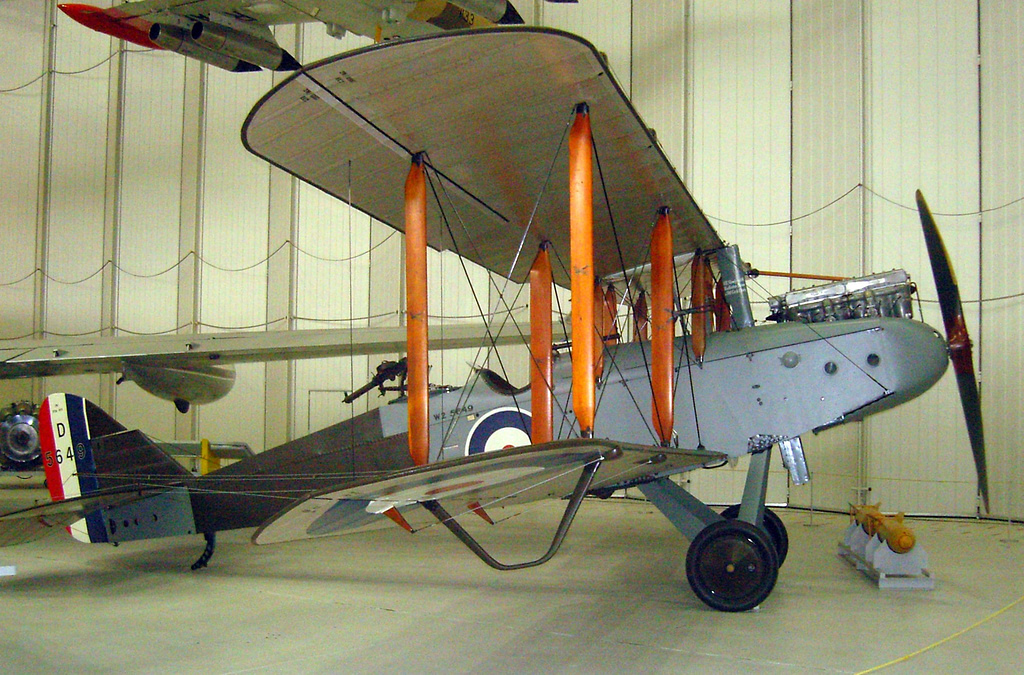
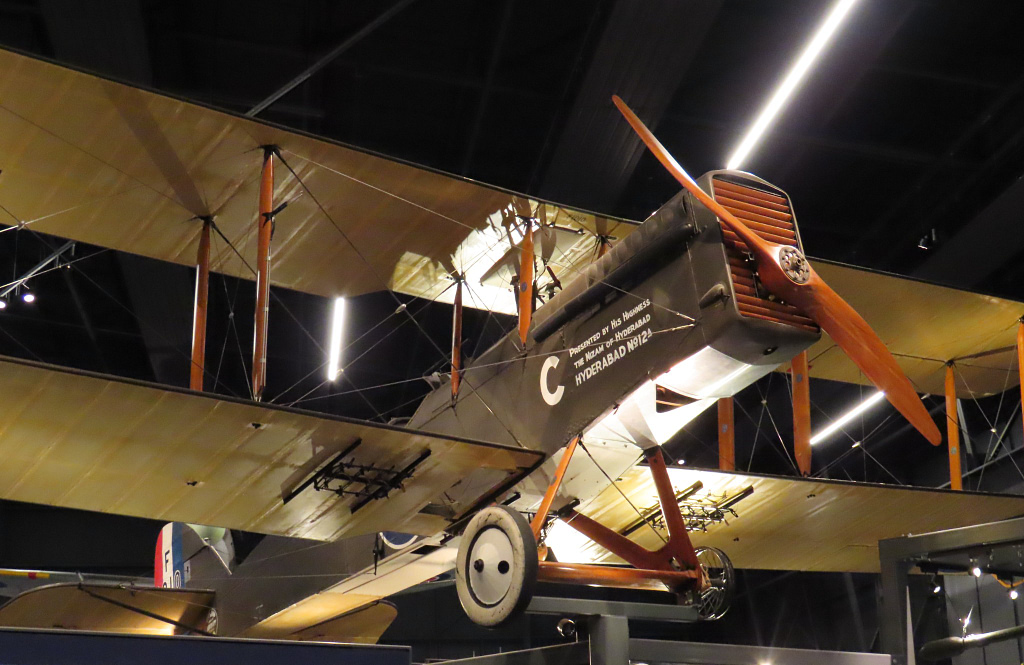
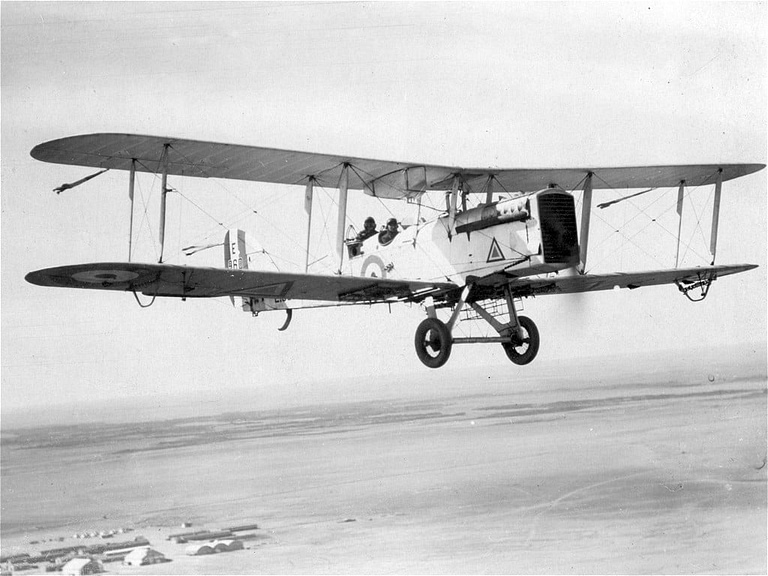
Tap or click any photo to enlarge. All images are used under their stated licences; credits appear in each caption.
Restored to fly: the world’s only airworthy Airco DH.9
“Historic World War One Airco DH9 bomber restored to former glory.” Filmed by The Telegraph (an established news channel, 6M+ subscribers), this report follows the Historic Aircraft Collection’s restoration of a DH.9 recovered from India — today the world’s only airworthy example.
Where the Airco DH.9 flew: British origin, the 1918 raids, global export and survivors
One country designed and first flew it; its brief, costly war was fought over the Western Front and Germany; and its long afterlife as the DH.9A and the Soviet R-1 spread it across the world. Toggle the categories to see its British origin, its 1918 service and raids, the post-war and export operators, and where original airframes survive today. Hover or tap a country for detail.
The Airco DH.9’s war record: costly by day, redeemed by the Ninak
The DH.4 shaped two stories at once: daylight strategic bombing in Europe, and the industrial birth of American military aviation. Figures are approximate and drawn from published histories; we flag them as estimates.
Airco DH.9: frequently asked questions
Can I fly in an Airco DH.9?
Why was the Airco DH.9 worse than the DH.4 it replaced?
What engine did the DH.9 use, and why was it a problem?
What was the DH.9A “Ninak”?
Did the DH.9 really suffer heavy losses over Germany?
How many Airco DH.9s were built?
Was the DH.9 exported or built abroad?
Are there any surviving Airco DH.9s?
What was the DH.9’s role and armament?
You cannot fly the Airco DH.4 —
but these, you can
The DH.4 lives on only in museums and a rare airworthy reproduction. But you can still strap into a real military jet and fly it yourself. Here is what MiGFlug can put you in.
 Fly the L-39 AlbatrosThe world’s most-flown jet trainer — aerobatics included
 Fly the F-104 Starfighter“The missile with a man in it”
 Fly the MiG-21The Cold War’s most-produced jet
 Управляйте самолетом T-33 Shooting Star.America’s first jet trainer
 Fly the DH VampireA piece of early jet history
 Fly the S.211Agile Italian jet trainer
 Fly the MB-326The classic Aermacchi jet
 Fly the MiG-15The Soviet legend of the Korean War
More British aircraft of the Great War
Sources & further reading on the Airco DH.9
- Imperial War MuseumsThe DH.9 D5649 at Duxford, recovered from India, and wider WWI air-war context.
- Royal Air Force MuseumThe DH.9A “Ninak” in the collection and the RAF’s 1920s colonial “air control.”
- Historic Aircraft CollectionRestoration of the world’s only airworthy DH.9 from India-recovered airframes.
- Vintage Aviation NewsThe airworthy DH.9 G-CDLI, its Indian provenance and restoration history.
- Grub Street — “DH9: From Ruin to Restoration”Book-length account of the India recovery and rebuild of the surviving DH.9s.
- Smithsonian National Air and Space MuseumWWI bombing and the development of British day bombers for institutional context.
- AviastarSpecifications, variants and production history of the DH.9 and DH.9A.