
Airco DH.9
the bomber that went backwards
Britain’s 1918 day bomber was meant to improve on the superb DH.4 — but a de-rated, unreliable engine left it slower, lower-flying and terribly vulnerable, and its crews paid for it over Germany. Re-engined as the DH.9A, the very same design became one of the finest bombers of its age.
The Airco DH.9: how engine politics turned a great bomber into a death-trap — and back again
By 1917 the British had, in the Airco DH.4, one of the best day bombers of the First World War: fast, high-flying and, with the Rolls-Royce Eagle, blessed with a superb engine. So when the Aircraft Manufacturing Company and its brilliant designer Geoffrey de Havilland set out to build a successor, expectations were high. The new DH.9 reused much of the DH.4’s proven airframe but moved the pilot back next to the observer for better teamwork, and — crucially — was designed around a promising new engine that was supposed to be cheaper and available in huge numbers.
That engine was the problem. The Rolls-Royce Eagle was magnificent but hand-built and scarce, so the DH.9 was designed around the new BHP / Siddeley Puma inline six, expected to give around 300 hp and to be mass-produced. It never delivered. To make it reliable at all the Puma had to be de-rated to about 230 hp, and even then it was chronically unreliable and underpowered. The result was one of the cruellest ironies in aviation procurement: the DH.9 that was meant to improve on the DH.4 actually performed worse than the aircraft it replaced — slower, and with a markedly lower service ceiling.
For a day bomber, height and speed were life. The DH.4 could often climb above the German fighters; the DH.9 could not. Trials reportedly showed the new bomber to be inferior, and senior officers protested, but with production already tooled and the air service desperate for aircraft the DH.9 went to the front anyway. Through the summer and autumn of 1918 the day-bomber squadrons of the Independent Air Force — the RAF’s strategic bombing arm — flew deep raids against targets in Germany in DH.9s that could neither outrun nor outclimb the defenders. The losses were savage. In one commonly cited period two squadrons lost dozens of aircraft to enemy action and even more to engine failure and accidents. It was, in the plainest terms, a step backwards forced by engine politics — a cautionary tale about betting a war machine on an engine that isn’t ready.
And yet the story does not end in failure, because the airframe underneath was sound. The redemption came from across the Atlantic. Re-engined with the reliable American 400 hp Liberty L-12 and given a strengthened, enlarged airframe, the design was reborn as the DH.9A — universally nicknamed the “Ninak” (from “nine-ack”). With power to match its ambitions the Ninak was everything the DH.9 should have been: strong, dependable and long-legged. It arrived only in the last weeks of the war, but its real career came afterwards.
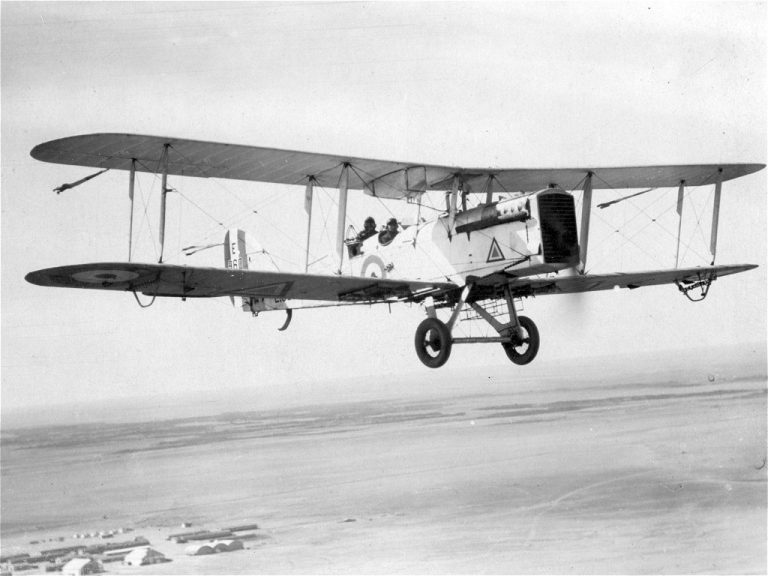
Through the 1920s the DH.9A became a mainstay of the peacetime RAF, and in particular the workhorse of Britain’s policy of colonial “air control” — policing the vast territories of Iraq, India and the Middle East from the air. Rugged and easy to maintain in the field, the Ninak soldiered on in RAF service until around 1931. The wider DH.9 family, meanwhile, spread across the world: it was hugely exported and licence-built. Spain built hundreds with Hispano-Suiza engines; South Africa flew it as a founding type of its air force; and the Soviet Union produced over 2,400 unlicensed copies as the Polikarpov R-1, making a de Havilland design the standard Soviet light bomber of the decade. Surplus DH.9s also had a long civil career as early airliners, mail-planes and joy-riding machines.
The DH.9’s honest legacy is therefore two-sided. As first built it is a textbook example of how a single bad component — forced through for reasons of production politics rather than merit — can undo an otherwise good aeroplane and cost the lives of the men who fly it. As the DH.9A it is proof that the same airframe, given the engine it always deserved, could become a genuinely great and long-serving bomber. Few aircraft carry both lessons at once. Note: production totals, loss figures and performance numbers vary between sources and are hedged throughout this page.
01Why the Airco DH.9 was worse than the DH.4 it replaced
The DH.9 kept much of the DH.4’s aerodynamics but swapped its superb Rolls-Royce Eagle for the new BHP/Siddeley Puma, expected to be more powerful and far easier to mass-produce. When the Puma proved unreliable it was de-rated to roughly 230 hp — well short of the Eagle’s output in a heavier aircraft. The consequence was lower speed and, more dangerously, a much reduced service ceiling. For a daylight bomber that had to reach and hold high altitude to survive, losing height meant losing lives. Comparative trials are said to have shown the DH.9 inferior to the DH.4, and its introduction was opposed — but production was already committed. Hedge: exact trial figures vary by source.
02The Independent Air Force raids and the DH.9’s heavy losses of 1918
In the summer of 1918 the DH.9 equipped several day-bomber squadrons of the Independent Air Force, the RAF’s strategic bombing force tasked with hitting German industry and railways. Flying by day, low and slow, they were badly exposed to German fighters and to their own failing engines. Contemporary accounts and later histories record very heavy losses — a substantial share of them from engine failure rather than enemy fire, with crews sometimes forced down over hostile territory. It remains one of the clearest cautionary tales of fielding an under-developed powerplant in wartime. Hedge: precise squadron-by-squadron loss totals differ between sources.
03From DH.9 to DH.9A “Ninak”: the Liberty engine and redemption
The fix was more power and a stronger structure. Fitted with the American 400 hp Liberty L-12 V-12 and a redesigned, enlarged airframe, the aircraft became the DH.9A, nicknamed the “Ninak.” It reached the front only in the final weeks of the war, but proved so capable and dependable that it became a standard RAF type into the 1930s. The same basic de Havilland design that had failed as the DH.9 succeeded completely once it finally had the engine it needed — a rare and instructive reversal.
How the Airco DH.9 was built: a sound airframe, a fatal engine, and the Liberty cure
A refined DH.4 airframe with the crew together
De Havilland reused much of the excellent DH.4’s wooden, wire-braced two-bay biplane structure but moved the pilot aft, seating him and the observer back-to-back. That improved crew communication and defensive coordination — a genuine step forward that the engine would sadly negate.
The Siddeley Puma: the flaw at the heart of it
The DH.9 was built around the BHP/Siddeley Puma inline six, meant to give ~300 hp and mass production. De-rated to ~230 hp for reliability it still ran hot and failed often, leaving the bomber underpowered, low-flying and slower than the DH.4 — the single decision that defined the aircraft.
Two guns, a useful bomb load — and the Liberty answer
Armament was a fixed forward Vickers .303 for the pilot and one or two Lewis guns on the observer’s Scarff ring, with up to ~460 lb of bombs. The DH.9A answered the power problem with the 400 hp Liberty L-12 and a strengthened airframe, roughly doubling the installed power.
04The engine question: BHP, Puma, Eagle and Liberty
The DH.9’s troubles trace to a supply decision. The Rolls-Royce Eagle that made the DH.4 so good was hand-built and scarce, so planners chose the new BHP (Beardmore-Halford-Pullinger) engine, developed by Siddeley-Deasy as the Puma, because it promised more power and far greater output. In service the Puma could not reliably deliver its rated power and was de-rated to about 230 hp. Only the American Liberty L-12 of ~400 hp, fitted to the DH.9A, finally gave the design a dependable, powerful engine. Hedge: some DH.9s also flew with other engines (e.g. the Fiat A.12), and figures vary.
05How many were built — DH.9 and DH.9A
Figures vary between sources. The DH.9 was produced in very large numbers — commonly cited as around 3,000–4,000 built across many British contractors (roughly 3,200 is a typical figure). The DH.9A added on the order of 1,700–2,000 more from British production, and the Soviet Union built over 2,400 further copies as the Polikarpov R-1. Spain and others licence-built still more. Hedge: totals differ widely; treat any single number as approximate.
06Crew, armament and what the DH.9 could carry
The DH.9 was a two-seater: pilot and observer/gunner. The pilot fired a fixed, synchronised .303 in Vickers machine gun; the observer had one or two .303 in Lewis guns on a rotating Scarff ring. Bomb load was up to around 460 lb (two 230-lb or several smaller bombs) carried externally. The DH.9A could lift a heavier load thanks to its Liberty engine. These are nominal figures — loadouts varied with mission, fuel and altitude.
Airco DH.9 specifications: dimensions, performance, armament and cost
Baseline note: the figures describe the standard Airco DH.9 day bomber with the 230 hp Siddeley Puma, the engine that the overwhelming majority of the 3,000-odd DH.9s actually carried, in the two-seat bombing configuration with a 460 lb load. Deltas for the re-engined DH.9A with the American Liberty 12A, and for the Fiat A.12 and Napier Lion re-engining experiments, are in grey. Climb is given as time to a stated height and endurance in place of range, which is how figures of this period were quoted; speeds are given with their altitude wherever the source states one, because on this particular aircraft the altitude is the whole argument. Where a DH.4 figure appears alongside, it is there deliberately: the DH.9 was built to replace the DH.4 and the comparison is the reason this page exists.
Dimensions & weights
- Crew
- 2 — pilot and observer/gunner, seated back to back in a common cockpit opening. This was the DH.9's one genuine improvement on the DH.4, where a fuel tank sat between the two men and made speech impossible.
- Wingspan
- 12.92 m (42 ft 4-5/8 in) — the DH.4 wing, carried over unchanged. The DH.9A stretched it to 14.01 m (45 ft 11-3/8 in) to carry the Liberty and its fuel.
- Length
- 9.27 m (30 ft 5 in) per Manson and Jackson; Bruce gives 9.30 m (30 ft 6 in). DH.9A 9.22 m (30 ft 3 in).
- Height
- 3.44 m (11 ft 3½ in); Bruce gives 3.40 m (11 ft 2 in). DH.9A 3.45 m (11 ft 4 in).
- Wing area
- 40.3 m² (434 sq ft) — identical to the DH.4, because it is the DH.4 wing. DH.9A 45.22 m² (486.75 sq ft).
- Aerofoil
- RAF-16, two-bay biplane cellule with wire bracing and a fixed tailskid undercarriage. Nothing about the airframe was new and nothing about it was bad; the fault lay entirely forward of the firewall.
- Empty weight
- 1,011 kg (2,230 lb) tare, the figure both Jackson and Manson give. Thetford gives 999 kg (2,203 lb). DH.9A 1,270 kg (2,800 lb).
- Loaded weight
- 1,719 kg (3,790 lb) with the full 460 lb bomb load (Manson); Jackson quotes an all-up 1,508 kg (3,325 lb) and Thetford 1,664 kg (3,669 lb), which are lighter fits. DH.9A 2,107 kg (4,645 lb).
- Wing loading at loaded weight
- 42.7 kg/m² (8.7 lb/sq ft) — against 39.5 kg/m² (8.0 lb/sq ft) for a fully loaded DH.4 on the same wing. A heavier aeroplane on the same area with less power is a very short summary of the whole problem.
- Power loading
- 7.47 kg/hp (16.5 lb/hp) on 230 hp. The DH.4 with a 375 hp Eagle VIII managed 4.20 kg/hp (9.3 lb/hp); the DH.9A with a 400 hp Liberty, 5.27 kg/hp (11.6 lb/hp).
- Tankage
- Fuel 318 to 320 litres (70 to 70.5 imperial gallons), oil 20 to 32 litres (4.5 to 7 gallons), cooling water 30 to 34 litres (6.5 to 7.5 gallons) — Bruce's figures. The generous fuel is why endurance stayed good even when nothing else did.
- Production
- 3,024 DH.9s built in Britain by the commonly cited count; Bruce puts the total at ~4,091 across all contractors, and Belgian and Spanish production sits on top of that. 2,300 DH.9As were built by ten British firms, and the Soviet Union built more than 2,400 unlicensed Polikarpov R-1 copies between 1922 and 1932. 4,630 DH.9s were on order before the prototype had flown.
- Service dates
- Air Board drawings for a modified DH.4 presented 23 July 1917; prototype (a converted DH.4) first flown from Hendon in July 1917; first deliveries to No. 108 Squadron RFC in November 1917 with just five accepted by the year's end; first operational sortie by No. 6 Squadron RNAS in March 1918; nine Western Front squadrons by July 1918; withdrawn from RAF service in 1920. The DH.9A served the RAF until 1930 and Spanish DH.9s flew until 1940.
Performance
- Maximum speed at sea level
- 182 km/h (113 mph) — Manson. The DH.4 with the Eagle VIII did 230 km/h (143 mph) at the same height.
- Maximum speed at 3,050 m
- 176 km/h (109.5 mph at 10,000 ft) — the figure Jackson and Manson agree on. Thetford gives 179 km/h (111.5 mph). This is the number that mattered, because it is roughly the height a formation had to hold to survive.
- Maximum speed at 3,960 m
- 168 km/h (104.5 mph at 13,000 ft) — Thetford. An Albatros D.Va or a Fokker D.VII had well over 30 mph in hand at that height.
- Time to 3,050 m
- 18 minutes 30 seconds (to 10,000 ft). The DH.4 it replaced took 9 minutes. That is not a marginal regression; it is twice as long, and every minute of it was spent inside German anti-aircraft range.
- Time to 3,960 m
- 31 minutes 55 seconds (to 13,000 ft) — Thetford. A loaded DH.9 formation could spend more than half an hour simply getting to a height from which it might come home.
- Initial rate of climb
- 3.2 m/s (625 ft/min) per Jackson; Thetford gives 2.5 m/s (500 ft/min). Quoted here only because it is in the sources; period practice is the time-to-height figures above.
- Service ceiling
- 4,724 m (15,500 ft) — Jackson, Manson and Thetford's naval volume all agree. Thetford's RAF volume gives 5,334 m (17,500 ft) for a lighter fit. The DH.4 reached 6,706 m (22,000 ft). A DH.9 could not climb above the aircraft sent to kill it, and that single line explains the casualty returns.
- Endurance
- 4 hours 30 minutes (Jackson, Manson); Thetford gives 4 hours. Genuinely good, and the one performance figure on which the DH.9 beat the DH.4's 3 hours 45 minutes.
- Bomb load
- 209 kg (460 lb) maximum — the same as the DH.4, carried more slowly and lower.
- Loss record
- Between May and November 1918 Nos. 99 and 104 Squadrons of the Independent Force alone lost 54 DH.9s to enemy action and wrote off 94 more in accidents. On several raids fewer than half the aircraft that took off reached the target, most of the shortfall being engine failures rather than combat.
- DH.9A with the Liberty 12A
- 198 km/h at sea level (123 mph), 184 km/h at 3,050 m (114.5 mph at 10,000 ft), 15 minutes 45 seconds to 3,050 m (10,000 ft), ceiling 5,105 m (16,750 ft), endurance 5 hours 25 minutes, bomb load 336 kg (740 lb). Still no DH.4 on ceiling, but it climbed with a heavier load and, decisively, the engine kept running.
- Re-engined experiments
- With the Fiat A.12: 189 km/h at 3,050 m (117.5 mph at 10,000 ft), ceiling 5,334 m (17,500 ft). With the 430 hp Napier Lion: 222 km/h at 3,050 m (138 mph at 10,000 ft), 232 km/h at sea level clean (144 mph), ceiling 7,010 m (23,000 ft). A Lion-engined DH.9 flown by Captain Lang with Lieutenant Blowes took the world altitude record to 9,296 m (30,500 ft) on 2 January 1919; both men went to hospital with frostbite.
Propulsion & systems
- Engine
- One Siddeley Puma, a six-cylinder water-cooled upright inline, rated 230 hp (170 kW) and driving a two-blade fixed-pitch wooden propeller through a direct drive.
- Engine origin and the derating
- The Puma is the Beardmore-Halford-Pullinger, chosen by the Advisory Committee for Aeronautics in March 1917 while it was still being tested, on the strength of a projected 300 hp. It would not hold that output reliably and was cut to 230 hp to keep it running at all. Siddeley-Deasy renamed it the 230 hp B.H.P., then the Puma. The aircraft was designed around a number the engine never delivered.
- Engine dimensions
- 18.8 litres (1,149 cu in) displacement, dry weight 293 kg (645 lb). Aluminium cylinder blocks in groups of three with screwed-in steel liners — the whole point of the design was that it could be built by semi-skilled labour, unlike a Rolls-Royce Eagle.
- Why it kept breaking
- The connecting rods were stampings, and the stamping introduced a weak section that is generally held to be behind the type's poor service reliability. Squadrons fitted home-made enlarged carburettor air intakes and reworked mixture controls in the field, which tells you plainly how much confidence there was in the factory article.
- The second source
- Galloway Engineering built the same basic engine as the Adriatic. Both were called 230 hp B.H.P. in British service but they differed in dimensions and shared few interchangeable parts — a logistical trap in a squadron store. Siddeley-Deasy built the vast majority: at least 4,288 delivered against 11,500 ordered before the Armistice cancelled the rest.
- Alternative engines
- 2,000 Fiat A.12s ordered in August 1917 for delivery in the first half of 1918; deliveries were unsatisfactory. The 430 hp Napier Lion was tried and was far too scarce. The Rolls-Royce Eagle was the obvious answer and could not be had in quantity. The 400 hp American Liberty 12A was the answer that worked, and it produced the DH.9A.
- Liberty 12A (DH.9A)
- A 27-litre water-cooled V-12 of 400 hp (300 kW). Crews in the Middle East rated its reliability as good as any Rolls-Royce in desert conditions, which for a hastily designed American wartime engine is a remarkable verdict.
- Gun synchronisation gear
- Constantinesco-Colley C.C. hydraulic gear. George Constantinescu's system transmits the firing impulse as a pressure wave along a column of oil rather than through a mechanical push rod, which is why it could be fitted to any engine and any airframe without redesign. It became standard on all British aircraft with synchronised guns in November 1917 and stayed in service until the Gloster Gladiator.
- Observer's mounting
- Scarff No. 2 ring on the rear cockpit coaming, with bungee compensation so the gun stayed where the gunner put it against the slipstream. The best mounting of the war, by a distance.
- Cooling and airframe systems
- Frontal block radiator with pilot-operated shutters; welded and wire-braced airframe with a wooden two-bay cellule; no armour anywhere. Some aircraft carried wireless telegraphy and a camera for reconnaissance, and one was converted to carry a single stretcher on the upper longerons behind the pilot as an air ambulance.
- Bombing equipment
- Racks under the fuselage and lower wings, with a High Altitude Drift Sight for the observer. The bomb sight assumed a stable run at height — an assumption the Puma frequently declined to honour.
07Variants: DH.9, DH.9A “Ninak”, the Soviet R-1 and civil conversions
The DH.9 was the original Puma-engined day bomber. The DH.9A (“Ninak”) was the strengthened, Liberty-engined redemption that served the RAF into the 1930s. Abroad, Spain licence-built hundreds with Hispano-Suiza engines, South Africa flew and re-engined it (the Bristol Jupiter-powered “M’pala”), and the Soviet Union built 2,400+ copies as the Polikarpov R-1. Numerous DH.9s were converted for civil use as early airliners, air-mail and joy-riding aircraft (e.g. the DH.9B/9C). Hedge: variant designations and totals differ between sources.
08What an Airco DH.9 “cost” — and why we can’t give a number
There is no reliable, comparable unit price or cost-per-flight-hour for a 1918 British day bomber of this class. Wartime accounting, the collapse of Airco after the war, and the sheer spread of licence and export production mean any single figure would mislead, so we record it honestly as not reliably recorded. What can be said is that the DH.9 was deliberately conceived to be cheaper and more mass-producible than the Rolls-Royce-engined DH.4 — an economy that, through the Puma, proved false.
Armament & payload
The DH.9 carried the DH.4's guns and the DH.4's bombs to two-thirds of the DH.4's altitude
Nothing about the DH.9's armament was wrong. One synchronised Vickers for the pilot, one or two Lewis guns on a Scarff ring for the observer and up to 460 lb of bombs was exactly the right fit for a 1918 day bomber, and it was precisely what the DH.4 carried. The problem was that the same weapons were being delivered from a lower, slower aircraft that could not climb away from anything, so the defensive guns were fired far more often and the bombs were dropped far less often.
Read the armament rows below with the ceiling figure in mind. A Scarff ring is a superb mounting and a Lewis gun is a good weapon, but a two-seater whose survival depends on its rear gun has already lost the argument. What the DH.9 actually needed was six thousand feet, and no gun fit could supply it. Fits varied: RNAS and Home Defence coastal patrol aircraft often flew with reduced or no bomb load and extra fuel, Middle East machines were frequently flown with a single Lewis to save weight, and post-war export aircraft were re-armed and re-equipped by their operators.
Pilot's fixed gun
- One .303 in (7.7 mm) Vickers machine gun mounted on the port side of the forward decking, firing through the propeller arc, with the breech inside the cockpit where the pilot could reach it to clear a stoppage.
- The air-cooled pattern used on aircraft, with the water jacket lightened and louvred. Rate of fire about 450 rounds per minute, cut by the synchronisation gear.
- Aimed through a ring-and-bead sight; Aldis telescopic tube sights were fitted to a proportion of aircraft.
- On a bomber this gun is for the run-in and for a head-on pass, not for fighting. DH.9 crews nevertheless used it aggressively, and Captain John Stevenson Stubbs took eleven victories flying the type.
Observer's guns
- One or two .303 in (7.7 mm) Lewis guns on a Scarff No. 2 ring around the rear cockpit. Bruce records both a single gun and a double-yoked pair as standard fits.
- The Lewis fed from 97-round double drums; a gunner changed drums by hand at 13,000 ft in a 100 mph slipstream, wearing gloves he could not afford to take off.
- The Scarff ring rotated through the full circle and was bungee-compensated in elevation, so the gun stayed on aim instead of being blown flat by the airflow.
- Two celebrated actions came from this mounting. On 9 August 1918 Lieutenant E. A. Simpson of No. 49 Squadron shot down four fighters defending a formation; on 23 August, Lieutenant Arthur Rowe Spurling and Sergeant Frank Bell of the same squadron were attacked by some thirty Fokker D.VIIs and were credited with five.
- Those are the exceptions that make the rule. The rear gun was busy because the aeroplane could not run away.
Ammunition and sights
- Belt feed for the Vickers with Prideaux disintegrating metal links on later aircraft, which removed the take-up drum and one of the commonest sources of stoppage.
- Drum feed for the Lewis, with spare drums stowed in the rear cockpit. The observer's usable ammunition was whatever he could reach and fit while fighting.
- Belts loaded ball with tracer, and incendiary rounds where balloons or fabric structures were the target.
- Ring-and-bead for the pilot, ring-and-bead on the Lewis, and the High Altitude Drift Sight for bombing.
- No gun heating. Above 13,000 ft in an open cockpit, both weapons and both crewmen were operating well outside comfortable limits, and freezing was a routine cause of a gun going silent.
Synchronisation gear
- Constantinesco-Colley C.C. hydraulic gear, standard on all British synchronised installations from November 1917 and therefore standard on every DH.9 that reached a squadron.
- It works by sending the trigger impulse as a pressure wave down a pipe of oil from an impulse generator on the engine to a trigger motor on the gun — George Constantinescu's theory of sonics, first drawn in May 1916 and provisionally patented that July.
- Because the impulse is hydraulic rather than a rod, the gear did not care about engine type, gun position or the distance between them. That adaptability is why it displaced the Sopwith-Kauper mechanical gear, which had begun shooting through propellers as gun and engine speeds rose.
- Roughly 6,000 gears were fitted between March and December 1917 and another 20,000 during 1918; 50,000 were made in all and the type stayed in service for twenty years.
- It is worth saying plainly that the gun gear was one part of this aircraft that worked exactly as advertised.
Bomb load
- Maximum 209 kg (460 lb) on racks under the fuselage and lower wings.
- Typical fits per Bruce: two 230 lb bombs, or three to four 112 lb bombs. Smaller 25 lb Cooper bombs were carried for ground attack and anti-personnel work.
- Coastal patrol aircraft flying anti-submarine work from British aerodromes carried a reduced load and depth-charge-style ordnance against surfaced U-boats.
- The DH.9A raised the maximum to 336 kg (740 lb) on underwing and fuselage racks — the more useful number, and the one that made the Nine-Ack a real light bomber.
- A DH.9 at maximum load struggled to reach a height from which the bombs could be aimed accurately. The payload figure and the ceiling figure have to be read together or they mislead.
What was not carried
- No armour of any kind, for the crew, the engine, the radiator or the tanks. Standard for the period, and unusually costly here because the aircraft was so often caught.
- No oxygen and no cockpit heating, which capped the useful operating height well below any figure the aircraft could theoretically reach.
- No parachutes for RAF aircrew in 1918 — the observer's only recourse was the gun.
- Wireless telegraphy and a camera were carried by aircraft on reconnaissance and artillery work but were not part of the bombing fit; the weight came off the bomb load.
- No self-sealing tanks, no fire extinguisher worth the name, and no way to jettison fuel.
Three typical loadouts
- Independent Force day raid, summer 1918
- Two 230 lb bombs, one synchronised Vickers, one Lewis on the Scarff ring, full fuel. Formation cruise at 10,000 to 13,000 ft. This is the fit in which Nos. 99 and 104 Squadrons lost 54 aircraft to enemy action in six months, and it is the reason the DH.9 has the reputation it has.
- Home waters anti-submarine patrol, 1918
- Reduced ordnance, full tanks, single Lewis aft, endurance flown out to the limit of the 4½ hours. No opposition to speak of, no need for ceiling, and here the DH.9 was a perfectly sound aeroplane — a fact usually lost in the account of the Western Front.
- DH.9A colonial policing sortie, Iraq or the North-West Frontier, 1922
- Four 112 lb bombs or a mix with 20 lb Cooper bombs, one Vickers, one Lewis, extra radiator area, a spare wheel and water containers lashed to the fuselage. Long sorties over country with no landing grounds, flown on a Liberty that could be relied on to bring the crew back. Whatever one thinks of the mission, this is the aircraft working as intended.
Sourcing caveat: DH.9 performance figures vary widely and the variation is almost always about which altitude and which all-up weight is meant. This page prefers figures that state an altitude — Manson and Jackson for 109.5 mph at 10,000 ft, Thetford for 111.5 mph at 10,000 ft and 104.5 mph at 13,000 ft — and flags the bare sea-level 113 mph as the least useful number in the literature. Ceiling is given as 15,500 ft by three authorities and 17,500 ft by one, the higher figure evidently describing a lighter fit. Bomb and gun fits are from Bruce and Manson. Production totals disagree by a thousand airframes.
Variants
The DH.9 was rescued by an American engine and then had a longer career than the aircraft it failed to replace
The DH.9 story is a procurement story before it is an engineering one. In June 1917, after the Gotha raids on London, the War Office proposed nearly doubling the Royal Flying Corps to 200 squadrons and the Cabinet agreed in early July. Most of the new squadrons were to be bombers. An order for 700 DH.4s was placed on 28 June; on 23 July the Air Board produced drawings for a modified DH.4 with a new engine, and existing DH.4 contracts were converted wholesale. Orders reached 4,630 aircraft before the prototype flew. J. M. Bruce's judgement is that the choice "seems to have been taken in a spirit of optimism or blind faith, for its chosen engine was, in July 1917, experiencing serious manufacturing difficulties".
The trials at Martlesham Heath told the truth immediately: the B.H.P. would not give 300 hp, derating it to 230 hp to keep it alive gutted the performance, and the resulting aeroplane was inferior to the DH.4 in the one dimension that decides whether a day bomber comes home. Trenchard objected in November 1917. Sir William Weir's answer — that "it was the choice of having the DH.9 with the B.H.P. engine, or of having nothing at all" — is the honest defence, and it is also an admission. Production had already started; stopping it meant empty squadrons.
What redeems the record is what came next. Westland redesigned the aircraft around the 400 hp Liberty while Airco worked on the DH.10, gave it longer wings and a stronger fuselage, and produced in the DH.9A an aircraft that was reliable, useful and long-lived. Bruce's verdict on the original is worth keeping: "Certainly, there was little wrong with the aircraft itself."
- DH.9 (1917–1919 / 3,024 British-built; ~4,091 by Bruce's count)
- The production aircraft: DH.4 wings and tail, new fuselage with the crew together, 230 hp Siddeley Puma or Galloway Adriatic. Built by Airco, Alliance, G. & J. Weir, Short Brothers, Vulcan, Waring & Gillow and National Aircraft Factories Nos. 1 and 2.
- DH.9 (Fiat A.12) (1918 / 2,000 engines ordered, deliveries unsatisfactory)
- Italian 300 hp six-cylinder inline as an escape from the Puma; better at height — 117.5 mph at 10,000 ft and a 17,500 ft ceiling — but never available in the numbers promised.
- DH.9 (Napier Lion) (1918–1919 / small numbers)
- 430 hp broad-arrow twelve. Transformed the aircraft: 138 mph at 10,000 ft and a 23,000 ft ceiling, and a world altitude record of 30,500 ft on 2 January 1919. The engine was needed elsewhere.
- DH.9A (1918–1927 / 2,300 built by ten British firms, plus 268 on 1925–26 contracts)
- The redemption. Westland-designed, 400 hp Liberty 12A, longer-span wings, strengthened fuselage, 740 lb of bombs, 5 hours 25 minutes endurance. First Liberty aircraft flown 19 April 1918, in RAF service from June. Equipped 24 RAF squadrons between 1920 and 1931 and became the standard imperial policing aircraft in Iraq, on the North-West Frontier and in Africa.
- Engineering Division USD-9A / USD-9B (1918–1919 / 9 completed of 1,415 ordered)
- American-built DH.9A by the Army's Engineering Division and Dayton-Wright. One USD-9A carried a pressurised cockpit for high-altitude research, which is a considerably more interesting footnote than the production total suggests.
- Polikarpov R-1, R-2, MR-1 (1922–1932 / more than 2,400 R-1s, 124 MR-1s)
- Unlicensed Soviet copies of the DH.9A with the M-5, the Soviet Liberty clone, and with Mercedes, Puma and BMW IVa engines in small batches. The MR-1 was a twin-float seaplane. More R-1s were built than DH.9As.
- DH.9B, DH.9C and DH.9J (1919–1930s / civil conversions)
- Three- and four-seat civil conversions flown by Aircraft Transport and Travel on the earliest London–Paris and London–Amsterdam services, and the DH.9J with a 385 hp Armstrong Siddeley Jaguar III radial for the de Havilland School of Flying.
- M'pala I, M'pala II and Mantis (South Africa, 1920s–1937 / conversions)
- South African Air Force rebuilds with 450 hp Bristol Jupiter VI, 480 hp Jupiter VIII and 200 hp Wolseley Viper engines respectively. The SAAF took 48 DH.9s, used them against the Rand Revolt in 1922 and flew the conversions until 1937.
- Spanish-built DH.9 (1920s–1940 / hundreds)
- Licence production with 300 hp Hispano-Suiza engines. Some remained in Spanish service until 1940 — the longest career of any DH.9 variant, and a reminder that with a decent engine the airframe was sound.
- Handley Page HP.17 and Westland Walrus (1920–1921; 36 Walruses)
- The HP.17 was a DH.9 fitted with slotted wings for Handley Page's leading-edge slot research. The Walrus was the production form of the Armstrong Whitworth Tadpole, a three-seat carrier spotter on DH.9A lines with a Napier Lion III.
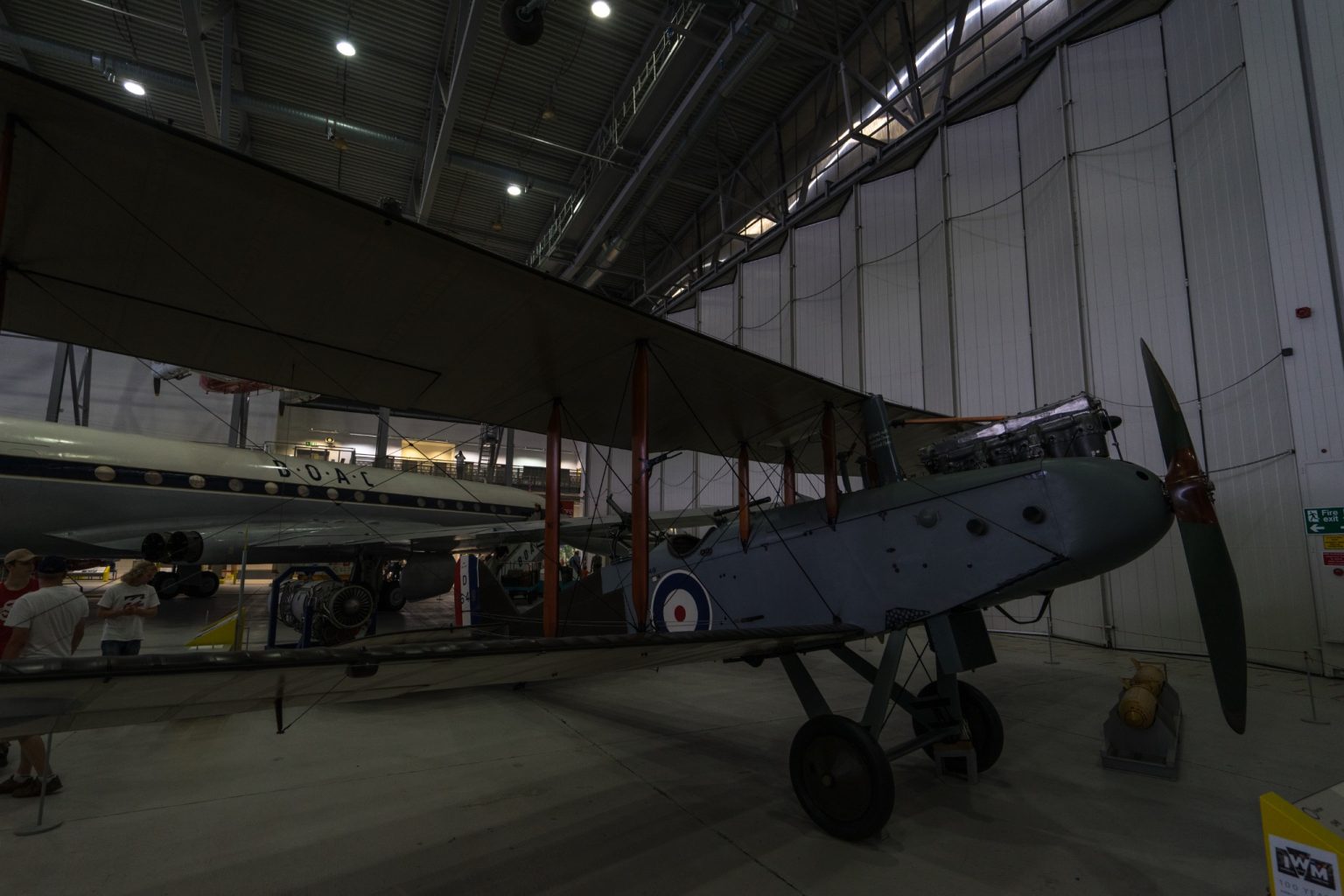
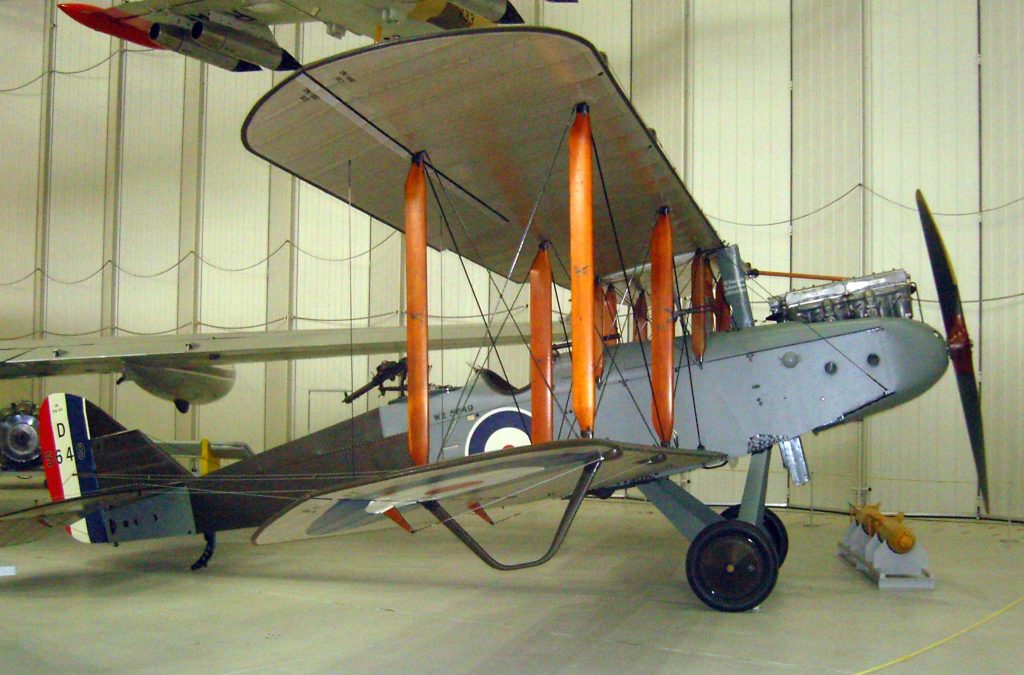
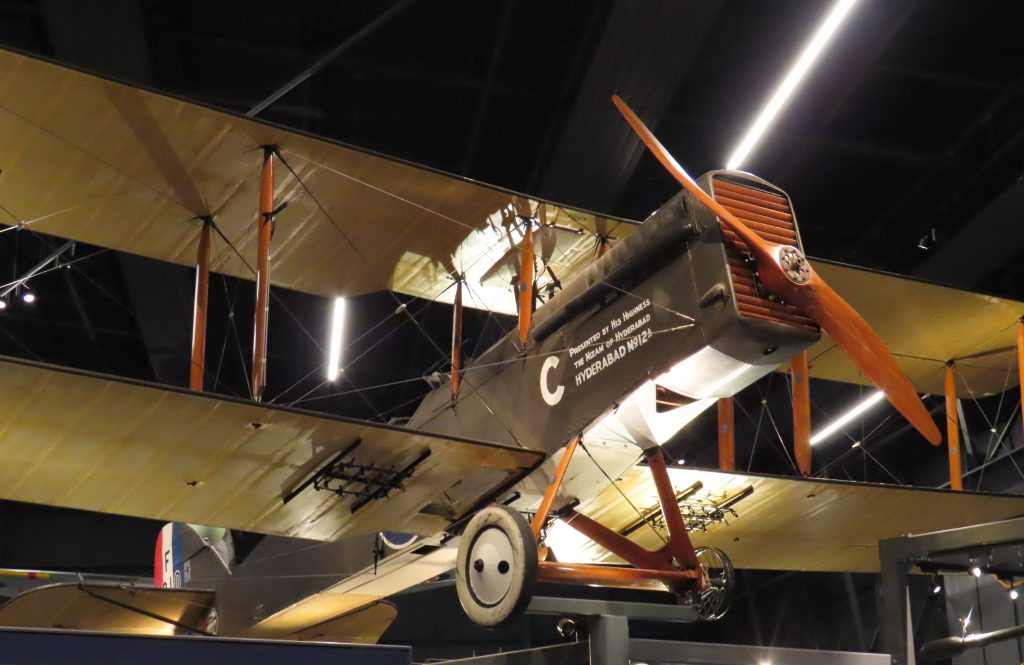
Survivors, stated precisely. Original DH.9 airframes: F1258 at the Musée de l'Air et de l'Espace, Paris; an unserialled ex-South African Air Force machine, later the civil ZS-AOI, at the South African National Museum of Military History in Johannesburg; and G-EAQM, originally RAF serial F1278, the first single-engined aircraft to fly from Britain to Australia, at the Australian War Memorial in Canberra. Three further DH.9 remains were found in India in 2000 in the stables of the Maharaja of Bikaner: D5649 was restored and is displayed at the Imperial War Museum, Duxford; E8894, now G-CDLI, was restored to airworthy condition and is flown in England by the Historic Aircraft Collection; the third stayed in India and is displayed at Junagarh Fort, Bikaner. Original DH.9A airframes: exactly one, F1010, completed by Westland in June 1918 for No. 110 Squadron, shot down over Germany on 5 October 1918, displayed in Berlin before the Second World War, recovered from Poland by exchange in 1977 and now at the Royal Air Force Museum London. Everything else that carries DH.9 or DH.9A markings today is a reproduction or a composite, and none of the airworthy DH.9 reproductions should be confused with G-CDLI, which is an original airframe.
Airco DH.9 timeline: from flawed bomber to long-serving Ninak
Designed by de Havilland
Airco’s Geoffrey de Havilland develops the DH.9 as a cheaper, mass-producible successor to the excellent DH.4, built around the new BHP/Puma engine.
First flight
The prototype flies from Hendon; introduction to service follows in November 1917.
The engine debacle
The Puma proves unreliable and is de-rated to ~230 hp. Trials reportedly show the DH.9 inferior to the DH.4 it replaces — but production is already committed.
Independent Air Force raids
DH.9 day-bomber squadrons raid targets in Germany by day and suffer heavy losses to fighters and engine failure alike.
The DH.9A “Ninak”
Re-engined with the 400 hp American Liberty and given a stronger airframe, the DH.9A enters service in the war’s final weeks — the redemption of the design.
Global export & licence build
Spain, South Africa, Belgium and many others operate or build the type; surplus DH.9s begin a long civil career as airliners and mail-planes.
RAF colonial air-policing
The DH.9A becomes the workhorse of Britain’s “air control” over Iraq, India and the Middle East.
Soviet Polikarpov R-1
The USSR builds 2,400+ unlicensed DH.9A copies as the R-1 — its standard light bomber and reconnaissance aircraft.
RAF withdrawal
The DH.9A is finally retired from front-line RAF service after more than a decade of colonial service.
Survivors recovered & restored
Airframes recovered from India (some from a maharaja’s stables/museum) are restored — including the world’s only airworthy DH.9.
The Airco DH.9 in its own words: engine failures, redemption and rediscovery
A successor to the DH.4
On paper the DH.9 looked like an improvement: the same fine airframe, the crew seated together, and a new engine promised in huge numbers.
Read the story
The engine that wasn’t ready
The BHP/Siddeley Puma was meant to give 300 hp. To run reliably at all it had to be de-rated to about 230 — and even then it failed often.
Read the story
A step backwards
Comparative trials reportedly showed the DH.9 to be slower and lower-flying than the DH.4 it was built to replace — and senior officers said so.
Read the story
The Independent Force raids
Through 1918 DH.9 squadrons of the Independent Air Force flew daylight raids deep into Germany — and were cut to pieces.
Read the story
The enemy behind the firewall
A grim share of DH.9 losses came not from the enemy but from the engine quitting — sometimes over hostile ground, far from home.
Read the story
America’s 400 horses
Fitting the big American Liberty L-12 transformed the design: suddenly there was power to spare, and the aircraft became strong and dependable.
Read the story
A bomber crews loved
Nicknamed the “Ninak,” the DH.9A became a standard RAF type into the 1930s — rugged, honest and easy to keep flying in the field.
Read the story
Policing an empire from the air
Through the 1920s the DH.9A was the workhorse of Britain’s policy of “air control” over Iraq, India and the Middle East.
Read the story
A de Havilland in Soviet colours
The Soviet Union built more than 2,400 unlicensed copies as the Polikarpov R-1 — making the DH.9A the standard Soviet light bomber of the decade.
Read the story
Airliners, mail and joy-rides
Surplus DH.9s were converted by the hundred into early passenger aircraft, mail-planes and pleasure-flight machines across post-war Europe.
Read the story
Out of a maharaja’s stable
Decades later, remarkably complete DH.9 airframes were discovered in India — famously stored in a maharaja’s elephant stables and fort — and brought back to Britain.
Read the story
The world’s only airworthy DH.9
From those Indian relics came the world’s only airworthy Airco DH.9 — painstakingly restored by the Historic Aircraft Collection and flown again a century on.
Read the story
Airco DH.9 in photographs: wartime service, the DH.9A, survivors and civil life
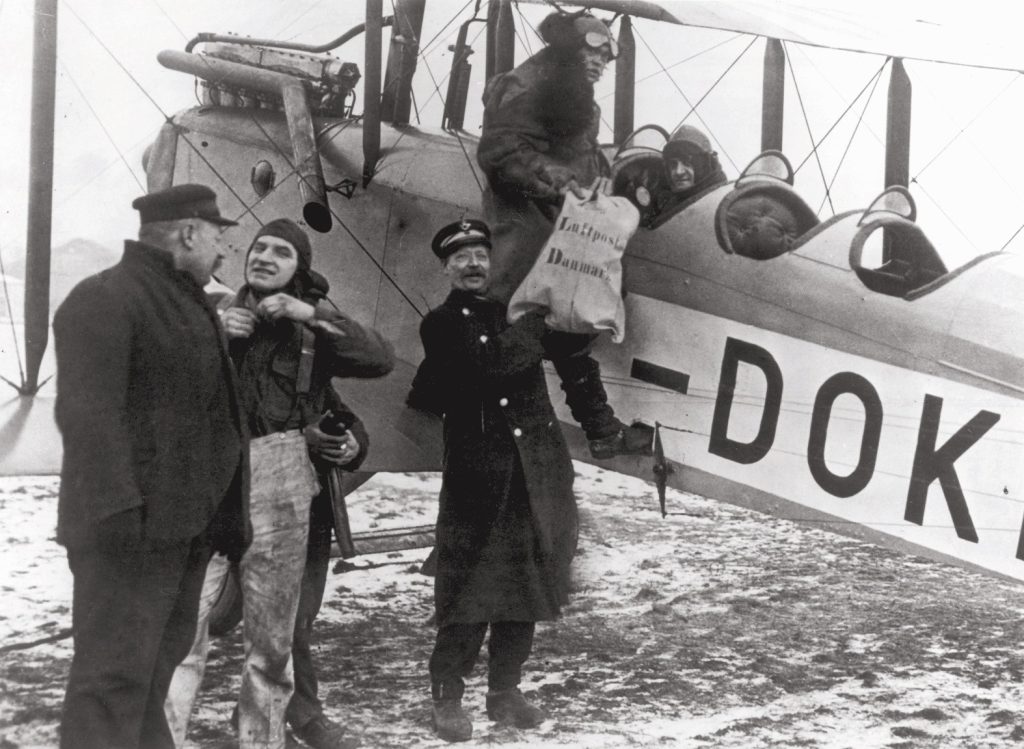
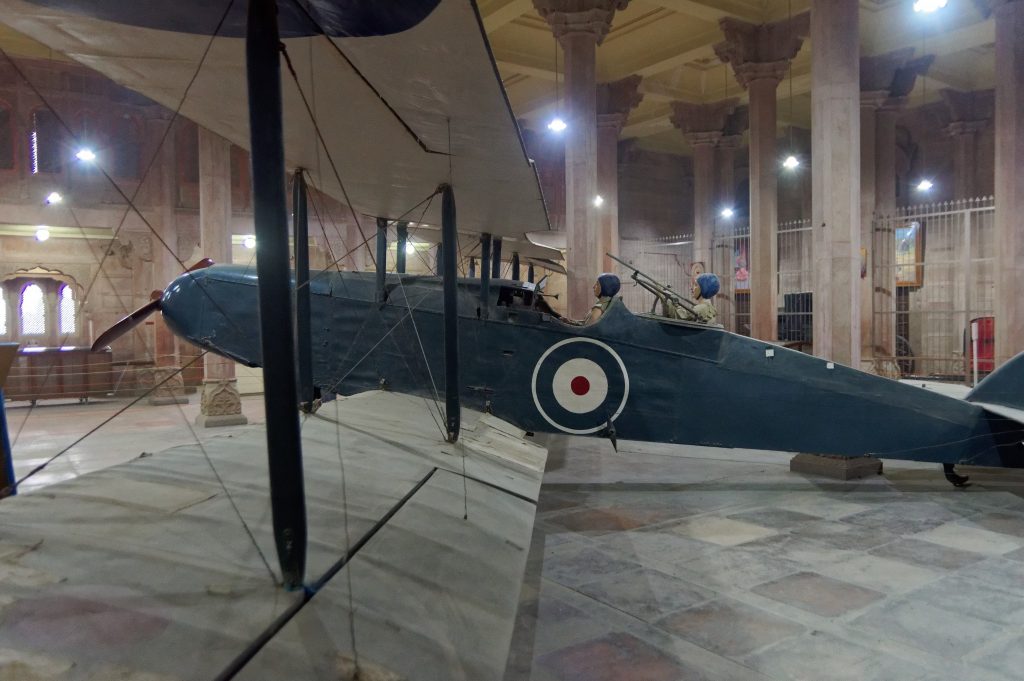
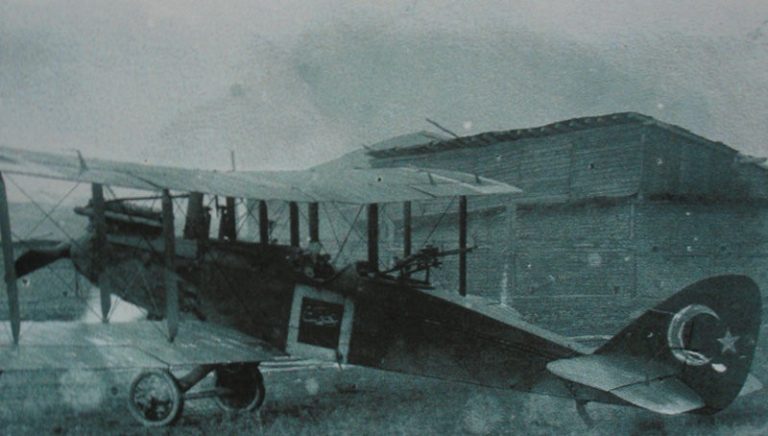
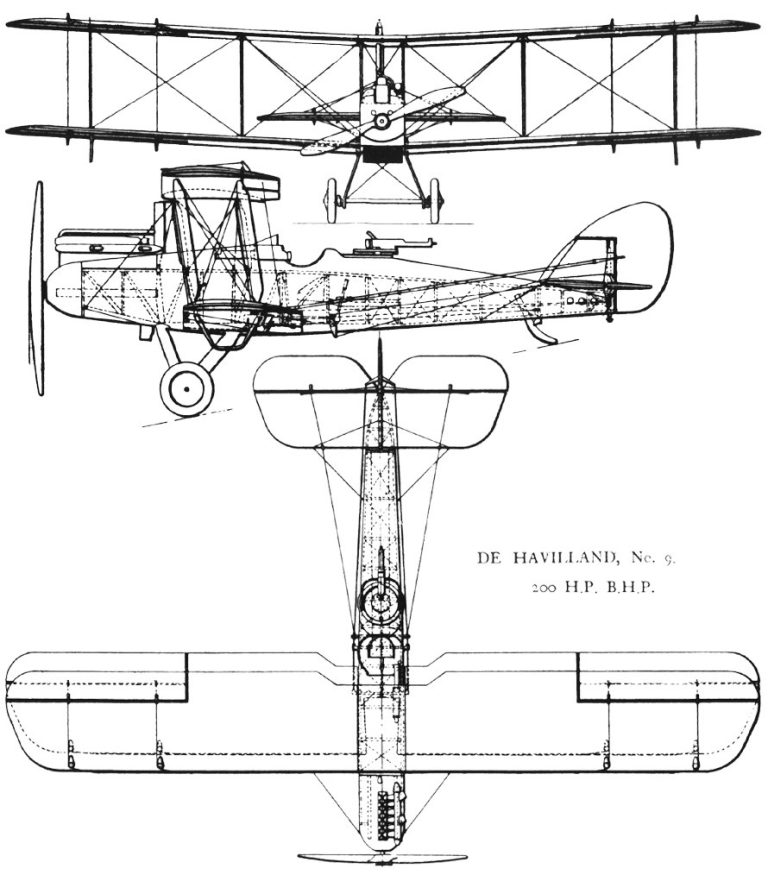
Tap or click any photo to enlarge. All images are used under their stated licences; credits appear in each caption.
Restored to fly: the world’s only airworthy Airco DH.9
“Historic World War One Airco DH9 bomber restored to former glory.” Filmed by The Telegraph (an established news channel, 6M+ subscribers), this report follows the Historic Aircraft Collection’s restoration of a DH.9 recovered from India — today the world’s only airworthy example.
Where the Airco DH.9 flew: British origin, the 1918 raids, global export and survivors
One country designed and first flew it; its brief, costly war was fought over the Western Front and Germany; and its long afterlife as the DH.9A and the Soviet R-1 spread it across the world. Toggle the categories to see its British origin, its 1918 service and raids, the post-war and export operators, and where original airframes survive today. Hover or tap a country for detail.
The Airco DH.9’s war record: costly by day, redeemed by the Ninak
The DH.4 shaped two stories at once: daylight strategic bombing in Europe, and the industrial birth of American military aviation. Figures are approximate and drawn from published histories; we flag them as estimates.
Airco DH.9: frequently asked questions
Can I fly in an Airco DH.9?
Why was the Airco DH.9 worse than the DH.4 it replaced?
What engine did the DH.9 use, and why was it a problem?
What was the DH.9A “Ninak”?
Did the DH.9 really suffer heavy losses over Germany?
How many Airco DH.9s were built?
Was the DH.9 exported or built abroad?
Are there any surviving Airco DH.9s?
What was the DH.9’s role and armament?
You cannot fly the Airco DH.4 —
but these, you can
The DH.4 lives on only in museums and a rare airworthy reproduction. But you can still strap into a real military jet and fly it yourself. Here is what MiGFlug can put you in.
 Fly the L-39 AlbatrosThe world’s most-flown jet trainer — aerobatics included
 Fly the F-104 Starfighter“The missile with a man in it”
 Fly the MiG-21The Cold War’s most-produced jet
 Fly the T-33 Shooting StarAmerica’s first jet trainer
 Fly the DH VampireA piece of early jet history
 Fly the S.211Agile Italian jet trainer
 Fly the MB-326The classic Aermacchi jet
 Fly the MiG-15The Soviet legend of the Korean War
More British aircraft of the Great War
Sources & further reading on the Airco DH.9
- Imperial War MuseumsThe DH.9 D5649 at Duxford, recovered from India, and wider WWI air-war context.
- Royal Air Force MuseumThe DH.9A “Ninak” in the collection and the RAF’s 1920s colonial “air control.”
- Historic Aircraft CollectionRestoration of the world’s only airworthy DH.9 from India-recovered airframes.
- Vintage Aviation NewsThe airworthy DH.9 G-CDLI, its Indian provenance and restoration history.
- Grub Street — “DH9: From Ruin to Restoration”Book-length account of the India recovery and rebuild of the surviving DH.9s.
- Smithsonian National Air and Space MuseumWWI bombing and the development of British day bombers for institutional context.
- AviastarSpecifications, variants and production history of the DH.9 and DH.9A.