
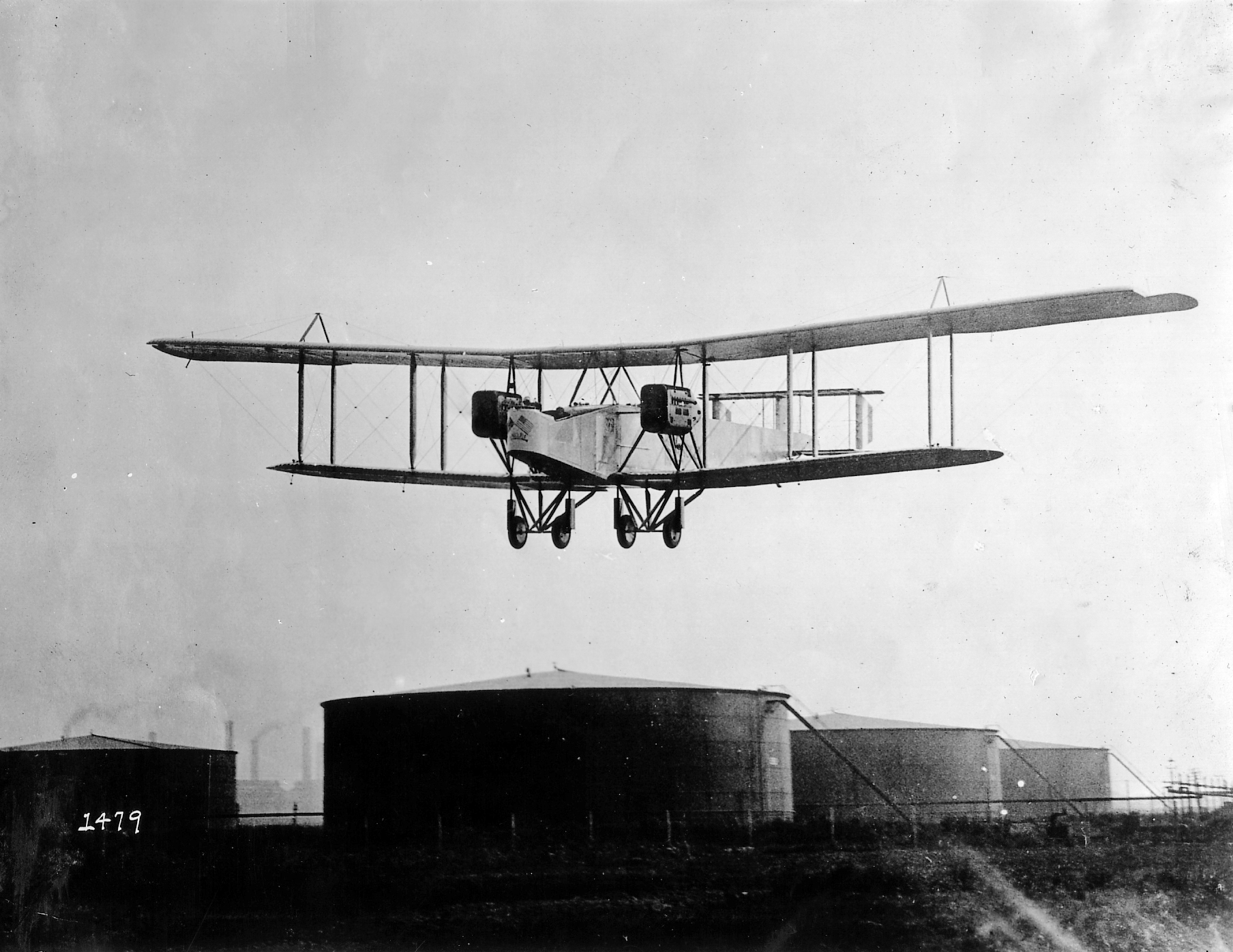
Handley Page O/400 — the bloody paralyser that carried Britain’s war into Germany
The Handley Page O/400: Britain’s heavy bomber and the birth of the night raid
In the autumn of 1914 the Royal Naval Air Service went looking for a weapon that did not yet exist. Britain wanted an aeroplane big enough to carry a heavy load of bombs across the North Sea and drop it on the sheds where German airships were built. The requirement passed into legend through a single blunt phrase — the call for a “bloody paralyser of an aeroplane” — and out of it came the Handley Page O/100, and then its refined successor, the O/400.
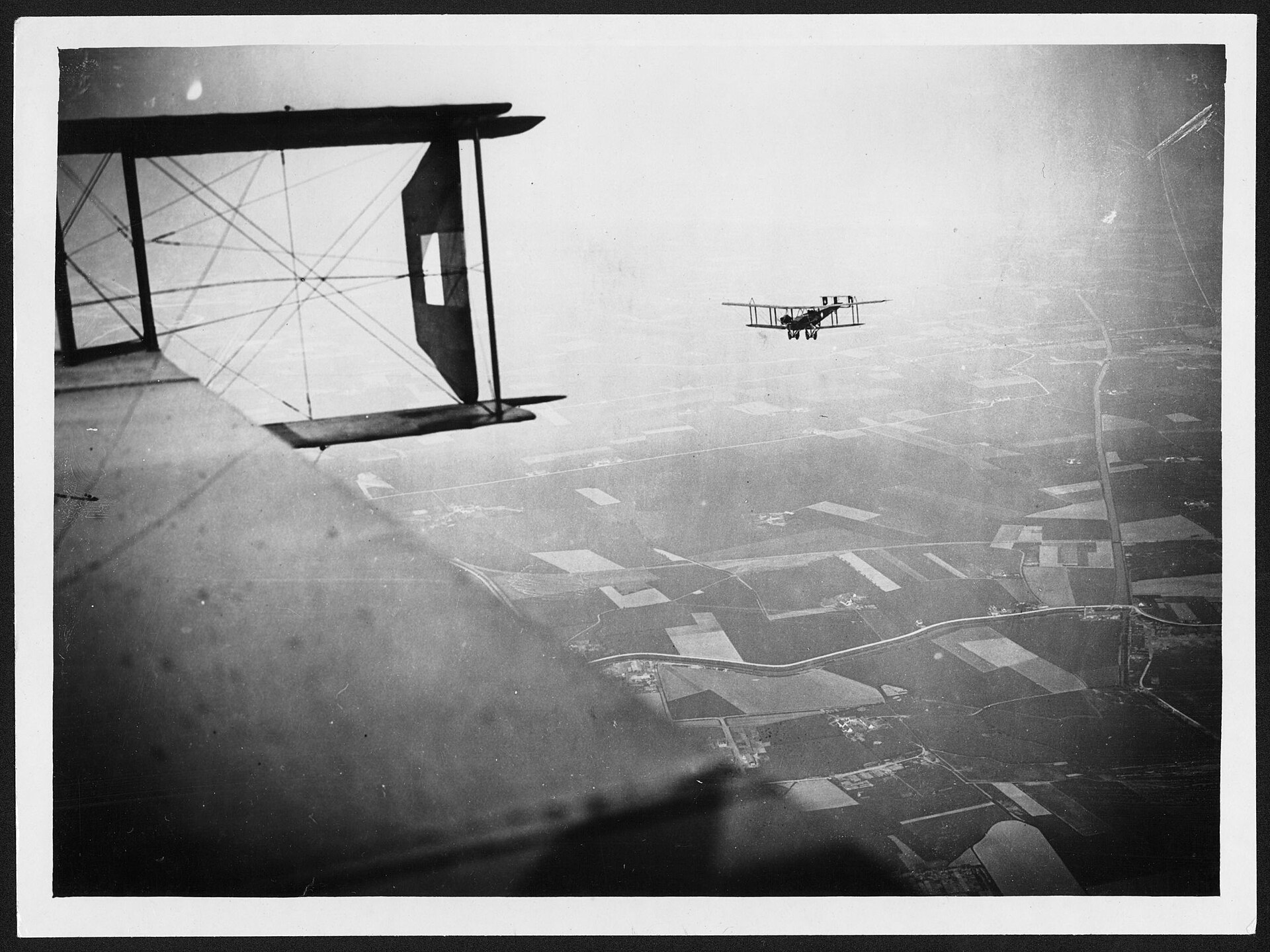
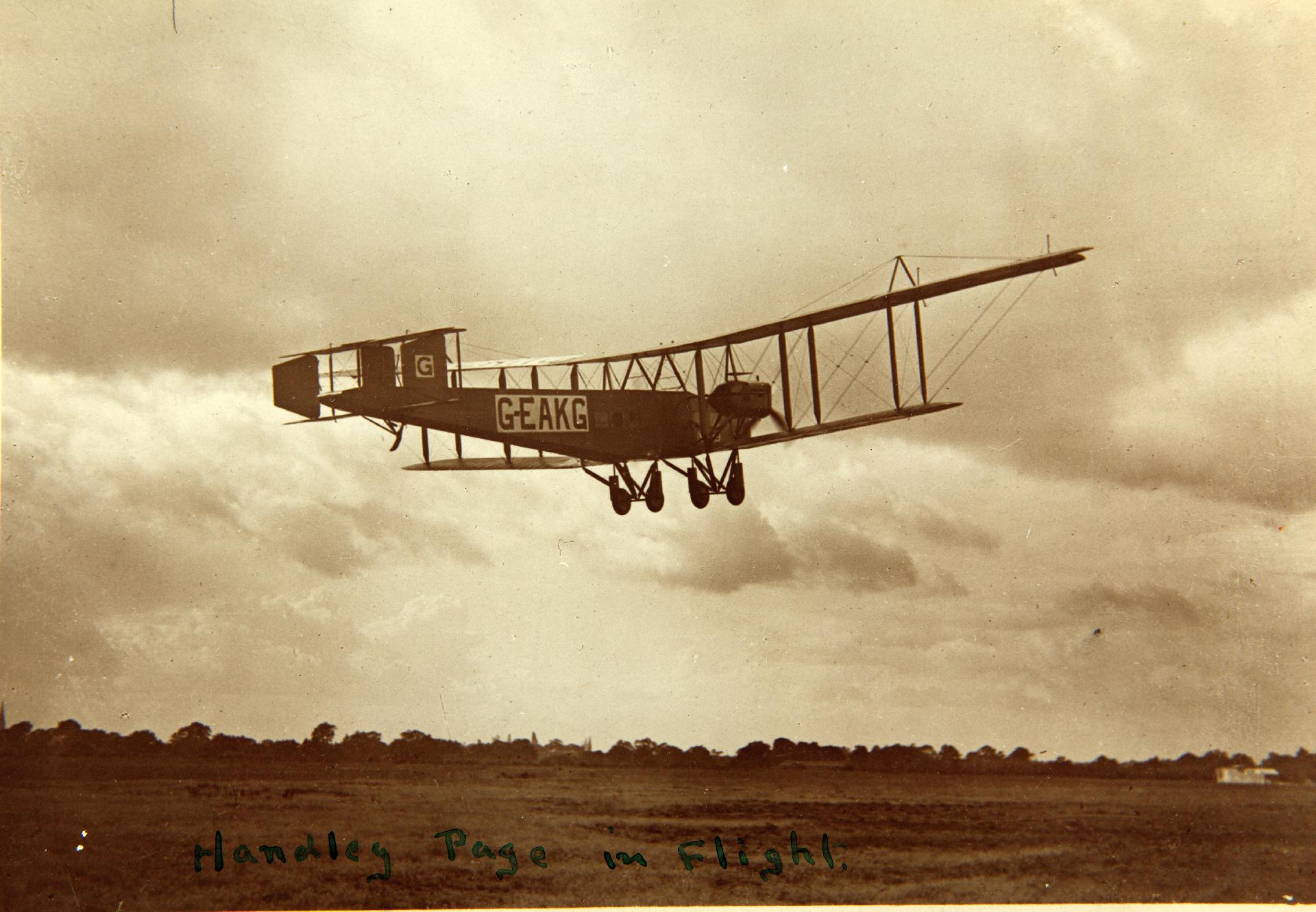
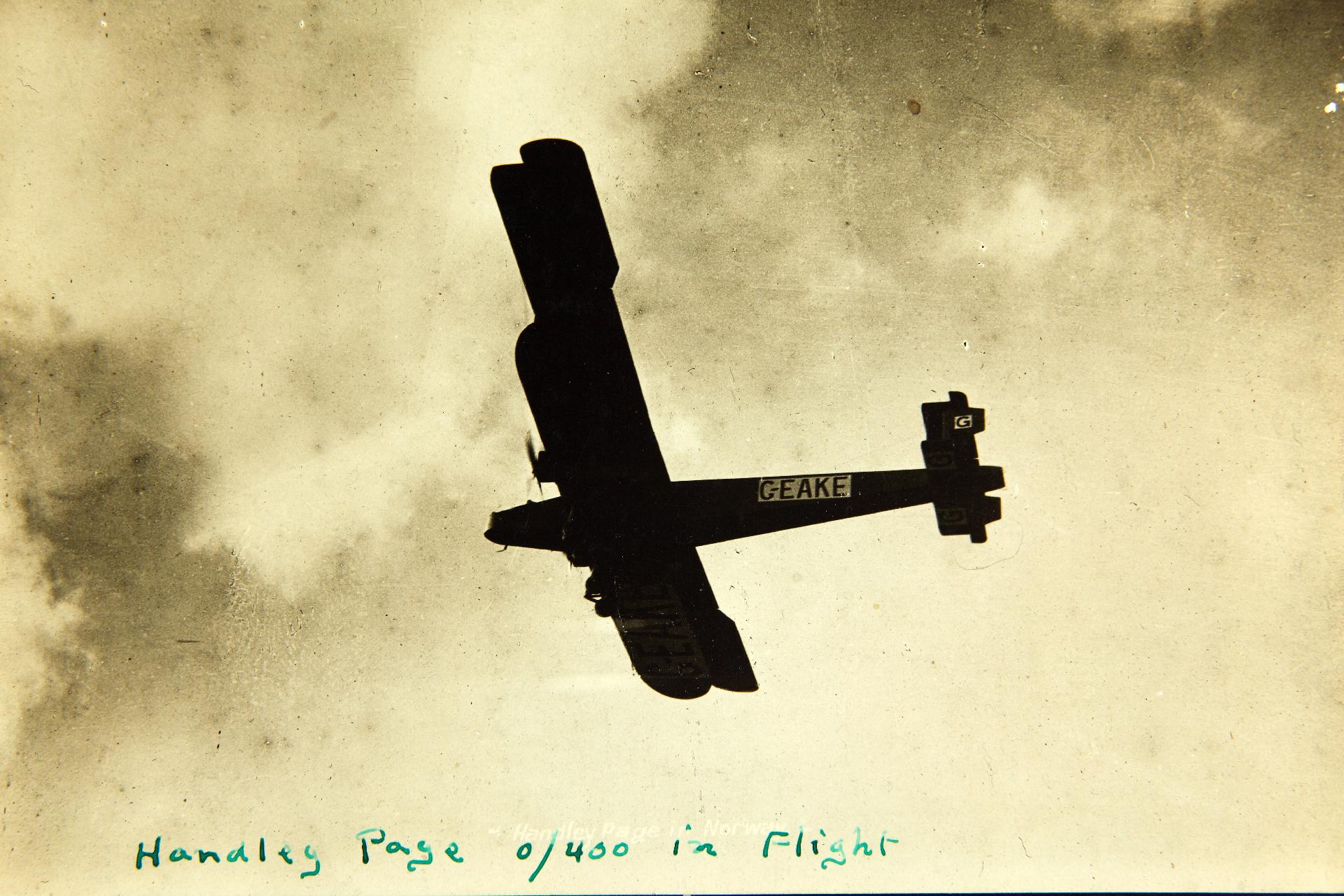
By the standards of 1918 the O/400 was enormous. Its wings stretched a full hundred feet and folded back like a moth’s so the machine could be wheeled into an ordinary hangar. Two Rolls-Royce Eagle engines, mounted between the wings in armoured nacelles, hauled it into the air with a crew of four or five and up to nine hundred kilograms of bombs slung beneath. It was slow, it was fragile in a dive, and it was never meant to dogfight. It was meant to arrive over a target in the dark and change what people thought war could reach.
For most of 1917 and 1918 that is exactly what it did. Flying by night from fields in France and Belgium, O/100s and O/400s of the RNAS — and, after 1 April 1918, the new Royal Air Force — bombed rail junctions, airfields, docks and U-boat bases behind the German lines. Then, in the summer of 1918, the aircraft was handed a larger idea. The Independent Air Force was formed to strike Germany itself, and its O/400 squadrons flew the long, cold trips across the frontier to bomb blast furnaces, chemical works and railways in the Rhineland, the Saar and the Ruhr. It was Britain’s deliberate answer to the German Gotha and Zeppelin raids on London — the opening argument, made in the dark over the Rhine, that air power could carry a war to an enemy’s home.
The O/400 also went east. A single long-range example was flown out to the Middle East, and No. 1 Squadron of the Australian Flying Corps operated the type from Haifa in 1918, its huge shape throwing a shadow over the last Turkish and German positions in Palestine. Hundreds of the bombers were built — commonly given as around 554 — and the design was even put into production in the United States, where the Standard Aircraft Corporation tooled up to assemble it; the Armistice arrived before more than a handful of American machines could reach the front.
What happened after the war may matter as much as what happened during it. Handley Page Transport rebuilt surplus O/400s with enclosed cabins and rows of wicker seats and flew fare-paying passengers between London and Paris — among the first airline services anywhere. From the same line grew the four-engined Handley Page V/1500, a giant built to bomb Berlin from bases in England, ready just as the war ended. The O/400 was the bridge between the improvised bomb-droppers of 1915 and the strategic bombers, and airliners, that would follow.
None of this should be over-claimed. The Independent Force’s raids did limited physical damage, the O/400 was slow and vulnerable, and the strategic-bombing theory it embodied would take another generation, and another world war, to mature. But as a first attempt — the first aircraft with which a nation set out, deliberately and systematically, to carry a war to an enemy’s home by air — the O/400 has a strong claim to a place among the most historically significant aeroplanes of its era. That it has almost entirely vanished, with no complete example left anywhere, only makes the surviving photographs and relics more valuable.
that led to the Handley Page O-types
The Handley Page O/400 in detail: origins, engineering and the argument for the bomber
01The Handley Page O/400’s origins: the O/100 and the “bloody paralyser”
The O/400 did not appear from nothing. In December 1914 the Admiralty issued a requirement for a large aeroplane capable of carrying a worthwhile bomb load over long distances — a machine that could reach the German airship sheds. The demand is remembered through the phrase calling for a “bloody paralyser of an aeroplane”, a line that has been attached to several senior RNAS figures over the years; the wording varies between accounts, so it is best treated as the spirit of the requirement rather than a verbatim quotation from one named officer.
Frederick Handley Page answered with the O/100, first flown in December 1915: a twin-engined biplane of unprecedented size for a British aircraft. Forty-six O/100s were built for the RNAS. Experience in service led to the improved O/400, which standardised on more powerful Rolls-Royce Eagle VIII engines and a revised fuel system. The two types are often discussed together as the “Handley Page Type O”, and in the field they served side by side.
It is worth pausing on how bold the concept was. In 1914 most military aircraft were small, unarmed scouts used for reconnaissance; the notion of a purpose-built heavy bomber able to carry a tonne of bombs deep behind the lines was close to science fiction. The O-series turned that notion into hardware, and in doing so helped define a whole category of aircraft that had not existed before.
Why it mattered
The O-series gave Britain, for the first time, an aircraft designed from the outset to deliver heavy bombs at range. Everything the Independent Air Force attempted in 1918 rested on that foundation.
02The Handley Page O/400’s folding wings and Rolls-Royce Eagle engines
Two features defined the machine. The first was its folding wings. The original naval requirement demanded that so large an aeroplane still fit inside existing hangars and sheds, so the outer wings were hinged to fold back alongside the fuselage — an elegant solution that turned a hundred-foot span into something a ground crew could store and shelter. The second was its powerplant: two Rolls-Royce Eagle VIII V-12 engines of about 360 horsepower each on the O/400, mounted in nacelles between the wings and driving tractor propellers. (The earlier O/100 used lower-powered Eagle IIs; some aircraft, including many intended for American production, were fitted with other engines such as the Liberty or Sunbeam Maori, so engine fits varied.)
The Rolls-Royce Eagle was one of the great engines of the war — a water-cooled V-12 developed from the company’s pre-war motor-car engineering — but it was also in high demand and short supply, which constrained how many bombers could be built and kept flying. Two of them per aircraft made the O/400 a thirsty, resource-hungry machine to field in quantity.
The result was an aircraft that was steady and load-carrying rather than fast or agile. Handled gently it was a fine night bomber; thrown around, its long wings and heavy structure punished the careless.
03The Handley Page O/400’s bomb load and the 1,650 lb bomb
The O/400 carried its bombs internally in a cell in the fuselage, plus underwing stations, for a maximum load usually given as around 2,000 lb (roughly 900 kg). Typical fits included sixteen 112 lb bombs, eight 250 lb bombs, or three larger weapons. Late in the war the type could also carry a single 1,650 lb bomb — the heaviest bomb dropped by the RAF during the First World War — a weapon meant for hardened targets and for the shock value of a very large explosion.
The actual load carried on any given night depended on the target and the distance: fuel for a long trip to the Ruhr meant fewer bombs, while a shorter raid on the Belgian coast allowed a heavier load. Bomb aiming was done with the simple sights of the day, so accuracy was limited and crews aimed for large targets — rail yards, factories, airfields — rather than pinpoint objectives.
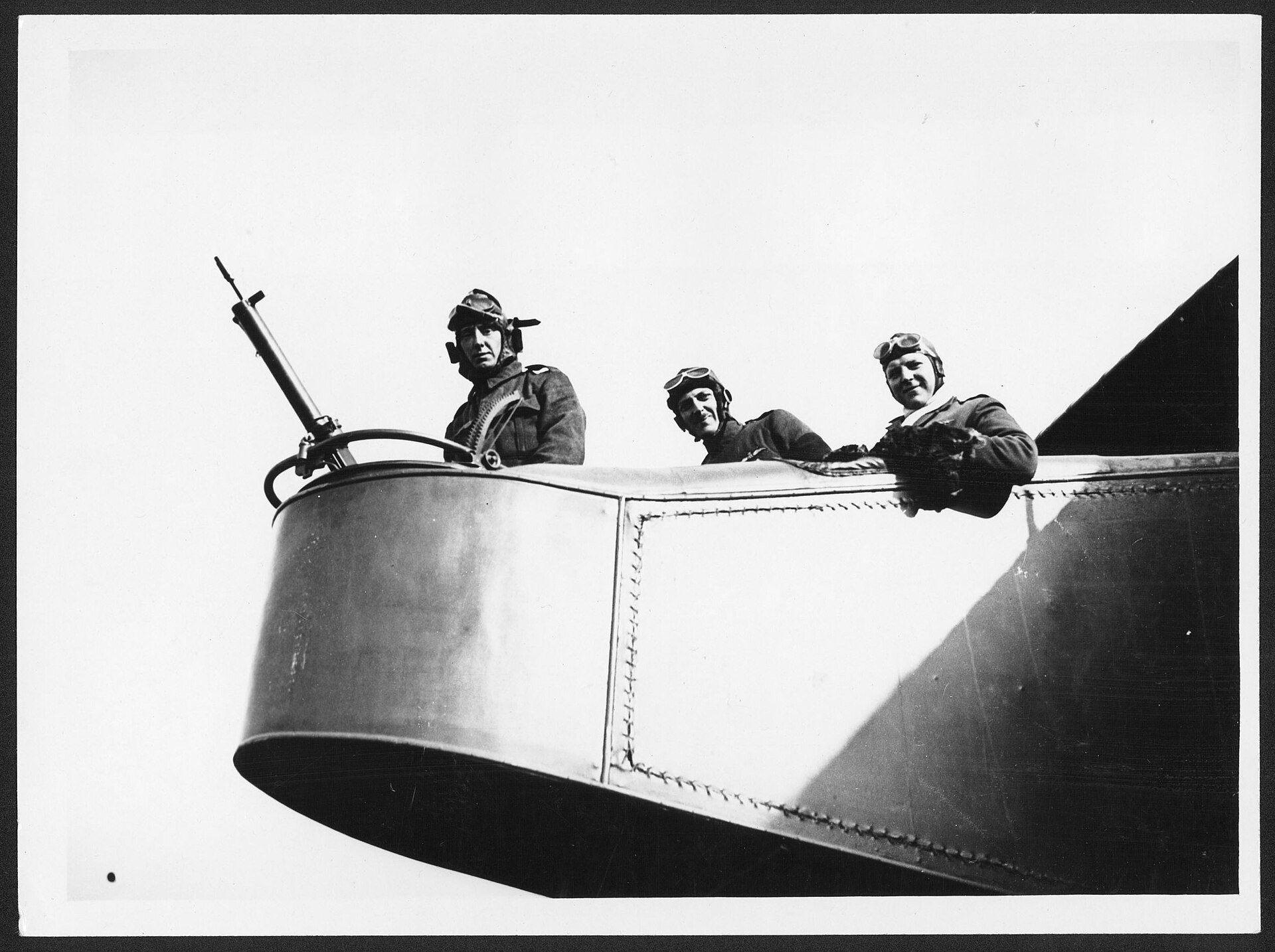
Defensively the bomber bristled with .303 in Lewis guns — commonly up to five — on a nose scarff ring, in a dorsal position and firing downward through a ventral hatch to guard the blind spot beneath the tail. At night, however, its real defence was darkness.
How the Handley Page O/400 was built to bomb by night
A hangar-sized biplane that folded
A hundred-foot upper wing, a slab-sided fuselage and a biplane tail carried the load; hinged outer wings folded back so the giant could be sheltered like any other aeroplane.
Two Eagles between the wings
A pair of Rolls-Royce Eagle VIII V-12s, about 360 hp each, in nacelles between the wings — reliable, water-cooled and just powerful enough to lift bombs, fuel and crew for a long night trip.
Bombs inside, Lewis guns all round
An internal bomb cell fed by a hinged floor, up to a 1,650 lb single bomb, and as many as five Lewis guns covering nose, back and belly for the run home in the dark.
Handley Page O/400 specifications, performance and cost
Figures are representative of a standard Rolls-Royce Eagle-engined O/400; dimensions, weights and production totals vary between contemporary sources, and estimated or contested values are flagged.
Baseline: the Handley Page O/400 as the Independent Force flew it from Ochey and Xaffévillers in the second half of 1918 — two 360 hp Rolls-Royce Eagle VIII, four or five men, five Lewis guns on free mountings and a fuselage bomb bay of vertical cells — because that is the aeroplane of the Rhineland night raids, of the RAF's first deliberate strategic bombing campaign, and of the machine most Britons in 1918 simply called "a Handley Page". Deltas for the earlier O/100, for Sunbeam Maori and Liberty-engined machines, for the O/7, O/10 and O/11 civil conversions and for the four-engined V/1500 are in grey. Three corrections before the figures. First, production. The round figure of "about 850 Type O built" is common in print, and it counts contracts rather than aeroplanes. The best-attested breakdown is 46 O/100s (four prototypes and 42 production machines) and 554 O/400s built in Britain by Handley Page and its subcontractors, plus 107 completed in the United States by the Standard Aircraft Corporation — a little over 700 airframes. The larger totals include the hundreds cancelled on the slipway in November 1918, and the American order for 1,500 of which fewer than one in ten was ever finished. Second, engines. The O/400 is sometimes credited with the Fiat A.12, and it should not be: the A.12 was an Italian engine of the DH.4, the Breguet 14, the Caproni bombers and the third Vickers Vimy prototype, and it does not belong in this aeroplane's history. The documented alternatives to the Eagle VIII were the 260 hp Sunbeam Maori, fitted to a proportion of British machines when Eagles were short, and the 400 hp Liberty 12 in the American aircraft. Third, weights. The figures 13,360 lb and 14,022 lb both circulate as the O/400's loaded weight, and one widely copied data table manages to list the larger as gross and the smaller as maximum take-off, which cannot both be true. 13,360 lb is the standard loaded weight and the one used here; 14,022 lb is an overload condition. Where authorities disagree elsewhere the disagreement is flagged rather than averaged away.
Dimensions & weights
- Crew
- 4 or 5 — pilot, observer/bomb-aimer in the nose, wireless operator and one or two gunners Unlike the cramped British bombers of the next war, the Type O let its crew move about. The nose position was reached along the floor from the pilot's cockpit, and the rear gunner could work either the upper Scarff ring or the ventral hatch. A second pilot was often carried on long sorties, because eight hours at the controls of an unstabilised 100-foot biplane in the dark is genuinely exhausting work.
- Length
- 19.16 m (62 ft 10¼ in)
- Wingspan
- 30.48 m (100 ft) — the span from which the O/100 took its name The Admiralty asked in December 1914 for a large biplane with folding wings; Handley Page answered with a hundred-foot span and called the design after it. The O/400 kept the span unchanged.
- Wings folded
- Wings hinged just outboard of the engine nacelles and folded aft alongside the fuselage The specification of 28 December 1914 required the aeroplane to fit a hangar 75 ft square, which is why a machine of hundred-foot span could be housed at all. Folding was done by hand by the ground crew and took several men and several minutes.
- Height
- 6.71 m (22 ft) — a two-storey aeroplane, and photographs with men standing beside the wheels never quite convey it
- Wing area
- 153.1 m² (1,648 sq ft)
- Wing structure
- Two-bay wooden biplane, spruce spars and ribs, fabric covered, with steel-tube compression members and swaged-wire bracing; four ailerons, on upper and lower planes There is no NACA or RAF aerofoil designation worth quoting for this aircraft: the section was a deep, high-lift Handley Page profile from the firm's own wind-tunnel work, and Frederick Handley Page's parallel research on the slotted wing was the more lasting contribution to aerodynamics.
- Empty weight
- 3,856 kg (8,502 lb)
- Loaded weight
- 6,060 kg (13,360 lb) An overload figure of 14,022 lb (6,360 kg) is also published. Squadron practice was to trade fuel against bombs rather than exceed the standard figure, because the O/400 climbed badly at any weight and appallingly above it.
- Useful load
- 2,204 kg (4,858 lb) of fuel, oil, crew, guns, ammunition and bombs — a little over a third of the loaded weight
- Maximum bomb load
- 907 kg (2,000 lb) Handsome for 1918 and the reason the type existed. The Gotha G.V that bombed London carried roughly 500 kg; the DH.4 carried 460 lb. Only the Italian Capronis and the German Riesenflugzeuge were in the same class, and there were very few of those.
- Wing loading
- 39.6 kg/m² (8.1 lb/sq ft) at loaded weight Very low even by 1918 standards, which is the whole explanation of the aeroplane's character: it could lift a great deal, land slowly on a rough field at night, and could not be persuaded to go fast or high by any means whatever.
- Power loading
- 8.4 kg/hp (18.6 lb/hp) on 720 hp Marginal. On one engine the O/400 would not maintain height at operational weight, and an engine failure outbound over Lorraine meant jettisoning the bombs immediately and hoping.
Performance
- Maximum speed, sea level
- 157 km/h (97.5 mph, 85 kt) Quoted variously as 97 and 98 mph; the aircraft was slower than most 1918 fighters by a factor of two, which is precisely why it flew at night.
- Cruising speed
- 129 km/h (80 mph, 70 kt) — the speed at which the endurance figures below were achieved
- Landing speed
- 80 km/h (50 mph) The best number on this page. A heavy bomber that could be put down at fifty miles an hour on a grass field lit by paraffin flares was a survivable heavy bomber, and Independent Force loss returns show a strikingly low proportion of landing accidents for so large a machine.
- Climb to 5,000 ft
- 23 minutes (1,525 m) at loaded weight Period practice was to state climb as time to a stated height rather than a rate, because the rate fell away so sharply with altitude that a single figure would have been meaningless. Twenty-three minutes to 5,000 ft is the honest measure of this aeroplane: a raid on Cologne began with the better part of an hour spent grinding upwards over friendly territory before setting course.
- Initial rate of climb
- 1.2 m/s (240 ft/min) at sea level, falling steeply with height
- Service ceiling
- 2,590 m (8,500 ft) This is a lightly loaded figure. With a full bomb load an O/400 was doing well to reach 7,000 ft, and the practical answer was to stay lower and rely on darkness.
- Typical raid altitude
- 1,200–2,400 m (4,000–8,000 ft) over the target Low by the standards of 1943 and entirely normal for 1918, when German night fighting scarcely existed and the real threats were searchlights, ground fire and the weather.
- Endurance
- 8 hours The figure that actually governed operations, and the one this page leads with. Range in miles is a peacetime abstraction for an aeroplane routing around defended areas, holding for weather and hunting for a flare path on return; hours of petrol in the tanks is what a squadron commander planned with.
- Range
- 1,130 km (700 miles) nominal Quoted without a stated bomb load, as almost all First World War range figures are. In practice the Independent Force worked to a radius of roughly 150–200 miles from Lorraine, which put Cologne, Frankfurt, Mannheim, Stuttgart, Coblenz and the Saar within reach and Berlin firmly outside it — the gap the V/1500 was built to close.
- Longest recorded sortie
- 8½ hours — an attack on Cologne on the night of 24/25 March 1918 by a single aircraft of No. 216 Squadron A useful reality check. Eight and a half hours in an open cockpit at 6,000 ft in March, without heating, oxygen or any navigational aid beyond a compass, a watch and the ground when it could be seen.
- Fuel consumption
- Roughly 180 litres/hour (40 imp gal/hour) for the pair at cruise Rolls-Royce quoted 24 imp gal/hour per Eagle VIII at full throttle; the endurance figure implies a good deal less than that in the cruise. Both figures are period estimates and neither should be treated as precise.
Propulsion & systems
- Engines
- Two Rolls-Royce Eagle VIII, 60° V-12, water-cooled, geared, driving four-blade fixed-pitch wooden propellers One tractor engine in each nacelle between the wings. The Eagle was the outstanding British aero engine of the war and the single most important reason the Type O worked at all; the O/100 had been designed around 150 hp Sunbeams and would have been useless with them.
- Rating
- 360 hp (268 kW) each at 1,800 rpm, 720 hp total Sources give the Eagle VIII as 350, 360 and 375 hp depending on whether the figure is the nominal rating, the bench figure or the later production standard. 360 hp is the usual O/400 figure.
- Engine detail
- 20.3 litres (1,239 cu in), dry weight about 408 kg (900 lb), epicyclic reduction gear, single overhead camshaft per bank 3,302 Eagle VIIIs were built at Derby between 1917 and 1922. Time between overhauls for the later Eagles ran to something between 100 and 180 hours, which sounds derisory now and was excellent then.
- Fuel system — the change that made the O/400
- Two 130 imp gal fuselage tanks feeding two 15 imp gal gravity tanks; about 290 imp gal (1,320 litres) total This is the whole difference between the two marks, and it is worth being precise about. The O/100 carried its main fuel in large tanks inside the engine nacelles, immediately behind hot engines and directly between the wings, where a single incendiary round or a rough landing could turn the aeroplane into a torch and where the bulk added drag and lifted the centre of gravity. The O/400 moved the petrol into the fuselage above the bomb floor, fed it by pressure to small gravity tanks, and shortened the nacelles. The result was a safer, cleaner, better-balanced aeroplane that could take the higher-powered Eagle VIII and a heavier bomb load without redesign. It is a textbook case of a modest systems change producing a new mark.
- Alternative powerplants
- 260 hp Sunbeam Maori in a proportion of British aircraft; 400 hp Liberty 12 in American-built machines The Maori-engined O/400s were noticeably poorer performers and unpopular, and were fitted because Eagles were the bottleneck in the whole British bomber programme. The Fiat A.12 sometimes attributed to this type belongs to the Vimy and the Caproni, not to the Handley Page.
- Cooling and nacelles
- Frontal radiators with shutters, in short nacelles carried on the lower wing and braced to both planes The O/100 prototype had armoured nacelles and an armoured, enclosed cockpit for the crew, a naval idea that survived contact with the weighing machine for exactly one aeroplane. The second prototype flew with an open cockpit and the armour deleted, and every subsequent Type O was unarmoured.
- Bomb gear
- Internal bomb bay under the fuel tanks with vertical cells for sixteen 112 lb bombs, released electrically by the observer; underwing carriers for larger stores Carrying the bombs internally, nose-up in cells, was advanced for 1915 and is one of several respects in which the Type O looks forward to the bombers of 1939 rather than back to 1914.
- Bombsight
- Drift Sight Mk 1A Harry Wimperis's drift sight, which let the observer measure drift against the ground and set a release angle for a known height and airspeed. It was a real instrument rather than a guess, and it was the direct ancestor of the Course Setting Bomb Sight that served the RAF into the next war. At night, over an industrial haze, its accuracy was another matter entirely.
- Gun synchronisation gear
- None fitted, and none required Worth stating plainly, because the question is always asked of a 1918 aeroplane. The O/400 had no fixed forward-firing gun: every one of its Lewis guns was on a free mounting clear of the propeller discs, so neither the Constantinesco-Colley hydraulic gear nor the Scarff-Dibovski gear used on British single-seaters had any application here. The Scarff name appears on this aircraft only as the ring mounting in the nose and dorsal positions.
- Wireless and navigation
- Trailing-aerial wireless telegraphy on some aircraft; compass, watch, drift sight, and the ground There was no radio navigation, no beam, no astro-compass and no autopilot. Independent Force crews found their targets by dead reckoning corrected against rivers, lakes and the glow of the Rhine industrial belt, and the difference between bombing Mannheim and bombing a field near Mannheim was frequently a matter of luck.
- Undercarriage
- Fixed twin-wheel main units beneath each nacelle, tailskid; no brakes Four main wheels spread the load on soft ground and made the aeroplane forgiving of a heavy arrival, which mattered a great deal to squadrons landing at night on grass.
Armament & payload
The O/400 was built to carry a ton of bombs to Germany and to defend itself with rifle-calibre Lewis guns and the dark
Everything about this aeroplane's armament follows from one decision taken in 1914: Murray Sueter asked Frederick Handley Page for "a bloody paralyser of an aeroplane", and what the Admiralty wanted paralysed was the German submarine bases and, later, German industry. The offensive load was therefore the point, and it was excellent — 2,000 lb, carried internally in vertical cells, aimed with a real drift sight, and by 1918 including a single 1,650 lb weapon that no other Allied aeroplane could lift. The defensive fit was an afterthought that the type never outgrew: five .303 in Lewis guns on free mountings, hand-worked by men in open cockpits, adequate against nothing in daylight and rarely fired in anger at night. The Type O found the same answer that Bomber Command would rediscover in 1939, and found it in 1917 rather than after three months of massacre: it stopped flying by day. Fits varied widely by mark, theatre and date. An O/100 of the RNAS at Dunkirk in 1917 with anti-submarine bombs, an Independent Force O/400 over the Saar in October 1918, an Eastern Mediterranean aircraft raiding Constantinople, and a Palestine machine of No. 1 Squadron AFC carrying petrol and spares to the Arab army were, in armament terms, four different aeroplanes.
Guns and gun positions
- Five .303 in Lewis guns on free mountings in the standard O/400 fit: two on a Scarff ring in the nose, two on a Scarff ring in the dorsal position aft of the wings, and one firing downwards and rearwards through a ventral hatch in the floor
- Not all aircraft carried all five. Four guns was a common operational fit, and machines stripped for range or for the heaviest bombs went out with fewer still
- Twin-gun mountings on a single ring were unusual in 1918 and reflected the recognition that one Lewis gun's volume of fire was not worth the man carrying it
- The ventral hatch covered the blind spot beneath and behind, which is where a German night fighter would in theory have attacked. In practice, German night fighting in 1918 barely existed and the ventral gunner spent his war cold rather than busy
- Every gun was rifle calibre and every one was aimed by hand by a man leaning into a hundred-mile-an-hour slipstream in the dark. Against the Fokker D.VIIs that caught the day-bombing DH.9s of the Independent Force, an O/400 would have had no defence at all; the aeroplane's protection was the night, and its designers had the sense to accept that early.
Ammunition, sights and bomb aiming
- Lewis guns fed from 47-round or 97-round drums, changed by hand; a gunner's practical rate of fire was governed by how fast he could swap drums with numb fingers
- Bombing was done from the nose position by the observer, lying or kneeling at the Drift Sight Mk 1A and calling corrections to the pilot through a speaking tube or by hand signal
- The Drift Sight, designed by Harry Wimperis, measured the aircraft's drift over the ground and set a release angle for a known height and airspeed. It required straight and level flight, an accurate altimeter setting and a visible ground reference — three conditions rarely present together over the Rhine at night
- Release was electrical, from a selector in the nose, allowing single bombs, salvoes or the whole load
- Independent Force bombing accuracy is the great unmentioned figure of the 1918 campaign. Post-war analysis of night raids suggests the majority of bombs fell outside the target factory or marshalling yard altogether, a finding the RAF would have to establish all over again with the Butt Report in 1941. The instruments were honest; the problem was the night, the weather and the physics.
Bomb load and bomb cells
- 2,000 lb (907 kg) maximum — the largest load routinely carried by any Allied aeroplane of the war
- The commonest load was sixteen 112 lb (51 kg) bombs carried nose-up in vertical cells in a bay beneath the fuselage fuel tanks, an arrangement that anticipates the bomb bays of the 1930s by fifteen years
- Alternative loads included eight 250 lb (113 kg) bombs, and 520 lb (236 kg) and 550 lb weapons on underwing carriers for maritime work
- Incendiary and phosphorus stores were carried against the Rhineland chemical and steel plants, on the sound reasoning that a factory that catches fire stays out of production longer than one with a hole in the roof
- The load was carried at the cost of everything else. An O/400 with 2,000 lb of bombs took the better part of an hour to reach 5,000 ft and had a single-engine performance of nil. Squadron commanders traded bombs for petrol on the longer targets, and the nominal maximum was seldom the load that actually crossed the lines.
The 1,650 lb SN bomb
- A single 1,650 lb (748 kg) weapon, the heaviest air-dropped bomb used operationally by any air force in the First World War, and carried by no other Allied aircraft
- It was too large for the internal cells and was slung beneath the fuselage, which is one of the reasons the O/400's revised bomb gear mattered as much as its revised fuel system
- With the bomb aboard the aeroplane was at its limits: fuel had to be cut back, and the target had to be near the front rather than deep in the Rhineland
- Its intended targets were the things that a scatter of 112 lb bombs could not touch — railway bridges, viaducts, submarine pens, blast furnaces and the heavy structures of the German war economy
- Accounts of the SN bomb's operational use are thin and often contradictory, and this page will not put a first-use date and target on it that the sources will not bear. What is certain is that a British bomber in 1918 could deliver a weapon of a size that would not be exceeded until the 1,800 lb and 4,000 lb bombs of the next war — and that the lineage runs directly from this bomb, through Handley Page and Vickers, to the outsized weapons of 1942.
Maritime, supply and special loads
- Anti-submarine bombs on North Sea and Channel patrols: in September 1917 O/100s flying from Dunkirk sighted eleven U-boats and attacked seven of them, and sank none — an honest summary of what 1917 anti-submarine air weapons could do
- Ship-attack bombs in the Eastern Mediterranean. The single O/100 flown 2,000 miles from England to Mudros by Lieutenant Ross Smith raided Constantinople on the night of 9/10 July 1917, bombing the battlecruiser SMS Goeben in the Golden Horn and hitting the Ottoman torpedo boat Yadigar-i Millet, which was reported sunk
- Petrol, oil, spares and ammunition, carried in the bomb bay to T. E. Lawrence and the Arab Northern Army at Umm es Surab in September 1918 by an O/400 of No. 1 Squadron AFC — the aeroplane that Lawrence recorded the Arabs greeting as the true aeroplane of which all the others had been foals
- On 19 September 1918, at the opening of the Megiddo offensive, a Palestine O/400 bombed the Ottoman telephone exchange and railway at Afulah, cutting Turkish command communications at the decisive moment. It is arguably the single most effective bombing sortie of the type's career, and it had nothing to do with strategic bombing
- After the Armistice the same bay carried passengers, mail and freight. The distinction between a bomb cell and a cargo hold was, in 1919, mostly a matter of what you chose to put in it — which is exactly how civil aviation in Britain began.
What the O/400 did not carry
- No power-operated turret and no cannon. Nothing of the kind existed in 1918 for an aeroplane of this size, and the Type O's hand-worked Scarff rings were state of the art rather than a shortcoming
- No fixed forward-firing armament, and therefore no synchronisation gear — neither the Constantinesco-Colley hydraulic gear nor any mechanical interrupter appears on this aircraft
- No armour. The O/100 prototype had an armoured, enclosed cockpit and armoured nacelles to Admiralty taste; the weight was intolerable and it was stripped out before the type entered production
- No torpedo, despite the Admiralty parentage. Torpedo work went to the smaller Short and Sopwith seaplanes, and the Type O's maritime contribution was bombs and reconnaissance
- And no oxygen, no heating, no de-icing and no parachutes. British aircrew were not issued parachutes in 1918, a decision defended at the time on morale grounds and indefensible on any other, and the men who flew these aeroplanes over Germany at night flew without them.
Three typical loadouts
- Independent Force night raid, Lorraine to the Rhine, autumn 1918
- Sixteen 112 lb bombs in the internal cells; full internal fuel for an eight-hour sortie; four or five crew; four Lewis guns. Take-off from Ochey or Xaffévillers after dark in a stream of individually routed aircraft, a slow climb to 6,000 ft over friendly territory, dead-reckoning navigation to Cologne, Mannheim, Kaiserslautern or the Saar, and a return to a paraffin flare path some eight hours later. This is the sortie the O/400 was built for and the one it flew most often.
- Maximum-weight strike with the 1,650 lb bomb
- One 1,650 lb SN bomb slung externally beneath the fuselage; internal cells empty; fuel reduced to keep within weight; minimum crew and a reduced gun fit. A short-range sortie against a bridge, viaduct or heavy industrial structure within a hundred miles or so of the lines. The heaviest single air-dropped weapon of the war, on an aeroplane that could barely climb with it.
- Palestine, September 1918: bombs one way, petrol the other
- Sixteen 112 lb bombs for the Afulah telephone exchange and railway at the opening of Megiddo; or, on the supply sorties, the bomb bay filled with petrol tins, oil, spares and ammunition for the Arab Northern Army at Umm es Surab. One aeroplane, No. 1 Squadron AFC, doing in a fortnight both the interdiction and the air-transport jobs that would take separate air forces to invent twenty years later.
Sourcing caveat: First World War armament returns are patchier than those of the next war, and gun fits in particular were altered by squadrons without paperwork. Where this section states a number of guns it states the standard fit; individual aircraft carried more or fewer. The 1,650 lb bomb is well attested as an O/400 store and poorly attested in its operational employment, and has been described accordingly. Bomb weights are the British service designations of the period, which were nominal rather than exact.
Variants
One airframe became the RAF's heavy bomber, Britain's first airliner and the parent of the aeroplane meant to bomb Berlin
The Type O family is short and unusually legible. There are two military marks separated by a fuel system, one American production programme that produced a fraction of what was ordered, three civil conversions with different interiors, and a four-engined derivative that arrived a fortnight too late to do the job it was designed for. What makes the list interesting is not the engineering spread but the range of uses: within four years the same airframe bombed Cologne, supplied Lawrence in the desert, carried the British delegation to the Versailles negotiations, flew the first fare-paying passengers from London to Paris, and delivered airmail between Peking and Tientsin for a Chinese warlord.
Before the list, the campaign, because the O/400 is inseparable from it and because the RAF has spent a century being vague about the result. The Independent Force was formed on 6 June 1918 under Major-General Hugh Trenchard, with its headquarters near Nancy, expressly to bomb German industry rather than to support the British armies — the first formation in history constituted for strategic bombing. It grew to nine squadrons: DH.4s, DH.9s and DH.9As by day with Camels for escort, and FE2bs and Handley Page O/400s by night, the O/400 squadrons being Nos. 100 and 216 and later 97, 115 and 215. It bombed Cologne, Mannheim, Frankfurt, Stuttgart, Coblenz, Karlsruhe, Wiesbaden, Saarbrücken and the Saar industrial basin. It was renamed the Inter-Allied Independent Air Force on 26 October 1918 and disbanded on 14 November, eight days after the guns stopped.
What it achieved, stated plainly, was not much. In five months the Independent Force dropped 550 long tons of bombs and lost 109 aircraft doing it. Of that tonnage, 390 tons went down at night and more than 220 tons — two fifths of the entire effort of Britain's strategic bombing force — fell on German aerodromes, which are tactical targets by any definition. German war production was not meaningfully interrupted. The honest verdict of the historians is that the force achieved little material effect on German industry in return for heavy losses in men and machines, and that the war ended before it could conduct sustained strategic bombing at all. Two qualifications are owed. The raids did force Germany to hold back fighter squadrons, anti-aircraft guns and searchlight units for home defence at a moment when every one of them was needed in France, and Trenchard argued with some justice that hammering German aerodromes kept German bombers off British ones. And the Independent Force mattered institutionally far more than materially: it established the precedent of an air force acting independently of armies and navies, which is the argument on which the RAF survived as a separate service in 1919 and the doctrine that Trenchard — who had privately opposed the whole idea before being given command of it — carried into the interwar years and bequeathed to Bomber Command.
It is also the family in which Handley Page the manufacturer became Handley Page the airline. When the Air Ministry sold off surplus bombers in 1919, Frederick Handley Page bought his own aeroplanes back, cut passenger cabins into them and started flying people to Paris. Handley Page Transport was registered in June 1919 and began London–Paris services that autumn, first from Hounslow Heath and from February 1920 from Cricklewood, alongside the pioneering DH.4s and DH.16s of Aircraft Transport and Travel. It was on this route, on 11 October 1919, that a Handley Page carried the world's first in-flight meal — sandwiches and fruit in a cardboard box, sold to passengers for three shillings. It was also on this route, on 14 December 1920, that an O/400 registered G-EAMA struck a tree on take-off at Golders Green and killed both crew and two of its six passengers, the first fatal accident to a British airliner. Both facts belong in the same paragraph, because they are the same story: an aeroplane designed to bomb Cologne at night being asked, within eighteen months, to carry civilians safely and comfortably, and managing the first better than the second. Handley Page Transport was absorbed into Imperial Airways on 31 March 1924. Very few military aircraft have a second career of that consequence.
- O/100 (1915–1917 / 46 built: 4 prototypes and 42 production)
- The original. First flight 17 December 1915; 266 hp Rolls-Royce Eagle II engines, main fuel in the engine nacelles, and on the first prototype an armoured enclosed cockpit that was deleted before production. Served with the RNAS from Dunkirk from late 1916, first by day and then, after fighter losses, only at night. One landed intact behind German lines on 1 January 1917 with engine trouble and was flown by the Germans in their own markings until it was wrecked.
- O/400 (1918 / 554 built in Britain)
- The definitive machine and the subject of this page. Fuel moved from the nacelles into two 130 imp gal fuselage tanks feeding gravity tanks, shorter nacelles, 360 hp Eagle VIII engines, strengthened bomb gear for the 1,650 lb bomb. Built by Handley Page and by subcontractors including Metropolitan Carriage, Birmingham Carriage and Clayton & Shuttleworth of Lincoln, who completed 46 of an order for 50. In RAF service from April 1918.
- O/400 (Standard Aircraft Corporation) (1918 / 107 of 1,500 ordered)
- The American programme, built at Elizabeth, New Jersey with 400 hp Liberty 12 engines and shipped in knock-down form for assembly in England. The order was for 1,500 aircraft; 107 were completed and only a handful were assembled and flown before the Armistice ended the contract. None saw action. It is a fair miniature of the whole American aviation effort of 1917–18: enormous ambition, an excellent engine, and almost nothing at the front by November.
- O/400 with Sunbeam Maori (1918 / a proportion of British production)
- Fitted when Eagle VIIIs were unobtainable, the 260 hp Maori cost the aircraft roughly a quarter of its power and rather more of its usefulness. Crews disliked them and squadrons swapped them for Eagles whenever they could. A reminder that the Type O's performance was always an engine story.
- O/7 (1919–1920 / 12 conversions)
- Export transport, principally for China: fourteen passengers, fuel moved into lengthened nacelles to clear the cabin. Six went to China and flew the first Peking–Tientsin airmail and passenger service on 7 May 1920 before the civil war swallowed the operation and the aircraft passed to various warlords.
- O/10 (1920 / 10 conversions)
- Twelve-passenger airliner conversion for Handley Page Transport's European routes, with windows cut into the fuselage sides and wicker seats where the bomb cells had been.
- O/11 (1920 / 3 conversions)
- The compromise: two passengers forward, three aft, freight between them. The specification of a company still working out whether the money was in people or in cargo.
- 86 (Communication) Wing conversions (1919 / 8 aircraft)
- Eight O/400s converted to carry the British delegation and its papers between London and Paris during the Versailles negotiations. Two were finished as VIP transports in silver dope and named Great Britain and Silver Star; the remainder seated eight and kept their dark green service finish. The first British head-of-government air transport service, improvised out of night bombers.
- V/1500 (1918–1919 / 40 completed, 22 more as spares, from 210 ordered)
- The four-engined successor, built to a 1917 requirement to bomb Berlin from East Anglia: 126 ft span, four Eagle VIIIs in tandem tractor-and-pusher nacelles, up to 7,500 lb of bombs. Three reached No. 166 Squadron at Bircham Newton in October 1918 and the Berlin raid was ordered and then cancelled by the Armistice. One aircraft, J1936, made the first through-flight from England to India, reaching Karachi on 15 January 1919, and in May 1919 bombed the royal palace at Kabul during the Third Anglo-Afghan War — a single sortie with a political effect out of all proportion to its weight of bombs.
- W.8 and the airline lineage (1919 onwards / civil designs, not Type O conversions)
- Included here because the encyclopaedia should be clear about what is and is not a Type O. The W.8 was a new civil design, not a converted bomber, and it replaced the O/10s and O/11s on Handley Page Transport's Paris and Brussels routes from 1920. The claim that the first in-flight film, The Lost World, was shown aboard a Type O on the London–Paris route in April 1925 is repeated widely and should be treated with caution: by 1925 Imperial Airways was flying W.8s and the surviving Type Os had largely gone.
Survivors, and the honest position. No complete original Handley Page Type O of any mark survives anywhere in the world — not an O/100, not an O/400, not a civil conversion. The largest holding of genuine material is at the RAF Museum Cosford, which has relics rather than an airframe: fabric from an O/100, assorted small O/400 components, and five O/400 wing sections that spent decades as part of a shed roof in Flintshire before their recovery in late 2013. A detailed cockpit reproduction is displayed at Stow Maries Great War Aerodrome in Essex; it is a reproduction, built new, and contains no original airframe. There is no flying Type O and no complete static replica of the sort that exists for the Vimy or the Bristol Fighter, and photographs captioned as O/400s not infrequently show the four-engined V/1500 instead, which no more survives than its parent. For an aircraft built in the hundreds, that were the RAF's standard heavy bomber and the founding equipment of British commercial aviation, the physical record is close to nothing — a consequence of wood, fabric, the 1919 scrap drives, and the fact that nobody in 1920 imagined anyone would want one.
The Handley Page O/400’s variants, costs and place in history
04The Handley Page O/400’s operating costs: what a WWI heavy bomber cost
No reliable unit price or hourly operating cost survives for the O/400 in a form worth quoting. It was a wartime aircraft, procured under emergency conditions and accounted for very differently from a modern machine, and the surviving records do not translate into a meaningful “cost per flight hour”. What can be said is that the O/400 was expensive in the terms that mattered in 1918: it needed two of the scarce, costly Rolls-Royce Eagle engines, a large skilled crew, and a great deal of fuel for its long night sorties.
Because no complete O/400 survives and none is airworthy, there is also no modern operating cost and nothing to book. Any figure you see presented as a per-hour cost for this aircraft is not grounded in a real, flyable example.
05The Independent Air Force: the Handley Page O/400 and strategic night bombing
The most historically important chapter in the O/400’s career is its service with the Independent Air Force in 1918. This was a force deliberately detached from the direct support of the army and navy so that it could strike targets inside Germany — industry, railways and the war economy — rather than the trenches. Its O/400 squadrons flew by night from fields in eastern France to bomb the Rhineland, the Saar and the Ruhr.
The material damage was modest by later standards, and the campaign was cut short by the Armistice. Its significance is as a precedent. Here, for the first time, was a national force organised around the idea that bombers could carry a war to an enemy’s heartland — the direct counterpart to the German Gotha and Zeppelin raids on London, and the ancestor of the strategic bombing of the Second World War. The O/400 was the aircraft that made the argument real.
06From bomber to airliner: the Handley Page O/400, Handley Page Transport and the V/1500
When the war ended, hundreds of large bombers were suddenly surplus. Handley Page saw an opportunity. The firm’s new airline, Handley Page Transport, converted O/400s into early passenger aircraft — fitting cabins, windows and seats into the roomy fuselage — and from 1919 flew paying passengers between London and Paris, among the world’s first scheduled airline services. Civil versions carried designations such as O/7, O/10 and O/11. Early airline flying was dangerous work: the loss of a converted O/400 at Golders Green in December 1920 was one of the first fatal British airliner accidents, and it fed directly into the earliest air-safety regulation.
The design line also grew upward. The four-engined Handley Page V/1500 — a still larger bomber intended to reach Berlin from bases in England — was developed from the same thinking and was ready as the war closed. Together the O/400 and V/1500 mark the moment the heavy aeroplane became both a strategic weapon and a vehicle for civil aviation.
07The Handley Page O/400 and the German Gotha: two answers to the same idea
The O/400 is best understood alongside its German counterpart, the Gotha. In 1917 and 1918 German Gotha bombers, and the earlier Zeppelin airships, carried out daylight and night raids on London and other English towns. The material damage was limited, but the psychological and political effect was large: for the first time, an enemy could reach the British public directly, and the country demanded both a defence and a reply.
The O/400 was that reply in kind. Where the Gotha struck British cities, the O/400 — especially with the Independent Air Force — struck German industry and railways. The two aircraft were broadly comparable in concept: large twin-engined biplane bombers, operating mostly by night, carrying a similar order of bomb load. They represent the same idea arrived at on both sides — that the aeroplane could carry a war beyond the battlefield — and together they mark the true beginning of strategic bombing. The German raids also helped push Britain to create the RAF, the service that then flew the O/400 over Germany.
08A night raid in a Handley Page O/400: crew, cold and navigation in 1918
Flying an O/400 on a night raid was a feat of endurance. The crew of four or five sat in open or lightly enclosed positions, exposed to a freezing slipstream for sorties that could last many hours. There was no radar, no radio navigation and no reliable blind-flying instruments; the pilot flew by feel, by compass, and by the dim shapes of rivers, coastlines, forests and towns below.
Finding the target
Navigation was by dead reckoning — heading, airspeed and time, corrected for a wind that could only be guessed at — checked against whatever landmarks moonlight revealed. Reaching the right town at all was an achievement; hitting a specific factory or rail yard within it, with the simple bomb sights of the day, was harder still. Anti-aircraft fire and the ever-present risk of engine failure over enemy territory made every trip a gamble.
These conditions explain both the O/400’s strengths and its limits. It was steady, roomy and long-legged — good qualities for a night bomber — but the accuracy and weight of effort it could deliver were bounded by the technology of 1918, and honest histories of the Independent Force stress how modest the physical results were compared with the scale of the idea.
09The Handley Page O/400 in the Middle East: the giant that flew to Palestine
One of the more remarkable episodes in the type’s career took place far from the Western Front. In 1918 a single long-range O/400 was flown out to Egypt by way of a long ferry route — a demanding journey for any aircraft of the period — to reinforce the air effort in the Middle East. Its size alone made it a sensation among crews used to far smaller machines.
No. 1 Squadron, Australian Flying Corps, operated the type from Haifa in the last phase of the Palestine campaign, using its bomb-carrying capacity against Turkish and German airfields, troop columns and communications as General Allenby’s forces advanced north. The presence of a heavy bomber in that theatre, however briefly, showed the reach the design gave the RAF and its Dominion squadrons, and it is one reason the O/400’s story spans not just France and Germany but the eastern Mediterranean as well.
10What became of the Handley Page O/400: retirement, the Vimy and why none survive
The O/400’s front-line career was short. Within a year of the Armistice the RAF was replacing it with the Vickers Vimy, a cleaner and more capable heavy bomber, and the wartime O/400 fleet was rapidly run down. Some airframes found a second life in civil hands as airliners and survey aircraft; most were simply scrapped as surplus.
That is the core reason no complete example survives. In 1919 the O/400 was yesterday’s weapon, produced in haste for a war that had just ended, and there was neither the appetite nor the money to preserve one. By the time aviation history was valued enough to warrant museum collections, the intact aircraft were long gone. What remains — relics, sections and fittings in collections including the Royal Air Force Museum — is precious precisely because it is all that is left of an aircraft that mattered a great deal and vanished almost completely.
The Handley Page O/400 through the war and after
The “bloody paralyser” requirement
The Admiralty asks for a large bomb-carrying aeroplane to reach German airship sheds — the demand that produces the Handley Page O-types.
The O/100 flies
Handley Page’s huge twin-engined O/100 first flies; 46 are built for the Royal Naval Air Service and enter bombing service on the Western Front.
The O/400 enters the picture
The improved O/400, with Rolls-Royce Eagle VIII engines and a revised fuel system, is developed and ordered in large numbers.
The RAF and the Independent Force
The Royal Air Force is formed; in June the Independent Air Force begins strategic night raids on Germany, its O/400 squadrons bombing the Rhineland, Saar and Ruhr.
Palestine and America
No. 1 Squadron AFC flies the O/400 from Haifa; the Standard Aircraft Corporation tools up to build the type in the USA. The Armistice halts American production.
Bomber becomes airliner
Handley Page Transport converts O/400s into early airliners, flying London–Paris; the four-engined V/1500 is developed from the line. The type is retired from RAF service in favour of the Vickers Vimy.
No complete survivor
No intact Handley Page O/400 exists anywhere. Only relics, sections and parts survive, with related material held by the Royal Air Force Museum and other collections.
The Handley Page O/400 in twelve stories: from the airship sheds to the Rhine
A “bloody paralyser” is ordered
Britain asks for an aeroplane bigger than anything it has flown, to reach the German airship sheds.
Read the full account
In the winter of 1914 the Admiralty wanted a way to hit the sheds where German airships were built, far behind the front. Existing aircraft could not carry enough bombs far enough to matter. The answer was a requirement for a large, long-range bomb-carrier — a demand that has come down to us through the vivid phrase calling for a “bloody paralyser of an aeroplane”.
The exact wording, and the officer who first said it, are reported differently in different accounts; the phrase is variously linked to senior Royal Naval Air Service figures of the period, so it is safest to treat it as the spirit of the requirement rather than a single documented quotation. What is not in doubt is its effect. Frederick Handley Page took up the challenge, and out of that demand for something enormous and destructive grew the O/100 and, after it, the O/400.
The O/100 takes the air
The first of the giant Handley Pages flies — a twin-engined biplane of a size no British aircraft had reached.
Read the full account
The O/100 first flew in December 1915. With a wingspan of a hundred feet and outer wings that folded back so the machine could be stored in an ordinary shed, it dwarfed the scouts and two-seaters around it. Forty-six were built for the Royal Naval Air Service.
Early machines carried a glazed, partly enclosed crew position — unusual for the time — though this was later opened up in service. More importantly, it was the O/100 that worked out the tactics: flying by night, navigating by dead reckoning and the shapes of coast and river, and delivering bombs against targets behind the German lines. Everything the O/400 later did over Germany was rehearsed first in the O/100.
A gift to the enemy
One of the first O/100s lands by mistake behind German lines, handing the enemy an intact example.
Read the full account
Ferrying the new bombers out to France did not always go to plan. In early 1917 one O/100, its crew disoriented on a long flight, put down at a German-held aerodrome and was captured intact — an embarrassing gift that allowed German engineers to examine Britain’s new heavy bomber at their leisure.
The incident was a sharp reminder of how demanding long over-water and cross-lines navigation was in 1917. These aircraft had no radio navigation aids, only basic instruments and a compass, and a single error over a featureless night landscape could put a crew down in the wrong country. It was a hazard the O/400 crews would live with for the rest of the war.
Bombing the occupied coast
RNAS Handley Pages begin systematic night raids on U-boat bases, docks and airfields in occupied Belgium.
Read the full account
Through 1917 the RNAS used its Handley Pages by night against the German-occupied Belgian coast — the U-boat and destroyer bases at Bruges, Zeebrugge and Ostend, the docks, and the airfields from which German bombers themselves operated against Britain and the Channel ports.
Flying in darkness was the key. It sharply reduced losses to fighters and anti-aircraft fire, at the cost of making the target far harder to find and hit. Crews learned to read moonlight on water, to follow coastlines and canals, and to judge a bombing run by eye. It was slow, cold, exhausting work, and it built the body of experience that made the strategic raids of 1918 possible.
The O/400 comes of age
More powerful Rolls-Royce Eagle VIII engines and a safer fuel system turn the design into a mass-produced weapon.
Read the full account
The O/400 refined the O/100 rather than replacing its concept. The two key changes were the 360 hp Rolls-Royce Eagle VIII engines — a real step up in power and reliability — and a revised fuel arrangement that moved the tanks out of the engine nacelles and into the fuselage, reducing the risk of fire.
With these improvements the type could be ordered in large numbers, and it was: production totals are commonly given as around 554, though sources vary. Standardised, reasonably reliable and available in quantity, the O/400 became the backbone of Britain’s heavy-bombing effort in the last year of the war and the aircraft on which the Independent Air Force was built.
Reliability mattered as much as power. A night crossing of the lines gave no margin for a failed engine over hostile ground, so the improved Eagle VIII’s steadiness was not a luxury but the difference between a bomber that could be sent out night after night and one that could not.
The RAF is born
The Royal Air Force is created; the heavy bombers pass into the world’s first independent air arm.
Read the full account
On 1 April 1918 the RNAS and the Royal Flying Corps merged into the Royal Air Force — the first independent air service in the world, answerable to its own ministry rather than to the army or navy. The pressure that helped bring it about came in large part from the German Gotha and Zeppelin raids on Britain, which had shown that air power could strike a nation’s cities directly.
The new service inherited the O/400 as its principal heavy bomber. Within weeks the RAF would use those bombers to make its own argument in reply — carrying the war back across the Rhine, by night, to German soil.
The raids on Germany begin
The Independent Air Force is formed to bomb German industry; O/400 squadrons fly the long night trips east.
Read the full account
The Independent Air Force, commanded by Major-General Hugh Trenchard, was formed in June 1918 with a radical remit: to strike targets inside Germany itself rather than support the armies at the front. Its O/400 squadrons flew from fields in eastern France against blast furnaces, chemical plants, railway yards and airfields in the Rhineland, the Saar and the Ruhr.
The trips were long, cold and dangerous, flown in darkness with primitive navigation, and the bomb tonnage delivered was small by the standards of a later war. But the idea was revolutionary and deliberate: a national force organised around the belief that bombers could reach and wear down an enemy’s heartland. It is the direct ancestor of the strategic bombing campaigns that followed, and the O/400 was the aircraft that first made it real.
Trenchard himself was privately sceptical that the material results justified the effort, and post-war analysis largely bore him out — yet he became the great advocate of the doctrine, and the Independent Force experience shaped RAF thinking for decades. The O/400 thus sits at the very root of the strategic-bombing debate that would dominate air power in the twentieth century.
The 1,650-pounder
The O/400 gains the ability to carry the heaviest bomb dropped by the RAF in the whole war.
Read the full account
Late in the war the O/400 could carry a single 1,650 lb bomb — the largest air-dropped weapon the RAF used in the First World War. It was enormous for its day, and carrying it pushed the aircraft to its limits.
The weapon was meant for hardened or high-value targets and for the shock of a very large single explosion. More often the bomber carried a mix of smaller bombs — sixteen 112-pounders, eight 250-pounders, or a few larger weapons — chosen for the target. But the 1,650-pounder pointed straight at the future, when ever-larger bombs would come to define strategic air power.
A giant over Haifa
A long-range O/400 is flown to the Middle East, and No. 1 Squadron AFC operates the type from Haifa.
Read the full account
The O/400 was not confined to the Western Front. A single long-range machine was flown all the way out to Egypt and on to Palestine — a remarkable journey in itself for 1918 — where the arrival of so large an aircraft caused a considerable stir.
No. 1 Squadron of the Australian Flying Corps operated the type from Haifa during the final British advance. In the closing weeks of the campaign the big bombers struck Turkish and German airfields, columns and communications as Allenby’s forces drove north. The same design that bombed the Rhineland by night now threw its shadow over the hills and valleys of northern Palestine.
The Middle Eastern deployment also showcased the type’s range. Reaching Egypt at all meant a demanding staged flight across Europe and the Mediterranean rim, and the fact that a heavy bomber could be delivered so far under its own power hinted at the long-distance possibilities that Handley Page would later pursue with civil and record-breaking flights.
Building the O/400 in New Jersey
The Standard Aircraft Corporation tools up to mass-produce the O/400 in the United States.
Read the full account
The O/400 was judged good enough to be chosen for licence production in the United States, where the Standard Aircraft Corporation set out to assemble the type — commonly cited as around 100 to 107 machines, built from a mixture of British-supplied and American-made parts, many intended to use the American Liberty engine.
The Armistice of November 1918 ended the programme before more than a handful of American-built examples could reach service. But that an American manufacturer was tooling up to build a British bomber at all says a great deal about how completely the O/400 had been adopted as an Allied standard heavy bomber.
The bomber that became an airliner
Handley Page Transport rebuilds surplus O/400s into some of the world’s first airliners.
Read the full account
With the war over and bombers suddenly surplus, Handley Page saw an opportunity. The firm converted O/400s into passenger aircraft — fitting cabins, windows and rows of wicker seats into the deep fuselage — and its new airline, Handley Page Transport, flew fare-paying passengers between London and Paris from 1919. These were among the first scheduled airline services anywhere in the world. Civil versions carried designations such as O/7, O/10 and O/11.
It was rough, cold, pioneering travel, and not without danger: the loss of a converted O/400 at Golders Green in December 1920 was one of the first fatal British airliner accidents and fed directly into the earliest air-safety rules. But it began the transformation of the heavy aeroplane from weapon into transport.
Those first London–Paris services were spartan by any later measure — noisy, cold and slow, with passengers wrapped up against the draught — but they proved that a converted bomber could carry paying travellers on a regular schedule. In doing so the O/400 helped invent the airline as an idea, and Handley Page went on to become one of the pioneering names of early British commercial aviation.
Why you will never see a whole one
No complete Handley Page O/400 survives anywhere in the world — only fragments and relics remain.
Read the full account
For all that hundreds were built, not a single complete Handley Page O/400 survives. The bombers were scrapped when they became obsolete, lost in accidents, or simply worn out in early airline and survey work, and none was set aside and preserved intact.
What remains are relics and sections — pieces of structure, fittings and instruments in museum and private collections, with related material held by the Royal Air Force Museum and others. To picture the aircraft today you have to rely on those fragments, on the wealth of wartime photographs, and on full-scale replicas and models rather than an original airframe. It is one of the most historically important British aircraft of which nothing whole is left.
It is a strange fate for a machine of such importance. Contemporaries who had flown or built these giants lived to see the Second World War’s thousand-bomber raids, yet the aircraft that began the whole story had already disappeared. Preserving one was simply never a priority in the lean years after 1918 — a reminder of how much early aviation heritage was lost before anyone thought to save it.
The Handley Page O/400 in photographs
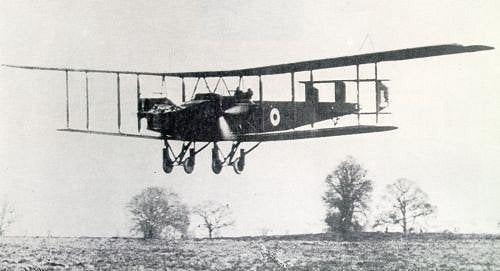
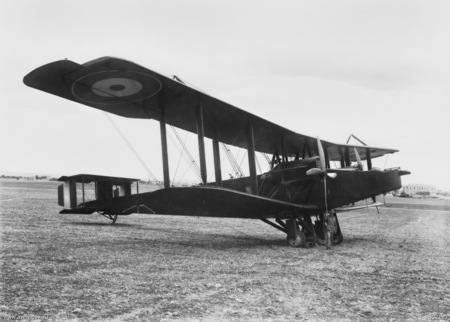
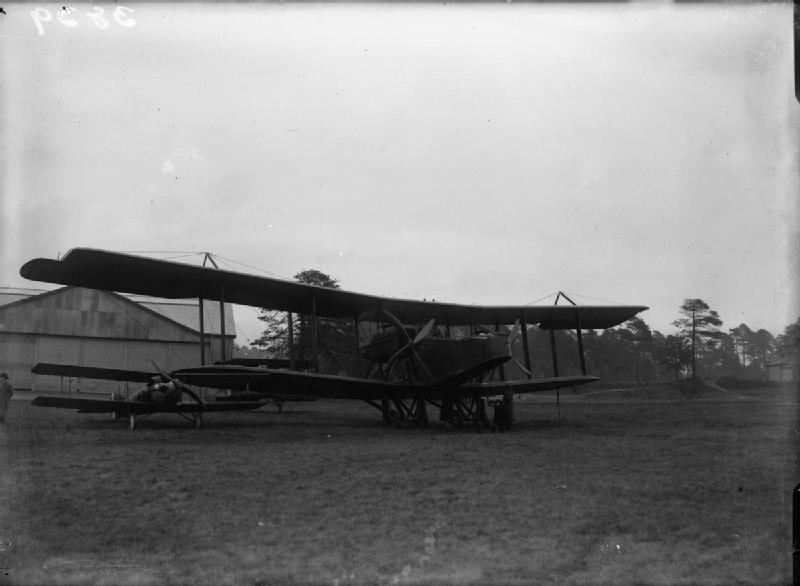
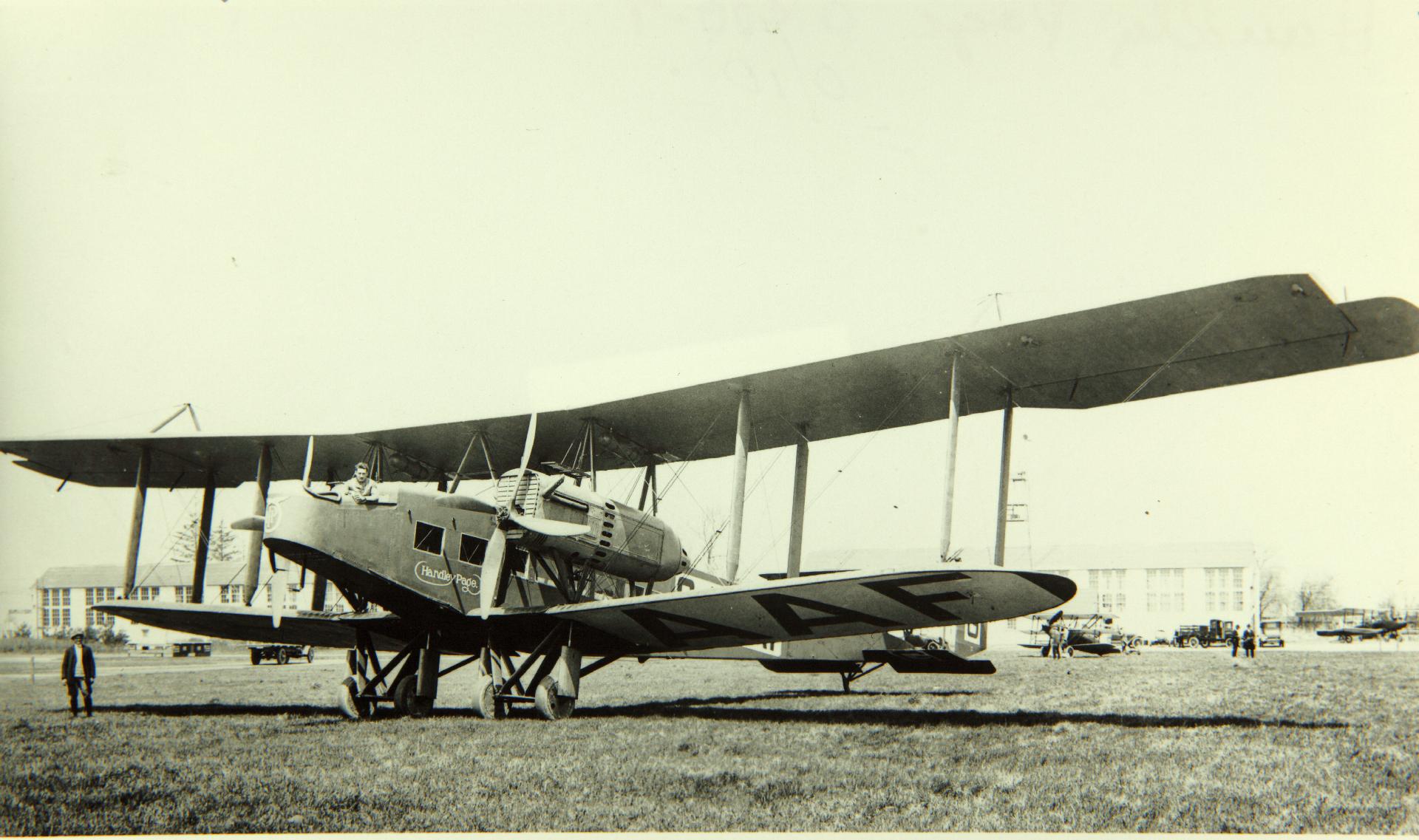
The Handley Page O/400 on film: Britain’s first heavy bomber
“Handley Page Type O — Britain’s First ‘Heavy’ Bomber”, Rex’s Hangar (aviation-history documentary channel), 2024 — roughly 128,000 views at the time of writing. Chosen as a dedicated, well-researched account of the type.
Where the Handley Page O/400 flew, fought and survives
Britain built and flew it; from France and Belgium it bombed the occupied coast and, with the Independent Air Force, Germany itself; it served in Palestine and was to be built in America; and today it survives nowhere in complete form. Toggle the categories to explore.
The Handley Page O/400’s war record
Handley Page O/400: your questions answered
Can I fly in a Handley Page O/400?
No. Not a single complete Handley Page O/400 survives anywhere in the world, and there is no airworthy or bookable example — so there is no way to fly in, or fly, the real aircraft. Any offer suggesting otherwise is not genuine.
What you can do is experience real military flight in aircraft that do still fly. MiGFlug puts civilians in the cockpit of genuine jets — from the L-39 Albatros to fast supersonic types — for aerobatics, high-g manoeuvres and edge-of-space flights. If the O/400 sparked your interest in military aviation, start here: migflug.com/flights-prices.
What was the Handley Page O/400?
It was Britain’s principal heavy night bomber of the First World War — a very large twin-engined biplane built by Handley Page. Developed from the earlier O/100, it carried a crew of four or five and a bomb load of up to around 900 kg, and it was designed to strike targets behind the German lines and, in 1918, inside Germany itself.
How was the O/400 different from the O/100?
The O/400 was a refined, mass-produced development of the O/100. The main changes were more powerful 360 hp Rolls-Royce Eagle VIII engines and a revised fuel system that moved the tanks out of the engine nacelles, reducing fire risk. About 554 O/400s were built, against 46 O/100s for the Royal Naval Air Service. The two are often grouped together as the “Handley Page Type O”.
What did “bloody paralyser” mean?
It comes from the 1914 Admiralty/RNAS requirement that led to the Handley Page O-types: the call for a “bloody paralyser of an aeroplane” — a machine big and powerful enough to carry heavy bombs to the German airship sheds. The phrase is quoted in slightly different forms and attributed to different officers depending on the source, so it is best treated as the spirit of the requirement rather than a single documented quotation.
Did the Handley Page O/400 bomb Germany?
Yes. From June 1918 the Independent Air Force used O/400 squadrons for strategic night raids on German industrial, rail and chemical targets in the Rhineland, the Saar and the Ruhr, flying from bases in France. This was Britain’s deliberate answer to the German Gotha and Zeppelin raids on London, and one of the first organised strategic bombing campaigns in history.
How big was the O/400, and what could it carry?
Its wingspan was about 30.5 m (100 ft), with folding wings so it could fit in a hangar. It could carry up to roughly 900 kg (2,000 lb) of bombs — a mix of smaller weapons or, late in the war, a single 1,650 lb bomb, the heaviest air-dropped weapon the RAF used in the First World War. For defence it carried up to five .303 in Lewis guns.
Did any O/400 become an airliner?
Yes. After the war Handley Page Transport converted surplus O/400s into some of the first airliners, fitting cabins and seats and flying fare-paying passengers between London and Paris from 1919. Civil versions were designated O/7, O/10 and O/11. The line also led to the larger four-engined Handley Page V/1500, a bomber built to reach Berlin from England — making the O/400 an important step in both military and civil aviation.
Who flew the Handley Page O/400, and how many crew did it carry?
It was flown by the Royal Naval Air Service and Royal Flying Corps, and after 1 April 1918 by the Royal Air Force — including the squadrons of the Independent Air Force that raided Germany. The Australian Flying Corps operated it in Palestine. The crew is usually given as four or five: pilots, an observer/bomb-aimer and gunners, though some sources cite three to five depending on the sortie and the fit.
How does the O/400 compare with the German Gotha bomber?
They were close counterparts. The Gotha carried out the German night raids on London; the O/400, especially with the Independent Air Force, carried out British night raids on German industry. Both were large twin-engined biplane bombers of broadly similar concept and bomb load, operating mainly in darkness. Together they mark the beginning of strategic bombing — each side’s attempt to reach the other’s home from the air. The Gotha raids also helped prompt the creation of the RAF, which then flew the O/400 over Germany.
Does any Handley Page O/400 survive?
No complete example survives anywhere. The bombers were scrapped or worn out, and none was preserved intact. Only relics, sections and parts remain in museum and private collections, with related material held by the Royal Air Force Museum. To picture the aircraft today you have to rely on those fragments, on wartime photographs, and on full-scale replicas rather than an original airframe.
The bomber lives in museums. A real jet flight does not.
No Handley Page O/400 will ever fly again — but a genuine military jet flight is real, and bookable. Take the controls, pull real g and see the curve of the Earth with MiGFlug.
 Fly the L-39 AlbatrosThe world’s most-flown jet trainer — aerobatics included
 Fly the F-104 Starfighter“The missile with a man in it”
 Fly the MiG-21The Cold War’s most-produced jet
 Fly the T-33 Shooting StarAmerica’s first jet trainer
 Fly the DH VampireA piece of early jet history
 Fly the S.211Agile Italian jet trainer
 Fly the MB-326The classic Aermacchi jet
 Fly the MiG-15The Soviet legend of the Korean War
Explore more of the Book of Beasts
Where these Handley Page O/400 facts come from
- Royal Air Force Museum — Handley Page O/400 and Independent Force history.National museum of the RAF; holds related O/400 material.
- Imperial War Museums (IWM) — First World War aircraft and bombing collections.Photographs and records of RNAS/RAF heavy bombers.
- Smithsonian National Air and Space Museum — WWI strategic bombing.Reference on early heavy bombers and the birth of air power.
- Australian War Memorial — No. 1 Squadron AFC in Palestine, 1918.Records and images of the O/400 at Haifa.
- Tangmere Military Aviation Museum — Handley Page O/400 aircraft profile.Specifications, armament and service summary.
- HistoryNet — “Britain’s Bloody Paralyzer”.Feature on the O/100 and O/400 origins and the 1,650 lb bomb.
- Handley Page Association — company and aircraft history.Heritage body dedicated to Handley Page aircraft.
- Flight archive (contemporary reporting).Period coverage of the Type O and its civil conversions.
- Handley Page Transport — early London–Paris airline services.Background on the O/400’s post-war airline career.
- Rex’s Hangar — “Handley Page Type O — Britain’s First Heavy Bomber” (video).Dedicated documentary overview of the type.
Specifications, production totals and the wording and attribution of the “bloody paralyser” requirement vary between sources; contested and estimated figures are flagged in the text. Images are public domain or free of known copyright restrictions via Wikimedia Commons, credited individually. MiGFlug does not operate Handley Page O/400 flights — no complete or airworthy example exists.