
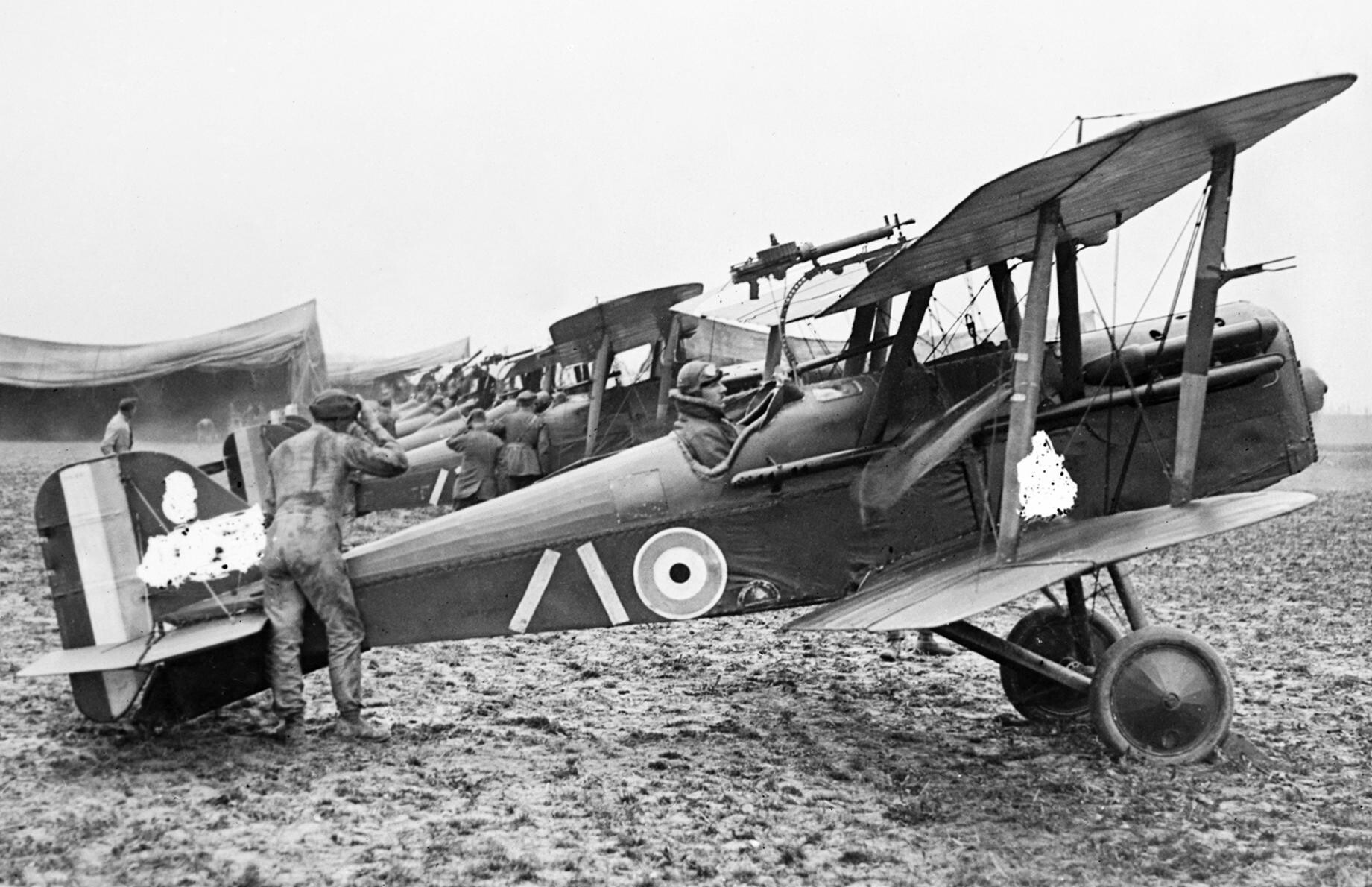
Royal Aircraft Factory S.E.5a
“The fighter the aces trusted”
Britain’s steady, fast-diving answer to 1917 — a stable gun platform that carried McCudden, Mannock and Ball, and helped win back the skies after Bloody April.
The Royal Aircraft Factory S.E.5a: how Britain built a fighter its aces could trust
When the Royal Flying Corps fought over France in the spring of 1917, it was losing badly. During what its crews called Bloody April, German scouts led by the Albatros D-series shot down RFC aircraft faster than they could be replaced. The answer was already in the air: the Royal Aircraft Factory S.E.5 — Scout Experimental 5 — designed at Farnborough by Henry Folland and John Kenworthy, with the Factory’s chief test pilot Frank Goodden closely involved. Goodden took the first prototype up on 22 November 1916, but was killed early in 1917 when a prototype’s wing failed — a loss that forced the wing to be redesigned before the type could be trusted at the front.
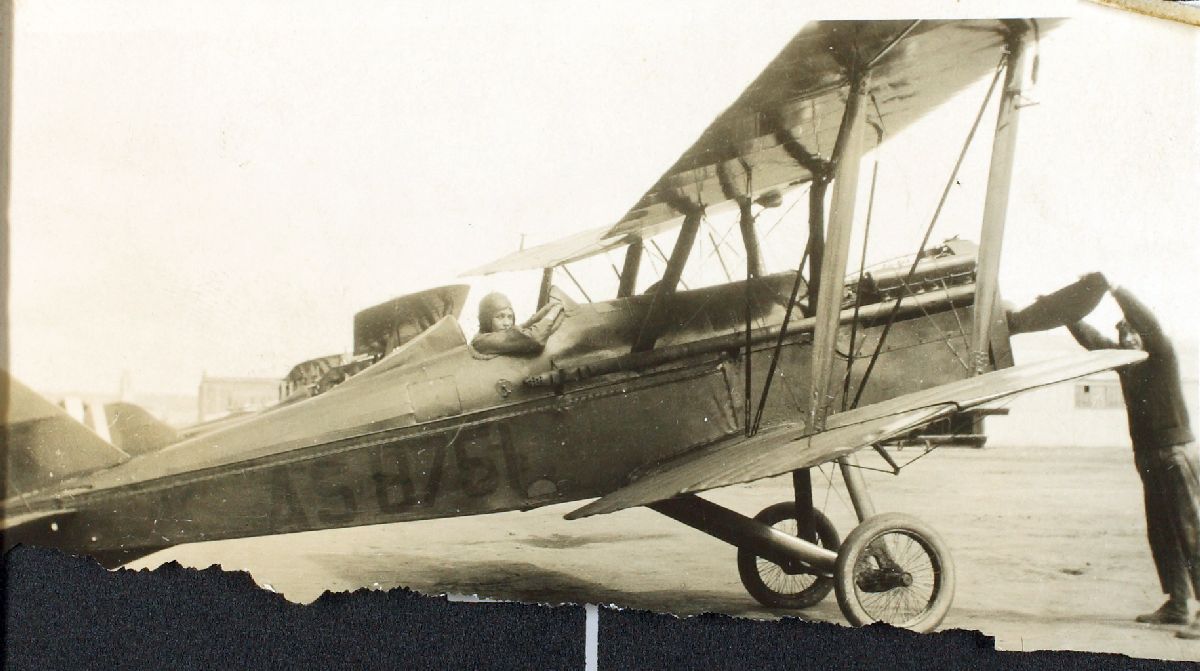
The production version, the S.E.5a, reached the squadrons from the middle of 1917, built around a more powerful 200 hp engine. It was never meant to be the most agile fighter in the sky; that title belonged to the twitchy, rotary-engined Sopwith Camel. Instead the S.E.5a was fast, strong and rock-steady — a stable gun platform a pilot could aim like a rifle. It dived faster than almost anything it met, held its speed in a zoom-climb, and stayed controllable where lighter machines wallowed. For the RFC’s marksmen, that steadiness was worth more than nimbleness.
The one thing that nearly wrecked the programme was its engine. The S.E.5a was designed around the 200 hp geared Hispano-Suiza 8, an advanced French V8 — but the geared version proved unreliable, and French and licensed supply fell chronically short. Airframes sat at the depots waiting for engines through the second half of 1917. The bottleneck eased only when the British firm Wolseley developed the Viper: a high-compression, direct-drive derivative of the Hispano that was rugged and easy to build. With the Viper — or a dependable direct-drive Hispano — the S.E.5a finally became the reliable fighter its airframe deserved.
Its armament was as practical as its handling: a single belt-fed .303 Vickers gun in the fuselage, synchronised through the propeller by Constantinesco gear, plus a .303 Lewis gun on a Foster mounting above the upper wing that could be pulled down to fire upward into an enemy’s belly, or swapped for a fresh drum. In expert hands the pairing was deadly. James McCudden, who scored the great majority of his 57 victories on the type, used its speed and ceiling to stalk high-flying reconnaissance machines; Edward ‘Mick’ Mannock, credited with 61, made it a weapon of patient tactics and teamwork; and Albert Ball — who had famously preferred the nimble Nieuport — was flying an S.E.5 when he was killed in May 1917.
By the Armistice the S.E.5 and S.E.5a had equipped more than twenty squadrons of the RFC, the new Royal Air Force, the Australian Flying Corps and two American squadrons, serving over France and Belgium and as far afield as Palestine and Mesopotamia. Roughly 5,200 were built by a web of British contractors, and more were ordered in the United States. Widely rated the best British single-seat fighter of the war, it is remembered — alongside the Camel — as one of the two aircraft that carried the Allied air effort to victory in 1918.
01The Royal Aircraft Factory S.E.5a’s origins: Folland, Kenworthy, Goodden and the Hispano gamble
The S.E.5 was the work of a small Farnborough team — Henry Folland and John Kenworthy as designers, with chief test pilot Frank Goodden deeply involved — built around Marc Birkigt’s new 150 hp Hispano-Suiza 8 V8. Goodden first flew it on 22 November 1916. The early prototypes had a roomy, heavily glazed cockpit and a wing that proved too weak: Goodden was killed on 28 January 1917 when a prototype broke up in the air. The wings were strengthened and the large windscreen cut down, and the definitive S.E.5a followed with the 200 hp engine. Building the fighter around the advanced but temperamental geared Hispano-Suiza was a gamble that nearly cost the programme its place at the front — and was rescued by the home-grown Wolseley Viper.
What makes the S.E.5a special
A rock-steady gun platform
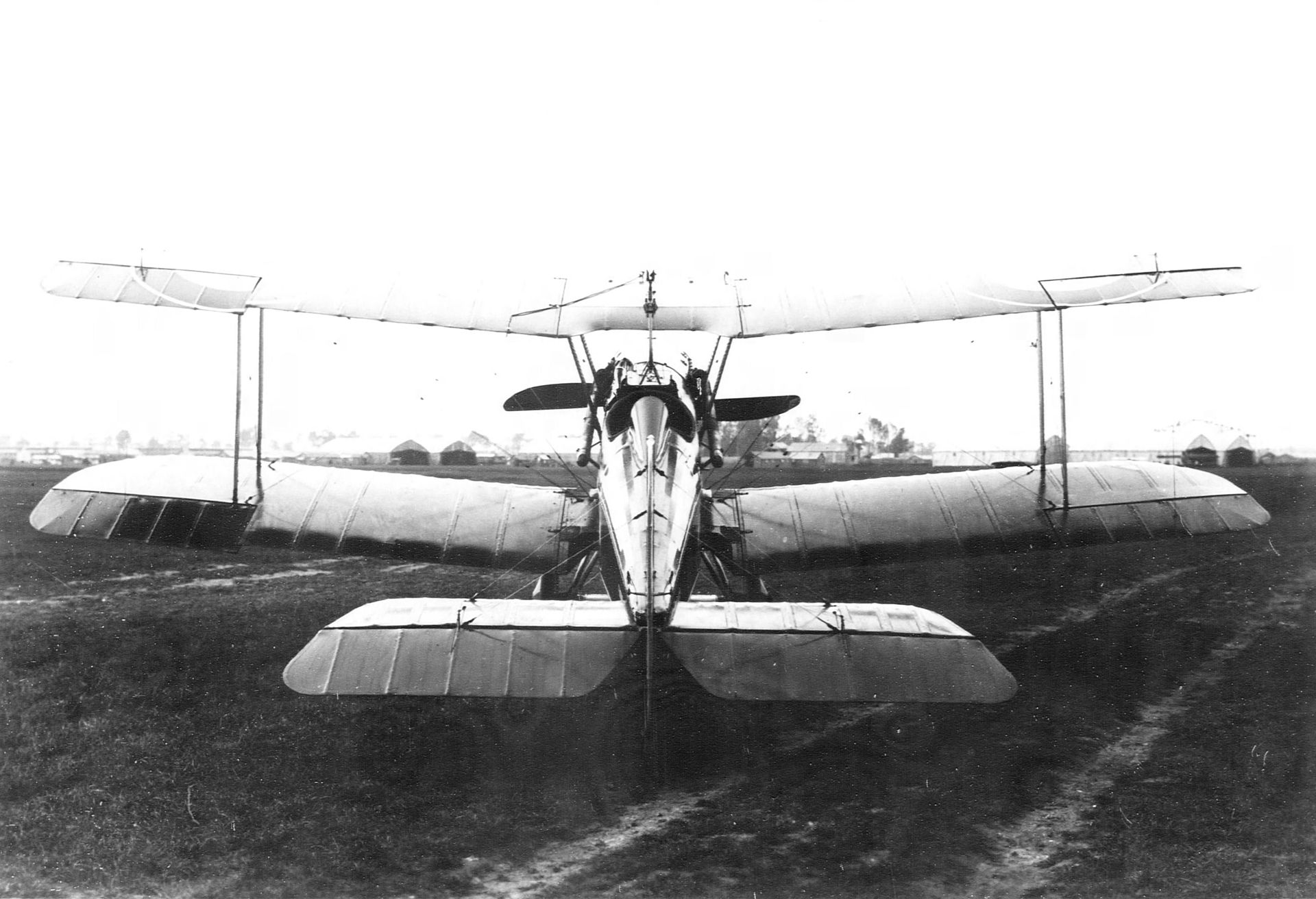
The S.E.5a was tuned for stability rather than agility. Generous dihedral and a well-balanced tail let a pilot fly almost hands-off, so he could concentrate on his sights. Where the Sopwith Camel demanded constant correction, the S.E.5a sat still in the air — turning marksmanship, not acrobatics, into the path to victory.
Two guns, firing two ways
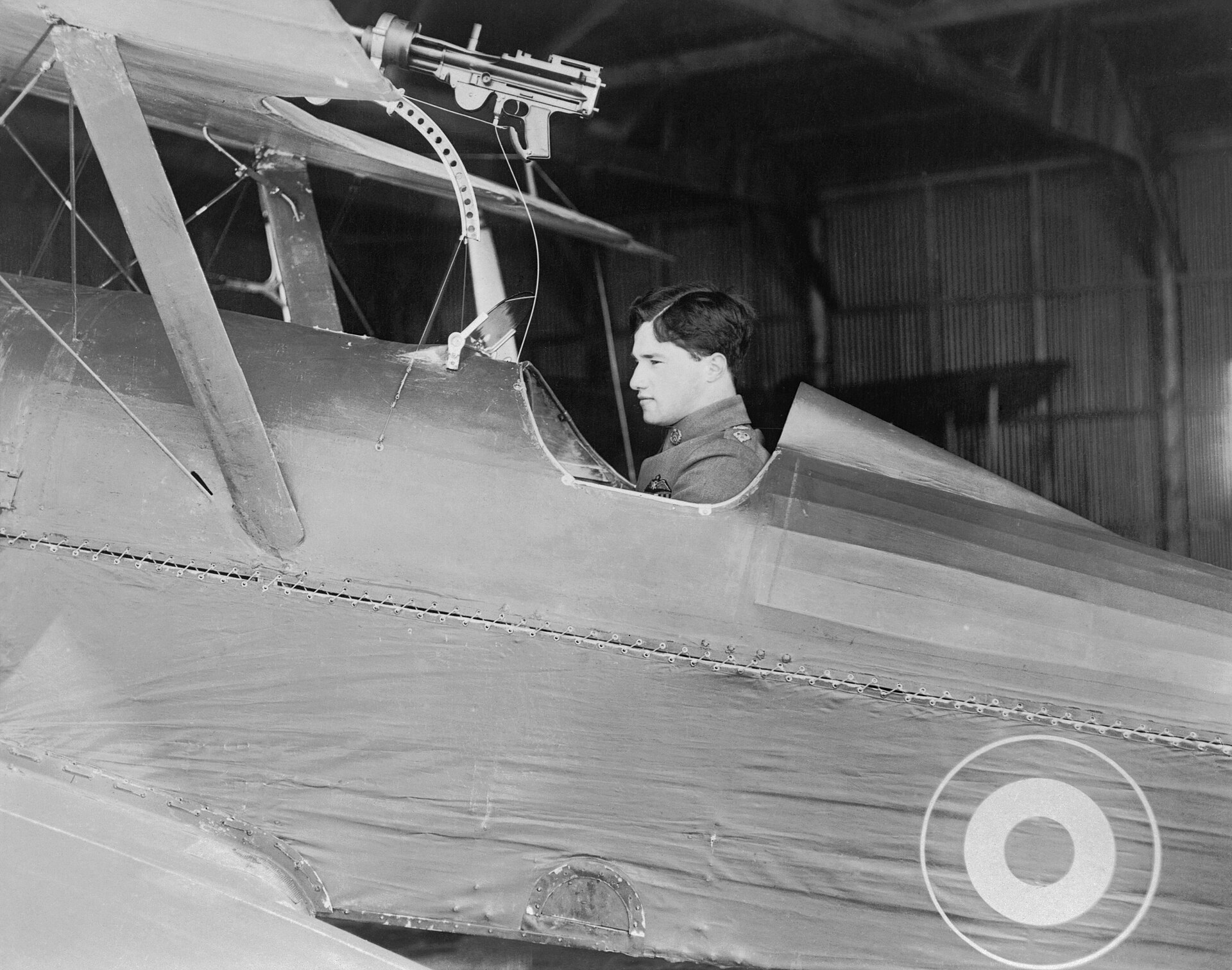
It carried a belt-fed .303 Vickers gun in the fuselage, synchronised to fire through the propeller by Constantinesco hydraulic gear, plus a drum-fed .303 Lewis gun on a curved Foster mounting over the upper wing. The Lewis could be angled to fire upward into an enemy’s belly, or slid down so the pilot could change its 97-round drum in flight.
Built to dive: power and a strong airframe
With about 200 hp from a Hispano-Suiza 8 or Wolseley Viper V8, the S.E.5a was among the fastest fighters of its day at roughly 222 km/h, and its sturdy wire-braced wooden airframe let pilots dive hard to attack and break away. Speed and strength, not turning circle, defined how it fought.
02The S.E.5a’s airframe: the wing failure that killed its test pilot — and the fix
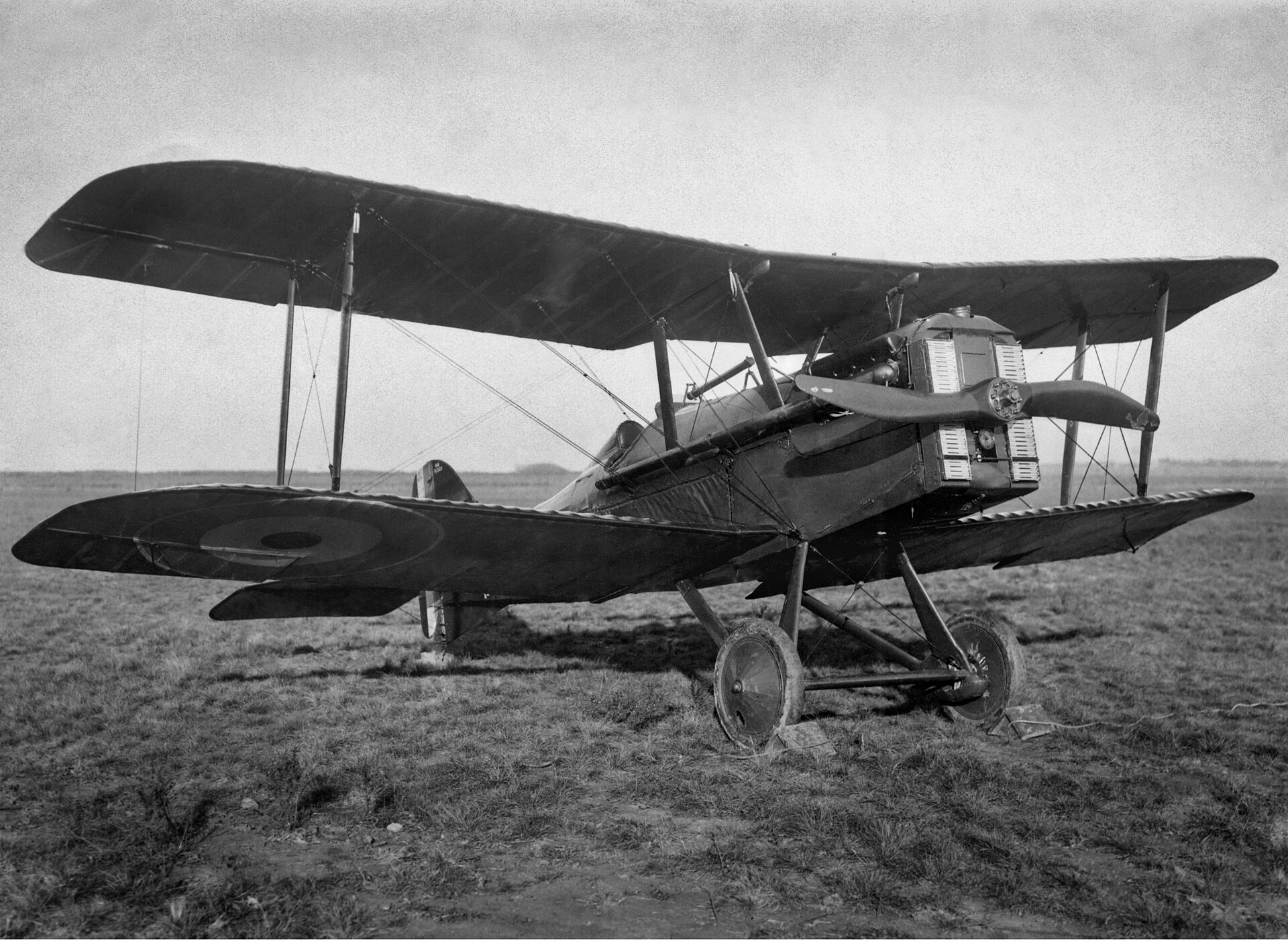
The S.E.5 used conventional two-bay wooden wings, wire-braced and fabric-covered, on a wooden fuselage. The first prototypes, however, had wings that were structurally suspect: on 28 January 1917 chief test pilot Frank Goodden was killed when a prototype broke up in the air. The wing was redesigned and strengthened before the type went to war, and the reworked structure proved tough enough to let pilots dive the S.E.5a hard in combat — a quality that defined its fighting style. The heavily framed original windscreen was also cut down to improve the view.
03The S.E.5a’s engines: the Hispano-Suiza 8 and the Wolseley Viper
The S.E.5a was built around the 200 hp geared Hispano-Suiza 8b, but that engine’s reduction gearing was troublesome and supply from France and licensees was chronically short, stranding finished airframes through late 1917. The rescue came from Wolseley’s Viper — a high-compression, direct-drive development of the Hispano that was reliable and simple to mass-produce — which became the standard fit. Direct-drive 200 hp Hispano engines (and, for US-built machines, the Wright-Martin) were also used. Engine type mattered: a good Viper transformed the aircraft’s reputation from unreliable to trusted.
04How pilots flew the S.E.5a: dive, zoom and the marksman’s advantage
Pilots exploited the S.E.5a’s speed, ceiling and stability rather than its turn. The classic attack was a diving pass from above, using height and momentum, then a zoom-climb back to safety — tactics that suited its strong airframe and steady gun platform. James McCudden fitted high-compression engines and refined his machine to reach and ambush high-flying German reconnaissance aircraft; Mannock built disciplined formation tactics around it. The overwing Lewis on its Foster mount gave a second option: pull it down and fire upward into an enemy’s unprotected underside.
Royal Aircraft Factory S.E.5a full specifications
Baseline note: the figures below describe the S.E.5a with the 200 hp Wolseley W.4A Viper — the direct-drive, high-compression British-built development of the Hispano-Suiza 8 that finally made the type reliable and which powered the majority of the aircraft that reached squadrons in 1918. Deltas for the original S.E.5 (150 hp Hispano-Suiza 8a), the 200 hp geared Hispano-Suiza 8B (the engine that nearly ruined the programme) and the American S.E.5E (180 hp Wright-Hispano E) are in grey. As with every 1914–18 type, published performance varies between sources because it was measured on individual aircraft with individual engines, and the test altitude is frequently omitted.
Dimensions & weights
- Crew
- 1
- Wingspan
- 8.11 m (26 ft 7½ in), equal upper and lower
- Length
- 6.38 m (20 ft 11 in)
- Height
- 2.89 m (9 ft 6 in)
- Wing area
- 22.67 m² (244 sq ft) — a fifth more wing than a Camel, on a comparable span
- Chord
- 1.52 m (60 in) on both wings
- Aerofoil
- RAF 15
- Undercarriage track
- 1.52 m (60 in) — wide, and one of several reasons the S.E.5a was far less inclined than a Camel to bite a beginner on landing
- Structure
- Wire-braced wooden box-girder fuselage, wooden wing spars and ribs, fabric covering. Narrower in the fuselage than most contemporaries, which is why the view from the cockpit was so good. After two prototypes were lost to wing failure the wings were redesigned squarer and much stronger; the production aeroplane could be dived at speeds nothing else of its generation would survive
- Empty weight
- 639 kg (1,410 lb)
- Loaded weight
- 878 kg (1,935 lb)
- Maximum take-off weight
- 902 kg (1,988 lb) with four Cooper bombs
- Wing loading
- 38.7 kg/m² (7.93 lb/sq ft) — a quarter higher than the Camel’s, which is the arithmetic behind "less manoeuvrable, much faster"
Performance
- Maximum speed, sea level
- 222 km/h (138 mph) — among the fastest aircraft of the war, a match for the SPAD S.XIII and faster than any standard German type of the period
- Maximum speed at 3,050 m
- 203 km/h (126 mph at 10,000 ft) — roughly 35 km/h faster than a Clerget Camel at the same height
- Climb to 1,525 m
- 4 min 55 sec (5,000 ft)
- Climb to 3,050 m
- About eleven minutes (10,000 ft) — marginally better than a Clerget Camel, and unlike the Camel it kept climbing usefully afterwards
- Service ceiling
- 5,940 m (19,500 ft) for a good Viper aircraft; 5,180 m (17,000 ft) is the figure often quoted for an average squadron machine, and both are defensible
- Endurance
- 2 hr 30 min — the practical measure; quoted ranges of 300 miles are arithmetic
- Diving speed
- Very high, and safely so. The S.E.5a’s ability to be dived hard and then zoomed back to height was the foundation of the diving attack that Mannock, McCudden and Bishop all built their tactics on
- Stability
- Inherently stable in all three axes, in the Royal Aircraft Factory house style. This made it a markedly better gun platform than a Camel: a stable aeroplane holds an aim point long enough for a deflection shot at range
- Manoeuvrability
- Good, but not a Camel’s. It rolled and turned more slowly and needed to be flown rather than merely thought at. In exchange it did not try to kill its pilot
- Accident rate
- Noticeably lower than comparable fighters, and far lower than the Camel’s. This is the single most under-reported statistic in First World War fighter history
- Altitude performance
- Its greatest advantage over the Camel, and what made it a fair match for the Fokker D.VII when that aircraft arrived in mid-1918 — the point at which the Camel had stopped being competitive
Propulsion & systems
- Engine
- One Wolseley W.4A Viper water-cooled V8, 149 kW (200 hp), 5.3:1 compression, direct drive to the propeller
- Why the Viper mattered
- It was a British-built, high-compression, ungeared derivative of the Hispano-Suiza 8. Deleting the reduction gear deleted the failure. The 200 hp geared Hispano-Suiza 8B shed propellers in flight and on several occasions shed the entire gearbox — a fault it shared with the Sopwith Dolphin, and one that kept S.E.5a squadrons short of aircraft until well into 1918
- Alternative engines
- Hispano-Suiza 8a, 112 kW (150 hp) on the original S.E.5; Hispano-Suiza 8B, 8Ba and 8Bb, 149 kW (200 hp) geared; Wright-Hispano E, 134 kW (180 hp) on the American S.E.5E
- Propeller
- Two-blade fixed-pitch wood, 2.36 m (7 ft 9 in) diameter, on Viper aircraft; four-blade on the geared Hispano machines, whose raised thrustline also required the Foster rail to be raised to keep the Lewis gun’s line of fire clear of the propeller
- Cooling
- Frontal radiator with pilot-operated shutters — a real workload item, since a V8 that is allowed to boil at 5,000 m will not get its pilot home
- Synchronisation gear
- Constantinesco-Colley C.C. hydraulic gear on the single Vickers, transmitting the firing impulse as a pressure wave along an oil-filled pipe. The best gear of the war, and so tightly rationed in its first year that the S.E.5a never got the second Vickers its designers wanted
- Sights
- Aldis non-magnifying telescopic tube, with a ring-and-bead as backup. Both guns were aimed through the one sight, which implies harmonisation and is one reason the mixed armament worked better in practice than it looks on paper
- Cockpit
- Described by the Shuttleworth Collection’s former chief test pilot as "the best of the bunch from the era": high seat, narrow fuselage, excellent all-round view. The large "greenhouse" windscreen of the first production batch was distrusted by pilots and removed
- Instruments and equipment
- Tachometer, altimeter, air-speed indicator, compass, radiator thermometer, fuel and oil pressure. No radio, no oxygen, no armour, no parachute
- First flight
- 22 November 1916 (first prototype; the second and first were both lost to wing failure, killing the Royal Aircraft Factory’s chief test pilot Major Frank Goodden on 28 January 1917)
- Service entry
- March 1917 with No. 56 Squadron, which flew its first S.E.5 patrol on 22 April 1917
- Number built
- ~5,205 S.E.5 and S.E.5a of all sources. American production was a fiasco: a Curtiss contract for around a thousand aircraft yielded barely one completed machine before the Armistice cancelled it, and the American Expeditionary Force flew 38 Austin-built aircraft supplied from Britain instead
05S.E.5a variants: the S.E.5, the Viper-engined S.E.5a and the American S.E.5E
The original S.E.5 (1916–17) used the 150 hp Hispano-Suiza and a large, heavily framed cockpit canopy. The S.E.5a was the definitive mass-production fighter: a strengthened airframe, cut-down windscreen and a nominal 200 hp engine — the geared Hispano-Suiza 8b, direct-drive Hispano, or the standard Wolseley Viper. In the United States, licence production was ordered from Curtiss and others; relatively few were completed before the Armistice. After the war the American S.E.5E was built and rebuilt by Eberhart with the Wright-Martin engine, and a number of aircraft were converted into two-seaters or used for skywriting and racing.
06The S.E.5a’s costs: from 1917 wartime contracts to flying a reproduction today
No reliable unit price for the S.E.5a is preserved in the usual references — wartime aircraft were bought under bulk government contracts spread across many firms, and figures were not consistently recorded or published. Any single 1917–18 “price tag” should be treated with caution. As a modern reference point, operating an airworthy S.E.5a reproduction — vintage or replica V8 engine, specialist maintenance, insurance and hangarage — is commonly estimated at very roughly $2,000–4,000 per flight hour. That figure is an informed estimate for comparison only, not a historical cost, and real-world numbers vary widely between operators.
Armament & payload
One Vickers through the propeller and one Lewis over the top wing — an odd arrangement that survived because the alternative was not available
The S.E.5a is the only major fighter of the war to carry two guns of different types, fed differently, mounted differently and reloaded differently. A single 7.7 mm Vickers sat in a trough on the port side of the fuselage, belt-fed and synchronised through the propeller by the Constantinesco gear. A single 7.7 mm Lewis sat on a curved rail above the centre section, drum-fed and firing over the propeller arc entirely.
This was not a design preference. Twin Vickers were considered and would have been better; twin-gun Constantinesco gears were not available in quantity until late 1917, and the first ones off the line were needed to replace the failing Sopwith-Kauper gears in Camel squadrons. Twin Foster-mounted Lewis guns were also considered and rejected, because the centre section would have needed reinforcing to take the recoil and vibration of two. So the hybrid fit froze, and it stayed frozen for the whole production life of the aircraft.
In practice it worked better than it deserved to. Both guns were aimed through one Aldis sight and fired together for the ordinary attack; the Lewis, being outside the propeller arc, could take incendiary ammunition the synchronised Vickers could not, and could be pulled down the rail to fire upward into an opponent’s blind spot from below. Against that, changing a Lewis drum in a dogfight required a pilot to stand up in an open cockpit at 160 km/h and wrestle a 97-round drum with one hand. Several aces said so plainly. Fits were essentially constant across the type’s life; what varied was what individual pilots did with them, and the geared-Hispano aircraft carried the Foster rail higher than the Viper machines did.
Gun
- One fixed 7.7 mm (0.303 in) Vickers Mk I* machine gun in a trough on the port upper fuselage, firing through the propeller arc.
- One 7.7 mm (0.303 in) Lewis Mk II or Mk III on a Foster mounting above the upper wing centre section, firing over the propeller arc.
- Weight of fire was one gun short of a Camel’s, and it mattered less than it looks, because a stable aeroplane with a good telescopic sight puts a higher proportion of its rounds where the pilot intended.
- The Vickers breech was within reach for clearing stoppages; the Lewis breech was not, without standing up.
- Two Vickers, or two Foster-mounted Lewis guns, were both examined and both rejected — the first for want of synchronisation gears, the second for want of centre-section strength.
Ammunition & sights
- 400 rounds in a belt for the Vickers; four 97-round double drums for the Lewis, one on the gun and three stowed in the cockpit, giving 388 rounds if every change went well.
- Aldis non-magnifying telescopic tube sight mounted ahead of the cockpit, with a ring-and-bead as a backup. Both guns were sighted through it, which implies a degree of harmonisation and made the mixed installation coherent.
- The Lewis fired from an open bolt and could therefore safely take Buckingham and RTS incendiary ammunition, which was barred from closed-bolt synchronised Vickers guns for fear of a round cooking off in a hot chamber. This is why balloon-strafing was Lewis work.
- Advanced training units in 1918 fitted a Hythe camera gun to the Foster rail instead of the Lewis — one of the first gun cameras, and mounted there specifically to keep propeller flicker out of the frame.
The Foster mounting
- A quadrant-shaped I-beam rail invented in early 1916 by Sergeant Foster of No. 11 Squadron RFC, originally for the overwing Lewis of the Nieuport 11. The S.E.5 version needed a much longer and heavier rail because of the geometry of its wings.
- Its primary purpose was reloading, not tactics. The gun slid back and down the rail in one movement so the pilot could reach the breech, pull off an empty drum and fit a full one while seated — the fixed overwing mountings it replaced had required pilots to stand on the seat.
- The secondary use is the famous one: with the gun held part-way down the rail it fired forward and upward, letting a fighter attack a two-seater from below and behind, where the observer could not reach it. Albert Ball made it his signature and Billy Bishop used it too.
- The same principle reappeared as Schräge Musik in German night fighters a quarter of a century later.
- Pilots complained about the gymnastics needed to change a drum in a hurry, and about quadrant rails twisting under rough handling. Bungee cord was often substituted for the clock spring that returned the gun forward.
Synchronisation gear
- Constantinesco-Colley C.C. hydraulic gear, designed by the Romanian engineer George Constantinescu, working on the single Vickers.
- The firing impulse travelled as a pressure wave down a column of oil rather than through a mechanical push rod, so the gun could be mounted wherever it suited the airframe and nothing bent, whipped or wore out of time.
- Constantinescu found in testing that stray hits on his test disc came from variation in the ammunition rather than the gear; carefully inspected rounds cured it.
- The C.C. gear was made standard for all British aircraft in November 1917 and was the best synchroniser any combatant fielded during the war. The S.E.5a’s hybrid armament is a direct consequence of there not being enough of it in 1917.
Bombs
- Four 20 lb Cooper bombs (9 kg each, 24 lb all-up) on a carrier under the fuselage, two either side, released in the sequence 2, 3, 4, 1 to keep the aircraft in trim.
- Frequently listed as 25 lb bombs, including in modern references; the service designation of the Cooper was 20 lb.
- Used for low-level attacks on troops, transport and aerodromes, particularly during and after the German spring offensive of 1918 — but the S.E.5a was never a dedicated ground-attack aircraft the way the late-war Camel became.
- Adding the full bomb load took the aircraft to its maximum weight of 902 kg and cost noticeably in climb, which mattered on an aeroplane whose whole advantage was height.
Not carried
- No cannon, no rockets, no guided weapon — none existed in 1918.
- No radio, no oxygen equipment. The absence of oxygen is significant here, because the S.E.5a routinely fought at 5,500 m and above, where an unacclimatised pilot is measurably impaired.
- No armour, no self-sealing tank, no parachute. The RFC and RAF withheld parachutes from single-seat pilots for the entire war.
- No arrester gear, catapult spool or flotation equipment — the S.E.5a was a land fighter throughout and never went to sea, unlike the Camel.
Three typical loadouts
- Offensive patrol, 1918
- One Vickers with 400 rounds, one Lewis with four drums, full fuel for two and a half hours, no bombs. Flown high, in disciplined flights of five or six, attacking in a dive and zooming back to height — the method Mannock taught and the reason his squadrons had low casualties as well as high scores.
- High-altitude two-seater hunt
- Same armament, aircraft tuned and rigged for altitude, everything unnecessary stripped. James McCudden built his score on this: he had the compression of his engine raised, fitted a four-blade propeller with a spinner salvaged from an LVG he shot down on 30 November 1917, and had the airframe rigged and polished for height, chasing Rumpler two-seaters up to 6,000 m and beyond where the average S.E.5a topped out around 5,180 m. Fifty-seven victories, most of them two-seaters, most of them very high up.
- Low patrol and ground attack, spring 1918
- Both guns plus four 20 lb Cooper bombs under the fuselage, flown against troops and transport during the German offensive. Effective, but it put a fast high-altitude fighter into the one regime where its advantages counted for nothing and ground fire counted for everything.
Sourcing caveat: First World War performance figures are not directly comparable between sources. They were measured on individual aircraft with individual hand-built engines, on days with particular weather, and the altitude at which a speed was obtained is very often not recorded — which is how one aeroplane comes to be quoted at 17,000 ft and 19,500 ft of ceiling in two equally respectable books, both correct about different airframes. Figures here follow the Royal Aircraft Factory and squadron trial data as reproduced by J. M. Bruce and Paul Hare, cross-checked against the Shuttleworth Collection, the Royal Air Force Museum and the National Museum of the United States Air Force. Victory totals are the officially credited ones, and credited totals on all sides of this war were generous.
Variants
The S.E.5a was one aeroplane waiting three times for an engine that worked
The variant list is short because the airframe was right almost immediately and the engine was wrong for over a year. Henry Folland, John Kenworthy and Frank Goodden designed the S.E.5 around the 150 hp Hispano-Suiza 8 — an outstanding engine on paper and a badly underdeveloped one in fact. Goodden was killed on 28 January 1917 when the first prototype’s wing failed. The wing was fixed. The engine took much longer.
The 200 hp geared Hispano-Suiza 8B that was supposed to solve the power problem instead created a worse one: its reduction gear failed, sometimes throwing the propeller and occasionally the whole gearbox off the front of a flying aeroplane. French production quality was erratic, supply never met demand, and squadrons earmarked for the S.E.5a soldiered on with Airco D.H.5s and Nieuport 24s into early 1918. The fix was unglamorous and completely effective: Wolseley’s Viper, a high-compression direct-drive version of the same engine with the gearbox simply removed. The first S.E.5s reached France before the first Camels; there were never as many S.E.5a squadrons as Camel squadrons, and the engine is the whole reason why.
The honest comparison with the Camel runs like this. The Camel turned better and was the deadlier aeroplane in the hands of a pilot who had survived long enough to master it. The S.E.5a was 35 km/h faster, dived harder, climbed higher, held its performance at altitude where the Camel’s collapsed, was a far steadier gun platform, and did not kill beginners. Mick Mannock took 61 victories on it and Billy Bishop 25 in twelve days; James McCudden took 57; Andrew Beauchamp-Proctor 54. Given how much less production it received, the case that the S.E.5a contributed more to the air war than the Camel did is a strong one — and it is not the case most books make.
- S.E.5 (1917, 77 built)
- First production version with the 150 hp Hispano-Suiza 8a, the large "greenhouse" windscreen and a high seat. Equipped No. 56 Squadron in April 1917; Albert Ball was flying one when he was killed on 7 May 1917.
- S.E.5a with geared Hispano-Suiza 8B (1917–18)
- 200 hp, four-blade propeller, raised thrustline and a raised Foster rail to match. Excellent when it ran; the reduction gear was a chronic and occasionally fatal liability, and supply of French-built engines never came close to matching airframe production.
- S.E.5a with Wolseley Viper (1918, the bulk of production)
- 200 hp, direct drive, 5.3:1 compression, two-blade propeller. The definitive aircraft: same power, no gearbox, British-built and available. This is the S.E.5a of the last nine months of the war.
- S.E.5b (1918, one aircraft)
- A converted S.E.5a with sesquiplane wings of unequal span and chord, a streamlined nose, a spinner and a retractable underslung radiator. First flew in April 1918; the extra drag of the big upper wing cancelled the gains and it was not considered for production. Re-fitted with standard wings in January 1919 and used for research into the early 1920s.
- Eberhart S.E.5E (1922–23, ~50 rebuilt)
- American rebuilds by the Eberhart Steel Products Company of Buffalo from stored parts, with the 180 hp Wright-Hispano E and plywood-covered fuselages, used by the US Army as advanced trainers.
- Two-seat trainer conversions (1918–19)
- A number of aircraft were converted to two seats for training — which the type was well suited to, being one of the very few high-performance fighters of the war that a novice could be trusted with.
- Export and post-war military users (1919–29)
- Australia received 35 under the Imperial Gift in 1919 and flew them as the RAAF’s principal fighter into the late 1920s. Canada, South Africa, Chile, Ireland, Poland, Brazil and Argentina all operated small numbers; a Viper-engined machine went to Japan with the British Aviation Mission in 1921.
- Civil conversions (1920s, United Kingdom)
- Surplus airframes went into air racing — one won the Morris Cup in 1927 — and into skywriting. On 30 May 1922 Cyril Turner wrote "London Daily Mail" in smoke above the Derby from an S.E.5a, the first use of skywriting for advertising.
Survivors, and what is actually original: six original S.E.5 airframes are generally accounted for, and exactly one of them flies. F904, an original S.E.5a of No. 84 Squadron that spent the 1920s on the civil register as G-EBIA, was restored by the Royal Aircraft Establishment in the 1950s and is airworthy with the Shuttleworth Collection at Old Warden — the only original S.E.5 of any mark in flying condition anywhere. Static originals are held by the Science Museum in London, the Royal Air Force Museum London, the South African National Museum of Military History in Johannesburg and the Australian War Memorial in Canberra, and the National Museum of the United States Air Force holds an original Eberhart S.E.5E donated from the estate of the American ace William C. Lambert. Everything else is a reproduction. Two full-scale replicas were built by Miles Aircraft in 1965 for The Blue Max and later films — one of them was being flown for Von Richthofen and Brown when Charles Boddington was killed in it on 15 September 1970. The Vintage Aviator Limited in New Zealand has built three flying reproductions and one static example, using period Hispano engines with newly made parts from original drawings, and the Museum of Flight in Seattle displays a reproduction completed in 1989. A reproduction with an original engine is still a reproduction; the distinction is worth keeping, because for First World War types almost everything that flies is new.
The Royal Aircraft Factory S.E.5a: from Farnborough to the Armistice
Scout Experimental 5 takes to the air
Henry Folland and John Kenworthy design the S.E.5 around Marc Birkigt’s Hispano-Suiza 8 V8; chief test pilot Frank Goodden makes the first flight on 22 November 1916.
Into combat during Bloody April
After the wing is redesigned following Goodden’s fatal crash, No. 56 Squadron takes the S.E.5 to France during the RFC’s costliest month of the air war.
The S.E.5a — and the engine crisis
The 200 hp S.E.5a enters service, but unreliable geared Hispano-Suiza engines and chronic supply shortages strand airframes until the Wolseley Viper arrives to save the programme.
Mastery over the Western Front
With reliable engines and aces like McCudden and Mannock, the S.E.5a helps win back air superiority; by the Armistice it equips more than twenty RFC/RAF, Australian and American squadrons.
Armistice and afterlife
Production reaches roughly 5,200; after the war surplus S.E.5a fly on in Australia, Canada, South Africa and the United States, and as famous skywriting and racing aircraft into the 1920s.
The S.E.5a in twelve stories
The fighter the RFC desperately needed
In April 1917 the Royal Flying Corps was being slaughtered over the Western Front. The S.E.5 arrived just in time to help redress the balance.
Read the full story
The reluctant convert who died in one
Britain’s first celebrity ace distrusted the S.E.5 and clung to his nimble Nieuport — yet he was flying an S.E.5 when he was killed.
Read the full story
The stalker who tuned his own engine
McCudden turned the S.E.5a into a high-altitude sniper’s rifle, patiently ambushing German reconnaissance aircraft far above the trenches.
Read the full story
The tactician and top British ace
Where others hunted alone, Mannock built disciplined teamwork, coaching novices and leading patrols that dismantled enemy formations.
Read the full story
The Canadian who ran up scores on the S.E.5a
The British Empire’s highest-scoring ace commanded an S.E.5a squadron in 1918 and added victories at a furious rate.
Read the full story
The test pilot who never saw it fight
The man who first flew the S.E.5 was killed testing it — a tragedy that forced the redesign which made the aircraft safe to dive.
Read the full story
How the Wolseley Viper saved the programme
The S.E.5a nearly failed — not in the air, but at the depots, where finished airframes sat waiting for engines that would not come.
Read the full story
The gun that fired straight up
The S.E.5a’s overwing Lewis gun could be tilted to fire upward — letting a pilot shoot into an enemy’s unprotected belly.
Read the full story
The elite squadron that led it into battle
The RFC concentrated its best pilots and its new S.E.5s in one hand-picked squadron and sent it to France in April 1917.
Read the full story
The smallest man with the biggest S.E.5a score
A South African so short he needed cushions and blocks to reach the controls became the highest-scoring S.E.5a pilot of all.
Read the full story
Australian and American S.E.5a squadrons
The S.E.5a was not only a British weapon: Australian and United States squadrons flew it over the Western Front in 1918.
Read the full story
Skywriting, racing and the survivors that still fly
Surplus S.E.5a found second careers as skywriters and racers — and a handful survive today, including one still flying.
Read the full story
The S.E.5a in pictures
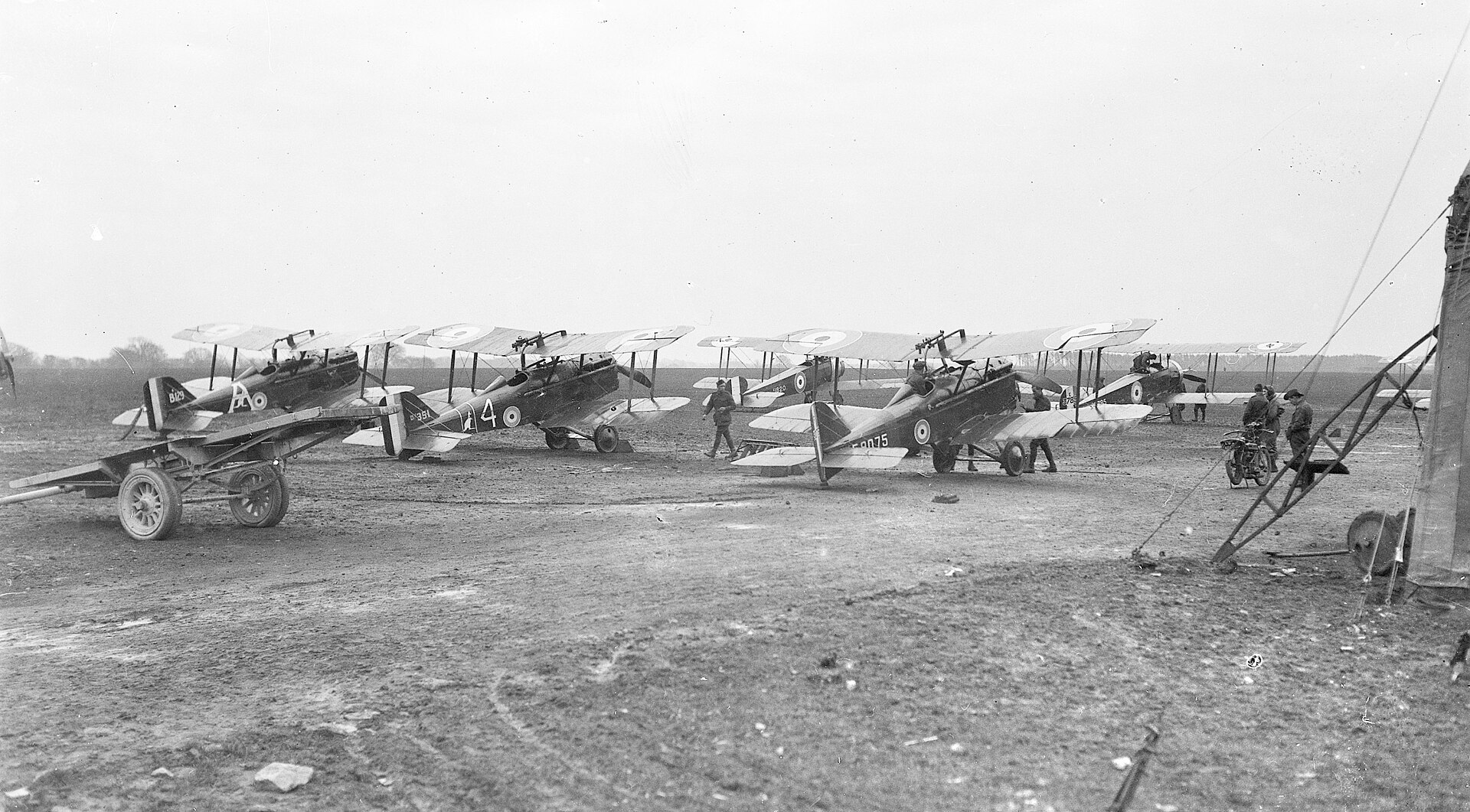
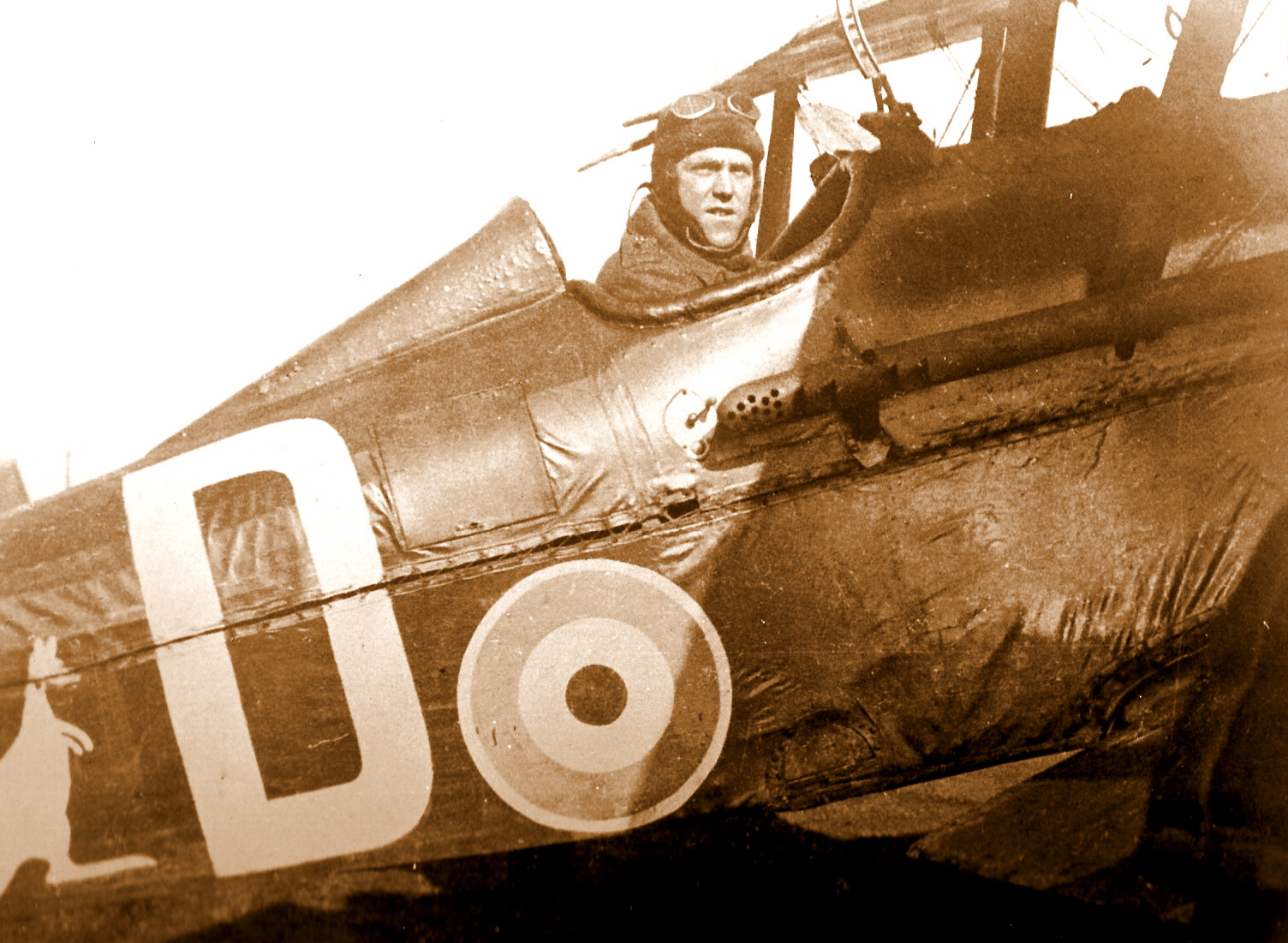
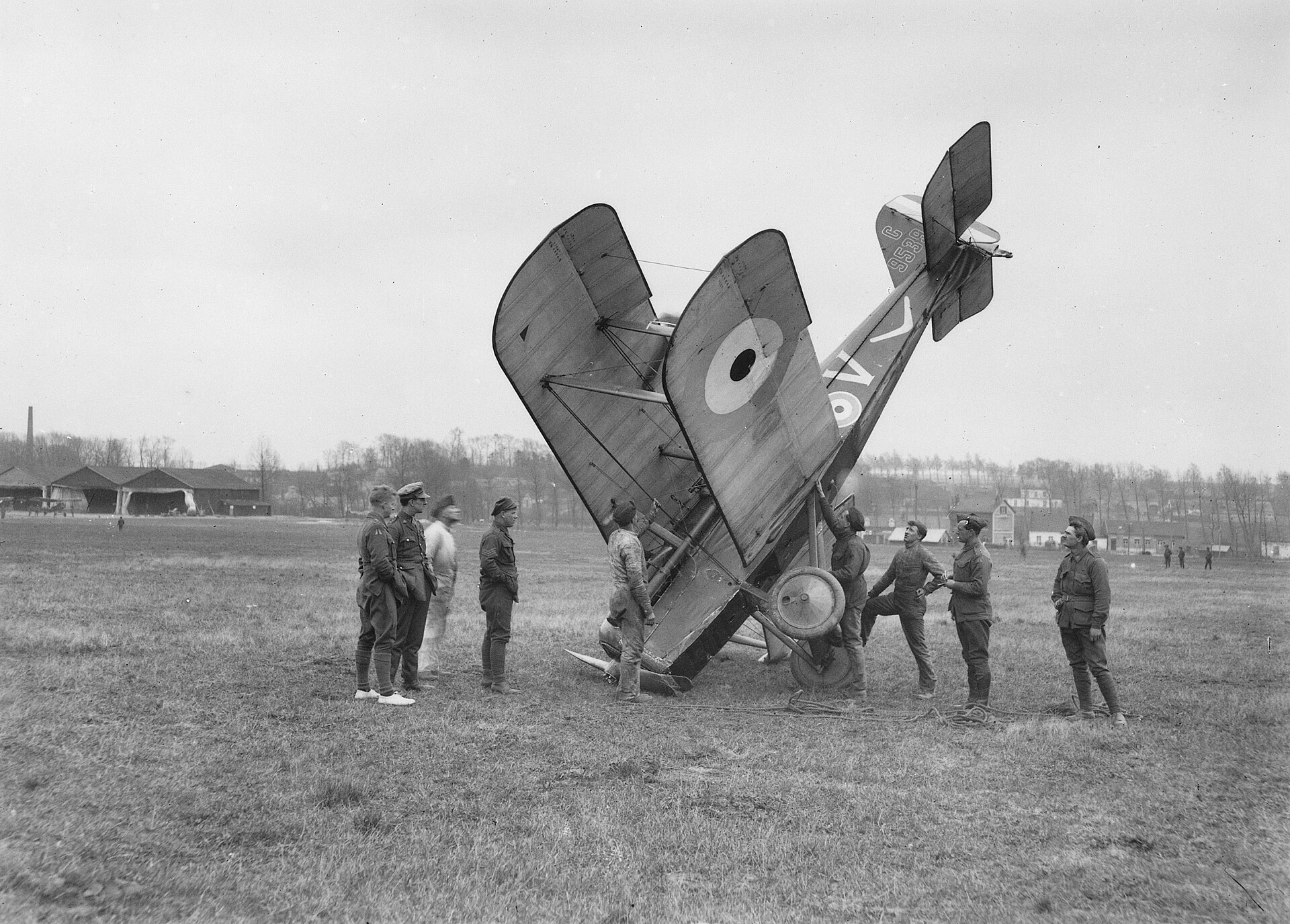
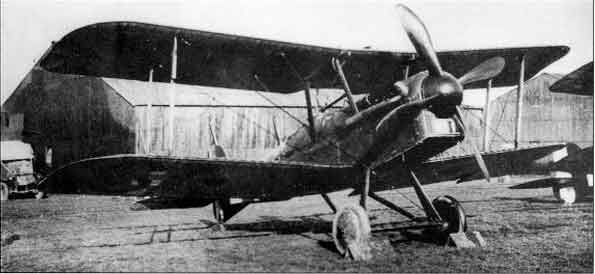
The S.E.5a on film
“Royal Aircraft Factory S.E.5a — WWI Fighter” from the Historical Aviation Film Unit (128,000+ views), showing a genuine airworthy S.E.5a in the air. The unit specialises in filming authentic flying reproductions of First World War aircraft.
Where the S.E.5a flew
Designed and built in Britain, the S.E.5a fought over the Western Front and other theatres from 1917, equipped RFC, RAF, Australian and American squadrons, and — after the war — served on with several air forces before being preserved in museums worldwide. Toggle the categories to see wartime operators, combat theatres, surviving museum airframes and post-war operators.
The record that defines it
The S.E.5a reached the Western Front during the RFC’s darkest month, and once its engine troubles were solved it became one of the decisive Allied fighters of 1918 — the mount of Britain’s greatest aces.
Precise victory tallies for individual aircraft types are impossible to verify a century on, and most aces flew several types over their careers. What is certain is the S.E.5a’s standing as one of the two British fighters — alongside the Sopwith Camel — that carried the Allied air war to victory. Explore the combat record of every military aircraft in our database.
Everything people ask about the S.E.5a
Can I fly in an S.E.5a?
What made the S.E.5a so good?
Who designed the S.E.5a and what engine did it use?
How many S.E.5as were built?
Which aces flew the S.E.5a?
How was the S.E.5a different from the Sopwith Camel?
Are there any original S.E.5as left?
You can’t fly the S.E.5a.
These, you can.
Some legends only live in museums — but a genuine fighter-jet flight is real, and bookable. Take the controls of a supersonic jet, pull real g and see the curvature of the Earth with MiGFlug.
 Fly the L-39 AlbatrosThe world’s most-flown jet trainer — aerobatics included
 Fly the F-104 Starfighter“The missile with a man in it”
 Fly the MiG-21The Cold War’s most-produced jet
 Fly the T-33 Shooting StarAmerica’s first jet trainer
 Fly the DH VampireA piece of early jet history
 Fly the S.211Agile Italian jet trainer
 Fly the MB-326The classic Aermacchi jet
 Fly the MiG-15The Soviet legend of the Korean War
Continue the tour
Every fact, checked
- Royal Air Force Museum — Royal Aircraft Factory S.E.5AMuseum record, service history and the aircraft rated the best British single-seat fighter of WWI.
- The Shuttleworth Collection — Royal Aircraft Factory S.E.5aThe genuine 1918 S.E.5a (F904) kept airworthy and flown at Old Warden.
- The Vintage Aviator — S.E.5a HistoryDetailed history, specifications and engine notes from builders of flying reproductions.
- Imperial War Museums — First World War collectionsOriginal photographs and context for the RFC/RAF air war, 1917–18.
- Smithsonian National Air and Space MuseumHolds an American-built S.E.5E, the type’s post-war US development.
- Science Museum Group Collection — S.E.5aCollection record for a preserved British S.E.5a airframe.
- Australian War Memorial — S.E.5a photographsImages of Australian Flying Corps S.E.5a service on the Western Front.
- J. M. Bruce — The Royal Aircraft Factory S.E.5/5aThe standard technical monograph on the design, development and production of the type.
- Norman Franks — SE 5/5a Aces of World War 1 (Osprey Aircraft of the Aces)Unit histories and biographies of the aces who flew the S.E.5a.
- James McCudden — Flying Fury: Five Years in the Royal Flying CorpsFirst-hand memoir by the S.E.5a ace, describing high-altitude combat in 1918.
Hero and gallery photography credited per image (Wikimedia Commons). Some performance and cost figures for a century-old aircraft are estimates and are hedged in the text. Spotted an error? Every page in the Aircraft Museum is fact-checked before publication — write to us and we’ll correct it.