
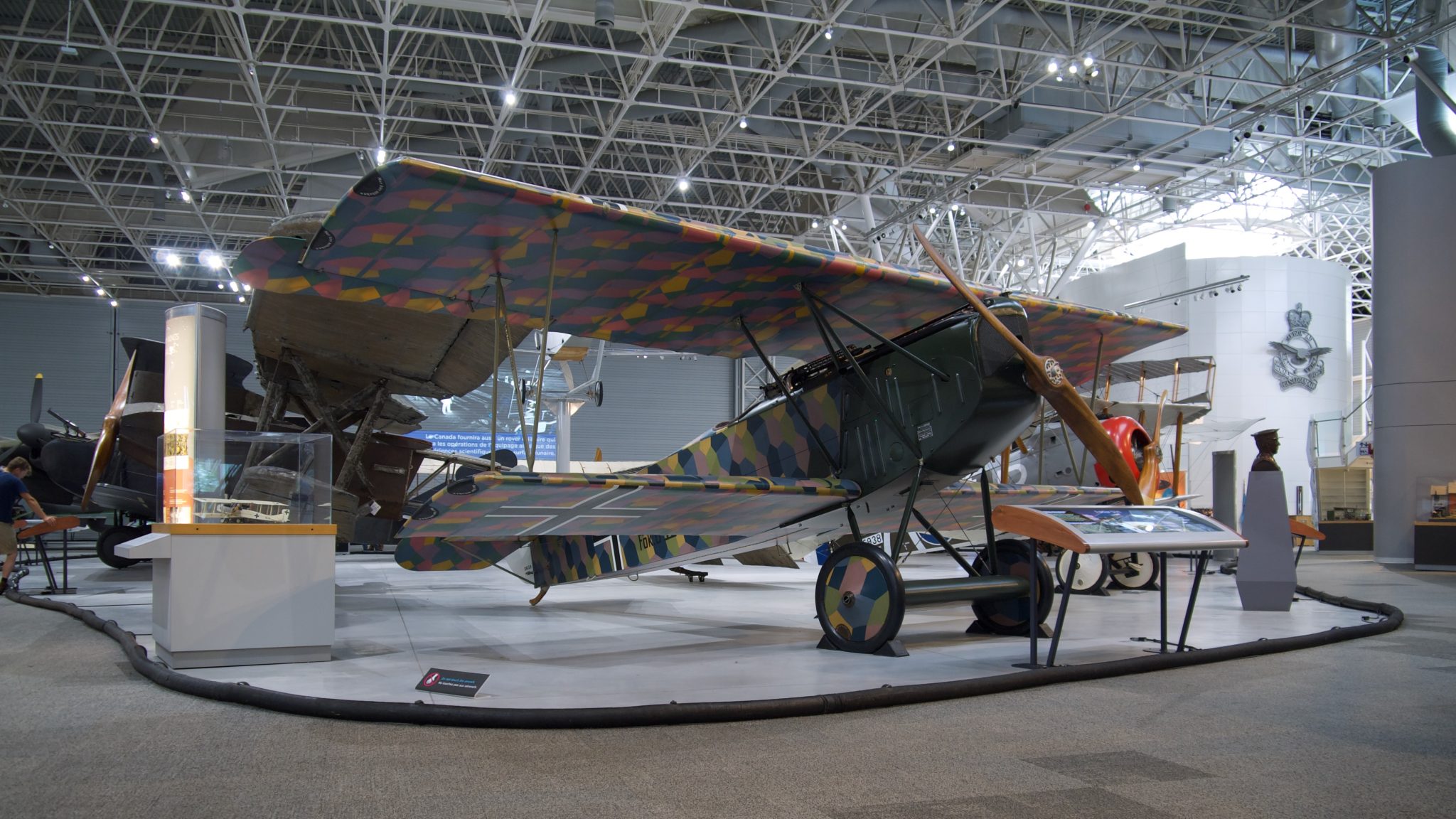
Fokker D.VII
“The fighter written into the Armistice”
Germany’s finest fighter of 1918 — so respected that the Armistice named it by type as the one aircraft the defeated air force was ordered to hand over first.
The Fokker D.VII: how Germany answered 1918 with its best fighter
By the start of 1918 the German air service was losing its edge. The Fokker Dr.I triplane that had made the Red Baron famous was slow and dated, and newer Allied fighters — the SPAD S.XIII, the SE5a, the Sopwith Camel — were arriving in numbers. Germany needed a new front-line fighter fast, and held a competition at Adlershof in January 1918 to find one. The winner was a Fokker prototype designed by Reinhold Platz, a former welder with no formal engineering training who had become Anthony Fokker’s chief designer.
What set Platz’s design apart was the wing. Instead of the thin, heavily wire-braced wings of its rivals, the D.VII used a thick cantilever aerofoil strong enough to carry its own loads with almost no external bracing. The result was an aircraft with tremendous lift, a gentle and forgiving stall, and outstanding control at low speed and high altitude — exactly where dogfights of 1918 were decided.
Entering service in the spring of 1918 with the elite Jagdgeschwader I, the D.VII quickly proved formidable. Pilots found it could be hauled around the sky near the stall without falling out of control, and could “hang on its propeller” to fire up at enemy aircraft above it. Fitted with the high-altitude BMW IIIa engine, the D.VIIF could out-climb almost anything the Allies flew. Aces including Ernst Udet flew it, and it equipped the units Germany could least afford to lose.
When the war ended, the aircraft received a distinction no other has matched. The Armistice of 11 November 1918 listed the war material Germany had to surrender, and its Western Front clauses named the D.VII specifically — the only aircraft singled out by type. Surrendered and licence-built airframes went on to serve a dozen air forces through the 1920s and 1930s, while Anthony Fokker smuggled aircraft and engines home to the Netherlands to rebuild his company.
01The Fokker D.VII’s origins: Reinhold Platz, the Adlershof competition and Anthony Fokker
The D.VII grew out of a series of experimental Fokker prototypes designed by Reinhold Platz, who favoured thick, internally braced cantilever wings at a time when most designers still trusted thin wire-braced ones. His V.11 biplane prototype was entered in the first Fighter Competition at Adlershof in January 1918, where front-line aces were invited to fly the candidates and give their verdict.
The prototype was fast and climbed well but was initially unstable in a dive; on advice from pilots at the competition — a group that, by many accounts, included Manfred von Richthofen — Platz lengthened the fuselage and revised the fin. The reworked aircraft won convincingly, and Fokker received a large production order. Because Fokker’s factory could not build enough on its own, the design was also produced under licence by Albatros at its Johannisthal and OAW plants — so many D.VIIs were, confusingly, built by Fokker’s biggest rival.
What makes the Fokker D.VII special
A thick wing that refused to stall
Platz’s deep cantilever aerofoil carried its loads internally, so the D.VII needed almost no bracing wires. It generated huge lift and, crucially, a soft, progressive stall — the aircraft mushed under control instead of spinning, letting pilots fight at low speed and high altitude where rivals ran out of wing.
A welded steel-tube fuselage
Where most fighters used wire-braced wooden frames, the D.VII’s fuselage was welded from steel tubing — Reinhold Platz’s trade. It was strong, damage-tolerant, quick to repair in the field, and well suited to mass production by semi-skilled labour, which mattered in 1918.
The BMW IIIa changed everything
The standard 160–180 hp Mercedes D.III made a fine fighter. The high-compression BMW IIIa, tuned for altitude, made a great one: the D.VIIF held its power where the air thinned, climbing and fighting effectively above 5,000 m — a decisive edge over Allied types that gasped at those heights.
02The Fokker D.VII’s wing: how a thick cantilever aerofoil beat the wire-braced biplane
Conventional 1918 biplanes used thin wings that could not support themselves, so they relied on a web of struts and bracing wires — draggy, fragile, and forever needing to be re-tensioned. Platz took the opposite approach: a thick aerofoil section with box spars strong enough to be a cantilever, needing only light interplane struts and no flying or landing wires.
The aerodynamic payoff was large. The deep wing produced more lift and stalled gently, so the D.VII kept flying and turning at speeds that would drop other fighters into a spin. It also gave the aircraft its trademark ability to point its nose up and “hang on the propeller,” firing at aircraft above it without stalling out. The idea was decades ahead of its time; thick cantilever wings would become standard on almost every aircraft that followed.
03The Fokker D.VII’s engines: the Mercedes D.III and the game-changing BMW IIIa
Most D.VIIs were powered by the Mercedes D.III, a reliable 160–180 hp six-cylinder water-cooled inline that gave good performance at low and medium altitude. But the version pilots wanted was the D.VIIF, fitted with the BMW IIIa.
The BMW IIIa was a high-compression engine designed for altitude. At sea level it produced comparable power to the Mercedes, but as the air thinned it held onto its output far better — so much so that pilots were warned against running it at full throttle low down, where it could over-rev. Above roughly 4,000–5,000 m the D.VIIF could still climb hard and fight, reaching a ceiling commonly quoted around 7,000 m against about 6,000 m for the Mercedes aircraft. Demand for the BMW engine always outstripped supply, so BMW-powered D.VIIs went to the best squadrons first.
04Why the Fokker D.VII could “hang on its propeller” and fight where others fell away
Two qualities combined to give the D.VII its edge in the vertical. First, the thick wing kept generating lift at very high angles of attack, so the aircraft could be held nose-high and slow without stalling and spinning. Second, the strong low-speed control let a pilot point the nose up at an enemy above and fire a burst while effectively balanced on the propeller’s thrust.
Allied pilots quickly learned not to assume a slow, nose-high D.VII was a beaten one — it was often a loaded gun. The aircraft’s forgiving handling also meant that squadrons could convert less-experienced pilots onto it quickly, which is why it was so often said that the D.VII made ordinary pilots dangerous and good pilots deadly.
Fokker D.VII full specifications
Baseline note: the figures below describe the Fokker D.VII(F) with the 185 hp BMW IIIa — the over-compressed, altitude-compensated engine that reached the front with Jasta 11 in late June 1918 and turned an already good aeroplane into the best fighter Germany fielded. Deltas for the standard D.VII with the 160–180 hp Mercedes D.IIIa and D.IIIaü (the great majority of the roughly 3,300 built) are in grey. Only about 750 D.VII(F) were completed, so the aircraft most Allied pilots met was the slower Mercedes machine. Period figures are not directly comparable between sources: they were taken on individual hand-built airframes with individual hand-built engines, and the test altitude is very often not recorded.
Dimensions & weights
- Crew
- 1
- Wingspan
- 8.90 m (29 ft 2½ in) over the upper wing; the lower plane is shorter and of slightly narrower chord
- Length
- 6.95 m (22 ft 9¾ in)
- Height
- 2.75 m (9 ft 0 in)
- Wing area
- 20.5 m² (221 sq ft)
- Wing section
- Thick, deeply cambered, blunt-nosed high-lift aerofoil of the Göttingen family. This is the single most important number on the page that is not a number: the thick section gave more lift, and it stalled gently instead of dropping a wing
- Fuselage structure
- Welded steel tube, fabric-covered, with aluminium panels over the engine bay. Reinhold Platz’s house method, and the reason a battle-damaged D.VII could be cut apart and re-welded in a field workshop by men who were not cabinet-makers
- Wing structure
- Two wooden box spars, plywood-covered leading edge, fabric aft, internally wire-braced. The wings carry their own loads: there are no flying wires and no landing wires anywhere on the aircraft
- Interplane struts
- Steel-tube N-struts carrying no bracing at all. They exist to hold the two wings in relation to each other and nothing else, and they are why the D.VII looked so bare and so ungainly to Allied pilots who first saw it
- Empty weight
- 700 kg (1,540 lb)
- Loaded weight
- 880 kg (1,940 lb) — Profile Publications quotes 670 kg (1,477 lb) and 906 kg (1,997 lb) for the Mercedes aircraft; the gap is the spread between published sources, not between marks. The BMW IIIa weighed 285 kg against the Mercedes D.IIIa’s 310 kg, so the D.VII(F) was if anything the lighter aeroplane
- Wing loading
- 42.9 kg/m² (8.79 lb/sq ft) — high for 1918, and carried entirely by the thick section rather than by acres of wing
- Axle fairing
- The undercarriage axle was enclosed in a small aerofoil-section fairing that contributed a useful amount of lift. A characteristic Fokker touch, shared with the Dr.I
Performance
- Maximum speed, sea level
- 200 km/h (124 mph) — 189–193 km/h (117–120 mph) with the Mercedes D.IIIaü
- Speed at height
- The headline sea-level figure understates the aircraft badly. The BMW’s altitude carburettor held full rated power to 2,000 m and it fell away slowly above that, so the D.VII(F)’s margin over its opponents widened the higher the fight went
- Climb to 1,000 m
- 1 min 40 sec (3,280 ft) — 4 min 15 sec with the Mercedes
- Climb to 3,000 m
- 7 min 0 sec (9,840 ft) — 13 min 49 sec with the Mercedes
- Climb to 5,000 m
- 14 min 0 sec (16,400 ft) — 38 min 5 sec with the Mercedes. That is not a marginal improvement; it is a different aeroplane
- Climb to 6,000 m
- 18 min 45 sec (19,700 ft) — the Mercedes machine could barely reach this height at all, and took most of its fuel doing it
- Service ceiling
- 6,400 m (21,000 ft) — 5,500–6,000 m (18,000–19,700 ft) with the Mercedes
- Endurance
- About 1 hr 30 min — short, and the practical limit on a patrol. The quoted 266 km (165 miles) range is arithmetic rather than an operational figure
- Stall
- Remarkably docile, with no tendency to drop a wing and a marked reluctance to spin. The Camel and the SPAD S.XIII both stalled sharply and spun hard; the D.VII simply mushed
- Hanging on the propeller
- Because of that stall the D.VII could be held nose-high at very low speed for several seconds and fired upward into an opponent’s belly. No other fighter of the war could do this safely, and it is the manoeuvre Allied pilots wrote home about
- Diving
- Unlimited in practice. The D.VII could be dived without any of the fear of structural failure that haunted Albatros and Nieuport pilots, and that alone changed how a German pilot could fight
- Emergency power
- At low level a BMW IIIa could be pushed to about 179 kW (240 hp) for a short period. It was also the surest way to destroy the engine, for the reasons in the next column
Propulsion & systems
- Engine
- One BMW IIIa water-cooled SOHC straight-six, 19.1 litres, 138 kW (185 hp) at 1,400 rpm, compression 6.4:1. The first engine BMW ever built, designed by Max Friz — the F in D.VII(F) is his initial, not a mark letter
- The over-compression problem
- The BMW was built to a compression ratio that only made sense in thin air. Opening the throttle fully below about 2,000 m risked detonation and could wreck the engine, so a D.VII(F) pilot had a throttle he was not allowed to use at the altitudes where ground attack and take-off happen. This was a deliberate trade, and the right one: the engine bought its altitude performance by giving up the bottom of the height band.
- Altitude carburettor
- A twin-barrel altitude-compensating carburettor adjusted mixture with height, holding roughly 200 hp to 2,000 m. It is the specific piece of engineering that made the D.VII(F) an outclimbing aeroplane, and it was Friz’s idea
- Horsepower confusion
- German ratings used metric Pferdestärke of 735.5 W; British ratings used 745.7 W and were taken on a different day with different fuel. Post-war British testing put the BMW IIIa at 230 hp and the Mercedes D.IIIaü at 200 hp against German ratings of 185 and 180. Much of the apparent disagreement between sources about D.VII performance dissolves once this is accounted for.
- Alternative engines
- Mercedes D.IIIaü, 134 kW (180 hp), over-compressed, the standard fit; Mercedes D.IIIa, 127 kW (170 hp), on the earliest aircraft; Austro-Daimler of 149 kW (200 hp) on Hungarian MÁG-built machines
- Fuel
- Petrol blended with benzole for octane. German fuel quality in 1918 was poor and erratic, and the higher the compression the more it mattered — an over-compressed engine on bad fuel detonates. Squadron serviceability suffered accordingly
- Propeller
- Two-blade fixed-pitch wood, from Axial, Wolff, Wotan or Heine. Contemporary reports show no consistent performance difference between them
- Cooling
- Frontal radiator in the nose with a shutter, and cooling louvres cut into the metal cowling sides. The louvre patterns differ between the Fokker, Albatros and OAW factories and are the quickest way to tell the three apart
- Guns and gear
- Two fixed 7.92 mm LMG 08/15 "Spandau" machine guns, synchronised by the Fokker Zentralsteuerung flexible-shaft gear
- Sights
- Ring-and-bead as standard; the Oigee Reflexvisier reflector sight, an early ancestor of the gunsight every fighter now carries, was fitted to a minority of German fighters in 1918
- Prototype and competition
- V 11 flown late 1917; won the first Idflieg D-type competition at Adlershof in January 1918
- Service entry
- May 1918, with Jasta 10. In service on 11 November 1918: 775 aircraft with 46 Jagdstaffeln
- Number built
- Approximately 3,300 by Fokker at Schwerin, Albatros at Johannisthal and Ostdeutsche Albatros at Schneidemühl, of which ~750 were BMW-engined D.VII(F)
05Fokker D.VII variants: the Mercedes D.VII, the BMW-powered D.VIIF and licence production
The main distinction is by engine. The baseline D.VII carried the Mercedes D.III; the prized D.VIIF carried the high-altitude BMW IIIa and is usually identified by cooling louvres on the cowling. A small number of experimental and post-war sub-types followed, including licence-built Dutch and Swiss machines produced into the mid-1920s.
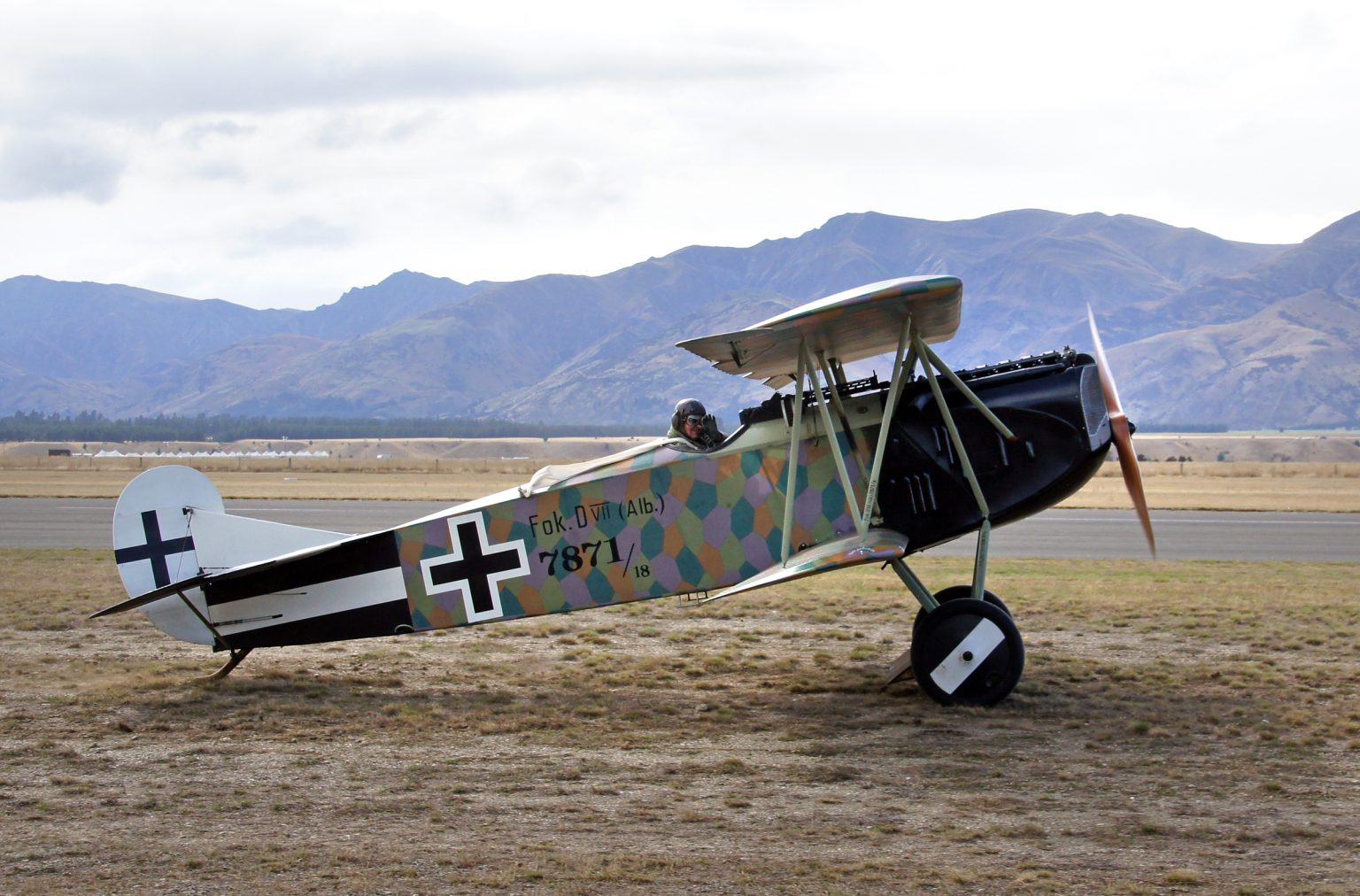
Production was split three ways: Fokker’s own works plus Albatros at Johannisthal and its OAW subsidiary. Licence-built Albatros aircraft were sometimes designated D.VII (Alb) or D.VII (OAW). Because three plants built to slightly different standards, quality and detail fittings varied between airframes.
06The Fokker D.VII’s costs: from 1918 mark contracts to flying a reproduction today
Reliable per-aircraft procurement figures for the D.VII are not well documented in surviving records, and comparing 1918 German mark contracts to modern money is fraught — wartime inflation and the post-war collapse of the mark make any single figure misleading. What is clear is that the welded steel-tube fuselage and simplified wing were deliberately cheap and quick to build, which is how Germany produced roughly 3,300 in a matter of months.
There is no meaningful “cost per flight hour” for an aircraft retired a century ago. As a modern reference point, the small number of airworthy reproductions that fly at vintage airshows are estimated to cost on the order of a few thousand dollars per flight hour to operate and maintain — a figure driven by hand-built engines, fabric and woodwork, and specialist insurance rather than fuel. Treat these figures as rough estimates flagged for the fact-check pass, not documented history.
Armament & payload
The D.VII carried the same two Spandaus as every other German fighter, and what made it lethal was where the aeroplane could point them
By 1918 the German fighter armament question was settled: two fixed 7.92 mm LMG 08/15 machine guns on the upper fuselage decking, firing through the propeller, breeches within the pilot’s reach. The Albatros D.III had it, the Dr.I had it, the Pfalz D.XII had it and the D.VII had it. Nothing about the D.VII’s guns was novel, and nobody at the time pretended otherwise.
What was novel was the platform. A thick-section wing that stalled without dropping a wing meant the D.VII could be flown at speeds where other fighters fell out of the sky, and held there. It could be pulled up until it was standing on its propeller, hanging in the air at almost no forward speed, and fired upwards into the underside of an aeroplane above it — and then recovered, instead of flicking into a spin. Camel and SPAD pilots trying the same thing arrived at the ground.
The other half of the story is the synchronisation gear. The Fokker Zentralsteuerung, standardised across the whole German air service by an order of 24 July 1917, gave each gun its own flexible drive and its own timing adjustment, so a failure in one did not silence the other. It was the best mechanical synchroniser of the war on any side except the British Constantinesco, and it is one of several reasons the D.VII simply worked. Fits were essentially constant across the type’s life and across all three factories; what varied was the engine in front of them and the quality of the ammunition behind them.
Gun
- Two fixed 7.92 mm (0.312 in) LMG 08/15 machine guns, the aircraft version of the Maxim-derived MG 08, universally called "Spandau" by Allied pilots after the arsenal mark on the lockplate.
- Mounted side by side on the upper fuselage decking directly ahead of the cockpit, so the pilot could reach both breeches in flight to clear a stoppage — an ordinary and constant part of flying a 1918 fighter.
- Cyclic rate around 450 rounds per minute each, reduced further by the synchroniser. Weight of fire was unremarkable; the guns were adequate rather than good, and the Germans knew it.
- Air-cooled in the airstream, with the water jacket of the ground gun replaced by a slotted or perforated barrel casing.
- No provision for a third gun, an overwing gun or a flexible mounting. The D.VII is the plainest armament installation on any major fighter of 1918.
Ammunition & sights
- Roughly 500 rounds per gun in belts, held in the fuselage ahead of the cockpit and fed up to the guns.
- Standard ball, with S.m.K. armour-piercing rounds mixed in against armoured two-seaters and ground targets.
- Phosphorus incendiary ammunition for balloon attack caused a specific and dangerous D.VII problem: heat radiating from the engine inside the cowling could ignite rounds in the ammunition boxes. The fix was more cooling louvres cut into the metal cowling panels, and it is why late aircraft carry so many more of them than early ones.
- Sighting was normally a simple ring-and-bead. A minority of 1918 German fighters carried the Oigee Reflexvisier, a true reflector sight projecting an aiming mark onto a glass, roughly two decades before this became normal.
Synchronisation gear
- Fokker Zentralsteuerung — the "central control" gear, designed in late 1916 and available in quantity from mid-1917.
- It abolished the push rod entirely. A flexible drive shaft ran from the end of the engine camshaft to a trigger motor on each gun; the firing button engaged a clutch at the engine, and the cam that generated the firing impulse now lived in the gun itself.
- Because each gun carried its own timing adjustment and its own drive, twin guns could be set to fire at the same point on the propeller disc a fraction apart, and a failure in one gun’s gear left the other firing.
- Made standard for all German aircraft by an order signed 24 July 1917, superseding the earlier Fokker Stangensteuerung push-rod gear and the Albatros-Hedtke and Albatros-Semmler gears.
The nose-up firing position
- Not a weapon, but the reason the weapons mattered. The thick cantilever wing gave the D.VII a soft, controllable stall with no wing drop and a strong reluctance to spin.
- A pilot could therefore haul the nose up until the aircraft was hanging on its propeller at almost no airspeed, fire upward into the belly of an aeroplane above him, and fly out of it.
- This was the manoeuvre that most alarmed Allied pilots in the last six months of the war, because it put fire into the one place a fighter of 1918 could not defend and it came from an aircraft that appeared to be about to fall out of the sky.
- It is also the honest core of the aphorism that the D.VII made a mediocre pilot good: the aeroplane would not punish a man for flying it to the edge, so an average pilot could use the whole envelope instead of the safe middle of it.
Bombs and ground attack
- None as standard. No German D.VII left the factory with a bomb rack, and the type was never a designated Schlachtflugzeug — ground attack was the job of the Halberstadt CL.II, the Hannover CL.III and the armoured Junkers J.I.
- The D.VII did fly low against troops during the retreats of autumn 1918, but with guns only, and at real cost to an over-compressed engine that could not use full throttle down there.
- The one substantial exception is post-war. Poland deployed roughly 50 D.VIIs in the Polish-Soviet War of 1919–20 and used them mainly for ground attack, with small bombs on locally made racks.
- Dutch and Dutch East Indies aircraft, and various small post-war air arms, likewise improvised light bomb carriage. All of it is field modification, none of it is a factory fit.
Not carried — with one exception
- No cannon, no rockets, no radio, no oxygen equipment, no armour, no self-sealing fuel tank. Fuel tanks that split at the seams were in fact a known D.VII complaint.
- No bomb load, no camera, no navigation aid beyond a compass. This is a pure interceptor and nothing else.
- The exception is the important one: German single-seat pilots did have a parachute. The Heinecke harness type was issued from the spring of 1918, and Ernst Udet used one to escape a burning D.VII on 29 June 1918. British and French single-seat pilots were given none for the entire war, and were still being told parachutes would encourage them to abandon repairable aircraft.
- That asymmetry belongs in any honest account of 1918 air fighting, and it belongs on this aircraft in particular, because the D.VII is the machine most German pilots were flying when it finally applied to them.
Three typical loadouts
- Standard Jagdstaffel patrol, summer 1918
- Two Spandaus with about 500 rounds each, full fuel for roughly ninety minutes, nothing else. Flown in a Kette of four or five at 4,000–5,000 m over the German side of the line, waiting for Allied formations to come to them. The BMW aircraft went to the leaders and the best shots; a Staffel rarely had more than a handful.
- High interception with the D.VII(F)
- The same armament, flown as high as the airframe would go. With fourteen minutes to 5,000 m against thirty-eight for a Mercedes machine, a BMW-engined D.VII could take off after an Allied formation was sighted and still arrive above it. This was the D.VII’s single greatest tactical advantage and the reason pilots clamoured for the F.
- Post-war ground attack, Poland 1919–20
- Guns plus small bombs on improvised racks, flown low against Soviet cavalry and transport by the Polish Air Force. It worked, and it is a striking second career for an aircraft designed to do nothing but shoot down other aeroplanes at height. Switzerland, the Netherlands, Belgium, Latvia, Lithuania, Hungary, Romania, Sweden, Denmark, Finland, Czechoslovakia, Bulgaria and the Soviet Union all flew D.VIIs after 1918 as well.
Sourcing caveat: First World War performance figures are not comparable between sources in the way modern ones are. They were measured on individual aircraft with individual hand-built engines, on particular days, and the altitude at which a speed was obtained is frequently not stated at all. German and British horsepower were also different units measured to different standards, which is why the same BMW IIIa is honestly quoted at 185 hp in Germany and 230 hp in a post-war British test report. The climb figures here are the BMW factory data reproduced in Flugsport in 1919 alongside the Mercedes figures, which is the only place the two are measured the same way; dimensions and weights follow Profile Publications and the National Museum of the United States Air Force, and where those disagree both are given. Victory totals on all sides of this war were credited generously and should be read as claims, not as audits.
Variants
One aeroplane, three factories, and the only piece of equipment ever named in an armistice
The D.VII began as the Fokker V 11, one of several prototypes Fokker took to the first Idflieg D-type competition at Adlershof in January 1918. That competition mattered because for the first time front-line pilots flew the candidates themselves. Manfred von Richthofen flew the V 11 and disliked it: tricky, unpleasant, directionally unstable in a dive. Reinhold Platz lengthened the rear fuselage by one structural bay and added a small triangular fin ahead of the rudder. Richthofen flew it again and called it the best aircraft in the competition. He was not the only pilot to say so, but his word effectively decided it, and Fokker had a provisional order for 400 aircraft within days.
Richthofen never flew the D.VII in combat. He was killed on 21 April 1918, days before the first aircraft reached the Jagdstaffeln. The aeroplane he chose went on to equip 46 of them.
Fokker could not build them fast enough, so Idflieg ordered Albatros — whose own D.V the Fokker had beaten — to build its rival under licence at Johannisthal and at Ostdeutsche Albatros in Schneidemühl, paying Fokker a five per cent royalty on every airframe. Fokker’s works kept no detailed drawings, so he simply sent Albatros a complete aeroplane to copy. The consequence was predictable: parts were not reliably interchangeable between the three factories, and Fokker’s own Schwerin-built machines had the poorest workmanship of the three. Several aircraft shed upper-wing fabric and broke wing ribs in service, a wartime materials-and-doping problem rather than a design fault, and fuel tanks split at the seams.
And then Article IV. The Armistice signed at Compiègne on 11 November 1918 required, under the military clauses relating to the Western Front, the surrender of "1,700 airplanes (fighters, bombers — firstly, all of the D 7’s and all the night bombing machines)". The popular retelling — that the treaty demanded "all machines of the D.VII type" as a clause of its own — is a slight embroidery of the actual text: the D.VIIs were to be the first aircraft counted against a total of 1,700, alongside every night bomber. The compliment survives the correction intact. No other aeroplane, on any side, in either world war, was ever named in a surrender document by type.
- Fokker V 11 (late 1917, prototype)
- The competition aircraft, with the Mercedes D.IIIa and the original short fuselage Richthofen disliked. Modified at Adlershof with a longer rear fuselage and a triangular fin; that modified machine is the D.VII.
- D.VII (Fok) (1918, Schwerin)
- Fokker’s own production. Early aircraft carried a streaked green fuselage rather than the printed lozenge fabric used elsewhere. Noted, by the Germans themselves, for the lowest standard of workmanship and materials of the three factories.
- D.VII (Alb) (1918, Johannisthal)
- Albatros-built under licence, copied from a sample airframe rather than from drawings, with a distinctive cowling louvre pattern. Albatros paid Fokker a five per cent royalty for the privilege of building the aircraft that had put its own D.V out of contention.
- D.VII (OAW) (1918, Schneidemühl)
- Ostdeutsche Albatros Werke production, identifiable by cowlings with twenty round cooling holes a side and, often, mauve-and-green splotch camouflage on the nose. OAW built a large share of the total.
- D.VII(F) (mid-1918, ~750 built)
- The 185 hp BMW IIIa installation, first with Jasta 11 in late June 1918. The F is for Max Friz, the engine’s designer. Dramatically better climb and altitude performance; production of the engine was the constraint, so the Mercedes aircraft continued to the end of the war.
- D.VII (MÁG) (1918–20s, up to 50)
- Hungarian licence production by Magyar Általános Gépgyár at Mátyásföld near Budapest with 200 hp Austro-Daimler engines, begun late in the war and continued afterwards.
- Fokker V 34, V 35 and V 36 (1918–19, prototypes)
- Post-Armistice BMW-engined developments, the V 35 a two-seater and the V 35 and V 36 carrying fuel in the undercarriage axle fairing. The V 38 became the two-seat Fokker C.I, which sold widely and kept the company alive.
- Post-war Fokker production, Netherlands (1919 onwards)
- Anthony Fokker moved engines, parts and complete airframes across the German border into the Netherlands by rail ahead of the Allied collection teams — by his own account several full trainloads — and sold finished D.VIIs from there. The Soviet Union bought 50 in 1920; the Netherlands Naval Aviation Service flew 20 from 1920 to 1937.
- Alfred Comte licence production, Switzerland (1929, 8 aircraft)
- Eight brand-new D.VII airframes built in Switzerland for the Fliegertruppe eleven years after the Armistice. There is no better single measure of how good the aeroplane was.
- American and Lithuanian rebuilds (1919–30)
- The US Army and Navy evaluated 142 captured aircraft, some re-engined with the Liberty L-6, which looked very like the German six from the outside. Lithuania rebuilt one with a Siddeley Puma in 1928 and two with Mercedes engines in 1930, with enlarged cowlings and a chin radiator.
Survivors, and what is actually original: eight original D.VIIs are generally accounted for, and not one of them flies. The Lac-Brome Museum at Knowlton, Quebec has the unrestored Albatros-built D.6810/18, the only surviving D.VII still wearing its original four-colour lozenge fabric and the source from which that pattern is documented; the Canada Aviation and Space Museum in Ottawa has 10347/18; the National Air and Space Museum in Washington has the Jasta 65 machine that landed by mistake at an American airfield near Verdun on 9 November 1918, two days before the Armistice; the Royal Air Force Museum in London has OAW 8417/18, abandoned in Belgium in 1918; the Musée de l’Air et de l’Espace at Le Bourget has 6796/18; the Deutsches Museum in Munich has an ex-Dutch naval machine found in a German barn in 1948; the Flieger-Flab-Museum at Dübendorf has a Swiss aircraft; and the Nationaal Militair Museum at Soesterberg has an ex-American war prize. Everything else is a reproduction, including the well-known aircraft at the National Museum of the United States Air Force. Most flying reproductions use inverted six-cylinder Ranger or Gipsy Queen engines of far smaller capacity than the Mercedes or BMW, which changes the nose shape and the aeroplane’s character; a handful, such as Old Rhinebeck Aerodrome’s, fly behind genuine Mercedes D.IIIa engines. A reproduction with an original engine is still a reproduction, and for First World War types that distinction is worth stating plainly, because almost everything airborne is new.
The Fokker D.VII: from Adlershof to the Armistice and beyond
Platz builds the prototype
Reinhold Platz’s experimental V.11 biplane, with its thick cantilever wing, flies at the Fokker works late in the year.
Wins the Adlershof competition
In January the reworked prototype wins the first Fighter Competition, judged in part by front-line aces, and Fokker receives a major production order.
Into service with JG I
From April the D.VII equips Germany’s elite fighter units; the BMW IIIa-powered D.VIIF gives a decisive high-altitude advantage.
Named in the Armistice
11 November — the surrender terms single out the D.VII by type as war material to be handed over, the only aircraft so named.
A long post-war life
Surrendered and licence-built D.VIIs serve a dozen air forces, from the Netherlands and Belgium to Switzerland, the Soviet Union and the USA, into the 1930s.
The Fokker D.VII in twelve stories
The aircraft written into the Armistice
Of all the war material Germany surrendered in November 1918, only one aircraft was named by type.
Read the full story
Ernst Udet and his red D.VII
Germany’s highest-scoring surviving ace flew the D.VII in the last months of the war.
Read the full story
Hermann Goering takes over JG I
The famous 'Flying Circus' ended the war flying D.VIIs under a future Nazi leader.
Read the full story
How aces chose the D.VII
Front-line pilots, not committees, picked Germany’s next fighter at Adlershof in January 1918.
Read the full story
Hanging on the propeller
The D.VII could point its nose at the sky and keep flying where others spun.
Read the full story
The BMW engine everyone wanted
The D.VIIF's high-compression BMW IIIa turned a good fighter into the best of 1918.
Read the full story
Fokker smuggles his factory home
After the Armistice, Anthony Fokker moved his company to the Netherlands - by train, quietly.
Read the full story
A fighter for a dozen air forces
The D.VII kept flying long after the war that produced it had ended.
Read the full story
The Soviets buy fifty
One of the D.VII's largest post-war customers was Soviet Russia.
Read the full story
American evaluation
Surrendered D.VIIs were shipped to the United States for testing.
Read the full story
The D.VII in Hollywood
Reproductions of the D.VII have been dogfighting on film for decades.
Read the full story
The barn-find at the Deutsches Museum
One of the most complete originals spent years hidden in a German barn.
Read the full story
The Fokker D.VII in pictures
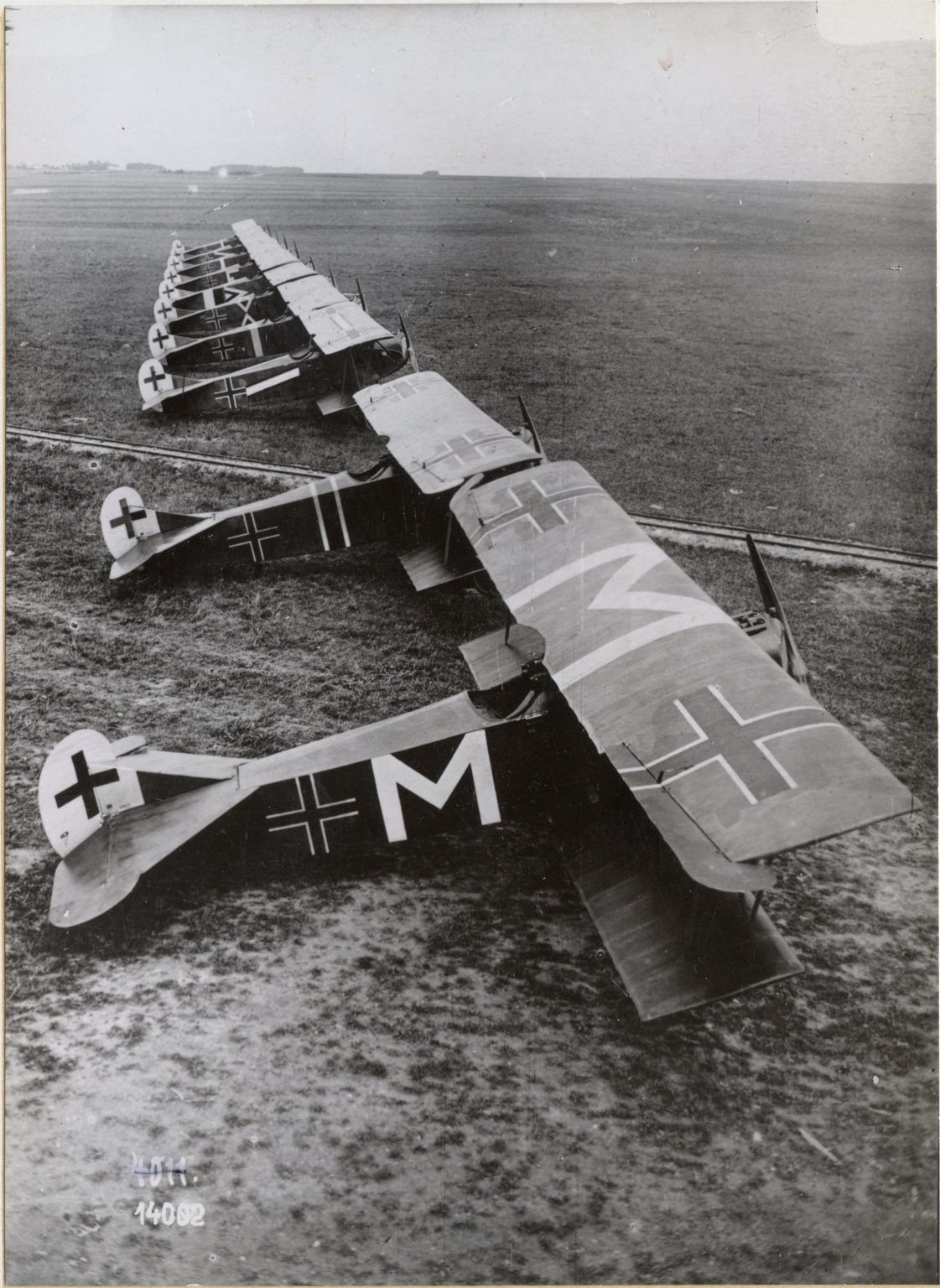
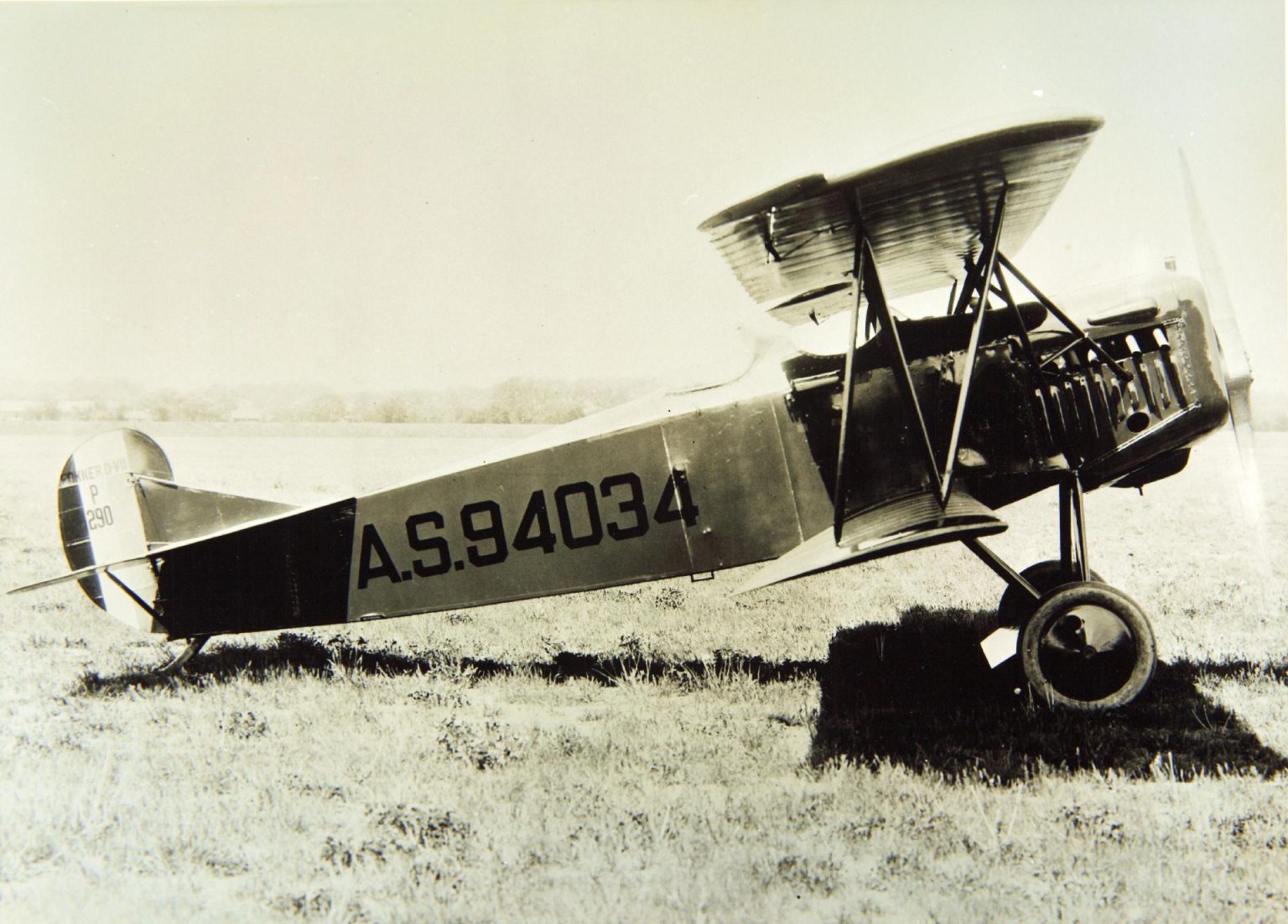
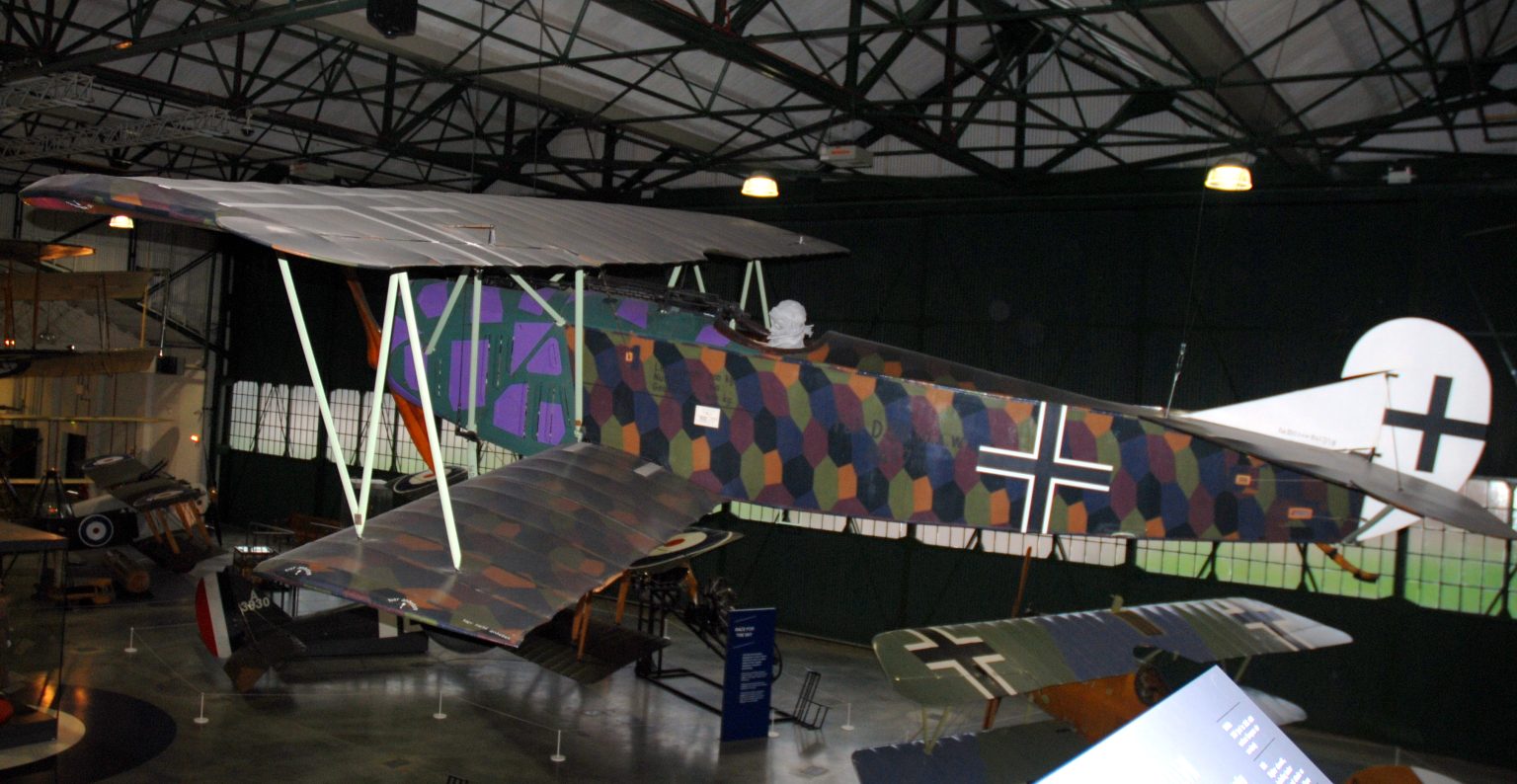
The Fokker D.VII on film
“The Fokker D.VII: WWI German Aerial Superiority” — a feature from the official channel of the Smithsonian National Air and Space Museum, filmed with the museum’s own airframe.
Where the Fokker D.VII flew
Built by Germany in 1918, fought over the Western Front, and — after the Armistice — flown by a dozen air forces across Europe and beyond. Toggle the categories to see wartime service, combat theatres, surviving museum airframes and post-war operators.
The record that defines it
The D.VII reached the front only in the spring of 1918, yet in a handful of months it restored German fighter effectiveness against numerically superior Allied air forces — and earned a place in the surrender terms that no other aircraft has ever held.
Precise victory tallies for individual 1918 types are contested; figures here follow the consensus of museum and historical sources. Compare the combat record of every military aircraft.
Everything people ask about the Fokker D.VII
Can I fly in a Fokker D.VII?
What made the Fokker D.VII so good?
How many Fokker D.VIIs were built?
Why did the Armistice specifically name the Fokker D.VII?
What engine did the Fokker D.VII use?
Are there any original Fokker D.VIIs left?
You can’t fly the Fokker D.VII.
These, you can.
Some legends only live in museums — others are fuelled and waiting. MiGFlug has put civilians in real military jet cockpits since 2004.
 Fly the L-39 AlbatrosThe world’s most-flown jet trainer — aerobatics included
 Fly the F-104 Starfighter“The missile with a man in it”
 Fly the MiG-21The Cold War’s most-produced jet
 Fly the T-33 Shooting StarAmerica’s first jet trainer
 Fly the DH VampireA piece of early jet history
 Fly the S.211Agile Italian jet trainer
 Fly the MB-326The classic Aermacchi jet
 Fly the MiG-15The Soviet legend of the Korean War
Continue the tour
Every fact, checked
- Smithsonian National Air and Space Museum — Fokker D.VIIMuseum record of a genuine airframe, construction and service history
- Smithsonian NASM — “The Fokker D.VII: WWI German Aerial Superiority”Curator video filmed with the museum’s own aircraft
- Royal Air Force Museum — Fokker D.VIIThe genuine survivor on display at Hendon
- Canada Aviation and Space Museum — Fokker D.VIIAirframe history and technical description
- Deutsches Museum Flugwerft SchleissheimThe ex-Netherlands Naval Aviation barn-find survivor
- Imperial War Museums — First World War aviation collectionsWestern Front air war context
- Avalon Project, Yale Law School — Armistice with Germany, 11 November 1918Primary text of the surrender terms naming the D.VII
- P. M. Grosz — Fokker D.VII (Windsock Datafile)Detailed monograph on design, production and variants
- Alex Imrie — Pictorial History of the German Army Air ServiceFront-line service of the D.VII with the Jagdgeschwader
- MiGFlug Afterburner — aviation history featuresMiGFlug’s magazine of aircraft history and flying reports
Hero and gallery photography credited per image (Wikimedia Commons). Some performance and cost figures for a century-old aircraft are estimates and are hedged in the text. Spotted an error? Every page in the Aircraft Museum is fact-checked before publication — write to us and we’ll correct it.