
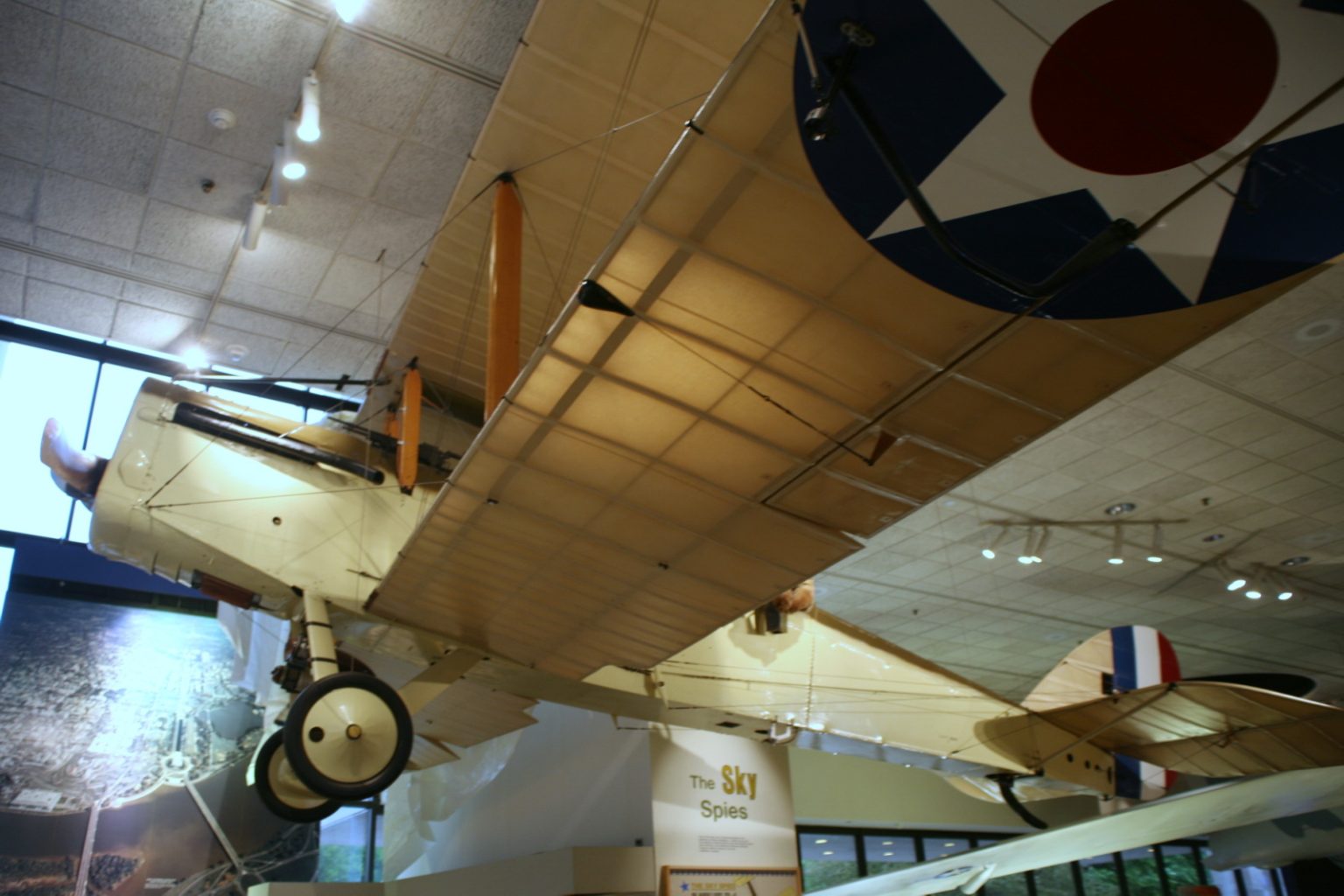
Airco DH.4
Britain's fast day bomber — and America's “Liberty Plane”
Designed by Geoffrey de Havilland in 1916, the DH.4 was widely regarded as the finest single-engined day bomber of the First World War — fast enough to outrun many fighters, and the one aircraft the United States mass-produced to send its own airmen into battle.
The Airco DH.4: how a fast day bomber outran the fighters — and armed the American Expeditionary Force
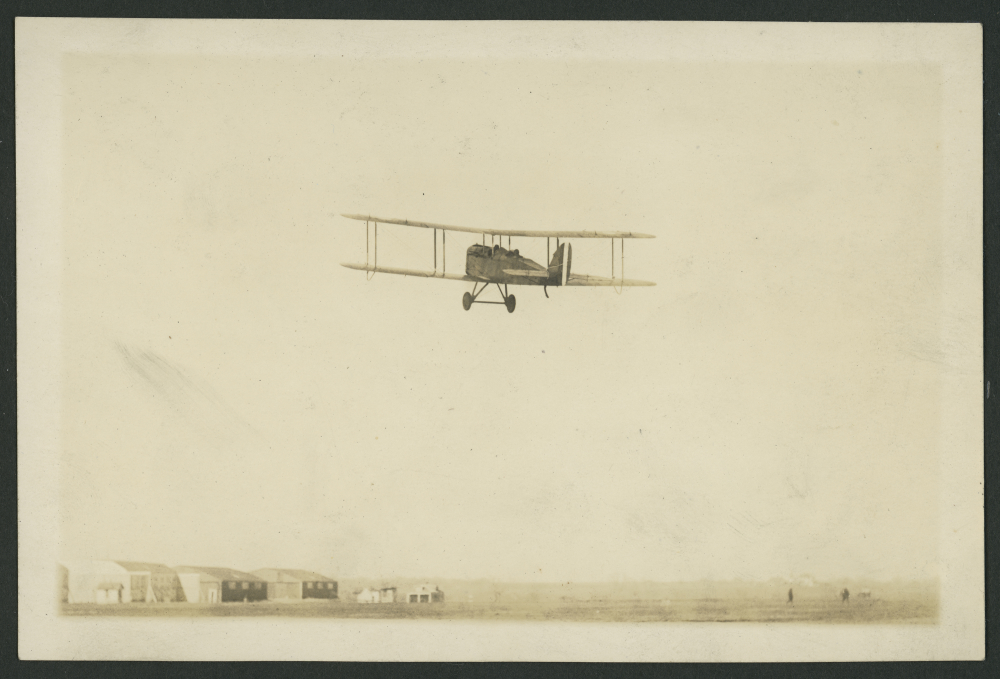
By 1916 the Royal Flying Corps needed a bomber that could reach its target, hit it accurately in daylight, and come home again — ideally without an escort. Geoffrey de Havilland, chief designer at the Aircraft Manufacturing Company (Airco), answered with the DH.4: a clean, conventional two-bay biplane built around the most powerful reliable engine Britain could offer. It first flew in August 1916 and reached the Western Front with No. 55 Squadron in spring 1917.
What set the DH.4 apart was speed. With the 375 hp Rolls-Royce Eagle VIII, a good example could reach roughly 230 km/h (about 143 mph) — fast enough that it could often outrun the German fighters sent to intercept it. Contemporaries and later historians frequently called it the best single-engined day bomber of the war, a reputation earned by its combination of pace, load and handling. We hedge that superlative deliberately: it is a widely repeated judgement rather than a measurable fact, and much depended on which engine a given airframe carried.
Fast, strong and accurate, the DH.4 could carry the fight to the enemy by day — and, uniquely, it became the aircraft that took Americans into the air war in their own machines.
That engine question was the DH.4's great weakness. The Eagle was superb but always in short supply, so many British DH.4s were fitted with less satisfactory powerplants — the BHP/Puma, the RAF 3a, the Fiat A-12 and others — which blunted the very performance that made the design special. A DH.4 was only ever as good as the engine bolted to its nose.
The aircraft's other notorious feature sat in the middle of the fuselage: the main fuel tank was placed between the pilot and the observer. That widened the gap between the two crew, making it hard for them to communicate in the noise and slipstream of combat, and it gave the type a grim reputation in some accounts as a fire risk — the nickname “the Flaming Coffin” appears in popular retellings. As we explain below, that reputation is disputed and probably exaggerated; the DH.4 was not measurably more prone to burning than other aircraft of its day.
The DH.4's second life was American. When the United States entered the war in 1917 with almost no combat aircraft of its own, it chose the DH.4 for mass production, re-engined with the new 400 hp Liberty L-12. The US-built machine — often called the “Liberty Plane” — became by far the most-produced American aircraft of the war and essentially the only US-built combat type to see action with American forces in France, though many arrived late and production ran far ahead of what reached the front.
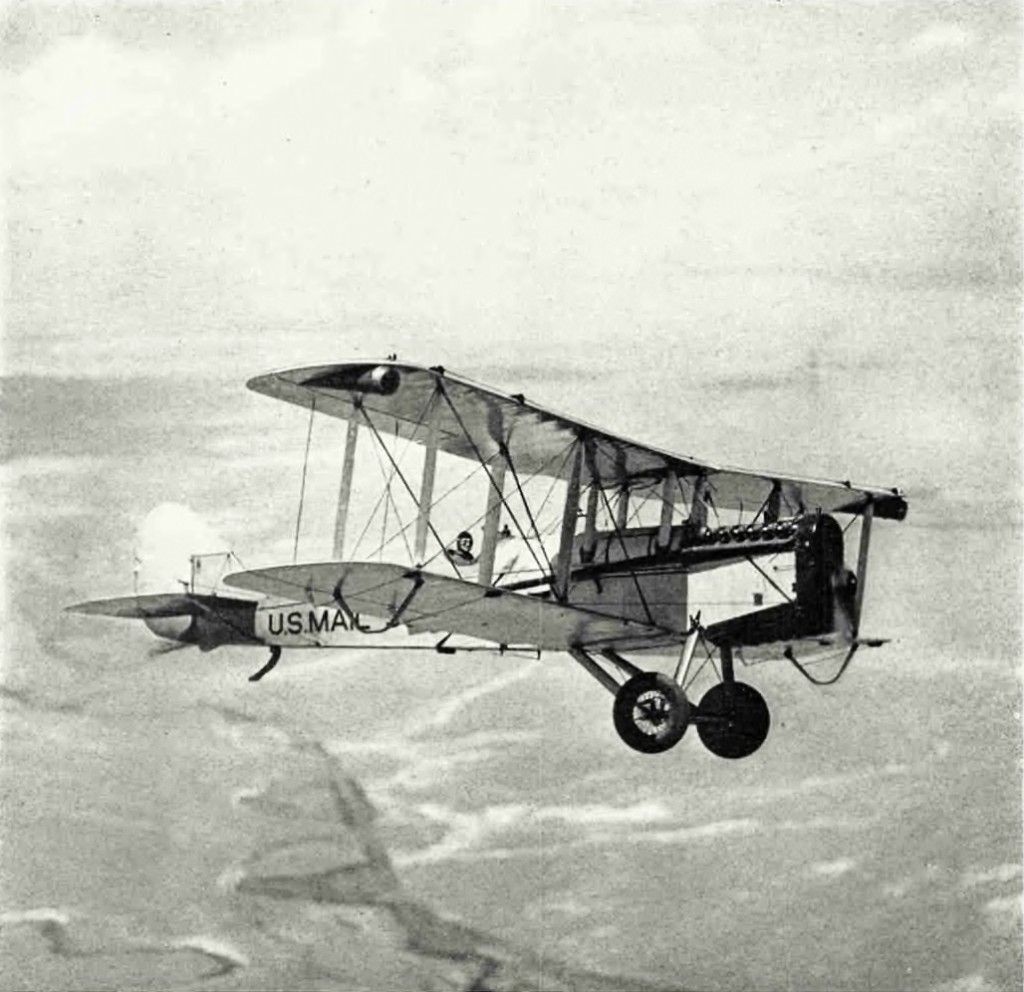
When the guns fell silent, thousands of surplus DH-4s found peacetime work. The US Air Mail Service flew them through the 1920s in one of aviation's most dangerous and legendary chapters, and others went to forestry patrol, border and Army duties around the world. Few First World War designs had so long or varied an afterlife.
The result is an aircraft that belongs to two histories at once: a British bomber that helped define daylight strategic bombing, and an American production story that put the young US air arm into the sky.
01The Airco DH.4's origins: de Havilland's answer to the daylight bombing problem
A purpose-built day bomber. Early RFC bombing was improvised on aircraft designed for other roles. The DH.4 was conceived from the start as a fast, single-engined machine that could carry a useful bomb load into German-held territory by day and defend itself on the way home. De Havilland kept the airframe simple and aerodynamically clean, and designed it around a high-powered inline engine rather than a rotary — a choice that pointed the way to the fast bombers of the 1920s and 1930s.
From prototype to squadron. The prototype flew in August 1916; No. 55 Squadron took the type to France in March 1917 and flew its first operations that April. It served with the RFC and the Royal Naval Air Service, and after April 1918 with the new Royal Air Force, on bombing, long-range reconnaissance, artillery observation and anti-submarine patrol.
02Why the DH.4 mattered: speed as a defence, and a template for the future
Outrunning the interceptors. The design philosophy — use performance, not just guns, to survive — anticipated later fast bombers such as the de Havilland Mosquito of the Second World War, another de Havilland design that relied on speed. A well-engined DH.4 could cruise high and fast enough to make interception difficult.
A two-nation legacy. Few aircraft of the era served so widely: British-built machines on multiple fronts, US-built “Liberty Planes” with the American Expeditionary Force, and post-war examples flying mail, patrol and survey work for years. The DH.4's influence on the later DH.9 and DH.9A extended its lineage well beyond the Armistice.
How the Airco DH.4 was built: Eagle power, a clean airframe — and that fuel tank
Rolls-Royce Eagle power
The DH.4 was designed around a powerful water-cooled V12. At its best, the Rolls-Royce Eagle VIII gave about 375 hp and the aircraft's headline speed. Eagle supply never met demand, so many airframes received weaker substitutes — the aircraft's greatest strength and its greatest inconsistency in one component.
Clean two-bay biplane
A conventional wood-and-fabric two-bay biplane, aerodynamically tidy for its day, with a fixed tailskid undercarriage and a useful bomb load carried under the fuselage and wings. Simplicity made it strong, easy to build in quantity and adaptable to several different engines.
The tank between the crew
The main fuel tank sat between the pilot's and observer's cockpits. It kept the centre of gravity sensible but forced the two men far apart, hampering communication — and, being large and pressurised, it fed the type's later “Flaming Coffin” reputation, a claim historians now treat with scepticism.
03The DH.4's engines: the Eagle, the Liberty and a long list of compromises
The good engine. The Rolls-Royce Eagle — a 20-litre-plus V12 developed through the war from about 250 hp to 375 hp in the Eagle VIII — made the DH.4 what it was. Eagle-powered aircraft were fast, high-flying and effective.
The substitutes. Because Rolls-Royce could not build Eagles fast enough, DH.4s were fitted with the 200 hp BHP/Galloway, the 230–250 hp Siddeley Puma, the RAF 3a, the 260 hp Fiat A-12 and others. These reduced performance and, crews felt, reliability — a genuine operational weakness we present without gloss.
The Liberty. For American production the aircraft was redesigned around the 400 hp Liberty L-12, a US-designed V12 built in enormous numbers. The Liberty made the US DH-4 a capable machine, though early installations had their own teething troubles.
04The fuel tank and the “Flaming Coffin”: reputation versus the record
The design fact. The large pressurised fuel tank genuinely sat between the two cockpits. That is not in dispute, and it did separate the crew awkwardly. In US service the position and the pressurised feed drew particular criticism, and the feed system was revised in the improved DH-4B, which moved the tank and brought the crew together.
The disputed reputation. The lurid “Flaming Coffin” nickname is often repeated but poorly supported. One frequently cited analysis notes that of 33 US DH-4s lost to enemy action, eight came down in flames — no worse than the average for aircraft of the period, which were generally prone to fire. We therefore present the nickname as reputation and folklore, not as an established measure of the aircraft's safety.
05The DH-4B and later marks: fixing the flaws after the war
The DH-4B. The most important American revision moved the fuel tank forward, seated the crew together for better communication, and strengthened the airframe. Large numbers of wartime DH-4s were rebuilt to DH-4B standard, and it was the DH-4B that flew most of the type's famous post-war careers.
Metal-fuselage marks. Later US rebuilds such as the DH-4M used welded steel-tube fuselages in place of the original wooden structure, keeping the type in Army and civil service well into the 1920s.
Airco DH.4 specifications: dimensions, performance, engines and armament
Baseline note: the figures describe the DH.4 with the 375 hp Rolls-Royce Eagle VIII, the engine of most British aircraft from the summer of 1917 and the one that made the type's reputation, as tabulated in Mason's The British Bomber since 1914 and Bruce's profile of the type. Deltas for the lower-powered engines the DH.4 was forced onto while Rolls-Royce production lagged — the 200 hp RAF 3a, the 230 hp BHP and Siddeley Puma, the 260 hp Fiat A-12, the 250 to 275 hp earlier Eagles — and for the American Liberty-engined DH-4, are in grey. Climb is given as time to a stated height and endurance in place of range, which is how figures of this period were quoted; where a source states no altitude for a speed, this table says so rather than implying one.
Dimensions & weights
- Crew
- 2 — pilot and observer/gunner
- Length
- 9.35 m (30 ft 8 in)
- Wingspan
- 13.21 m (43 ft 4 in) per Mason; 42 ft 5.625 in appears in other published tables
- Height
- 3.35 m (11 ft 0 in) per Mason; 10 ft 1 in elsewhere. Neither source states the propeller or attitude the figure was taken at.
- Wing area
- 40.32 m² (434 sq ft)
- Wing cellule and structure
- Conventional two-bay tractor biplane on a spruce and ash framework, fabric-covered, with the forward fuselage reinforced in plywood — light, stiff and characteristically de Havilland
- Cockpit spacing
- Pilot under the upper centre section, observer well aft, with the main fuel tank filling the fuselage between them. This gap is the single most discussed feature of the aeroplane and the origin of both its famous flaw and its famous nickname.
- Fuel
- 249 l (55 Imp gal) in the pressurised main tank between the cockpits, plus 27 l (6 gal) of oil
- Empty weight
- 1,083 kg (2,387 lb) with the Eagle VIII; 2,197 lb is quoted for the lighter-engined aircraft
- Loaded weight
- 1,575 kg (3,472 lb); 3,313 lb for lower-powered marks
- Wing loading at loaded weight
- 39.1 kg/m² (8.0 lb/sq ft)
- Power loading
- 4.20 kg/hp (9.3 lb/hp) — better than most single-seat fighters of 1917, which is the whole explanation of the DH.4
- Production
- 6,295 total. 1,449 completed in Britain against 1,700 ordered from Airco and six sub-contractors; 4,846 completed in the United States against 9,500 ordered, of which 1,885 reached France before the Armistice; 15 more by SABCA in Belgium in 1926.
- Service dates
- First flight August 1916; No. 55 Squadron RFC flew to France 6 March 1917 and made its first raid on 6 April 1917; first American-built aircraft delivered to France May 1918, in combat from August 1918; withdrawn by the US Army Air Corps in 1932
Performance
- Maximum speed at sea level
- 230 km/h (143 mph) with the Eagle VIII — the number that made the type's name, and the only one most tables give an altitude for
- Maximum speed, Puma-engined aircraft
- 171 km/h (106 mph). Thirty-seven miles an hour is the difference between an aeroplane that outruns fighters and one that does not, which is why the engine supply problem is the central fact of the DH.4 programme.
- Time to 3,050 m
- 9 minutes (to 10,000 ft) with the Eagle VIII
- Service ceiling
- 6,700 m (22,000 ft) with the Eagle VIII; 4,875 m (16,000 ft) is the figure for the weaker engines, and published ranges across all marks run 16,000 to 22,000 ft
- Endurance
- 3 hours 45 minutes (3½ to 4½ hours across sources and tankage) — enough to reach targets in Germany from eastern France and return
- Speed penalty with bombs
- About 5 to 8 km/h (3 to 5 mph) with racks loaded and 3 to 4 km/h with racks empty, per the Air Board data charts of 1917. Small numbers, and they mattered, because speed was the DH.4's entire defensive doctrine.
- Speed against the opposition
- At 143 mph the Eagle-engined DH.4 was faster than most German single-seat fighters of 1917 at the heights it worked at, which is why it routinely flew unescorted — an idea de Havilland took to its conclusion twenty-five years later with the Mosquito
- Combat evidence
- No. 55 Squadron was one of the very few RFC units not to suffer heavy losses during "Bloody April" 1917, when most British types were being cut to pieces. It escaped by climbing and running.
- Handling
- Reported as pleasant, honest and easy to fly, with good control response for a machine of its size. Crews liked it, which was not universal among 1917 bombers.
- The Liberty-engined DH-4
- About 206 km/h (128 mph) and roughly 640 km (400 miles) of range. The heavier American engine cost performance against the Eagle aircraft, and the type was still popular with its crews.
- Practical fighting height
- 15,000 ft and above on Independent Force raids into Germany, in open cockpits, without oxygen or heating, for close to four hours
Propulsion & systems
- Engine
- One 375 hp (280 kW) Rolls-Royce Eagle VIII, water-cooled 60-degree V12 with a single overhead camshaft per bank and epicyclic reduction gearing to hold the propeller below 1,100 rpm
- Engine dimensions
- Bore 114.3 mm (4.5 in), stroke 165.1 mm (6.5 in), capacity 20.32 l (1,239 cu in), compression 5.22:1
- Rated power, disputed
- 375 hp is the figure in the aircraft tables. The National Air and Space Museum rates its own Eagle VIII at 360 hp at 1,800 rpm; Lumsden lists the mark at 300 hp. The spread is 25 per cent and nobody has reconciled it; this page uses 375 hp because that is the figure the aeroplane's performance data were published against.
- Engine weight and consumption
- About 408 kg (900 lb) dry, burning roughly 90 l/h (24 gal/h)
- Carburation and cooling
- Twin Claudel-Hobson carburettors; water-cooled with a frontal radiator, and W. O. Bentley's aluminium pistons, contributed through the RNAS engineering department, are a large part of why the Eagle weighed what it did
- Eagle supply
- 4,681 Eagles built in all, of which 3,302 were Eagle VIIIs, every one at Derby. Rolls-Royce refused licence production on terms any other firm would accept, and the DH.4 programme was rationed by that commercial decision as much as by anything technical.
- Alternative engines
- 250 hp Eagle III and IV on early aircraft, 275 hp Eagle VII, 200 hp RAF 3a (No. 18 Squadron, June 1917, and not a success), 230 hp BHP and Siddeley Puma, 260 hp Fiat A-12 on the batch originally built for Russia, and 400 hp Liberty L-12 in American production
- Liberty L-12
- 45-degree water-cooled V12, bore 127 mm (5 in), stroke 178 mm (7 in), 27.02 l (1,649 cu in), 400 hp at 1,800 rpm, 383 kg (844 lb) — more power and considerably more weight than the Eagle
- Gun synchronisation gear
- Constantinesco-Colley hydraulic gear, universally called the C.C. gear. No. 55 Squadron's DH.4s flew to France on 6 March 1917 fitted with it, and were the first British service aeroplanes to carry it. A twin-gun version only became available late in 1917, which is why single-Vickers DH.4s were the norm through 1917.
- Fuel system
- Engine-pressurised main tank until late 1917, then two wind-driven pumps — a change made specifically to reduce the fire risk, and the most important single modification in the type's history
- Observer's mounting
- Scarff ring, developed by Warrant Officer F. W. Scarff of the Admiralty Air Department, with bungee suspension in elevation to carry the gun's weight and free traverse in azimuth. Admiralty DH.4s had it mounted higher than RFC machines.
- Equipment
- Plate cameras for photographic reconnaissance and wireless transmitters for artillery observation, the SCR-68 set in American service. The DH.4 was a reconnaissance aeroplane as often as it was a bomber.
06The DH.4's variants: from British bomber to American Liberty Plane
British marks. DH.4s differed mainly by engine, and the RFC/RNAS/RAF operated them on bombing, reconnaissance, artillery observation and coastal anti-submarine patrol. A handful were built as unarmed high-speed communications aircraft (the DH.4A) after the war.
American marks. The US-built DH-4 (Liberty), the revised DH-4B with the tank moved and crew together, and the steel-tube DH-4M were the principal variants. Belgium's SABCA even built a small batch as late as 1926. Precise totals differ between sources, so treat all production figures as approximate.
07The Airco DH.4's operating costs: why the numbers were never really kept
No modern cost accounting. First World War aircraft were not costed by flight hour in the way modern military jets are, and wartime unit prices were bound up in contracts, inflation and rapid change. We therefore record the cost-per-flight-hour as “not reliably recorded” rather than invent a figure.
What we can say. The DH.4's economic story is really one of scale: the United States poured enormous resources into building thousands of Liberty-engined machines, and the peacetime value of the type came from the vast pool of cheap surplus airframes that flew mail, patrol and survey work through the 1920s.
Armament & payload
The DH.4 outran what chased it, and its most famous enemy was the petrol tank sitting between the two men flying it
On paper the armament is unremarkable for 1917: one or two synchronised Vickers ahead of the pilot, one or two Lewis on a Scarff ring behind, and 460 lb of bombs on external racks. The real weapon was 143 mph. A DH.4 that had dropped its bombs could usually leave a 1917 German single-seater behind, which is why it often flew without escort at all and why No. 55 Squadron came through Bloody April largely intact while most of the RFC was being slaughtered. It is a very fair claim that this was the best single-engine day bomber of the war.
Against that stands the flaw everybody knows about, which is not strictly an armament question and is dealt with here because it is always the first thing asked. The 55-gallon main tank sat between the two cockpits. The crew could not talk to each other, which in a fight is worse than it sounds; and the American aircraft acquired the nickname "Flaming Coffin", which the surviving statistics support less firmly than the phrase suggests. Naval aircraft, American Liberty aircraft and postwar rebuilds all differed in gun fit and tank arrangement; nearly every generalisation below has an exception in one of them.
Guns, forward
- One .303 in (7.7 mm) Vickers Mk.I, belt-fed with about 500 rounds, on the fuselage decking ahead of the pilot and synchronised by the C.C. hydraulic gear. Aimed by aiming the aeroplane, usually through an Aldis tubular telescopic sight.
- Two Vickers became common once twin-gun C.C. gears reached the front late in 1917. The purpose-built naval aircraft — ninety built by Westland to Admiralty specification — had two from the start, together with a raised Scarff ring aft.
- The American DH-4 carried two .30 in (7.62 mm) Marlin-Rockwell M1917 guns in the nose instead, a development of the Colt-Browning, chosen because Vickers guns could not be had in American quantities.
- Some aircraft carried a pair of fixed Lewis guns above the upper wing as well, firing outside the propeller arc — a field fit rather than a standard one.
Guns, aft
- One or two .303 in Lewis guns on a Scarff ring around the observer's cockpit, giving free traverse and a genuinely excellent field of fire for the period.
- Ammunition in 97-round drums; a typical fit was eight drums, about 776 rounds, stowed within the gunner's reach.
- Two guns doubled the weight of fire and roughly halved how quickly a cold, tired man at 15,000 ft could bring them onto a target. Many gunners preferred one, and one became the postwar standard.
- The single most consequential burst ever fired from a DH.4 came from this position. On the night of 5 August 1918, Major Egbert Cadbury flew a DH.4 out of RNAS Great Yarmouth, jettisoned his reserve fuel and small bombs to reach 16,400 ft, and Captain Robert Leckie fired the Scarff-mounted Lewis into the Zeppelin L 70. She burned in under a minute and took down Peter Strasser, head of the German naval airship service.
- The American DH-4 carried two .30 in Lewis guns aft.
Bombs
- 209 kg (460 lb) maximum on external racks under the lower wings and beneath the fuselage. The American DH-4 is usually credited with 146 kg (322 lb).
- Standard combinations, from the Air Board data charts: twelve 20 lb Cooper bombs; eight 20 lb plus two 112 lb; four 112 lb H.E.R.L.; or two 230 lb H.E.R.F.C.
- The pair of 230 lb bombs is the strategic-bombing fit — the load No. 55 Squadron carried into Germany with the Independent Force from June 1918, and the reason the type is remembered as a bomber rather than a fast reconnaissance machine.
- There was no bombsight worth the name by any later standard. Accuracy on a long daylight raid was a function of formation discipline, height and luck, and Britain's official bombing surveys of 1918 are blunt about how little was actually hit.
- Four RNAS DH.4s were jointly credited with sinking the submarine UB 12 on 19 August 1918 using ordinary bombs, and Marine Corps DH-4Bs flew what are generally counted as the first American dive-bombing attacks, in Nicaragua in 1927.
The tank between the cockpits
- The main tank, 249 l (55 Imp gal), sat in the structural centre of the fuselage with the pilot ahead of it and the observer behind it.
- Effect one, beyond dispute: the crew could not communicate. In a fight the pilot could not tell the gunner what he was about to do and the gunner could not warn the pilot. Every account of the type, favourable and hostile, records it.
- Effect two, disputed: fire. The tank was engine-pressurised until late 1917, and a punctured tank or a burst rubber fuel line fed petrol into a wooden and fabric aeroplane. Replacing pressurisation with two wind-driven pumps late in 1917 reduced the hazard materially.
- Effect three, rarely mentioned and quite real: in a nose-over on landing, the tank could come forward onto the pilot.
- Both successor designs were answers to this. The DH.9 moved the tank ahead of the pilot in the normal place and was inferior to the DH.4 in almost every other respect. The American DH-4B moved the pilot aft to sit beside his observer — the better fix, and the reason a rebuilt DH-4B is a visibly different aeroplane.
"Flaming Coffin": what the numbers actually say
- The American nickname is genuine and the crews who used it meant it. American aircrew flew the Liberty DH-4 into combat from August 1918 and had strong opinions about the tank behind their heads.
- The standard rebuttal comes from Gorrell's official History of the Air Service, AEF: of 33 DH-4s lost to enemy action by the US Air Service, eight fell in flames — described there as no worse than the average of the period.
- Read honestly, that statistic does not clear the aeroplane. Thirty-three is a very small sample, eight out of thirty-three is close to a quarter, and the source is a service assessing its own equipment after the fact.
- What it does establish is the comparison. Aeroplanes of 1918 built of spruce, linen and dope, carrying unprotected petrol with no extinguishing system of any kind, burned regularly whatever the tank position. The DH.4 was not exceptional. It was conspicuous, because Americans flew it in numbers, named it, and were writing in English.
- One further point that is suggestive rather than settled: the British change from a pressurised system to wind-driven pumps in late 1917 does not appear to have been carried into American production, whose aircraft retained a pressurised tank and the rubber feed line that the US Air Force's own profile of the type blames for fires. That would explain why the nickname is American and not British.
Cameras, wireless and what was not carried
- Plate cameras for photographic reconnaissance and wireless transmitters for artillery observation, the SCR-68 in American service. No. 2 (Naval) Squadron photographed the whole of Zeebrugge in DH.4s before the raid of 22 and 23 April 1918.
- No armour, no self-sealing tanks, no fire extinguishers, no oxygen and no heating, in an aeroplane whose working height on a raid into Germany was 15,000 ft for three and a half hours.
- No parachutes. British and American aeroplane crews were issued none during the war.
- No gun covering below and behind — the classic blind spot of every two-seater of the period. The answers were formation, height and speed, in that order.
- No torpedo, no depth charges and no naval strike fit, despite extensive RNAS use over the North Sea, the Aegean and the Adriatic.
Three typical loadouts
- Long-range day raid into Germany, No. 55 Squadron, Independent Force, summer 1918
- Two 230 lb bombs on the underwing racks, one or two Vickers forward, one Lewis on the Scarff ring aft with eight drums, full tanks for a sortie approaching four hours, no fighter escort and a cruise above 15,000 ft. No. 55 was the only day-bombing squadron of the Independent Force that never had to stand down temporarily for want of surviving crews — on this fit, and with this doctrine.
- Anti-Zeppelin patrol, RNAS Great Yarmouth, night of 5 August 1918
- Reserve fuel and the small bombs jettisoned in the climb to buy height, one Lewis on the ring with incendiary ammunition, and a crew of two who had already destroyed a Zeppelin apiece. Cadbury attacked slightly to port of L 70 at 16,400 ft at 22:20; the tracer lit the escaping hydrogen and the airship became a fireball in less than a minute. Cadbury, Leckie and Lieutenant Ralph Keys all received the Distinguished Flying Cross.
- Infantry contact and supply drop, 50th Aero Squadron US Air Service, Meuse-Argonne, 12 October 1918
- Liberty engine, two Marlin-Rockwell guns forward, two Lewis aft, bundles of rations and ammunition in place of bombs, flown at treetop height into massed small-arms fire to find the Lost Battalion of the 77th Division. First Lieutenant Harold Goettler and Second Lieutenant Erwin Bleckley were killed doing it and both received the Medal of Honor. Four of the six Medals of Honor awarded to American airmen in the First World War were won on DH-4s.
Sourcing caveat: the DH.4 is well documented and still disagrees with itself. The 143 mph figure is stated for sea level, which is more than most period tables offer, but almost no source gives a comparable speed at 10,000 or 15,000 ft for the Eagle VIII aircraft, so the fighting speed at height has to be inferred. Span is published as 43 ft 4 in and as 42 ft 5.625 in, height as 11 ft 0 in and 10 ft 1 in, empty weight across marks as 2,197 to 2,387 lb, ceiling as 16,000 to 22,000 ft and endurance as 3½ to 4½ hours. The Eagle VIII is rated at 375, 360 and 300 hp by three respectable authorities. Production figures are firmer — 6,295 total, 4,846 American, 1,449 British — but should be read against 9,500 aircraft ordered in the United States and only 1,885 reaching France, which is the more revealing pair of numbers. The Gorrell fire statistic is quoted here because it is the only quantitative evidence there is, not because eight losses out of thirty-three settle anything.
Variants
The DH.4 was a British bomber that became an American institution, and then spent a decade carrying the post
The British variant list is short because the British aeroplane barely changed: one basic day bomber, a succession of engines forced on it by supply rather than chosen, a naval version with two forward guns, and a cabin conversion built so that ministers could talk on the way to the Paris Peace Conference. British production stopped early and for a bad reason. Trenchard and others decided at the end of 1917 that the DH.4 was obsolete and switched production to the DH.9, which had the tank in the right place and an engine that could not lift it. The DH.9 was worse than the aeroplane it replaced in almost every respect, and it took the American Liberty engine and the DH.9A to put things right.
The American story is a different order of magnitude. When the United States entered the war in April 1917 its Signal Corps had no aircraft fit for combat at all. The Bolling Commission chose four foreign types to build; the DH.4 was one, and it was the only one that actually reached the front in American-built form. Dayton-Wright, Fisher Body, Standard Aircraft and Boeing built 4,846 of them with over a thousand modifications from the British drawings, around the new 400 hp Liberty. It was the only American-built aeroplane to see combat in the First World War, and the fact that America's entire wartime aircraft industry produced exactly one combat type, and that a British design, is the most eloquent thing anybody can say about the state of American aviation in 1917.
Then came the strangest chapter. At the Armistice there were more than a thousand Liberty Planes in France and a flood of improved DH-4Bs coming off American production lines. Shipping the old ones home cost more than they were worth, so they were burned in France together with other surplus machines in the episode remembered as the "Billion Dollar Bonfire". The survivors at home were rebuilt as DH-4Bs, with the pilot moved aft next to his observer, and became the standard American general-purpose aeroplane of the 1920s: observation, ambulance, photographic, crop-dusting, smoke-laying, target-towing, engine testbed. The DH-4 flew the first successful air-to-air refuelling on 27 June 1923 and, later that summer, a 37-hour endurance flight with sixteen refuellings that set sixteen world records. Jimmy Doolittle crossed the United States in one in 21 hours 19 minutes on 4 September 1922 with a single fuel stop. The US Army Air Corps did not retire the type until 1932.
Its most durable civil career was the mail. The US Post Office took a hundred DH-4s from the Army and rebuilt them to the safer DH-4B standard, and from 21 August 1924 flew them on the transcontinental route between New York and San Francisco — 2,680 miles, at night, with bonfires along the route for navigation — until the last contracts passed to private carriers in 1927. Canada took twelve DH.4s as part of the Imperial Gift and used them on forestry patrol and survey, spotting hundreds of forest fires and, on the Air Board's accounting, saving millions of dollars in timber, with the last withdrawn in 1927. In Europe the same airframes opened commercial aviation: a DH.4A of Aircraft Transport and Travel flew Britain's first commercial passenger service from Hounslow Heath to Le Bourget on 25 August 1919, carrying a reporter, some newspapers and a consignment of grouse. QANTAS flew its first airmail on a DH.4 in 1922. A war-surplus bomber going cheap turned out to be the aeroplane that started civil aviation almost everywhere it landed.
- DH.4 (1917–18 / 1,449 of 1,700 ordered)
- British production by Airco, F. W. Berwick, Glendower Aircraft, Palladium Autocars, Vulcan Motor and Engineering and Westland. One Vickers forward, one or two Lewis aft, 460 lb of bombs.
- DH.4, alternative engines (1917–18)
- 200 hp RAF 3a, issued to No. 18 Squadron in June 1917 and a failure; 230 hp BHP and Siddeley Puma; 260 hp Fiat A-12 in the batch built for Russia and retained by the RFC. All markedly slower than the Eagle aircraft.
- Admiralty DH.4 (1917–18 / 90 plus 16)
- Ninety built by Westland to Admiralty specification with two forward Vickers and a raised Scarff ring, plus sixteen transferred from War Office orders. Flew with five RNAS squadrons in Belgium, three coastal stations, four squadrons in the Aegean and three in Italy.
- DH.4A (1919 / 16)
- Cabin transport with two passengers in a glazed enclosure behind the pilot, built at Bonar Law's request for the Paris Peace Conference. Seven for the RAF's No. 2 Communication Squadron and nine for civil use; one was Lloyd George's regular aeroplane, probably the first used routinely by a head of government.
- DH.4R (1919 / 1)
- Single-seat racer with a 450 hp Napier Lion, built for the postwar racing circuit.
- DH-4 "Liberty Plane" (1918 / 4,846 of 9,500 ordered)
- American production by Dayton-Wright, Fisher Body, Standard Aircraft and Boeing with more than a thousand design changes, 400 hp Liberty L-12, two Marlin-Rockwell guns forward and two Lewis aft, 322 lb of bombs. 1,885 reached France; the only American-built aeroplane to see combat in the war.
- DH-4B and sub-variants (1919–25 / many hundreds rebuilt)
- The important American rebuild: pilot moved aft alongside the observer with the tank ahead of him. B-1 to B-5 covered extra fuel, training, civil and cabin work; BD crop-duster, BG smoke-layer, BK night flyer, BP photographic, BS supercharger testbed, BT trainer, BW engine testbed. Boeing alone delivered 111 in 1920.
- DH-4M-1, DH-4M-2 and O2B (1923–25 / 163 plus a second batch)
- Welded steel-tube fuselage in place of the wooden one: Boeing's Model 16 as the DH-4M-1, Atlantic Aircraft's as the DH-4M-2. Twenty-two M-1s became dual-control trainers and a few target tugs; thirty were diverted to the Marine Corps as the O2B-1, which served until 1929.
- L.W.F. J-2 "Twin DH" (1919–20 / 30)
- Twin-engine long-range development with a 52 ft 6 in span and two 200 hp Hall-Scott Liberty L-6 engines. Twenty for the US Post Office and ten for the Army.
- Foreign, licence and gift aircraft (1918–32)
- SABCA built 15 in Belgium in 1926; Polikarpov copied the type at the former Dux factory in the 1920s. Imperial Gift aircraft went to Canada (12), New Zealand (2), South Africa and Australia. Military service also with Chile, Cuba, Greece, Iran, Mexico, Nicaragua, Spain and Turkey, some into the early 1930s.
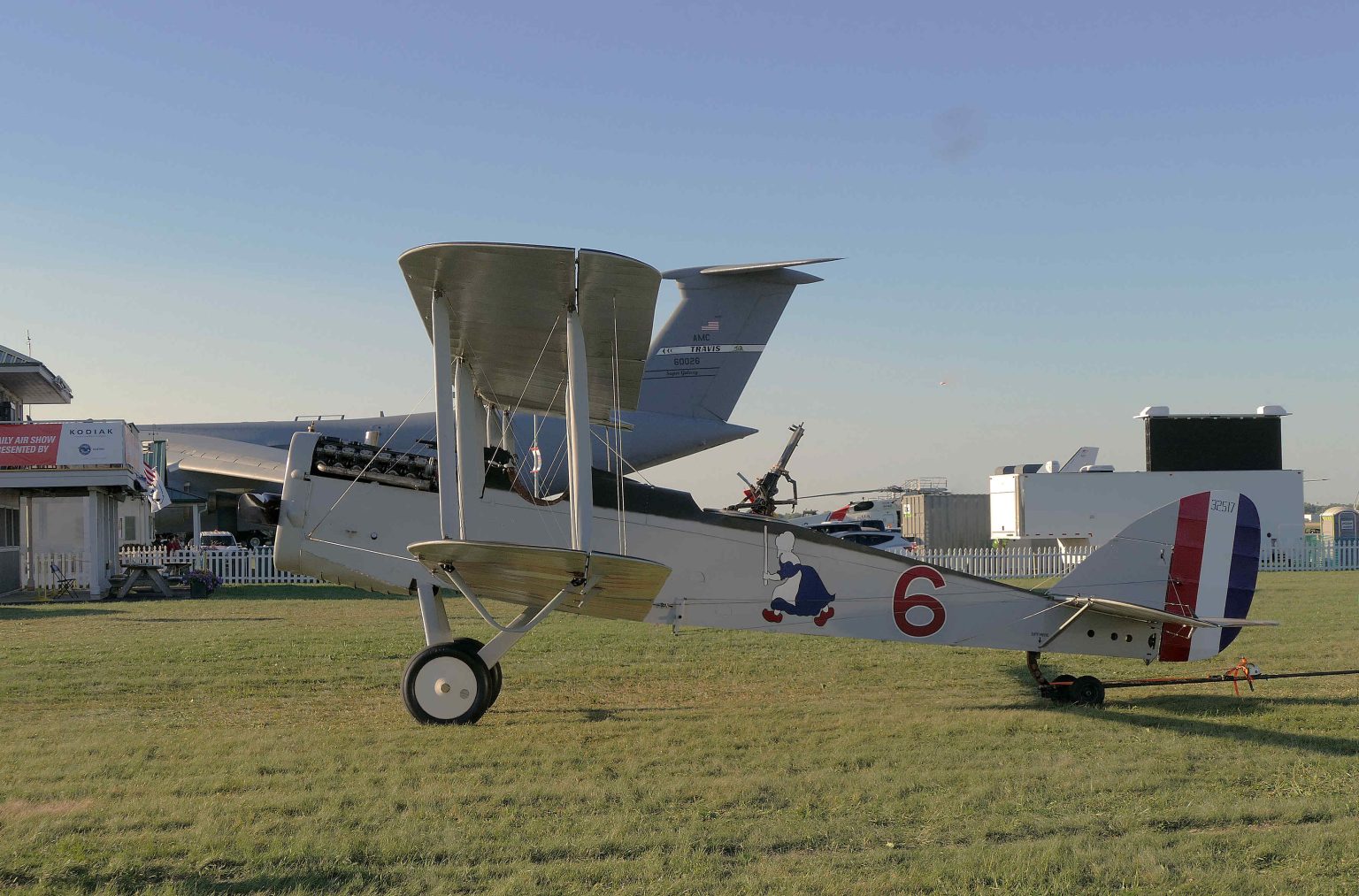
Survivors, stated precisely, because the distinction between an original airframe and a reproduction matters more here than the count — and because for this type it also decides the nationality. Every original DH.4 known to survive is American-built. The prototype American-built DH-4 is at the National Air and Space Museum in Washington; there is a DH-4 at the National Museum of the Marine Corps, one at the Omaka Aviation Heritage Centre in New Zealand, and airframe 32517 under reconstruction in Wichita as a memorial to Erwin Bleckley. Of the DH-4B rebuilds, examples are on display at the National Postal Museum in Washington, the National Museum of the United States Air Force at Dayton, the Pearson Air Museum in Vancouver, Washington, and Fantasy of Flight in Florida, with another in restoration. A DH-4M-1 is at the Evergreen museum in Oregon, and a DH-4M-2A is airworthy at the Historic Aircraft Restoration Museum in Missouri. What is missing from that list is the aeroplane that earned the reputation: no original British-built Airco DH.4 is known to survive anywhere, not one of the 1,449 that the RFC, RNAS and RAF flew, and not one Rolls-Royce Eagle VIII installation in an original airframe. The flying DH.4 in the world today is a reproduction — The Vintage Aviator's aircraft at Masterton in New Zealand, built by Century Aviation around a rebuilt Liberty V-12 — and there is a static reproduction at the Museo del Aire in Madrid. So the DH.4 that is preserved is almost entirely the American Liberty Plane, which is fair enough given where most were built and where they went on working for another decade, and slightly unfair to the Eagle-engined British aeroplane that actually did the fighting.
Airco DH.4 timeline: from de Havilland's drawing board to the airmail era
First flight
De Havilland's DH.4 prototype flies in August 1916, built around the Rolls-Royce Eagle and conceived as a fast single-engined day bomber.
Into service with No. 55 Squadron
The DH.4 reaches the Western Front with No. 55 Squadron RFC in March 1917 and flies its first operations that April, quickly proving fast and effective.
America chooses the DH.4
Entering the war with almost no combat aircraft, the United States selects the DH.4 for mass production, re-engined with the 400 hp Liberty L-12.
The Liberty Plane goes to war
US-built DH-4s reach France with the American Expeditionary Force — essentially the only US-built combat aircraft to see action with American squadrons, though many arrive late.
The improved DH-4B
The revised DH-4B moves the fuel tank forward and seats the crew together, answering the criticisms of the original layout; thousands of wartime machines are rebuilt to this standard.
Transcontinental airmail
US Air Mail Service DH-4Bs help establish coast-to-coast mail with night flying — a dangerous, legendary chapter that runs through the mid-1920s.
The last DH.4s retire
After forestry, border, survey and Army work around the world, the last military DH-4s are finally withdrawn in the early 1930s, ending an unusually long career.
Airco DH.4 stories: day bombing, the Liberty Plane and the airmail pilots
The best day bomber?
Why the DH.4 earned its reputation — and why we hedge it.
Read more
The DH.4 is repeatedly described as the finest single-engined day bomber of the war. With an Eagle VIII it was fast, climbed well and hit hard for its size. But the judgement is a historical consensus rather than a measured ranking, and a Puma-engined DH.4 was a very different aircraft from an Eagle one. We present the superlative as widely held opinion, not fact.
The Eagle problem
The engine that made it — and the ones that didn't.
Read more
Rolls-Royce could never build Eagles fast enough. So DH.4s went to war with a grab-bag of substitutes that cut speed and, crews complained, reliability. The aircraft's inconsistency was really an engine-supply story: identical airframes performed very differently depending on what was under the cowling.
A tank between them
The fuel tank that split pilot and observer.
Read more
With the main tank between the two cockpits, pilot and observer sat too far apart to talk easily over the engine and slipstream — a real handicap when coordinating defence against attacking fighters. The DH-4B finally moved the tank and brought the crew together.
“The Flaming Coffin”
A grim nickname that the record does not support.
Read more
The nickname is popular but shaky. One cited study found that of 33 US DH-4s lost to enemy fire, eight burned — no worse than typical for the period. Contemporary aircraft were widely fire-prone. Historians increasingly treat “Flaming Coffin” as exaggeration; we do too.
The Liberty Plane
How a British bomber armed the US air arm.
Read more
With no combat aircraft of its own in 1917, the United States mass-produced the DH.4 with the Liberty engine. It became the most-produced American aircraft of the war and essentially the only US-built type to fight with American squadrons in France — a remarkable act of industrial improvisation, even if output ran far ahead of what reached the front.
Ordered by the thousand
Vast plans, late deliveries.
Read more
American authorities ordered DH-4s in enormous numbers — figures of around 9,500 ordered are cited — but only a fraction, on the order of 1,800–1,900, actually reached France before the Armistice. The gap between plan and reality is a recurring theme in the DH.4 story, and a caution against tidy numbers.
Flying the mail
The DH-4B's dangerous peacetime career.
Read more
Surplus DH-4Bs became the workhorse of the US Air Mail Service. Pilots flew them in all weathers, and from 1924 helped pioneer transcontinental service with night flying guided by bonfires and, later, lighted airways. It was perilous work; the airmail pilots' losses became part of aviation legend.
More than a bomber
Reconnaissance, artillery spotting and patrol.
Read more
Fast and stable, the DH.4 was also a fine reconnaissance and artillery-observation platform, and RNAS machines flew long anti-submarine and coastal patrols over the North Sea. The same qualities that made it a good bomber made it a good camera and radio ship.
Beyond the Western Front
Where else the DH.4 served.
Read more
Although the Western Front over France and Belgium was its main theatre, DH.4s also served in other areas and were ordered by Russia late in the war. Post-war, examples reached operators from Belgium and Canada to Cuba, Nicaragua, New Zealand and beyond.
Forestry, borders and survey
The type that would not retire.
Read more
Cheap surplus airframes found endless peacetime work: forest-fire patrol, aerial photography and survey, border patrol and Army utility flying. The DH-4 kept flying in these roles into the early 1930s, an unusually long life for a 1916 design.
DH.4 to DH.9A
How the design lived on.
Read more
The DH.4 led directly to the DH.9 and the excellent DH.9A, which corrected the DH.9's weak engine and served the RAF for years after the war. The DH.4's clean, engine-led philosophy echoed on into de Havilland's later fast aircraft.
What survives today
Museums and a flying reproduction.
Read more
Original DH-4s survive in US collections including the Smithsonian's National Air and Space Museum and the National Museum of the United States Air Force, with others at the National Postal Museum and elsewhere. In New Zealand, a Liberty-powered airworthy reproduction flies, keeping the sound of the type alive.
Can you fly one?
The honest answer for enthusiasts.
Read more
The DH.4 is a museum aircraft, not a bookable ride — MiGFlug does not offer flights in one. But if you want to fly a genuine piece of military aviation history yourself, MiGFlug does offer flights in real jet warbirds. See the options below and on the flights page.
Airco DH.4 photos: British bombers, Liberty Planes and the airmail era
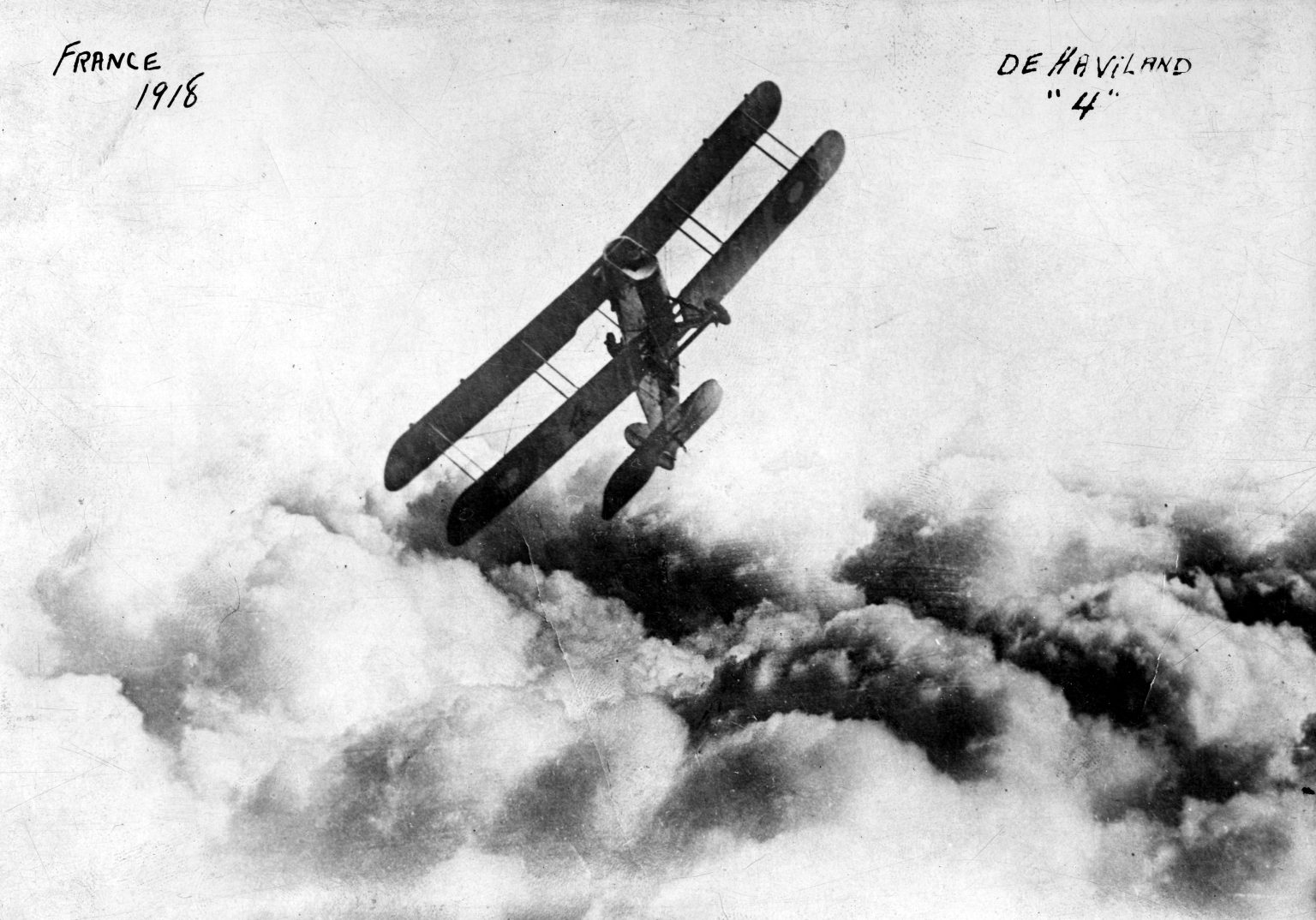
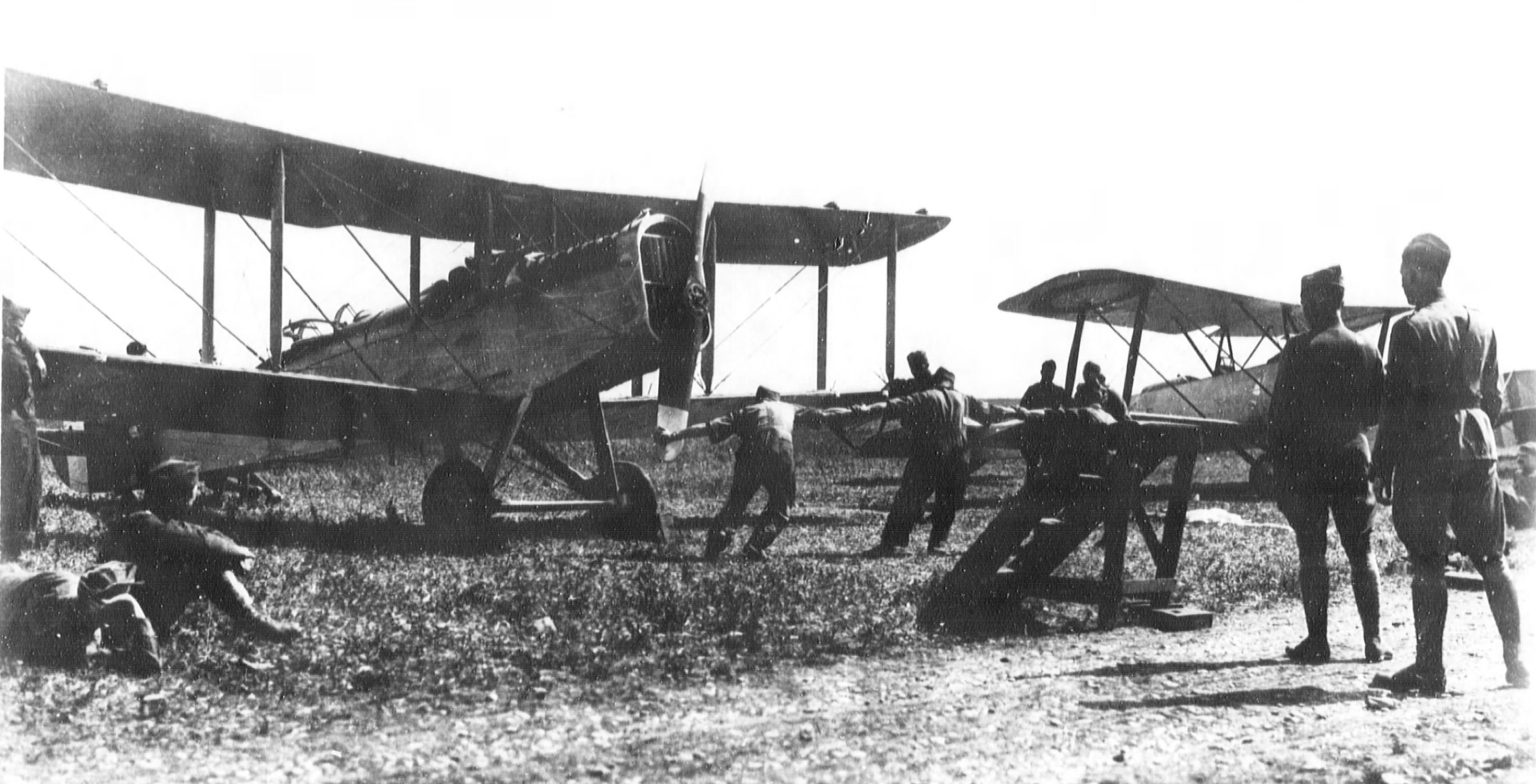
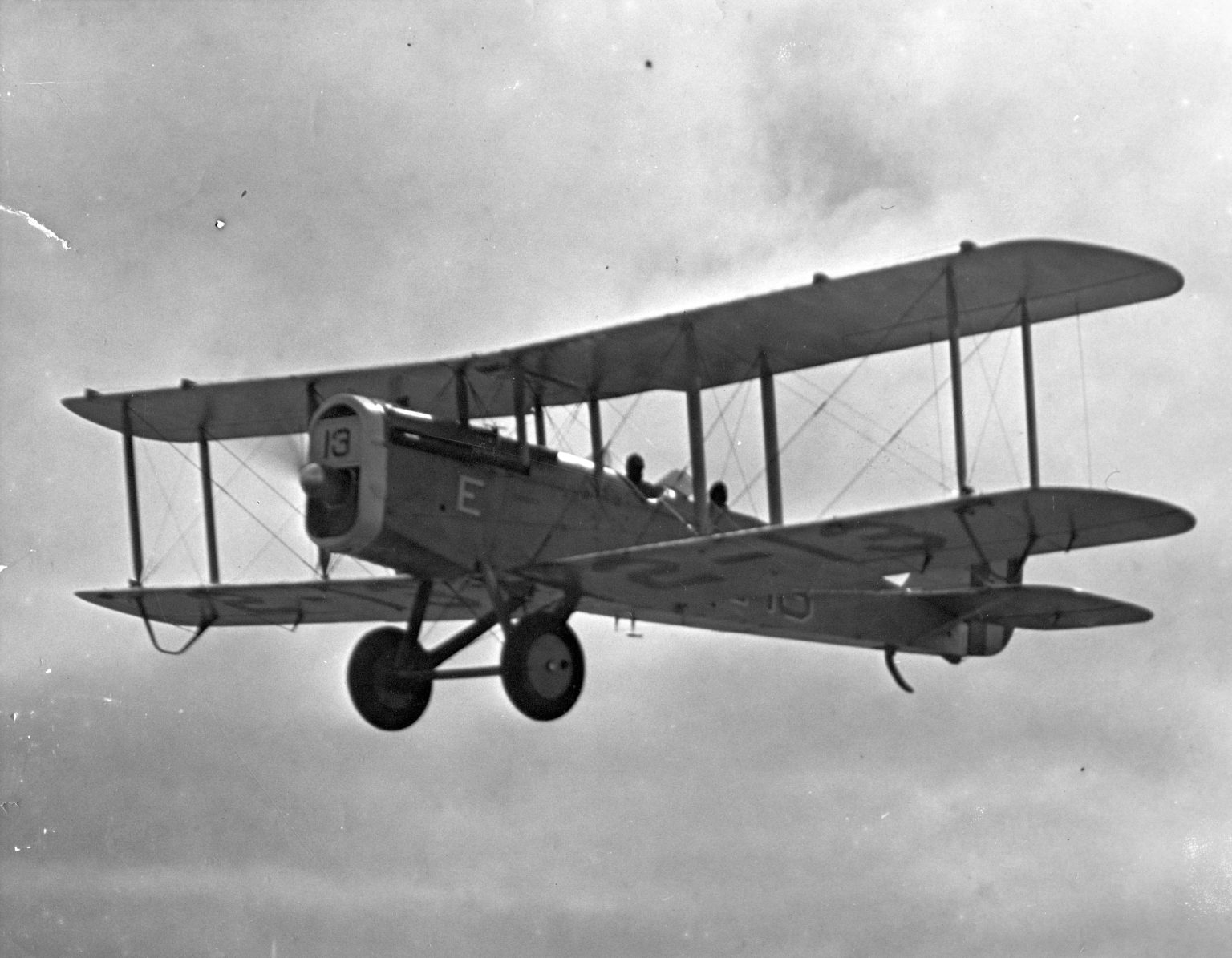
Tap or click any photo to enlarge. All images are used under their stated licences; credits appear in each caption.
The Airco DH.4 on film: a fast light bomber of the First World War
“The de Havilland DH-4: A Fast Light Bomber In WW1” by the Historical Aviation Film Unit — a specialist First World War aviation film and restoration group (around 18,000 views). We chose it for accuracy and provenance rather than raw popularity; the DH.4 is a niche subject with no high-view documentary.
Airco DH.4 operations map: origin, wartime fronts and surviving airframes
The Airco DH.4's mark on history: a bomber that outlived the war twice over
The DH.4 shaped two stories at once: daylight strategic bombing in Europe, and the industrial birth of American military aviation. Figures are approximate and drawn from published histories; we flag them as estimates.
Airco DH.4: your questions answered
Can I fly in an Airco DH.4?
No — the DH.4 is a museum aircraft, not a bookable flight. Original DH-4s survive only in museums such as the Smithsonian and the National Museum of the US Air Force, and the handful of airworthy reproductions (for example in New Zealand) are not available as passenger rides. MiGFlug does not offer flights in a DH.4.
However, you can fly in genuine military jets today — from the L-39 Albatros to the MiG-29 — through MiGFlug. See the current options and prices at migflug.com/flights-prices.
Was the DH.4 really the best day bomber of WWI?
It is very widely regarded as the finest single-engined day bomber of the war — fast, effective and able to outrun many fighters when fitted with the Rolls-Royce Eagle. We hedge the claim deliberately: it is a long-standing historical judgement rather than a measurable fact, and a DH.4 with a weaker substitute engine was a much less impressive machine.
Why was the DH.4 called “the Flaming Coffin”?
Because its large pressurised fuel tank sat between the pilot and observer, giving the type a reputation as a fire risk. That reputation is disputed and probably exaggerated: one cited analysis found that of 33 US DH-4s lost to enemy action, about eight burned — no worse than average for aircraft of the time. We present the nickname as folklore, not established fact.
What was the American “Liberty Plane”?
It was the US-built DH.4, re-engined with the 400 hp Liberty L-12. Entering the war with almost no combat aircraft, the United States mass-produced the DH.4 — it became the most-produced American aircraft of WWI and essentially the only US-built combat type to fight with American squadrons in France, although many were completed too late to reach the front.
Did the DH.4 have a career after the war?
Yes — an unusually long one. Surplus US-built DH-4Bs flew for the US Air Mail Service through the 1920s, including pioneering transcontinental night mail, and others served in forestry patrol, aerial survey, border patrol and Army roles into the early 1930s.
How many DH.4s were built?
Roughly 1,449 in Britain and about 4,846 in the United States, for a combined total of around 6,300 — though sources differ and US order figures (often quoted near 9,500) far exceeded the number actually completed and delivered. Treat all totals as approximate.
You cannot fly the Airco DH.4 —
but these, you can
The DH.4 lives on only in museums and a rare airworthy reproduction. But you can still strap into a real military jet and fly it yourself. Here is what MiGFlug can put you in.
 Fly the L-39 AlbatrosThe world’s most-flown jet trainer — aerobatics included
 Fly the F-104 Starfighter“The missile with a man in it”
 Fly the MiG-21The Cold War’s most-produced jet
 Fly the T-33 Shooting StarAmerica’s first jet trainer
 Fly the DH VampireA piece of early jet history
 Fly the S.211Agile Italian jet trainer
 Fly the MB-326The classic Aermacchi jet
 Fly the MiG-15The Soviet legend of the Korean War
Explore more First World War aircraft
Airco DH.4: sources & further reading
- Smithsonian National Air and Space Museum — Dayton-Wright DH-4Collection record for a surviving US-built DH-4, with history and provenance.
- National Museum of the US Air Force — DH-4 fact sheetOfficial history of the American DH-4 and its wartime and post-war service.
- Smithsonian National Postal MuseumBackground on the US Air Mail Service and the DH-4B airmail aircraft.
- History of War — Airco D.H.4Detailed reference on engines, variants, performance and production numbers.
- Imperial War Museums — collectionsPhotographs and records of RFC/RAF DH.4 operations on the Western Front.
- Historical Aviation Film Unit — DH-4 documentaryFilm treatment of the DH.4 by a specialist WWI aviation restoration group.
- Bruce, J. M., The Aeroplanes of the Royal Flying Corps (Military Wing) — standard reference on RFC types including the DH.4.
- Production and loss figures vary between published sources; all numbers on this page are given as approximate and flagged where contested.