
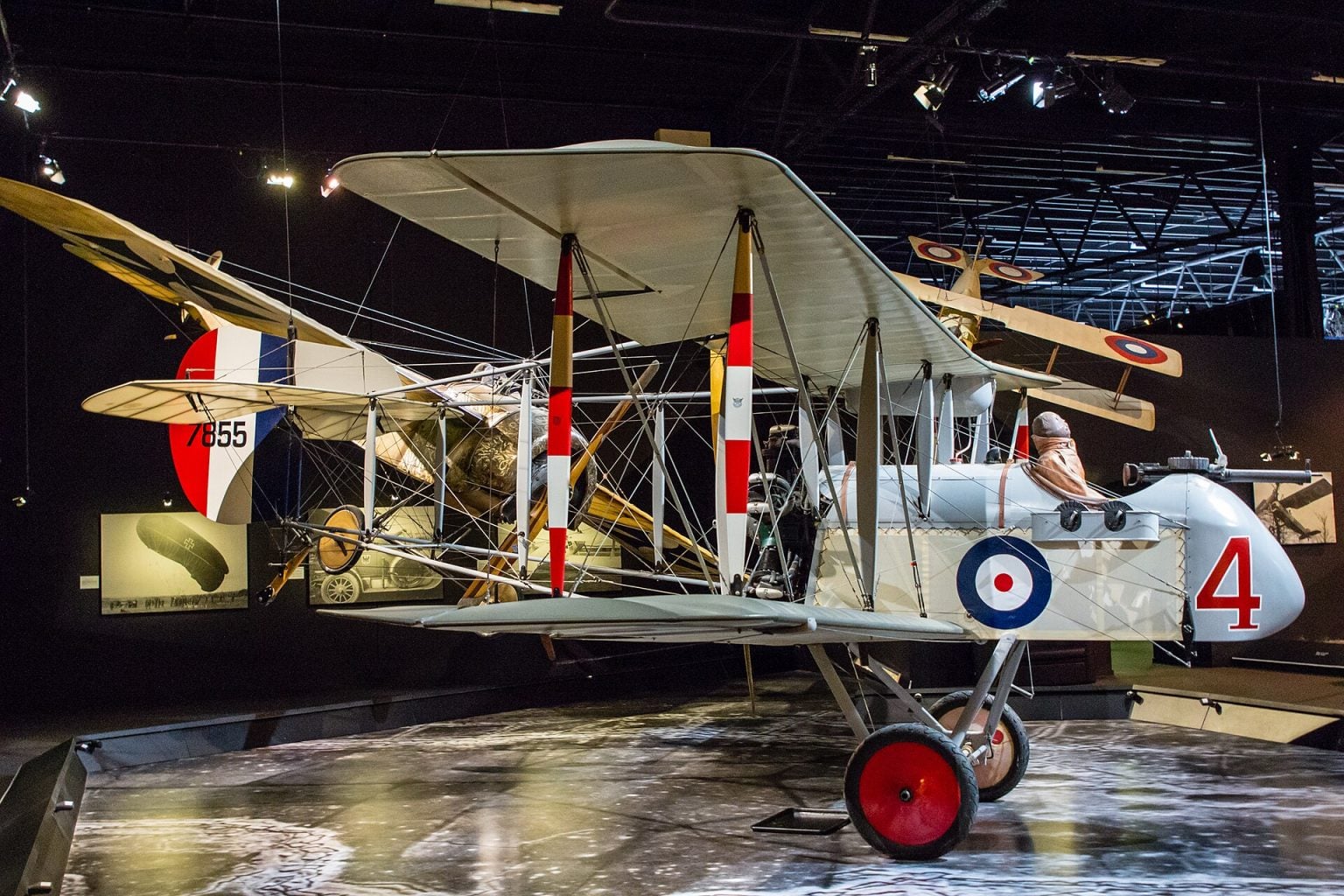
Airco DH.2
the backwards little fighter that broke the Fokker Scourge
A single-seat pusher biplane with its engine behind the pilot and a Lewis gun in the nose, the DH.2 gave the Royal Flying Corps its first true single-seat fighter and helped wrestle control of the Western Front sky back from Germany in 1916.
The Airco DH.2: how a “backwards” fighter beat the guns that ruled the sky
By the autumn of 1915 the Royal Flying Corps had a problem it could not shoot its way out of. The German Fokker Eindecker, a plain little monoplane, carried something the Allies did not: a reliable interrupter gear that let its machine gun fire straight through the spinning propeller. For a few grim months the Eindecker's pilots — among them Oswald Boelcke and Max Immelmann — hunted slower two-seaters almost at will, and the period earned a name that still carries a chill: the Fokker Scourge.
Britain's answer did not wait for a synchronisation gear of its own. Instead, Geoffrey de Havilland reached for an older idea and made it work. His Airco DH.2 was a pusher: the engine and propeller sat behind the pilot, driving the aircraft forward from the rear. That single decision cleared the nose completely, and into that clear nose went a forward-firing Lewis gun with an open field of fire ahead of the propeller arc. No gear, no timing, no shooting off your own blades — just point the aeroplane and pull the trigger.
The DH.2 was essentially a cut-down, single-seat development of de Havilland's earlier two-seat DH.1, built by the Aircraft Manufacturing Company (Airco) at Hendon. The prototype first flew on 1 June 1915. Small, light and mounted on slender twin tail-booms, it looked to modern eyes like a half-finished aeroplane — but it was quick for its day, climbed briskly and, crucially, could be flown as a gun platform aimed by the whole airframe.
“Point the aeroplane, pull the trigger.” With the propeller behind him, the DH.2 pilot aimed his gun by aiming the whole machine.
The type reached France with No. 24 Squadron RFC — the RFC's first single-seat fighter squadron — under Major Lanoe Hawker VC, one of the most respected airmen in the service. No. 24 became operational in early February 1916, soon joined by Nos. 29 and 32 Squadrons. Through the spring and summer of 1916 these DH.2 units, flying alongside the F.E.2b and the nimble Nieuport scouts, steadily broke the Eindecker's grip. By the opening of the Battle of the Somme in July 1916 the Fokker Scourge was over and the Allies held the air.
It was not an easy aeroplane to love at first. The DH.2 had a narrow speed range and a nasty willingness to spin in inexperienced hands; early losses in training gave it a black reputation, and pilots muttered about the “spinning incinerator.” Some of its Monosoupape rotaries were prone to flinging off a cylinder. But once crews learned its manners, the same lightness that made it tricky made it agile — a genuine dogfighter that could turn with almost anything in the sky in 1916.
The reprieve did not last. Germany answered with the streamlined, twin-gun Albatros D.I and D.II in the autumn of 1916, and the little pusher was suddenly outclassed — slower, more lightly armed and hopelessly exposed. On 23 November 1916, in one of the longest dogfights of the war, Lanoe Hawker himself was shot down and killed in a DH.2 by a then little-known German pilot named Manfred von Richthofen. It was Richthofen's eleventh victory, and a bitter symbol of the DH.2's fading day.
Front-line replacement began in September 1916; the Sopwith Pup, Nieuport 17, SPAD and DH.5 took over, and No. 24 Squadron re-equipped with the DH.5 in April 1917. The DH.2 soldiered on in Home Defence in Britain and in secondary theatres in the Middle East and Macedonia before being struck off charge by autumn 1918. Roughly 400 had been built. No genuine original survives today — but the strange, brave little pusher lives on in a handful of airworthy reproductions, and in the story of the summer it helped win.
01Why the Airco DH.2 was a pusher: the synchronisation problem explained
Firing a fixed machine gun forward from a tractor (propeller-in-front) aircraft means firing between the propeller blades many times a second. The German solution was an interrupter or synchronisation gear that mechanically stopped the gun from firing when a blade was in the way. Fitted to the Fokker Eindecker in 1915, it turned a mediocre monoplane into a killer.
Britain had experimented with synchronisation but had nothing reliable in service in 1915. Rather than wait, de Havilland sidestepped the whole problem: put the engine and propeller behind the pilot. With nothing spinning in front of the nose, a Lewis gun could fire straight ahead with no gear at all. The cost was aerodynamic — a pusher carries the drag of its booms and exposed engine — but in 1916 the trade was worth it. Once the Allies fielded their own synchronisation gears later in 1916, the pusher fighter's brief moment passed and the tractor scout took over for good.
02The Fokker Scourge and the DH.2: what “breaking” it actually meant
The Fokker Scourge was as much a psychological as a material campaign: relatively few Eindeckers were ever in the air at once, but their ability to attack from the blind spot behind a two-seater made every reconnaissance flight dangerous and forced the RFC into costly escort formations.
Breaking it took several aircraft working together — the two-seat F.E.2b, the French Nieuport 11 and 17, and the DH.2. What the DH.2 added was a dedicated single-seat fighting scout in the hands of specialist squadrons whose only job was to seek out and destroy enemy aircraft. No. 24 Squadron alone would eventually claim dozens of enemy machines. By mid-1916 the Eindecker had been mastered, and air superiority over the Somme front had swung back to the Allies.
How the Airco DH.2 was built: pusher layout, rotary power and a gun in the nose
Pusher configuration
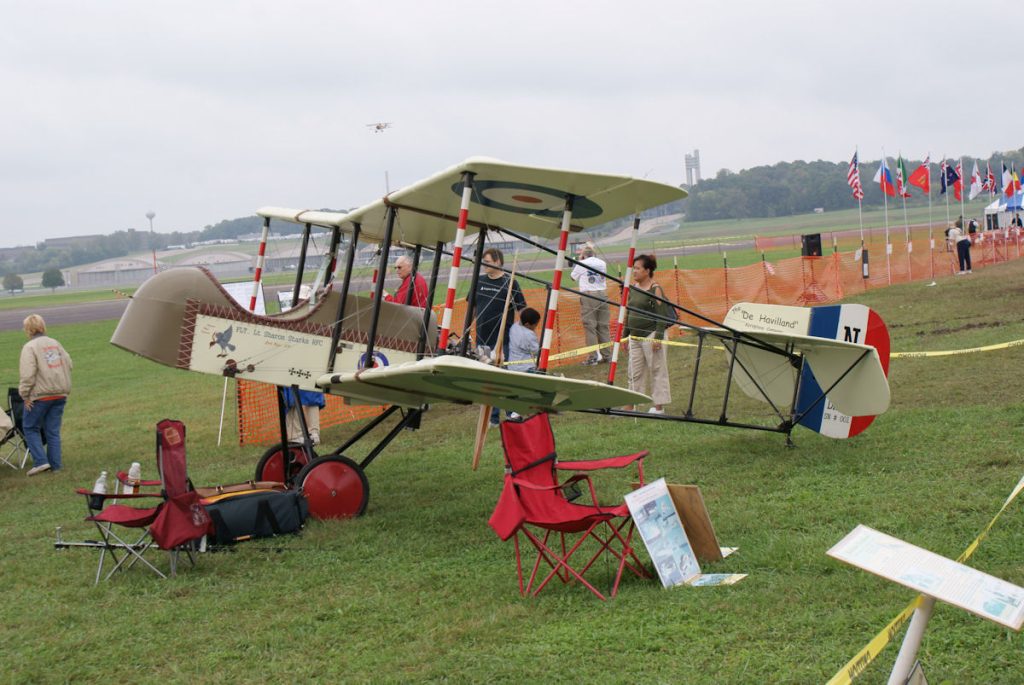
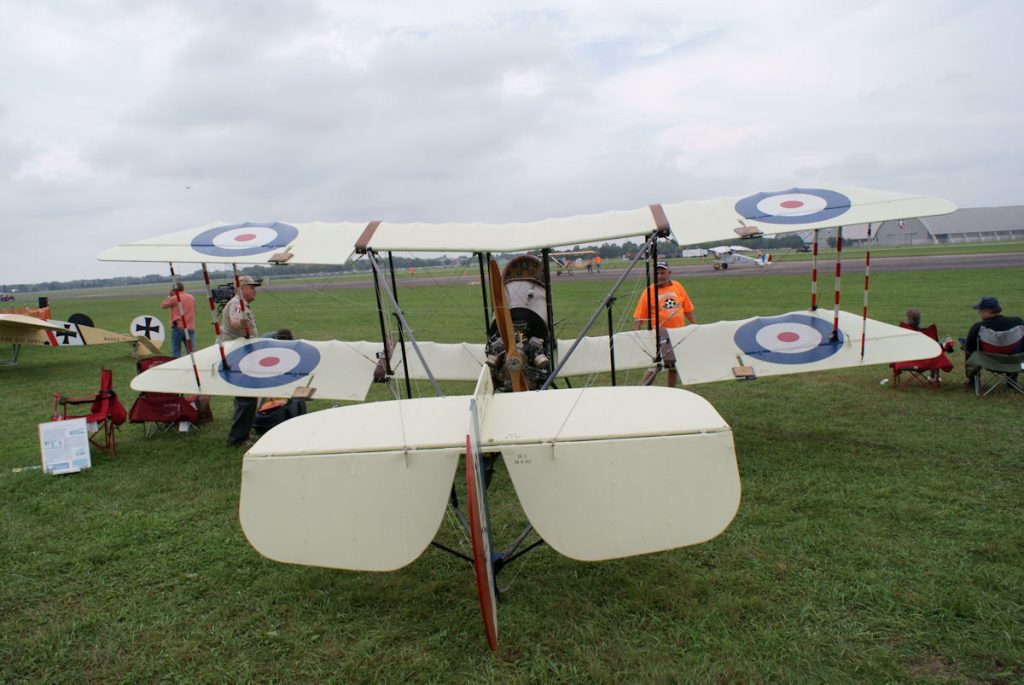
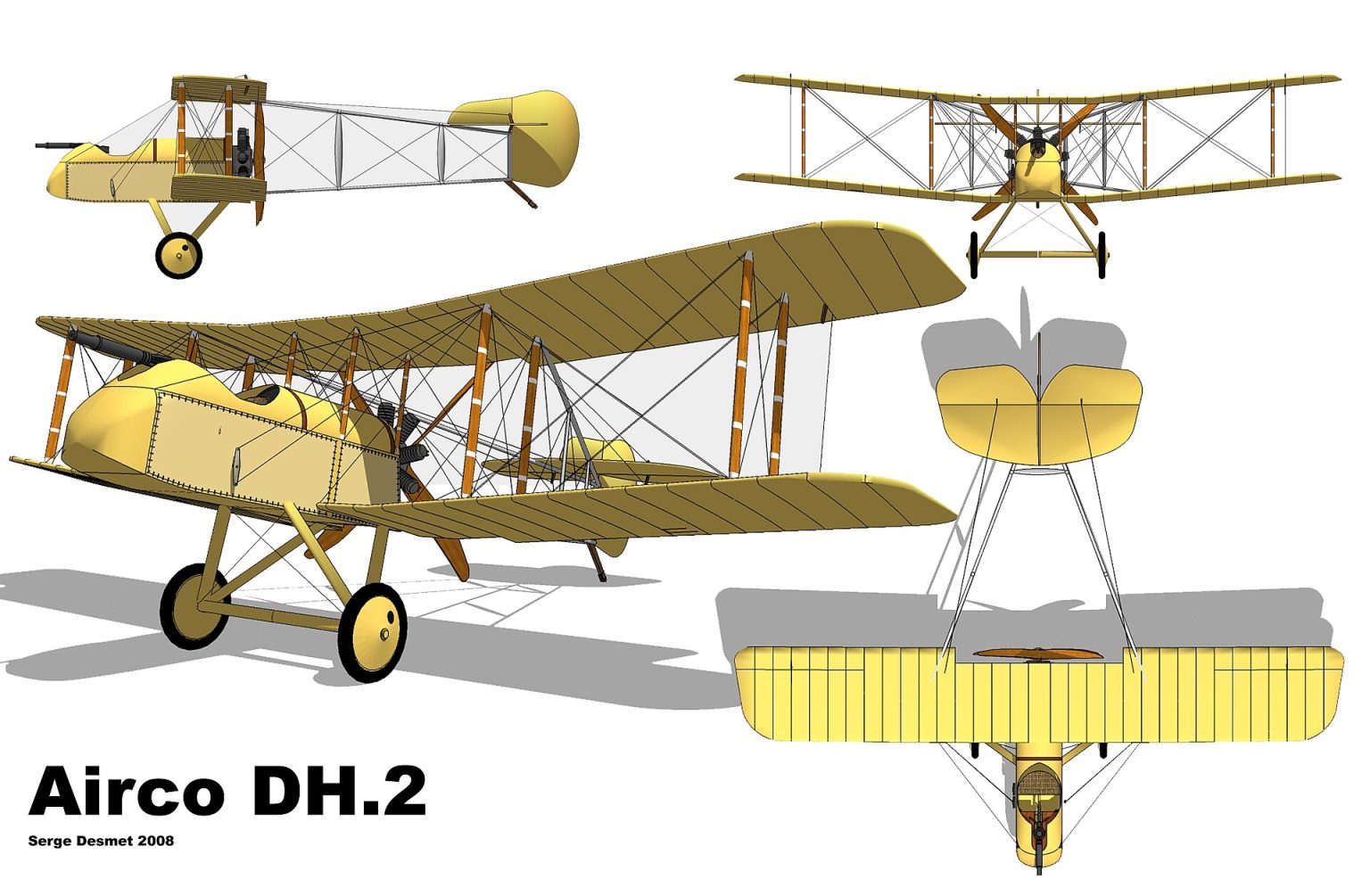
The 100 hp Gnome Monosoupape rotary sat behind the cockpit, driving a two-blade pusher propeller. Twin tail-booms carried the tail surfaces around the propeller disc, leaving the nose completely clear for the gun and giving the pilot an exceptional forward and downward view.
The Lewis gun mount
A single air-cooled .303 in Lewis gun was carried on a flexible mounting in the nose. In theory it could be aimed independently; in practice most pilots found this unworkable in a dogfight and locked or lashed the gun to fire straight ahead, aiming with the whole aircraft.
Light, agile airframe
Wood-and-fabric construction kept the empty weight near 940 lb. The DH.2 was light on the controls and highly manoeuvrable, but its narrow speed range and quick stall made it demanding to fly until pilots learned to respect it — after which it became a formidable turning fighter.
03The DH.2's Gnome Monosoupape rotary: power, quirks and the shed-cylinder problem
The DH.2 was normally powered by the Gnome Monosoupape (“single-valve”) nine-cylinder rotary of about 100 hp, in which the entire engine spun with the propeller. Rotaries were light and smooth but thirsty and temperamental: they were controlled largely by a fuel/air “blip” switch rather than a conventional throttle, and their spinning mass produced strong gyroscopic effects that a pilot had to fly around.
The Monosoupape had a particular reputation on the DH.2 for occasionally shedding a cylinder in flight — a spectacular and sometimes fatal failure. Some aircraft were later fitted with the 110 hp Le Rhône rotary. None of this was unique to the DH.2, but combined with the type's spin tendency it fed the aircraft's early “dangerous” reputation.
04Flying the DH.2: from “spinning incinerator” to trusted dogfighter
Early DH.2 training was costly. The light airframe would drop into a spin quickly, and pilots who did not understand rotary gyroscopics or the type's narrow margin between flying speed and the stall paid for it. The nickname “spinning incinerator” captured the fear.
The turning point came when experienced pilots showed that the spin was fully recoverable and that, flown correctly, the DH.2 was one of the most manoeuvrable aircraft over the front. Confidence transformed the type's fortunes: the same agility that killed novices made veterans deadly. It is a recurring pattern in fighter history — an aircraft’s reputation swinging from lethal to beloved once its handling is understood.
05Twin booms and a clear nose: the aerodynamic price of the pusher layout
The pusher arrangement bought a clear field of fire at a real aerodynamic cost. Exposed cylinders, bracing wires and the twin tail-booms all added drag, capping top speed at around 93 mph even with a modern-for-1915 rotary. The propeller behind the pilot also meant that a crash landing could drive the engine forward into the cockpit.
These were acceptable trades in 1916, when the alternative was having no forward-firing gun at all. But the moment reliable synchronisation reached Allied squadrons, the streamlined tractor scout — Sopwith Pup, Nieuport 17, SPAD — made the pusher fighter obsolete almost overnight.
Airco DH.2 specifications: dimensions, performance, engine and armament
Baseline note: the figures describe the production DH.2 with the 100 hp Gnome Monosoupape 9 Type B-2 rotary, the engine of very nearly every aircraft built, as tabulated by J. M. Bruce in Warplanes of the First World War and cross-checked against the standard reference tables. Deltas for the 110 hp Le Rhône 9J installation and for the few field modifications are in grey. Climb is given as time to a stated height and endurance in place of range, which is how figures of this period were quoted, and every speed below carries the altitude it was measured at — which for the DH.2 matters more than usual, because the aeroplane gave up a sixth of its speed between the ground and 10,000 ft.
Dimensions & weights
- Crew
- 1
- Length
- 7.68 m (25 ft 2½ in)
- Wingspan
- 8.61 m (28 ft 3 in), upper and lower equal, two-bay
- Height
- 2.92 m (9 ft 6½ in) per Bruce; 9 ft 2½ in appears in other standard tables, and the difference is probably whether the figure was taken to the tail booms or to the top of the propeller arc
- Wing area
- 23.13 m² (249 sq ft)
- Configuration
- Pusher biplane. A short nacelle carries the pilot in the extreme nose, the gun ahead of him and the engine behind him; the tailplane and rudder are carried on four booms running aft past the propeller. This one line explains the whole aeroplane.
- Structure and controls
- Wooden framework, wire-braced, fabric-covered except the nacelle nose and upper decking. Ailerons on both upper and lower planes, the upper pair spring-loaded to return to neutral when the stick was released.
- Empty weight
- 428 kg (943 lb)
- Military load
- 91 kg (200 lb) — pilot, Lewis gun, ammunition drums and the few instruments fitted
- Loaded weight
- 654 kg (1,441 lb)
- Wing loading at loaded weight
- 28.3 kg/m² (5.8 lb/sq ft) — light even for 1916, and the source of the turning performance that made the type worth flying
- Power loading
- 6.54 kg/hp (14.4 lb/hp)
- Production
- 453 built by Airco is the figure carried by Wikipedia and by classicfighters.co.nz; Bruce gives 400, of which 266 reached France. Nobody has reconciled the two, and this page prints both rather than choosing.
- Service dates
- Prototype first flight July 1915, sent to France 26 July 1915 and lost in early August; No. 24 Squadron RFC arrived in France 8 February 1916; withdrawn from France June 1917; Macedonia and Palestine to late 1917; last recorded flight at RAF Turnhouse, January 1919
Performance
- Maximum speed at sea level
- 150 km/h (93 mph)
- Maximum speed at 1,525 m
- 145 km/h (90 mph at 5,000 ft)
- Maximum speed at 3,050 m
- 124 km/h (77 mph at 10,000 ft) — this, not the sea-level number, is the fighting speed, and it is why the DH.2 was finished the moment a 110 mph tractor biplane appeared
- Time to 1,525 m
- 8 minutes 25 seconds (to 5,000 ft)
- Time to 3,050 m
- 24 minutes 45 seconds (to 10,000 ft) — a patrol spent nearly half an hour getting to its working height
- Service ceiling
- 4,265 m (14,000 ft)
- Endurance
- 2 hours 45 minutes
- Range
- Not quoted in period tables. Endurance was the operative figure for a fighter working within sight of its own aerodrome, and no useful still-air range for the DH.2 is attested.
- Turning performance
- Out-turned the Fokker E.III comfortably. On 25 April 1916 two DH.2 pilots discovered this in combat; a few days later a third made a Fokker crash onto a roof at Bapaume without firing at it.
- Spinning
- Entered a spin readily — light controls, a mass of rotating engine behind the pilot and pilots with very little training. Recovery was straightforward once the technique was taught, which it initially was not.
- Field of view
- Effectively unlimited forward, downward and to the sides. There is nothing ahead of a DH.2 pilot except his own gun, which no tractor biplane of 1916 could offer.
- Against the Albatros D.II
- The Albatros was faster, more powerful, and carried two synchronised guns to the DH.2's one. From late 1916 a DH.2 could still turn inside it and could do nothing else. Richthofen needed 900 rounds and a long fight to bring down Hawker, but he brought him down.
Propulsion & systems
- Engine
- One 100 hp (75 kW) Gnome Monosoupape 9 Type B-2 nine-cylinder air-cooled rotary in pusher installation, the whole engine revolving with the propeller about a fixed crankshaft
- Engine dimensions
- Bore 110 mm (4.33 in), stroke 150 mm (5.91 in), capacity 12.8 l (781 cu in), diameter 95 cm (37.4 in), compression 4.85:1
- Rated power
- 100 hp nominal. Lumsden records a maximum of 86 kW (115 hp) at 1,300 rpm
- Engine weight
- 137.4 kg (303 lb)
- Valve gear and lubrication
- A single cam-operated overhead exhaust valve per cylinder, the inlet valve deleted entirely and replaced by piston-controlled transfer ports in the cylinder wall — hence monosoupape, single valve. Castor oil on a total-loss system.
- Engine control
- No throttle. Power was set by fuel and air levers and trimmed with a blip switch that cut the ignition. The Monosoupape's deliberately rich mixture also made it thirstier than the Gnome engines it replaced.
- Reliability
- Poor, and known to be poor. The Monosoupape had a habit of shedding cylinders in flight; Trenchard called it "a beast of an engine". It was retained because there was nothing better available in the numbers required.
- Alternative engine
- 110 hp (82 kW) Le Rhône 9J. Sources disagree flatly on whether this went into later production aircraft or into exactly one experimental airframe; both statements appear in the same standard references.
- Propeller
- Two-blade fixed-pitch Integral DG 70 wooden pusher airscrew; four-blade Darracq T.7928 propellers were fitted to some later machines
- Fuel system
- Gravity feed from a tank whose position was not standardised: on the upper wing centre section, or above or below the port upper wing, depending on the individual aeroplane
- Gun synchronisation gear
- None, and the absence is the design. No British synchronisation gear existed when the DH.2 was drawn in 1915, so the propeller was moved behind the pilot instead. The first British aircraft to reach the front with a gear was a Bristol Scout on 25 March 1916, six weeks after 24 Squadron arrived with its pushers.
06The Airco DH.2's operating costs: why the numbers simply aren't recorded
Unlike modern aircraft, the DH.2 has no meaningful published cost-per-flight-hour figure. First World War military accounting did not track aircraft the way air forces do today, unit prices moved with wartime contracts and inflation, and the type was built and consumed inside a national war economy. What can be said is that it was a cheap, simple, mass-producible aircraft — wood, wire, fabric and a rotary engine — deliberately so, because attrition at the front was brutal and airframes were expected to be short-lived.
We mark unit cost, cost per flight hour and programme cost as not reliably recorded rather than inventing precise figures. Any exact pound-sterling number quoted for a 1916 DH.2 should be treated with caution.
07DH.2 variants and operators: who flew it and where
The DH.2 was essentially a single production type rather than a family of major variants; changes were largely limited to engine fit (Gnome Monosoupape or, on some aircraft, the Le Rhône) and detail modifications. It served exclusively with the Royal Flying Corps, most famously with Nos. 24, 29 and 32 Squadrons on the Western Front.
After withdrawal from France it continued with Home Defence flights in Britain and in secondary theatres including the Middle East (Palestine and Sinai) and the Macedonian front. There were no foreign military operators; the type never entered civilian service, and every genuine airframe had been scrapped by 1918.
Armament & payload
The DH.2 carried one Lewis gun, and the entire aeroplane was built back to front to give that gun a clear view
A single .303 in Lewis in the nose of the nacelle is the whole armament of an Airco DH.2, and everything else about the machine follows from it. In 1915 Britain had no working gun synchronisation gear, so the only way to give a single-seater a forward gun the pilot could aim, reach and unjam was to put the propeller behind him. That cost speed, climb and a good deal of structural efficiency; what it bought was a pilot sitting in the extreme nose with nothing at all in front of him, and for roughly ten months in 1916 that was the better bargain. The awkward part of the story is that the gun was designed to be swung about and was almost never swung about: pilots worked out within weeks that the correct method was to clamp it forward and aim the aeroplane, which is exactly what a synchronised tractor fighter did anyway. Field modifications were common and officially discouraged; almost nothing described below as a variation was ever a standard factory fit.
Gun
- One .303 in (7.7 mm) Lewis machine gun in the cut-away upper nose of the nacelle, firing forward outside the propeller arc. No gear, no interrupter, nothing between the muzzle and the target.
- Gas-operated, air-cooled and drum-fed, with a cyclic rate of roughly 500 to 600 rounds a minute that no synchronisation gear was slowing down. In 1916 a DH.2 put more rounds into the air per second than the geared Vickers of a tractor scout.
- The pilot's windscreen was mounted on the gun rather than on the airframe, which tells you exactly how the installation was originally conceived: the gun was the thing that moved and was aimed, and the screen went with it.
- Some pilots fitted two fixed Lewis guns. This was discouraged from above and never standardised, and the arithmetic of drum changes in an open nacelle at 10,000 ft explains why it did not spread.
Ammunition, drums and sights
- Drum-fed. The 47-round drum was the standard in early 1916; the 97-round aircraft drum of the Lewis Mk II came later in the war. Spare drums were carried in external racks on each side of the cockpit, within the pilot's reach.
- The limited ammunition supply of the original installation was reported as inadequate almost at once. Bruce records it among the first complaints from 24 Squadron, and it is the reason so many pilots wanted a second gun.
- Changing a drum meant flying with the knees and using both hands on a gun in a slipstream. Every DH.2 combat was in practice a series of short bursts separated by that operation.
- Sighting was a squadron product rather than a factory one: Lanoe Hawker devised a ring sight for the type and an "aiming off" model to teach his pilots deflection shooting, which no official training then covered.
The flexible mounting, and why nobody used it
- As delivered, the Lewis sat on a flexible mounting that let it be moved between positions and traversed in flight. On paper this was the whole justification for the pusher layout: a gun that could be pointed independently of the aeroplane.
- In practice one hand on the control column and one on a gun in a slipstream produced neither flying nor shooting. The mounting was separately criticised as loose and unstable, and it fouled the control column when elevated.
- Higher authority resisted fixing the gun, on the reasonable-sounding grounds that a fixed gun threw away the flexibility that had justified building a pusher in the first place. The argument was settled at squadron level and not at headquarters.
- Hawker designed a clamp and quick-release spring clip that held the Lewis rigidly forward and still let it be freed instantly for a drum change or a jam. After that the DH.2 was, in every practical sense, a fixed-gun fighter that happened to have a removable gun.
Synchronisation gear: none, and that is the point
- The DH.2 has no synchronisation gear because in 1915 Britain had none to fit. The Germans had a working Fokker gear in squadron service from July 1915 and guarded it; the resulting period of German superiority is the Fokker Scourge.
- Geoffrey de Havilland's answer was the same one the Royal Aircraft Factory reached on the F.E.2b and F.E.8: move the engine behind the crew and the problem ceases to exist. Bruce's judgement is explicit — with an adequate gear available, de Havilland would probably not have chosen a pusher at all.
- British gears arrived, and arrived late and badly. The mechanical Vickers-Challenger and Scarff-Dibovski gears reached production in 1916 and neither was good; the Sopwith-Kauper gear followed and wore out in service.
- The problem was only properly solved by George Constantinesco's hydraulic C.C. gear, standard on British aircraft from November 1917. By then the DH.2 had been out of France for five months and the pusher fighter was finished everywhere.
Rockets, and the stores the DH.2 never had
- Two DH.2s were fitted with Le Prieur rockets for attacking observation balloons: cardboard tubes of black powder on long wooden sticks, clipped to the interplane struts and fired electrically in a dive.
- Two aircraft out of four hundred is an experiment and not an armament option, and this page says so plainly. The Le Prieur rocket properly belongs to the Nieuport 11 and 16, not to the DH.2.
- Effective range was about 115 m (125 yd) with poor accuracy, and the pilot had to hold a 45-degree dive with the balloon in his sight until the last rocket had left the rails.
- There was never a standard bomb rack for a DH.2 and never a bombing role. It was designed as a fighter, used as a fighter and an escort, and used as nothing else.
What the DH.2 did not have
- No armour, no fireproofing and no parachute. British aeroplane crews were issued no parachutes at any point in the war; only balloon observers had them.
- No heating and no oxygen, in an aeroplane that fought at 10,000 ft and above with the pilot in the extreme nose of an open nacelle. Hawker's answer was to design thigh-length sheepskin "fug boots", which became standard issue against frostbite.
- No wireless, no camera and no second seat. Unlike the F.E.2b, the DH.2 could not double as a reconnaissance machine, so when it was outclassed there was nothing left to do with it but post it to a training squadron.
- No throttle, no self-starter and no brakes — all normal for 1916, and all part of why a badly trained pilot could spin a DH.2 off a mishandled turn on the circuit.
Three typical loadouts
- Offensive patrol and escort, No. 24 Squadron RFC, north of the Somme, spring and summer 1916
- One Lewis clamped forward, spare drums in the nacelle side racks, two and three-quarter hours of fuel, no bombs and no wireless. Hawker's tactical order of 30 June 1916 was two words long — "Attack Everything" — and on this fit 24 Squadron fought 774 combats over the Somme and claimed 44 enemy machines, at a cost of twelve of its own aeroplanes and twenty-one pilots killed, wounded or missing by November.
- Single-handed interception, Major L. W. B. Rees, No. 32 Squadron RFC, 1 July 1916
- DH.2 serial 6015, one Lewis and what drums he could reach, against a formation of ten German two-seaters on the first morning of the Somme. Rees attacked alone, was wounded in the thigh, broke up the formation and shot two of them down. He was awarded the Victoria Cross, and the sortie is the clearest single demonstration of what one clear-firing forward gun on a manoeuvrable aeroplane could do.
- The last patrol, Major Lanoe Hawker VC DSO, 23 November 1916
- DH.2 serial 5964, one Lewis, standard fuel, flown as part of "A" Flight out of Bertangles at 1300. Hawker dived on German aircraft over Achiet, lost his flight, and fought a long turning match against Manfred von Richthofen's Albatros D.II. Richthofen fired 900 rounds; Hawker ran short of fuel, broke for his own lines at low level and was killed by a single bullet. He was Richthofen's eleventh victory, and Richthofen hung his Lewis gun over his own door.
Sourcing caveat: DH.2 figures are unusually consistent for a 1916 type because nearly all of them descend from one source, Bruce's tables, and that source does state altitudes — 93 mph at sea level, 90 mph at 5,000 ft and 77 mph at 10,000 ft — which is why this page has preferred it. What does not agree is everything else. Production is given as 453 and as 400. Height is given as 9 ft 6½ in and as 9 ft 2½ in. Whether the 110 hp Le Rhône 9J went into later production aircraft or into a single test machine is stated both ways by reputable references. Ammunition capacity is not stated in any period table this page could find. And the nickname "Spinning Incinerator", repeated in every popular account, traces to Raleigh's official history of 1922 and to Funderburk in 1962; no contemporary squadron document using it has ever been produced, and it should be read as reputation rather than as evidence.
Variants
The DH.2 had no marks, only field modifications and a career short enough to fit in a diary
There is no mark series to set out here. The DH.2 was built to one standard by one firm, and the production aeroplane differed from the prototype only in its fuel system and a revised gun mounting. What variation exists is either a squadron doing something the manufacturer had not sanctioned, or a detachment adapting to Macedonia and Palestine, or an engine experiment that may have involved a single airframe.
The type's importance is entirely in its timing. No. 24 Squadron reached France on 8 February 1916 as the first RFC squadron equipped throughout with single-seat fighters, and within two months the Fokker Scourge was effectively over. It is worth being accurate about the credit: the DH.2 did not do this alone, and probably did not do most of it. The F.E.2b, another pusher, had been arriving since late 1915 and was formidable in formation. The French Nieuport 11 reached the front in January 1916, had ninety machines in service inside a month, and was concentrated at Verdun in February and March in dedicated fighter squadrons. What the three types had in common was not performance but a forward-firing gun and enough numbers to fly in formation, against Fokkers that operated in ones and twos. When a captured Fokker E.III was tested at a British aerodrome in April 1916, it turned out not to have the performance it had been credited with at all. The Scourge was always partly a fright.
The DH.2's own early reputation was a fright of the same kind. It reached its first squadron after two fatal accidents in training and immediately acquired a name for spinning — the "Spinning Incinerator", in a phrase that has survived far better than its provenance. Hawker dealt with it in the only way that ever works: he took a DH.2 up over the aerodrome in front of the assembled squadron, spun it repeatedly, recovered every time, landed, and then described the recovery technique to every pilot. Confidence recovered with him, and the type's reputation inverted — pilots came to describe it as manoeuvrable, strong, fully aerobatic and pleasant to fly. The aeroplane had not changed. The training had.
The end came fast and can be dated. The Halberstadt D.II and Albatros D.I reached the front in late 1916, and a single-gun pusher doing 77 mph at 10,000 ft had nothing to answer them with. On 23 November 1916 Richthofen shot down Hawker himself, which is the most quoted DH.2 fact and is also a fair technical marker: the man who had made the type work was killed in it by a machine it could no longer fight. The DH.2 stayed in first-line French service another seven months only because there was nothing to replace it with, and then went to Macedonia, Palestine and the training squadrons.
- DH.2 prototype (1915 / 1)
- Serial 4732, first flown July 1915 and sent to France on 26 July for operational evaluation with No. 5 Squadron RFC. Shot down in early August 1915, its pilot killed; the wreck was recovered and repaired by the Germans.
- DH.2 production aircraft (1915–17 / 400 or 453)
- The only production standard. Differed from the prototype in the fuel system and a revised gun mounting; 100 hp Gnome Monosoupape, one Lewis. Deliveries began in the second half of 1915 and a few machines were reportedly in France before the year ended.
- Le Rhône 9J installation (1916–17 / one or more)
- The 110 hp Le Rhône 9J in place of the unloved Monosoupape. Whether this reached production aircraft or stopped at a single test airframe is genuinely disputed between standard sources.
- Le Prieur rocket fit (1916 / 2)
- Two aircraft equipped with eight Le Prieur rockets on the interplane struts for balloon attack, per Grey's Windsock Datafile. An experiment, not an option.
- Twin-Lewis field conversions (1916 / unrecorded)
- Squadron-level installations of two fixed Lewis guns, officially discouraged and never standardised. Numbers were never recorded because the modifications were not supposed to exist.
- Macedonia and Palestine detachments (1917)
- "A" Flight of No. 47 Squadron and a joint RFC and RNAS fighter squadron in Macedonia, and "X" Flight in Palestine, kept DH.2s in front-line use until late 1917, by which time the type was dangerously obsolete anywhere it met opposition.
- Advanced trainer (1917–19)
- The type's last real job: an advanced and fighting-school machine in Britain. The last recorded flight of a DH.2 was a single example at RAF Turnhouse in January 1919.
- Redfern DH-2 (1970 onwards / plans-built)
- Walter M. Redfern of Seattle built a flying reproduction in 1970 around a 125 to 150 hp Kinner radial and then sold the plans to homebuilders. Several of these fly; Redfern's own aircraft is at the Omaka Aviation Heritage Centre in Blenheim, New Zealand.
- Bellamy reproduction G-BFVH (1970s / 1)
- Built by Vivian Bellamy for Leisure Sport Ltd in Britain and flown behind a Pobjoy Niagara Mk 3 radial, marked as 5964 — Hawker's aeroplane.
- Later reproductions (1990s onwards / several)
- ZK-JOH at Omaka; N32DH in the United States; a batch of five begun by members of EAA Chapter 292 in Oregon, three of which were exported to New Zealand for completion.
Survivors, stated precisely, because for a First World War type the distinction between an original and a reproduction matters more than the count. There are no survivors. Not one original Airco DH.2 exists anywhere in the world — not a complete aeroplane, not a nacelle in a store, not a set of booms. Out of four hundred-odd built the type was consumed entirely: shot down, crashed, worn out in the fighting schools, or broken up for scrap after the Armistice. Every DH.2 the public can look at is a modern reproduction, and most of them descend from one man's drawings — Walter Redfern's 1970 aircraft, built around a Kinner radial and sold as plans, which is why DH.2 shapes now fly in the United States and New Zealand. Britain's example, Vivian Bellamy's G-BFVH, flew behind a Pobjoy Niagara. Not one of them has a Gnome Monosoupape, and not one of them is a 1916 aeroplane. For the type that broke the Fokker Scourge alongside the Nieuport 11 and the F.E.2b, the survival rate is exactly zero, which is a useful reminder that being decisive and being preserved have very little to do with each other.
Airco DH.2 timeline: from prototype to the end of the pusher fighter
First flight
Geoffrey de Havilland's single-seat pusher scout, developed from the two-seat DH.1, makes its maiden flight on 1 June 1915. The prototype is sent to France for evaluation that summer.
No. 24 Squadron operational
The RFC's first single-seat fighter squadron, led by Major Lanoe Hawker VC, becomes operational in France with the DH.2, soon joined by Nos. 29 and 32 Squadrons.
Breaking the Fokker Scourge
Flying alongside the F.E.2b and Nieuport scouts, DH.2 squadrons steadily wrest air superiority back from the Fokker Eindecker over the Western Front.
Air control over the Somme
By the opening of the Battle of the Somme the Fokker Scourge is over and the Allies hold the air — a hard-won advantage the DH.2 helped secure.
Outclassed by the Albatros
Germany's streamlined, twin-gun Albatros D.I and D.II arrive. The lightly armed DH.2 is suddenly outmatched, and front-line replacement begins.
Death of Lanoe Hawker
Hawker is shot down and killed in a DH.2 after a long dogfight with Manfred von Richthofen — the German ace's eleventh victory.
Home Defence and retirement
No. 24 Squadron re-equips with the DH.5 in April 1917. The DH.2 continues in Home Defence and secondary theatres before being struck off charge by autumn 1918.
Airco DH.2 stories: aces, dogfights and the men who flew the pusher
Lanoe Hawker VC
A pre-war pioneer and the RFC's first fighter ace to win the Victoria Cross, Hawker led No. 24 Squadron and shaped how single-seat fighters were flown.
Read more
Hawker won his VC in 1915 for attacking three German aircraft in a single sortie in a Bristol Scout. As commander of No. 24 Squadron he insisted on aggressive patrolling and cold-weather flying kit for his men. His death in a DH.2 on 23 November 1916, after a duel with Richthofen that ranged across the sky until Hawker ran low on fuel, made him one of the most mourned airmen in the service.
Hawker versus Richthofen
One of the longest dogfights of the war ended with the DH.2's most famous pilot dead and a future legend's reputation rising.
Read more
Richthofen later wrote respectfully of the “British Boelcke,” describing a circling, descending fight in which neither pilot could gain a decisive advantage until Hawker, low on fuel and deep over German lines, broke for home. A long-range burst from the Albatros struck him in the head. Richthofen kept a souvenir of the machine gun as a trophy.
“Spinning incinerator”
Before pilots mastered it, the DH.2's spin tendency and rotary quirks earned it a grim reputation in training.
Read more
Early accident rates on the type were high, and rumours spread that it was a death-trap. The turnaround came when instructors demonstrated that the spin was recoverable and taught pilots to respect the narrow speed range. Within months the same men were praising the DH.2 as one of the most agile fighters at the front.
Aiming the whole aeroplane
The flexible Lewis mount sounded clever but proved a distraction in combat; most pilots simply fixed it forward.
Read more
Adjusting a swivelling gun while flying a twitchy pusher in a dogfight was near impossible. Pilots discovered that clamping the Lewis to fire straight ahead and aiming by pointing the aircraft was far more effective — effectively turning the DH.2 into a fixed-gun fighter and anticipating how every later single-seater would fight.
No. 24 Squadron RFC
The first British single-seat fighter squadron became the model for the specialist fighting scout unit.
Read more
Formed as a dedicated single-seater squadron, No. 24 claimed dozens of enemy aircraft over the Somme front in 1916. Its success proved the case for concentrating single-seat fighters in offensive patrols rather than tying them to escort duty — a doctrine that outlived the DH.2 by decades.
Eindecker to Albatros
The DH.2 was built to beat one German fighter and was undone by the next.
Read more
The DH.2 arrived to counter the Fokker Eindecker and did so decisively. But air war moved fast: within a year the Albatros D.I and D.II, with two synchronised guns and a powerful inline engine, left the single-gun pusher hopelessly outgunned. The DH.2's window of dominance was measured in months.
Eyes in the nose
With the engine behind him, the DH.2 pilot enjoyed a field of view few contemporaries could match.
Read more
Nothing blocked the pilot's forward and downward vision — a real advantage for spotting and stalking enemy aircraft. The trade was noise, oil and the knowledge that in a heavy landing the engine could come forward. Pilots generally judged the visibility worth it.
Open-cockpit winter war
At 10,000 ft over France in an open pusher, the enemy was often the weather as much as the Fokkers.
Read more
Hawker, an inventive man, is credited with helping design fur-lined thigh boots (“fug boots”) to keep his pilots from freezing. Frostbite, fatigue and the sheer physical effort of flying a rotary-engined aircraft in thin, freezing air were constant companions on high patrols.
The cylinder that flew away
The Monosoupape rotary's habit of occasionally shedding a cylinder became part of DH.2 folklore.
Read more
A failed cylinder could punch through the cowling or start a fire — alarming in an aircraft named a “spinning incinerator.” It was a known risk of early rotaries rather than a unique DH.2 flaw, but it did nothing for the type's nerves-of-steel reputation.
Beyond the Western Front
After France, DH.2s served far from the main event, in Home Defence and distant theatres.
Read more
Withdrawn from the Western Front, surviving DH.2s flew Home Defence sorties in Britain and served in the Middle East and on the Macedonian front, where the pace of air combat was slower and an ageing pusher could still be useful for a while longer.
The last of the fighting pushers
The DH.2 was the high point and the end of a design dead-end.
Read more
Once Allied synchronisation gears matured, the pusher fighter vanished. The DH.2, together with the F.E.2 and F.E.8, represents the brief era when putting the engine at the back was the smartest thing a fighter designer could do — a fascinating branch of aviation's family tree that flowered and died within two years.
Reproductions in the air
No original survives, but faithful reproductions keep the DH.2 flying for modern audiences.
Read more
Airworthy reproductions — notably those associated with The Vintage Aviator in New Zealand and displayed at Omaka, plus a flying replica seen at the National Museum of the USAF's Dawn Patrol events — let people see and hear a DH.2 as pilots did in 1916. They are single-seaters, flown by specialist display pilots, and not available for passenger flights.
Airco DH.2 photos: RFC scouts, reproductions and the pusher up close
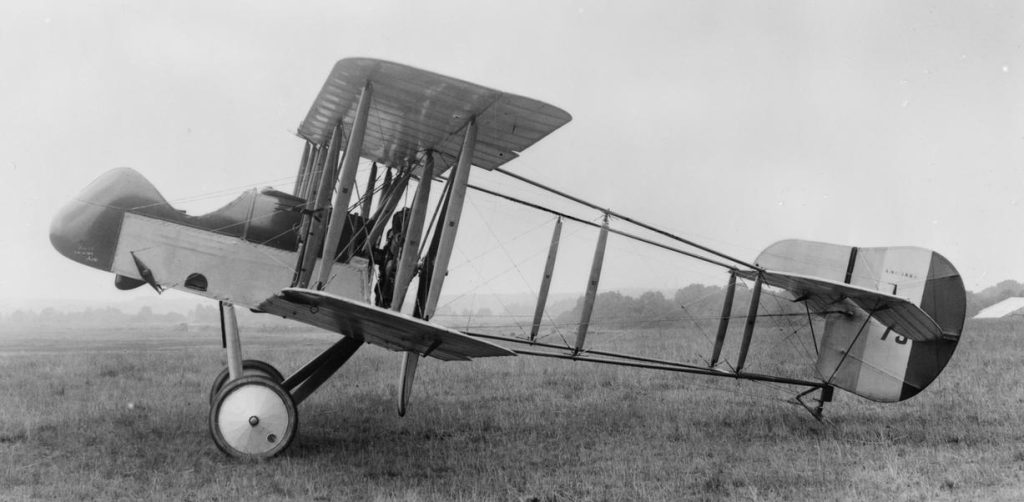
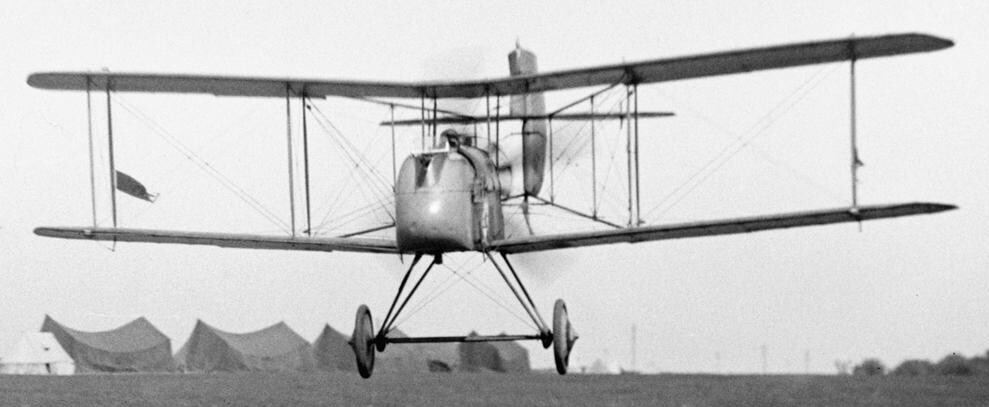
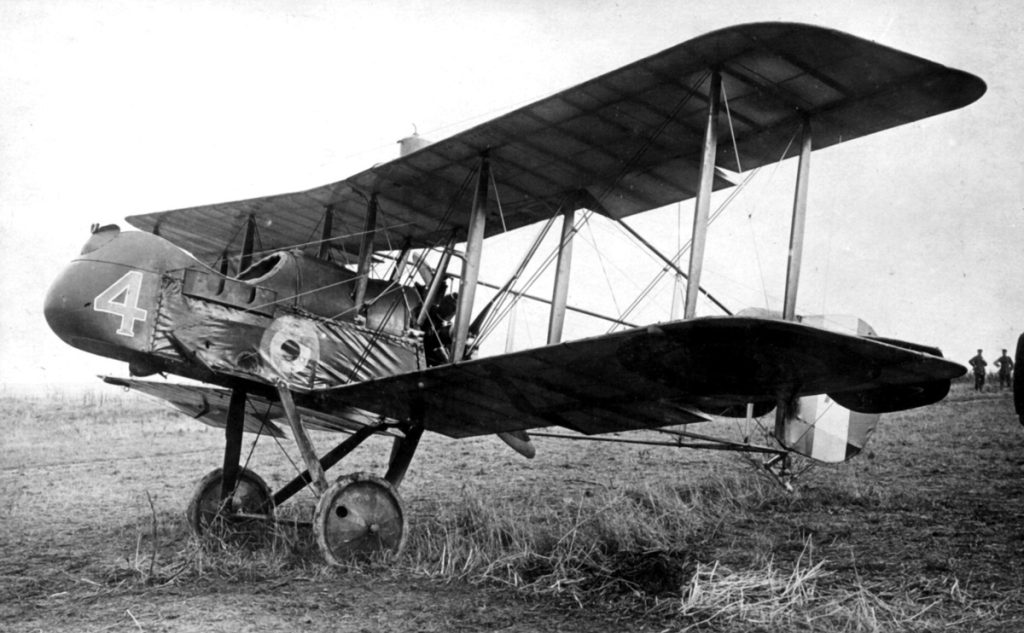
Images sourced from Wikimedia Commons and used under their respective public-domain or Creative Commons licences; each is credited to its author above.
Airco DH.2 in the air: a reproduction flying today
Video: “Airco DH.2 – 1915 World War 1 Fighter” by Historical Aviation Film Unit, an authoritative aviation-film channel documenting airworthy First World War reproductions (~301,000 views). It shows a DH.2 reproduction starting up and flying.
Airco DH.2 operations map: origin, wartime fronts and survivors
The Airco DH.2's mark on history: a fighter that bought the Allies the sky
The DH.2's true significance is not a kill tally but a turning point: as one of the aircraft that broke the Fokker Scourge, it helped restore Allied air superiority over the Western Front in 1916. Squadron claim totals from the period are estimates and should be treated as such.
Airco DH.2: your questions answered
Can I fly in an Airco DH.2?
No. The DH.2 was a single-seat fighter, no genuine original survives, and MiGFlug does not offer DH.2 flights. A handful of airworthy reproductions fly at airshows, but they are single-seaters flown by specialist display pilots — not bookable passenger aircraft.
However, you can fly in a genuine historic military jet yourself. MiGFlug arranges flights in real fighters and jet trainers around the world. See migflug.com/flights-prices for what is available.
Why did the DH.2 have its engine and propeller behind the pilot?
Because in 1915–16 Britain had no reliable gun-synchronisation gear to fire through a spinning propeller. The pusher layout put the engine and propeller at the back, leaving the nose clear for a forward-firing Lewis gun with an unobstructed field of fire ahead of the aircraft.
Did the Airco DH.2 really end the Fokker Scourge?
It was one of the principal Allied aircraft that broke it, rather than the sole cause. Working with the F.E.2b and French Nieuport scouts, DH.2 squadrons — led by No. 24 Squadron — helped end German air superiority and restore Allied control over the Somme front by mid-1916.
How did Lanoe Hawker die?
Major Lanoe Hawker VC, commander of No. 24 Squadron, was shot down and killed in a DH.2 on 23 November 1916 after one of the longest dogfights of the war, against Manfred von Richthofen in an Albatros D.II. It was Richthofen's eleventh victory.
Was the DH.2 dangerous to fly?
At first it had a fearsome reputation — a tendency to spin, a narrow speed range and a rotary engine that could shed a cylinder earned it the nickname “spinning incinerator.” Once pilots learned to handle it, though, it proved highly agile and became a trusted and effective dogfighter.
How many were built and do any survive?
About 400 were built (roughly 401 accepted by the RFC, though sources vary). All were struck off charge by autumn 1918, and no genuine original survives. Several airworthy reproductions and static replicas exist today.
You cannot fly the Airco DH.2 —
but these, you can
No original DH.2 survives and the reproductions are single-seaters. But you can strap into a genuine military jet with MiGFlug and fly it yourself — from warbird trainers to supersonic fighters.
 Fly the L-39 AlbatrosThe world’s most-flown jet trainer — aerobatics included
 Fly the F-104 Starfighter“The missile with a man in it”
 Fly the MiG-21The Cold War’s most-produced jet
 Fly the T-33 Shooting StarAmerica’s first jet trainer
 Fly the DH VampireA piece of early jet history
 Fly the S.211Agile Italian jet trainer
 Fly the MB-326The classic Aermacchi jet
 Fly the MiG-15The Soviet legend of the Korean War
Explore more First World War fighters
Airco DH.2: sources & further reading
- History of War — Airco D.H.2Detailed development, service and specification history of the type.
- Royal Air Force MuseumNational collection covering the RFC, its aircraft and the air war of 1914–18.
- Imperial War MuseumsPhotographs, documents and context for Royal Flying Corps operations on the Western Front.
- Smithsonian National Air and Space MuseumReference material on early fighter development and the pusher configuration.
- The Vintage AviatorBuilders and operators of airworthy First World War aircraft reproductions, including the DH.2.
- National Museum of the U.S. Air ForceEarly military aviation collection and Dawn Patrol Rendezvous display flying.
- J. M. Bruce, The Aeroplanes of the Royal Flying Corps (Military Wing) — standard reference on RFC types including the DH.2.
- Cross & Cockade / First World War aviation historical journals — squadron histories and pilot accounts.