
Fokker Eindecker
“The monoplane that won the sky with one gun — and a good idea it did not invent”
A mediocre little wing-warping monoplane made deadly by the first practical machine gun that could fire straight through a spinning propeller. For a few months over the Western Front it made the Fokker name a byword for fear — the “Fokker Scourge” of 1915–16.
The Fokker Eindecker: how a modest monoplane and one clever gun gave Germany the sky in 1915
The Fokker Eindecker — German for simply “monoplane” — is one of history’s great reminders that a fighter is a weapons system, not just an airframe. On its own the Eindecker was unremarkable. Anthony Fokker’s design team took the layout of the pre-war French Morane-Saulnier H, built it with a welded steel-tube fuselage and a wire-braced, wing-warping monoplane wing, and hung an Oberursel rotary engine of about 80 to 100 horsepower on the nose. It was slow, it climbed indifferently, and it turned on a wing that twisted rather than using ailerons. As a flying machine it was already dated the day it appeared.
What made it lethal was bolted to the top of the fuselage: a single 7.92 mm lMG 08 “Spandau” machine gun coupled to a working synchronisation (interrupter) gear — the Fokker Stangensteuerung, a pushrod mechanism that timed the gun to fire between the blades of the spinning propeller. For the first time a pilot could aim his whole aeroplane at an enemy and fire straight ahead, without shooting off his own propeller. Point the nose, press the trigger. It sounds obvious now; in mid-1915 it was revolutionary.
The effect on the Western Front was immediate and one-sided. From the late summer of 1915 into the spring of 1916, small numbers of Eindeckers — never more than a few dozen at the front at any time — hunted the slow, largely defenceless Allied two-seater reconnaissance machines almost at will. British and French airmen called this grim season the “Fokker Scourge”, and the British press coined the bitter phrase “Fokker Fodder” for the crews sent up against it. The aircraft itself had not improved; the tactics and the gun had changed everything.
The Eindecker also made the first German air heroes. Max Immelmann, the “Eagle of Lille”, and Oswald Boelcke flew it to early fame and, in January 1916, became the first airmen awarded the Pour le Mérite. Boelcke used his time on the Eindecker to think systematically about aerial fighting, distilling hard lessons into the Dicta Boelcke — the founding rules of fighter tactics that air forces still teach in spirit today.
It did not last. The Eindecker’s dominance rested on a temporary technical monopoly, and monopolies in war are brief. By the spring and summer of 1916 the Allies fielded nimble, better-climbing machines — the Nieuport 11 “Bébé” and Nieuport 17, and the pusher Airco DH.2 — and the French had their own synchronised guns coming. Suddenly the slow, warping-winged Fokker was the hunted, not the hunter. Immelmann was dead by June 1916; the Eindecker was pulled from the front line before the year was out. Its reign had lasted barely nine months, but it had changed air warfare permanently: after the Eindecker, every serious fighter carried a synchronised gun firing through the propeller.
“The Eindecker won nothing with its wings. It won with a gun that could shoot where the pilot looked — and with two men who worked out what to do with it.”
01The Fokker Eindecker’s origins: a copied French monoplane, rescued by an idea Fokker did not invent
The airframe began as a near-copy of the Morane-Saulnier Type H, a French sporting and scouting monoplane Fokker’s firm studied closely. Fokker rebuilt it in his own idiom — a welded chrome-molybdenum steel-tube fuselage in place of wood, and his characteristic one-piece warping wing — producing the unarmed M.5 reconnaissance monoplane, from which the armed A-series and then the E-series (Eindecker) fighters were derived.
The decisive addition, the synchronisation gear, has a tangled history that is often told too simply. The concept was not Fokker’s: the Swiss engineer Franz Schneider had patented a synchroniser in 1913, and the Frenchman Raymond Saulnier had experimented with one in 1914 before falling back on crude propeller deflector wedges — the same bullet-deflecting plates that Roland Garros famously used in early 1915 (a different, cruder solution than true synchronisation). When Garros was forced down behind German lines in April 1915, his deflector-equipped Morane was captured. The popular story that Fokker then personally invented synchronisation in 48 hours is a marketing legend Fokker himself encouraged. In reality his engineers — among them Heinrich Lübbe and colleagues — developed a practical pushrod interrupter that timed the gun rather than deflecting bullets. The honest summary: the working mechanism is popularly credited to Fokker but built on earlier ideas, and engineered by his team.
What the Fokker Eindecker actually was: three parts, one of which mattered
The synchronised gun — the whole point
A single 7.92 mm lMG 08 “Spandau”, mechanically linked to the engine so it fired only when a propeller blade was clear. This, not the airframe, is why the Eindecker mattered. It let one man aim the aeroplane and the gun as a single instrument.
A borrowed, wing-warping airframe
A welded steel-tube fuselage carrying a wire-braced monoplane wing derived from the Morane-Saulnier H. Roll control came from warping (twisting) the whole wing, not from ailerons — already old-fashioned by 1915 and heavy to fly.
An Oberursel rotary engine
A 9-cylinder Oberursel rotary — essentially a licence copy of the French Gnome — of roughly 80 hp (E.I/E.II) to 100 hp (E.III). The whole engine spun with the propeller, giving strong gyroscopic torque that shaped how the aircraft turned.
02The Fokker Eindecker’s armament: the Spandau gun and the Stangensteuerung interrupter, explained
Early Eindeckers (E.I) usually carried a single air-cooled lMG 08 — the aircraft version of the Maxim-derived MG 08, universally nicknamed “Spandau” after the arsenal that built it. The gun was fixed, pointing straight forward over the cowling, and fed by a fabric or metal-link belt. The Fokker Stangensteuerung (“pushrod control”) took a drive off the engine and, through a system of cams and rods, physically interrupted the gun’s firing at the instants a blade was in front of the muzzle. Rate of fire dropped a little compared with a free-firing gun, but the pilot could now hold the target in his sights and shoot down the line of flight.
Later variants raised the firepower: the E.IV was designed around two — occasionally three — synchronised guns, though the extra weight and the drag hurt an airframe that was already struggling to keep up with newer Allied fighters. Reliability of the gear varied; jams and the occasional shot-through propeller blade were not unknown, and pilots treated the mechanism with respect.
03The Fokker Eindecker’s flying qualities: warping wings, rotary torque and honest hard work
By the standards of even 1916 the Eindecker was not pleasant to fly. Roll was commanded by warping the flexible wing via cables to a control “cloche”, which was heavy and imprecise and grew worse as speed rose. The rotary engine had essentially one power setting; pilots managed thrust by “blipping” the ignition with a button, cutting and restoring the spark. The spinning mass of the engine produced strong gyroscopic precession, so the aircraft turned readily one way and reluctantly the other — a quirk skilled pilots exploited and novices feared.
Performance was modest: an E.III made roughly 130–140 km/h flat out and took a long time to reach its ceiling of about 3,600 m. It was the gun and the tactics of men like Boelcke — diving out of the sun, attacking from the blind spot behind and below a two-seater — that turned this ordinary flying machine into a killer.
04The Fokker Eindecker variants: from the E.I to the twin-gun E.IV
E.I (1915): first production fighter version, ~80 hp Oberursel U.0, one gun — the machine that opened the Fokker Scourge. E.II: a mostly parallel development with the more powerful ~100 hp U.I rotary and a slightly shorter wing. E.III: the most numerous and best-known variant, ~100 hp, one gun, the definitive Eindecker and the type most often preserved. E.IV: an attempt to keep the design competitive with a heavier ~160 hp two-row Oberursel U.III and twin guns; the bigger engine was unreliable and the airframe was by then outclassed. Total production of all Eindecker variants is usually given as about 416 aircraft, though sources disagree and the figure should be treated as approximate.
Fokker Eindecker (E.III) specifications, with the figures worth doubting flagged
Baseline note: the figures describe the Fokker E.III with the 100 hp Oberursel U.I — by a wide margin the most numerous mark, 249 of the 416 Eindeckers built, and the aircraft meant when anyone says "Fokker". Deltas for the E.I (80 hp Oberursel U.0), the E.II (100 hp U.I on a larger wing) and the twin-gun E.IV (160 hp Oberursel U.III fourteen-cylinder twin-row rotary) are in grey. Eindecker figures come from very small samples of hand-built aircraft and almost never carry a stated test altitude; where one exists it is given here, and where none exists that is said rather than glossed over.
Dimensions & weights
- Crew
- 1
- Wingspan
- 9.52 m (31 ft 3 in) — 8.85 m (29 ft 0 in) on the E.I; between 9.7 and 10.0 m (31 ft 10 in and 32 ft 10 in) on the E.II and E.IV. Published spans for individual marks disagree between sources by up to half a metre
- Length
- 7.20 m (23 ft 7 in) — 7.50 m (24 ft 7 in) on the E.IV
- Height
- 2.40 m (7 ft 10½ in)
- Wing area
- 16.0 m² (172 sq ft) — 15.9 m² (171 sq ft) on the E.I and E.IV
- Wing chord
- 1.80 m (71 in) — slightly narrower than the E.I and E.II, and the main aerodynamic change that defines the E.III
- Lateral control
- Wing warping. The whole rear of the wing is twisted by cables running to a kingpost pylon above the fuselage and to an inverted pylon below it. No ailerons
- Tail surfaces
- All-moving balanced rudder and elevator, with no fixed fin and no fixed tailplane — the Morane-Saulnier arrangement, inherited wholesale
- Structure
- Welded chrome-molybdenum steel tube fuselage, fabric covered — Fokker’s one genuine improvement over the wooden Morane it copied, and the reason Eindeckers stood up to rough handling on the ground better than the French original
- Sheet metal finish
- All exposed and internal sheet panels carried a distinctive "dragged" engine-turned finish, used on Eindeckers and on the first Fokker biplanes and dropped by the end of 1916. It is the quickest way to identify a genuine Fokker panel
- Empty weight
- 399 kg (880 lb) — 360 kg (794 lb) on the E.I; 466 kg (1,027 lb) on the E.IV
- Loaded weight
- 610 kg (1,345 lb) — 563 kg (1,241 lb) on the E.I
- Wing loading
- 38 kg/m² (7.8 lb/sq ft) — almost exactly the same as a Nieuport 17, which is a useful reminder that the Eindecker’s problem was not its wing loading but its power, its controls and its structure
Performance
- Maximum speed
- 140 km/h (87 mph). Altitude not stated in any period source that survives; take it as a low-level figure. The E.I managed 130 km/h (81 mph) and the E.IV is quoted between 160 and 170 km/h (99–106 mph), though pilots did not find it faster in any useful sense
- Climb to 1,000 m
- 5 min (3,280 ft)
- Climb to 3,000 m
- 30 min (9,840 ft) — this is the single most damning number about the aeroplane. A Nieuport 17 did it in nine minutes and a Nieuport 11 in fifteen and a half
- Initial rate of climb
- 3.3 m/s (655 ft/min), falling away sharply with height
- Service ceiling
- 3,600 m (11,810 ft) — 3,000 m (9,840 ft) on the E.I; 3,960 m (13,000 ft) on the E.IV
- Endurance
- 1 hr 30 min, and in practice less, because the pilot had to hand-pump fuel from the main tank to the gravity tank up to eight times an hour
- Pitch and yaw response
- Hypersensitive, and genuinely dangerous to a novice. Kurt Wintgens said that "lightning is a straight line compared with the barogram of the first solo", and he was not joking
- Roll response
- Poor. Wing warping twists a wing that also has to carry the aeroplane; it is heavy, slow and gets worse as speed rises. The Nieuport 11’s ailerons were simply better, and this was the largest single control-response gap between the two types
- Diving attack
- What the aeroplane was actually for. Climb high, dive out of the sun, fire one long burst, keep diving out of range, climb again. Immelmann’s zoom-and-reverse at the top of the recovery became the Immelmann turn
- Turning fight
- To be avoided from early 1916 onward. Against a D.H.2 or a Nieuport the Eindecker lost the turn, lost the roll and lost the climb; on 25 April 1916 two D.H.2 pilots found they could out-manoeuvre Fokkers at will, and days later one caused a Fokker to crash onto a roof at Bapaume without firing at it
- Obsolescence
- Fast. The type had a clear technical advantage for roughly seven months, was outclassed by February 1916 and was being withdrawn from the front by August and September of the same year
Propulsion & systems
- Engine
- One Oberursel U.I nine-cylinder air-cooled rotary, 75 kW (100 hp) — an Oberursel-built derivative of the French Gnome rotary, made in Germany from pre-war licence knowledge
- Alternative engines
- 60 kW (80 hp) Oberursel U.0 seven-cylinder on the E.I; 119 kW (160 hp) Oberursel U.III fourteen-cylinder twin-row on the E.IV, itself a copy of the Gnome Double Lambda and chronically unreliable
- Fuel system
- A gravity tank feeding the engine, refilled by the pilot with a hand pump from the main tank — behind the pilot from the E.II onward — up to eight times an hour. In a fight this is a hand not on the stick
- Propeller
- Two-blade fixed-pitch wood
- Armament
- One 7.92 mm lMG 08 "Spandau", offset to starboard, synchronised. A few E.IIIs were experimentally fitted with two; the E.IV had two as standard after a three-gun installation failed
- Synchronisation gear
- Fokker Stangensteuerung — push-rod control. In the production form a large cam wheel, effectively a light flywheel, was driven directly by the spinning rotary crankcase; a follower on that wheel drove a reciprocating push rod that tripped the gun’s trigger once per revolution
- Sights
- A simple ring-and-bead. The gear made the aeroplane the sight, which was the entire point
- What the pilot did not have
- No radio, no oxygen, no armour, no parachute, no starter and effectively no instrument panel. A tachometer, a fuel pressure gauge, an altimeter and a compass on some aircraft
- Prototype and first flight
- Fokker demonstrated the synchronised gun to Idflieg at Döberitz on 19–20 May 1915, having towed the aeroplane there behind his car; Otto Parschau flew the armed prototype A.16/15 from 23 May 1915
- Service entry
- E.I from July 1915, attached one or two at a time to ordinary Feldflieger Abteilungen as escorts. About fifteen were operational by the end of July 1915. The E.III reached Boelcke’s FFA 62 towards the end of 1915
- Number built
- 416 across all marks — 68 E.I, 49 E.II, 249 E.III, 49 E.IV, plus five M.5K/MG pre-production aircraft. Many E.IIs were completed as, or later rebuilt to, E.III standard, so the mark breakdown is softer than it looks
- Withdrawal
- Concentrated into Kampfeinsitzer Kommandos from February 1916, replaced by Halberstadt and Fokker biplanes and by the Albatros D types; the last Eindeckers left front-line units in August and September 1916
05The Fokker Eindecker’s operating costs: why there is no honest “price per hour” for a 1915 fighter
No reliable unit price or cost-per-flight-hour survives for the Eindecker. In 1915 military aircraft were procured in small batches under wartime conditions; the currency (the pre-inflation gold Mark), the accounting, and the record-keeping simply do not translate into a meaningful modern figure. Any “cost” you see quoted for an original Eindecker is effectively invented.
What can be said is that the type was cheap and quick to build by the standards of the day — a steel-tube fuselage and a simple warping wooden wing, powered by an existing rotary engine. The real running cost today attaches to the airworthy reproductions flown by collections such as The Vintage Aviator in New Zealand: rotary engines are thirsty, temperamental and expensive to maintain, and hand-built WWI aircraft demand specialist care. Operating estimates for such machines run from several hundred dollars to over a thousand dollars per flying hour — but that is a modern reproduction figure, clearly flagged as an estimate, not a historical cost.
06Fokker Eindecker variants and serial figures: reading the E.I–E.IV numbers with caution
Production totals for the Eindecker are quoted inconsistently across references. The commonly cited overall figure is about 416 aircraft across the E.I, E.II, E.III and E.IV, with the E.III the most numerous. Some sources break the numbers down differently or count the unarmed M.5 monoplanes and A-series scouts alongside the fighters, which inflates or deflates the tally depending on how you draw the line. Treat any precise breakdown as an approximation; the honest statement is that Eindeckers were built in the low hundreds, never in the thousands, and that only a handful were ever at the front simultaneously — part of why so few genuine airframes survive today.
Armament & payload
One machine gun, and a mechanism that let a pilot aim it by aiming the aeroplane
The Fokker Eindecker carried a single 7.92 mm lMG 08 "Spandau" on the cowling, offset to starboard, with about 500 rounds in a belt and a ring-and-bead sight. By the standards of 1916 that is a thin armament, and by the standards of 1917 it is negligible. It won a campaign anyway, because it was the first gun in service that a pilot could aim without taking his hands off the controls.
Everything before it had been a compromise. A pusher put the gun in front and paid for it in speed. A flexible gun on a two-seater needed a second man and could not be aimed by flying. A gun mounted to fire outside the propeller arc pointed somewhere other than where the aeroplane pointed. Garros’s steel deflector wedges let a Morane fire through its own propeller by absorbing the hits, which wrecked propeller efficiency and hammered the crankshaft. The Stangensteuerung made the aeroplane and the gun into one instrument, and once that was possible the fighter aircraft existed as a category.
It is worth being blunt about the aeroplane wrapped around the gear. It was mediocre: a Morane-Saulnier derivative with warping wings, a poor roll rate, a half-hour climb to 3,000 m and a top speed a modern light aircraft would find unremarkable. It won because it was first, because Boelcke and Immelmann worked out how to use it, and because what it met was a fleet of unarmed or lightly armed reconnaissance two-seaters. Individual aircraft varied: a handful of E.IIIs were fitted with two guns experimentally, the E.IV carried two as standard, and the three-gun installation tried on the E.IV prototype was abandoned as unworkable.
Gun
- One fixed 7.92 mm (0.312 in) lMG 08 "Spandau", the aircraft version of the Maxim-derived MG 08, mounted on the cowling and offset to starboard.
- Belt-fed and closed-bolt, which is why it could be synchronised at all. The drum-fed, open-bolt Lewis its opponents carried could not be, and British attempts to synchronise one were doomed from the start.
- The prototype and the five M.5K/MG pre-production aircraft carried a Parabellum MG 14 instead. It was swapped for the Spandau because every available Parabellum was needed as an observer’s gun, where its lightness mattered more.
- A few E.IIIs were experimentally given two guns; the E.IV had two as standard.
- Rate of fire in the synchronised installation was in the region of 400 rounds a minute — slow, which was an advantage, because a slow gun can be geared to fire once every two or three propeller revolutions and is correspondingly safer.
Ammunition & sights
- Roughly 500 rounds in a fabric belt, feeding from a box in the fuselage — ten times what a Lewis drum held, and the ammunition supply was a real tactical advantage over the drum-fed Allied guns of 1915.
- Standard German steel-jacketed rifle ammunition. Its consistency mattered: the commonest cause of a synchronised gun putting rounds into its own propeller was variation between cartridges, not failure of the gear.
- A simple ring-and-bead sight. Nothing telescopic, nothing illuminated, nothing computed.
- Clearing a jam meant reaching forward to the breech, which on the Eindecker the pilot could just do. Immelmann described flying with no hands on the controls at all while he cleared one, which on an aeroplane this twitchy in pitch is a considerable statement.
The Fokker Stangensteuerung
- A mechanical linkage that fired the gun rather than interrupting it. The gear tripped the trigger at a moment when the propeller blades were clear, turning a fully automatic weapon into a semi-automatic one fired forty-odd times a second.
- The first version took its drive from the oil pump shaft at the rear of the engine, which avoided running a push rod through the firewall and fuel tank. The spindle was not robust enough and the gear jammed repeatedly; Parschau’s June 1915 combats were largely wasted on it.
- The production version replaced that with a large cam wheel, almost a light flywheel, driven directly off the spinning rotary crankcase, with a follower driving the push rod. That version worked, and is what every operational Eindecker carried.
- Adjustment was critical and had to be rechecked after any propeller change or engine overhaul. A cam wheel slipped a millimetre or a push rod flexing could send every round into one blade — a worse outcome than firing with no gear at all.
- It never worked properly with more than one gun, because two guns firing simultaneously spread their fire wider than the safe gap between blades. Extra cam followers were tried to produce a ripple; on three guns it was a disaster and on two it was merely unsatisfactory. Fokker’s answer, the flexible-drive Zentralsteuerung of late 1916, solved it, and by then Albatros had had to design its own Hedtke gear to get twin guns to work at all.
Who actually invented it
- August Euler patented the idea of a fixed forward-firing gun aimed by aiming the aeroplane in 1910, illustrating it, revealingly, on a pusher.
- The Swiss engineer Franz Schneider — formerly of Nieuport, by then at LVG — filed the first known patent for firing through a tractor propeller in July 1913. It was published in the German magazine Flugsport in 1914, so the concept was public knowledge well before Fokker built anything. Schneider’s design assumed the gear would prevent the gun firing; every gear ever built in practice did the opposite.
- Raymond Saulnier patented a gear in 1914 and actually built it. It failed, largely because the only gun he could borrow was a gas-operated Hotchkiss — fundamentally unsuited to single-shot firing — and the army wanted it back.
- Garros’s deflector wedges of March 1915 were not a synchroniser at all but an admission that one was unavailable. When he was forced down on 18 April 1915 and the propeller was recovered, Idflieg tried to copy it, found German steel-jacketed ammunition would smash the wedges, and invited Fokker and Pfalz to Döberitz to suggest alternatives. Schneider’s own LVG, oddly, was not asked.
- So: Fokker did not invent the concept, and the tale of his team designing, building and installing the gear in 48 hours — from his authorised 1929 biography — is not believed. The current consensus is that Fokker’s team, including the engineer Heinrich Lübbe, already had a device in development when Garros’s propeller arrived. What Fokker’s people genuinely did was make one work, fit it to a suitable aeroplane and put it into production first. In 1915 that was the whole of the achievement.
What the gear did not do
- It did not make the gun safe. Gears failed, and when they failed badly they shot the propeller off. Immelmann had it happen twice while testing multi-gun installations and got down both times; on 18 June 1916 his E.III broke up in the air after several rounds went through a blade, and although the British credited McCubbin and Waller of 25 Squadron with shooting him down, the propeller is the likelier proximate cause.
- It did not make the gun automatic. A synchronised gun is fired once per impulse, and its effective rate of fire is set by the propeller, not the weapon.
- It did not stay secret. German high command forbade Eindecker pilots from crossing the lines in case one was captured, but the principle was already published and by mid-1916 several Allied gears were in quantity production.
- It did not scale. One gun through a two-blade wooden propeller on a slow-turning rotary was the limit of the Stangensteuerung, and every attempt to push past that failed until the gear was redesigned from scratch.
What it did not carry
- No bombs. Eindeckers were escorts and hunters; the bombing was done by the two-seaters they protected.
- No rockets. The Le Prieur rockets used against balloons were an Allied fitting, taken up by Germany only marginally and not on this type.
- No armour, no self-sealing tank, no fire extinguisher, no parachute.
- No radio, no oxygen, no camera. The E.III could not reach the height at which oxygen would have mattered anyway.
Three typical loadouts
- Escort attachment, autumn 1915
- One Spandau, full belt, an hour and a half of fuel. One or two Eindeckers attached to a Feldflieger Abteilung of six reconnaissance two-seaters, flying alone or in pairs. This is how the type spent most of its career, and the dispersion is one reason its numerical effect was so much smaller than its reputation.
- The Boelcke and Immelmann diving attack
- Same armament, flown high and with the sun behind. Dive steeply, fire a long burst at close range, continue the dive well out of range, climb and repeat. Immelmann added the zoom-and-reverse at the top of the recovery that carries his name. Boelcke scored 19 of his 40 victories on the Eindecker and Immelmann all 15 of his; both received the first two Pour le Mérite awards made to airmen.
- Concentrated single-seat unit, spring 1916
- Eindeckers gathered from scattered detachments into Kampfeinsitzer Kommandos of two to four aircraft from February 1916, at Vaux, Avillers, Jametz and Cunel near Verdun. The tactical idea was right and became the Jagdstaffel; the aeroplane was by then wrong, and the KEKs re-equipped as fast as biplane fighters could be delivered.
Sourcing caveat: Eindecker performance data survives in very small quantity, mostly through Peter Grosz’s Windsock Datafiles and the German-aircraft literature that follows them, and almost none of it records the altitude at which a speed was taken — which is why published spans, weights and top speeds for individual marks differ noticeably between reputable books. The captured E.III 210/16 evaluated by the British at St Omer and Upavon in 1916 is the single best-documented airframe of the type and much of what is confidently stated about Eindecker handling descends from those trials. Victory totals are the officially credited ones and were generously awarded on all sides; the first synchronised-gun victory is now attributed to Kurt Wintgens on 1 July 1915, not to Immelmann, and older books that say otherwise are simply out of date.
Variants
Four marks in eighteen months, and the important differences are all in the engine and the gun
The Eindecker line is short, quick and unromantic. Fokker’s M.5 was a close copy of the Morane-Saulnier H, redrawn with a welded steel-tube fuselage in place of the Frenchman’s wood. Bolt a synchronised machine gun to it and you have the E.I. Fit a bigger rotary and you have the E.II. Trim the wing chord and tidy the structure and you have the E.III, which is 60 per cent of all Eindeckers built. Fit a fourteen-cylinder engine and two guns and you have the E.IV, which was heavier, no better and disliked by the men who mattered.
The "Fokker Scourge" that these aircraft gave their name to ran from about July 1915 to February 1916, and the British press coined the phrase in mid-1916, after it was over. The material effect was modest: 120 RFC aircraft lost between June 1915 and January 1916, most of the victories scored by a handful of aces rather than by the many ordinary pilots flying the many ordinary Fokkers. The operational effect was out of all proportion. On 14 January 1916 the RFC ordered that reconnaissance aircraft must fly with three escorts in close formation and cancel the sortie if contact with them was lost; on 7 February a single B.E.2c reconnaissance was to be escorted by twelve aircraft. That is what air superiority does, and it was achieved by roughly fifteen operational aeroplanes in mid-1915.
It ended almost as quickly. The Nieuport 11 reached the French front in January 1916 and was concentrated into fighter escadrilles at Verdun; the F.E.2b arrived with 20 Squadron on 23 January 1916 and the D.H.2 with Lanoe Hawker’s 24 Squadron on 8 February. All three could out-turn, out-climb and out-roll an Eindecker. Boelcke’s response was doctrinal rather than technical: withdrawn from combat on 27 June 1916 as the war’s leading ace, he wrote the Dicta Boelcke — secure the advantage before attacking, keep the sun behind you, carry an attack through, fire only at close range, attack from behind, meet a diving opponent head-on, never forget your line of retreat, and fight as a unit of four or six. It was the world’s first tactical air combat manual, two years ahead of anything British or French, and its descendants are still taught. Boelcke was killed on 28 October 1916, after 40 victories, in a mid-air collision with his own wingman.
- Fokker M.5K and M.5L (1914)
- Unarmed scouts, short-span and long-span, adopted as the A.III and A.II. Morane-Saulnier H copies with steel-tube fuselages. Everything that follows is this aeroplane with a gun.
- Fokker M.5K/MG (1915, 5 built)
- Pre-production armed prototypes, serialled E.1/15 to E.5/15, with the Parabellum MG 14 and the first form of the Stangensteuerung. Wintgens flew E.5/15 for the first synchronised-gun victory on 1 July 1915; Boelcke flew E.3/15.
- Fokker E.I (1915, 68 built)
- First production mark, 80 hp Oberursel U.0, one Spandau, the definitive cam-wheel gear. Immelmann’s E.13/15 was an E.I and he scored his first victory on it on 1 August 1915.
- Fokker E.II (1915, 49 built)
- Same airframe with the nine-cylinder 100 hp Oberursel U.I. The larger-diameter cowl needed the upper nose panelling raised and the cowl extended. Built in parallel with the E.III as engines allowed; many were completed or rebuilt as E.IIIs.
- Fokker E.III (1915–16, 249 built)
- The definitive Eindecker: 100 hp U.I, slightly narrower 1.80 m wing chord, improved structure and equipment. Reached Boelcke’s FFA 62 at the end of 1915 and did most of the type’s fighting in 1916.
- Fokker E.IV (1916, 49 built)
- Enlarged airframe, 160 hp Oberursel U.III fourteen-cylinder twin-row rotary, two Spandaus as standard after a three-gun prototype installation proved unmanageable. Heavier, less agile and burdened with an unreliable engine; Boelcke tried it and went back to the E.III, and it is the clearest case in the line of more power making an aeroplane worse.
- Austro-Hungarian and Ottoman service (1915–16)
- Small numbers of Eindeckers served with the Austro-Hungarian Luftfahrtruppen and on the Ottoman fronts, where obsolescent types stayed useful far longer than in France.
- Fokker D.I and D.II (1916)
- Not Eindeckers, but the direct replacements from the same factory and the same Martin Kreutzer design office. They were not much good either, and German fighter superiority in late 1916 came from Albatros, not Fokker.
- Fokker E.V and D.VIII (1918)
- A parasol monoplane designed by Reinhold Platz with a cantilever wooden wing and no bracing at all, sharing nothing with the Eindeckers but the letter. Listed here only because the designation causes constant confusion.
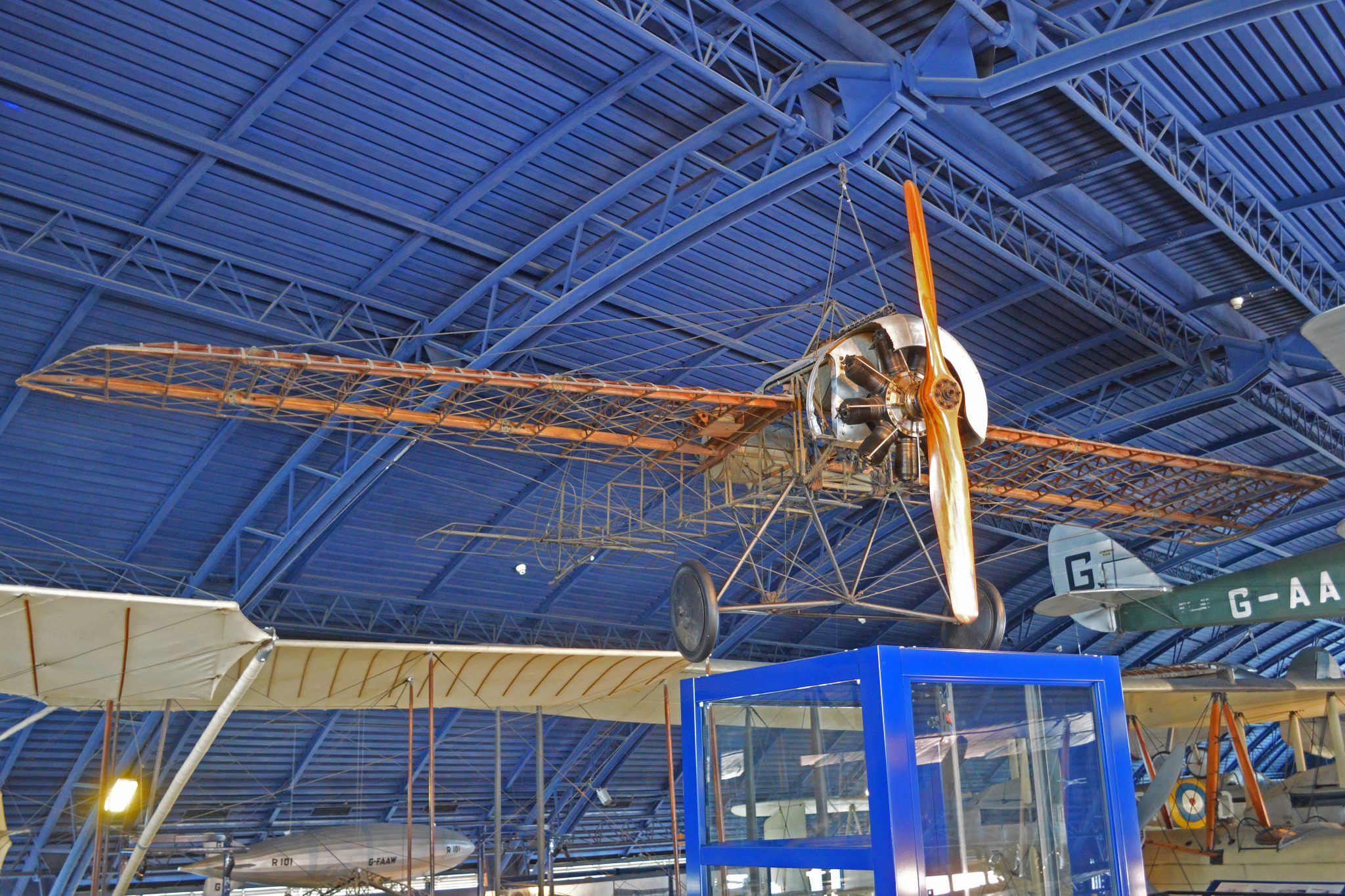
Survivors, and what is actually original: one original Eindecker exists. On 8 April 1916 a novice German pilot flying a new E.III, Idflieg serial 210/16, lost himself in haze on a delivery flight from Valenciennes and landed at a British aerodrome east of St Omer; he was taken before he could burn it. That aircraft was flown against the Morane-Saulnier N and other Allied types, evaluated at Upavon, and is today at the Science Museum in London, displayed with its fabric removed so the steel-tube structure is visible. Immelmann’s own E.13/15 also survived the war and was exhibited in Dresden, where Allied bombing destroyed it during the Second World War. Nothing original flies. Every airworthy Eindecker in the world is a reproduction, most of them built from commercial full-scale or 75 per cent kits and many powered by modern radial or flat engines rather than an Oberursel rotary, since no meaningful supply of running U.I engines exists. Reproductions are displayed and flown in Britain, Germany, the United States and New Zealand, and a reproduction with a period-pattern gear and a genuine Spandau is still a reproduction — which for First World War aircraft is the normal case, not the exception.
The Fokker Eindecker’s brief, decisive career
The idea, before Fokker
Franz Schneider patents a gun-synchroniser in 1913; Raymond Saulnier experiments with one in 1914. The concept of firing through the propeller arc predates the Eindecker by years.
Garros captured
Roland Garros, flying a Morane fitted with crude bullet-deflecting wedges, is forced down behind German lines. His aircraft is captured and studied — sharpening German interest in forward-firing guns.
The Eindecker is armed
Fokker’s team develops a practical pushrod interrupter gear and fits it to the M.5-derived monoplane, creating the E.I — the first purpose-built fighter to combine a fixed forward gun with reliable synchronisation.
First victories
Kurt Wintgens scores an early Eindecker success in July; through the late summer Boelcke and Immelmann begin building their tallies. The “Fokker Scourge” opens over the Western Front.
The Scourge at its height
Small numbers of Eindeckers dominate Allied reconnaissance aircraft. The RFC is forced to fly escorted formations; British crews grimly call themselves “Fokker Fodder”.
The first Pour le Mérite airmen
Max Immelmann and Oswald Boelcke become the first aviators awarded Prussia’s highest order — the “Blue Max” — cementing the Eindecker’s aces as national heroes.
The tide turns
The Nieuport 11 “Bébé” and the Airco DH.2 reach the front. Faster, better-climbing and more manoeuvrable, they end the Eindecker’s monopoly within months.
Eclipse and withdrawal
Immelmann is killed on 18 June 1916. Outclassed and outnumbered, the Eindecker is pulled from front-line service by the end of the year — but every fighter that followed carried its great innovation, the synchronised gun.
The people and legends behind the Fokker Eindecker
Max Immelmann becomes Germany’s first air hero
A former cadet with a reputation for mechanical fussiness became the face of the Fokker Scourge.
Read the full story
Oswald Boelcke writes the rules of air fighting
The Eindecker gave Boelcke the tool; he supplied the thinking that outlived the aircraft.
Read the full story
The “Immelmann turn”: name, myth and reality
The manoeuvre in the aerobatics manual is probably not the one Immelmann actually flew.
Read the full story
Kurt Wintgens and the first synchronised-gun victory
Weeks before Immelmann and Boelcke made headlines, a quieter pilot may have drawn first blood.
Read the full story
Roland Garros and the deflector wedges
Before synchronisation, one Frenchman simply armoured his propeller — and inadvertently helped the enemy.
Read the full story
The RFC’s grim winter of 1915–16
A handful of monoplanes forced a whole air service to change how it flew.
Read the full story
Anthony Fokker and a very useful legend
The most famous story about the synchroniser is the one its beneficiary told about himself.
Read the full story
Blipping, warping and gyroscopic torque
Flying the Eindecker was a workout of switches, cables and physics.
Read the full story
How Max Immelmann died — and the argument that followed
His death on 18 June 1916 became a controversy that touched the Eindecker’s own weak point.
Read the full story
Boelcke’s school and the aces who followed
The Eindecker era ended, but the thinking it fostered produced the war’s great fighter pilots.
Read the full story
The genuine E.III at the Science Museum, London
One of very few real Eindeckers left in the world sits, quietly, in South Kensington.
Read the full story
The Vintage Aviator’s airworthy reproduction
You cannot fly an original — but faithful reproductions have put the Eindecker back in the air.
Read the full story
The Fokker Eindecker in photographs
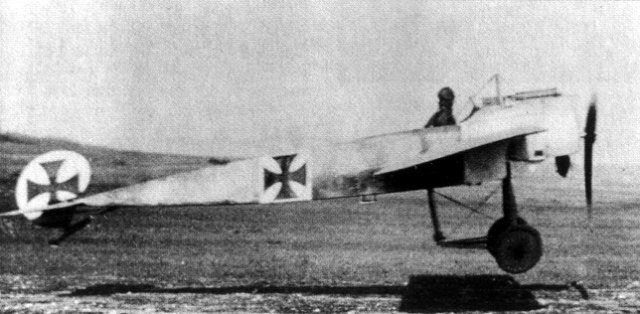
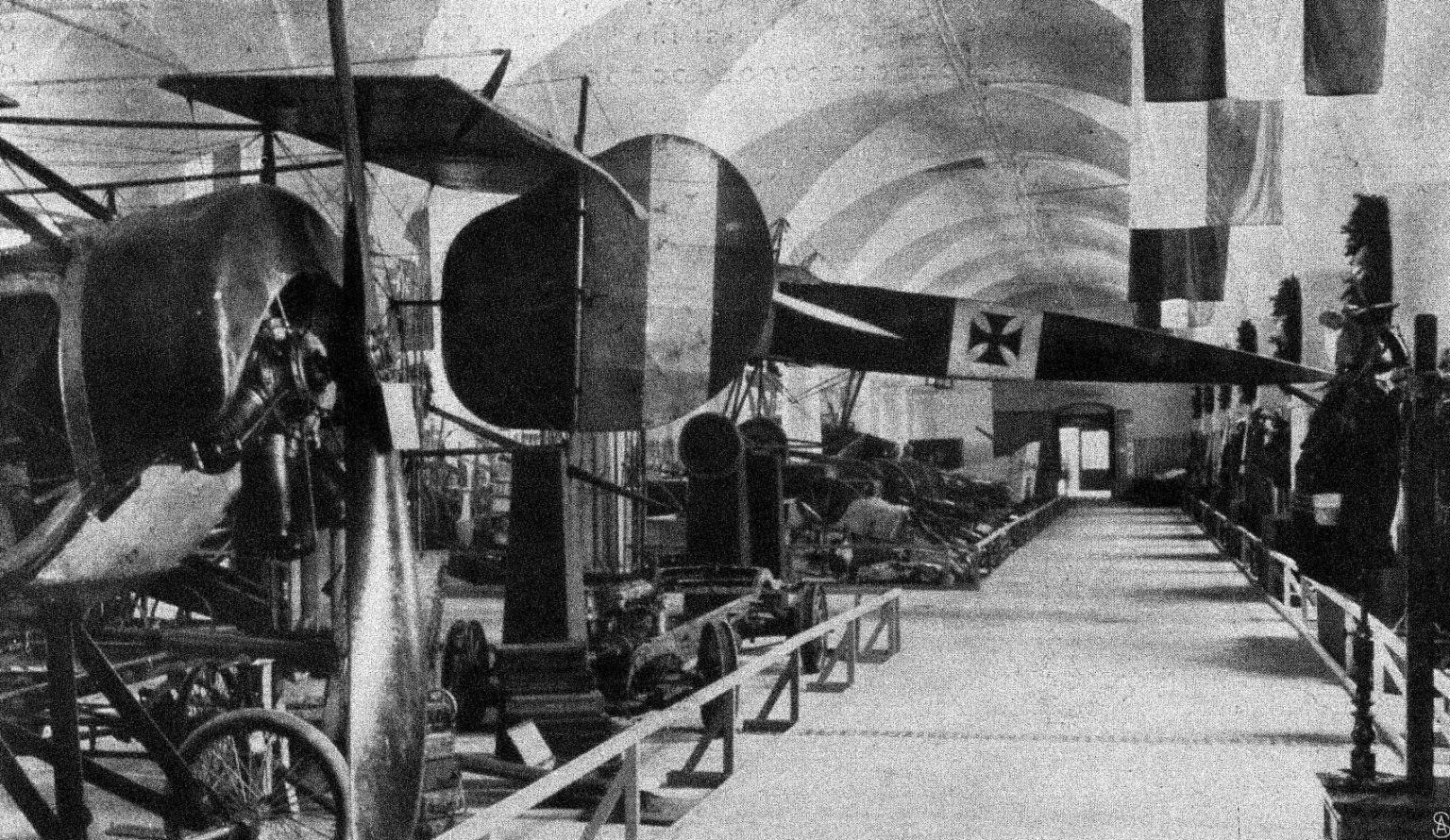
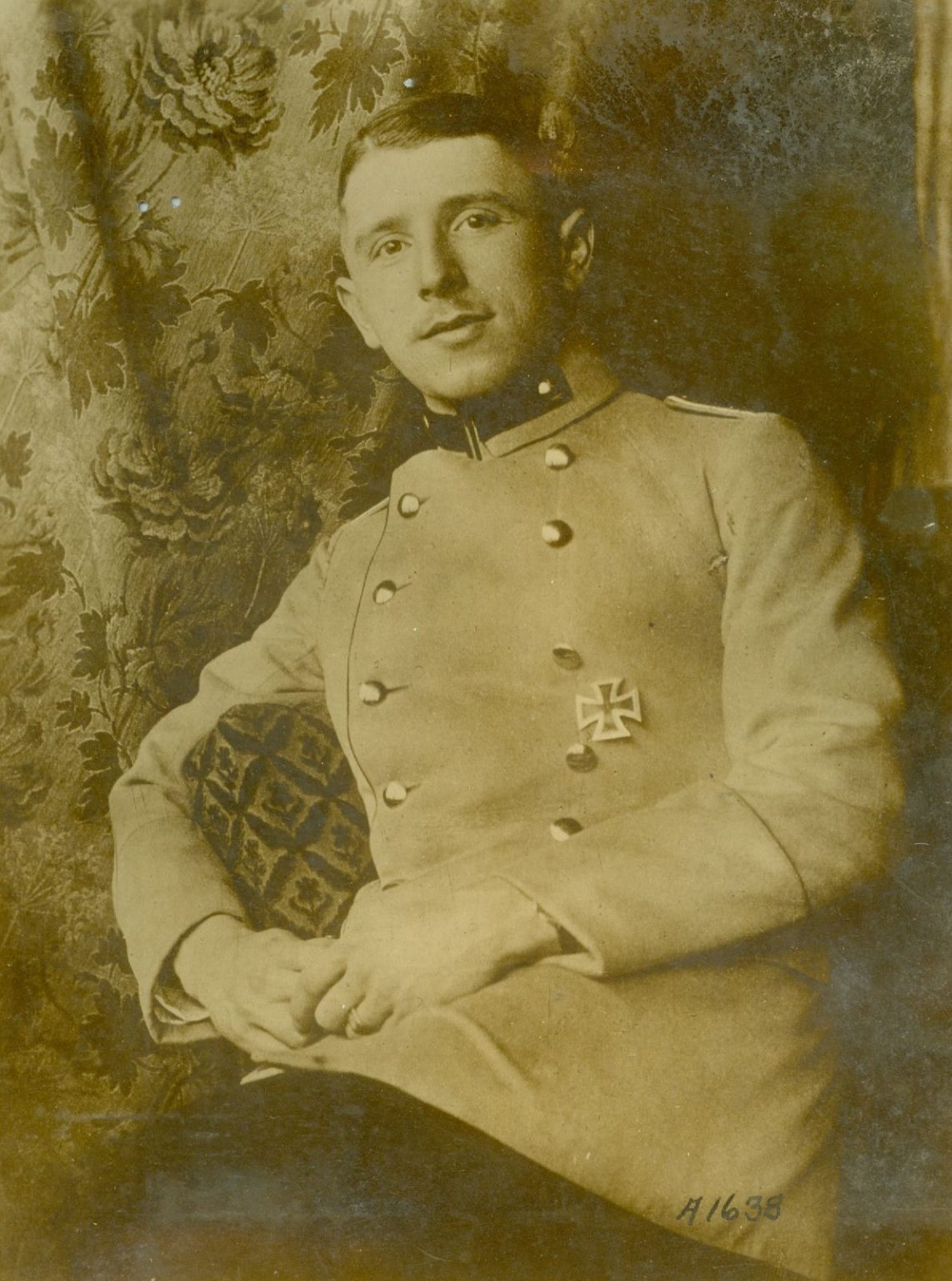
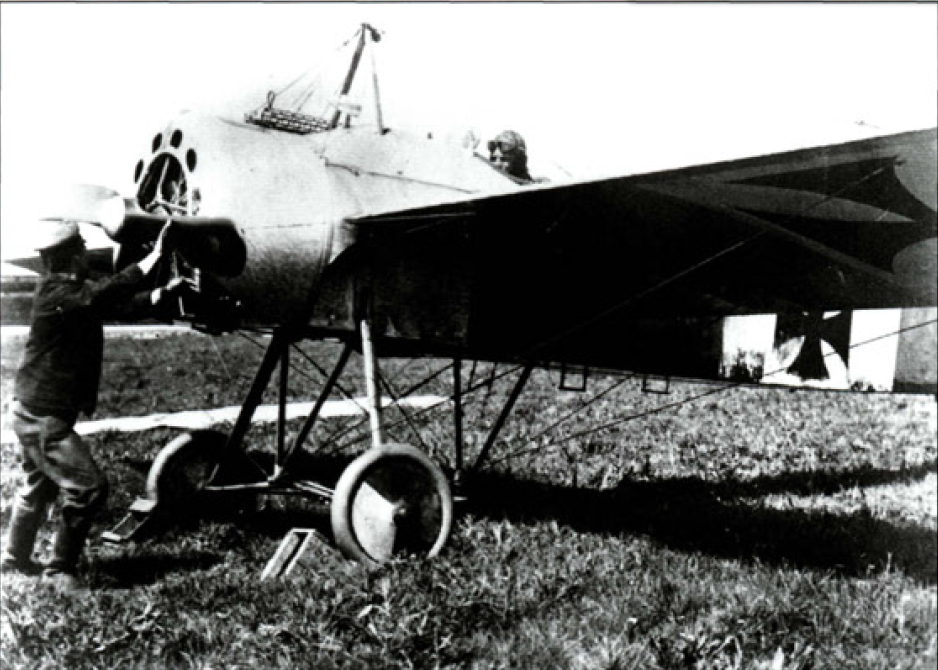
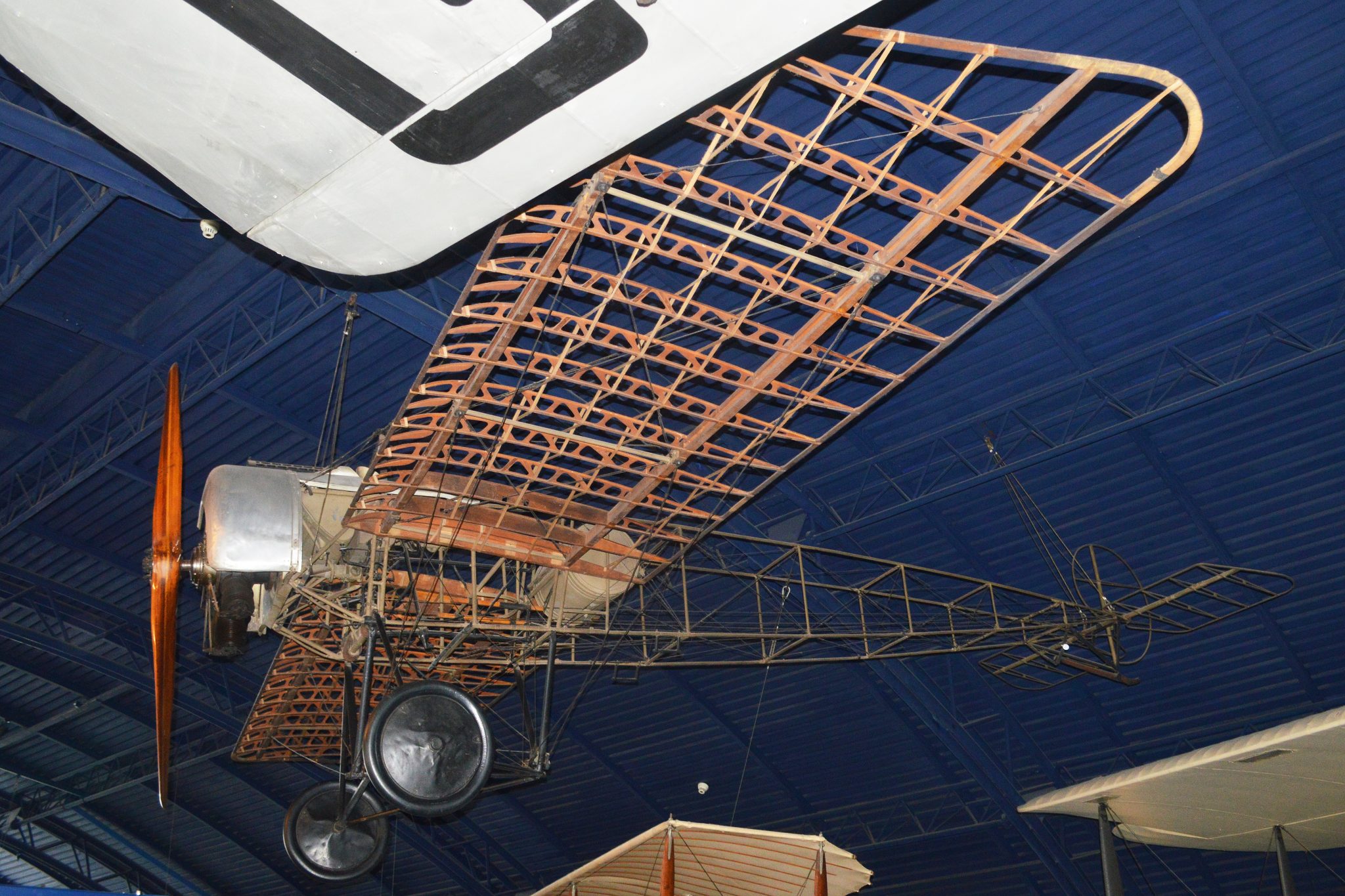
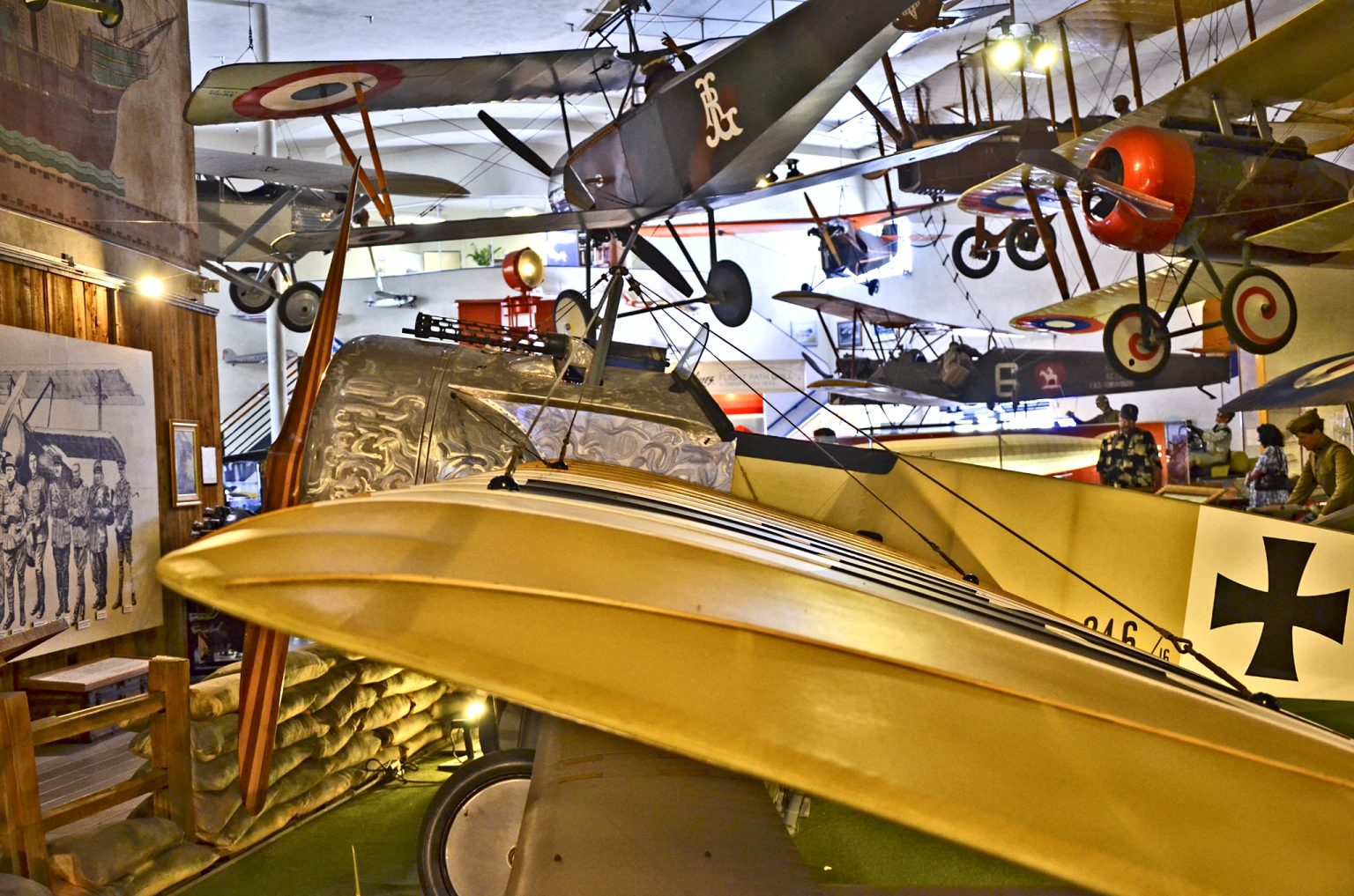
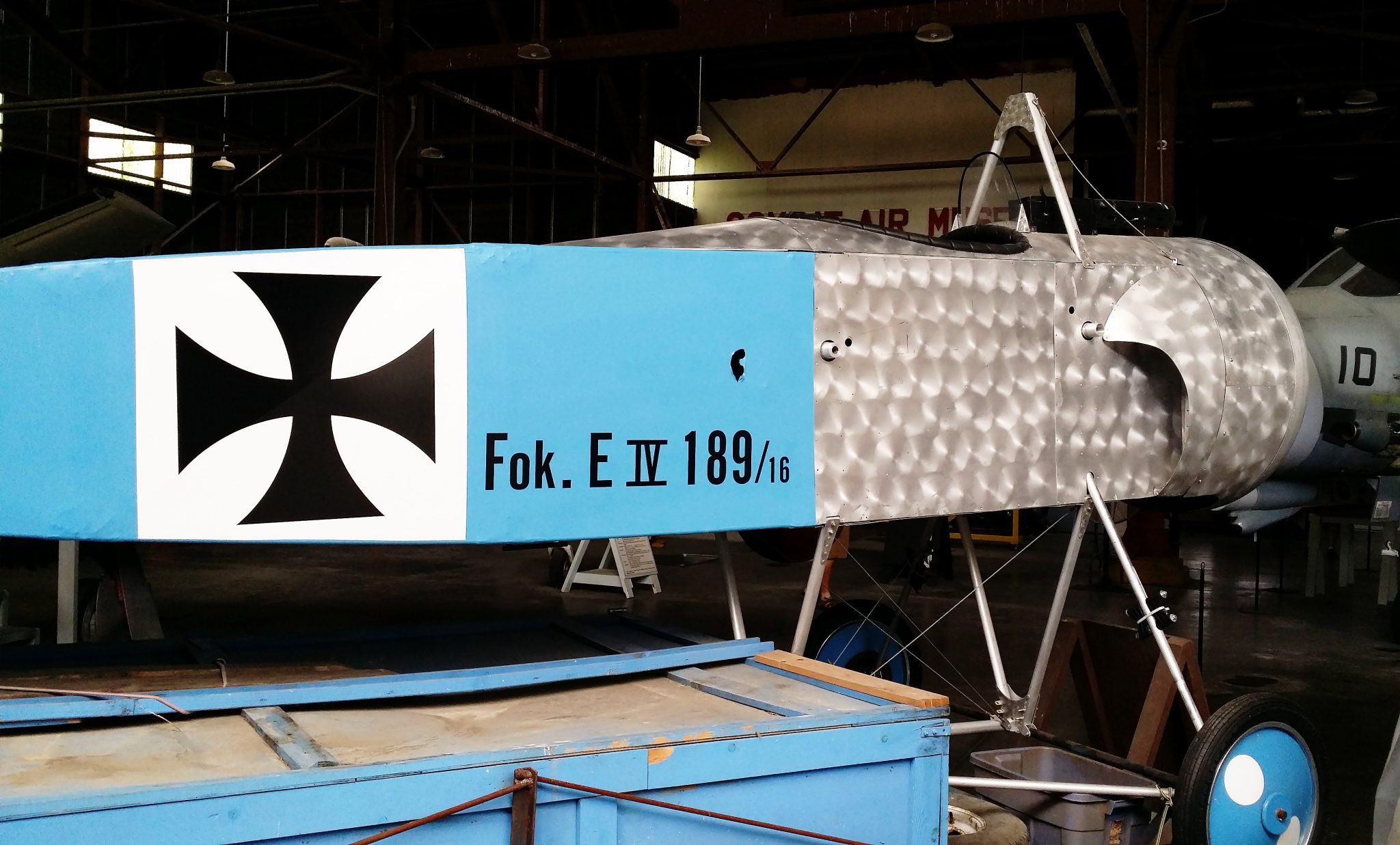
Tap any photograph to enlarge. All images are public domain or Creative Commons via Wikimedia Commons; individual credits are shown on each caption.
The Fokker Eindecker in the air
Real footage of The Vintage Aviator Collection’s airworthy Fokker Eindecker (1915) reproduction and its Oberursel-type rotary engine, filmed by the Historical Aviation Film Unit — a rare look at how the Fokker Scourge fighter actually flew. (Channel: Historical Aviation Film Unit · ~41,900 views · 2024.)
Where the Fokker Eindecker flew, fought and survives
The Eindecker was a German aircraft through and through — designed, built and overwhelmingly flown by Germany, with a handful passing to its Central Powers allies. It had no export career; its worldwide footprint today is measured in the few genuine survivors and the airworthy reproductions that keep it flying. Toggle the categories to see origin, wartime operators, captured examples and where airframes and replicas are found today.
The mark the Fokker Eindecker left on air warfare
Victory tallies and production figures from the First World War are inherently uncertain, and Eindecker numbers in particular are quoted inconsistently across sources. Figures here are given as approximations. The Eindecker’s true significance is not a body count but a principle: it proved the synchronised forward-firing gun, and every fighter that followed was built around that idea.
Fokker Eindecker: your questions answered
Can I fly in a Fokker Eindecker?
What made the Fokker Eindecker so dangerous in 1915–16?
Did Anthony Fokker invent the synchronisation gear?
Was the Fokker Eindecker actually a good aircraft?
What is the “Immelmann turn”, and did Max Immelmann invent it?
How many Fokker Eindeckers were built, and do any survive?
You can’t fly the Nieuport 17.
These, you can.
Some legends only live in museums — others are fuelled and waiting. MiGFlug has put civilians in real military jet cockpits since 2004.
 Fly the L-39 AlbatrosThe world’s most-flown jet trainer — aerobatics included
 Fly the F-104 Starfighter“The missile with a man in it”
 Fly the MiG-21The Cold War’s most-produced jet
 Fly the T-33 Shooting StarAmerica’s first jet trainer
 Fly the DH VampireA piece of early jet history
 Fly the S.211Agile Italian jet trainer
 Fly the MB-326The classic Aermacchi jet
 Fly the MiG-15The Soviet legend of the Korean War
Explore more of the collection
Where this Fokker Eindecker profile comes from
- Science Museum, LondonHome of the genuine surviving Fokker E.III (serial 210/16), captured on the Western Front in 1916.
- Smithsonian National Air and Space MuseumFirst World War aviation, fighter development and the coming of the synchronised gun.
- Imperial War Museums — The Birth of Military AviationThe Fokker Scourge of 1915–16 and the Allied response that ended it.
- Royal Air Force MuseumThe Royal Flying Corps’ ordeal against the Eindecker and the “Fokker Fodder” era.
- San Diego Air & Space Museum — Fokker E.IIIA flyable Fokker E.III reproduction and notes on the type’s history.
- The Museum of Flight — Fokker E.III ReproductionMuseum reference on the Eindecker’s design and combat significance.
- Military Aviation Museum — Fokker E.III EindeckerA flying Eindecker reproduction with historical background on the type.
- The Vintage AviatorOn building and flying accurate airworthy Fokker Eindecker reproductions and their rotary engines.
- J.M. Bruce — standard WWI aircraft referencesBruce’s technical works (e.g. German Aircraft of the First World War) underpin the Eindecker’s specifications and serial figures cited here.