
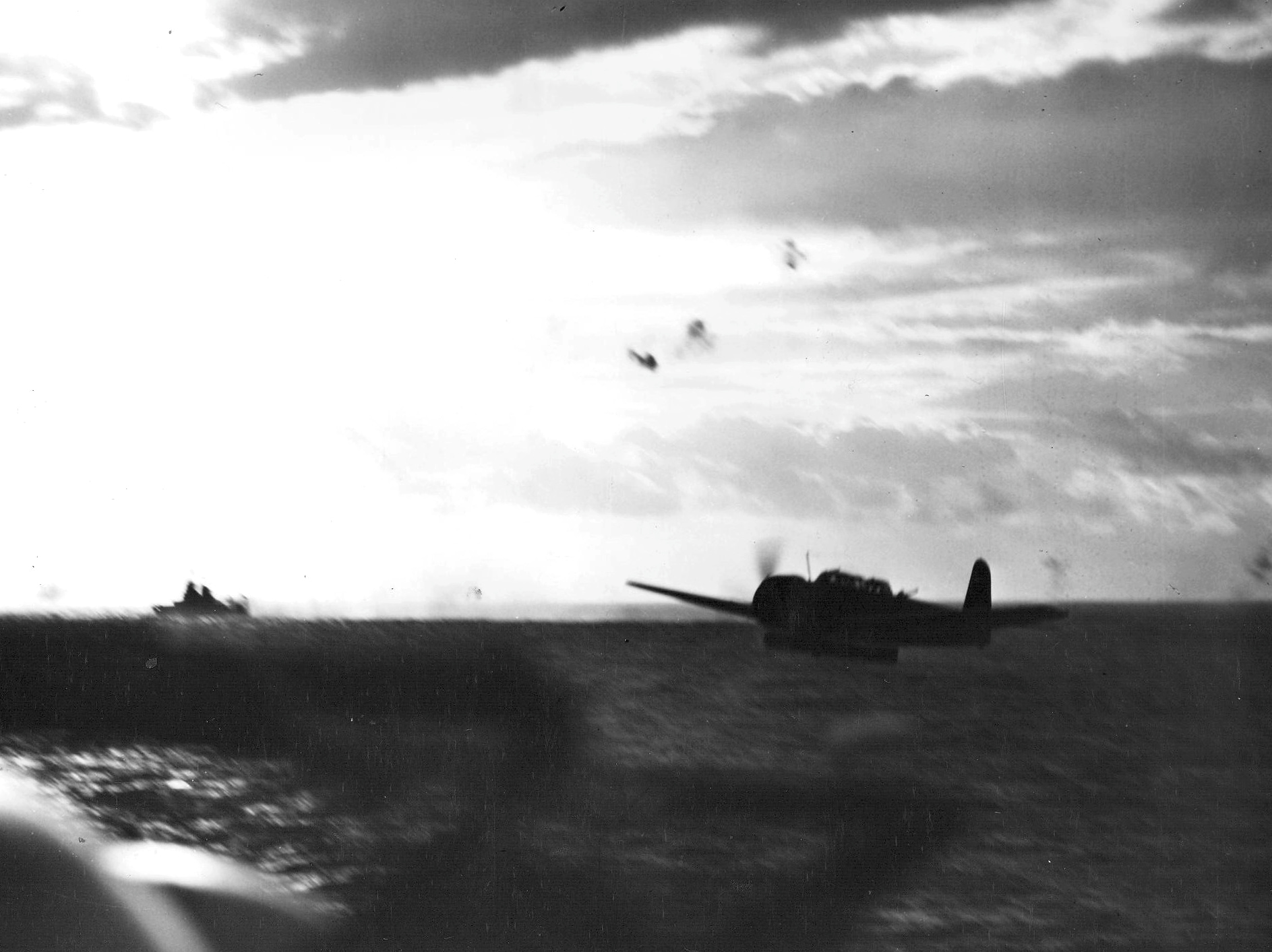
Nakajima B6N Tenzan
“Jill”
Japan’s fastest carrier torpedo bomber — the powerful successor to the B5N Kate that reached the fleet in 1943, just as the crews and carriers it was built for were slipping away.
The Nakajima B6N Tenzan: Japan’s torpedo bomber that arrived too late
By 1939 the Imperial Japanese Navy’s frontline carrier torpedo bomber was the Nakajima B5N “Kate” — the aircraft that would help sink battleships at Pearl Harbor. Even as the Kate went to war, Nakajima was already designing its replacement. The result was the B6N Tenzan (“Heavenly Mountain”): a bigger, heavier, far more powerful machine meant to carry a torpedo faster and further than any carrier attack aircraft Japan had ever flown.
On paper it was a clean evolution — the same three-man crew, the same folding wings for carrier stowage — but built around a giant new radial engine and a redesigned airframe. In the air it became the fastest carrier torpedo bomber Japan ever fielded. Yet it was born into trouble. The engine chosen for it, Nakajima’s own Mamoru, was powerful but unreliable, and development slipped almost two years behind schedule.
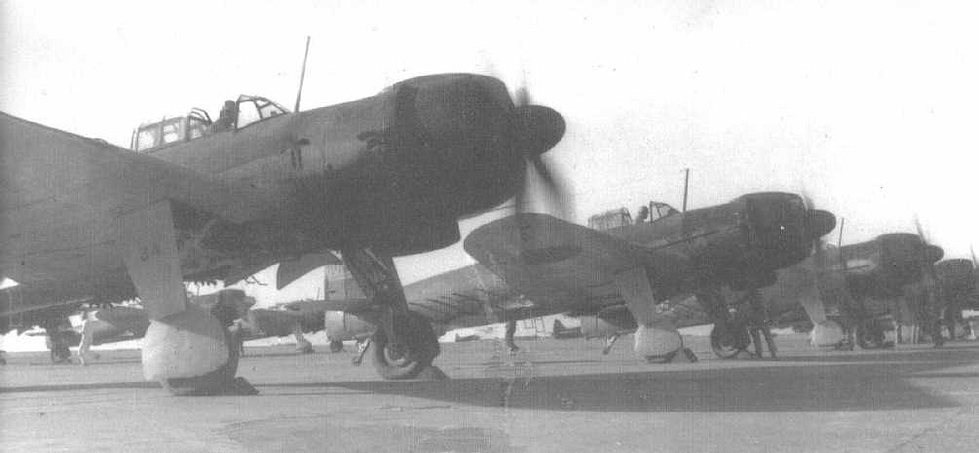
When the Ministry of Munitions ordered Nakajima to abandon the Mamoru and concentrate its factories on other engines, the whole programme had to be re-engined around the Mitsubishi Kasei 25. That produced the definitive B6N2 — but it cost precious time. The engine and its large four-blade propeller generated so much torque that the vertical tail had to be canted slightly to one side just to keep the aircraft flying straight.
By the time the Tenzan finally reached the fleet in 1943, the war had already turned. The superb carrier aircrews that had rampaged across the Pacific in 1941–42 had been gutted at Midway and bled white over the Solomons. The Tenzan was a fine aeroplane flown, increasingly, by half-trained crews against an enemy whose fighters, radar and anti-aircraft fire had all improved dramatically.
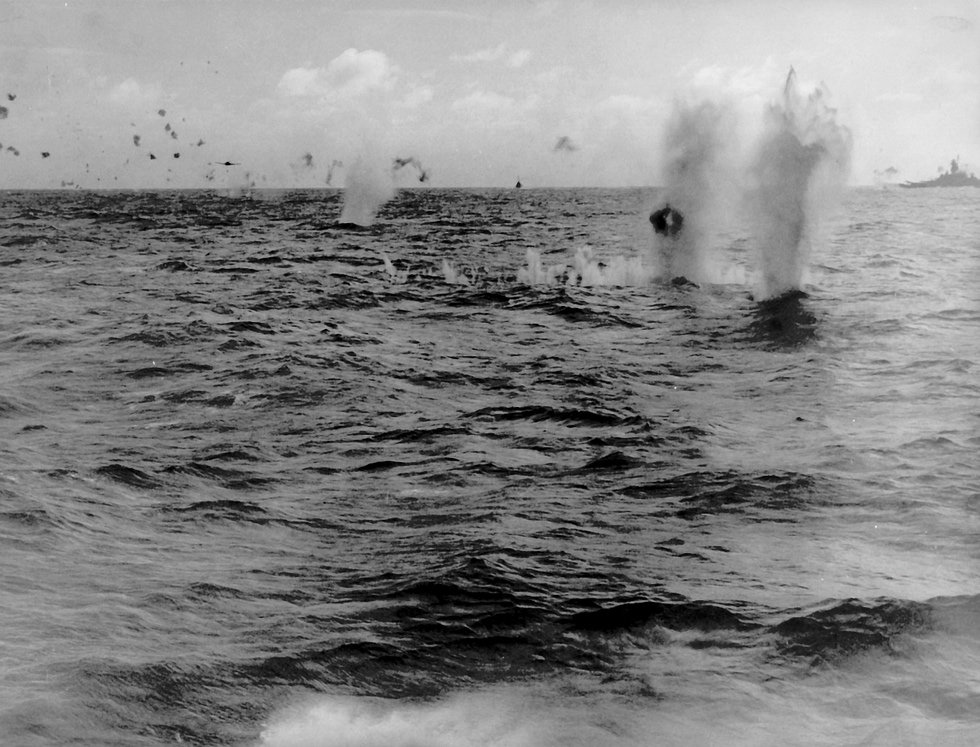
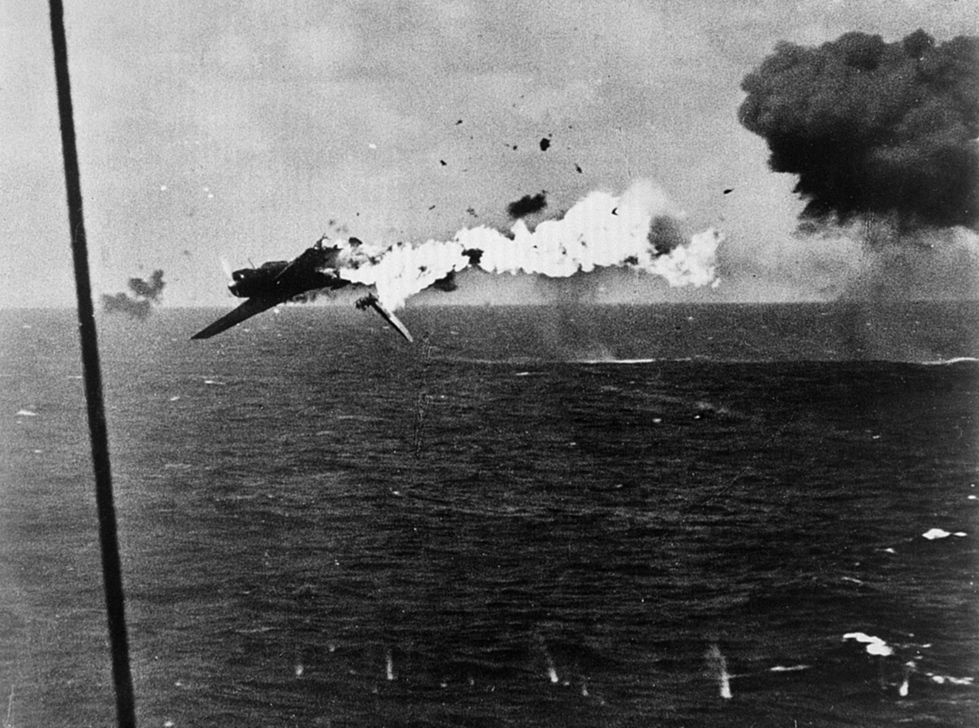
The reckoning came in June 1944 at the Battle of the Philippine Sea — the “Great Marianas Turkey Shoot.” Dozens of Tenzans were launched against the US fleet; most were shot down by Hellcats before they could line up a shot, and not one of their torpedoes struck home. At Leyte Gulf that October the story repeated. Increasingly the type flew from land bases, and in the war’s final months some were expended in kamikaze attacks off Okinawa.
Around 1,268 were built — the exact figure is contested. To the Allies it was simply “Jill.” By most measures it was a good aircraft: fast, long-legged and hard-hitting on paper. Its tragedy was timing — a first-class torpedo bomber delivered to a naval air arm that no longer had the trained crews or the carriers to use it. Today a single B6N2 survives, held by the Smithsonian’s National Air and Space Museum: the last Tenzan in the world.
01The Nakajima B6N Tenzan’s engine crisis: how a troubled radial reshaped the whole aircraft
The Tenzan was designed around Nakajima’s new Mamoru 11, a 14-cylinder radial of about 1,800 hp chosen for its fuel economy and room to grow. But the Mamoru proved troublesome, and Nakajima’s factories were already stretched. When the Ministry of Munitions ordered the company to stop building the Mamoru after only around 130 B6N1s and switch to the Mitsubishi Kasei 25, the airframe had to be adapted to a different engine mid-programme — the change that created the mass-produced B6N2.
The powerful engine brought its own quirk. Torque from the big four-blade propeller pulled the aircraft off-heading so strongly that Nakajima canted the vertical tail a few degrees to port to compensate — a distinctive, slightly lopsided look. Combined with structural fixes forced by carrier landing trials, the engine saga is the main reason a design first flown in early 1941 did not reach the fleet in numbers until 1943.
What makes the B6N Tenzan special
A bigger, faster successor to the Kate
The Tenzan kept the B5N’s three-seat layout and carrier-friendly folding wings but wrapped them around a much larger radial engine and a cleaner, heavier airframe. The payoff was speed and reach: at roughly 482 km/h it was the fastest carrier torpedo bomber Japan ever put to sea, able to carry a full torpedo across long over-water distances.
The engine that forced a redesign
Planned around the unreliable Nakajima Mamoru and then re-engined with the Mitsubishi Kasei 25 of about 1,850 hp, the Tenzan carried the marks of its troubled birth. Engine torque was so strong that the fin was canted to one side, and the delay pushed the aircraft into service two years late.
Built for the torpedo, armed for the fleet
Its reason for being was the Type 91 aerial torpedo — roughly 800 kg slung under the belly — or an equivalent bomb load. A crew of three worked the aircraft: pilot, observer and a radio-operator/gunner defending the tail, with later marks carrying a heavier dorsal gun and, on some aircraft, air-to-surface radar.
02The Nakajima B6N Tenzan’s carrier problem: why it needed Japan’s newest decks
The Tenzan was heavier and faster-landing than the Kate it replaced, and early carrier trials exposed structural and arrestor-hook problems that had to be fixed before it could operate safely. By the time those fixes were made, many of the large fleet carriers it had been designed for had already been sunk at Midway and in the 1942–43 battles. The aircraft increasingly flew from the newer, larger carriers that survived — and, more and more, from land bases — rather than the sea-going striking force it was conceived to equip.
03The Nakajima B6N Tenzan’s defences: three men, a torpedo and a losing fight for the sky
Like most torpedo bombers, the Tenzan was fast for its class but lightly defended — one or two rifle-calibre machine guns, upgraded to a 13 mm dorsal weapon on the B6N2a. Against the disciplined Hellcat combat air patrols and radar-directed anti-aircraft fire of the 1944 US fleet, that was not enough. A torpedo run demanded a long, low, straight approach at the target, exactly the profile that made the aircraft easiest to shoot down. The Tenzan’s combat record is less a story of its own failings than of a good aircraft flown into an impossible tactical situation.
Full B6N Tenzan specifications
Airframe & Performance
- Экипаж
- 3 (pilot, observer, radio-operator/gunner)
- Длина
- ~10.87 m (B6N2)
- Размах крыльев
- ~14.89 m
- Высота
- ~3.80 m
- Max takeoff weight
- ~5,650 kg
- Max speed
- ~482 km/h (299 mph) at ~4,900 m
- Крейсерская скорость
- ~330 km/h
- Диапазон
- ~1,750 km normal · ~3,000 km ferry
- Служебный потолок
- ~9,000 m
- First flight
- 14 March 1941
Propulsion, Armament & Cost
- Engine (B6N2)
- Mitsubishi Kasei 25 (MK4T) 14-cyl radial
- Power
- ~1,850 hp at takeoff
- Engine (B6N1)
- Nakajima Mamoru 11 (~1,800 hp)
- Main weapon
- 1 × Type 91 torpedo (~800 kg) or bombs
- Defensive guns
- 1–2 × 7.7 mm (13 mm dorsal on B6N2a)
- Allied reporting name
- “Jill”
- Built
- ~1,268 (all variants, 1943–45)
- Unit cost
- No reliable public figure (wartime state production)
- Cost per flight hour
- No reliable public figure exists
04The Nakajima B6N Tenzan’s cost: why no reliable price exists
The Tenzan was a wartime product of the Japanese state, built for the Imperial Japanese Navy and never sold on any open market, so a meaningful flyaway unit price simply does not exist in the public record. Period Japanese figures were denominated in wartime yen under a controlled economy and do not convert into a comparable modern dollar cost. There is likewise no credible cost-per-flight-hour figure for the type — the concept was not tracked the way it is for modern aircraft, and no reliable operating-cost accounting survives. Any precise price attached to a B6N should be treated as an estimate, not a sourced fact.
From the Kate’s successor to the war’s last torpedo runs
The requirement
The Navy issues a specification for a faster, longer-ranged carrier attack aircraft to succeed the B5N Kate.
First flight
The prototype flies on 14 March 1941 with the Nakajima Mamoru engine — the start of a long, troubled development.
Enters service
After the switch to the Mitsubishi Kasei engine and carrier-trial fixes, the B6N2 finally reaches the fleet.
Combat debut
Tenzans fly their first strikes over the Solomons and Bougainville against US carrier forces raiding Rabaul.
The Philippine Sea
In the “Marianas Turkey Shoot” most attacking Tenzans are shot down; none of their torpedoes hit.
Leyte & Formosa
Land- and carrier-based Tenzans attack US Task Force 38 at Leyte Gulf and in the Formosa Air Battle, at heavy cost.
Kamikaze
With the fleet gone, surviving Tenzans are thrown into suicide attacks off Okinawa in the war’s final months.
The last survivor
The Smithsonian acquires a B6N2 recovered after the war — today the only complete Tenzan left in the world.
From the hangar deck: twelve B6N Tenzan stories
Built to replace the Kate
The B5N Kate helped sink battleships at Pearl Harbor; the Tenzan was meant to do the same job faster.
Read the full story
Why “Heavenly Mountain”?
Tenzan is named for a mountain range; to the Allies it was just “Jill.”
Read the full story
The engine that changed twice
Designed around the Nakajima Mamoru, the Tenzan had to be re-engined with the Mitsubishi Kasei.
Read the full story
The tail that leans
Engine torque was so strong the vertical fin was canted to one side to fly straight.
Read the full story
Too heavy for the old decks
Structural and arrestor problems meant the Tenzan needed Japan’s newer, larger carriers.
Read the full story
First blood over the Solomons
The Tenzan went to war in November 1943 against US carriers raiding Rabaul.
Read the full story
The Marianas Turkey Shoot
In June 1944 Tenzan squadrons were annihilated before they could line up their torpedoes.
Read the full story
No hits, heavy losses
At Leyte the Tenzan again failed to break through American fighter and radar defences.
Read the full story
Night torpedo runs
Land-based Tenzans attacked Task Force 38 in the Formosa Air Battle of October 1944.
Read the full story
Hunting ships in the dark
Some late Tenzans carried air-to-surface radar for night anti-shipping work.
Read the full story
The last missions
In 1945 surviving Tenzans were expended in suicide attacks off Okinawa.
Read the full story
The last Tenzan on Earth
One B6N2 survives at the Smithsonian — the only complete example left in the world.
Read the full story
The B6N Tenzan in pictures
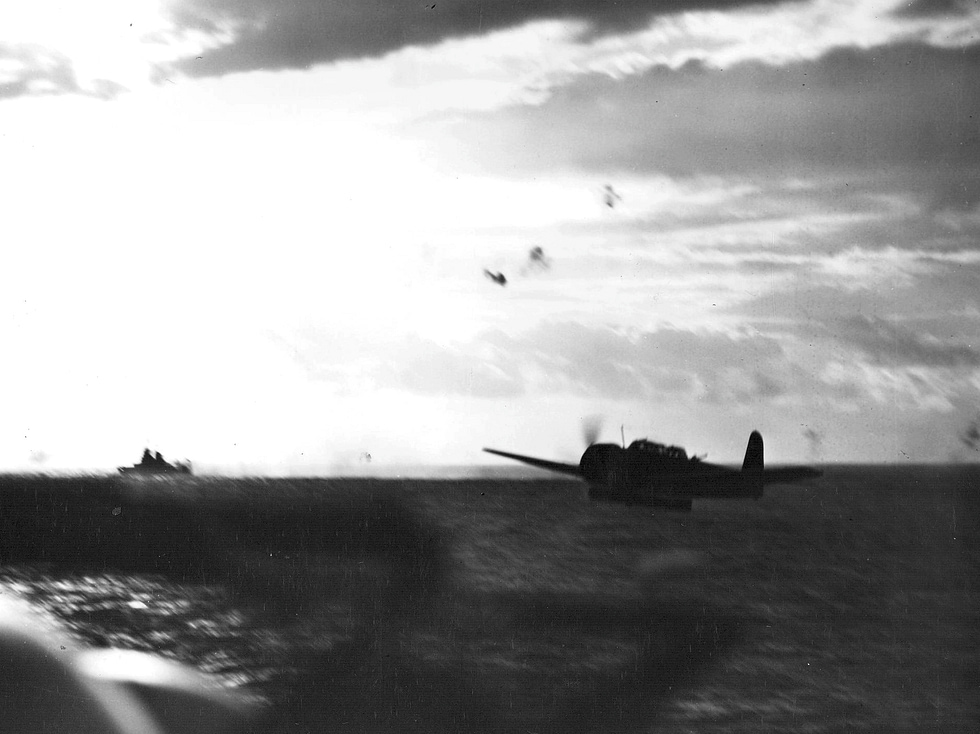
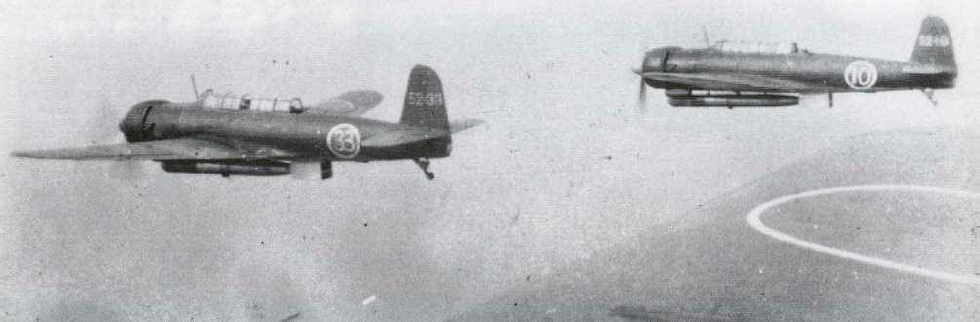
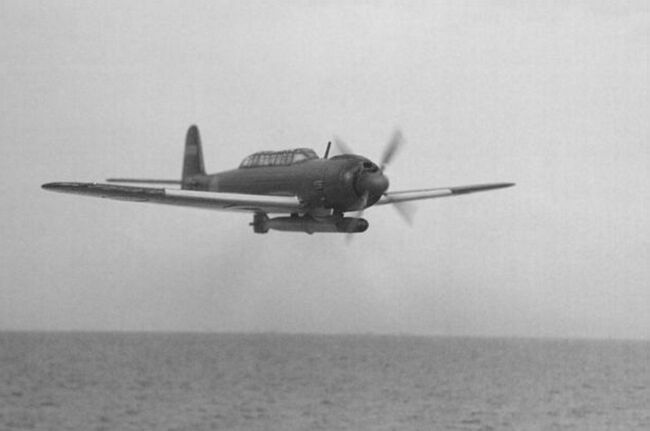
The B6N Tenzan in motion
Rare wartime footage of the Nakajima B6N Tenzan in flight and operating from the deck — one of the few moving-picture records of Japan’s last carrier torpedo bomber. Archival compilation via Aviation Videos Archives.
Where the B6N Tenzan fought
The score that defines the B6N Tenzan
The Tenzan’s combat record is a hard one to read, because its story is less about what it did than about when it arrived. Technically capable and fast for its class, it reached the fleet only after Japan had lost the experienced carrier aircrews and the massed carrier decks it was built to serve. In its two great battles it was cut apart before it could strike.
Compare the combat record of every military aircraft. Figures reflect the most commonly cited accounts and are hedged where sources differ.
Everything people ask about the Nakajima B6N Tenzan
Can I fly in a Nakajima B6N Tenzan?
What does “Tenzan” mean, and why was it called “Jill”?
How fast was the B6N Tenzan?
Why did the B6N need a new engine?
How many B6N Tenzans were built?
Did the B6N Tenzan sink any ships?
Are there any surviving B6N Tenzans?
How was the B6N different from the B5N Kate?
You can’t fly the B6N Tenzan.
These, you can.
Some legends only live in museums — others are fuelled and waiting. MiGFlug has put civilians in real military jet cockpits since 2004.
 Fly the L-39 AlbatrosThe world’s most-flown jet trainer — aerobatics included
 Fly the F-104 Starfighter“The missile with a man in it”
 Fly the MiG-21The Cold War’s most-produced jet
 Управляйте самолетом T-33 Shooting Star.America’s first jet trainer
 Fly the DH VampireA piece of early jet history
 Fly the S.211Agile Italian jet trainer
 Fly the MB-326The classic Aermacchi jet
 Fly the MiG-15The Soviet legend of the Korean War
Continue the tour
Every fact, checked
- Smithsonian National Air and Space Museum — Nakajima B6N2 TenzanThe last surviving Tenzan in the world; museum history and provenance of the airframe.
- HistoryOfWar.org — Nakajima B6N TenzanDevelopment, variants, engine change and production figures.
- Naval Encyclopedia — B6N Tenzan “Jill”Design detail and combat history of the type.
- Military Factory — Nakajima B6N TenzanSpecifications and performance data.
- U.S. Navy / Naval History and Heritage CommandWartime photographs and accounts of the 1944 carrier battles.
- Imperial War MuseumsPacific carrier-war context and the collapse of Japanese naval aviation.
- CombinedFleet.comImperial Japanese Navy operational history and battle narratives.
- Wikimedia Commons — Nakajima B6N (images)Public-domain wartime photographs used in the gallery, with licensing.