
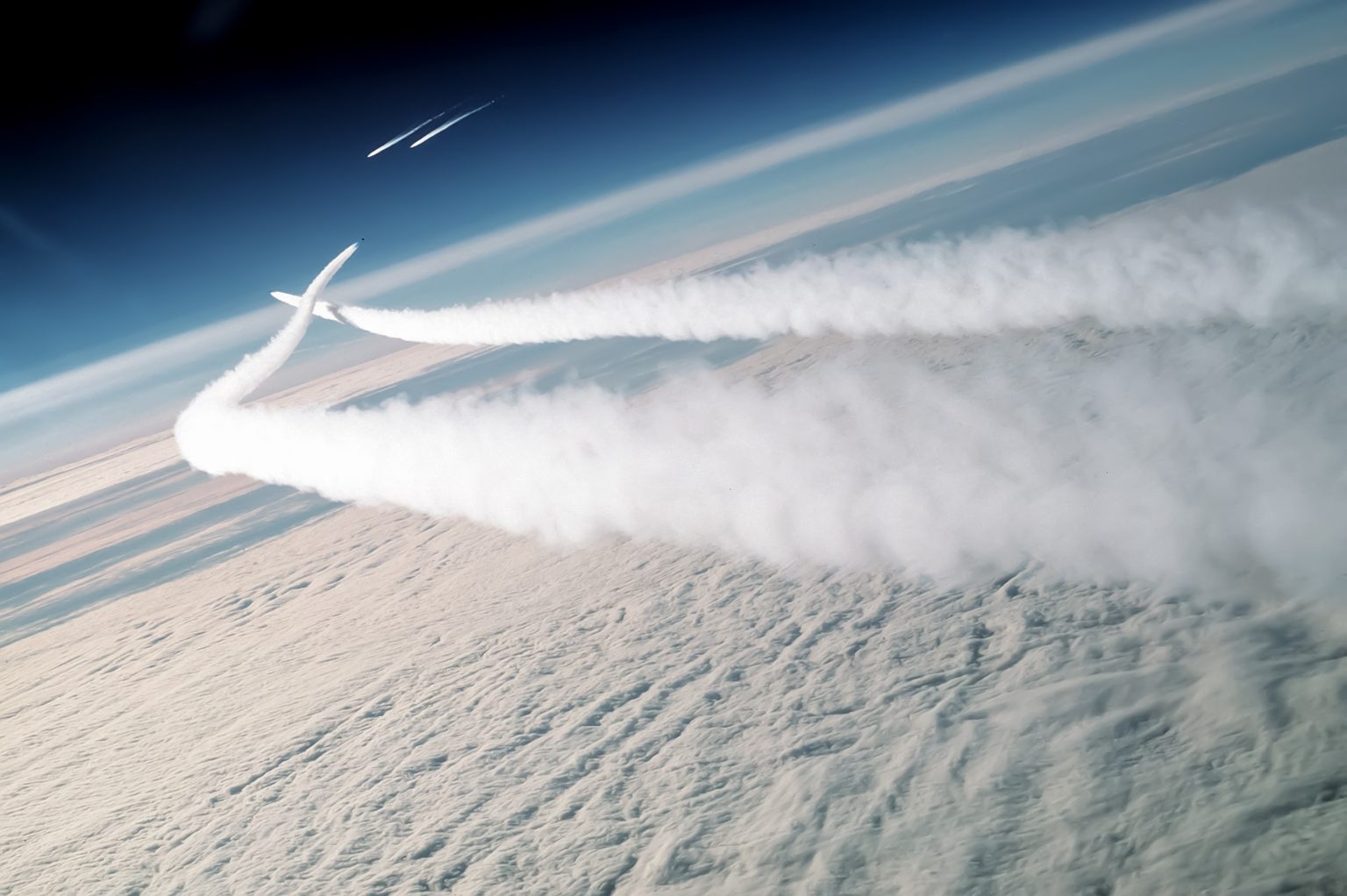
Mikoyan MiG-29
“Fulcrum”
The light Soviet air-superiority fighter that stunned NATO after German reunification — a nimble, twin-engined dogfighter whose helmet-cued R-73 missile could kill from angles Western jets couldn’t answer, and one of the very few fighters MiGFlug can still take a civilian supersonic toward the edge of space.
The light fighter that shocked NATO
The MiG-29 was born from the Soviet PFI requirement of the early 1970s — Moscow’s answer to the American F-15. When the programme split into a heavy and a light half, Sukhoi took the heavy side (which became the Su-27 Flanker) and Mikoyan took the light one: a smaller, cheaper, mass-produced frontline air-superiority fighter. A Council of Ministers decree of 26 June 1974 authorised the work, and the first prototype flew on 6 October 1977 with Alexander Fedotov at the controls. The Fulcrum entered Soviet service in 1982–83; more than 1,600 were eventually built at Moscow and Nizhny Novgorod.
Its reputation was forged in an accident of history. When Germany reunified in 1990, the Luftwaffe inherited 24 East German MiG-29s and flew them in mock combat against NATO’s best. The results stunned Western pilots: in the merge, the Fulcrum’s R-73 (AA-11 Archer) missile — cued by the pilot’s helmet-mounted sight — could lock and fire at targets far off the nose, well beyond where an F-16 or F/A-18 could point. Combined with a blistering turn rate and cobra-like high-alpha theatrics, the MiG-29 forced NATO to accelerate its own helmet-cueing and high-off-boresight missile programmes. Beyond visual range, though, Western radar and AMRAAM still held the edge.
The Fulcrum is still very much alive in 2026. It remains a frontline type for Russia, India and many other air forces; the navalised MiG-29K flies from Indian and Russian carriers, and the 4++ generation MiG-35 keeps the bloodline current. And uniquely among modern fighters, it is one that a civilian can actually fly — MiGFlug has taken passengers up in a real MiG-29, supersonic and toward the edge of space.
01The MiG-29’s origins: how the Soviet PFI split created both the Fulcrum and the Flanker
The early-1970s PFI (Perspektivny Frontovoi Istrebitel, “advanced frontline fighter”) requirement was the Soviet reply to the U.S. F-X programme that produced the F-15. It proved too much for one airframe, so it was divided: the heavy TPFI went to Sukhoi and became the long-ranged Su-27 Flanker, while the light LPFI went to Mikoyan and became the MiG-29. The two aircraft are stablemates — visually similar, born of the same doctrine — but built for different jobs. The Su-27 is the big, long-legged heavy fighter; the MiG-29 is the compact, short-range frontline fighter meant to be built in numbers and operated from austere forward airfields.
What makes the MiG-29 special
R-73 missile & helmet sight
The Fulcrum’s single most influential feature. The Vympel R-73 (AA-11 Archer) short-range infrared missile, cued by the pilot’s Shchel helmet-mounted sight, gave the MiG-29 a high-off-boresight first-shot capability — the pilot could point his head, not the whole jet, and launch. Western fighters could not match it for years, and it forced a generation of NATO upgrades to catch up in the visual-range fight.
Blended lift-body aerodynamics
The MiG-29’s wing-body blending and large leading-edge root extensions (LERX) make the fuselage itself generate a large share of total lift — cited as high as ~40%. The result is outstanding sustained and instantaneous turn performance and controlled flight at very high angles of attack, the basis of both its dogfight agility and its famous cobra-like airshow passes.
Rugged twin RD-33 engines
Two Klimov RD-33 afterburning turbofans give a high thrust-to-weight ratio and a ferocious climb. Crucially, the main intakes can be sealed by protective doors on the ground and take-off, with air drawn instead through auxiliary louvers on the wing roots — a FOD defence that lets the Fulcrum operate from rough, debris-strewn frontline strips.
02The MiG-29’s R-73 and helmet sight: the edge that rewrote Western dogfight doctrine
Before the Fulcrum, a fighter pilot had to point his aircraft’s nose more or less at the enemy to get a missile lock. The R-73 and Shchel helmet sight broke that rule: the seeker could be slaved to where the pilot was looking, letting a MiG-29 lock and launch at a target well off the boresight line. In the close-in merge that was decisive — a glance was enough to shoot. When reunified Germany flew its inherited MiG-29s against NATO, Western pilots discovered they could be killed from angles their own jets simply could not answer. The scramble to field equivalent helmet-cueing and high-off-boresight missiles (the AIM-9X, the ASRAAM and their sighting systems) was a direct response. It remains arguably the most influential single capability the MiG-29 introduced.
03The MiG-29’s rough-field intakes: closing the doors to eat gravel
Soviet doctrine assumed that airfields would be cratered and frontline jets would operate from rough, debris-strewn strips. The MiG-29 was engineered for exactly that. On the ground and during take-off, blank-off doors can seal the main engine intakes to keep stones and debris out of the compressors, while the engines breathe through auxiliary louvers on top of the wing-root extensions. Once safely airborne the main intakes open and the louvers close. It is a heavier, more complex solution than a Western fighter’s clean intake — but it let the Fulcrum taxi and launch from surfaces where cleaner-throated jets risked swallowing FOD and destroying an engine.
Full MiG-29 specifications
MiG-29 — dimensions & weights
- Crew
- 1 (2 in the MiG-29UB trainer)
- Length
- 17.37 m (57 ft 0 in) including nose probe
- Wingspan
- 11.36 m (37 ft 3 in)
- Height
- 4.73 m (15 ft 6 in)
- Wing area
- 38.06 m² (409.7 ft²) gross, blended wing/body reference area
- Empty weight
- 11,000 kg (24,250 lb) baseline 9.12; Soviet-published and Western-estimated empty weights differ by a few hundred kilograms and later marks are heavier
- Normal takeoff weight
- 15,300 kg (33,730 lb) clean, air-to-air load
- Max takeoff weight
- 18,000 kg (39,680 lb) for the 9.12; the 9.13, SMT and M/K marks are cleared substantially higher
- Internal fuel
- ~3,500 kg (~7,720 lb / ~4,365 litres) in the 9.12; the “fatback” 9.13 spine and the enlarged SMT spine add more, and published capacities vary by mark and by whether unusable fuel is counted
MiG-29 — performance
- Max speed (altitude)
- 2,400 km/h (1,490 mph / Mach 2.25) at high altitude, clean
- Max speed (sea level)
- 1,500 km/h (930 mph / Mach 1.22) at sea level
- Cruise speed
- 850 km/h (530 mph / Mach 0.69) typical subsonic cruise; the Fulcrum has no supercruise capability
- Rate of climb
- 330 m/s (65,000 ft/min) initial, clean at low weight — among the highest figures ever published for a production fighter
- Service ceiling
- 18,000 m (59,100 ft)
- Combat radius
- ~700 km (~435 mi / ~380 nmi) on internal fuel, air-to-air profile; strongly profile-dependent and Soviet-published radii sit above most Western estimates
- Ferry range
- ~2,100 km (~1,300 mi / ~1,130 nmi) with a centreline tank; roughly 1,400–1,500 km on internal fuel alone. Short legs are the type’s best-known operational weakness
- Takeoff run
- 260 m (850 ft) at normal takeoff weight
- Landing run
- 600 m (1,970 ft) with brake chute
- Load factor
- +9 g (some early airframes and configurations were restricted lower in service)
MiG-29 — propulsion & systems
- Engines
- 2 × Klimov RD-33 afterburning turbofans (RD-33MK on the M/K/MiG-35 line)
- Thrust each
- 49.4 kN dry / 81.4 kN with afterburner (11,110 lbf dry / 18,300 lbf reheat); the smoky exhaust of the early RD-33 became a Fulcrum trademark and a tactical liability
- Cannon
- 1 × GSh-30-1 30 mm (150 rounds, buried in the port wing root extension, slaved to the laser ranger of the KOLS sensor)
- Hardpoints & max ordnance
- 6 pylons, ~3,500 kg (~7,720 lb); later marks carry seven to nine stations and heavier loads. Published maxima differ by mark and by whether the centreline tank station is counted
- Radar
- N019 Rubin (NATO: Slot Back) on the 9.12, N019M on the 9.13/S; N010 Zhuk-M / Zhuk-ME on the SMT, M/M2 and K/KUB. Soviet-quoted detection ranges against fighter-sized targets run well above the figures Western evaluators assessed after 1990 — treat any single number with caution
- Helmet sight & IRST
- Shchel-3UM helmet-mounted sight + KOLS IRST infrared search-and-track with laser rangefinder. Cueing the high-off-boresight R-73 by helmet gave the Fulcrum a close-in advantage that genuinely surprised NATO pilots flying against ex-East German MiG-29s after reunification, and it drove Western HMS and AIM-9X programmes
- Ejection seat
- Zvezda K-36DM zero-zero class seat, with an exceptional real-world save record — including the public escapes at Paris 1989 and Fairford 1993
- First flight
- 6 October 1977 (prototype 9-01, flown by Aleksandr Fedotov)
- Service entry
- 1983 (first Soviet Air Forces regiments; NATO identified the type as Fulcrum)
- Built
- ~1,600 all marks combined. Russian tallies cluster around this figure; Western counts differ depending on how UB trainers, export marks and later new-build M/K airframes are attributed
- Unit cost
- ~US$22–29 million flyaway, wide spread by mark, year and package; recent MiG-29M/M2 and K/KUB contracts imply higher per-aircraft prices once weapons and support are included
- Cost per flight hour
- ~US$8,000–12,000 per flight hour — an open estimate only. No authoritative operating cost is published for the type; the figure varies sharply with mark, engine life, operator and support arrangement, and Russian-operated costs are not disclosed at all
04The MiG-29’s operating costs: what a Fulcrum costs to buy and fly
Firm figures for the MiG-29 are slippery, because it was a Soviet state product and export prices varied enormously by variant, era and buyer. A rough baseline MiG-29 was quoted in the low tens of millions of dollars in the 1990s (~$11 M), while the modern navalised MiG-29K and its derivatives have been cited nearer $29 M — treat both as era- and variant-dependent estimates. Cost-per-flight-hour is even less official: around $12,000 is a MiGFlug/unofficial working figure, not a published military number. What is certain is the design intent: the Fulcrum was meant to be cheaper and simpler than the heavy Su-27, buildable in the hundreds and affordable for frontline air forces across the Warsaw Pact and the wider Soviet export world.
MiG-29 armament and payload
The MiG-29 was built first and foremost to kill other aircraft at close and medium range under ground control. Its air-to-air fit — the R-73 cued by a helmet-mounted sight, backed by the R-27 family — was formidable from the start; its air-to-ground capability was rudimentary until the SMT, M and K upgrades of the 1990s and 2000s brought guided weapons, a modern radar and a usable cockpit.
Gun
- 1 × GSh-30-1 (9A-4071K) 30 mm single-barrel cannon, 150 rounds
- Cyclic rate around 1,500 rounds per minute; short, heavy bursts rather than sustained fire
- Mounted in the port leading-edge root extension, ranged by the KOLS laser rangefinder and cued through the helmet sight
- Gun gas and debris ingestion drove service restrictions on some early airframes
Air-to-air
- R-73 (AA-11 Archer) high-off-boresight infrared missile — the Fulcrum’s signature weapon, cued by the Shchel-3UM helmet sight
- R-27R and R-27T (AA-10 Alamo-A/B), semi-active radar and infrared, medium range
- R-27ER and R-27ET (AA-10 Alamo-C/D) extended-range rounds on the 9.13/MiG-29S and later
- R-60 and R-60M (AA-8 Aphid) short-range infrared missiles on early airframes
- RVV-AE / R-77 (AA-12 Adder) active-radar missile on the MiG-29S, SMT, M/M2, K/KUB and MiG-35 — not available on the baseline 9.12
Air-to-surface
- Baseline 9.12 Fulcrum-A: essentially no guided air-to-ground capability — unguided stores only, delivered on a simple sight
- Kh-29T / Kh-29L (AS-14 Kedge) television- and laser-guided missiles on upgraded marks
- Kh-31A anti-ship and Kh-31P anti-radiation missiles (AS-17 Krypton) on the M/K and MiG-35 line
- Kh-35 / Kh-35U (AS-20 Kayak) anti-ship missile on naval and later multirole marks
- KAB-500Kr and KAB-500L guided bombs where the aircraft has the sensors and stores management to use them
Bombs
- FAB-250 and FAB-500 general-purpose iron bombs, the mainstay of Fulcrum air-to-ground work
- RBK-250 and RBK-500 cluster bombs
- ZAB incendiary bombs and practice stores
- KMGU-2 submunition and mine dispensers
- Some 9.13 airframes were reported wired for a tactical nuclear store; the details have never been authoritatively confirmed in open sources
Rockets & pods
- S-5 57 mm rockets in UB-16 and UB-32 pods
- S-8 80 mm rockets in B-8M1 twenty-round pods — the most commonly carried type
- S-24B 240 mm heavy unguided rockets, single-rail
- Reconnaissance, jamming and targeting pods on specific upgrade standards only; the baseline aircraft carried almost none
Other stores
- Centreline drop tank (1,500 litres on later marks) plus underwing tanks on the 9.13 and after
- BVP-30-26M chaff and flare dispensers, carried in the dorsal spine of the “fatback” marks
- Gardeniya-series internal or podded jamming equipment, fit varying widely by mark and customer
- Air-to-air refuelling probe on the MiG-29SMT, M/M2, K/KUB, MiG-29UPG and MiG-35 — absent from the original 9.12
MiG-29 representative loadouts
- Point-defence intercept (9.12)
- 2 × R-27R plus 4 × R-73, gun with 150 rounds, no external tank — the short-legged, ground-controlled intercept mission the type was designed around
- Escort / extended CAP (9.13 / MiG-29S)
- 2 × R-27ER or R-27ET plus 4 × R-73, centreline tank, gun — trading a station for the reach the baseline aircraft lacked
- Upgraded multirole (SMT / M / K)
- 2 × RVV-AE and 2 × R-73 for self-escort, plus guided air-to-surface stores such as Kh-29T or KAB-500Kr, or four FAB-500, worked through the Zhuk-family radar and a glass cockpit
Weapon clearances vary enormously between marks and customers: a 1980s Soviet 9.12, a downgraded export 9.12B, an Indian MiG-29UPG and an Egyptian MiG-29M carry substantially different stores through substantially different systems. Treat every list above as mark-dependent rather than universal, and note that several capabilities credited to “the MiG-29” in general reference works belong only to later upgrade standards.
MiG-29 variants and family
- MiG-29 (9.12, Fulcrum-A)
- The baseline single-seat fighter with N019 radar, six pylons, KOLS infrared search-and-track and no refuelling probe; export 9.12A and 9.12B aircraft had downgraded systems.
- MiG-29UB (9.51, Fulcrum-B)
- Two-seat conversion trainer with a second cockpit in place of the radar, retaining the infrared sensor and limited combat capability.
- MiG-29S (9.13, Fulcrum-C)
- The “fatback” mark: enlarged dorsal spine carrying extra fuel and countermeasures, improved N019M radar, higher takeoff weight and clearance for R-77 and extended-range R-27 rounds.
- MiG-29SMT
- Deeper multirole rebuild with a much enlarged spine, glass cockpit, Zhuk-ME radar, refuelling probe and guided air-to-ground weapons; a batch returned from Algeria in 2008 ended up in Russian service.
- MiG-29K / KUB
- Navalised single- and two-seat carrier fighters with folding wings, arrestor hook, strengthened landing gear and corrosion protection, in Indian Navy and Russian Navy service.
- MiG-29M / M2
- Extensively redesigned airframe with fly-by-wire controls, more internal fuel and full multirole systems; Egypt is the principal operator of the current-production version.
- MiG-35
- The further development of the MiG-29M/M2 line rather than a variant of the original aircraft — new sensors, AESA-class radar offering and a heavy marketing push, but only small numbers built to date.
- Export and upgrade marks
- MiG-29AS/UBS (Slovak, NATO-compatible avionics, retired in 2022 and passed to Ukraine); ex-East German MiG-29G/GT flown by the Luftwaffe from 1990 and later sold to Poland for a nominal sum; Polish MiG-29A/UB; Indian MiG-29UPG; Ukrainian MU1/MU2; and the SD, SE and SM export standards.
Five decades of the Fulcrum
The programme is launched
A Council of Ministers decree of 26 June 1974 authorises the light LPFI fighter — the Mikoyan half of the PFI split that also produced the Su-27.
First flight
The prototype (Product 9.11) makes its maiden flight on 6 October 1977 with test pilot Alexander Fedotov at the controls.
Enters Soviet service
The MiG-29 joins the Soviet Air Force as a frontline air-superiority fighter; the first operational squadrons form.
Revealed to the West
The Fulcrum is shown at Kuopio-Rissala, Finland in 1986 and makes its Farnborough debut in 1988, dazzling crowds with high-alpha displays.
The naval MiG-29K flies
The carrier-borne MiG-29K prototype makes its first flight on 23 July 1988, piloted by Toktar Aubakirov from Saky.
The NATO shock
Reunified Germany inherits ~24 East German MiG-29s and flies them against NATO fighters — the R-73 and helmet sight stun Western pilots.
Gulf War combat debut
Iraqi MiG-29s meet the coalition in 1991 and fare poorly, several downed by USAF F-15s in the opening days. (Claims contested.)
Fulcrum vs Flanker
In the Ethiopia–Eritrea war, Su-27s and MiG-29s fight the only air duels in history between the two types; NATO also downs Yugoslav MiG-29s over Serbia.
Carriers and the MiG-35
The MiG-29K enters Indian (2010) and Russian naval service; the 4++ generation MiG-35 is developed from the MiG-29M/K line.
War in Ukraine
Ukrainian MiG-29s — bolstered by ex-Slovak and ex-Polish jets — are adapted to fire Western weapons such as the AGM-88 HARM; Russia flies MiG-29/MiG-35. War-era claims stay contested.
From the flight line: twelve Fulcrum stories
The jet that rewrote Western dogfight doctrine
Reunified Germany’s MiG-29s humbled NATO in mock fights.
Read the full story
Look, lock, kill
A glance was enough to launch.
Read the full story
Two Soviet legends meet over Africa
The only time these jets ever fought each other.
Read the full story
Closing the doors to eat gravel
Built for battered frontline strips.
Read the full story
High-alpha theatre
Tailslides and cobra-like passes made the MiG-29 a display legend.
Read the full story
Outmatched on day one
The Fulcrum’s combat debut was harsh.
Read the full story
The naval rebirth
Nearly forgotten, then reborn on carriers.
Read the full story
A Fulcrum on every continent
Few fighters spread as far.
Read the full story
Grounded before the fight
Over Serbia in 1999, NATO’s AMRAAM found the Fulcrum.
Read the full story
The family’s latest face
The bloodline didn’t stop.
Read the full story
Old jet, new tricks
Since 2022, Soviet airframes firing Western weapons.
Read the full story
Civilian to the edge of space
You didn’t need wings on your uniform.
Read the full story
The Fulcrum in pictures
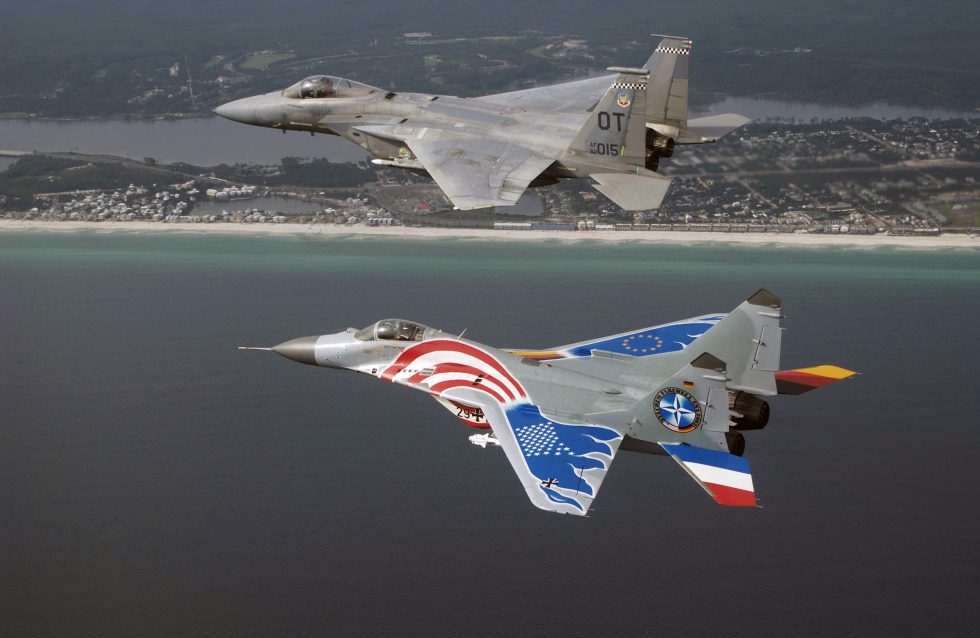
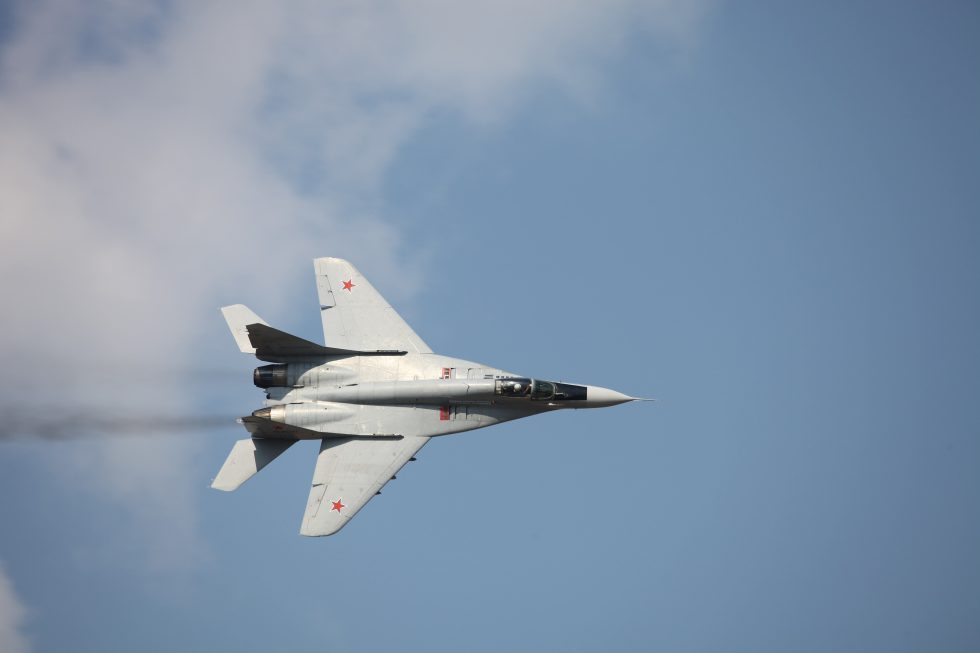
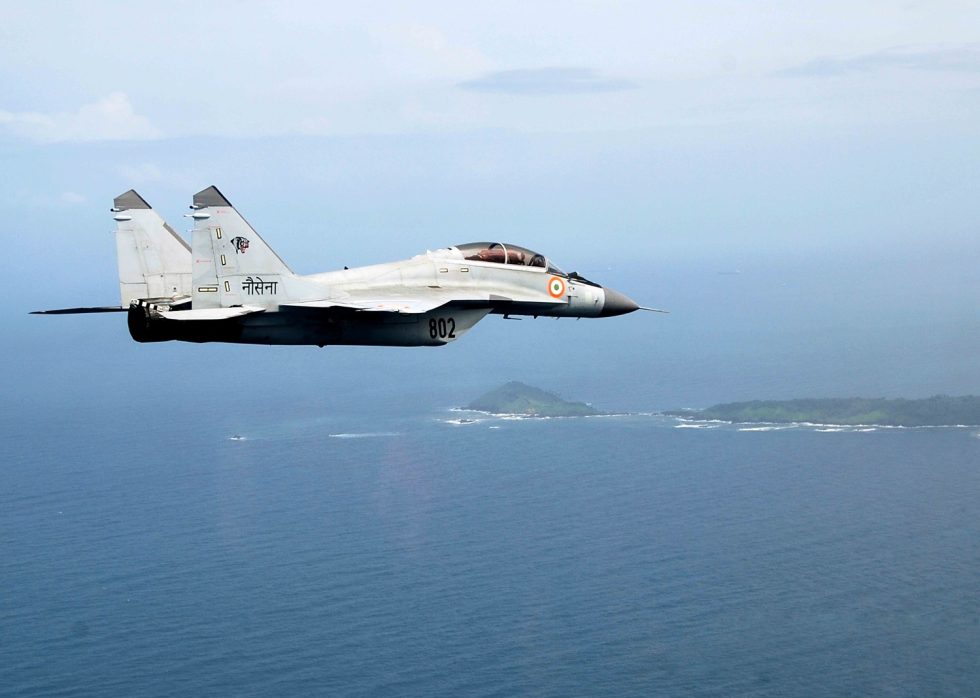
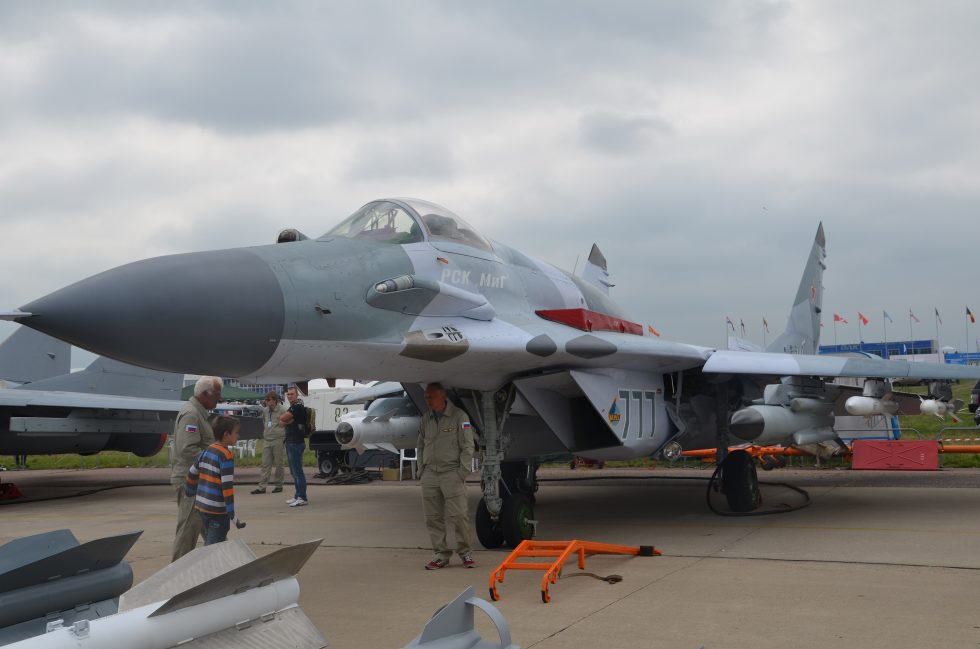
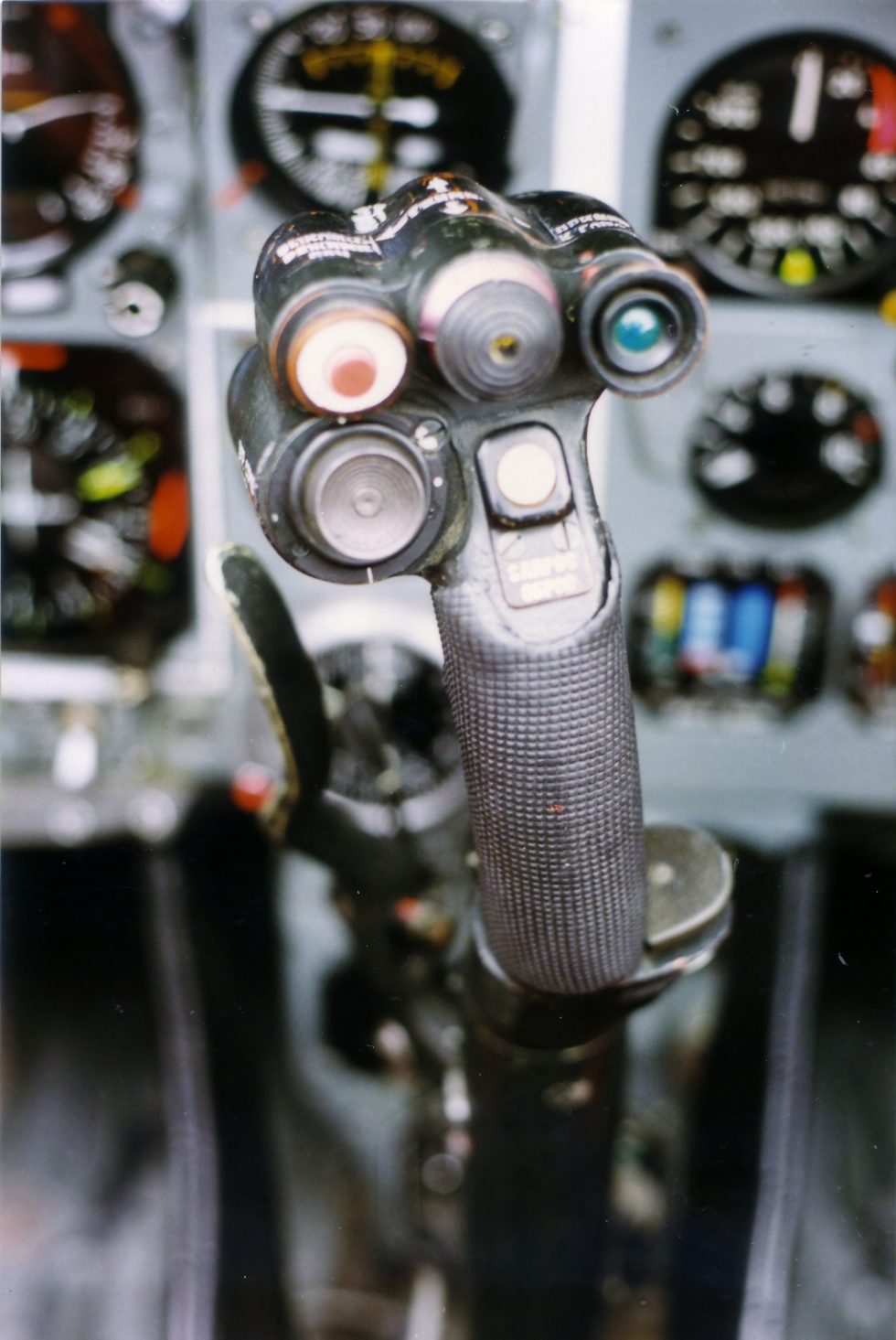
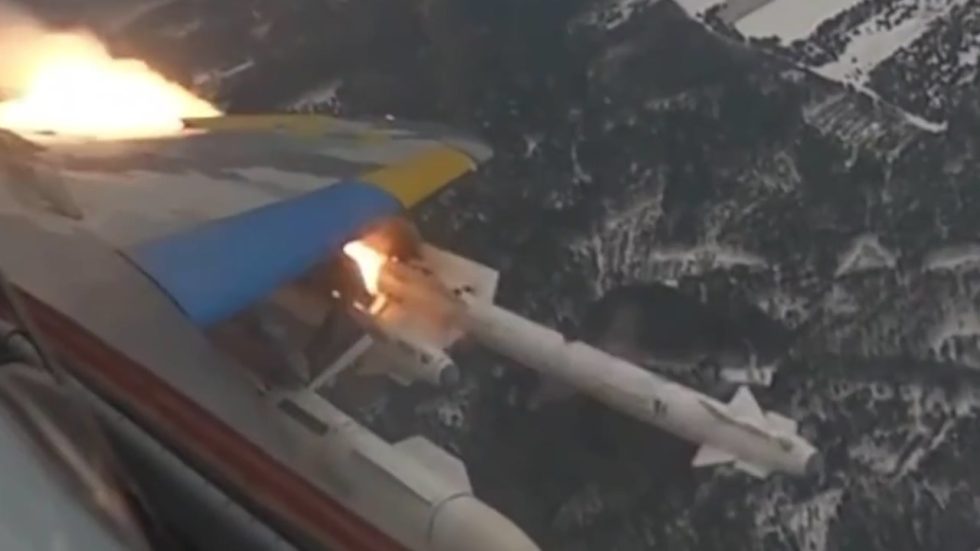
The Fulcrum in motion
A cockpit and technical walkthrough of the MiG-29 Fulcrum.
Where the Fulcrum flies
MiG-29 operators by fleet size
The Fulcrum was exported widely and remains in service on four continents, but almost every published fleet count is an estimate. The figures below are rounded orders of magnitude compiled from open reporting rather than a single database, and they describe airframes on charge — not aircraft that can fly today.
All figures are rounded estimates of airframes on charge, not measured availability: a substantial share of the aircraft counted here are stored, awaiting overhaul, or not flyable. † Fleets whose true size is not currently knowable. Russian and Ukrainian MiG-29 numbers have changed substantially through the war since 2022 — through combat and ground losses on both sides, through transfers of Polish and Slovak airframes to Ukraine, and through returns to service from storage — and no current figure for either country is reliable. Uzbek and Kazakh aircraft are heavily storage-bound, and Kazakhstan (roughly a dozen or so) is omitted from the chart for that reason. ‡ Poorly documented fleets. North Korean, Syrian, Iranian and Myanmar numbers rest on thin open reporting; Syrian aircraft in particular suffered attrition and ground losses through the civil war and the collapse of the previous government, and Iran’s fleet includes Iraqi aircraft flown there in 1991. § Retiring or already retired. Poland is replacing its MiG-29s and has transferred aircraft to Ukraine; Slovakia retired the type in 2022 and handed its aircraft to Ukraine; Bulgaria has been winding its fleet down as F-16s arrive; Germany retired the ex-NVA Fulcrums in 2003 and sold them to Poland; Malaysia and several other former operators have withdrawn the type entirely. Bangladesh (about eight aircraft) and one or two other small operators are omitted for brevity, not because their fleets are in doubt.
Tested on four continents
The MiG-29 fought in the Gulf War, over the Balkans, in the Horn of Africa and — from 2022 — over Ukraine. Its published kill and loss records are among aviation’s most politically contested, so always read them as claims, not settled scores. What is beyond dispute is the breadth of the Fulcrum’s service and the shock it delivered to NATO in mock combat.
Compare the combat record of every military aircraft. Figures as of July 2026.
Everything people ask about the MiG-29
Can I fly a MiG-29?
How fast is the MiG-29?
Is the MiG-29 still in service?
What was the R-73 and helmet sight about?
MiG-29 vs Su-27 — who wins?
How many MiG-29s were built?
What is the MiG-29K?
How does the MiG-35 relate?
You can actually fly the MiG-29.
Pick your cockpit.
Some legends only live in museums — others are fuelled and waiting. MiGFlug has put civilians in real military jet cockpits since 2004.
 Fly the L-39 AlbatrosThe world’s most-flown jet trainer — aerobatics included
 Fly the F-104 Starfighter“The missile with a man in it”
 Fly the MiG-21The Cold War’s most-produced jet
 Fly the T-33 Shooting StarAmerica’s first jet trainer
 Fly the DH VampireA piece of early jet history
 Fly the S.211Agile Italian jet trainer
 Fly the MB-326The classic Aermacchi jet
 Fly the MiG-15The Soviet legend of the Korean War
Continue the tour
Every fact, checked
- GlobalSecurity.org — MiG-29Detailed development, specification and combat-history references.
- Naval TechnologyMiG-29K/KUB carrier-fighter programme details for India and Russia.
- We Are The MightyGermany inheriting East German MiG-29s and NATO’s mock-combat surprise.
- The AviationistCockpit-video and display-flying reporting on European Fulcrums.
- Russia BeyondNarrative of the Ethiopia–Eritrea Su-27 vs MiG-29 duels (contested figures).
- Military Watch MagazineVariant breakdowns and the East African air-war analysis.
- Vintage Aviation NewsFirst-flight anniversary and development background.
- MiGFlug AfterburnerThe civilian MiG-29 flight experience and Fulcrum feature articles.