
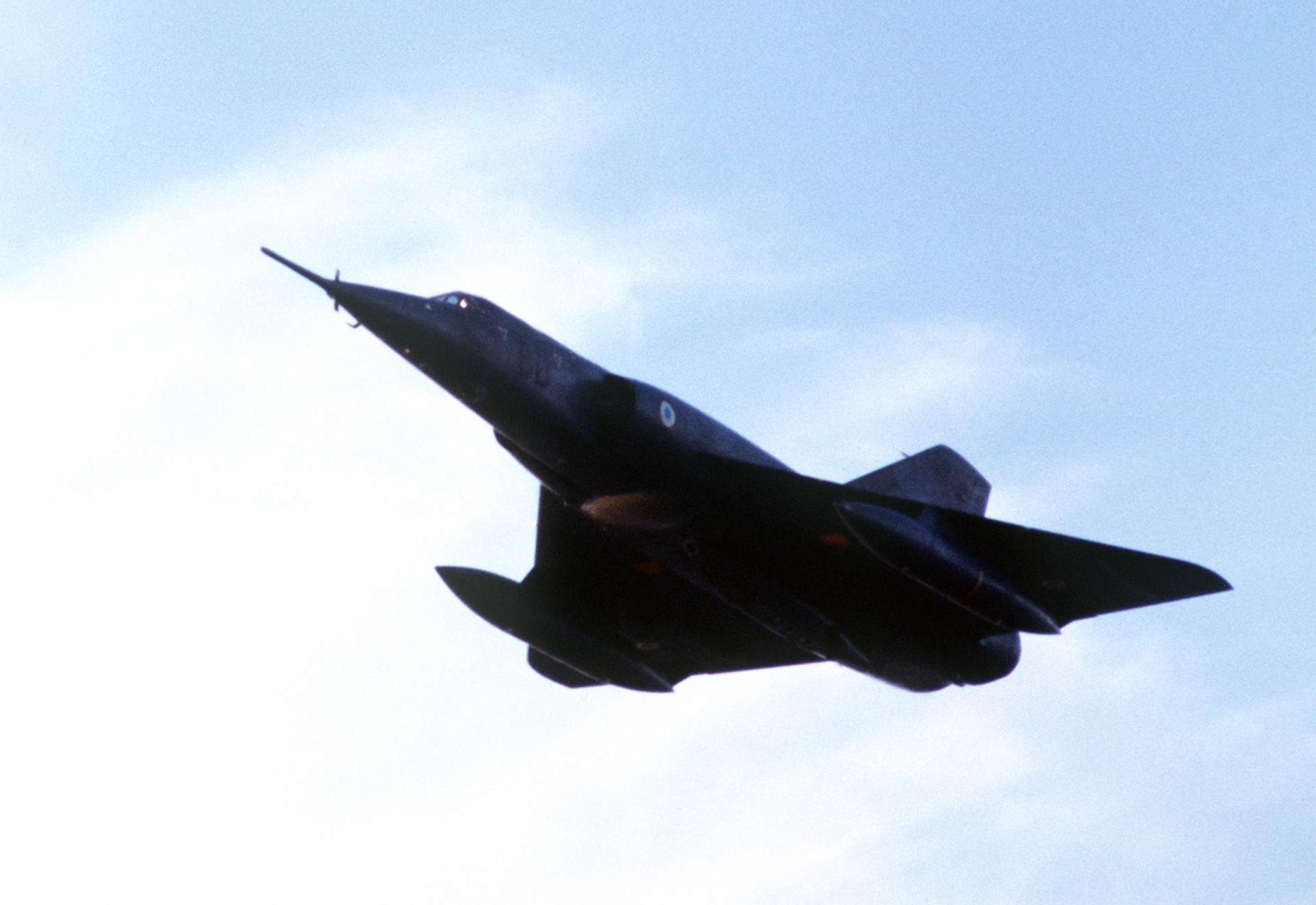
Dassault Mirage IV
France’s Nuclear Delta
The supersonic strategic bomber that carried France’s atomic deterrent for three decades — a scaled-up, twin-engine delta built to punch through Soviet defences at Mach 2 and drop a nuclear weapon that, thankfully, it never had to.
The delta that carried the Force de frappe
France’s humiliation in the 1956 Suez Crisis — leaned on by both superpowers and forced to back down — convinced Paris that only an independent nuclear force could guarantee its sovereignty. When Charles de Gaulle returned to power in 1958, he committed the country to building its own bomb и its own way of delivering it. The airborne leg of that deterrent, the Force de frappe, would be a supersonic bomber built by Dassault: the Mirage IV.
Dassault took the tailless-delta formula it had proven on the small Mirage III fighter and scaled it up into a two-seat, twin-engine machine large enough to carry an atomic bomb at Mach 2. The prototype first flew on 17 June 1959 in the hands of test pilot Roland Glavany, and just days later made a supersonic flypast at the Paris Air Show — extraordinary confidence in a brand-new bomber. Deliveries began in 1964, and the first squadron stood nuclear alert that October.
The Mirage IV was never used in anger — that was the entire point of a deterrent. Its only live nuclear release came over the Pacific in 1966, on a test range. For the rest of its career it stood quick-reaction alert, dispersed across France so no single strike could wipe it out, ready to fly one-way missions that everyone hoped would never be ordered. When the nuclear role passed to newer aircraft in 1996, the surviving jets soldiered on as supersonic spy-planes until 2005 — a remarkable 46 years after the prototype first flew.
01Why France built the Mirage IV: Suez, de Gaulle and an independent bomb
In 1956 Britain and France launched a joint operation to seize the Suez Canal, only to be forced into a humiliating withdrawal under US and Soviet pressure. The lesson French planners drew was blunt: alliances could not be relied upon in an existential crisis, and France needed its own nuclear weapons under its own control. De Gaulle made the Force de frappe a centrepiece of national policy, and the fastest route to a credible deterrent was a manned bomber that could reach Soviet targets at supersonic speed. Dassault’s Mirage IV was the answer — conceived, in effect, as a nuclear delivery system with a cockpit, sized around the bomb it had to carry.
What makes the Mirage IV special
Twin Atar turbojets and a sustained Mach 2
Two SNECMA Atar 9K afterburning turbojets — later the Atar 9K-50 on rebuilt aircraft — gave the Mirage IV genuine supersonic reach, each engine delivering roughly 67 kN in reheat. Dassault claimed it was the only European aircraft able to hold Mach 2 for more than half an hour, letting it dash across defended airspace rather than plod toward its target.
Short legs, solved with the tanker and the buddy
The delta was thirsty and its combat radius on internal fuel was modest, so France bought 12 Boeing C-135F tankers to feed it — the acquisition trials were nicknamed “Boeing Biberon,” Boeing baby-bottle. Because tankers were scarce, Mirage IVs could also refuel one another buddy-to-buddy, one bomber giving up its own range to push a partner deeper toward the target.
One delta, two payloads: nuke or camera
The Mirage IV carried a single nuclear weapon semi-recessed under the fuselage — first the AN‑11 gravity bomb, then the hardened AN‑22, and later the ASMP stand-off missile on rebuilt aircraft. That same belly station accepted the CT52 reconnaissance pod, turning the strategic bomber into a supersonic spy-plane — the role that outlived its nuclear career.
02The Mirage IV’s range problem: tankers, buddy refuelling and the dash to the deck
A supersonic delta burns fuel ferociously, and the Mirage IV’s unrefuelled radius was never enough to reach deep Soviet targets and return — many wartime profiles were frankly one-way. France closed the gap two ways. First, it acquired a dozen Boeing C-135F tankers, derivatives of the KC-135, delivered from 1964. Second, individual bombers carried buddy refuelling stores so one Mirage IV could top up another in flight. As Soviet surface-to-air missiles improved through the 1970s, the fleet also abandoned high-altitude penetration and re-trained to attack from very low level — screaming in at a few hundred feet to slip beneath radar, a punishing profile that drove the switch from the AN‑11 bomb to the toss-delivery-hardened AN‑22.
03From free-fall bomb to stand-off missile: the Mirage IVP rebuild
By the early 1980s a subsonic run-in to drop a gravity bomb over a modern target had become suicidal. Rather than retire the airframe, France rebuilt around 18–19 aircraft (sources differ) into the Mirage IVP — “P” for Pénétration — able to launch the ASMP supersonic stand-off nuclear missile from tens of kilometres out, well outside the innermost defences. The rebuilt jets became operational in 1986, with new navigation and attack systems, and kept the ageing delta strategically relevant until the airborne strike mission passed to the Mirage 2000N in the mid-1990s.
Full Mirage IV specifications
Airframe & Performance
- Экипаж
- 2 (pilot + navigator/systems officer)
- Длина
- ~23.5 m
- Размах крыльев
- 11.85 m
- Высота
- ~5.4 m
- Max takeoff weight
- ~33,500 kg
- Max speed
- Mach 2.2 dash · Mach 2 sustained
- Служебный потолок
- ~18,000 m
- Боевой радиус
- ~1,200 km (further with refuelling)
- Ferry range
- ~3,200 km · ~4,000+ km refuelled
Propulsion & Systems
- Engines
- 2 × SNECMA Atar 9K (9K-50 on IVP)
- Thrust (each)
- ~67 kN with afterburner
- Nuclear weapon
- AN-11 / AN-22 bomb · ASMP missile (IVP)
- Reconnaissance
- CT52 sensor/camera pod
- Tanker support
- Boeing C-135F · buddy refuelling
- First flight
- 17 June 1959 (prototype)
- Built
- ~62 production (1964–1968)
- Unit cost
- No reliable public figure
04The Mirage IV’s numbers: why the specs are hedged
The Mirage IV was a French state strategic asset, never exported and never sold on an open market, so several figures vary between sources. Length is quoted between about 23.3 and 23.5 m; maximum speed as Mach 2.0 sustained rising to about Mach 2.2 in a dash; and range figures swing widely with mission profile — from roughly 1,200 km combat radius to well over 4,000 km ferry range with in-flight refuelling. About 62 production aircraft were built between 1964 and 1968, of which some 18–19 were later rebuilt as Mirage IVP. No credible unit cost or cost-per-flight-hour exists in open sources; treat any precise dollar figure with caution.
From Suez to the last supersonic spy-flight
Suez sparks the deterrent
The Suez Crisis convinces France it needs an independent nuclear force under its own control — the seed of the Force de frappe.
First flight
Prototype Mirage IV 01 flies on 17 June with Roland Glavany at the controls, and goes supersonic at the Paris Air Show days later.
Enters service
Deliveries begin; the first bomber squadron at Mont-de-Marsan stands nuclear alert in October, armed with the AN-11 gravity bomb.
The only live drop
Operation Tamouré: on 19 July a Mirage IV releases a live atomic bomb over Mururoa atoll — the sole nuclear release of its career.
Down to the deck
As Soviet SAMs improve, the fleet re-trains for low-level penetration and adopts the hardened AN-22 bomb for toss delivery.
Mirage IVP and ASMP
Rebuilt Mirage IVP aircraft enter service carrying the ASMP supersonic stand-off nuclear missile, replacing the free-fall bomb.
Nuclear role ends
The Mirage IV is withdrawn from the strategic strike mission, which passes to the Mirage 2000N and, later, the Rafale.
The last flight
The reconnaissance Mirage IVPs, flying the CT52 camera pod, are finally retired — 46 years after the prototype first flew.
From the flight line: twelve Mirage IV stories
The bomber Suez built
France’s 1956 humiliation drove the decision to build an independent deterrent.
Read the full story
Supersonic at the air show
Just days after its maiden flight, the prototype went supersonic over Paris.
Read the full story
The 30-minute Mach 2
Dassault claimed no other European aircraft could hold Mach 2 as long.
Read the full story
Closed-circuit speed marks
In 1960 the Mirage IV set world speed records over closed circuits.
Read the full story
“Boeing Biberon”
France bought a dozen C-135F tankers to feed the thirsty delta.
Read the full story
Buddy-to-buddy
Mirage IVs could refuel each other to stretch strike range.
Read the full story
Operation Tamouré
The one and only time a Mirage IV dropped a live nuclear bomb.
Read the full story
Dispersed to survive
The fleet was scattered so no single strike could destroy it.
Read the full story
Under the radar
Improving Soviet missiles forced the fleet to attack from very low level.
Read the full story
From bomb to missile
The Mirage IVP swapped the free-fall bomb for a stand-off missile.
Read the full story
The supersonic spy-plane
Stripped of nuclear duty, the Mirage IV became a fast recon platform.
Read the full story
Forty-six years on
The final Mirage IVs retired in 2005, closing a remarkable career.
Read the full story
The Mirage IV in pictures
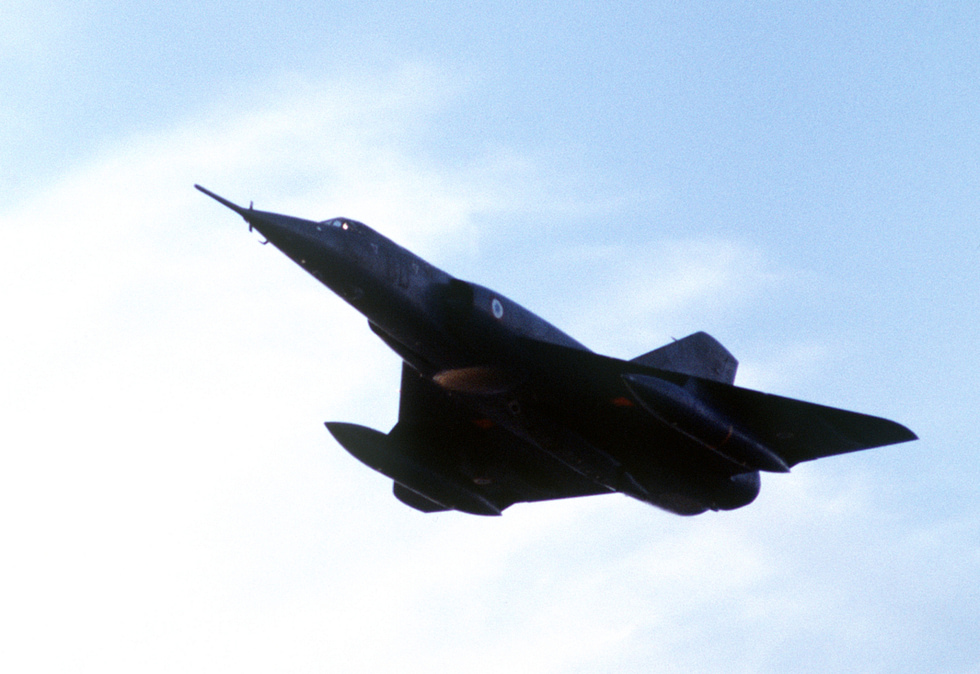
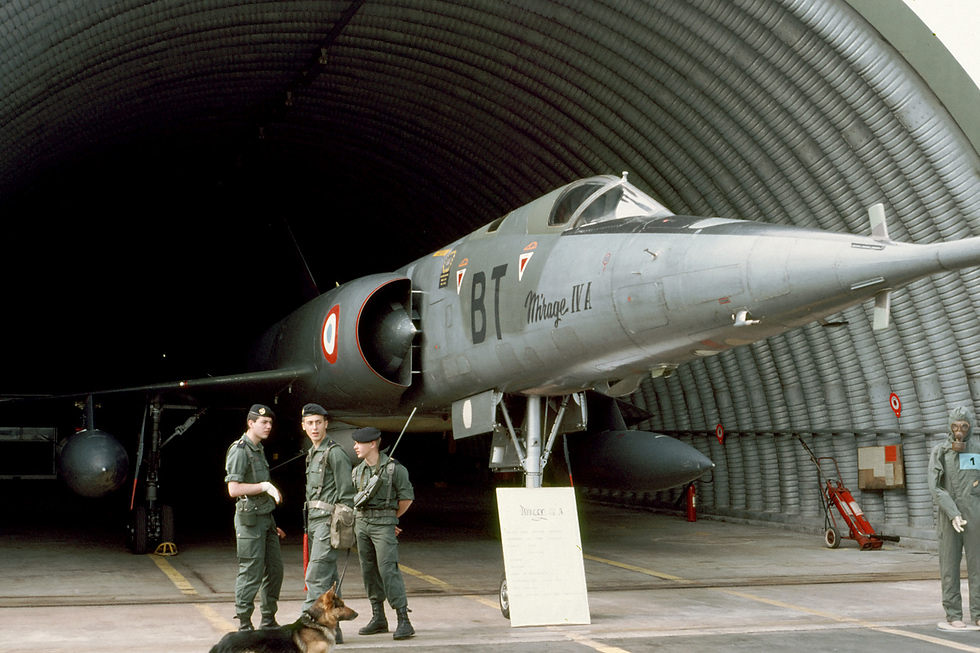
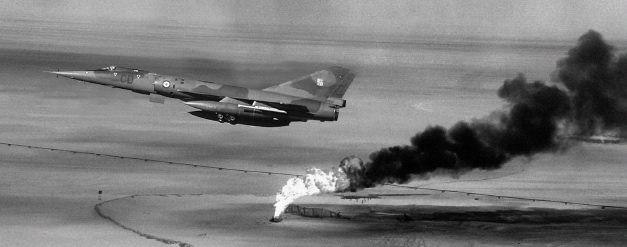
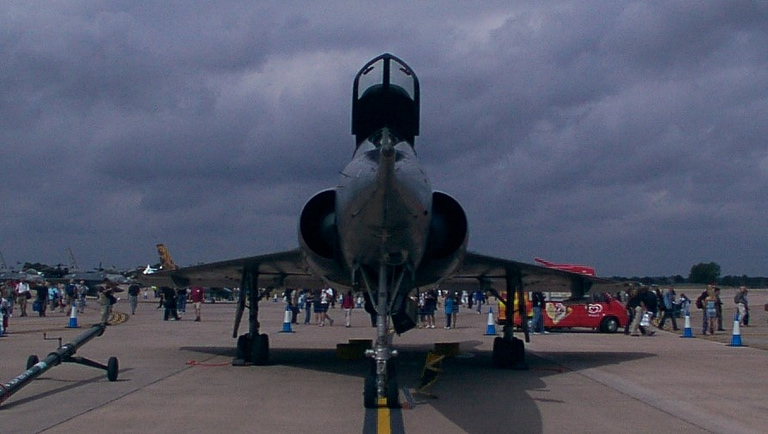
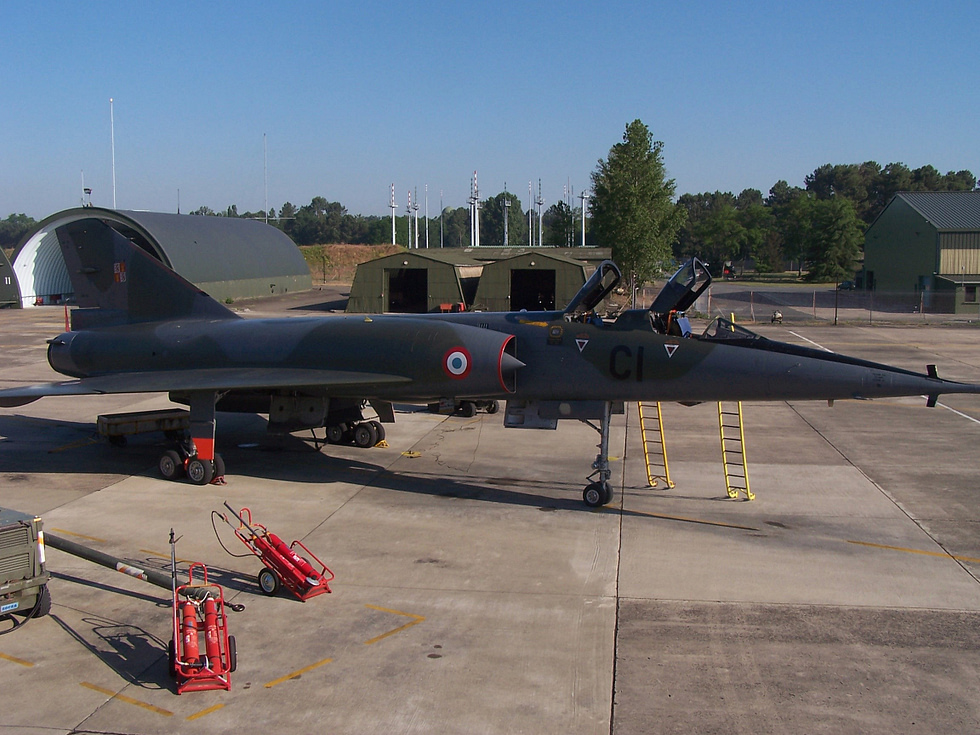
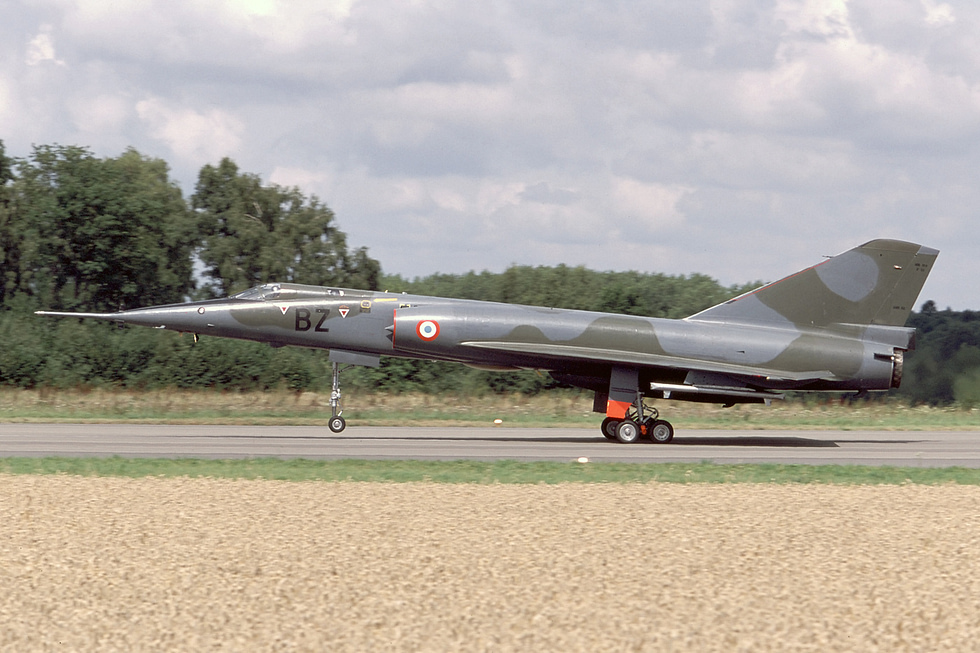
The Mirage IV in motion
A dedicated Mirage IV video feature is coming soon. In the meantime, explore the gallery above and the twelve stories for the full picture of France’s supersonic nuclear delta.
The Mirage IV in motion
ATE CHUET — one of the most-watched Mirage IV films on YouTube.
Where the Mirage IV served
The record of a deterrent that never fired
The Mirage IV was never used in anger — and that was precisely the measure of its success. As the airborne leg of France’s nuclear deterrent, its job was to be so credible that it never had to fly a wartime strike. Its only live nuclear release was a 1966 test over the Pacific; its real operational sorties came decades later, unarmed, as a supersonic reconnaissance platform over the Balkans and the Middle East.
Compare the combat record of every military aircraft. Figures as of July 2026.
Everything people ask about the Mirage IV
Can I fly in a Mirage IV?
How fast was the Mirage IV?
What nuclear weapons did it carry?
Was the Mirage IV ever used in combat?
How many were built?
Why was it retired?
What replaced the Mirage IV?
You can’t fly the Mirage IV.
These, you can.
Some legends only live in museums — others are fuelled and waiting. MiGFlug has put civilians in real military jet cockpits since 2004.
 Fly the L-39 AlbatrosThe world’s most-flown jet trainer — aerobatics included
 Fly the F-104 Starfighter“The missile with a man in it”
 Fly the MiG-21The Cold War’s most-produced jet
 Управляйте самолетом T-33 Shooting Star.America’s first jet trainer
 Fly the DH VampireA piece of early jet history
 Fly the S.211Agile Italian jet trainer
 Fly the MB-326The classic Aermacchi jet
 Fly the MiG-15The Soviet legend of the Korean War
Continue the tour
Every fact, checked
- Dassault Aviation — Mirage IVThe manufacturer’s own history: first flight, service entry and performance claims.
- Royal Aeronautical SocietyDetailed development history, tanker acquisition and the 1960 speed records.
- Federation of American ScientistsNuclear-forces reference: weapons, dimensions and the Mirage IVP conversion.
- GlobalSecurity.orgQuick-reaction-alert doctrine, dispersal and the AN-22 / ASMP weapons.
- Ailes Anciennes ToulouseMuseum profile of the Mirage IVP, conversion numbers and reconnaissance sorties.
- Yorkshire Air MuseumAirframe reference for the preserved Mirage IVA on display.
- The Aviation Geek ClubAccount of Operation Tamouré, the sole live nuclear drop in 1966.
- Military MattersOverview of the type’s career, weapons evolution and final retirement.