
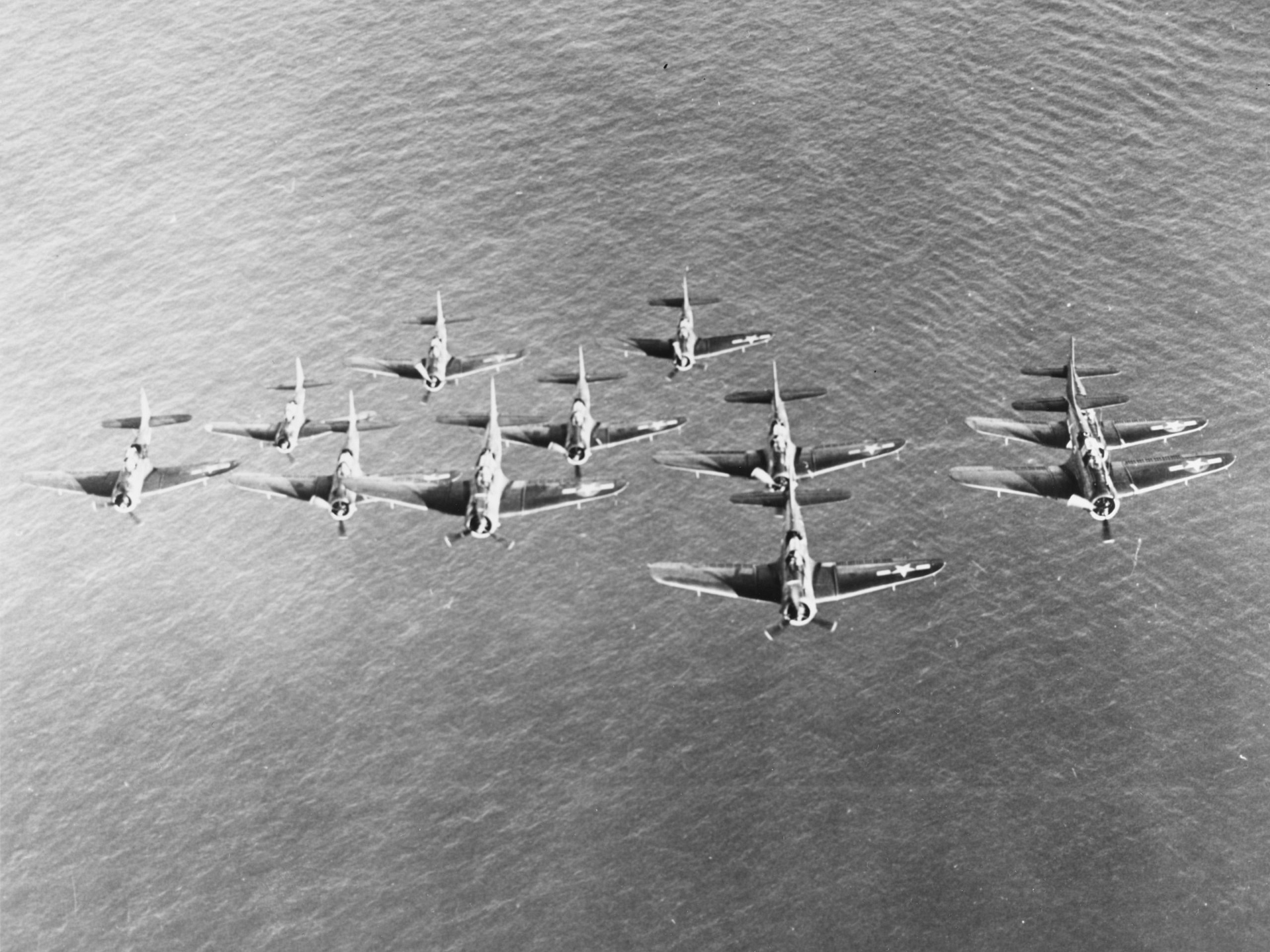
Douglas SBD Dauntless
“Slow But Deadly”
The US Navy dive bomber that broke the back of the Japanese carrier fleet — the aircraft that, in a few minutes over Midway, turned the whole Pacific war.
The dive bomber that turned the Pacific war
O Douglas SBD Dauntless did not look like a war-winner. It was slow, its wings did not fold, and by 1942 it was already considered obsolescent. Yet in a single morning over Midway it did more to decide the Second World War in the Pacific than any other aircraft — and it did it with a reputation for accuracy, toughness and a survival record no other US carrier bomber could match.
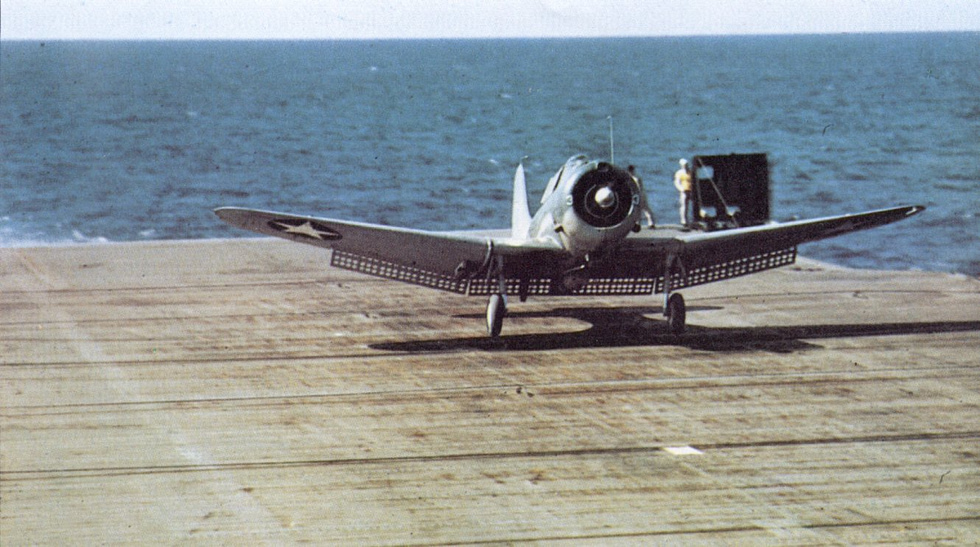
Its roots lay with Ed Heinemann ve Northrop BT-1 of the mid-1930s. When Douglas absorbed Northrop’s El Segundo division in 1937, Heinemann’s improved XBT-2 was redesignated the XSBD-1 — Scout Bomber, Douglas. It first flew in 1940 and reached the Marines and Navy in 1940–41. Its signature feature was a set of perforated “Swiss cheese” split dive flaps: drilled with holes to kill the tail buffeting that plagued early dive bombers, they let a pilot hold a steady, near-vertical dive and place a bomb with remarkable precision.
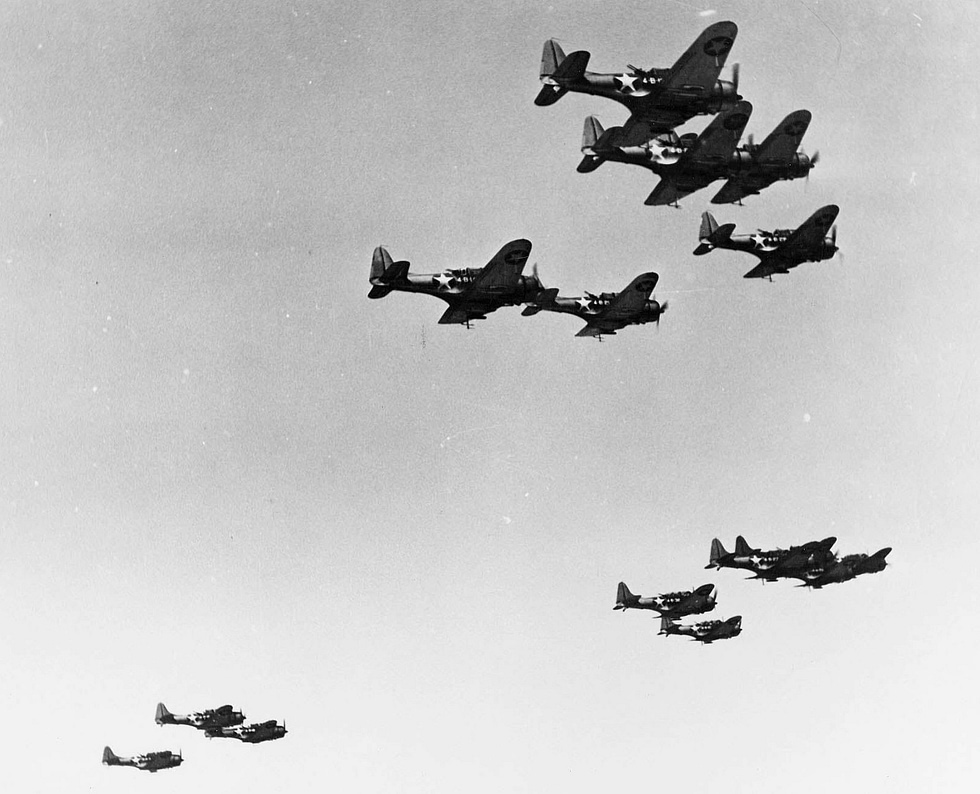
The Dauntless was blooded at Coral Sea in May 1942, helping sink the light carrier Shoho and damage Shokaku in history’s first carrier-versus-carrier battle. Then came 4 June 1942. As Japanese carriers rearmed their aircraft, SBDs from Enterprise Ve Yorktown — led in part by Lieutenant Commander Wade McClusky, who had gambled on following a lone destroyer to the fleet — rolled into their dives. In roughly six minutes they turned Akagi, Kaga Ve Soryu into blazing wrecks; that afternoon they finished Hiryu. Four fleet carriers, the heart of Japan’s striking power, were gone in a day.
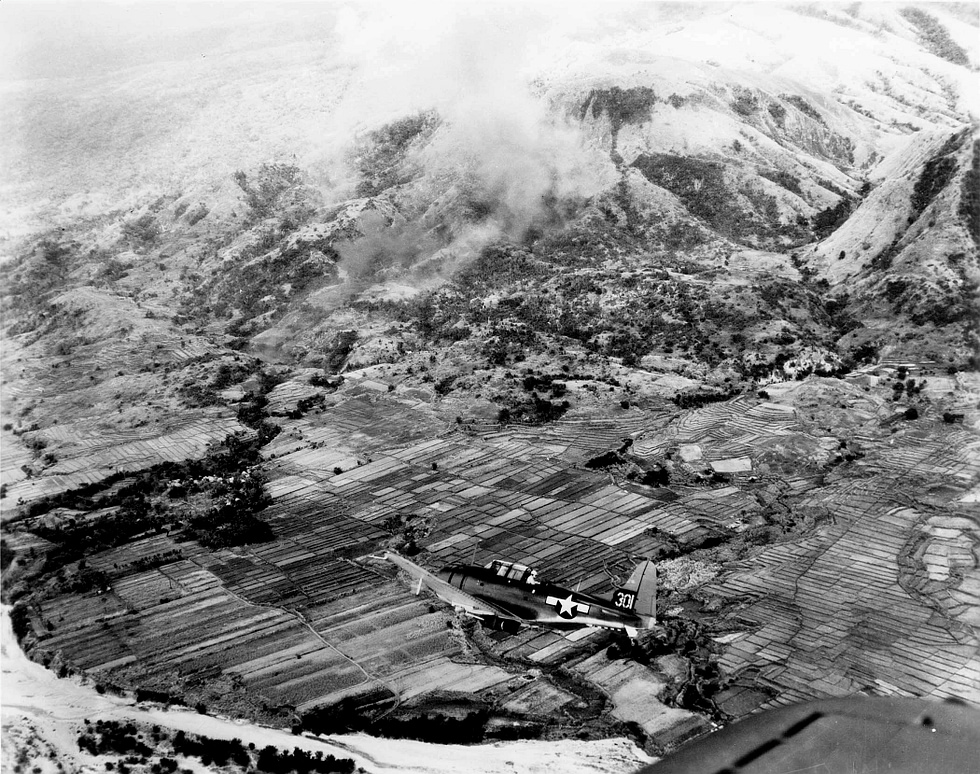
The Dauntless fought on through the grinding campaign at Guadalcanal, where the Marine and Navy SBDs of the “Cactus Air Force” hunted Japanese shipping down “the Slot,” and on to the Philippine Sea in 1944. Crews turned its designation into the affectionate backronym “Slow But Deadly.” The US Army flew a land-based version, the A-24 Banshee, and surplus aircraft later served France, Mexico, New Zealand and were evaluated by Britain. Around 5,900 were built before the faster SB2C Helldiver replaced it — though many crews thought the older, steadier Dauntless the better aircraft.
01The Douglas SBD Dauntless at Midway: how a few minutes decided the Pacific
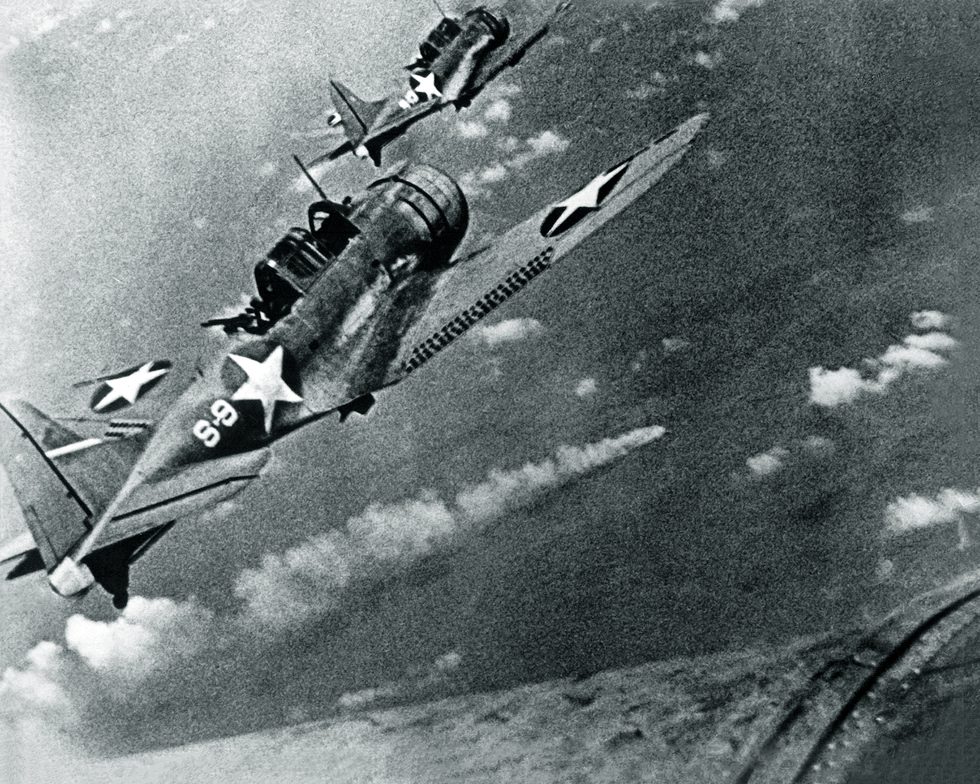
Midway is often called the most decisive naval battle of the 20th century, and the Dauntless was its instrument. Through the morning of 4 June 1942, wave after wave of American torpedo bombers attacked the Japanese carriers and were slaughtered — but in doing so they dragged the defending fighters down to sea level. When the SBD dive-bomber squadrons arrived overhead almost unopposed, they found the carriers at their most vulnerable: decks crowded with fuelled, armed aircraft being re-spotted for a strike.
The timing was part luck, part the doggedness of leaders like Wade McClusky, who pressed on past his planned search limit and followed the wake of a Japanese destroyer straight to the fleet. Within minutes Akagi, Kaga Ve Soryu were mortally hit; Hiryu followed hours later. Historians rightly caution against reducing so complex a battle to a single lucky interval — but it is no exaggeration that the SBD, in that window, changed the course of the war.
What makes it special
Perforated “Swiss cheese” dive flaps
The Dauntless’s trademark was its split dive flaps, upper and lower, drilled with rows of holes. Early dive bombers suffered violent tail buffeting when the flaps were deployed; the perforations broke up that turbulent wake, letting the pilot hold a stable, near-vertical dive at a controlled speed. The result was dive-bombing accuracy that made the SBD a precision ship-killer.
Rugged — and hard to kill
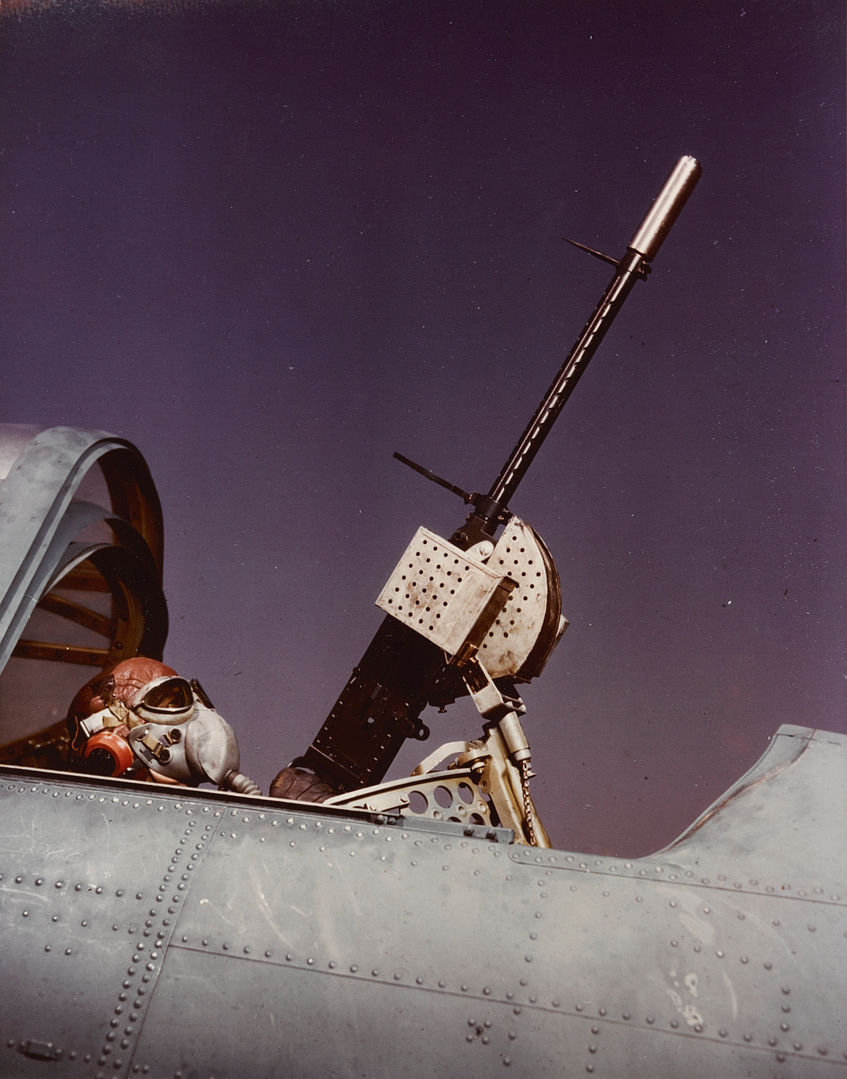
Heinemann’s team traded folding wings for a strong, simple structure. With armour, self-sealing tanks in later marks and two forward .50-cal guns plus twin flexible .30s in the rear, the Dauntless was punishing to attack. It flew with the lowest loss rate of any US carrier aircraft in the Pacific — and its gunners were even credited with shooting down enemy fighters.
Scout and bomber in one
The “S-B” in the name meant Scout Bomber. The same aircraft flew long over-water search patrols to find the enemy fleet and then delivered the strike that sank it. That dual role made the Dauntless the eyes as well as the fist of the US carrier air groups through 1942–43.
02The SBD Dauntless’s dive brakes: why the perforated flaps made it accurate
When Northrop and Douglas first tested the split-flap dive brake on the BT-1 lineage, deploying the flaps set up a violent buffet that shook the tail and spoiled the pilot’s aim. The fix was elegant: drill the flaps full of holes. The perforations let air bleed through and broke up the turbulent wake, damping the buffet while still providing the drag needed to hold the aircraft to a safe, steady dive speed. A Dauntless pilot could roll into a dive of around seventy degrees, track the target through his sight, and release low — the reason the type earned a reputation as the most accurate US dive bomber of the war.
03The SBD Dauntless’s survivability: the lowest loss rate in the US carrier fleet
For all its lack of speed, the Dauntless was remarkably hard to shoot down. Its rugged airframe absorbed damage, its crew were protected, and its rearward-firing guns gave attacking fighters a real fight. Statistically the SBD suffered the lowest attrition of any US carrier aircraft in the Pacific, and it is one of very few dive bombers ever credited with a favourable air-to-air exchange — its gunners and pilots claimed a number of Japanese aircraft. Those figures come from wartime tallies and should be read as well-supported estimates rather than exact accounts.
Full specifications
Airframe & Performance (SBD-5)
- Mürettebat
- 2 (pilot + radioman/gunner)
- Uzunluk
- 10.09 m (33 ft 1 in)
- Kanat açıklığı
- 12.65 m (41 ft 6 in)
- Yükseklik
- 4.14 m (13 ft 7 in)
- Max takeoff weight
- ~4,850 kg (10,700 lb)
- Max speed
- ~410 km/h (255 mph) at altitude
- Menzil
- ~1,795 km (1,115 mi)
- Servis tavanı
- ~7,780 m (25,530 ft)
- Dive control
- Perforated split flaps
Propulsion, Systems & Cost
- Motor
- 1 × Wright R-1820-60 Cyclone radial
- Power
- ~1,200 hp (890 kW)
- Fixed guns
- 2 × 0.50-in (12.7 mm) Browning
- Flexible guns
- 2 × 0.30-in (7.62 mm) Browning (rear)
- Bomb load
- Up to ~1,020 kg (2,250 lb); typ. 1 × 1,000 lb centreline
- First flight
- 1940
- Built
- ~5,936 (1940–1944)
- Unit cost
- No single reliable figure (wartime estimate)
- Cost per flight hour
- No reliable public figure
04The SBD Dauntless’s cost: what a wartime dive bomber was worth
The Dauntless was a mass-produced wartime aircraft bought in bulk by the US government, not sold on an open market, so a single authoritative flyaway price is hard to pin down. Period figures place a Dauntless in the low tens of thousands of 1940s US dollars — an order-of-magnitude figure that varied by variant, contract and year, and that should be treated as an estimate rather than a precise quote. No credible cost-per-flight-hour number exists for the type in open sources. What is certain is that, measured against the four Japanese carriers it helped sink at Midway alone, the Dauntless was among the best military investments of the war.
From Northrop drawing board to Midway and beyond
The Northrop BT-1
The design lineage begins with the Northrop BT-1 dive bomber, developed under Ed Heinemann.
Douglas takes over
Douglas absorbs Northrop’s El Segundo division; the improved XBT-2 becomes the XSBD-1.
First flight & service
The SBD enters production; SBD-1s reach the Marines and SBD-2s the Navy.
Coral Sea
SBDs help sink the light carrier Shoho and damage Shokaku in the first carrier-vs-carrier battle.
Midway
In minutes, Dauntless dive bombers fatally hit four Japanese fleet carriers — the turning point of the Pacific war.
Guadalcanal
The “Cactus Air Force” SBDs hammer Japanese shipping down “the Slot.”
A-24 Banshee
The US Army Air Forces operate their land-based version, the A-24 Banshee.
Philippine Sea
SBDs fly their last major carrier action as the SB2C Helldiver takes over front-line duties.
Production ends, service abroad
After ~5,900 built, production closes; surplus SBDs serve France, Mexico and New Zealand.
From the cockpit: twelve Dauntless stories
From the BT-1 to the Dauntless
Ed Heinemann turned a troublesome Northrop dive bomber into a war-winner.
Read the full story
Ten minutes that changed the war
As the Japanese carriers rearmed, the SBDs arrived almost unopposed.
Read the full story
Wade McClusky’s gamble
A commander who pressed past his search limit found the whole enemy fleet.
Read the full story
The Swiss-cheese flaps
Holes drilled in the dive brakes fixed a deadly buffet.
Read the full story
The first carrier duel
Before Midway, the Dauntless drew first blood at Coral Sea.
Read the full story
Down the Slot
The Cactus Air Force flew the SBD to a standstill over the Solomons.
Read the full story
“Slow But Deadly”
Crews turned the SBD designation into an affectionate boast.
Read the full story
The dive bomber that shot back
Rugged and well-armed, the SBD was dangerous to attack.
Read the full story
The Army’s Dauntless
The land-based version never matched the Navy’s success.
Read the full story
Eyes of the fleet
Before it sank ships, the SBD had to find them.
Read the full story
The Dauntless overseas
France, Mexico and New Zealand all flew the SBD.
Read the full story
Outliving its replacement
Many crews preferred the old SBD to the newer Helldiver.
Read the full story
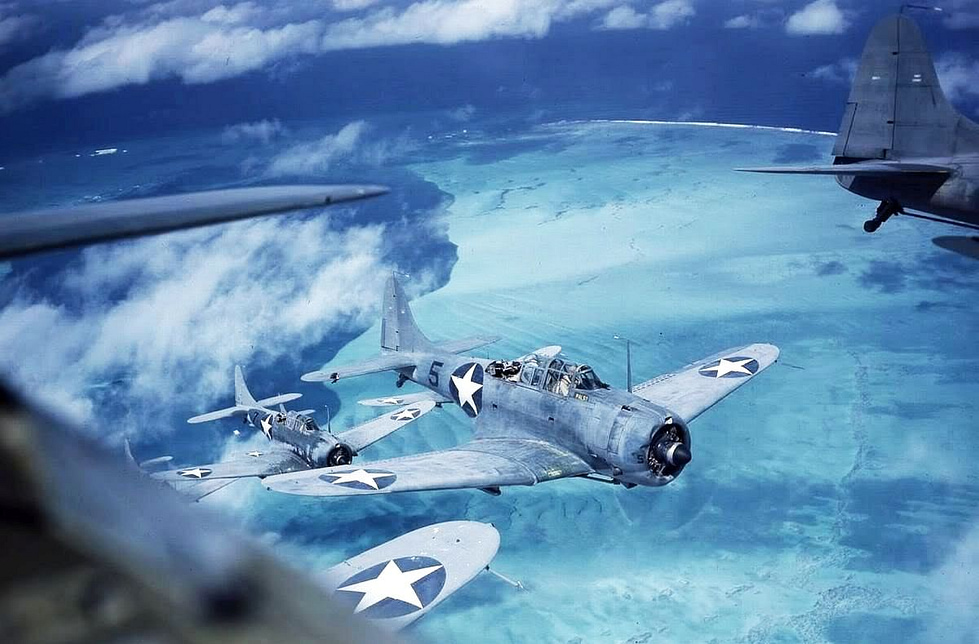
The Dauntless in pictures
The Dauntless in motion
Video coming soon.
Where the Dauntless flew
The score that defines it
The Dauntless’s record is written in enemy ships, not aerial kills. It is credited with sinking more Japanese shipping than any other Allied aircraft in the Pacific; at Midway it fatally struck four fleet carriers in a single day; and, remarkably for a slow bomber, it flew with the lowest loss rate of any US carrier aircraft of the war. Figures are wartime tallies and are best read as well-supported estimates.
Compare the combat record of every military aircraft. Figures as of July 2026.
Everything people ask about the SBD Dauntless
Can I fly in an SBD Dauntless?
How many carriers did the Dauntless sink at Midway?
Why was it nicknamed “Slow But Deadly”?
What were the perforated dive flaps for?
What was the A-24 Banshee?
How many were built, and what replaced it?
Are any SBD Dauntlesses still flying?
You can’t fly the Dauntless.
These, you can.
Some legends only live in museums — others are fuelled and waiting. MiGFlug has put civilians in real military jet cockpits since 2004.
 Fly the L-39 AlbatrosThe world’s most-flown jet trainer — aerobatics included
 Fly the F-104 Starfighter“The missile with a man in it”
 Fly the MiG-21The Cold War’s most-produced jet
 T-33 Shooting Star'ı uçurunAmerica’s first jet trainer
 Fly the DH VampireA piece of early jet history
 Fly the S.211Agile Italian jet trainer
 Fly the MB-326The classic Aermacchi jet
 Fly the MiG-15The Soviet legend of the Korean War
Continue the tour
Every fact, checked
- The National WWII Museum — Douglas SBD DauntlessOverview of the type, its Midway record and specifications.
- National Naval Aviation MuseumPreserved airframes and the SBD’s service history.
- USS Midway Museum — SBD DauntlessThe dive bomber’s role at the battle that gave the museum ship its name.
- Naval History Magazine (USNI) — The Ship KillersThe Dauntless as the war’s pre-eminent ship-sinking aircraft.
- History HitAnalysis of the Dauntless’s decisive part at Midway.
- The National InterestThe SBD’s development lineage and Midway strike.
- Naval EncyclopediaDetailed variants, specifications and foreign operators.
- National Museum of WWII AviationA pilot’s perspective on flying the Dauntless.