
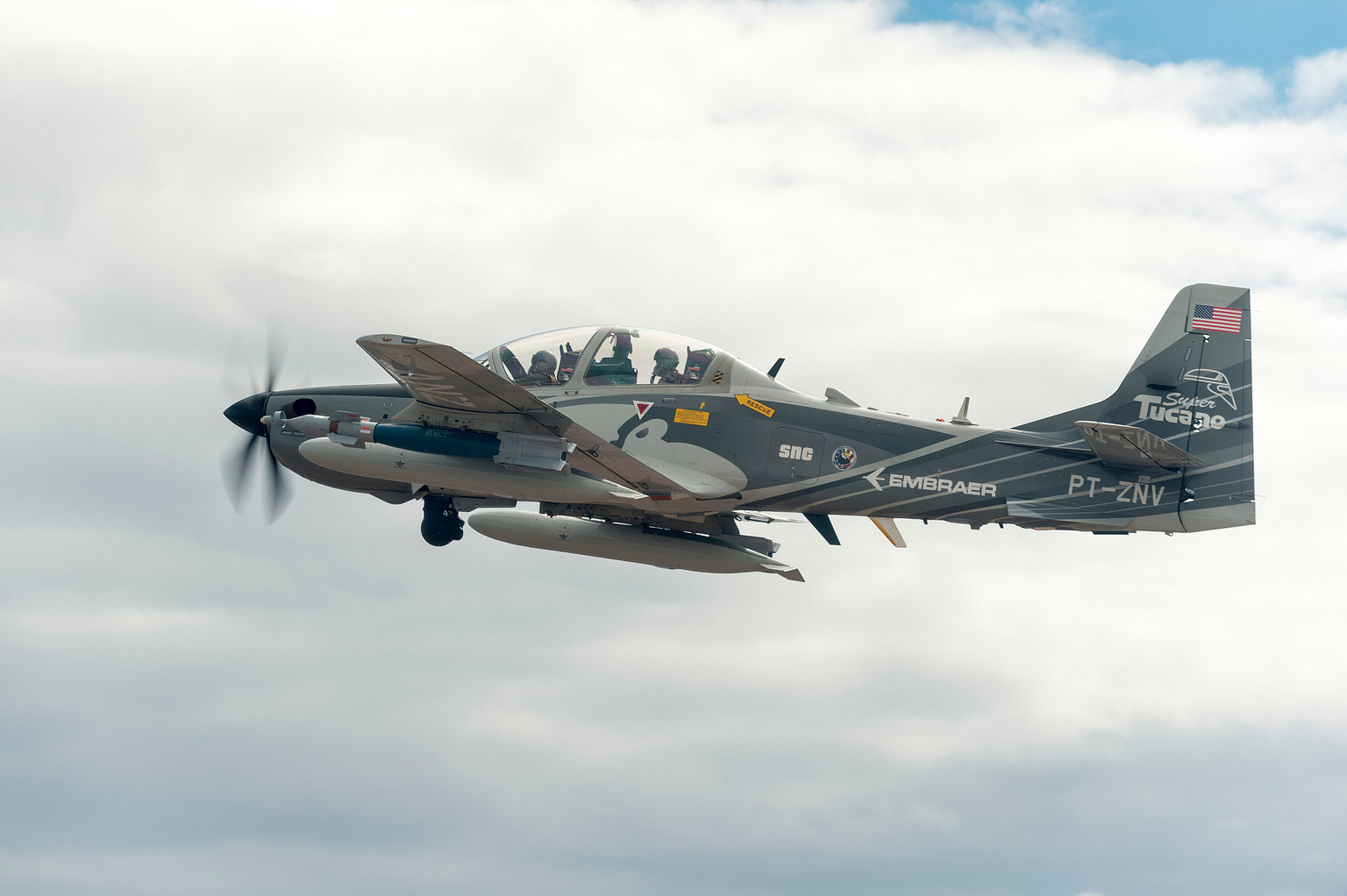
Embraer A-29
Super Tucano
A cheap, rugged Brazilian turboprop that became the world’s default counter-insurgency aircraft — a two-seat trainer with armour, ejection seats, five hardpoints and precision weapons, flying combat from jungle strips on a fraction of a jet’s budget.
The Super Tucano: how a trainer became a war-winner
By the late 1980s Embraer had a hit on its hands: the EMB-312 Tucano, a tidy turboprop trainer sold around the world. But Brazil’s air force needed something the Tucano couldn’t do — patrol the vast Amazon frontier, intercept smugglers’ light aircraft, and put real firepower over the jungle without the cost of a jet. The answer, developed through the 1990s, was a much bigger, tougher aeroplane: the EMB-314 Super Tucano, known in military service as the A-29.
First flown in 1999, the Super Tucano kept the friendly manners of a trainer — two seats in tandem, a glass cockpit, benign handling — but wrapped them around a single 1,600-shaft-horsepower Pratt & Whitney Canada PT6A-68 turboprop, cockpit armour, zero-zero ejection seats, and five hardpoints for guns, bombs, rockets and precision munitions. It could operate from short, rough, unpaved strips, loiter for hours, and be maintained by a small team far from any base.
That combination turned out to be exactly what dozens of air forces wanted. Colombia used it against FARC guerrillas; African states flew it against insurgents; the United States bought A-29s — assembled in Florida with Sierra Nevada Corporation — to equip the Afghan and other partner air forces, and flew it in the USAF’s Light Attack experiment. It has been exported to more than a dozen nations across South America, Africa, the Middle East and Asia, and it is still being built. Few modern combat aircraft have seen as much actual fighting — and almost none do it as cheaply.
01The A-29 Super Tucano’s origins: from Amazon patrol to global COIN aircraft
The Super Tucano grew out of Brazil’s ALX programme of the 1990s, itself linked to the SIVAM effort to monitor and police the Amazon basin. Brazil needed an aircraft that could find and force down drug-running light planes, watch a porous jungle border, and deliver ordnance in support of ground troops — all on a modest budget and from primitive airfields. Embraer stretched and strengthened the Tucano trainer into the EMB-314, giving it a far more powerful engine, a strengthened airframe, armour, and a modern sensor-and-weapons suite.
What began as a niche Brazilian requirement matched a worldwide need that exploded after 2001, as many nations found themselves fighting insurgents rather than other air forces. Against lightly armed opponents with no radar-guided missiles, an armoured turboprop that can loiter for hours, carry precision bombs, and cost a fraction of a jet to buy and fly is often the right tool — not a compromise. That is why the A-29 spread so far, so fast.
What makes the A-29 Super Tucano special
A turboprop, chosen on purpose
The Super Tucano is powered by a single Pratt & Whitney Canada PT6A-68, a proven turboprop of roughly 1,600 shp driving a five-blade propeller. A turboprop burns far less fuel than a jet, thrives on short unpaved strips, and needs less specialised support — letting the aircraft loiter for hours over a battlefield and fly for a small fraction of a jet’s hourly cost. Slow speed is a feature here, not a flaw: it means more time on station and a steadier weapons platform.
Built to be shot at
Unlike the trainer it descends from, the A-29 is designed to survive ground fire. It carries cockpit and engine armour, zero-zero ejection seats (safe even on the runway), self-sealing or protected fuel, and defensive aids such as radar and missile-warning receivers and chaff/flare dispensers on export configurations. It is meant to work low and slow over hostile ground — the environment that kills unprotected light aircraft — and come home.
Sensors and precision weapons
A modern glass cockpit, HOTAS controls and an electro-optical / infra-red sensor turret let the crew find targets day or night and guide weapons onto them. Across its five hardpoints the A-29 can carry two built-in .50-calibre wing machine guns, gun pods, unguided bombs and rockets, and precision munitions including laser-guided bombs — and, in some fits, short-range air-to-air missiles for the light-interception role.
02The A-29 Super Tucano’s cost advantage: a squadron for the price of one jet
The whole case for the Super Tucano is arithmetic. A modern fast jet can cost tens of millions of dollars to buy and, commonly, many thousands of dollars per flight hour to operate. The A-29’s flyaway price is usually quoted in the low tens of millions at most, and its cost per flight hour is commonly estimated at only a few hundred to around a thousand US dollars — figures that vary by operator and configuration and should be read as estimates, not audited numbers. For an air force fighting insurgents rather than other jets, that math means more aircraft, more hours, and more presence overhead for the same money.
03The A-29 vs the jets: why slow and cheap sometimes wins
A Super Tucano cannot dogfight a fighter or survive a modern integrated air-defence network — and it was never meant to. Its job is close air support, armed reconnaissance, border patrol and counter-insurgency in permissive or lightly defended airspace. There, its long loiter time, precise weapons, good downward visibility and rugged short-field ability make it more useful than a fast jet that arrives with minutes of fuel and departs. The same qualities make it an excellent lead-in fighter trainer, teaching students the tactical skills they will later use in jets.
A-29 Super Tucano: full specifications
Airframe & Performance
- Mürettebat
- 2 (tandem) · single-seat A-29A
- Uzunluk
- 11.38 m
- Kanat açıklığı
- 11.14 m
- Yükseklik
- 3.97 m
- Max takeoff weight
- ~5,400 kg
- Max level speed
- ~590 km/h (~320 kn)
- Servis tavanı
- ~10,670 m (35,000 ft)
- Endurance
- ~6.5 h (longer with external tanks)
- Ferry range
- ~2,850 km (commonly cited)
- Takeoff run
- Short / unpaved strips capable
Propulsion, Systems & Cost
- Motor
- 1 × P&WC PT6A-68 turboprop
- Power
- ~1,600 shp (~1,196 kW)
- Sert noktalar
- 5 · up to ~1,550 kg stores
- Built-in guns
- 2 × .50-cal (12.7 mm) wing MGs
- Weapons
- Bombs, rockets, laser-guided munitions, AAMs
- First flight
- 1999
- Built
- 260+ delivered (production ongoing)
- Unit cost
- ~US$10–18 million (config-dependent, est.)
- Cost per flight hour
- ~US$500–1,000 (commonly cited, est.)
04The A-29 Super Tucano’s operating costs: what the numbers really say
Low operating cost is the Super Tucano’s single biggest selling point, but exact figures are slippery. Published cost-per-flight-hour estimates for the A-29 commonly land in the range of a few hundred to about US$1,000 per hour — roughly an order of magnitude below a fast jet — while flyaway unit cost is usually quoted in the low tens of millions of dollars depending on sensors, weapons and support. Both numbers vary widely by operator, contract and how “cost” is defined (fuel-and-maintenance versus fully-burdened), so we present them as commonly-cited estimates rather than audited figures. The consistent point across every source is relative: for the price of operating one modern jet fighter, an air force can keep several Super Tucanos in the air.
From Amazon trainer to global light-attack aircraft
The Tucano succeeds
Embraer’s EMB-312 Tucano trainer sells worldwide, establishing the company as a maker of capable turboprops.
The ALX programme
Brazil’s need to police the Amazon frontier drives development of a bigger, armed derivative — the EMB-314 Super Tucano.
First flight
The two-seat Super Tucano prototype takes to the air, powered by the PT6A-68 turboprop.
Enters Brazilian service
The Forca Aerea Brasileira begins receiving the A-29 for border patrol, air policing and light attack.
First export and first combat
Colombia becomes an early export customer and puts the type into action against FARC guerrillas.
Made in the USA for Afghanistan
Sierra Nevada Corporation and Embraer win a U.S. contract; A-29s assembled in Florida are delivered to the Afghan Air Force from 2016.
The USAF Light Attack experiment
The A-29 flies in the U.S. Air Force’s OA-X / Light Attack evaluation alongside the AT-6.
Still spreading, still fighting
Nigeria receives 12 A-29s (2021); the Philippines, Lebanon and others field the type; production continues for new customers.
Twelve stories from the Super Tucano’s war
The plane the Amazon demanded
Brazil needed to police a jungle frontier the size of a continent — and built the Super Tucano to do it.
Read the full story
War against the FARC
Colombia was an early customer and put the A-29 straight into a hard counter-insurgency fight.
Read the full story
A Brazilian plane assembled in Florida
To arm partner air forces, the U.S. had A-29s built in Jacksonville with Sierra Nevada Corporation.
Read the full story
The Afghan Air Force’s strike arm
A-29s became the backbone of Afghan close air support — until 2021.
Read the full story
The Light Attack experiment
The U.S. Air Force flew the A-29 in a real-world evaluation of cheap combat aircraft.
Read the full story
Against Boko Haram
Nigeria bought 12 A-29s to fight insurgents in its north-east.
Read the full story
One proven turboprop
The PT6 family is one of the most trusted engines in aviation — and it powers the Super Tucano.
Read the full story
A trainer that fights back
Armour, ejection seats and defensive aids separate the A-29 from the trainer it descends from.
Read the full story
Smart weapons on a cheap airframe
Laser-guided bombs and a sensor turret give the A-29 accuracy once reserved for jets.
Read the full story
The lead-in fighter trainer
Many air forces use the Super Tucano to prepare pilots for front-line jets.
Read the full story
A map that keeps growing
From Chile to Indonesia, the A-29 spread across four continents.
Read the full story
The right plane for the wars we fight
Cheap, rugged and precise, the A-29 keeps winning contracts jets cannot.
Read the full story
The A-29 Super Tucano in pictures
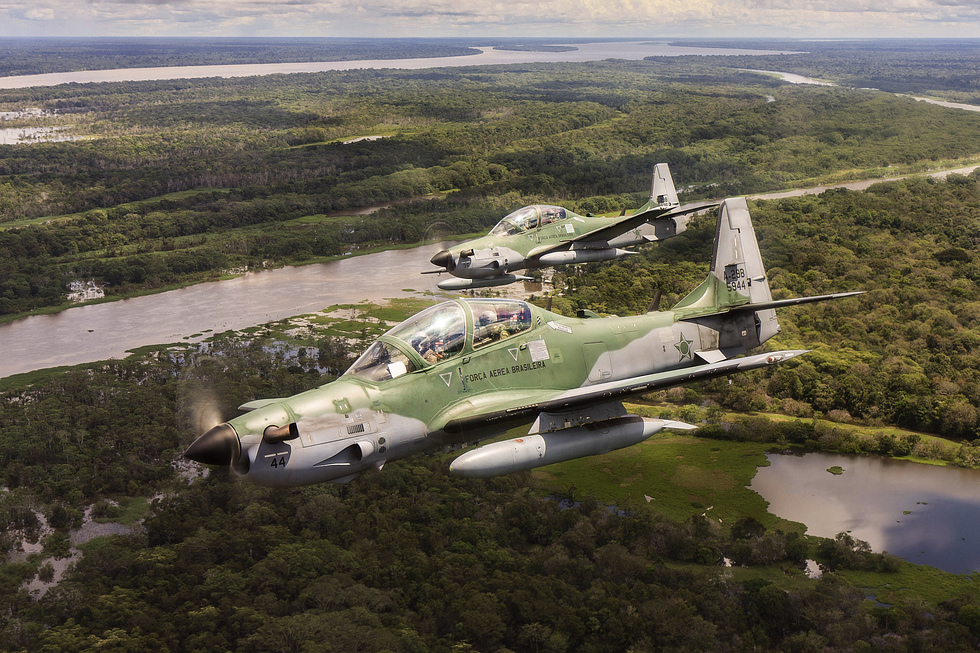
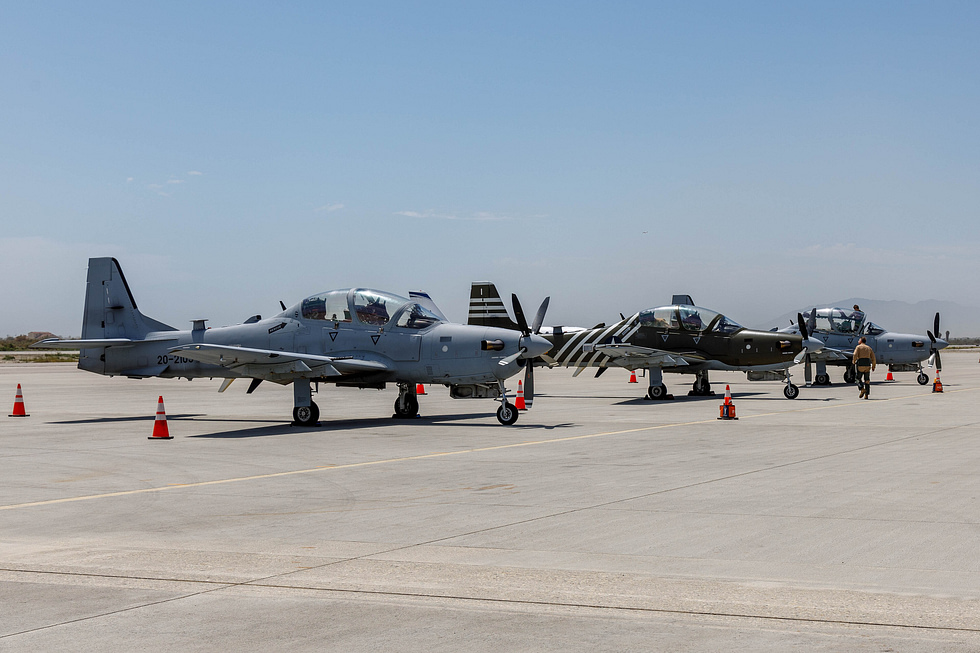
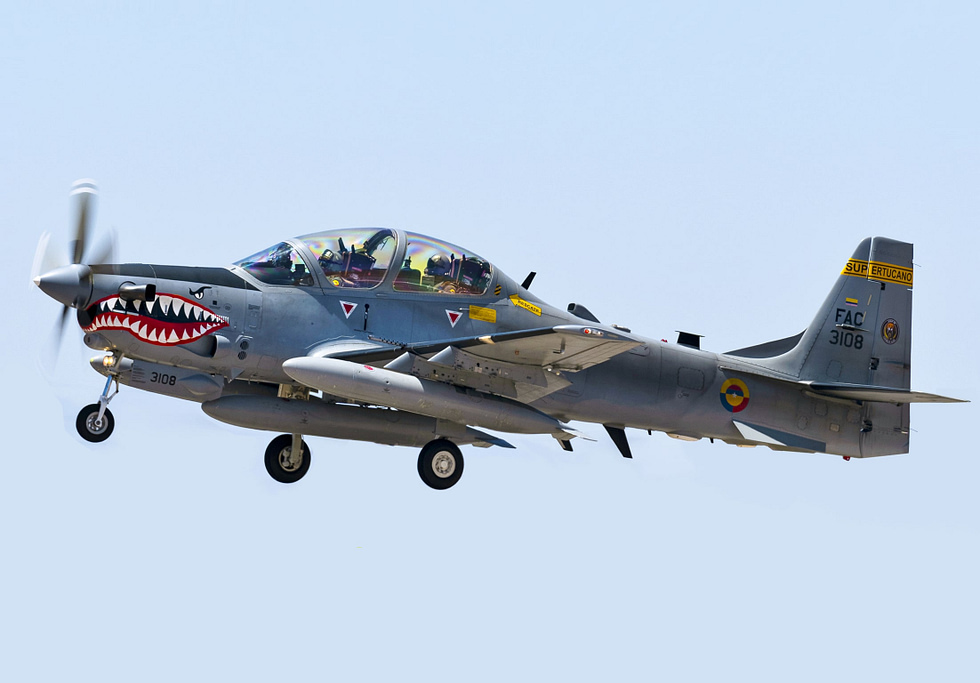
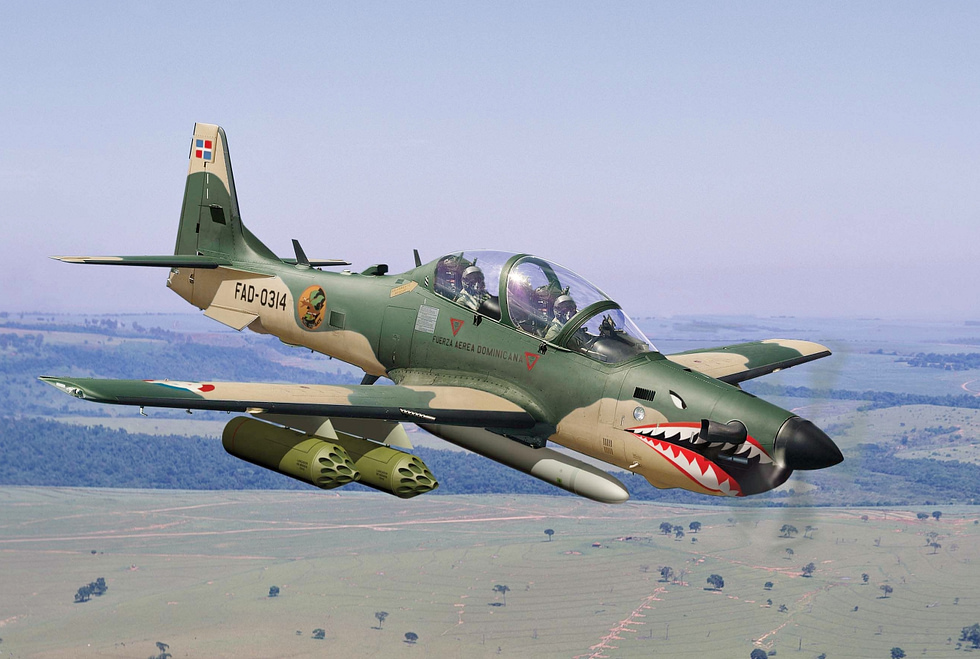
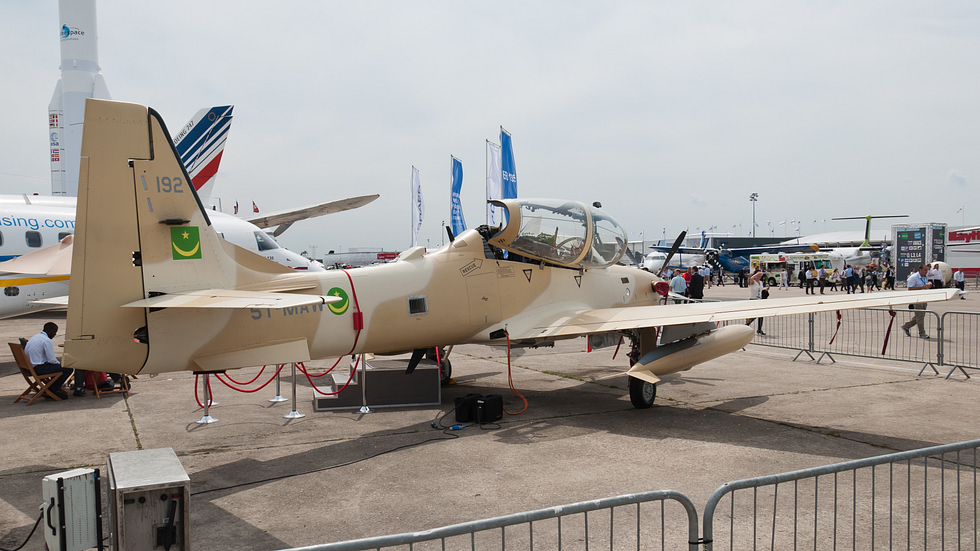
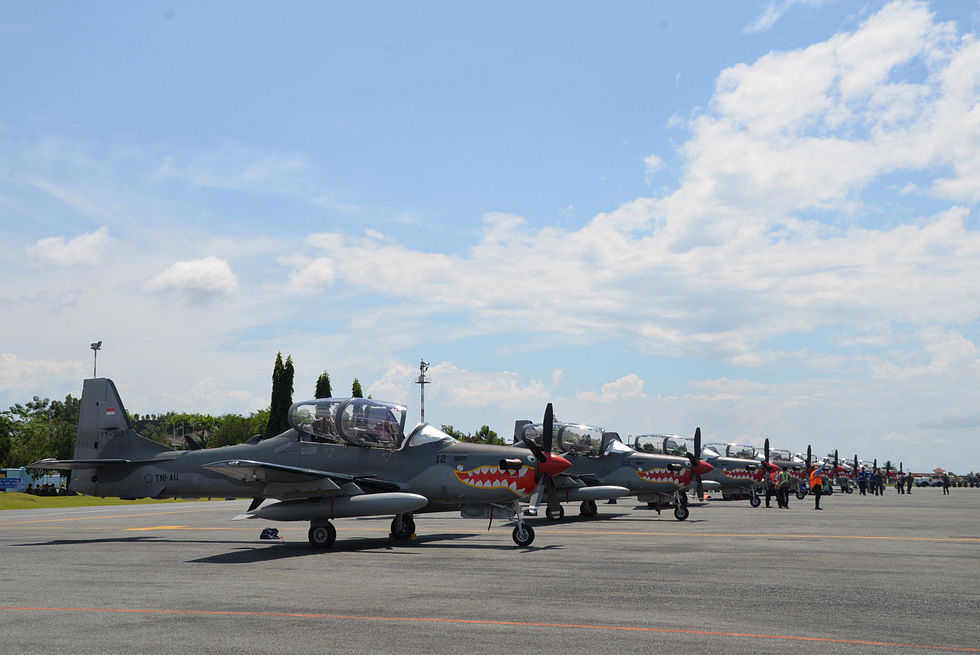
The A-29 Super Tucano in motion
Megaprojects: The A-29 Super Tucano — How a Propeller Plane Became a 21st-Century War Machine. A documentary on how the Embraer turboprop became the world’s go-to counter-insurgency and light-attack aircraft — roughly 0.9 million views.
Where the A-29 Super Tucano flies
The A-29 Super Tucano at war
Few modern combat aircraft have flown as many real missions as the Super Tucano. Rather than air-to-air kills, its record is written in years of close air support, armed reconnaissance and counter-insurgency — over the jungles of Colombia, the deserts and Sahel of Africa, the mountains of Afghanistan, and the islands of the Philippines. It is one of the most combat-experienced aircraft of its generation.
Compare the combat record of every military aircraft. Figures as of 2026.
Everything people ask about the A-29 Super Tucano
Can I fly in an A-29 Super Tucano?
What is the A-29 Super Tucano used for?
Is the A-29 a jet?
How much does a Super Tucano cost to fly?
What weapons can the A-29 carry?
Who makes the A-29, and why is it built in the USA too?
Which countries operate the Super Tucano?
Has the A-29 seen real combat?
You can’t fly the A-29 Super Tucano.
These, you can.
Some legends only live in museums — others are fuelled and waiting. MiGFlug has put civilians in real military jet cockpits since 2004.
 Fly the L-39 AlbatrosThe world’s most-flown jet trainer — aerobatics included
 Fly the F-104 Starfighter“The missile with a man in it”
 Fly the MiG-21The Cold War’s most-produced jet
 T-33 Shooting Star'ı uçurunAmerica’s first jet trainer
 Fly the DH VampireA piece of early jet history
 Fly the S.211Agile Italian jet trainer
 Fly the MB-326The classic Aermacchi jet
 Fly the MiG-15The Soviet legend of the Korean War
Continue the tour
Every fact, checked
- Embraer Defense & SecurityManufacturer material on the A-29 Super Tucano, its role and configurations.
- FlightGlobalProgramme, export and order reporting on the Super Tucano over two decades.
- Air & Space Forces MagazineCoverage of the USAF Light Attack experiment and the Afghan A-29 programme.
- JanesSpecification and operator data cross-checked for performance and armament.
- The War ZoneAnalysis of light-attack aircraft, the OA-X evaluation and A-29 operations.
- Defense NewsReporting on U.S. sales of A-29s to partner air forces including Nigeria and Lebanon.
- U.S. Air ForcePublic-domain imagery and releases on A-29 training and Light Attack testing.
- Sierra Nevada CorporationU.S. assembly partner for A-29s supplied to partner air forces.