
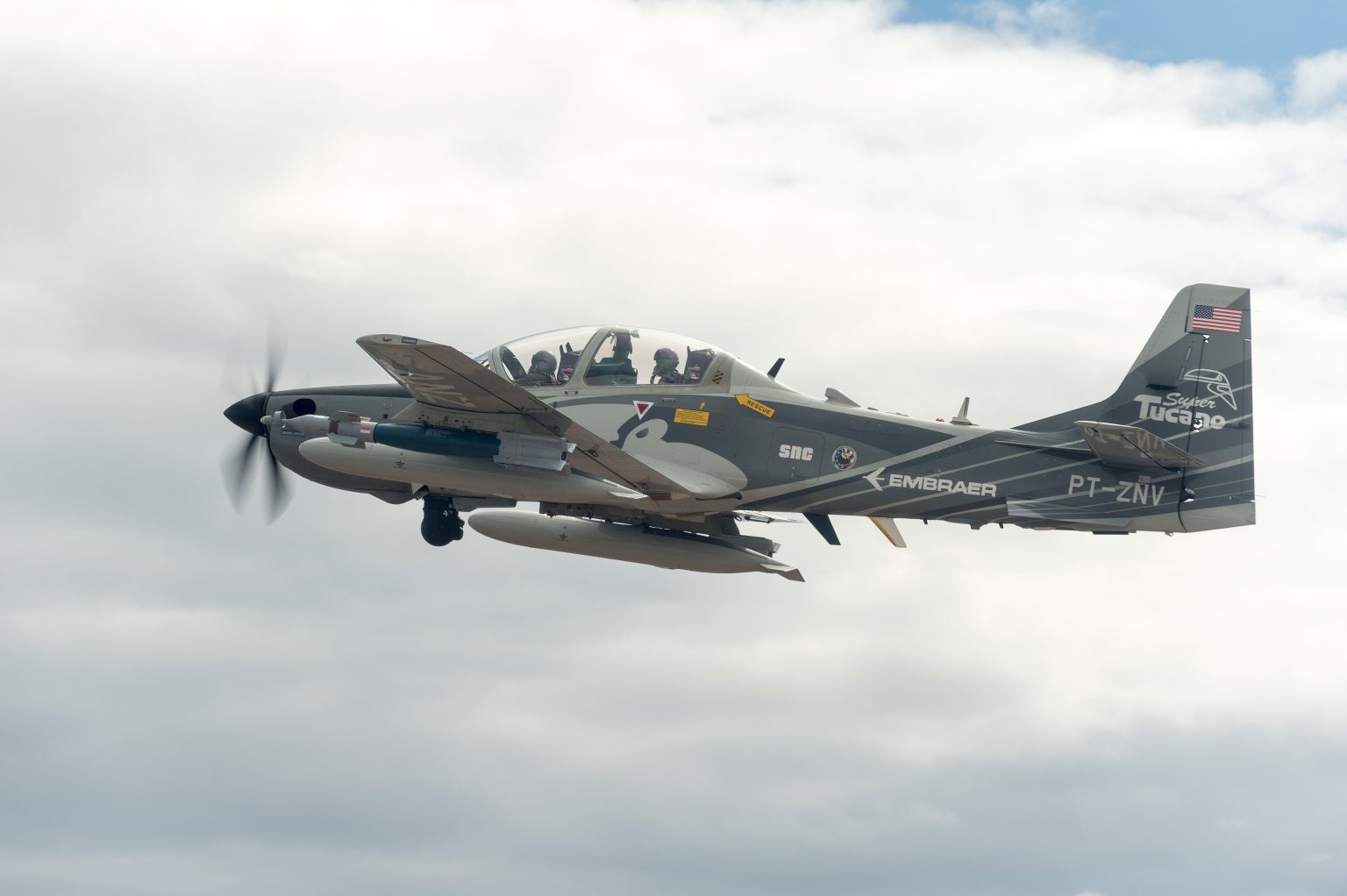
Embraer A-29
Super Tucano
A cheap, rugged Brazilian turboprop that became the world’s default counter-insurgency aircraft — a two-seat trainer with armour, ejection seats, five hardpoints and precision weapons, flying combat from jungle strips on a fraction of a jet’s budget.
The Super Tucano: how a trainer became a war-winner
By the late 1980s Embraer had a hit on its hands: the EMB-312 Tucano, a tidy turboprop trainer sold around the world. But Brazil’s air force needed something the Tucano couldn’t do — patrol the vast Amazon frontier, intercept smugglers’ light aircraft, and put real firepower over the jungle without the cost of a jet. The answer, developed through the 1990s, was a much bigger, tougher aeroplane: the EMB-314 Super Tucano, known in military service as the A-29.
First flown in 1999, the Super Tucano kept the friendly manners of a trainer — two seats in tandem, a glass cockpit, benign handling — but wrapped them around a single 1,600-shaft-horsepower Pratt & Whitney Canada PT6A-68 turboprop, cockpit armour, zero-zero ejection seats, and five hardpoints for guns, bombs, rockets and precision munitions. It could operate from short, rough, unpaved strips, loiter for hours, and be maintained by a small team far from any base.
That combination turned out to be exactly what dozens of air forces wanted. Colombia used it against FARC guerrillas; African states flew it against insurgents; the United States bought A-29s — assembled in Florida with Sierra Nevada Corporation — to equip the Afghan and other partner air forces, and flew it in the USAF’s Light Attack experiment. It has been exported to more than a dozen nations across South America, Africa, the Middle East and Asia, and it is still being built. Few modern combat aircraft have seen as much actual fighting — and almost none do it as cheaply.
01The A-29 Super Tucano’s origins: from Amazon patrol to global COIN aircraft
The Super Tucano grew out of Brazil’s ALX programme of the 1990s, itself linked to the SIVAM effort to monitor and police the Amazon basin. Brazil needed an aircraft that could find and force down drug-running light planes, watch a porous jungle border, and deliver ordnance in support of ground troops — all on a modest budget and from primitive airfields. Embraer stretched and strengthened the Tucano trainer into the EMB-314, giving it a far more powerful engine, a strengthened airframe, armour, and a modern sensor-and-weapons suite.
What began as a niche Brazilian requirement matched a worldwide need that exploded after 2001, as many nations found themselves fighting insurgents rather than other air forces. Against lightly armed opponents with no radar-guided missiles, an armoured turboprop that can loiter for hours, carry precision bombs, and cost a fraction of a jet to buy and fly is often the right tool — not a compromise. That is why the A-29 spread so far, so fast.
What makes the A-29 Super Tucano special
A turboprop, chosen on purpose
The Super Tucano is powered by a single Pratt & Whitney Canada PT6A-68, a proven turboprop of roughly 1,600 shp driving a five-blade propeller. A turboprop burns far less fuel than a jet, thrives on short unpaved strips, and needs less specialised support — letting the aircraft loiter for hours over a battlefield and fly for a small fraction of a jet’s hourly cost. Slow speed is a feature here, not a flaw: it means more time on station and a steadier weapons platform.
Built to be shot at
Unlike the trainer it descends from, the A-29 is designed to survive ground fire. It carries cockpit and engine armour, zero-zero ejection seats (safe even on the runway), self-sealing or protected fuel, and defensive aids such as radar and missile-warning receivers and chaff/flare dispensers on export configurations. It is meant to work low and slow over hostile ground — the environment that kills unprotected light aircraft — and come home.
Sensors and precision weapons
A modern glass cockpit, HOTAS controls and an electro-optical / infra-red sensor turret let the crew find targets day or night and guide weapons onto them. Across its five hardpoints the A-29 can carry two built-in .50-calibre wing machine guns, gun pods, unguided bombs and rockets, and precision munitions including laser-guided bombs — and, in some fits, short-range air-to-air missiles for the light-interception role.
02The A-29 Super Tucano’s cost advantage: a squadron for the price of one jet
The whole case for the Super Tucano is arithmetic. A modern fast jet can cost tens of millions of dollars to buy and, commonly, many thousands of dollars per flight hour to operate. The A-29’s flyaway price is usually quoted in the low tens of millions at most, and its cost per flight hour is commonly estimated at only a few hundred to around a thousand US dollars — figures that vary by operator and configuration and should be read as estimates, not audited numbers. For an air force fighting insurgents rather than other jets, that math means more aircraft, more hours, and more presence overhead for the same money.
03The A-29 vs the jets: why slow and cheap sometimes wins
A Super Tucano cannot dogfight a fighter or survive a modern integrated air-defence network — and it was never meant to. Its job is close air support, armed reconnaissance, border patrol and counter-insurgency in permissive or lightly defended airspace. There, its long loiter time, precise weapons, good downward visibility and rugged short-field ability make it more useful than a fast jet that arrives with minutes of fuel and departs. The same qualities make it an excellent lead-in fighter trainer, teaching students the tactical skills they will later use in jets.
A-29 Super Tucano: full specifications
Baseline note: the figures below describe the production two-seat A-29B as built at São José dos Campos and delivered to the Força Aérea Brasileira from December 2003 — the 1,600 shp Pratt & Whitney Canada PT6A-68C aeroplane with the five-blade Hartzell propeller, five stores stations, an armoured cockpit and a belly sensor turret. Deltas for the single-seat A-29A, for the American-assembled Light Air Support aircraft, and for the A-29C, A-29M and A-29N standards are given in grey. Five disagreements between reputable sources are worth settling before the tables begin. First, the dimensions: Embraer’s own English-language brochure prints a length of 11.14 m and a span of 11.38 m, which reverses the figures given by Jane’s and by both the English and Portuguese encyclopaedic accounts. The Super Tucano keeps the EMB-312 Tucano’s 11.14 m wing and stretches the fuselage, so it is the brochure’s labels that are wrong, not the aeroplane. Second, the engine: early EMB-314 literature quotes a 969 kW (1,300 shp) PT6A-68A and the ALX papers a PT6A-68/3, while every production A-29 has the PT6A-68C flat-rated at 1,600 shp — flat-rated being the operative word, because the whole point of the rating is that it survives an Amazonian afternoon. Third, range: 1,330 km is internal fuel, 2,855 km is with three drop tanks, and Embraer’s 1,550 nm is the same ferry figure in different clothes. Fourth, the ceiling: 10,670 m (35,000 ft) is a certified maximum that the pressurised cockpit and the on-board oxygen generator genuinely support, but a working sortie is flown between 1,500 and 5,000 m, because that is where the sensor turret and the weapons are useful. Fifth, gun ammunition: 200 rounds per gun is the figure Embraer and the American programme documents give, 250 appears in Brazilian sources, and both are probably right for different fits.
Dimensions & weights
- Crew
- 2 in the A-29B, in tandem under a single side-hinged canopy. The back seat is a weapons systems officer at least as often as an instructor — on a six-hour Amazon patrol or a Colombian night strike the second pair of eyes runs the sensor turret while the front seat flies. The A-29A deletes the rear station entirely and can carry a 303 litre ferry tank in the space
- Length
- 11.38 m (37 ft 4 in) — 1.52 m longer than the EMB-312 Tucano it grew from. Embraer’s brochure prints 11.14 m for length, which is the wingspan figure in the wrong row
- Wingspan
- 11.14 m (36 ft 7 in) — identical to the Tucano’s. Embraer stretched the fuselage, doubled the power and left the span alone, which tells you the wing was never the problem
- Height
- 3.97 m (13 ft 0 in)
- Wing area
- 19.4 m² (208.8 sq ft)
- Aspect ratio
- 6.4 — modest, and chosen for roll rate and gust response rather than for loiter efficiency. The endurance comes from the fuel and the propeller, not from the wing
- Propeller diameter
- 2.39 m (7 ft 10 in), five blades, constant-speed, fully feathering and reversible. Some tables give 2.38 m. Reverse pitch is not a detail: it is how the aeroplane stops on a dirt strip in the Amazon or the Sahel
- Empty weight
- 3,200 kg (7,055 lb)
- Maximum take-off weight
- 5,400 kg (11,905 lb) — 70 per cent more than a Tucano, in an airframe only 15 per cent longer
- Maximum external stores
- 1,550 kg (3,417 lb) across five stations. That is more weight of ordnance than an armed Tucano’s entire useful load, and roughly what a Second World War Il-2 Shturmovik carried
- Internal fuel
- ~694 litres (183 US gal, about 560 kg of Jet A-1) in the wings, self-sealing. A 303 litre tank can replace the rear cockpit on single-seaters
- External tanks
- 3 × 330 litres — two underwing, one on the centreline. Every litre of that is a hardpoint not carrying a bomb, which is the aeroplane’s central design tension
- Wing loading
- 278 kg/m² (57 lb/sq ft) at maximum take-off weight; about 165 kg/m² clean and light. The low end is why it can turn inside its own weapons effects over a jungle canopy
- Load factors
- +7 / −3.5 g — against +6 / −3 for the Tucano. The airframe was re-stressed rather than reinforced, and it is certified for aerobatic display: the Esquadrilha da Fumaça has flown A-29s since 2012
- Fatigue life
- 12,000 flight hours in combat configuration, 18,000 in training configuration, tracked by an on-board fatigue index computation. Airframe hours are the reason a 2003 aircraft is being rebuilt to A-29M standard rather than replaced
Performance
- Maximum level speed
- 590 km/h (367 mph, 320 kt) clean at altitude. Slower than a Second World War Mustang, and that is not a criticism — the mission is conducted at half this speed
- Cruise speed
- 520 km/h (323 mph, 280 kt)
- Stall speed
- 148 km/h (92 mph, 80 kt) — a 4.4:1 speed range. A fast jet cannot follow a man walking; this can
- Rate of climb
- 16.4 m/s (3,240 ft/min) at sea level
- Time to 3,050 m
- 3 min (10,000 ft) — a manufacturer figure, clean
- Service ceiling
- 10,670 m (35,000 ft). Reachable because the cockpit is pressurised and the oxygen is generated on board, and almost never used
- Sensor working altitude
- 4,570 m (15,000 ft) — Embraer’s stated altitude for useful electro-optical and infrared work. Above the reach of small arms and most heavy machine guns, and comfortably inside the envelope of a shoulder-launched missile
- Combat radius
- ~550 km (~300 nmi) hi-lo-hi with 1,500 kg of external stores
- Ferry range
- 2,855 km (1,774 miles, 1,542 nmi) with three external tanks; 1,330 km on internal fuel alone
- Endurance
- 3.4 h on internal fuel; 5.2 h with two external tanks and the sensor turret fitted; up to 8.4 h ferrying. The 5.2 hour figure is the one that matters, because it is the loiter a ground commander actually gets
- Take-off and landing
- 900 m and 860 m (2,950 ft and 2,820 ft) over a 15 m obstacle at sea level, on unprepared surfaces. Ground rolls are considerably shorter
- Cost per flight hour
- ~US$1,000–1,500 as quoted by Embraer and Sierra Nevada, against roughly US$15,000 for an F-16 or F-15. This is the aeroplane’s entire commercial argument and it should be treated with care: the figure is direct operating cost. The United States paid Sierra Nevada US$1.8 bn between 2019 and 2024 to sustain an Afghan fleet of about 25 aircraft, and no arithmetic makes that US$1,500 an hour
- Unit cost
- ~US$9–27 m depending on what is inside the parcel. Chile paid US$120 m for 12 in 2008 and Colombia US$234 m for 25; the Afghan Light Air Support buy was US$427 m for 20 with training and support; Nigeria’s 12 came to US$329 m with infrastructure and weapons; Portugal is paying about €200 m for 12 A-29Ns. Brazil’s own 2001 contract, for 99 aircraft at US$214 m, is the outlier that shows what the airframe alone is worth
Propulsion & systems
- Engine
- 1 × Pratt & Whitney Canada PT6A-68C free-turbine turboprop, 1,193 kW (1,600 shp), flat-rated. The Tucano it replaced had 750 shp. More than twice the power is the single change from which every other change follows
- Engine control
- Electronic power management unit — automatic torque, temperature and propeller-speed limiting through a single power lever. The pilot of a heavily loaded aeroplane on a hot short strip is not also managing a turbine
- Propeller
- Hartzell five-blade constant-speed, fully feathering, reversible-pitch — the same family as the PC-21’s. Five blades keep the disc small enough for propeller clearance on rough ground and keep the acoustic signature down, which is a tactical property and not a comfort one
- Armour
- Armoured cockpit and engine compartment — Kevlar and steel panelling rated against 7.62 mm and, in the critical areas, 12.7 mm fire. This is the line between this aeroplane and every armed trainer it competes with, and it is why a Super Tucano can be flown at 1,500 m over a firefight when a Texan II or a PC-9 cannot
- Fuel system
- Self-sealing tanks — the other half of the same argument. An armed trainer holed in the wing at low level lands somewhere it did not choose
- Life support
- Pressurised cockpit, air conditioning, on-board oxygen generation system and an anti-g system — OBOGS is the unglamorous item that changes the sortie. No liquid oxygen cart, no bottle exchange, no oxygen ground-support chain at a dirt strip in Mali, and no endurance limit imposed by the crew’s breathing supply on an eight-hour ferry
- Ejection seats
- 2 × Martin-Baker Mk 10LCX zero-zero with three selectable modes. They work: the Brazilian losses of 13 September 2021, 27 April 2022 and 30 July 2025 all ended with the crews walking away, and the 2021 pilot steered his aircraft clear of housing before going
- Cockpit displays
- Two 152 × 203 mm (6 × 8 in) colour multi-function displays per cockpit, head-up display with colour video camera, up-front control panel, full HOTAS, and complete night-vision-goggle compatibility. Brazilian aircraft use Elbit Systems avionics; the American-built Light Air Support machines use Elbit Systems of America mission computers, HUD and stores management
- Sensor turret
- Belly-mounted electro-optical and infrared turret — an AN/AAQ-22 SAFIRE-class FLIR Systems sensor on Brazilian and many export aircraft, with laser rangefinder and laser designator. The designator is the difference between calling for someone else’s precision weapon and dropping your own
- Navigation
- Embedded GPS with inertial reference, radio altimeter, autopilot and flight director, digital moving map and embedded mission planning — all of it certified for instrument flight, which matters because the weather in the Amazon does not consult the tasking order
- Communications and data link
- VHF, V/UHF and HF with encryption, an encrypted tactical data link and IFF with ADS-B — the data link is the least visible item on this list and the most consequential. It is what lets a Super Tucano take a target from a SIVAM ground radar, an E-99 or a joint terminal attack controller and put a weapon on it without a word being spoken in clear
- Self-protection
- Radar warning receiver, missile approach warning system, chaff and flare dispensers — fitted, real, and not sufficient against a modern man-portable missile with an imaging seeker. Every honest assessment of this aeroplane starts there
- Stores stations
- 5 — four underwing and one centreline, to NATO standards, plus the two internal wing guns. Embraer advertises more than 160 cleared configurations
04The A-29 Super Tucano’s operating costs: what the numbers really say
Low operating cost is the Super Tucano’s single biggest selling point, but exact figures are slippery. Published cost-per-flight-hour estimates for the A-29 commonly land in the range of a few hundred to about US$1,000 per hour — roughly an order of magnitude below a fast jet — while flyaway unit cost is usually quoted in the low tens of millions of dollars depending on sensors, weapons and support. Both numbers vary widely by operator, contract and how “cost” is defined (fuel-and-maintenance versus fully-burdened), so we present them as commonly-cited estimates rather than audited figures. The consistent point across every source is relative: for the price of operating one modern jet fighter, an air force can keep several Super Tucanos in the air.
Armament & payload
The Super Tucano carries a fighter’s weapons list, but the item that made it useful is the sensor turret under its belly
Five NATO-standard stores stations, 1,550 kg of ordnance and two .50 calibre machine guns buried in the wings put a Super Tucano’s magazine somewhere between an armed trainer and a Second World War attack aircraft — and none of that is what separates it from the armed Tucanos, AT-6s and Pilatus PC-9s it competes with. What separates it is the electro-optical and infrared turret with a laser designator, the computing head-up display that feeds it, and the encrypted data link that lets somebody else feed both. The A-29 can find a target at night from four kilometres up, mark it with its own laser, drop its own Paveway on the mark and record the whole thing for the lawyers, using one aeroplane and one sortie. That is a capability American and European air forces did not have in a light aircraft until the 1990s and that many still do not field. Fits vary enormously. Brazilian aircraft, the American-assembled Light Air Support machines and the various export standards carry different mission computers, different data links and different cleared stores; Embraer advertises more than 160 configuration possibilities, the great majority of which no air force has ever flown.
Gun
- Two FN Herstal M3P 12.7 mm (.50 in) machine guns, one in each wing outboard of the propeller disc, 200 rounds per gun and a cyclic rate of 1,100 rounds per minute. Brazilian sources give 250 rounds; both figures appear in print and both are probably right for different fits
- Wing mounting is the quiet engineering choice. There is no nose bay, no synchronisation gear and no propeller to fire through, at the price of convergence — the rounds cross at a set range and the pilot must know it
- Two hundred rounds at 1,100 rounds per minute is about eleven seconds of continuous fire per gun. Nobody fires continuously; a strafing pass is a burst measured in tenths of a second
- A Nexter (formerly GIAT) NC621 20 mm cannon pod at 650 rounds per minute can be carried on the centreline, and 12.7 mm pods under each wing for operators who want volume rather than calibre. Neither is a common fit, and the reason is honest: against pick-up trucks, canoes, motorcycles and men in cover, the .50 is enough and the cannon is recoil and weight the airframe would rather spend on fuel
- Aiming is a computing head-up display with continuously computed impact point and release point modes, fed by the mission computer and by the laser rangefinder in the belly turret. That is the largest single capability gap between this aeroplane and the A-37 and OV-10 generation it replaced, which aimed by eye
Air-to-air
- The AIM-9L Sidewinder, the Brazilian Mectron MAA-1 Piranha and the Israeli Python 3 and Python 4 all appear in cleared configurations. This is not a fighter and Embraer has never claimed it is
- The mission those rails exist for is slow-mover interception. Under the Brazilian SIVAM and SIPAM air picture the Super Tucano is the shooter of last resort against light aircraft running cocaine out of Bolivia, Peru and Colombia, cued by ground radar and by E-99 radar aircraft
- On 3 June 2009 a pair of Força Aérea Brasileira A-29s intercepted a Cessna U206G over Rondônia and fired warning bursts from the wing guns — the first exercise of the powers under Brazil’s Lei do Abate. The aircraft landed and 176 kg of cocaine base paste was recovered. The gun did the work; the missile has never been needed
- The Dominican Republic’s eight aircraft are the clearest proof of the concept. Illicit air tracks into Dominican airspace fell by more than 80 per cent after they entered service in 2009 and 2010, and the deterrent came from the aeroplane being airborne and visible rather than from anything it fired
- There is no radar. Interception is a visual and infrared problem flown under ground control, and against anything faster than a light twin the Super Tucano is a spectator
Air-to-surface guided
- Paveway II laser-guided bombs are the staple: the 500 lb GBU-12, the 250 lb GBU-58 and the dual-mode GPS and laser GBU-49 Enhanced Paveway II. The Afghan Air Force’s first laser-guided weapon of any kind, on 22 March 2018, was a GBU-58 from an A-29
- GBU-38 JDAM and the GBU-39 small diameter bomb are integrated or in integration on the American-built and A-29M standards. Elbit’s Lizard and IAI’s Griffin laser kits are the Israeli-sourced alternative, and Colombia used Griffin-guided weapons in Operation Phoenix on 1 March 2008
- The AGR-20 Advanced Precision Kill Weapon System — a laser seeker bolted between the motor and warhead of an ordinary 70 mm rocket — is the store that changed the arithmetic. A precision shot for tens of thousands of dollars rather than hundreds of thousands, from an aeroplane costing a fifteenth of a fighter to fly
- None of it works without the turret. Because the A-29 carries its own laser designator it can find, mark and kill a target in one pass with one aircraft. Colombia’s A-37 Dragonflies, which dropped the same Paveways a decade earlier, had to borrow the spot from somebody else
- AGM-65 Maverick and AGM-114 Hellfire appear in manufacturer literature and in several national wish-lists. Treat those as offers rather than as weapons a squadron has loaded
Bombs
- Mk 81 250 lb and Mk 82 500 lb low-drag general-purpose bombs are the standard iron, with the M117 750 lb on some clearance lists and Brazilian-pattern general-purpose weapons alongside them
- Colombia is the type’s heaviest bomber and its combat record is largely Colombian. Operation Sodoma on 22 September 2010 put roughly seven tonnes of ordnance onto one camp and killed the FARC military chief Mono Jojoy; Operation Odiseo on 4 November 2011 used 450 kg and 135 kg weapons from five aircraft and killed Alfonso Cano; Operation Armageddon on 26 March 2012 delivered around forty guided 500 lb bombs from nine aircraft
- Brazil uses the same weapons against different targets. During Operação Ágata in August 2011 A-29s dropped eight computer-aimed 230 kg Mk 82s to crater a clandestine airstrip — an application of air power that is closer to civil engineering than to close air support
- BLG-252 cluster munitions appear in published clearances. Brazil is not a party to the Convention on Cluster Munitions and several Super Tucano operators are, which is one reason the printed stores list and any given squadron’s magazine differ so widely
- Unguided delivery is through the computing HUD rather than a fixed sight, and this is a 1990s bombing system in an aeroplane that flies like a 1950s one. Colombia attributed the success of its very first Super Tucano combat mission, on 18 January 2007, specifically to the continuously computed impact point
Rockets
- 70 mm (2.75 in) rockets in LAU-68A/G seven-tube and LAU-131 pods, and in the Brazilian Avibras SBAT-70/19 nineteen-tube pod. This is the everyday counter-insurgency weapon and always has been
- The APKWS laser-guided version turns the same pod into a precision magazine. A single seven-tube launcher becomes seven aimed shots rather than one aimed pattern, which is the difference between suppressing a treeline and killing a specific vehicle in it
- Philippine Air Force A-29Bs used rockets and guns against camps at Palimbang, Sultan Kudarat, in December 2021 — the type’s combat debut in South East Asia, barely a year after delivery
- Indonesian aircraft were reported, with video, attacking positions of the Free Papua Movement in the Kiwirok district of Bintang Mountains Regency on 6 October 2025, using machine guns and rockets. Indonesian accounts and Papuan accounts of that day do not agree and this page does not adjudicate between them
- Rockets are also the cheapest way for a poor air force to keep its pilots current. That is not a footnote: for several of the sixteen operators it is the reason the training and the fighting are done by the same squadron in the same aeroplane
Pods & other stores
- The belly electro-optical and infrared turret is the aircraft’s real weapon. An AN/AAQ-22 SAFIRE-class FLIR Systems sensor on Brazilian and many export machines, with laser rangefinder and designator, usable from about 4,570 m (15,000 ft); other operators fly MX-series and Elbit alternatives
- Three 330 litre external tanks, two underwing and one on the centreline. Fuel, sensors and weapons all compete for the same five stations, and every long-endurance sortie is a negotiation between loiter and load
- Chaff and flare dispensers, a radar warning receiver and a missile approach warning system are fitted to combat-configured aircraft. They are real and they are not sufficient against a modern imaging-seeker missile
- An encrypted tactical data link, and VHF, V/UHF and HF radios with encryption. Nothing on the aeroplane is less photogenic and nothing has changed its usefulness more: a Super Tucano can be handed a target by a ground radar, an airborne early-warning aircraft or a terminal attack controller without a word in clear
- A 303 litre ferry tank can occupy the rear cockpit of the single-seat A-29A, and the mission recorder system stores HUD and sensor video for post-strike assessment — which in counter-insurgency is as often a legal requirement as a tactical one
Three typical loadouts
- Amazon air policing, Brazil
- Belly EO/IR turret, two 330 litre underwing tanks, both wing guns loaded, no bombs. Five hours or more on station out of Porto Velho or Boa Vista under SIVAM and SIPAM radar control, working slow-mover intercepts and photographing clandestine strips. The most flown Super Tucano configuration in the world, and the one nobody photographs.
- Night precision strike, Colombia, the Odiseo pattern
- Two Paveway II laser-guided bombs, one 330 litre tank, turret and guns. The aircraft finds the camp on infrared from a stand-off orbit, designates for itself and releases; a second and third aircraft repeat within the minute. This is the loadout that killed three successive FARC leaderships between 2008 and 2012.
- Close air support, Afghanistan 2018–2021
- Two rocket pods or a pair of GBU-58s, turret, one centreline tank, full gun load. Two hours overhead a troops-in-contact with the fuel to stay, at a height where a Taliban DShK could not reach and a shoulder-launched missile could. The Afghan Air Force flew roughly 2,000 strike sorties in 2017 alone on this basis.
Sourcing caveat: the stores list above is compiled from Embraer’s own published brochure, from United States Foreign Military Sales notifications, and from operator statements after specific operations. A weapon cleared on one national standard is not thereby cleared on another, and integration announced by a manufacturer is not the same as a weapon in a squadron bomb dump. Where a store appears only in marketing material it is flagged as such above.
Variants
One airframe, half a dozen mission systems, and three assembly lines on two continents
The Super Tucano is not a Tucano with guns, and the distinction is worth insisting on because the two aircraft share a name and very little else. The fuselage is 1.52 m longer. The engine has more than twice the shaft horsepower. The structure is stressed to +7 and −3.5 g rather than +6 and −3. The cockpit is pressurised, air-conditioned, armoured against 7.62 mm fire and fitted with zero-zero ejection seats, an on-board oxygen generator and a glass instrument panel. The fuel tanks are self-sealing. The undercarriage was redesigned to absorb 1,550 kg of external stores off a dirt strip. Roughly 90 per cent of the aeroplane is new, which is why Embraer changed the type number from EMB-312 to EMB-314 partway through development.
The naming is a small thicket. EMB-314 is the Embraer type number. A-29 is the Brazilian military designation, adopted by the United States for the Light Air Support aircraft; AT-29 appears in early Brazilian usage for the two-seater; ALX was the programme, not the aeroplane. Super Tucano is the marketing name and the one everybody uses, including this page.
The industrial history is more interesting than the engineering history. Brazil built the aeroplane at São José dos Campos from 2003. The United States Air Force’s Light Air Support competition, launched in 2009 for a counter-insurgency aircraft for Afghanistan, produced one of the most litigated procurements of its decade: the Beechcraft AT-6 was excluded as technically unacceptable on 16 November 2011, Hawker Beechcraft protested, a stop-work order followed in January 2012, the Air Force then cancelled its own award in February 2012 because it could not adequately document how it had reached the decision, the competition was re-run, and in February 2013 Sierra Nevada and Embraer won it again — US$427 m for 20 aircraft for the Afghan Air Force. Congressional objections about buying a Brazilian aeroplane persisted even though the aircraft were finished in Florida. The Beechcraft protest was eventually dismissed by the Government Accountability Office and the Court of Federal Claims.
- EMB-312H Tucano H / ALX demonstrators (1991–1997, 3 conversions)
- Stretched-fuselage EMB-312 airframes with a PT6A-67R and later PT6A-68A. First flew 9 September 1991; two more followed in May and October 1993, and two were rebuilt as ALX prototypes under the August 1995 contract. These proved the aerodynamics; almost nothing else survived into the production aeroplane.
- YA-29 and YAT-29 prototypes (1999, 2 aircraft)
- The definitive configuration. The single-seater flew on 2 June 1999 and the two-seater on 22 October 1999, by which point the type number had changed from EMB-312 to EMB-314 because so little of the Tucano was left. Development cost across the whole programme is put at US$200–300 m.
- A-29A (2003–, 33 for Brazil)
- Single-seat attack and armed reconnaissance version, rear station deleted and available as a 303 litre ferry tank bay. Brazil is the only significant operator of the single-seater, which says something about how the export market actually uses the aeroplane.
- A-29B (2003–, 66 for Brazil and the great majority of exports)
- The standard aircraft and the one almost every operator bought. The second seat is a weapons systems officer as often as an instructor, which is the real reason the two-seater won: a light attack aeroplane with a sensor operator is worth more than two single-seaters without one.
- A-29B Light Air Support standard (2013–, Jacksonville-assembled)
- Built in Brazil, finished by Sierra Nevada Corporation at Embraer’s plant on the grounds of Jacksonville International Airport in Florida, with Elbit Systems of America mission computer, HUD and stores management. The first light attack aircraft in the world to hold a United States Air Force Military Type Certificate.
- A-29C (2021–2024, 3 aircraft)
- Air Force Special Operations Command configuration flown from Hurlburt Field for the Combat Aviation Advisor mission — teaching partner air forces to fly the aeroplane they had bought. Passed to the United States Air Force Test Pilot School in 2024, which is a graceful way of ending a programme.
- A-29M (announced November 2024, 68 Brazilian aircraft)
- Mid-life rebuild: encrypted data link, digital head-up display, helmet-mounted display, laser rangefinder and a wide-area cockpit display commonised with Brazil’s Gripen E. The point is a common pilot interface across the fast-jet and light attack fleets, not new performance.
- A-29N (announced April 2023; Portugal, 12 aircraft for about €200 m)
- NATO-standard variant with NATO communications, IFF and symbology, single-pilot operation, and virtual and mixed-reality training devices. Assembly is at OGMA in Portugal, into which Embraer announced an investment of R$540 m in August 2024 — the type’s third assembly line and its first inside NATO.
- EMB-314 civil-registered (2008–, 1 aircraft)
- One aeroplane bought by EP Aviation, a Blackwater subsidiary, for the United States Navy’s Imminent Fury trials of a light attack aircraft for special operations. Sold to Tactical Air Support in 2012. Imminent Fury died of funding; almost everything it argued for came back as OA-X eight years later.
Closing caveat: Embraer states more than 290 aircraft contracted, over 580,000 flight hours flown of which about 60,000 on active operations, and 20 air forces. Independent counts of aircraft actually delivered stood at roughly 260 in 2023 and the type remains in production, so any figure on this page is a snapshot. Attrition is real: at least sixteen accidents were recorded between 2007 and 2021, Indonesia has lost three aircraft including two on Mount Bromo on 16 November 2023, Brazil at least seven, and the Afghan fleet was effectively destroyed in August 2021. Where sources conflict on national totals, ordered and delivered quantities have been separated rather than averaged.
Operators today
Sixteen air forces still fly the Super Tucano, and the argument about whether it belongs in modern airspace has never been settled
This is the rare encyclopaedia entry where the production line is still running. Embraer counts more than 290 aircraft contracted and 20 air forces; independent tallies of airframes delivered were around 260 in 2023, with Paraguay, Uruguay, Panama and Portugal signing since. The bars below count aircraft delivered and taken on national charge rather than aircraft serviceable on a given morning, and the difference matters more than usual here: Brazil has lost at least seven of its 99, Indonesia three of sixteen, Mali one of four, Ecuador at least one of eighteen, and Colombia one in July 2012 that FARC claimed with a .50 calibre machine gun and the Colombian air force attributed to something else after inspecting the wreckage. Two countries are deliberately absent. Afghanistan received 26 aircraft under the American Light Air Support programme and no longer has an air force: at least twenty were destroyed or abandoned in August 2021, several were flown to Uzbekistan by escaping pilots, and at least one was photographed in Taliban hands at Mazar-i-Sharif. Ghana ordered five in 2015 and has never taken delivery.
The harder question is the one the United States Air Force asked itself for a decade and never answered. The Super Tucano is superb over an enemy who has rifles, machine guns and occasionally a shoulder-launched missile: it is armoured, it loiters for five hours, it costs somewhere near US$1,500 an hour to fly against US$15,000 for a fighter, and it can be based on a strip a C-130 would think twice about. Against an enemy with a modern integrated air defence system it is a target, and every serious advocate of the type concedes it. The OA-X Light Attack Experiment of 2017 and 2018 flew A-29s and AT-6s at Holloman and Davis-Monthan, lost an A-29 and its pilot at the Red Rio range at White Sands, and ended with the Air Force buying three aircraft of each type for a training and advisory role rather than the several hundred that had been discussed. Armed Overwatch went to a different aeroplane. Whether that was strategic clarity or an institution declining to buy something cheap is still argued in the American defence press, and the twenty burned Afghan A-29s are evidence for both sides: the aeroplane worked, and the air force it was built for did not survive.
These are estimates. Figures are built from delivery records rather than a single inventory snapshot, and separate ordered from delivered: Brazil 99 (33 A-29A and 66 A-29B) delivered from December 2003, with 68 contracted in November 2024 for rebuild to A-29M; Colombia 25 delivered 2006–2008 for US$234 m; Chile 22 in three batches (12 in 2009, 6 in 2018, 4 in 2020); Ecuador 18, reduced from an original 24, all delivered by 2011; Indonesia 16 delivered 2012–2016; Nigeria 12 delivered October 2021 under a US$329 m package; Dominican Republic 8, reduced from 10, delivered 2009–2010; Angola 6 from January 2013; Lebanon 6 delivered October 2017 and June 2018, funded by Saudi Arabia through the American Light Air Support programme; Philippines 6 delivered October 2020 with 6 more contracted in December 2024; Turkmenistan 5 delivered 2020–2021; Mali 4 of 6 ordered, delivered July 2018, one lost in April 2020; Mauritania 4 from October 2012, some sources give 3; Burkina Faso 3 from September 2011; United States 3 A-29Cs delivered 2021 to Air Force Special Operations Command and transferred to the Test Pilot School in 2024; Honduras 2 ordered 2014. Many airframes counted on paper are stored, in deep overhaul, or not operational. Not counted here because nothing has been delivered: Portugal 12 A-29N approved December 2024, Paraguay 6 and Uruguay 6 ordered July 2024, Panama 4 contracted September 2025, Ghana 5 ordered 2015 and never delivered. Senegal appears in some Portuguese-language lists and could not be corroborated, so it is omitted. Sources: IISS The Military Balance and FlightGlobal World Air Forces cross-checked against Embraer, Sierra Nevada, national air force and United States government announcements; entries that could not be corroborated are omitted.
From Amazon trainer to global light-attack aircraft
The Tucano succeeds
Embraer’s EMB-312 Tucano trainer sells worldwide, establishing the company as a maker of capable turboprops.
The ALX programme
Brazil’s need to police the Amazon frontier drives development of a bigger, armed derivative — the EMB-314 Super Tucano.
First flight
The two-seat Super Tucano prototype takes to the air, powered by the PT6A-68 turboprop.
Enters Brazilian service
The Forca Aerea Brasileira begins receiving the A-29 for border patrol, air policing and light attack.
First export and first combat
Colombia becomes an early export customer and puts the type into action against FARC guerrillas.
Made in the USA for Afghanistan
Sierra Nevada Corporation and Embraer win a U.S. contract; A-29s assembled in Florida are delivered to the Afghan Air Force from 2016.
The USAF Light Attack experiment
The A-29 flies in the U.S. Air Force’s OA-X / Light Attack evaluation alongside the AT-6.
Still spreading, still fighting
Nigeria receives 12 A-29s (2021); the Philippines, Lebanon and others field the type; production continues for new customers.
Twelve stories from the Super Tucano’s war
The plane the Amazon demanded
Brazil needed to police a jungle frontier the size of a continent — and built the Super Tucano to do it.
Read the full story
War against the FARC
Colombia was an early customer and put the A-29 straight into a hard counter-insurgency fight.
Read the full story
A Brazilian plane assembled in Florida
To arm partner air forces, the U.S. had A-29s built in Jacksonville with Sierra Nevada Corporation.
Read the full story
The Afghan Air Force’s strike arm
A-29s became the backbone of Afghan close air support — until 2021.
Read the full story
The Light Attack experiment
The U.S. Air Force flew the A-29 in a real-world evaluation of cheap combat aircraft.
Read the full story
Against Boko Haram
Nigeria bought 12 A-29s to fight insurgents in its north-east.
Read the full story
One proven turboprop
The PT6 family is one of the most trusted engines in aviation — and it powers the Super Tucano.
Read the full story
A trainer that fights back
Armour, ejection seats and defensive aids separate the A-29 from the trainer it descends from.
Read the full story
Smart weapons on a cheap airframe
Laser-guided bombs and a sensor turret give the A-29 accuracy once reserved for jets.
Read the full story
The lead-in fighter trainer
Many air forces use the Super Tucano to prepare pilots for front-line jets.
Read the full story
A map that keeps growing
From Chile to Indonesia, the A-29 spread across four continents.
Read the full story
The right plane for the wars we fight
Cheap, rugged and precise, the A-29 keeps winning contracts jets cannot.
Read the full story
The A-29 Super Tucano in pictures
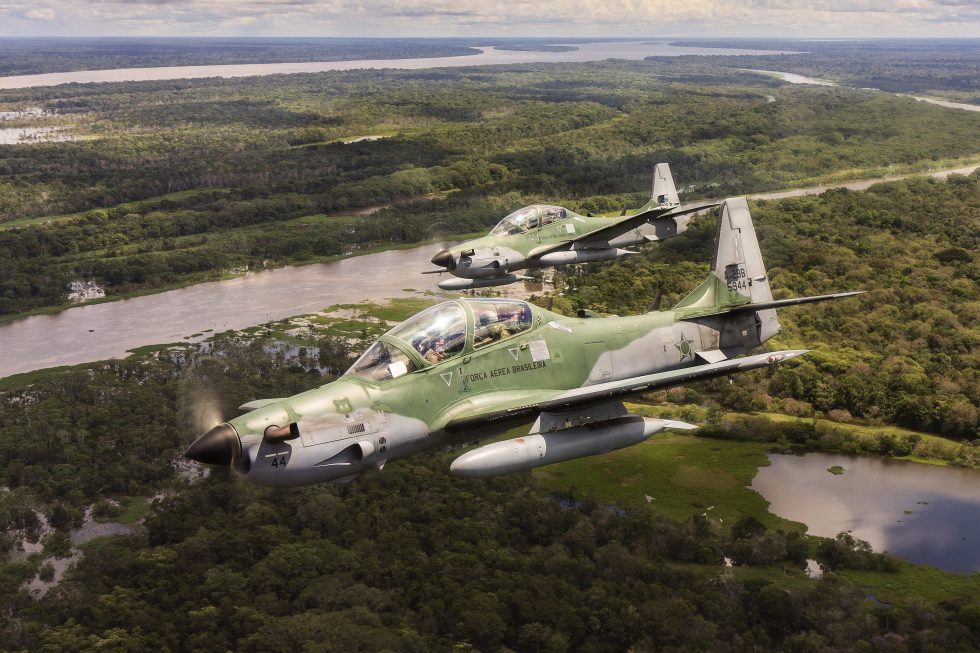
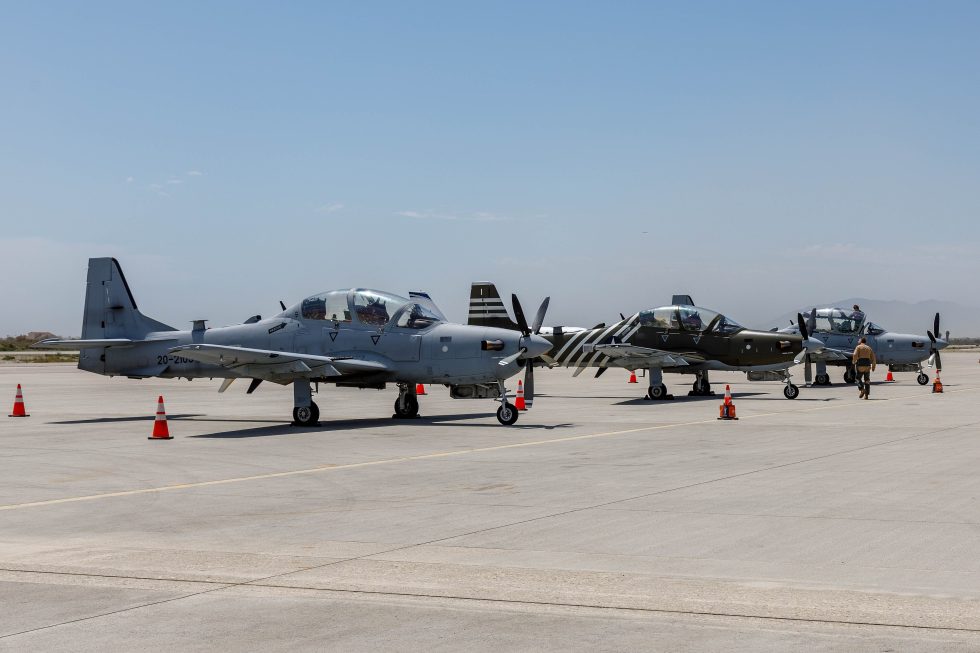
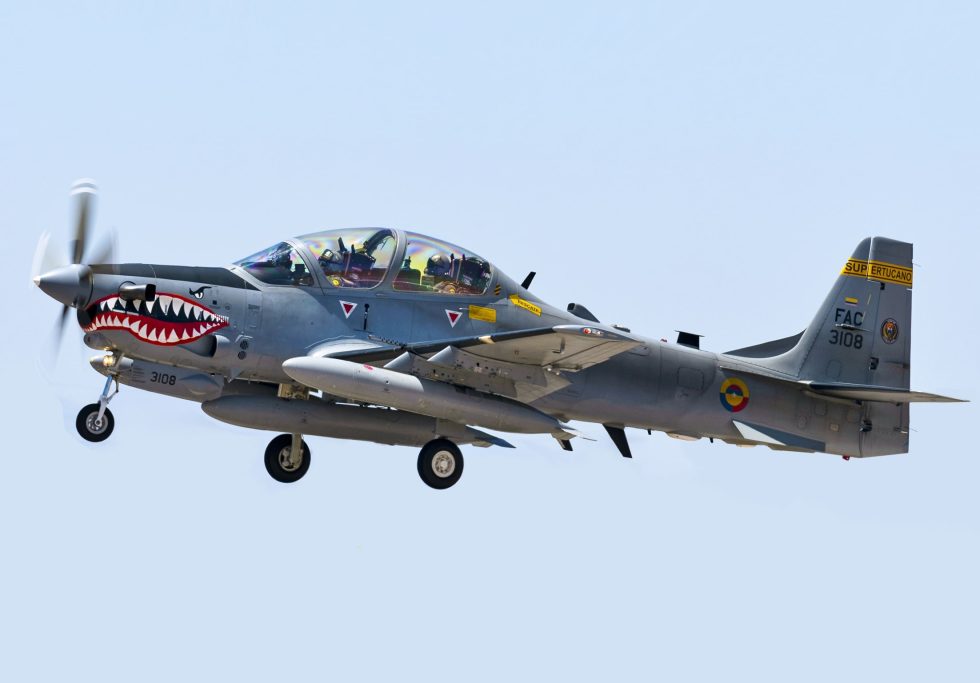
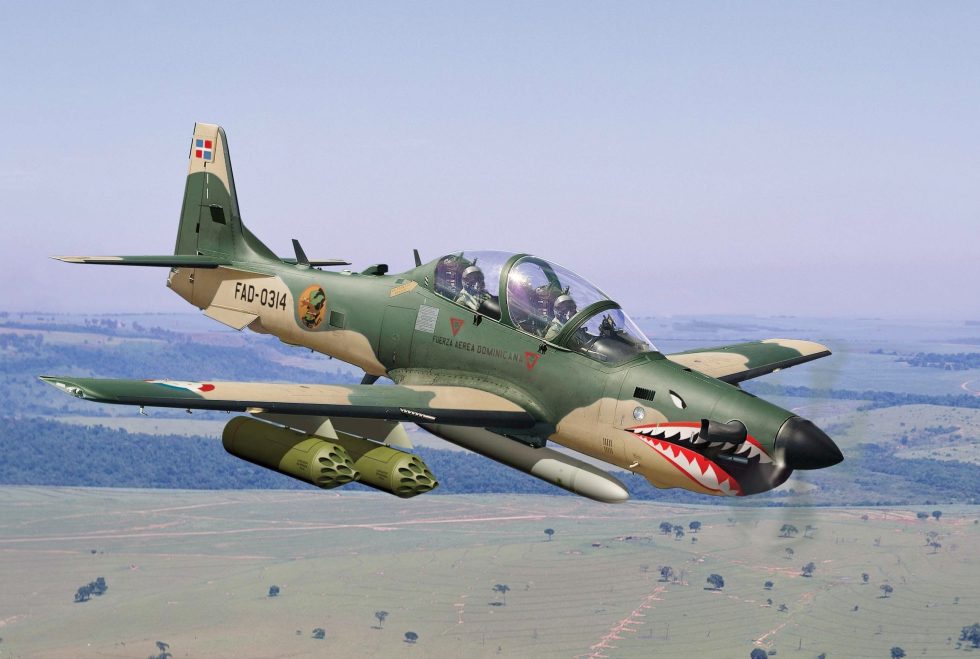
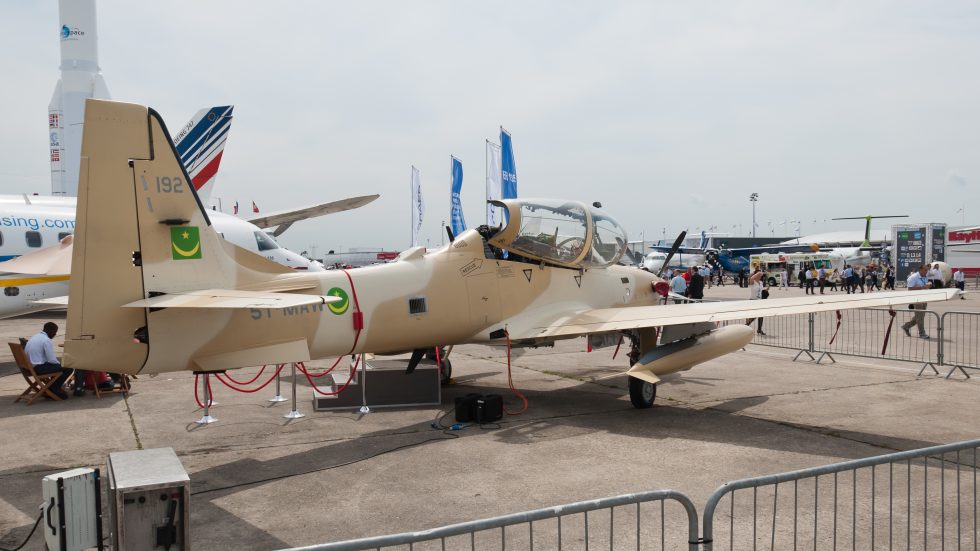
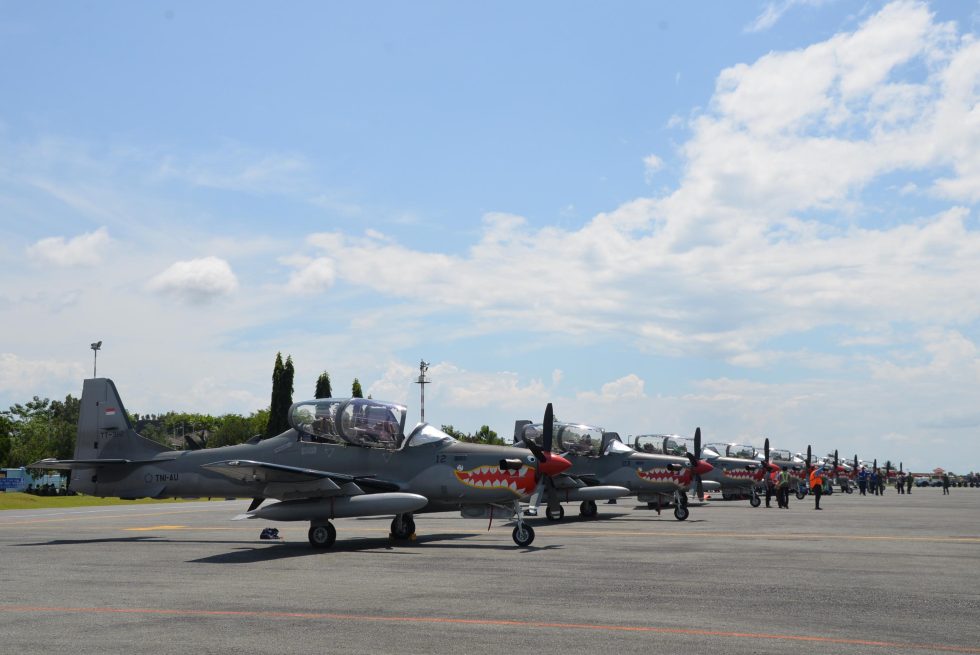
The A-29 Super Tucano in motion
Megaprojects: The A-29 Super Tucano — How a Propeller Plane Became a 21st-Century War Machine. A documentary on how the Embraer turboprop became the world’s go-to counter-insurgency and light-attack aircraft — roughly 0.9 million views.
Where the A-29 Super Tucano flies
The A-29 Super Tucano at war
Few modern combat aircraft have flown as many real missions as the Super Tucano. Rather than air-to-air kills, its record is written in years of close air support, armed reconnaissance and counter-insurgency — over the jungles of Colombia, the deserts and Sahel of Africa, the mountains of Afghanistan, and the islands of the Philippines. It is one of the most combat-experienced aircraft of its generation.
Compare the combat record of every military aircraft. Figures as of 2026.
Everything people ask about the A-29 Super Tucano
Can I fly in an A-29 Super Tucano?
What is the A-29 Super Tucano used for?
Is the A-29 a jet?
How much does a Super Tucano cost to fly?
What weapons can the A-29 carry?
Who makes the A-29, and why is it built in the USA too?
Which countries operate the Super Tucano?
Has the A-29 seen real combat?
You can’t fly the A-29 Super Tucano.
These, you can.
Some legends only live in museums — others are fuelled and waiting. MiGFlug has put civilians in real military jet cockpits since 2004.
 Fly the L-39 AlbatrosThe world’s most-flown jet trainer — aerobatics included
 Fly the F-104 Starfighter“The missile with a man in it”
 Fly the MiG-21The Cold War’s most-produced jet
 Fly the T-33 Shooting StarAmerica’s first jet trainer
 Fly the DH VampireA piece of early jet history
 Fly the S.211Agile Italian jet trainer
 Fly the MB-326The classic Aermacchi jet
 Fly the MiG-15The Soviet legend of the Korean War
Continue the tour
Every fact, checked
- Embraer Defense & SecurityManufacturer material on the A-29 Super Tucano, its role and configurations.
- FlightGlobalProgramme, export and order reporting on the Super Tucano over two decades.
- Air & Space Forces MagazineCoverage of the USAF Light Attack experiment and the Afghan A-29 programme.
- JanesSpecification and operator data cross-checked for performance and armament.
- The War ZoneAnalysis of light-attack aircraft, the OA-X evaluation and A-29 operations.
- Defense NewsReporting on U.S. sales of A-29s to partner air forces including Nigeria and Lebanon.
- U.S. Air ForcePublic-domain imagery and releases on A-29 training and Light Attack testing.
- Sierra Nevada CorporationU.S. assembly partner for A-29s supplied to partner air forces.