
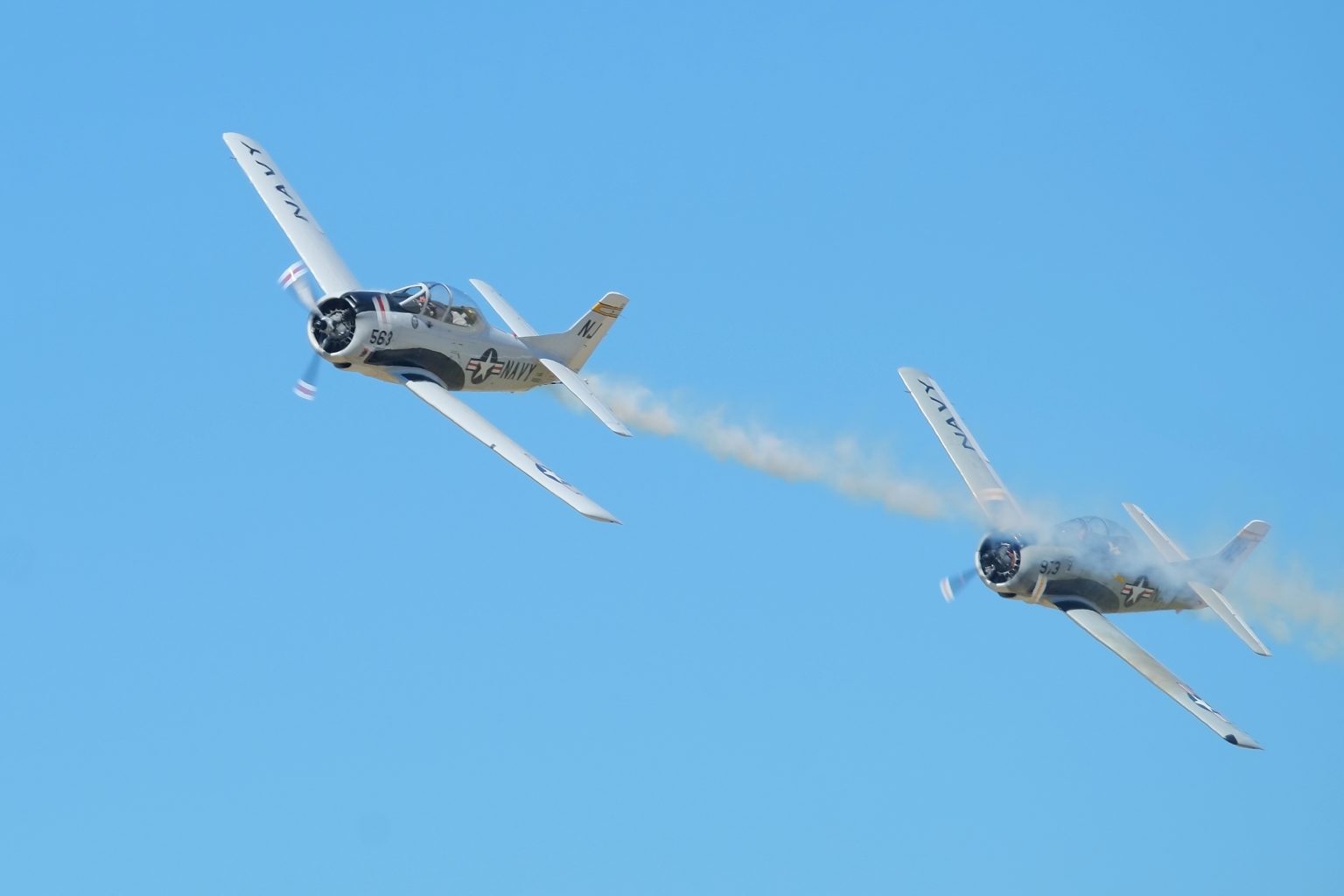
North American T-28
“Trojan”
The piston trainer that taught a generation of American military pilots — then went back to war as a bomb-carrying counter-insurgency aircraft over the jungles of Vietnam and Laos and the mountains of Algeria.
The T-28 Trojan: built to replace the Texan, sent to fight a guerrilla war
In 1948 the U.S. Air Force wanted a modern replacement for the North American T-6 Texan, the tail-dragging trainer that had checked out most of the pilots of the Second World War. North American Aviation answered with the T-28 — a purpose-built trainer with tricycle landing gear, a roomy tandem cockpit, and a big radial engine turning a constant-speed propeller. It first flew on 24 September 1949, and the USAF adopted it as the T-28A in 1950, powered by an 800-horsepower Wright R-1300.
The Air Force flew the type only briefly before moving its primary training to jets, but the U.S. Navy took the design much further. The Navy’s T-28B and carrier-capable T-28C swapped in the far more powerful 1,425-horsepower Wright R-1820 Cyclone, and the Trojan became the backbone of American naval flight training for three decades, teaching thousands of aviators before it was finally replaced by the T-34C Turbo Mentor in the 1980s.
It might have remained a footnote — a competent trainer — had the Cold War’s brush wars not given it a second life. France was first: from 1959 it converted surplus T-28A airframes into the armed “Fennec,” a light strike aircraft used for counter-insurgency in the Algerian War. The United States followed, rebuilding Trojans into the T-28D Nomad — a stronger airframe with the R-1820, six underwing hardpoints, gun pods, bombs, rockets and napalm. The T-28D became one of the defining aircraft of the early Vietnam War: it equipped the South Vietnamese Air Force from 1962, flew the CIA-backed “Secret War” in Laos alongside Air America and the Royal Lao Air Force, and served with the Khmer Air Force over Cambodia. A cheap, forgiving trainer had become a workhorse of America’s shadow wars in Southeast Asia.
01The T-28 Trojan’s two lives: how a flight-school trainer became a counter-insurgency bomber
The T-28 was designed for one job: to take a raw student and turn them into a military pilot safely. Tricycle gear made it easy to land, the big radial gave honest, predictable power, and the tandem cockpit let an instructor watch every input. For that role it was excellent, and the U.S. Navy kept it in primary and basic training into the 1980s.
Its second life came from economics and politics. In the counter-insurgency campaigns of the late 1950s and 1960s, air forces needed something cheaper, slower and more rugged than a jet — an aircraft that could loiter over a jungle, carry a useful load of bombs and rockets, operate from rough strips, and be flown by pilots of modest experience. The surplus T-28 fitted perfectly. France’s Fennec conversion proved the concept in Algeria; the American T-28D Nomad industrialised it for Southeast Asia. The same qualities that made the Trojan a good trainer — docility, ruggedness, simplicity — made it a natural light-attack aircraft. Its limits, exposed in combat, were structural: airframes built for training were not built for the sustained stress of diving weapons delivery, and wing failures dogged the type in hard use.
What makes the T-28 Trojan special
A trainer built around forgiveness
The Trojan’s whole design was about teaching safely. Tricycle landing gear made ground handling and landings far easier than the T-6 Texan’s tail-wheel, cutting training accidents. The stepped tandem cockpit gave the instructor a clear view forward, and the aircraft’s honest, stable handling let students make mistakes and recover. It was powerful enough to feel like a real warplane, gentle enough to survive learning in.
From 800 to 1,425 horsepower
The USAF’s T-28A used the 7-cylinder Wright R-1300 of about 800 hp. The Navy found it underpowered and re-engined the T-28B/C with the 9-cylinder Wright R-1820 Cyclone of roughly 1,425 hp — nearly doubling the power. That big Cyclone, driving a three-blade propeller, is why the armed T-28D and Fennec could haul ordnance off short strips and still climb away.
Six hardpoints and a war load
The armed T-28D Nomad and French Fennec added six underwing pylons for bombs, rockets, napalm and gun pods, typically a pair of .50-calibre machine guns. It could carry a useful war load — commonly cited around 1,800 kg (4,000 lb) — and loiter over a target far longer than a fast jet, making it well suited to close air support against guerrilla forces.
02The T-28D Nomad and the Fennec: how two nations turned a trainer into a gunship
The armed conversions were separate national programmes with the same idea. France acted first: from 1959 the state converted surplus T-28A airframes into the Sud Aviation Fennec (“desert fox”), fitting the R-1820 engine, underwing armament and, on many, machine-gun pods, for counter-insurgency in Algeria. Roughly 245 are commonly cited as converted. The United States industrialised the concept as the T-28D Nomad from the early 1960s, strengthening the airframe and adding six hardpoints. Both aircraft did the same job — slow, patient, low-altitude strike work against irregular forces — that fast jets did poorly.
03The T-28 Trojan’s Achilles heel: wing failures in the dive-bombing role
The Trojan was engineered as a trainer, not a dive bomber, and combat use found the difference. Flown hard in repeated weapons-delivery dives — a flight profile it was never stressed for — T-28Ds in South Vietnamese service suffered wing separations that killed crews and badly hurt confidence in the aircraft. The problem drove reinforcement programmes and, ultimately, the type’s replacement in front-line VNAF service by the sturdier Douglas A-1 Skyraider and, later, jets such as the A-37. It is the clearest illustration of the T-28’s core tension: a training airframe asked to do a combat airframe’s job.
North American T-28 Trojan: full specifications
Baseline note: the figures below describe the T-28B — the 1,425 hp Wright Cyclone Navy trainer, 489 built new plus 17 rebuilt from T-28As, and the airframe from which every armed Trojan is descended. Deltas for the 800 hp T-28A, the carrier-hooked T-28C, the T-28D Nomad and the French Fennec are in grey. Five things need settling before the tables begin. First, there is no single T-28. The USAF T-28A and the Navy T-28B share a shape and very little else: the B has 78 per cent more power, a different engine of a different cylinder count, a three-blade propeller, a belly speed brake, a castering nosewheel and a rebuilt nose. Reading one aeroplane’s numbers onto the other is the commonest error in the literature and it is the reason the T-28A was a mediocre trainer and the T-28B an outstanding one. Second, production. 1,948 airframes were built between 1950 and 1957 — 1,194 T-28As, 489 T-28Bs, 299 T-28Cs and two XT-28 prototypes. Every armed Trojan in this article is a conversion of one of those airframes; not one attack T-28 was ever built as such. Third, span. Most tables give 12.22 m (40 ft 1 in); a substantial minority give 12.38 m (40 ft 7½ in). The difference is a datum question about the wingtip navigation-light fairings rather than two different wings, and both figures are quoted below. Fourth, the T-28A’s weights are genuinely unsettled. Empty weight appears in print as anything from 2,318 kg (5,111 lb) to 2,958 kg (6,521 lb), a 27 per cent spread, because some tables quote a stripped trainer and others a late-life airframe with armour plate and radio fit. Where the T-28A is given below it is flagged. Fifth, and the number that killed people: the T-28 was stressed as a trainer. Nothing in these tables was calculated for repeated 4 g dive-bombing pull-outs at overload weights, and in March and April 1964 two Farm Gate T-28s shed a wing in flight over South Vietnam. That is not a footnote to the specification — it is the specification.
Dimensions & weights
- Crew
- 2 — tandem, under one long sliding canopy, both cockpits fully instrumented and both with a control column, which is why the type converted so cleanly from trainer to two-seat attack aeroplane. In combat the back seat held a national observer, a second pilot, a radio operator or nobody at all, depending on the air force and the year
- Length
- 10.06 m (33 ft 0 in) for the T-28B, C and D; the T-28A measures 10.00 m (32 ft 10 in). The R-1820 installation is longer but the nose was reprofiled around it, so the two marks come out within 60 mm of each other
- Wingspan
- 12.22 m (40 ft 1 in) in most sources; 12.38 m (40 ft 7½ in) in others. Unswept, untapered inboard, mildly tapered outboard, with a 6 per cent thicker section than a fighter would use. It was drawn to be forgiving, not fast
- Height
- 3.86 m (12 ft 8 in) on the tricycle undercarriage — tall for a trainer, and the reason armourers could load the underwing pylons without a trestle. That is worth more sorties per day than any performance figure here
- Wing area
- 24.90 m² (268 sq ft), aspect ratio 6.0. A large, generous wing for a 3.9 tonne aeroplane, which is exactly why the T-28 could carry ordnance nobody had designed the structure to carry
- Empty weight
- 2,914 kg (6,424 lb) for the T-28B and C. Published T-28A empty weights run from 2,318 kg (5,111 lb) to 2,958 kg (6,521 lb) and the disagreement is real; the lower figure is the stripped 1950 trainer, the higher one an aeroplane with a service fit
- Max take-off weight
- 3,856 kg (8,500 lb) for the T-28B and C, and the figure most tables also print for the T-28D. That is the trainer’s number, and an armed Nomad with six pylons filled and full internal fuel is at or beyond it before it leaves the ground — which is the whole argument of this aeroplane’s second career
- Maximum external stores
- 544 kg (1,200 lb) is the figure Donald and Lake’s Encyclopedia of World Military Aircraft (1996) and several other reference works give for the six-pylon T-28D; 816 kg (1,800 lb) appears in the warbird-registry data and in period operator documents. Both are quoted honestly here because both were flown, and the higher one is part of why wings came off
- Hardpoints
- Six underwing on the T-28D and Fairchild AT-28D — but only two on the first Pacific Airmotive conversions, and four on the French Fennec. The T-28D-5 added ammunition pans inside the wing so the gun pods no longer had to carry their own belts
- Internal fuel
- 670 L (177 US gal, 147 imp gal) in two wing tanks on the B, C and D; the T-28A was delivered with 473 L (125 US gal) and later brought up to the same 670 L. Self-sealing tanks were fitted to the combat conversions and to nothing else
- Wing loading
- 155 kg/m² (31.7 lb/sq ft) at maximum take-off weight. Very low — roughly half a Second World War fighter’s — and the source of the type’s two defining qualities: it was almost impossible to stall by accident, and it turned tightly enough to work a jungle valley at low level
- Power loading
- 2.71 kg/hp (5.96 lb/hp) for the T-28B against 3.61 kg/hp (7.96 lb/hp) for the T-28A. The Cyclone marks climb better than several wartime fighters, a claim made often enough about the Trojan that it is worth stating plainly: at light weights a T-28B out-climbs a P-51D
- Design load factor
- Trainer limits, never restressed for the attack role — and no published attack-role fatigue life exists because none was ever calculated before the aeroplane was sent to war. North American’s own field representatives concluded in 1964 that the T-28 "wasn’t designed for the stresses it was being subjected to as a close air support aircraft". That sentence is the single most important line in this whole table
Performance
- Maximum speed
- 552 km/h (343 mph, 298 kn) for the T-28B at 3,050 m (10,000 ft); the T-28A manages 455 km/h (283 mph, 245 kn) at 1,800 m (5,900 ft). The Cyclone marks are 97 km/h faster on 78 per cent more power, which tells you how much of the extra output went into climb rather than speed
- Maximum indicated airspeed
- 340 kn IAS (630 km/h) for the T-28B and C; 254 kn IAS (470 km/h) for the T-28A. The B/C limit is a genuine airframe number and dive deliveries were flown against it, not against engine power
- Cruising speed
- 370 km/h (230 mph, 200 kn). Warbird operators today plan on 200 kn and about 170 L (45 US gal) an hour at 26–28 in of manifold pressure and 1,850–2,000 rpm, which is a useful reminder that this is a big-bore radial with a big-bore radial’s appetite
- Stall speed
- About 130 km/h (81 mph, 70 kn) in the landing configuration, gear and flaps down, varying several knots either side with weight. Docile, straight-ahead and with plenty of warning — the quality that made it a primary trainer for three decades
- Rate of climb
- 18.0 m/s (3,540 ft/min) for the T-28B; some tables give 20.3 m/s (4,000 ft/min). The T-28A climbs at 9.5 m/s (1,870 ft/min), barely half as well, and that gap is the reason the USAF was disappointed with its aeroplane while the Navy was delighted with theirs
- Service ceiling
- 10,820 m (35,500 ft) for the T-28B, with 11,280 m (37,000 ft) also widely printed; the T-28A reaches 7,315 m (24,000 ft). Neither number mattered in the work the type actually did, which was flown between 300 and 3,000 m
- Ferry range
- 1,705 km (1,060 miles, 920 nmi) on internal fuel. This is a range, not a radius, and it is quoted clean; the armed conversions gave a great deal of it back
- Combat radius
- ~370 km (200 nmi) with a useful load and time on target — a working estimate from operator practice rather than a manual figure. In Laos it hardly mattered, because the targets were often thirty minutes from Long Tieng and pilots flew as many as ten sorties a day
- Endurance
- Four hours and more on internal fuel at economical settings — the quality that made the AT-28D useful for night armed reconnaissance over the Ho Chi Minh Trail, where loiter beat speed and a jet had nothing to offer
- Take-off run
- Around 460 m (1,500 ft) at trainer weights on a hard surface; considerably more, hot and high and loaded, from the dirt and pierced-steel strips the type actually worked from. Laotian and Hmong pilots operated it from strips that no jet of the era could have used
- Landing speed and rollout
- Approach around 165 km/h (90 kn), and the belly speed brake on the B, C and D let a pilot come down steeply without running away in the descent — an unglamorous fitting that did more for the type’s survivability under ground fire than anything on the pylons
Propulsion & systems
- Engine (T-28B/C/D)
- One Wright R-1820-86 Cyclone 9 — nine-cylinder single-row air-cooled radial, 29.88 L (1,823 cu in), 1,425 hp. This is the B-17 and DC-3 engine family: enormous, loud, thoroughly proven and supported by a global spares pool, which is a substantial part of why the type is still flying in numbers
- Engine (T-28A)
- One Wright R-1300-1 Cyclone 7 — seven-cylinder, 21.3 L (1,300 cu in), 800 hp, effectively the R-1820 with two cylinders removed. Some references call it a nine-cylinder; it is not. The R-1300 was reliable enough but simply too small for the airframe, and the USAF spent the 1950s flying an under-powered aeroplane while the Navy flew the same shape with nearly twice the horsepower
- Engine (conversions)
- R-1820-56S of 1,300 hp in the PacAero Nomad Mark I, R-1820-76A of 1,425 hp in the Mark II, R-1820-80 of 1,535 hp in the Mark III — and the Fennec is quoted variously with the supercharged R-1820-97 at 1,200 hp and the R-1820-76A at 1,425 hp. French and American sources disagree and this article does not pretend otherwise
- Propeller
- Hamilton Standard three-blade constant-speed hydromatic on the Cyclone marks; two-blade on the T-28A — the T-28C uses shortened blades purely for deck clearance during arrested landings, which costs it a little climb and is the only meaningful performance difference from the B
- Fuel system
- Two integral wing tanks, 670 L (177 US gal) total, gravity-vented, with self-sealing liners on the T-28D and AT-28D only. Drop tanks could be hung on the wing pylons at the cost of ordnance stations, which in practice nobody in Laos was willing to pay
- Speed brake
- Hydraulically actuated belly brake on the T-28B, C and D; absent from the T-28A — fitted for the Navy so that a student could be taught energy management, and inherited by the attack conversions, where it let a pilot hold a steep dive angle at a controlled speed and pull out lower
- Undercarriage
- Retractable tricycle, wide track, designed for grass and unpaved strips — steerable nosewheel on the T-28A, castering nosewheel with differential braking on the Navy marks, which is a nuisance on the ground and one of the type’s few genuine vices. The gear was strengthened again for the T-28D to take the higher operating weights
- Arresting gear
- Tailhook and a locally strengthened rear fuselage on the T-28C only — first flown 19 September 1955, and used to give Navy and Marine students their first carrier landings aboard USS Antietam, USS Lexington and later USS Forrestal-class decks. The Argentine Navy’s T-28P and the Brazilian Navy’s T-28R-1 were separate hook conversions of other marks
- Armour and protection
- None as built — the T-28D and AT-28D added cockpit and side armour plate and self-sealing tanks, and the Fennec added lateral armour of its own. Everything protective on an armed Trojan was retrofitted, which is a fair summary of the entire second career
- Escape system
- Manual bale-out over the side on trainers and on most T-28Ds — the Fairchild AT-28D introduced the rocket-powered Stanley Yankee extraction seat, the same system fitted to the A-1 Skyraider, which drags the crew out through the canopy on a rocket. On an aeroplane whose wings were failing in the dive, this was not a luxury
- Canopy
- Long two-piece sliding hood, manually operated — the Fennec substituted an electrically driven sliding canopy, one of the few French changes that had nothing to do with weapons and everything to do with a pilot in a hot cockpit over the Sahara
- Avionics
- Nothing worth the name — VHF and UHF radio, a compass, a fixed reflector gunsight and a gun camera. No radar, no navigation system, no computing sight, no night vision, no self-protection. Trail interdiction at night was flown on flares, moonlight, memory and a wristwatch
04The T-28 Trojan’s operating costs: what a Trojan costs to fly today
As a military trainer the T-28 was deliberately cheap to buy and run — that was the point of a trainer — and no standardised period cost-per-flight-hour figure survives in the open record. A commonly repeated period unit cost of around $130,000 for a 1950s T-28A should be read as an order-of-magnitude estimate, not a sourced price.
As a modern warbird the Trojan is considered one of the more affordable big radials to own. Owner and broker estimates for direct operating cost — fuel, oil and routine maintenance — commonly fall in the region of $400–800 per flight hour, with the thirsty Wright R-1820 and engine-overhaul reserves the main drivers. Treat any single figure with caution: real costs swing widely with fuel prices, how hard the engine is worked, and whether a major overhaul is looming.
Armament & payload
The Trojan carried its entire war on six pylons that were bolted to a wing designed for student pilots
Not one T-28 was built as a combat aeroplane. Every armed Trojan is a trainer that was taken out of storage at Davis-Monthan, given a bigger engine, armour plate, self-sealing tanks and two, four or six underwing hardpoints, and sent to fight an insurgency. The weapons fit is correspondingly humble: podded .50 in machine guns because there was no room for an internal gun, iron bombs, napalm, folding-fin rockets, and a fixed reflector sight with no ranging and no lead computation. What it bought was persistence and precision of a very old-fashioned sort — a pilot who knew the ground, flying slowly enough to identify what he was shooting at, four hours from home base.
What it cost was the airframe. Loading 544 to 816 kg onto a wing stressed for aerobatic training, then pulling out of dive after dive at overload weight, produced exactly the result an engineer would predict, and it produced it in public: two Farm Gate T-28s lost a wing in flight within seventeen days of each other in the spring of 1964. Fits varied enormously by operator and by year. The first Pacific Airmotive T-28Ds had two pylons, not six; the Fennec had four and a French weapons suite that shares almost nothing with the American one; the Royal Lao Air Force armed whatever it had with whatever Udorn sent; and a good deal of the published stores list below is a clearance rather than something a squadron routinely loaded.
Gun
- No internal gun of any kind, on any mark. The T-28 fuselage was drawn around two cockpits and a fuel system, and there was nowhere to put one
- Standard American fit: two underwing pods, each with one .50 in (12.7 mm) Browning M3, typically 100 rounds a gun. On the T-28D-5 the belts moved into ammunition pans inside the wing so the pod carried only the gun
- The Fennec carried two twin .50 in mountings with 100 rounds per gun — four barrels against the American two, which is a real difference in weight of fire and one reason French pilots rated the aeroplane highly over Algeria
- SUU-11/A pods with the 7.62 mm GAU-2 minigun appear on later Southeast Asian aircraft, and 20 mm cannon pods appear in clearance tables. Neither was common
- Aiming was a fixed depressible reflector sight and a gun camera. No lead computation, no ranging, no radar. The pilot flew the dive angle he had been taught and released at the height he had been taught, and the accuracy came out of repetition over ground he knew personally
Air-to-air
- No air-to-air missile was ever fitted to a T-28 by any operator. The type’s entire air-combat record was made with .50 in machine guns
- That record includes one of the strangest first victories in aviation history. In 1963 a Royal Lao Air Force T-28 flown by Lieutenant Chert Saibory, a Thai national, defected to North Vietnam. It was refurbished within six months and became the North Vietnamese air force’s first fighter aircraft; on 15 February 1964 Nguyen Van Ba flew it to the VPAF’s first-ever aerial victory, shooting down a South Vietnamese C-123 Provider
- So the T-28 opened North Vietnam’s air-to-air account — against an aeroplane flown by the air force that also flew T-28s, using a machine gun, in a stolen trainer
- In the other direction the type was prey, not predator. A straight-winged 552 km/h piston aeroplane with no radar and no warning receiver had no answer to anything jet-powered, and its operators never pretended otherwise
- Against helicopters and light transports the T-28 was theoretically dangerous and practically almost never used, because in every war it fought the enemy’s air force was either absent or overwhelming
Air-to-surface guided
- None. Never. In thirty-five years of combat across four continents, no T-28 of any mark carried a guided air-to-surface weapon of any kind
- This is the central fact about the aeroplane’s weapons fit and it should not be softened. Every result the Trojan produced — over Algeria, over the Mekong, over the Plain of Jars, over the Ho Chi Minh Trail, over Congo, over Mindanao — was produced with unguided ordnance and a fixed sight
- The AGM-12 Bullpup was in service throughout the T-28’s combat career and was never integrated. There was no designator, no data link, no launch computer and no aircraft weight budget for any of them
- The practical consequence is that the aeroplane had to overfly its target, every time, at heights where a heavy machine gun could reach it. Royal Lao Air Force T-28 pilots survived an average of about twenty months in combat
- The one attempt to move the airframe into a more capable class, the turboprop YAT-28E with twelve hardpoints and 2,720 kg of stores, was cancelled in 1965 without a guided weapon in sight
Bombs
- American practice: 100 lb, 250 lb and 500 lb general-purpose and fragmentation bombs — Mk 81 and Mk 82 on later aircraft. Four to six light bombs was the everyday Southeast Asian load, because fuel and pylon limits rarely allowed more
- Napalm, extensively, by every major operator. BLU-series fire bombs in American service; in Algeria the Fennec squadrons used purpose-built containers and improvised ones alike. It is the part of this aeroplane’s record that ages worst and it should be stated rather than skipped
- French practice on the Fennec: 120 kg fragmentation and blast bombs, a lighter and more numerous load suited to the dispersed targets of a counter-insurgency in mountain and desert country
- Cluster and submunition dispensers of the CBU family appear on late Southeast Asian aircraft for troops in the open and for truck parks along the trails
- The Khmer Air Force demonstrated the political reach of a light bomb load on 17 March 1973, when a T-28 pilot bombed Lon Nol’s palace in Phnom Penh, killing at least twenty people and wounding thirty-five
Rockets
- 2.75 in (70 mm) folding-fin aerial rockets in seven-tube LAU-32 and LAU-59 pods and nineteen-tube LAU-3 pods — the workhorse weapon of the type, cheap, plentiful and effective against soft targets and personnel
- Matra Type 122 six-round 68 mm pods on the French Fennec, with other Matra calibres also carried. The French built their own rocket ecosystem around the aeroplane rather than importing the American one
- White phosphorus marking rockets, which turned any armed T-28 into a forward air controller able to mark for jets it could not itself keep up with. Over Laos this was often the more valuable of its two jobs
- Rockets were the reason the type could work close to friendly troops. A pilot could put a pod’s worth of 70 mm inside a treeline without the blast radius of a 500 lb bomb, from an aeroplane slow enough to see who was where
- Heavier 5 in rockets appear in some clearance documents. They were rare, because six pylons rated for at most 816 kg in total do not leave much room for argument
Pods & other stores
- Flare dispensers and parachute flares — essential kit for the 606th Air Commando Squadron’s night interdiction work from Nakhon Phanom, where the AT-28D crews lit their own targets before attacking them
- Drop tanks on the wing pylons, at the direct cost of ordnance stations. Very few operators judged the trade worthwhile
- Camera installations: the Royal Lao Air Force fielded an RT-28 photo-reconnaissance conversion in unrecorded numbers, and armed reconnaissance was a standing T-28 task everywhere the type served
- Smoke and leaflet fits for psychological operations, and in several Latin American air forces a nominal light-transport and liaison role that the two-seat cockpit could not really support
- What was never carried is as telling as what was: no electronic countermeasures pod, no radar warning receiver, no chaff or flare self-protection dispenser, no targeting pod, no external fuel-and-sensor combination of any kind. The T-28 went to war naked and stayed that way
Three typical loadouts
- Farm Gate close support, Bien Hoa, 1962–64
- Two .50 in gun pods, two seven-tube 2.75 in rocket pods and two 250 lb bombs or napalm tanks, with a South Vietnamese national in the back seat because Washington required one on every mission. Sorties were flown as armed reconnaissance and on-call support for ARVN units, in Vietnamese markings, by USAF crews who were not officially there.
- Royal Lao Air Force day strike, Long Tieng, 1968–72
- Two .50 in gun pods with full pans, rocket pods and light bombs, refuelled and rearmed on the strip between sorties. Hmong pilots flew this load as many as ten times a day against Pathet Lao and North Vietnamese positions on the Plain of Jars, often within a few kilometres of their own villages.
- Zorro night trail interdiction, Nakhon Phanom, 1966–68
- Fairchild AT-28D with six pylons: flares, rocket pods, light bombs and the gun pods, flown single-pilot at low level along the Ho Chi Minh Trail hunting trucks by their headlights. Fewer than ten aircraft were ever on hand at once, and the squadron was credited with 70 to 75 per cent of trucks destroyed on the Trail before the AC-130 gunships arrived.
Sourcing caveat: there is no single authoritative T-28 weapons manual in the public domain, because the armed aircraft were conversions performed by three different contractors for a dozen air forces over fifteen years, and many fits were improvised in theatre. Pylon counts, station ratings and maximum stores figures below all vary between reference works, and where they conflict both figures have been given rather than one silently chosen.
Variants
North American built three T-28s; everyone else built the rest of them with a spanner
The production story is short. Two prototypes, one USAF trainer, two Navy trainers, 1,948 airframes between 1950 and 1957, and then the line closed. The interesting half of the family tree grows sideways out of the desert storage yards from 1959 onwards, as Pacific Airmotive, Fairchild Hiller, Sud-Aviation and Hamilton Aircraft each took surplus T-28As and turned them into something else — an attack aeroplane, a French colonial gunship, a five-seat business machine.
Two things follow from that. First, the designations are a mess: a T-28D can be a two-pylon PacAero conversion or a six-pylon Fairchild rebuild with an extraction seat, and an aircraft can be a T-28A, a Fennec, an Argentine T-28P and a Uruguayan naval aircraft in one lifetime. Second, the conversions kept adding weight and load to a structure that was never re-analysed for it, which is the thread that runs through the whole second half of this aeroplane’s life.
- XT-28 (1949 / 2)
- Prototypes to specification NA-159; first flight 24 September 1949, though some sources give the 26th. Designed from the start as the T-6 Texan’s replacement, with a tricycle undercarriage and a cockpit laid out to teach pilots who would go on to jets.
- T-28A (1950–53 / 1,194)
- USAF trainer with the 800 hp Wright R-1300-1 and a two-blade propeller. Adequate rather than good; the USAF phased it out of primary pilot training by the early 1960s, which is precisely why so many airframes were available to convert into attack aircraft.
- T-28B (1954–55 / 489 new plus 17 conversions)
- The transformation: 1,425 hp Wright R-1820-86 Cyclone, three-blade propeller, reprofiled nose, belly speed brake, castering nosewheel. The US Navy’s standard basic trainer, concentrated above all at NAS Whiting Field, and the parent of every armed Trojan.
- T-28C (1955–57 / 299)
- T-28B with an arrester hook, strengthened rear fuselage and shortened propeller blades for deck clearance; first flight 19 September 1955. Some references give 266 rather than 299. This was the aeroplane on which a generation of American naval aviators made their first carrier landings.
- T-28D Nomad (1962 onwards / 321 by Pacific Airmotive)
- Surplus T-28As rebuilt with the R-1820, three-blade propeller, strengthened wings and undercarriage, armour, self-sealing tanks and underwing hardpoints — two at first, six later. The T-28D-5 added ammunition pans inside the wing. Taylor and Munson’s Jane’s Pocket Book of Major Combat Aircraft (1973) gives 360 conversions against the 321 quoted elsewhere.
- Fairchild AT-28D (1967–69 / 72)
- The serious attack rebuild: six underwing hardpoints and the rocket-powered Stanley Yankee extraction seat, as fitted to the A-1 Skyraider. These were the aircraft the 606th Air Commando Squadron flew at night over the Trail, and the mark on which wing fatigue finally became unmanageable.
- T-28S Fennec (1959–60 / 148)
- 148 T-28A airframes bought from Pacific Airmotive and converted by Sud-Aviation for the Armée de l’Air: supercharged Wright R-1820, electrically driven canopy, side armour and four hardpoints. Flown by the Escadrilles d’Aviation Légère d’Appui in Algeria from 1959 to 1962, then sold off between 1964 and 1967 — 65 to Argentina as the naval T-28P, 25 to Morocco, 12 to Haiti, eight ex-Moroccan aircraft to Honduras, nine on from Argentina to Uruguay in 1980, and others to Tunisia.
- T-28R Nomair (1962 onwards / 10 modified)
- Hamilton Aircraft’s conversions. The T-28R-1 was a hooked carrier trainer, six supplied to the Brazilian Navy in 1962; the T-28R-2 was a five-seat cabin monoplane for civil use — the only serious attempt to make a business aeroplane out of a military trainer’s airframe.
- YAT-28E (1963–65 / 3)
- Turboprop counter-insurgency prototype: 2,445 hp Lycoming YT55-L-9, two 12.7 mm guns and up to 2,720 kg (6,000 lb) on twelve hardpoints. First flight 15 February 1963, cancelled in 1965 — a genuinely capable aeroplane that lost to the argument that the USAF should not be buying propellers at all.
- AIDC T-CH-1 Chung Hsing (1976–81 / 50)
- Taiwan’s turboprop trainer, laid out closely on the T-28 and often described as its last descendant, built under licence-derived arrangements by the Aero Industry Development Center. Fifty were produced and served the Republic of China Air Force until the late 1990s.
Survivors: the T-28 has one of the largest warbird populations of any military aeroplane ever built. Roughly 350 airframes are registered with civil aviation authorities worldwide, of which nearly 300 are in the United States — between a sixth and a fifth of total production, an extraordinary survival rate explained by a docile aeroplane, a Cyclone engine with a global spares pool and thirty years of orderly Navy retirement rather than scrapping. Every single one is an original airframe: no T-28 reproduction has ever been built, and no reason exists to build one. Sixteen derelicts were recovered from Cambodia in the late 1980s and shipped to Australia for restoration, and Royal Lao Air Force machines flown out to Thailand in 1975 passed on to the Philippine Air Force. Formation display teams including the Trojan Horsemen and the Trojan Phlyers fly them, a South Dakota School of Mines T-28A penetrated hailstorms for the National Science Foundation from 1969 to 2005, and museum examples stand in the United States, Argentina, Australia, the Philippines, Taiwan, Thailand and the United Kingdom. Purchase prices are commonly quoted in the low-to-mid hundreds of thousands of US dollars, which by warbird standards is cheap and is exactly why so many fly. As a military type the Trojan is finished: the US Navy flew the last training sortie at NAS Corpus Christi in early 1984 and the last aircraft departed for display on 14 March 1984, and no air force anywhere is known to operate the T-28 today.
The T-28 Trojan: from flight school to shadow war
A replacement for the Texan
The USAF issues a requirement for a modern trainer to replace the T-6 Texan; North American designs the T-28.
First flight
The prototype XT-28 flies on 24 September 1949, with tricycle gear and an 800-hp Wright R-1300 radial.
T-28A enters USAF service
The Air Force adopts the T-28A for primary training, though it soon shifts basic training toward jets.
The Navy’s Trojans
The re-engined T-28B (1,425-hp R-1820) and carrier-capable T-28C become the backbone of U.S. naval flight training.
France’s Fennec goes to war
France converts surplus T-28As into the armed Fennec for counter-insurgency strikes in the Algerian War.
Nomad over Vietnam
Armed T-28Ds arrive with USAF “Farm Gate” units and the South Vietnamese Air Force for close air support.
The Secret War in Laos
T-28Ds fly the CIA-directed war in Laos with Air America and the Royal Lao Air Force, guided by USAF Raven FACs.
Retirement and rebirth
The U.S. Navy retires the Trojan in the 1980s; hundreds pass into civilian hands and it becomes a hugely popular warbird.
From the cockpit: twelve T-28 Trojan stories
Retiring the Texan
The T-28 was built to replace the legendary T-6 Texan that trained WWII pilots.
Read the full story
Three decades of naval aviators
The Navy’s T-28B and T-28C trained thousands of pilots into the 1980s.
Read the full story
Landing on a moving deck
The T-28C added a tailhook so student naval aviators could qualify aboard a carrier.
Read the full story
The Fennec, France’s desert fox
From 1959 France turned surplus Trojans into armed Fennecs for the Algerian War.
Read the full story
America’s first Vietnam warplanes
In 1961–62 armed T-28s were among the first U.S. combat aircraft in Vietnam.
Read the full story
The Trojan in Vietnamese hands
The South Vietnamese Air Force made the T-28D a workhorse of its early air war.
Read the full story
The Secret War
In Laos, T-28s fought a war the United States did not officially admit to.
Read the full story
Forward air controllers of Long Tieng
USAF “Raven” FACs directed T-28 strikes from a secret base in the Laotian highlands.
Read the full story
The airline that went to war
The CIA-owned Air America flew and supported armed T-28s across Southeast Asia.
Read the full story
When the wings let go
Combat dive-bombing revealed that the Trojan’s training airframe could fail under stress.
Read the full story
A second retirement, a new life
Hundreds of surplus Trojans became some of the most popular warbirds flying today.
Read the full story
Grandfather of the COIN aircraft
The T-28’s combat career helped prove the case for dedicated light-attack aircraft.
Read the full story
The T-28 Trojan in pictures
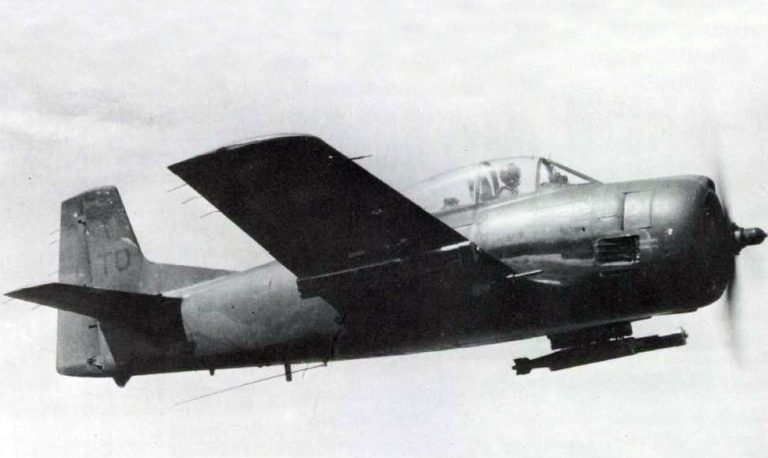
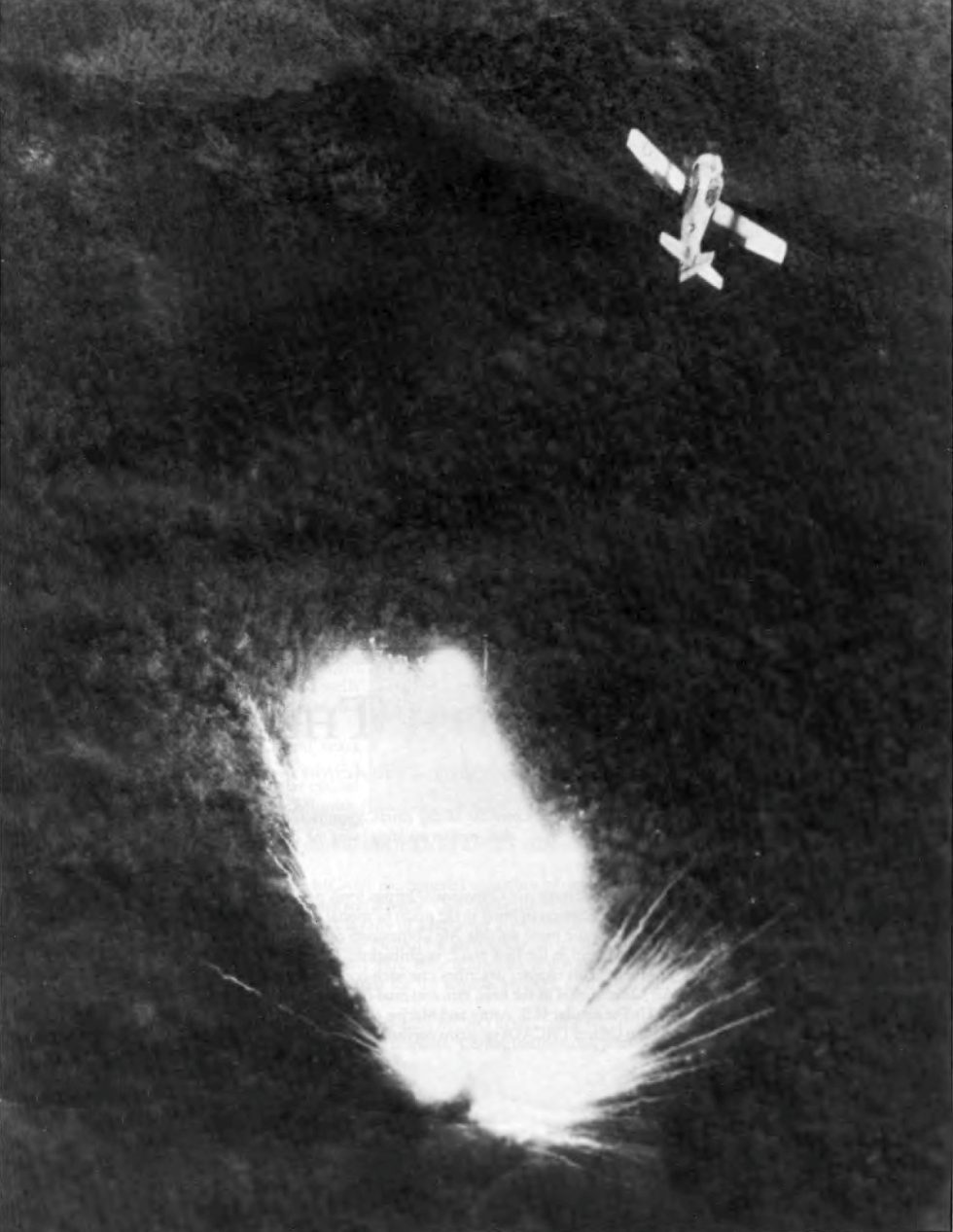
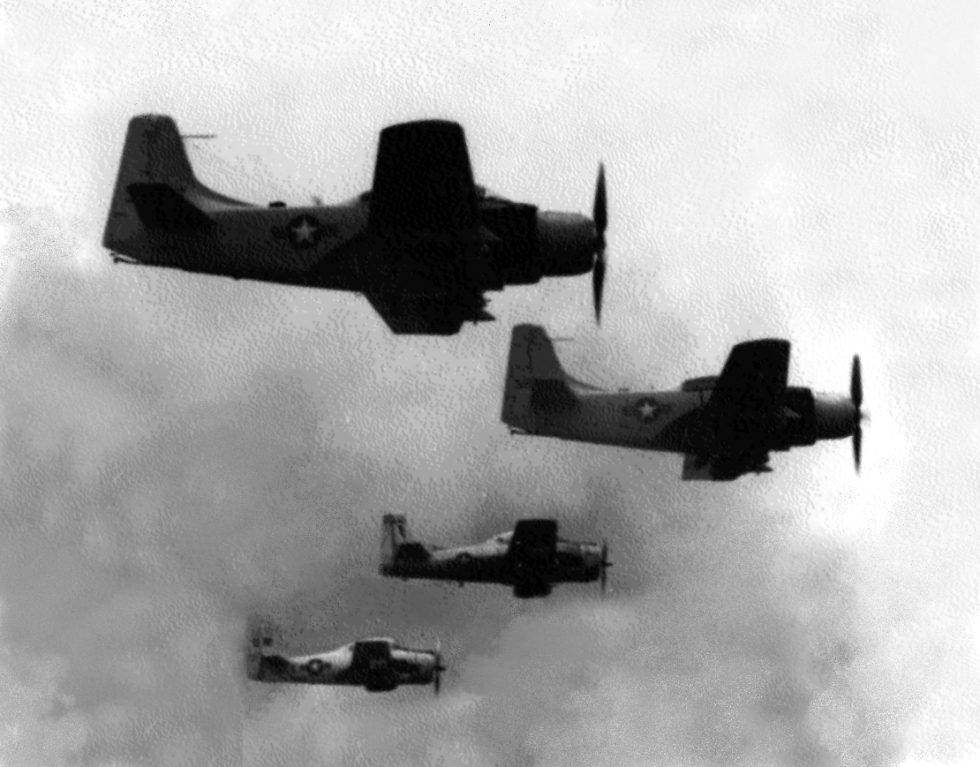
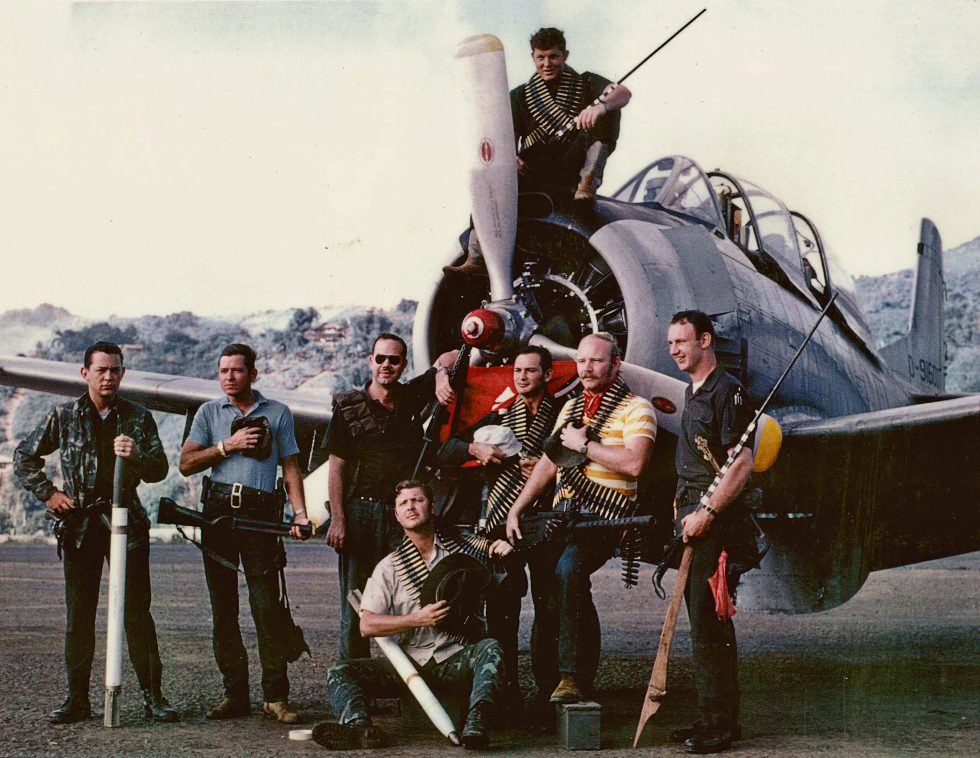
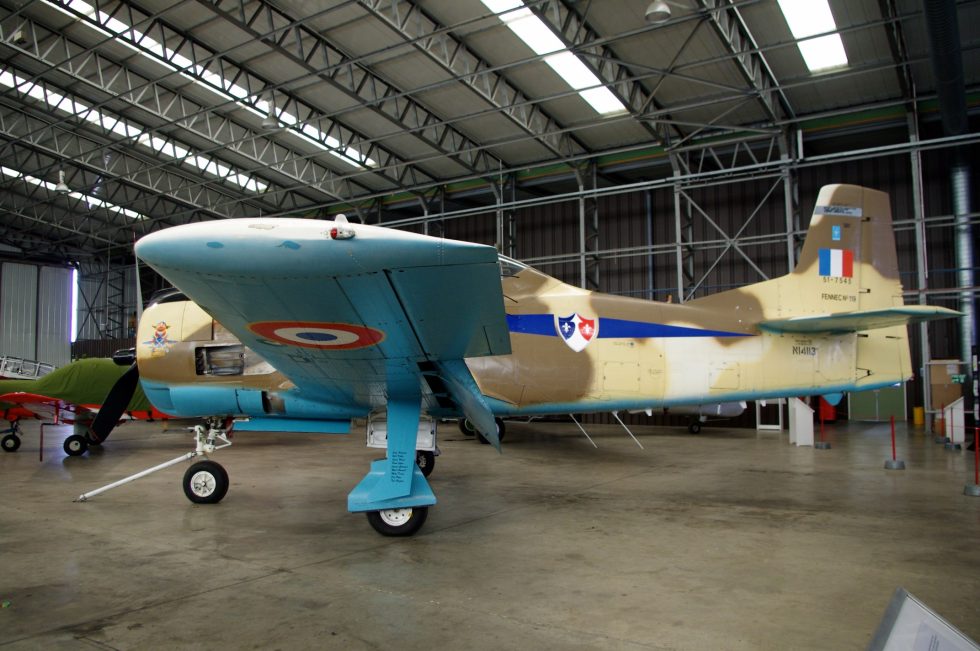
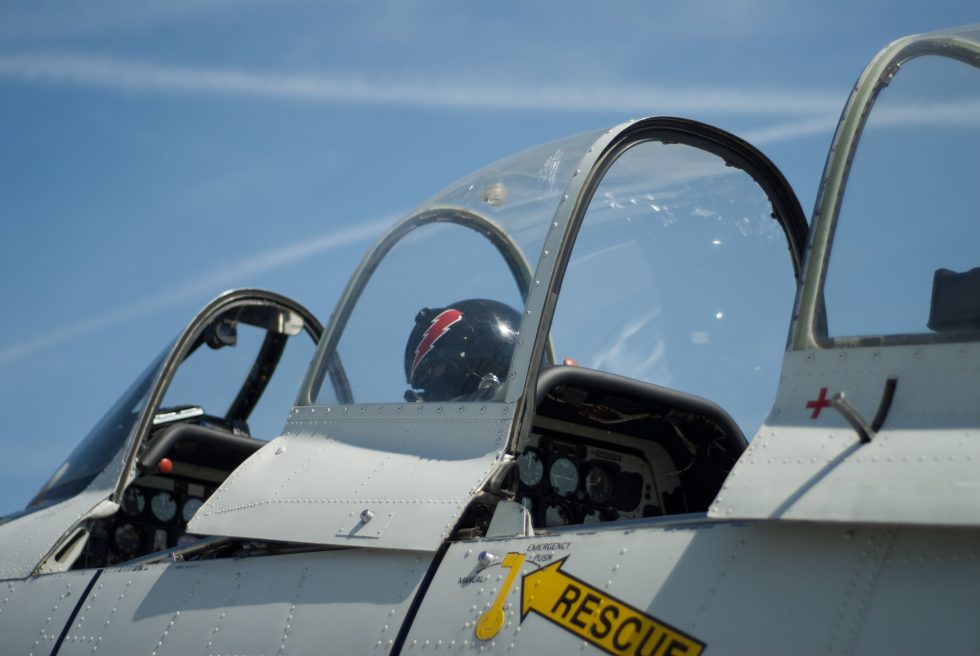
The T-28 Trojan in motion
EAA: Fight On — Celebrating 75 Years of North American’s T-28 Trojan. A tribute from the Experimental Aircraft Association marking the type’s 75th anniversary, with flying warbird footage and owner interviews.
Where the T-28 Trojan flew
The T-28 Trojan’s war record
The Trojan was a trainer that stumbled into three counter-insurgency wars. Its combat story is not about air-to-air kills but about ground attack — napalm, rockets and bombs delivered low and slow over jungle and mountain, in Algeria, Vietnam, Laos and Cambodia. It flew some of the first American combat sorties of the Vietnam War and carried much of the secret air war in Laos.
Compare the combat record of every military aircraft. Figures as of 2026.
Everything people ask about the T-28 Trojan
Can I fly in a North American T-28 Trojan?
What was the T-28 Trojan used for?
What is the difference between the T-28D Nomad and the Fennec?
What engine does the T-28 Trojan have?
Why did the T-28 struggle in Vietnam?
How many T-28 Trojans were built?
Is the T-28 Trojan still flying?
You can’t fly the T-28 Trojan.
These, you can.
Some legends only live in museums — others are fuelled and waiting. MiGFlug has put civilians in real military jet cockpits since 2004.
 Fly the L-39 AlbatrosThe world’s most-flown jet trainer — aerobatics included
 Fly the F-104 Starfighter“The missile with a man in it”
 Fly the MiG-21The Cold War’s most-produced jet
 Fly the T-33 Shooting StarAmerica’s first jet trainer
 Fly the DH VampireA piece of early jet history
 Fly the S.211Agile Italian jet trainer
 Fly the MB-326The classic Aermacchi jet
 Fly the MiG-15The Soviet legend of the Korean War
Continue the tour
Every fact, checked
- National Museum of the U.S. Air Force — T-28 fact sheetOfficial history of the trainer and its T-28D Nomad counter-insurgency conversion.
- Smithsonian National Air and Space MuseumReference for the Trojan’s design, variants and service history.
- National Naval Aviation MuseumThe T-28B/C in three decades of U.S. Navy and Marine flight training.
- The Aviation Geek ClubAccounts of T-28D operations in Vietnam and the Secret War in Laos.
- UT Dallas — Air America ArchivePrimary-source collection on Air America and the CIA-directed war in Laos.
- HistoryNet / Aviation HistoryThe Raven forward air controllers and the T-28 over Laos.
- Experimental Aircraft Association (EAA)The Trojan as a modern warbird and the 75th-anniversary tribute film.
- Joe Baugher — U.S. military aircraft serialsProduction totals, variants and serial-number histories for the T-28 family.