

Bristol Blenheim
Britain’s fast bomber that briefly outran the biplanes — then paid a brutal price once the fighters caught up.
At a Glance
Bristol Blenheim: key facts
Hikaye
The Bristol Blenheim: the bomber that was briefly faster than the fighters
In the mid-1930s the Royal Air Force still went to war in open-cockpit biplane fighters that struggled to top 250 mph. Then a sleek, all-metal monoplane from the Bristol Aeroplane Company embarrassed them all. It was not a warplane — it was a private venture built to carry businessmen quickly across Europe — and it reshaped British bomber policy almost overnight.
The aircraft was the Bristol Type 142, paid for by the newspaper magnate Lord Rothermere, who wanted the fastest executive aircraft on the continent and named it “Britain First”. When it flew in 1935 it reached roughly 307 mph, comfortably faster than the Gloster Gauntlet biplanes then defending Britain. Rothermere presented it to the nation, and an alarmed, delighted Air Ministry asked Bristol for a bomber version.
That bomber became the Blenheim. Bristol’s chief designer Frank Barnwell turned the Type 142 into a three-seat light bomber with a mid-set wing raised to clear an internal bomb bay, a dorsal gun turret and two Bristol Mercury radial engines. The first Blenheim Mk I reached No. 114 Squadron in March 1937, and for a short, heady moment Bomber Command had a bomber that could outrun its own fighters.
That moment did not last. Aviation was advancing so quickly that the Blenheim was overtaken almost as soon as it entered service. By 1939 the Messerschmitt Bf 109 was more than 100 mph faster, heavily armed and everywhere over Europe. The Blenheim’s single forward machine gun and hand-aimed dorsal turret, respectable in 1935, left it dangerously under-defended against modern fighters.
It went to war regardless — and it went first. On 3 September 1939, hours after Britain declared war, a Blenheim IV of No. 139 Squadron became the first RAF aircraft to cross the German coast, photographing the fleet at Wilhelmshaven. The next day Blenheims led the RAF’s first bombing raid of the war against German warships. Several were shot down; the pattern of the Blenheim’s war was set on its opening day.
Through 1940 and 1941 the Blenheim squadrons of No. 2 Group carried the RAF’s daylight bombing offensive over occupied Europe — attacking airfields, power stations, docks and coastal shipping in the deadly “Channel Stop” patrols. Casualties were appalling. On 13 August 1941, eleven of the twelve Blenheims that set out to bomb Aalborg in Denmark were lost. Blenheim crews knew, better than most, the price of the daylight bomber.
The Blenheim was far more than a bomber, though. Fitted with a belly pack of four machine guns, the Blenheim IF and IVF served as long-range and night fighters; on the night of 2–3 July 1940 a Blenheim of the Fighter Interception Unit scored one of the first RAF kills guided by airborne radar. Blenheims fought over Norway, France, Greece, Malta, the Western Desert, East Africa, Iraq and the Far East, where they met the Japanese in the desperate defence of Malaya and Burma.
Blenheims were also built far from Bristol: under licence in Finland, and in Canada as the Fairchild-built Bolingbroke. By 1943 faster aircraft — above all the de Havilland Mosquito and the Bristol Beaufighter — had taken over its jobs, and the Blenheim was retired from front-line service. Yet it had carried the RAF across the gap from fabric biplane to fast monoplane, and it had done so in the hands of some of the bravest, and most exposed, crews of the early war.
Judged by results alone, the Blenheim’s war reads as a catalogue of loss. Judged in context — as a fast bomber of 1935 thrown into the fighter-dominated skies of 1940 and 1941 — it is a story of an aircraft, and above all of crews, who kept fighting long after the design’s brief advantage had gone. That is why it is remembered, and why one still flies.
01The Bristol Blenheim’s origins: how a press baron’s speed machine became a bomber+
The Blenheim began life as the Bristol Type 142, a private venture financed by Lord Rothermere, owner of the Daily Mail. Rothermere wanted the fastest civil aircraft in Europe and challenged Bristol to build it; the result, named “Britain First”, first flew on 12 April 1935 and reached about 307 mph — faster than the biplane fighters then in RAF service.
The performance was so embarrassing to official policy that Rothermere presented the aircraft to the nation. The Air Ministry ordered a bomber development, the Type 142M, which entered service as the Blenheim Mk I. In effect, one wealthy man’s pursuit of speed handed the RAF its first modern stressed-skin monoplane bomber.
It is one of aviation’s great ironies that the aircraft which shamed the RAF into modernising should itself be obsolete within a few short years — a victim of the very pace of progress it had helped to set in motion.
02Why the Bristol Blenheim suffered such heavy losses in daylight+
The Blenheim was designed when speed alone seemed defence enough. But fighter development accelerated far faster than bomber development, and by 1940 the Blenheim was slower than its opponents, lightly armed and carried only a modest bomb load. Sent on unescorted daylight raids against defended targets, it was desperately vulnerable.
The anti-shipping “Channel Stop” patrols and low-level airfield attacks of 1941 were especially costly, and losses on individual operations — such as the Aalborg raid, where eleven of twelve aircraft were lost — were catastrophic. The bravery of 2 Group’s Blenheim crews became a byword in Bomber Command, but the aircraft itself had simply been overtaken by the pace of the air war.
The tragedy was not that the Blenheim was a bad aircraft, but that it was a good aircraft of 1935 asked to fight the war of 1941 — and the men who flew it paid for that gap with their lives.
Design & Engineering
How the Bristol Blenheim was built to fight
The Blenheim’s speed came from clean aerodynamics and modern construction — but the same airframe that made it fast in 1935 left little margin for the defensive firepower it would need in 1940.
A modern stressed-skin monoplane
Where the RAF’s biplanes were fabric over wood and wire, the Blenheim was an all-metal, stressed-skin monoplane with a retractable undercarriage, flaps and a smooth cantilever wing. That clean airframe let the short-nosed Mk I reach around 285 mph — remarkable for a bomber of the mid-1930s and the whole point of the design.
Two Bristol Mercury radials
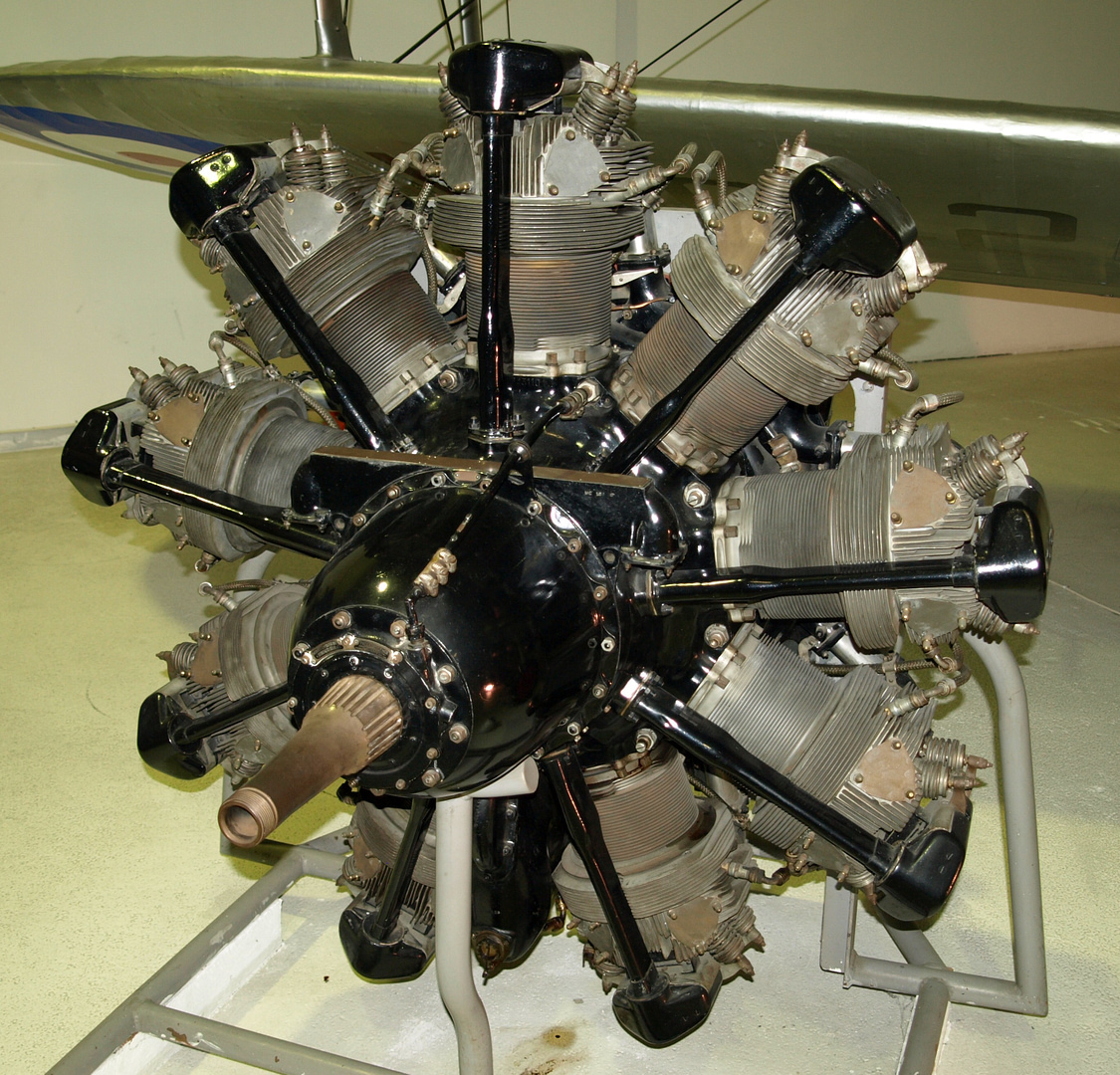
The Blenheim was carried by a pair of Bristol Mercury air-cooled radial engines, driving three-blade variable-pitch propellers. Early Mk I engines gave about 840 hp each; the later Mercury XV of the Mk IV produced around 920 hp, restoring some of the performance lost as the airframe grew heavier with armour, guns and a longer nose.
Bomb bay, turret and a defensive gap
Bombs were carried internally — about 1,000 lb in a belly bay — while defence rested on a single fixed forward gun and a hand-worked dorsal turret. It was adequate against 1935’s threats, but against cannon-armed monoplane fighters the Blenheim was under-gunned, a weakness later partly answered by rear-firing under-nose guns and the four-gun fighter belly pack.
03The Bristol Blenheim in other roles: fighter, reconnaissance and radar pioneer+
Although conceived as a light bomber, the Blenheim proved remarkably adaptable. Fitted with a ventral pack of four machine guns, the Mk IF and IVF served as long-range and night fighters with both Fighter and Coastal Commands, escorting convoys and hunting enemy aircraft far out over the sea.
Blenheims also flew photographic and maritime reconnaissance and — most significantly — pioneered airborne interception radar, scoring one of the first radar-guided night kills in July 1940. In these secondary roles the aircraft often outlasted its usefulness as a daylight bomber.
Full Specifications
Bristol Blenheim Mk IV — specifications
Figures are for the long-nose Blenheim Mk IV, the main production bomber version; earlier Mk I and later Mk V figures differ. Contested values are given as approximate.
| Mürettebat | 3 (pilot, observer/bomb-aimer, gunner) |
|---|---|
| Uzunluk | 12.98 m (42 ft 7 in) |
| Kanat açıklığı | 17.17 m (56 ft 4 in) |
| Yükseklik | ~3.00 m (9 ft 10 in) |
| Kanat alanı | 43.6 m² (469 sq ft) |
| Boş ağırlık | ~4,440 kg (9,790 lb) |
| Max takeoff weight | ~6,540 kg (14,400 lb) |
| Powerplant | 2 × Bristol Mercury XV radials |
| Power | ~920 hp (686 kW) each |
| Maksimum hız | ~428 km/h (266 mph) at 3,600 m |
|---|---|
| Cruising speed | ~320 km/h (200 mph) |
| Menzil | ~1,810 km (1,125 mi) |
| Servis tavanı | ~6,700 m (22,000 ft) |
| Bomb load | ~1,000 lb (454 kg) internal |
| Defensive guns | 1 fixed + twin-gun dorsal turret (.303 in) |
| Fighter armament | 4 × .303 in belly pack (IF / IVF) |
| Unit cost (1938) | ~£8,000–£9,000 (contemporary; estimate) |
| Cost per flight hour | Not reliably recorded — est. several £1,000s/hr to fly the surviving example |
04The Bristol Blenheim’s variants: from the short-nose Mk I to the Mk V Bisley+
The family began with the short-nosed Mk I of 1937, powered by the Mercury VIII, and its fighter conversion the Mk IF. The definitive version was the long-nosed Mk IV, with a redesigned nose for the navigator and more powerful Mercury XV engines; its fighter derivative was the Mk IVF.
The final major mark was the armoured Mk V, or Bisley, intended for low-level attack but heavier and slower and never a success. Alongside these ran the Canadian-built Bolingbroke and the Finnish licence-built machines, which together pushed total production to several thousand aircraft.
05The Bristol Blenheim’s operating costs: what it cost to buy and to fly+
In late-1930s money a Blenheim cost roughly £8,000–£9,000 to build, though sources differ and the figure should be treated as approximate. Wartime cost per flying hour was never recorded in any way comparable to a modern operating figure, so no reliable historical number exists.
The one meaningful modern benchmark is the single airworthy example at Duxford. Keeping a rare twin-radial 1930s warbird flying — fuel, skilled maintenance, hand-made spares and specialist insurance — is generally estimated at several thousand pounds per flying hour. That is an informed estimate for the survivor, not a documented wartime cost.
Reference Data
Bristol Blenheim: structure, engines and production
Background reference data spanning the Blenheim family, from the 1935 prototype to the last licence-built machines.
| Manufacturer | Bristol Aeroplane Company |
|---|---|
| Country of origin | Birleşik Krallık |
| Type 142 first flight | 12 April 1935 |
| Blenheim I service entry | March 1937 |
| Primary operator | Royal Air Force (2 Group; Coastal & Fighter Commands) |
| Construction | All-metal, stressed-skin monoplane |
| Undercarriage | Retractable, tailwheel type |
| Propellers | 3-blade variable-pitch |
| Engine family | Bristol Mercury air-cooled radial |
| Number built | ~4,400 Blenheims (figures vary) |
| Licence / overseas build | Finland (VL) and Canada (Bolingbroke) |
| Main successors | de Havilland Mosquito, Bristol Beaufighter |
| Airworthy survivors | One (G-BPIV, Duxford) |
Powerplant & Heritage
Engines, names and the Blenheim’s place in history
06The Bristol Mercury: the engine behind the Blenheim’s speed+
The Blenheim was built around the Bristol Mercury, a compact air-cooled nine-cylinder radial that was one of the company’s great inter-war successes. Reliable, relatively light and produced in huge numbers, the Mercury also powered the Gloster Gladiator and the Westland Lysander, making it one of the most important British aero-engines of the 1930s.
Early Blenheims used the Mercury VIII of about 840 hp; the Mk IV adopted the more powerful Mercury XV of roughly 920 hp to offset the weight of its longer nose, extra fuel and armour. The engine was licence-built abroad as well, and Finnish and other operators kept Mercury-powered Blenheims flying well after the war.
The Mercury’s reliability and availability were as important as its power. Because it was already in mass production for other types, it could be supplied in the numbers a large bomber programme demanded — a logistical advantage that mattered as much as any performance figure.
07Where the Bristol Blenheim’s name comes from — and the lineage it began+
Like many RAF bombers of its generation, the Blenheim was named after a British battle honour — in this case Blenheim (1704), the Duke of Marlborough’s famous victory in the War of the Spanish Succession. The name fitted an aircraft the RAF hoped would restore its technological edge.
The design mattered beyond its own service. The Blenheim’s airframe was developed into the Bristol Bolingbroke and, more importantly, into the Bristol Beaufort torpedo bomber, which in turn led to the formidable Beaufighter. In that sense the fast little bomber of 1935 seeded a whole family of British combat aircraft.
That lineage gives the Blenheim a significance out of proportion to its own combat record: it was not just an aircraft but the start of a design dynasty that ran right through the war.
Variants
Every major Bristol Blenheim mark
From the fast little Mk I of 1937 to the armoured Mk V and the Canadian-built Bolingbroke, the Blenheim spawned a surprisingly large family. These are the marks that mattered.
| Variant | Engines | Primary role | Notlar |
|---|---|---|---|
| Type 142 “Britain First” | 2 × Bristol Mercury VI | Civil prototype | Rothermere’s fast monoplane (1935) that inspired the bomber |
| Blenheim Mk I | 2 × Bristol Mercury VIII | Light bomber | First production version; short nose; in service 1937 |
| Blenheim Mk IF | 2 × Bristol Mercury VIII | Fighter | Mk I with four-gun ventral pack; long-range & night fighter |
| Blenheim Mk IV | 2 × Bristol Mercury XV | Light bomber | Long-nose main production version; extended nose |
| Blenheim Mk IVF | 2 × Bristol Mercury XV | Fighter | Coastal Command long-range fighter version of the IV |
| Blenheim Mk V (Bisley) | 2 × Bristol Mercury 25/30 | Attack / bomber | Armoured low-level type; heavier, slower; N Africa & Far East |
| Bolingbroke Mk I | 2 × Bristol Mercury VIII | Patrol / recon | Canadian licence-built (Fairchild) maritime version |
| Bolingbroke IVW | 2 × P&W Twin Wasp Junior | Patrol / recon | Canadian version with American radial engines |
| Bolingbroke IVT | 2 × Bristol Mercury XV | Trainer | Canadian gunnery & navigation trainer (large numbers) |
| VL-built Blenheim | 2 × Bristol Mercury | Bomber | Finnish licence production; served into the 1950s |
| Dual-control trainer | 2 × Bristol Mercury | Trainer | Pilot-conversion trainers derived from the bomber |
| Export Blenheims | 2 × Bristol Mercury | Various | Supplied to Finland, Yugoslavia, Romania, Turkey, Greece, Portugal |
Notable Operations
The Bristol Blenheim in action
First over Germany, 3 Sept 1939
Hours after war was declared, a Blenheim IV of No. 139 Squadron became the first RAF aircraft to cross the German coast, photographing warships at Wilhelmshaven — the RAF’s first operational sortie of the Second World War. It was a modest sortie in itself, but a historic one — the first shot of the RAF’s long air war.
The first bombing raid, 4 Sept 1939
The next day Blenheims of Nos. 107, 110 and 139 Squadrons attacked German warships off Wilhelmshaven and Brunsbüttel. Several were lost to flak and weather in one of the war’s first hard lessons in daylight bombing. The raid taught bitter early lessons about weather, navigation and the strength of German coastal defences.
The Battle of France, May 1940
Blenheim squadrons were thrown against the bridges and columns of the German advance — at Maastricht, Gembloux and Sedan — suffering crippling losses to flak and fighters as they tried to stem the blitzkrieg. No amount of courage could offset the tactical reality: unescorted light bombers over a modern battlefield were terribly exposed.
First radar night kill, July 1940
On the night of 2–3 July 1940 a Blenheim of the Fighter Interception Unit, guided by early airborne AI radar, made one of the RAF’s first radar-assisted night interceptions — a milestone on the road to the night-fighter war. The technique would soon be handed to the faster Beaufighter and Mosquito, which turned it into a war-winning capability.
Channel Stop & the daylight offensive, 1941
Through 1941 No. 2 Group’s Blenheims flew low-level anti-shipping “Channel Stop” patrols and airfield attacks over occupied Europe. The raids were pressed home with great courage and terrible loss rates. Few 2 Group crews of this period completed a full operational tour, so heavy were the losses.
The Aalborg raid, 13 Aug 1941
In one of the war’s most costly small raids, eleven of the twelve Blenheims of No. 82 Squadron sent to bomb the airfield at Aalborg in Denmark were shot down — a stark measure of the daylight bomber’s vulnerability. The raid is still cited as a stark measure of what the daylight bomber offensive cost the men who flew it.
Cologne power stations, 12 Aug 1941
A large, low-level daylight formation of Blenheims struck power stations near Cologne deep inside Germany. It was a daring feat of navigation and flying, but again the losses were heavy. It was a feat of low-level navigation deep into hostile airspace, achieved at a price that could not be sustained.
Mediterranean and Far East
Blenheims fought across Greece, Malta, the Western Desert and East Africa, and met the Japanese in the doomed defence of Malaya and Burma in 1941–42 — while Finnish-built Blenheims flew against the Soviet Union. In every one of these theatres the Blenheim was outclassed, yet in every one it was flown into action regardless.
In Context
The Bristol Blenheim among its contemporaries
In 1937 the Blenheim was fast for a bomber; within three years its light defensive armament and modest bomb load left it outclassed. Set beside its peers — and its own successor — the shift is clear.
| Uçak | Engines | Max bomb load | Top speed | Mürettebat |
|---|---|---|---|---|
| Bristol Blenheim Mk IV | 2 | ~1,000 lb | ~266 mph | 3 |
| Fairey Battle | 1 | ~1,000 lb | ~257 mph | 3 |
| Handley Page Hampden | 2 | ~4,000 lb | ~254 mph | 4 |
| Dornier Do 17Z | 2 | ~2,200 lb | ~265 mph | 4 |
| de Havilland Mosquito B.IV | 2 | ~2,000 lb | ~380 mph | 2 |
Figures are approximate and vary by sub-variant, load and altitude; the Mosquito shows how far fast-bomber design had advanced by 1942.
Timeline
The Bristol Blenheim: a service record
Stories & Eyewitnesses
The Bristol Blenheim in sixteen stories
The private aircraft that shamed the RAF
A press baron’s speed machine outran Britain’s fighters — and forced a rethink of bomber design.
Devamını oku
Lord Rothermere commissioned the Bristol Type 142 “Britain First” as the fastest executive aircraft in Europe. When it flew in 1935 at around 307 mph it was faster than the RAF’s front-line biplane fighters. Rather than be embarrassed by a private aircraft, the Air Ministry ordered a bomber version — and the Blenheim was born.
It was a striking demonstration that private industry could outpace official thinking — and it set the RAF on the road to the fast monoplane bomber.
The RAF’s first sortie of the war
Within hours of the declaration of war, a Blenheim was over Germany.
Devamını oku
On 3 September 1939 a Blenheim IV of No. 139 Squadron, flown by Flying Officer Andrew McPherson, photographed the German fleet at Wilhelmshaven — the first RAF aircraft to cross into Germany in the war. Bitter cold froze the radio, so the crew could not signal their find until they landed.
McPherson flew further reconnaissance sorties in the days that followed, the Blenheim proving its worth as the RAF’s eyes over the enemy coast.
Hughie Edwards leads the Bremen raid
An Australian won the VC leading Blenheims at rooftop height into one of Germany’s best-defended cities.
Devamını oku
On 4 July 1941 Wing Commander Hughie Edwards led fifteen Blenheims of No. 105 Squadron in a daylight low-level attack on Bremen, flying through balloon cables and intense flak. Four aircraft were lost. Edwards pressed the attack home and was awarded the Victoria Cross.
Edwards survived the war as one of the most decorated Australians in RAF service, but the Bremen raid remained a byword for the cost of low-level daylight attack.
Eleven of twelve at Gembloux
In May 1940 a single squadron was almost wiped out in one sortie over Belgium.
Devamını oku
On 17 May 1940, No. 82 Squadron sent twelve Blenheims against German columns near Gembloux. Eleven were shot down by flak and fighters. It was a devastating foretaste of what daylight bombing without escort would cost — and, tragically, not the last time 82 Squadron would lose eleven of twelve.
The same squadron would be almost annihilated again over Aalborg in 1941 — a grim symmetry that summed up the Blenheim’s war.
The first radar-guided night kill
A Blenheim pioneered the night-fighting that would later blunt the Blitz.
Devamını oku
On the night of 2–3 July 1940, a Blenheim of the Fighter Interception Unit, using early airborne AI radar, was guided onto a Dornier Do 17 and shot it down. It was among the first radar-assisted night interceptions in history — a glimpse of the electronic air war to come.
The interception proved that an aircraft could find and kill an enemy it never saw with the naked eye, the foundation of modern air defence.
Death on the “Channel Stop”
Anti-shipping patrols off the occupied coast became some of the deadliest work in the RAF.
Devamını oku
Through 1941 Blenheims flew low-level “Channel Stop” patrols, attacking German coastal convoys bristling with flak ships. Losses were so severe that few crews completed a full tour. The courage demanded of the men was matched only by the brutal odds against them.
Aircrew reckoned their chances in bleak terms, and the phrase “Channel Stop” carried a dread all of its own in 2 Group.
Eleven of twelve at Aalborg
A raid on a Danish airfield became a byword for the cost of the daylight bomber.
Devamını oku
On 13 August 1941, twelve Blenheims of No. 82 Squadron set out to bomb the airfield at Aalborg in occupied Denmark. Eleven were lost. The raid is remembered as one of the most costly small operations of the RAF’s early war.
Only a single aircraft turned back early; the rest were lost, with most of their crews killed or taken prisoner.
Blenheims over the Western Desert
From Egypt and Malta, Blenheims hunted the ships that fed Rommel’s army.
Devamını oku
In the Mediterranean, Blenheims struck Axis airfields and shipping from bases in Egypt and Malta. The anti-shipping strikes from Malta were murderously dangerous, flown at mast height into defended convoys, but they helped choke the supply line to the Afrika Korps.
Malta-based Blenheims helped sink a significant share of Axis supplies at the height of the desert war, at a cost few squadrons could sustain for long.
The doomed campaign in Greece
A handful of Blenheims fought a losing battle against overwhelming numbers.
Devamını oku
In 1940–41 RAF Blenheims supported Greece against the Italian and then German invasions. Hopelessly outnumbered and operating from rough fields, the squadrons fought hard before the survivors were driven back through Crete in one of the war’s bleak early retreats.
The campaign was hopeless from the start, but the crews fought it to the end, covering the evacuation before the survivors regrouped in Egypt.
The Finnish Blenheims
Finland flew Blenheims — including its own — against the Soviet Union.
Devamını oku
Finland bought British Blenheims and then built them under licence at the state aircraft factory (VL). Finnish Blenheims flew reconnaissance and bombing missions in the Winter War and the Continuation War against the USSR, and a few soldiered on in Finnish service into the 1950s.
Finnish Blenheims became some of the longest-serving of all, a few lingering in second-line use well into the post-war years.
The Bolingbroke
Across the Atlantic, the Blenheim became a mass-produced trainer.
Devamını oku
Fairchild in Canada built the Blenheim under licence as the Bolingbroke. Used for maritime patrol on Canada’s coasts, it found its real calling as a gunnery and navigation trainer in the vast British Commonwealth Air Training Plan, schooling thousands of aircrew.
Thousands of Commonwealth aircrew earned their wings behind a Bolingbroke’s guns before ever reaching an operational squadron.
Against Japan in Malaya and Burma
Obsolete by 1941, Blenheims still went into battle against Japan — and won another VC.
Devamını oku
When Japan struck in December 1941, worn-out Blenheims flew against overwhelming odds over Malaya and Burma. On 9 December 1941, Squadron Leader Arthur Scarf of No. 62 Squadron pressed a lone attack on Singora despite mortal wounds, an act of valour recognised with a posthumous Victoria Cross.
Scarf’s Victoria Cross, awarded once the full facts emerged, stands for the courage of crews sent to fight with hopelessly outdated aircraft.
Three men in a fast, fragile box
The Blenheim’s war was fought by a crew of three in a cramped, cold and lightly armed aircraft.
Devamını oku
A Blenheim carried a pilot, an observer who navigated and aimed the bombs, and a wireless-operator/air-gunner in the dorsal turret. Against cannon-armed fighters, the gunner’s rifle-calibre guns were painfully inadequate — yet these crews flew, and were lost, in their thousands.
Their loss rates in 1940–41 were among the worst suffered by any RAF aircrew, a fact often forgotten in the shadow of the later four-engine offensive.
The Mk V that disappointed
A heavier, armoured Blenheim was meant to renew the type — but it was already too late.
Devamını oku
The Blenheim Mk V, or Bisley, added armour and firepower but was heavier and slower still. Committed to action in Tunisia and the Far East in 1942–43, it proved desperately vulnerable; on some operations whole formations were shattered, and the mark was soon withdrawn.
Within months the Mk V had been relegated to training and second-line duties — the last attempt to keep the basic design in front-line service.
How the Mosquito ended its war
A faster wooden wonder finally retired the Blenheim from the front line.
Devamını oku
By 1942 the de Havilland Mosquito did the fast-bomber job far better and far more safely, and the Blenheim faded into training and second-line duties. Yet the Blenheim’s own airframe had already fathered the Bristol Beaufort and the potent Beaufighter.
The Blenheim’s retirement was less a defeat than a handover: the ideas it pioneered lived on in faster, deadlier aircraft.
The last one flying
One airworthy Blenheim still takes to the sky over England.
Devamını oku
Today a single airworthy Blenheim — the Mk I registered G-BPIV, restored by the Aircraft Restoration Company at Duxford — flies at British airshows. It is the only flying Blenheim in the world: not a ride you can book, but a living memorial to the crews who flew the type into the deadliest skies of the early war.
Restored and maintained by specialists and volunteers, it flies each season as a tribute to the men who took the Blenheim to war.
The Blenheim in Depth
The Bristol Blenheim, mission by mission
Ten closer looks at how the Blenheim actually fought — and what it cost the men who flew it.
08The Bristol Blenheim’s daylight bombing offensive: why 2 Group paid so high a price+
From 1940 to 1942 the Blenheim squadrons of No. 2 Group, Bomber Command, carried the RAF’s daylight offensive over occupied Europe — attacking airfields, marshalling yards, power stations, docks and coastal shipping, usually without fighter escort and often at low level.
The tactics demanded pinpoint navigation and iron nerve, but the aircraft was slow and lightly armed, and German flak and fighters exacted a fearful toll. Operations such as Gembloux, Aalborg and the Cologne power-station raid became bywords for courage and loss in almost equal measure.
The offensive was not futile: it forced Germany to hold fighters and flak in the west, disrupted communications and gave Bomber Command hard-won experience. But the arithmetic of loss meant that by 1942 the daylight Blenheim raids were quietly wound down in favour of the fast, unarmed Mosquito.
09The Bristol Blenheim as a night fighter: radar, gun packs and the Blitz+
To fill an urgent gap in night defence, Blenheim IF and IVF fighters were fitted with a ventral pack of four .303 in Brownings and, crucially, early AI airborne-interception radar. On the night of 2–3 July 1940 a Fighter Interception Unit Blenheim used that radar to destroy a Dornier Do 17.
The Blenheim was too slow to be a great night fighter, but it pioneered the techniques — ground control, airborne radar, patient stalking in the dark — that the faster Beaufighter and Mosquito would later use to break the night Blitz.
The night-fighter units also seeded the specialist skills — and the aircrew — that would later crew the Beaufighter and Mosquito, so the Blenheim’s contribution to Britain’s night defence outlasted its own front-line career.
10The Bristol Blenheim in the Battle of France: bridges, columns and catastrophe+
When Germany attacked in the west in May 1940, Blenheim squadrons were flung against the bridges and armoured columns driving through Belgium and France. The targets were heavily defended, the missions flown in daylight, and the losses appalling.
On 17 May 1940 No. 82 Squadron lost eleven of twelve aircraft over Gembloux. The campaign confirmed a grim truth the RAF would spend years absorbing: an unescorted light bomber over a modern battlefield was desperately exposed.
Survivors carried the lesson home, and the experience hardened the RAF’s growing conviction that the future of the bomber lay at night, in numbers, and eventually with four engines.
11The Bristol Blenheim over the Mediterranean: Malta, shipping and the desert war+
In the Mediterranean the Blenheim found some of its most valuable work. Operating from Malta and Egypt, its crews attacked Axis airfields and, above all, the convoys carrying fuel and supplies to Rommel’s Afrika Korps.
The anti-shipping strikes were flown at mast height into a storm of flak and were murderously costly, but they helped strangle the supply line across the Mediterranean at a decisive moment in the desert war.
Operating from a besieged Malta, ground crews cannibalised wrecks for spares and turned raids around in brutal heat, keeping a handful of Blenheims flying against the odds — an unglamorous effort with a real strategic effect on the desert war.
12The Bristol Blenheim in the Far East: fighting Japan with an obsolete aircraft+
By late 1941 the Blenheim was obsolete, yet it was among the few strike aircraft available when Japan attacked Malaya and Burma. Worn-out machines flew against overwhelming odds to cover the retreat.
It was here, on 9 December 1941, that Squadron Leader Arthur Scarf of No. 62 Squadron pressed home a lone attack on the airfield at Singora despite fatal wounds — an act of valour that earned a posthumous Victoria Cross.
The campaign also exposed how far the Blenheim had fallen behind: against nimble Japanese fighters and with little early warning, losses were severe, and the survivors were soon withdrawn to India for second-line duties.
13The Bristol Blenheim’s defensive armament: the turret that could not keep up+
The Blenheim entered service with a single fixed forward-firing gun and a hand-operated dorsal turret with one, later two, .303 in machine guns. In 1935 that was reasonable; by 1940, against cannon-armed monoplane fighters, it was gravely inadequate.
Field modifications added rearward-firing guns beneath the nose to cover the vulnerable belly, and fighter versions carried a four-gun ventral pack. But the fundamental problem — rifle-calibre defence against a much faster enemy — was never really solved.
Later Blenheims and Bolingbrokes experimented with heavier guns and power-operated installations, but the underlying lesson — that a bomber needed either real speed or heavy defensive firepower, and preferably both — pointed straight at the aircraft that replaced it.
14The Bristol Blenheim’s bomb load and range: what it could actually carry+
The Blenheim carried roughly 1,000 lb (454 kg) of bombs in an internal bay — modest even by the standards of 1940, and a fraction of what the four-engine heavies would later lift. Its combat radius with a useful load was limited, which is why it was employed against nearer targets in Europe and the Mediterranean.
That light load reflected the design’s priorities: it had been conceived as a fast aircraft first and a bomb-carrier second, a balance that the war quickly showed to be the wrong way round for survival.
For comparison, the Avro Lancaster that entered service only a few years later could carry more than ten times the Blenheim’s bomb load. The Blenheim belonged to an earlier, smaller idea of what air power could be.
15The Bristol Blenheim Mk V (Bisley): the upgrade that came too late+
The Blenheim Mk V, sometimes called the Bisley, tried to keep the design relevant with added armour and heavier armament for low-level attack. But the extra weight cut its already marginal performance, leaving it slower and even more vulnerable.
Committed to action in Tunisia and the Far East in 1942–43, the Mk V suffered severely; some formations were effectively destroyed. It was quickly relegated to second-line roles, a clear signal that the Blenheim’s day was over.
The Mk V’s failure was instructive: simply bolting armour onto an ageing design could not overcome its basic performance deficit, and the RAF turned instead to purpose-built strike aircraft such as the Beaufighter.
16The Bristol Blenheim abroad: Finland, Canada and the export operators+
The Blenheim was very much an international aircraft. Finland bought and then licence-built it, flying Blenheims against the Soviet Union and keeping some in service into the 1950s. Yugoslavia also built it under licence, and export machines reached Romania, Turkey, Greece and Portugal.
In Canada, Fairchild produced the design as the Bolingbroke, used for coastal patrol and, in large numbers, as a gunnery and navigation trainer within the British Commonwealth Air Training Plan.
This international spread means that today the best-preserved Blenheims are as likely to be found in Finland or Canada as in England — a reminder that the aircraft’s story was never a purely British one.
17The Bristol Blenheim’s operating costs: what a fast 1930s bomber cost to run+
Contemporary unit costs for the Blenheim are usually quoted at roughly £8,000–£9,000 in late-1930s money — figures that vary between sources and should be treated as approximate. Wartime operating costs per flying hour were not recorded in any way comparable to a modern accounting figure, so any single number would be misleading.
The one meaningful modern data point is the airworthy example at Duxford: keeping a rare, twin-radial 1930s warbird flying — fuel, skilled maintenance, spares fabrication and insurance — is generally estimated at several thousand pounds per flying hour. That figure is an informed estimate, not a published cost, and it applies to the surviving aircraft rather than to wartime service.
For visitors the practical upshot is simple: the Blenheim is something to see — flying at Duxford or preserved in a museum — rather than something you can buy a seat in. Rarity and cost together make passenger flights impossible.
More on the Blenheim
The Bristol Blenheim: tactics, technology and legacy
18How fast was the Bristol Blenheim, really? Speed, and why it stopped being enough+
The short-nosed Blenheim Mk I could reach around 285 mph, and the Mk IV about 266 mph at altitude — genuinely fast for a bomber designed in the mid-1930s, and faster than the biplane fighters of that era. That speed was the aircraft’s whole reason for being.
The trouble was that fighter performance leapt ahead. By 1940 the Messerschmitt Bf 109 was more than 100 mph faster and heavily armed. A margin that had made the Blenheim untouchable in 1935 had vanished, and speed alone could no longer keep it safe.
It is a recurring pattern in aviation: an aircraft built around a single advantage is only as good as that advantage lasts. The Blenheim’s speed bought it a few brilliant years and then, quite suddenly, stopped being enough.
19The Bristol Blenheim vs the Junkers Ju 88 and Dornier Do 17: the light-bomber gap+
Germany’s equivalent aircraft — the Dornier Do 17 and, especially, the Junkers Ju 88 — showed how quickly the category was advancing. The Ju 88 in particular was faster, carried a heavier load and was far more adaptable, serving as bomber, dive-bomber, night fighter and more.
The Blenheim, locked into an earlier generation of design, could not match that versatility. Comparing them makes clear why the RAF pushed so hard for a new fast bomber — and found it in the Mosquito.
The comparison flatters the Blenheim in one respect, though: it reached service earlier than the Ju 88, and for a brief window in the late 1930s it was genuinely among the most advanced light bombers in the world.
20Why the de Havilland Mosquito succeeded where the Bristol Blenheim could not+
The de Havilland Mosquito answered the same requirement the Blenheim had pioneered — a fast bomber that relied on speed for defence — but did it far better. Built of wood, powered by two Merlins and stripped of defensive turrets, it was so fast that fighters struggled to catch it.
Where the Blenheim’s speed advantage had evaporated within a few years, the Mosquito’s endured, and it took over the daylight and precision roles the Blenheim had bled to perform. The Blenheim had the right idea a generation too early.
In a sense the Mosquito vindicated the Blenheim’s founding idea rather than refuting it. Speed as defence was sound; the Blenheim had simply been built before engines, aerodynamics and structures could deliver enough of it.
21The Bristol Blenheim’s influence: the Beaufort and Beaufighter lineage+
The Blenheim’s importance was not confined to its own service. Its airframe was developed into the Bristol Beaufort torpedo bomber, and the Beaufort in turn led directly to the Bristol Beaufighter — one of the most effective heavy fighters and strike aircraft of the war.
So the fast little bomber that began as a press baron’s toy seeded a family of combat aircraft that fought on long after the Blenheim itself had been retired from the front line.
Trace the family tree and the Blenheim sits at its root: Type 142 to Blenheim to Beaufort to Beaufighter — a direct line from a 1935 speed record to one of the war’s deadliest strike aircraft.
22How many Bristol Blenheims were built — and how the numbers are counted+
Production totals for the Blenheim vary between sources because different authors count different things. British factories built on the order of 4,000 Blenheims; add the Canadian-built Bolingbrokes and the Finnish licence machines and the total rises well beyond that.
A commonly cited round figure is “about 4,400” Blenheims proper, with several thousand more counting all related variants. Any precise single number should be treated with caution — the honest answer is “roughly four to five thousand, depending on what you include.”
Whatever the exact total, the Blenheim was built in numbers that made it one of the most important British aircraft of the early war: ubiquitous, hard-worked and, too often, lost.
Equipment & Operations
The Bristol Blenheim: crew, kit and the electronic war
23Inside the Bristol Blenheim: the three-man crew and their stations+
The Blenheim was flown by a crew of three. The pilot sat high on the left; the observer navigated, aimed the bombs from the nose and doubled as second gunner; and a wireless-operator/air-gunner worked the radio and manned the dorsal turret.
The cabin was cramped, cold and noisy, and moving between stations in a hurry — especially to reach the escape hatch — was difficult. For the men inside, the Blenheim’s war was fought in a small, exposed metal box.
Escape from a stricken Blenheim was notoriously difficult, and many crews were lost with their aircraft. The cramped layout that helped keep the machine small and fast came at a real human cost when things went wrong.
24The Bristol Blenheim’s guns and turret in detail+
Standard bomber armament was a single fixed forward-firing .303 in Browning in the port wing and a dorsal turret with one, later two, .303 in guns. The turret was initially hand-worked and offered limited coverage, leaving the aircraft’s belly and tail dangerously open.
Experience led to rearward-firing under-nose guns to protect the blind spot, while the dedicated fighter versions carried a ventral pack of four Brownings. Even so, rifle-calibre guns were a poor match for cannon-armed opponents.
The evolution of the Blenheim’s defensive armament — from a single gun to power turrets and belly packs — traces in miniature the whole early-war struggle to keep bombers alive over a defended enemy.
25The Bristol Blenheim and early airborne radar+
The Blenheim was one of the first aircraft to carry airborne interception (AI) radar operationally. The Fighter Interception Unit used radar-equipped Blenheims to develop the techniques of finding an enemy in the dark — and scored one of the first radar-guided kills in July 1940.
The Blenheim was too slow to exploit those techniques fully, but the groundwork it laid was inherited by the Beaufighter and Mosquito, which turned night interception into a war-winning capability.
The techniques pioneered on those early radar Blenheims — close ground control, patient stalking and short-range interception — became the template for the night-fighter force that eventually mastered the German night bomber.
26Flying and maintaining the surviving Bristol Blenheim today+
Only one airworthy Blenheim survives — the Mk I registered G-BPIV, operated by the Aircraft Restoration Company at Duxford after decades of painstaking rebuilding following earlier accidents. It appears at British airshows as the world’s only flying Blenheim.
Keeping it in the air is a formidable undertaking: two vintage Mercury radials, hand-fabricated spares and specialist insurance all cost heavily. It flies as a memorial, not as a passenger ride — you can watch it fly, but you cannot book a seat in it.
Seeing it fly is a rare privilege: with only one airworthy example in the world, every Blenheim display is a small act of remembrance as much as an airshow act.
Photo Gallery
The Bristol Blenheim in photographs
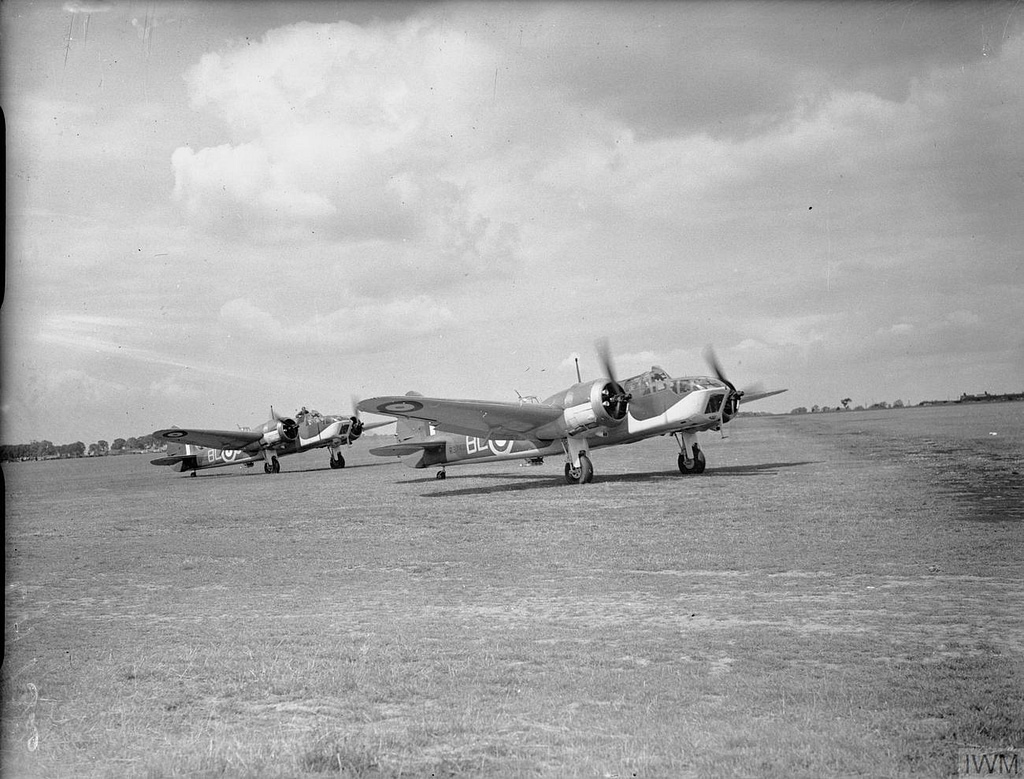
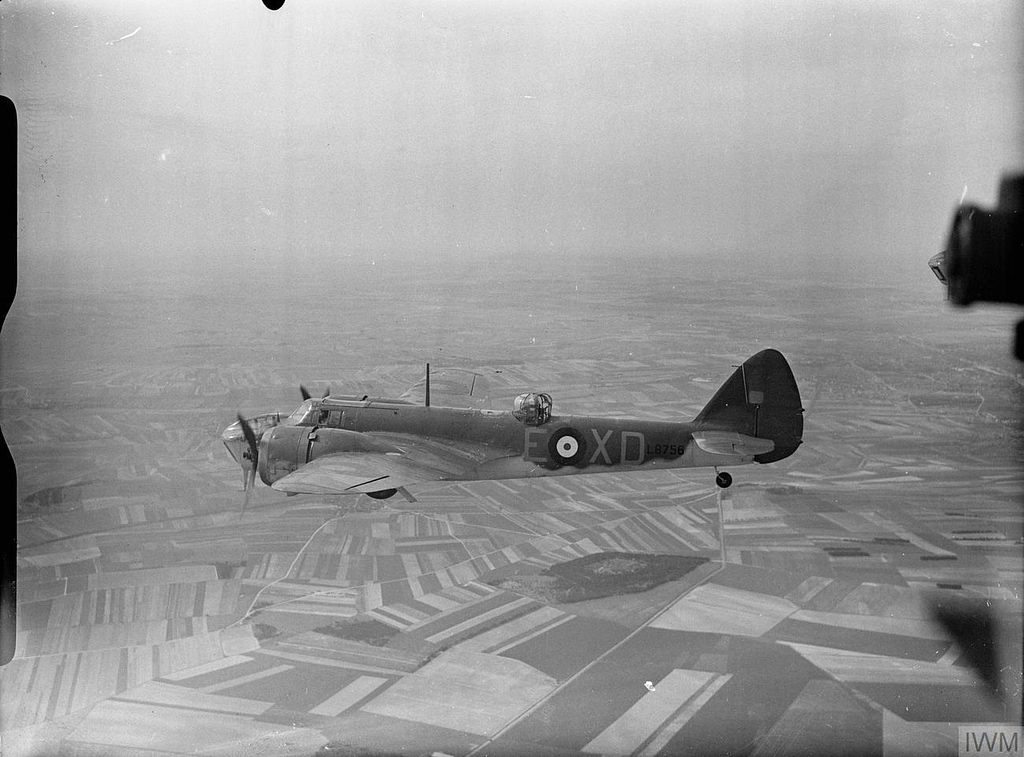
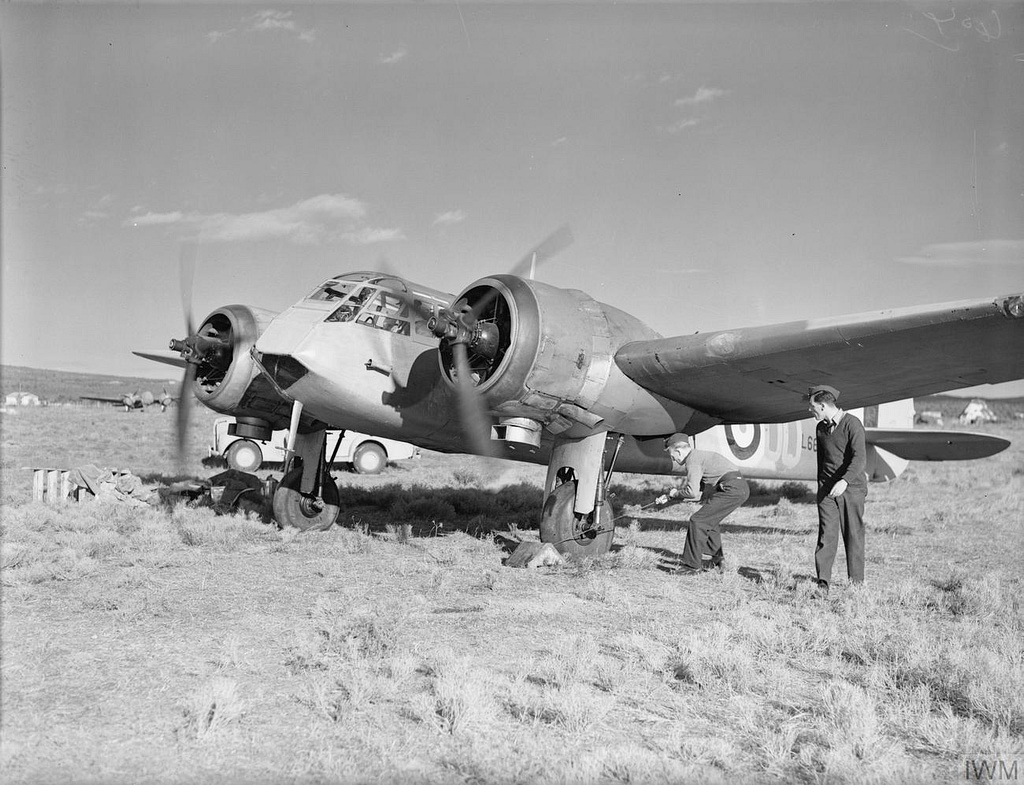
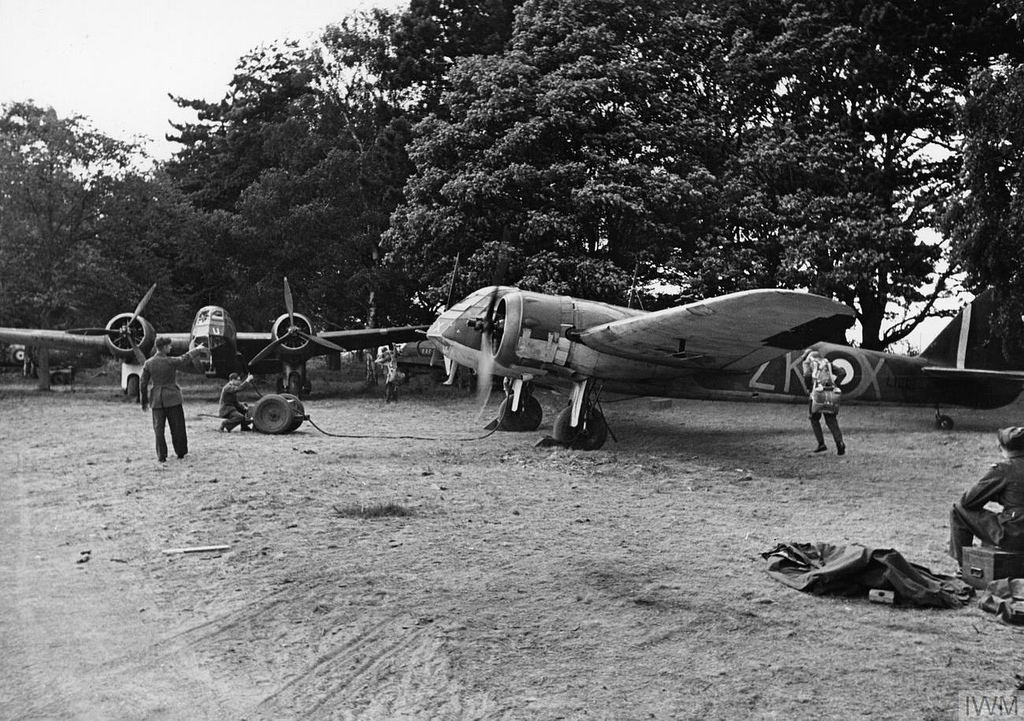
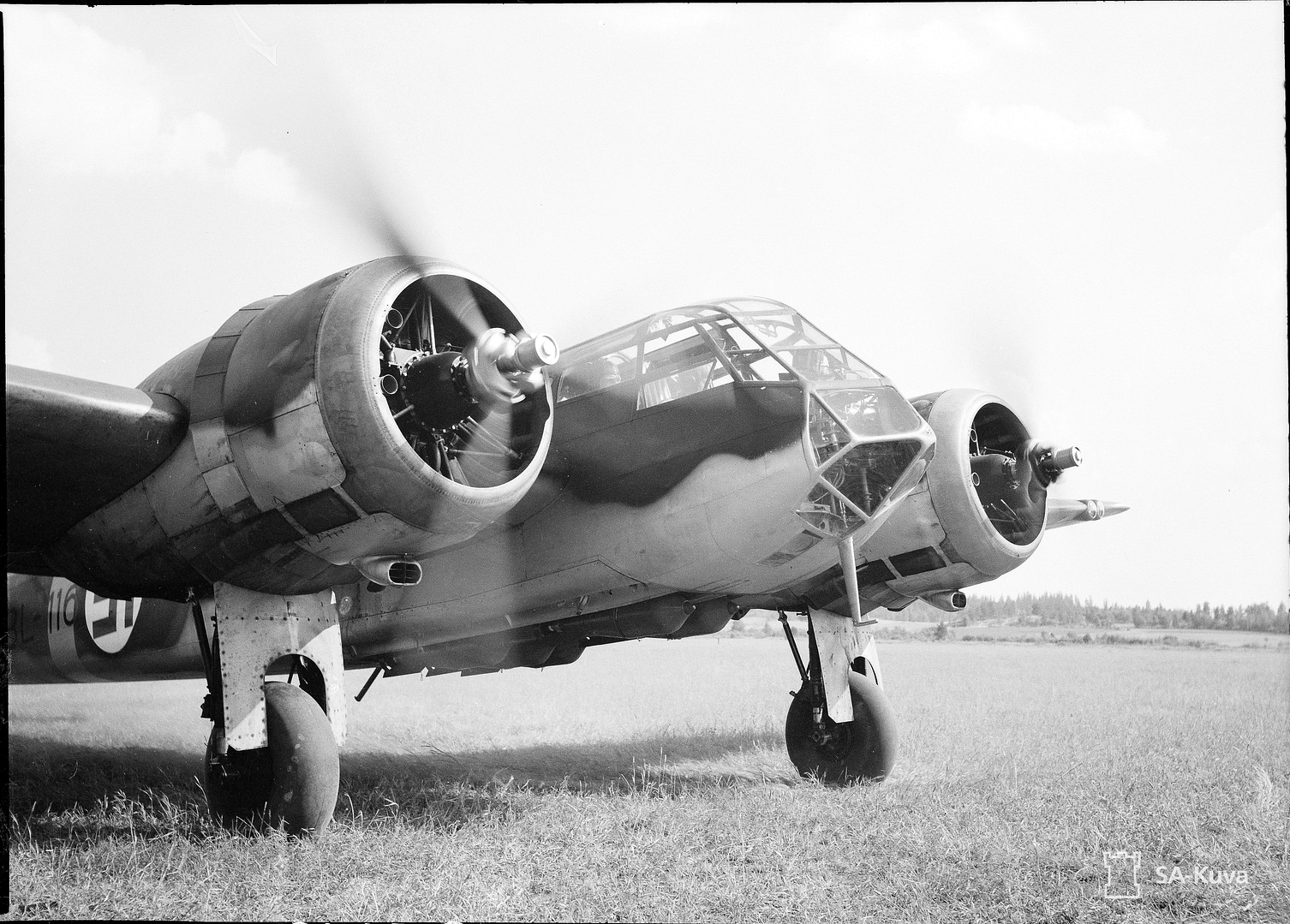
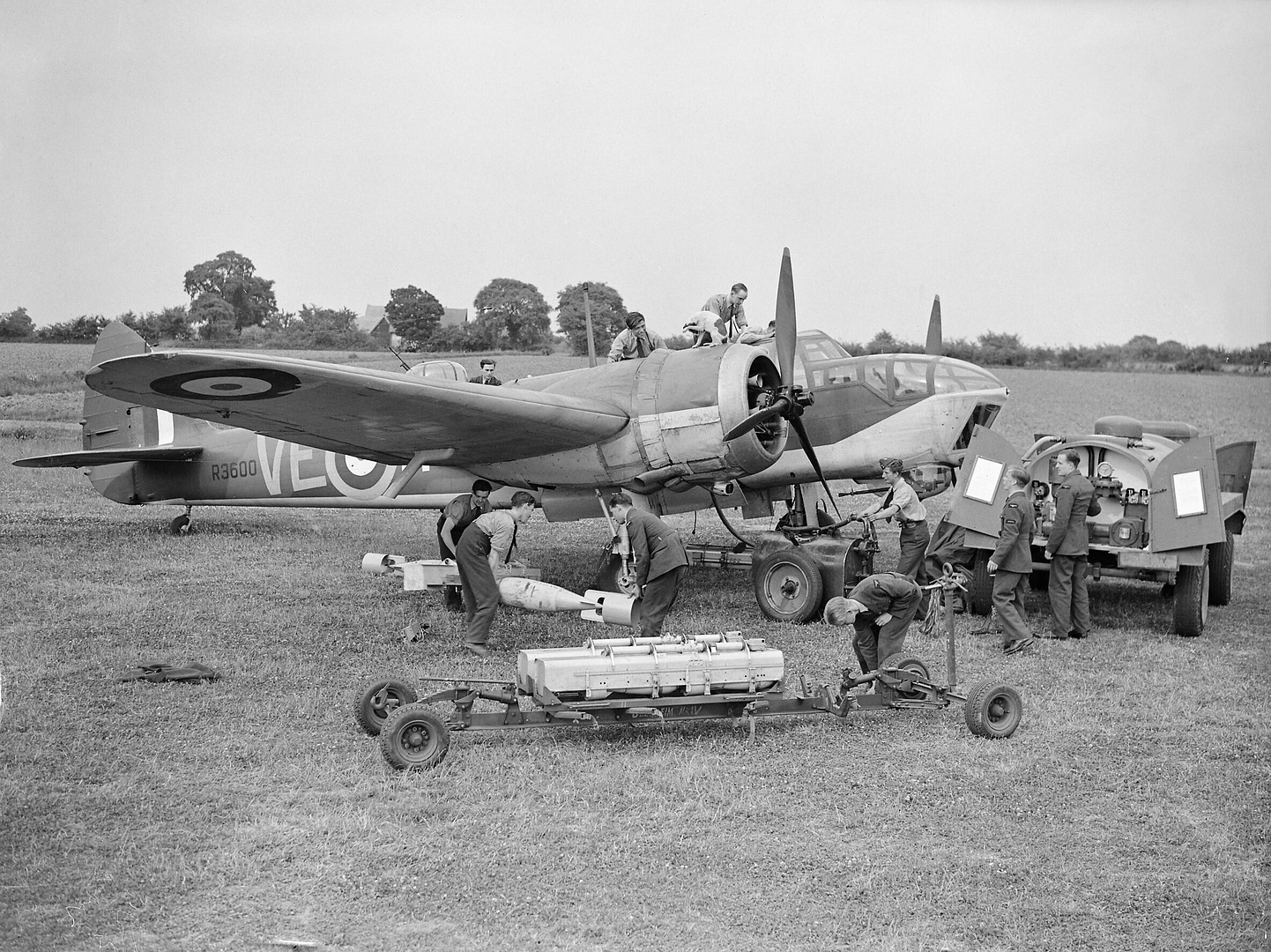
All images sourced from Wikimedia Commons. Public-domain wartime photographs and openly licensed images, credited individually above.
On Film
The Bristol Blenheim on film
A concise, well-sourced history of the Blenheim — how it began as the fastest thing in the sky and ended as one of the most dangerous aircraft in which to fly.
“Obsolete Wonder Weapon: The Bristol Blenheim” by Ed Nash’s Military Matters — around 44,000 views and 3,300+ likes on an authoritative aviation-history channel.
Operations Map
Where the Bristol Blenheim served
The Blenheim was a truly global aircraft — the RAF’s primary type, fought across a dozen theatres, exported and licence-built abroad, and preserved today on two continents. Toggle the categories to explore where it operated.
The Blenheim’s combat record is inseparable from its losses. Flown in daylight without escort against modern flak and fighters, No. 2 Group’s Blenheims endured some of Bomber Command’s worst loss rates, and on the blackest days whole squadrons were destroyed in a single sortie.
The Bristol Blenheim by the numbers
A short, hard-edged summary of what the Blenheim achieved — and what it cost.
Where to See One
Surviving Bristol Blenheims on display
Very few Blenheims survive — but one of them still flies, and others can be seen on the ground in Britain, Finland, Canada and Belgium.
Duxford, England
The Aircraft Restoration Company. The world’s only airworthy Blenheim — a Mk I registered G-BPIV — is operated from Duxford by the Aircraft Restoration Company and appears at British airshows. You can watch it fly, but it is a display aircraft and a memorial, not a passenger ride you can book.
The flying aircraft, registered G-BPIV, was rebuilt over decades from Blenheim and Canadian Bolingbroke components after earlier accidents, and is today the only airworthy Blenheim in the world.
United Kingdom museums
IWM Duxford & the RAF Museum. Static Blenheims, Bolingbroke airframes and major components are preserved at UK collections including Imperial War Museum Duxford and the Royal Air Force Museum, alongside the flying machine at Duxford.
These UK collections hold complete airframes, Bolingbroke fuselages, turrets, engines and nose sections — enough, between them, to tell the whole story of the type on the ground.
Finland, Canada & Belgium
Overseas survivors. The Aviation Museum of Central Finland at Tikkakoski displays a Finnish-built Blenheim; several Canadian-built Bolingbrokes survive in Canadian museums; and a Blenheim/Bolingbroke is held at the Royal Military Museum in Brussels.
Finland’s museum Blenheim actually flew in the war; Canadian collections preserve several Bolingbrokes; and a Bolingbroke represents the family at the Royal Military Museum in Brussels.
Between them these aircraft — one flying, the rest preserved on the ground — keep the memory of the Blenheim and its crews alive on both sides of the Atlantic.
The Blenheim is easy to caricature as a failure — too slow, too lightly armed, sent to die in daylight. But that judgement misreads both the aircraft and its moment.
Remembering the Bristol Blenheim
When it appeared in 1935 it was a genuine revolution: a fast, all-metal monoplane that hauled the RAF out of the age of the fabric biplane and into the modern era. For a few short years it was among the fastest things in British skies, and it forced a wholesale rethink of what a bomber could be.
That the war moved on faster than the design could was not the fault of the men who flew it. They took an increasingly obsolete aircraft into the deadliest skies of the early war — over the Channel, France, Greece, the desert and the Far East — and pressed home their attacks at a fearful price, two of them earning the Victoria Cross.
The Blenheim’s airframe lived on in the Beaufort and Beaufighter, and its founding idea — speed as defence — lived on in the Mosquito. Today a single example still flies over England: a reminder of a bomber that was briefly ahead of its time, and of the crews who paid the price when it no longer was.
Questions & Answers
Bristol Blenheim: your questions answered
Can I fly in a Bristol Blenheim?
Not as a paying passenger. Only one airworthy Blenheim exists in the world — the Mk I registered G-BPIV, flown by the Aircraft Restoration Company from Duxford — and while you can watch it display at British airshows, it is a memorial aircraft rather than a bookable ride.
If you want to actually fly in a piece of aviation history, though, you can. MiGFlug offers flights in genuine military jets, from the L-39 Albatros to the MiG-29 Fulcrum — see migflug.com/flights-prices/ for what is bookable today.
How fast was the Bristol Blenheim?
The short-nosed Mk I could reach about 285 mph (459 km/h) and the long-nosed Mk IV about 266 mph (428 km/h) at altitude. That was genuinely fast for a bomber of the mid-1930s — faster than the RAF’s own biplane fighters — but by 1939–40 modern monoplane fighters were more than 100 mph quicker.
Why did the Bristol Blenheim suffer such heavy losses?
By 1940 the Blenheim was outdated: slower than enemy fighters, lightly armed with rifle-calibre guns and carrying only a modest bomb load. Sent on unescorted daylight raids against well-defended targets, it was terribly exposed. On raids such as Gembloux (May 1940) and Aalborg (August 1941), eleven of twelve aircraft were lost.
What engines did the Bristol Blenheim use?
Every Blenheim was powered by two Bristol Mercury air-cooled radial engines. Early Mk I aircraft used the Mercury VIII of about 840 hp; the Mk IV adopted the Mercury XV of roughly 920 hp to offset its greater weight. Canadian-built Bolingbroke IVW aircraft used American Pratt and Whitney Twin Wasp Junior radials instead.
How many Bristol Blenheims were built, and were any built abroad?
Roughly 4,400 Blenheims were built, though totals vary between sources and rise well beyond that if you count related types. The aircraft was licence-built in Finland by the state aircraft factory, and built in Canada by Fairchild as the Bolingbroke — so it was very much an international design.
Are there any Bristol Blenheims left today?
Yes. One airworthy Blenheim flies from Duxford in England — the only one flying in the world — and static Blenheims and Canadian Bolingbrokes are preserved in the United Kingdom, Finland, Canada and Belgium.
You can’t fly the Bristol Blenheim. These, you can.
The Blenheim is a museum piece and a memorial — but the thrill of flying a real military aircraft is not out of reach. MiGFlug puts you in the cockpit of genuine jets, from trainers to supersonic fighters.
Fighter Jet Flights
Take the controls of a real ex-military jet with an experienced fighter pilot.
L-39 Albatros
The classic jet trainer — aerobatics and low-level fun, in several countries.
MiG-29 Fulcrum
Ride a genuine air-superiority fighter toward the edge of space.
Related Aircraft
More from the Aircraft Museum
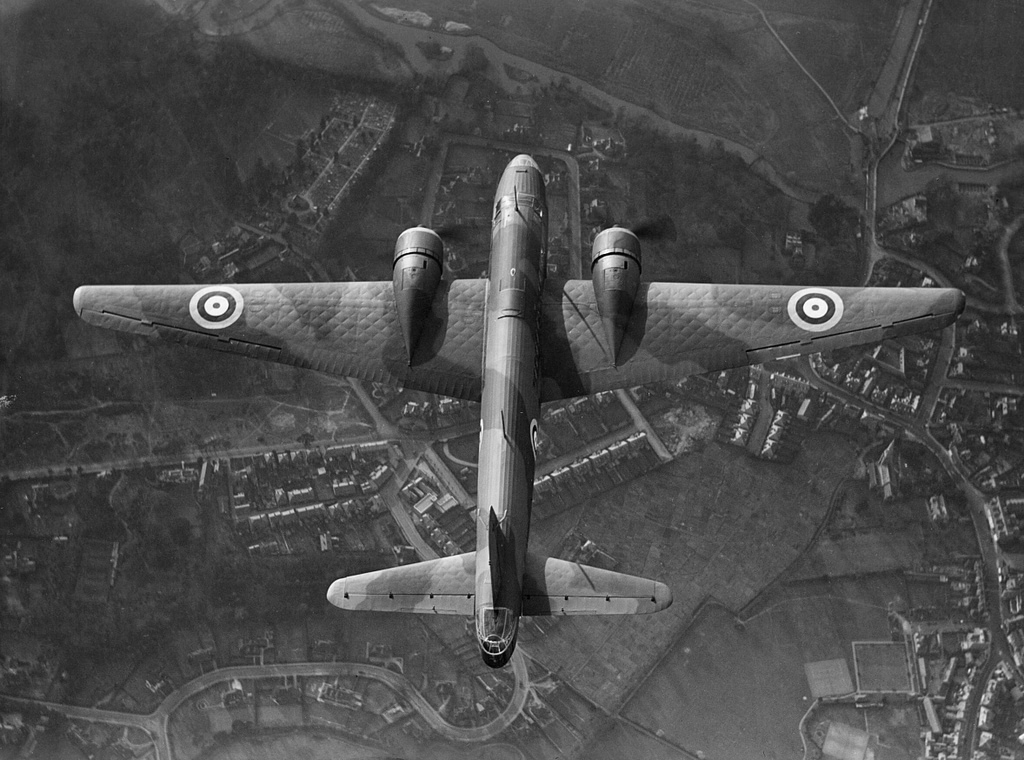
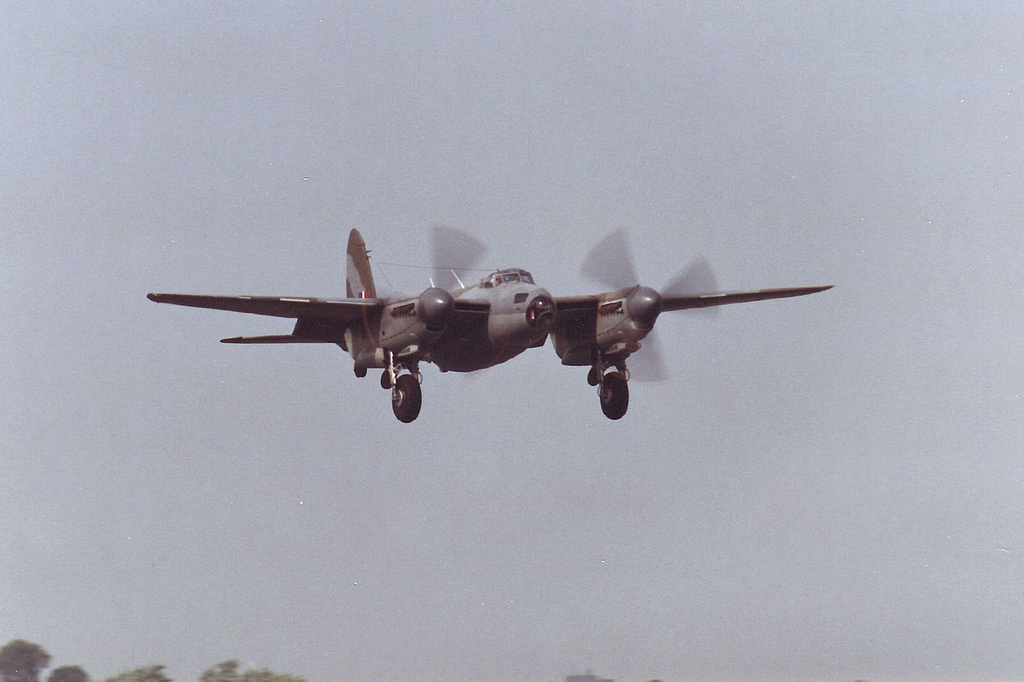
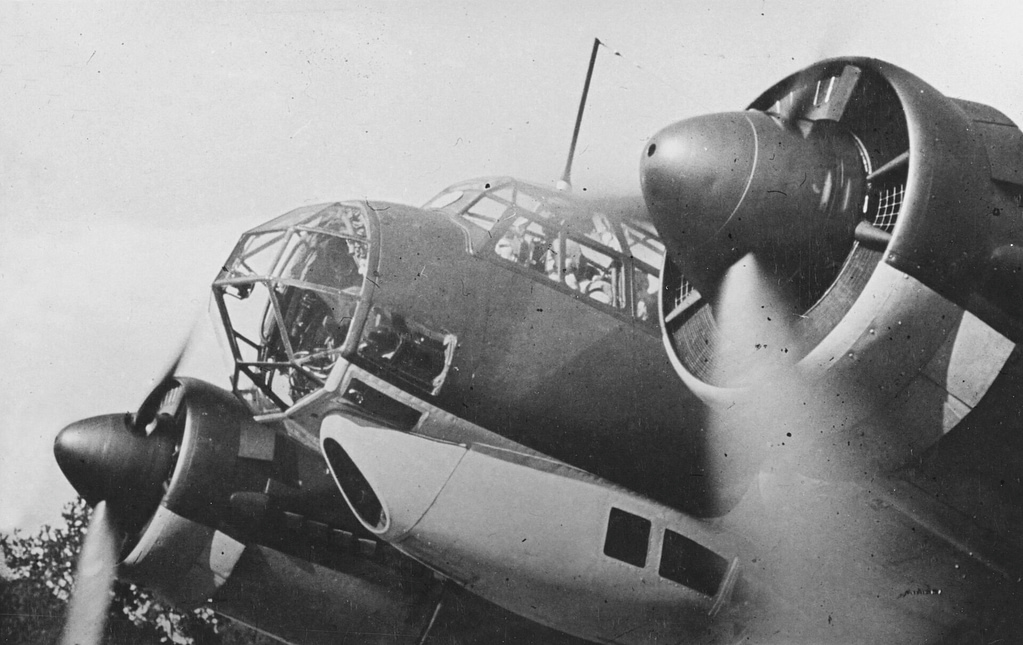
Sources & Further Reading
Where this page’s facts come from
Figures for speed, range, weights, sorties and losses are drawn from the museum and reference sources above; where sources differ, values are given as approximate and marked as estimates. Images are from Wikimedia Commons and credited individually in the gallery.