
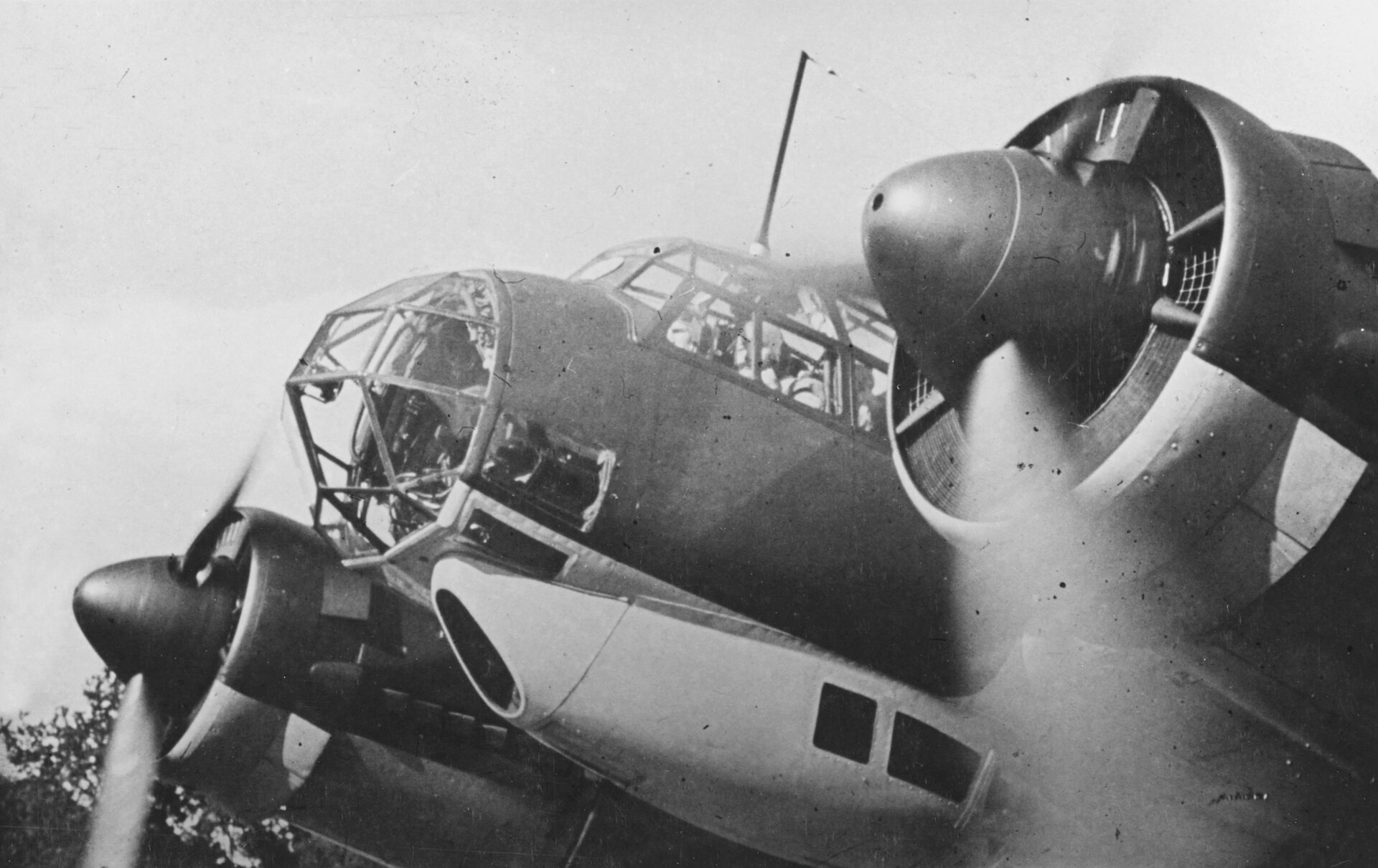
Junkers Ju 88
“The Maid of All Work”
Designed as a fast bomber, it ended the war doing almost everything — level and dive bombing, torpedo strikes, reconnaissance and radar night-fighting. Some 15,000 were built, more than any other German bomber.
The fast bomber that learned to do everything
In the mid-1930s the German air ministry wanted a Schnellbomber — a bomber fast enough to outrun the fighters sent to stop it. Junkers, under chief designer Ernst Zindel, answered with a clean twin-engine machine whose first prototype, the Ju 88 V1, flew on 21 December 1936. Early prototypes set impressive speed marks, and the design was chosen over rival proposals. It entered Luftwaffe service in September 1939, on the eve of the Second World War.
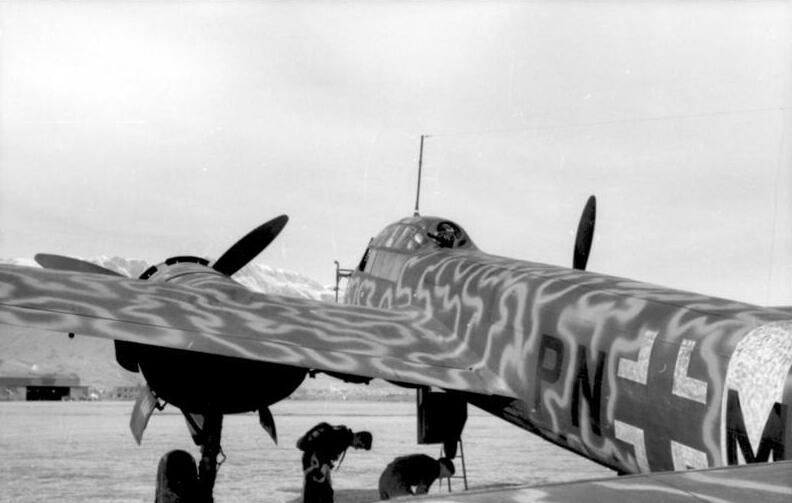
What made the Ju 88 remarkable was not any single record but its adaptability. The original fast bomber was soon asked to dive-bomb as well, which meant fitting dive brakes and strengthening the airframe — unusual demands for a twin-engine aircraft. Over the war it was pressed into service as a level bomber, dive bomber, torpedo bomber, long-range reconnaissance platform, heavy day fighter, radar-equipped night fighter, and even the explosive-packed lower half of the “Mistel” composite weapon. Few aircraft of the era matched its range of roles; German crews reportedly nicknamed it the Mädchen für alles, the maid of all work.
The Ju 88 flew on every front. It bombed Britain in 1940 during the Battle of Britain and the Blitz, pounded Malta and the Mediterranean, ranged across the Eastern Front, and became a feared anti-shipping weapon — notably in the destruction of Arctic convoy PQ-17 in July 1942. As the air war turned, its most effective late-war role was defensive: the radar-equipped Ju 88 G night fighter hunted RAF bomber streams over Germany.
Production reached roughly 15,000 aircraft (commonly cited figures range from about 14,700 to 15,200), making it the most-produced German bomber of the war. Yet almost all were scrapped or lost; only a handful of substantially complete airframes survive today, most famously the Ju 88 R-1 night fighter that a crew flew to Scotland in May 1943, handing British intelligence an intact airborne radar. It now stands in the Royal Air Force Museum at Cosford.
01The Junkers Ju 88’s origins: how a fast bomber became the Luftwaffe’s do-everything aircraft
The 1935 requirement behind the Ju 88 asked for speed above all — a bomber that could rely on pace rather than heavy defensive armament. Junkers delivered exactly that, and the prototypes duly impressed with record-setting runs. But doctrine shifted almost immediately: the Luftwaffe now wanted precision dive-bombing, and the sleek fast bomber had to be reworked with dive brakes, a stronger structure and extra crew stations. The changes added weight and eroded the very speed that had defined the design.
That tension — between the elegant fast bomber it was meant to be and the heavily loaded multirole machine it became — runs through the whole Ju 88 story. It was never the fastest or the best at any one task, but its adaptable airframe let one design cover a spread of missions that would normally have needed several separate aircraft. That versatility, more than raw performance, is why it was built in such numbers and stayed in front-line service to the end of the war.
What makes it special
One airframe, many jobs
The Ju 88 was unusually adaptable. The same basic design served as a fast level bomber, a dive bomber, a torpedo and anti-shipping aircraft, a long-range reconnaissance platform, a heavy day fighter and a radar night fighter. Sub-variants ran from the Ju 88 A bombers through the Ju 88 C and G fighters to the Ju 88 D reconnaissance machines — a spread of roles few contemporaries matched.
A twin-engine bomber that dived
Most medium bombers stayed level; the Ju 88 A did not. Fitted with slatted dive brakes under the wings and a reinforced structure, it could make steep diving attacks for greater accuracy — a demanding capability for a twin. The redesign added weight and complexity, and crews reportedly relied on pull-out aids to recover safely from the dive.
Radar night fighter & the Mistel
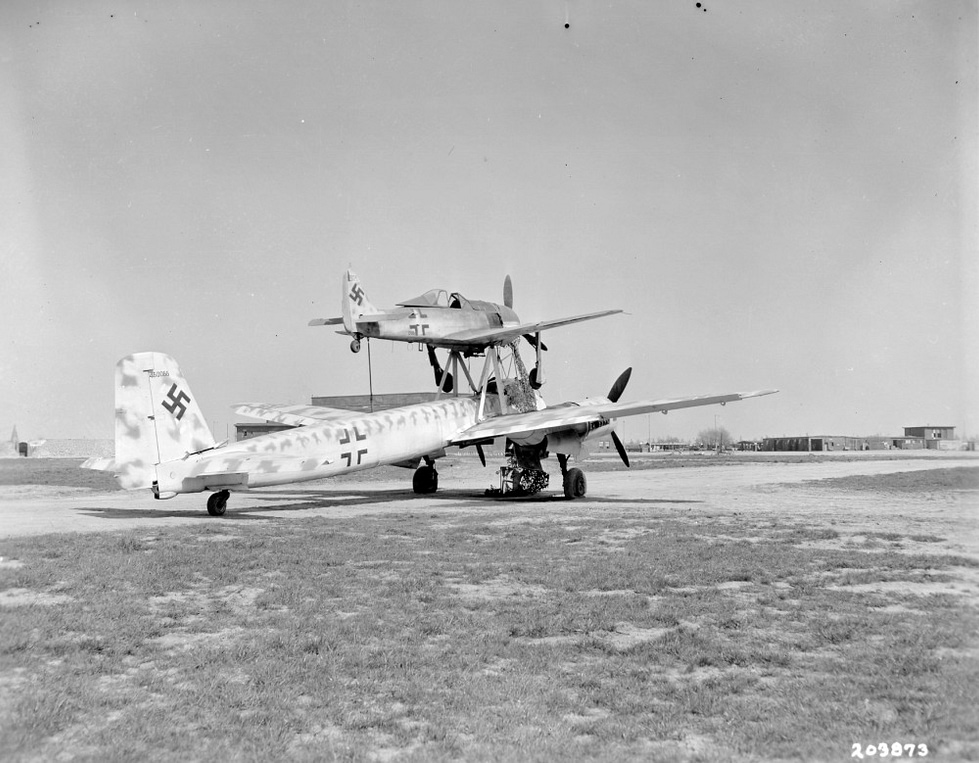
Late in the war the Ju 88 G became a leading night fighter, carrying FuG 220 Lichtenstein SN-2 radar and, on many aircraft, upward-firing schräge Musik cannon to strike bombers from below. The airframe also became the unmanned, explosive-laden lower component of the Mistel composite, guided to its target by a fighter mounted on top.
02The Junkers Ju 88’s dive-bombing: why a fast twin was taught to fall out of the sky
Turning a fast level bomber into a dive bomber was a significant engineering undertaking. Junkers added hydraulically operated dive brakes beneath the wings to hold the aircraft at a controllable speed in a steep dive, and strengthened the airframe to take the loads of the pull-out. The result gave the Luftwaffe an accurate medium bomber that could place its load far more precisely than level bombing allowed. The cost was weight and drag, which blunted the original fast-bomber performance. A commonly cited detail is an automatic pull-out device intended to help recover the aircraft from its dive; the mechanism is widely mentioned but the specifics are not consistently documented, so it is best treated as reported rather than firmly established.
03The Junkers Ju 88 as night fighter and Mistel: the type’s most radical late-war developments
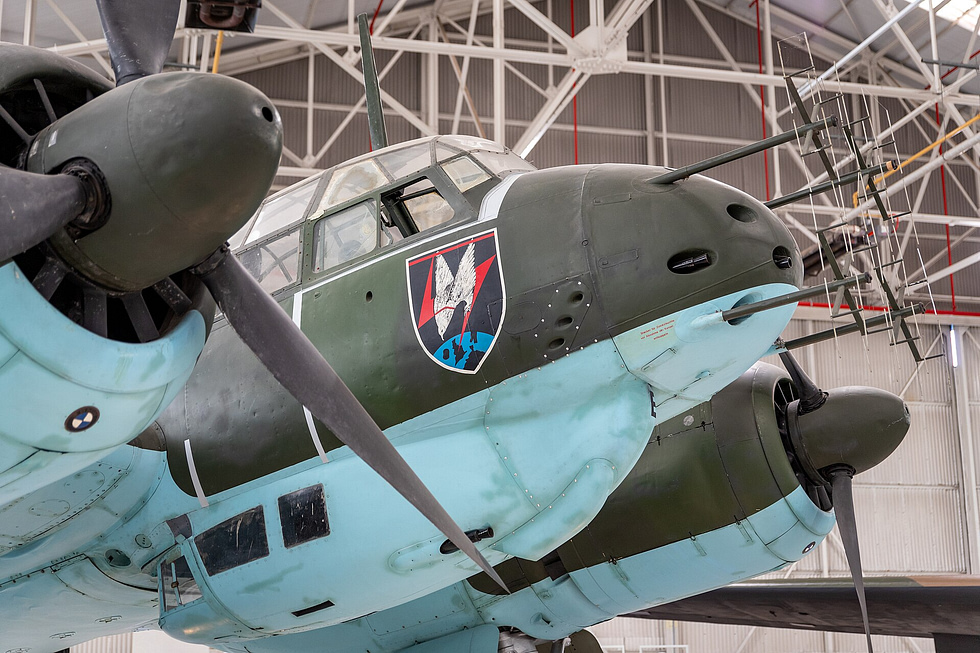
As RAF Bomber Command intensified its night offensive, the Ju 88 G became one of the Luftwaffe’s most important night fighters. It carried FuG 220 Lichtenstein SN-2 airborne-interception radar, whose distinctive nose aerials let crews find bombers in darkness, and often passive homing gear such as Flensburg and Naxos to track British radar and radio emissions. Many mounted schräge Musik — upward-firing cannon — so a fighter could attack a bomber from the blind spot directly below. Separately, the Mistel programme turned worn-out Ju 88 airframes into flying bombs: the nose was replaced by a large hollow-charge warhead of several tonnes, and the unmanned aircraft was flown to the target beneath a piggy-backed Bf 109 or Fw 190 whose pilot aimed the pair, released the bomber and flew home. Mistel attacks began in mid-1944; only a few hundred were built and results were limited.
Full specifications
Figures below are for the Ju 88 A-4, the main bomber variant. Sources vary; contested values are marked as commonly cited.
Baseline mark: all figures below are for the Ju 88A-4, the definitive long-span bomber and by far the most numerous version. Where the Ju 88C/G night fighters or the Ju 88S fast bomber differ materially, the delta is given in grey alongside. Wartime German data were quoted at varying weights, fuel states and boost settings, so published tables disagree by a few per cent.
Dimensions & weights
- Mürettebat
- 4 (pilot, bomb-aimer/gunner, flight engineer/gunner, radio operator/gunner) — all seated together in the forward cabin; C/G night fighters flew 3
- Uzunluk
- 14.36 m (47 ft 1 in) — Ju 88G-6 with radar and square tail, 14.54 m / 47 ft 8 in
- Kanat açıklığı
- 20.08 m (65 ft 10 in) — the A-1 had the short 18.37 m / 60 ft 3 in wing
- Yükseklik
- 4.85 m (15 ft 11 in)
- Kanat alanı
- 54.5 m² (587 sq ft)
- Boş ağırlık
- 8,550 kg (18,850 lb) — Ju 88G-6 nearer 9,100 kg / 20,060 lb with radar, cannon tray and armour
- Loaded weight
- 12,110 kg (26,700 lb) — normal bomber load
- Max takeoff weight
- 14,000 kg (30,865 lb) — overload, and only from a long hard runway, often with rocket assistance
- Dahili yakıt
- ~2,650 litres (~700 US gal) in wing and fuselage cells; a bomb-bay auxiliary tank of ~1,220 litres could be fitted in place of the forward bomb load
Performance
- Max speed
- 470 km/h (292 mph / 254 kn) at 5,300 m (17,390 ft), clean — Ju 88S-1 on boosted BMW 801 reached about 610 km/h / 379 mph; radar-laden Ju 88G-6 about 545 km/h / 339 mph
- Seyir hızı
- 400 km/h (249 mph / 216 kn) at altitude; economical cruise nearer 350 km/h / 217 mph
- Tırmanma hızı
- 235 m/min (770 ft/min) at loaded weight — modest, and one of the costs of the dive-bombing structure
- Servis tavanı
- 8,200 m (26,900 ft) — Ju 88S, stripped of turrets and drag, about 10,000 m / 32,800 ft
- Menzil
- ~2,430 km (~1,510 mi) with full internal fuel and a light bomb load; ~1,790 km / ~1,110 mi with a useful load
- Ferry range
- ~3,000 km (~1,865 mi) with the bomb-bay auxiliary tank and no weapons — a paper figure rather than a routine mission
- Takeoff run
- 800 m (2,625 ft) at loaded weight from a hard surface; longer at overload, hence the frequent use of jettisonable rocket packs
- Landing run
- 600 m (1,970 ft) — the aircraft was well flapped and landed cleanly for its size
- Bomb load
- ~3,000 kg (~6,600 lb) maximum on internal and external stations, and only at short radius; ~1,400 kg / ~3,090 lb internally was the usual full bay
Propulsion & systems
- Engines
- 2 × Junkers Jumo 211J-1/J-2 inverted V-12, liquid-cooled, with induction cooling — installed as annular-radiator power eggs that looked deceptively like radials; the Ju 88G-1 switched to BMW 801D-2 radials and the G-6 to the Jumo 213A
- Power each
- 1,340 PS (1,322 hp / 986 kW) for takeoff; Jumo 213A in the G-6 gave 1,750 PS / 1,726 hp with boost
- Propellers
- 3-blade VDM metal variable pitch, about 3.60 m (11 ft 10 in) diameter, with a constant-speed unit driven off the single-lever engine control
- Multirole adaptability
- The defining fact. Ordered as a fast unarmed-bomber (Schnellbomber), the Ju 88 became the most adaptable German aircraft of the war: level bomber, dive bomber, torpedo bomber, long-range reconnaissance, heavy day fighter, the mainstay night fighter of the Nachtjagd, anti-tank gun platform, trainer — and finally the unmanned, explosive-filled lower half of the Mistel composite. Very few airframes of any nation stretched that far. The cost was that adding a dive-bombing requirement to an already-fast bomber piled on weight, drag and structural complexity and delayed service entry — a pattern that recurs across German wartime procurement.
- Defensive armament
- 4–6 hand-aimed guns 7.92 mm MG 15, later MG 81 and twin MG 81Z, with 13 mm MG 131 in the rear dorsal and ventral gondola positions on later marks — all worked by a crew packed into one small cabin, which concentrated the aircraft's worst blind spots low and astern
- Radar
- FuG 202/212/220 Lichtenstein night-fighter fits only: FuG 202 Lichtenstein B/C and FuG 212 C-1 on the Ju 88C-6, the longer-wave FuG 220 Lichtenstein SN-2 with its large antler aerials on the Ju 88G, plus FuG 227 Flensburg and FuG 350 Naxos homers on some aircraft
- First flight
- 21 December 1936 Ju 88 V1 prototype
- Service entry
- 1939 first units equipped in the autumn, in action from the opening weeks of the war
- Built
- ~15,000 all variants, 1939–1945; commonly cited totals run from about 14,700 to just over 15,000 depending on whether conversions and Mistel rebuilds are counted separately
- Unit cost
- ~RM 300,000 order-of-magnitude only: German wartime accounting quoted a Ju 88A airframe in roughly this band, and unit prices fell substantially as mass production matured. Figures are not directly comparable to Allied dollar costs and should be treated as indicative
- Cost per flight hour
- Not applicable — none airworthy no Ju 88 anywhere in the world is flyable. What survives is a small number of static airframes in museums, several rebuilt from wrecks recovered from Norwegian fjords, lakes and crash sites, so there is no operating cost to quote
04The Junkers Ju 88’s costs: why no meaningful price figure exists
The Ju 88 was a wartime German state product, built in vast numbers under a command economy and never sold on any open market, so a firm flyaway unit price in modern terms simply does not exist in the public record. Nor is there a credible cost-per-flight-hour figure for the type. What can be said is that the design was deliberately suited to mass production — roughly 15,000 were built — and that its value to the Luftwaffe lay in versatility: one adaptable airframe covered missions that might otherwise have required several specialised aircraft. Any precise money figure attached to a Ju 88 today should be read as an estimate or conversion, not a documented price.
Armament & payload
Ju 88 armament: one airframe, four different weapons fits
The Ju 88 began as a fast bomber that was supposed to outrun interceptors rather than shoot back, and it ended the war as the best-armed German night fighter in service. Almost nothing about its armament was fixed: the nose could be glass or steel, the bomb bay could hold fifty-kilo bombs or a fuel tank, the wing racks could take bombs or torpedoes, and in the last year the whole forward fuselage could be replaced by a warhead. What follows is what the aircraft actually carried, mark by mark.
Defensive guns
The Ju 88 defended itself with hand-held guns, never a powered turret, and that decision shaped its whole combat life. Early A-1s carried three or four rifle-calibre 7.92 mm MG 15 on pillar mounts; the A-4 standardised on the faster-firing MG 81, often as the twin MG 81Z in the rear of the cabin, with a 13 mm MG 131 appearing in the dorsal and ventral positions on later machines.
All four crew sat shoulder to shoulder in one glazed forward cabin. That was excellent for crew coordination and morale and terrible for coverage: the gunners were fighting from a single small volume, and the arcs below and behind the aircraft were thin. The ventral Bola gondola under the nose existed largely to plug the belly gap, and it cost speed to carry.
Bombs
The standard load was German general-purpose SC (Sprengbombe Cylindrisch) and thick-cased fragmentation SD (Splitterbombe Dickwandig) bombs in 50, 250, 500 and 1,000 kg sizes, with 1,400 kg and 1,800 kg weapons on the heaviest external fits. The internal bay, split fore and aft, took up to 28 × SC 50; heavier weapons went on ETC 500 racks under the inner wings, outboard of the engines.
Maximum load was ~3,000 kg (~6,600 lb), but that was a short-radius figure with the auxiliary tank out and the bay partly given over to external carriage. A realistic operational load over a defended target was well under half of it. The aircraft could also lay LMA and LMB parachute sea mines, which it did extensively around British coastal waters and estuaries in 1940–41.
Night-fighter armament
The fighter Ju 88s put their guns where a bomber's bomb-aimer used to sit. The Ju 88C-6 replaced the glazed nose with a solid metal one holding 3 × 7.92 mm MG 17 Ve 3 × 20 mm MG FF/M cannon. The Ju 88G moved the battery into a ventral tray of 4 × 20 mm MG 151/20, a clean and very heavy forward-firing armament for a twin.
Most G-series aircraft also carried Schräge Musik: a pair of MG 151/20 mounted in the rear fuselage firing upward and forward at roughly 70 degrees. The tactic was straightforward. RAF heavy bombers had no ventral turret and effectively no downward view, so a night fighter that slid into formation underneath could hold position, aim through a reflector sight in the cabin roof and fire into the wing tanks between the engines from a place the bomber crew could not see. Aiming at the wings rather than the fuselage was deliberate. It was an unglamorous, highly effective piece of engineering, and it accounted for a substantial share of Bomber Command losses in 1944.
Anti-shipping weapons
Anti-shipping Ju 88s — principally the A-4/Torp and the purpose-built A-17 — carried 2 × LTF 5b aerial torpedoes on underwing racks, with the ventral gondola deleted and a torpedo-aiming installation fitted. Against convoys they also used ordinary SC bombs in shallow glide and dive attacks, and sea mines. Units such as KG 26 and KG 30 used them heavily against Arctic convoys, where PQ 17 and PQ 18 are the best-known examples.
One correction worth making plainly: the Ju 88 was not an operational carrier of the German guided weapons. The Fritz X armour-piercing glide bomb and the Hs 293 rocket-boosted anti-ship missile were the business of the Do 217, the He 177 and the Fw 200, which had the payload, the endurance and the Kehl-Strassburg guidance installation. The Ju 88 is often loosely associated with them; its real anti-ship punch was torpedoes, bombs and mines.
Radar & sensors
The night-fighter Ju 88 was a radar aircraft first and a gun platform second. FuG 202 Lichtenstein B/C Ve FuG 212 C-1 gave the C-6 an interception radar with a short, cluttered range; the FuG 220 Lichtenstein SN-2 on the Ju 88G used a longer wavelength deliberately chosen to defeat the Window chaff that had blinded the earlier sets over Hamburg in 1943.
Passive sensors mattered as much. FuG 227 Flensburg homed on the RAF's Monica tail-warning radar and FuG 350 Naxos on H2S ground-mapping transmissions, letting a crew find a bomber stream by listening to it. When a Ju 88G-1 was landed by mistake at Woodbridge in July 1944, the RAF got SN-2, Flensburg and Naxos intact in one night and changed its countermeasures accordingly.
Mistel & special fits
Mistel was the strangest use of the type. A war-weary Ju 88 had its entire crew cabin unbolted and replaced with a shaped-charge warhead of around 3,500–3,800 kg; a Bf 109 veya Fw 190 was mounted on struts above it, and the fighter pilot flew the pair, aimed the unmanned lower aircraft at the target, and released. Roughly ~250 conversions were made.
Results did not match the concept: the combination was slow, unwieldy and vulnerable, and attacks on Normandy shipping and later on the Oder bridges achieved little for the effort. The other specialist branch was the Ju 88P gun carrier, with a 75 mm PaK 40 or twin 37 mm or 50 mm BK 5 in a huge ventral fairing — accurate enough on paper, far too slow and exposed in practice, and built only in small numbers.
Three typical Ju 88 fits
- Level bombing — Ju 88A-4, medium-range sortie
- 10 × SC 50 in the aft bay plus 2 × SC 250 on ETC 500 wing racks, auxiliary tank forward, ~1,000 kg (~2,200 lb) of bombs. Four crew, MG 81Z aft, ventral gondola fitted. This is the everyday configuration — well short of the quoted maximum, because fuel and defensive drag came first.
- Night fighter — Ju 88G-6, bomber-stream interception
- 4 × 20 mm MG 151/20 in the ventral tray plus 2 × MG 151/20 Schräge Musik, FuG 220 SN-2 radar, no bombs. Three crew: pilot, radar operator, gunner/radio. Endurance and cannon ammunition mattered more than speed; the aircraft was patrolling and stalking, not chasing.
- Anti-shipping — Ju 88A-17, convoy strike
- 2 × LTF 5b torpedoes on underwing racks, ventral gondola removed, full internal fuel. Flown low and in numbers against Arctic and Mediterranean convoys. Torpedo work demanded a long, straight, slow run-in, which is why these units took the losses they did.
Every figure above is mark-dependent, and the Ju 88 changed more between marks than most aircraft change across a whole family. An A-1 of 1939, an A-4 of 1942, a G-6 of 1944 and a Mistel lower component share a designation and a wing, and very little else. Where a source quotes "the Ju 88" without naming a mark, treat the number with suspicion.
Variants
From Schnellbomber to Nachtjäger: the Ju 88 family
The Ju 88 was a genuinely excellent aeroplane — strong, docile, easy to adapt and available in quantity — and it is fair to call it the most useful German aircraft of the war. It is equally fair to say that it never quite became the aircraft it was designed to be. The prototypes were fast enough to set closed-circuit records; the requirement then imposed, that this fast bomber must also dive-bomb accurately, brought dive brakes, a heavier structure, a pull-out automation system and a great deal of extra weight and drag. Service entry slipped by roughly two years, and the production aircraft was slower than the machine that had impressed everyone in 1938. The same instinct — asking one airframe to do a further job it was not conceived for — recurs across German wartime procurement, most notoriously with the He 177 and the Me 262.
- Ju 88A-1
- Initial production bomber, 1939–40, short 18.37 m wing, Jumo 211B. Entered service in time for the Norwegian and French campaigns and the Battle of Britain, where it proved fast but not fast enough to dispense with escorts, and where the thin hand-held defensive armament cost crews dearly. Several hundred built before the A-4 took over.
- Ju 88A-4
- The definitive bomber: long 20.08 m wing, Jumo 211J, strengthened structure, better armament. The single most-produced version and the reference airframe for almost every published Ju 88 specification. Served on every front from the Arctic to North Africa, and was the basis for the torpedo, trainer and tropical sub-variants.
- Ju 88C-6
- Heavy fighter and first mass night fighter, solid nose with 3 × MG 17 and 3 × 20 mm MG FF/M. Roughly ~3,000 C-series aircraft of all sub-types. Started as a bomber-destroyer and intruder, then became the Nachtjagd's workhorse once Lichtenstein radar was fitted; many later received Schräge Musik.
- Ju 88G-1 / G-6
- Purpose-built night fighter: Ju 188-type square tail, ventral tray of 4 × MG 151/20, FuG 220 SN-2. G-1 on BMW 801D-2 radials, G-6 on the Jumo 213A. Around ~2,500 G-series built. Flown by the leading night-fighter crews of the war — Heinz-Wolfgang Schnaufer scored the bulk of his 121 victories on the type — and, stated plainly, these aircraft inflicted heavy and sustained losses on RAF Bomber Command through 1944 and into 1945, until fuel shortage and Allied intruder patrols over the airfields blunted them.
- Ju 88D
- Long-range photographic reconnaissance, A-4 airframe with cameras replacing the bomb load and extra fuel. Around ~1,450 built. Unglamorous and very widely used; a Ju 88D defection to Turkey in 1943 delivered an intact example to the Allies, and that aircraft is the reason a Ju 88 survives in the United States today.
- Ju 88S
- Fast bomber that returned to the original 1935 concept: cleaned-up rounded glazed nose, gondola and most guns deleted, boosted BMW 801 or Jumo 213. About 610 km/h (379 mph) — genuinely hard to intercept, at the price of a small bomb load and almost no defensive armament. Built only in modest numbers from 1943, and the clearest evidence of what the type could have been without the dive-bombing detour.
- Ju 88P
- Gun carrier: P-1 with a 75 mm PaK 40, P-2 and P-3 with twin 37 mm BK 3,7, P-4 with the 50 mm BK 5, all in a large ventral fairing. Only a few dozen of each. Intended against tanks on the Eastern Front and against heavy bombers in the West; in both roles the aircraft was too slow and too big a target to survive the approach.
- Mistel
- Composite weapon: an unmanned, war-weary Ju 88 with its cabin replaced by a ~3,500–3,800 kg shaped-charge warhead, flown and aimed by a Bf 109 or Fw 190 mounted above. Roughly ~250 conversions from 1944. Used against Allied shipping off Normandy and later against Oder bridges, with negligible results relative to the airframes and fuel consumed.
- Ju 188 and Ju 388
- Successor designs, not Ju 88 variants — clearly labelled here to avoid confusion. The Ju 188 was the intended replacement, with a longer pointed wing, an enlarged bulbous cabin and a square fin; roughly ~1,100 built from 1943. The Ju 388 went further, a high-altitude bomber, reconnaissance and night-fighter family with a pressure cabin and turbocharged engines, of which only a small number were completed before the war ended.
No Ju 88 anywhere in the world is airworthy today, and none has flown for decades. What remains is a small number of substantially complete airframes in museums — among them examples in the United Kingdom, Germany, Hungary, Norway and the United States — and several of these are composites assembled from recovered wrecks, including aircraft raised from Norwegian fjords and lakes and from other crash sites. Restoration of the type is a salvage discipline as much as an engineering one, and any Ju 88 on display should be read as a careful reconstruction rather than a preserved survivor.
From fast bomber to night hunter
First flight
The Ju 88 V1 prototype flies on 21 December, built to a fast-bomber requirement under Ernst Zindel at Junkers.
Enters service
The Ju 88 joins the Luftwaffe in September, on the eve of war, and sees early combat over Poland.
Battle of Britain & the Blitz
The fastest German bomber over England, it takes heavy losses by day and shifts increasingly to night raids.
Malta & the Mediterranean
Ju 88 units flying from Sicily hammer Malta and Allied convoys across the Mediterranean.
Convoy PQ-17
In July, Ju 88s play a major part in the destruction of Arctic convoy PQ-17; only 11 of 35 ships reach port.
Radar secret defects
On 9 May a Ju 88 R-1 night fighter lands in Scotland, delivering an intact Lichtenstein airborne radar to Britain.
Night fighters & the Mistel
The radar-equipped Ju 88 G becomes a leading bomber-destroyer; the explosive Mistel composite enters combat.
End of the line
Production ends with the war. Of ~15,000 built, only a handful of complete airframes survive today as museum pieces.
From every front: twelve Ju 88 stories
The bomber built to outrun fighters
Ernst Zindel’s fast-bomber gamble launched the whole programme.
Read the full story
A twin that dive-bombed
They taught a medium bomber to fall out of the sky.
Read the full story
Fast, but not fast enough
The quickest German bomber still bled over England.
Read the full story
The Arctic slaughter of PQ-17
A single Ju 88 could sink a merchant ship in minutes.
Read the full story
The island that would not fall
Ju 88s over one of the most-bombed places on Earth.
Read the full story
The night fighter that landed in Scotland
On 9 May 1943 a Ju 88 R-1 handed Britain an intact radar.
Read the full story
Music from below
Schräge Musik turned the Ju 88 into a bomber-killer.
Read the full story
The unarmed eyes
The Ju 88 D was the camera in the sky.
Read the full story
The flying bomb with a pilot on top
The Ju 88 itself became the warhead.
Read the full story
Finland’s Junkers
Twenty-four Ju 88s flew in Finnish colours.
Read the full story
Raised from the fjords
Norway’s cold lakes gave the Ju 88 back.
Read the full story
From 15,000 to a handful
Almost every Ju 88 ever built is gone.
Read the full story
The Ju 88 in pictures
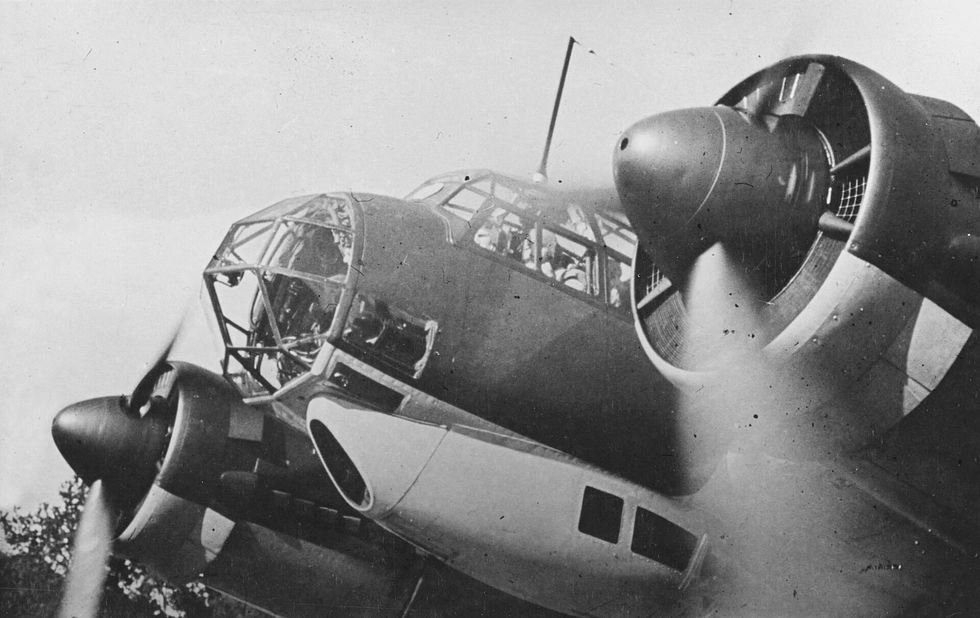
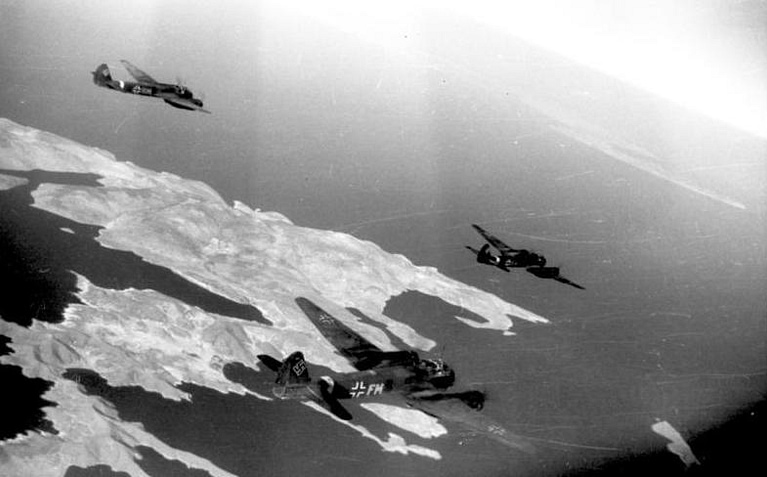
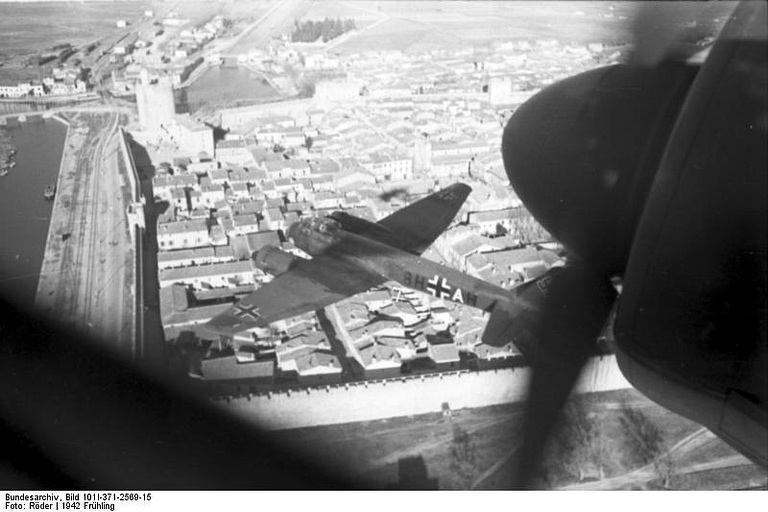
The Ju 88 in motion
A verified, high-authority video feature for the Junkers Ju 88 is coming soon. In the meantime, explore the photo gallery above and the operations map below.
Where the Ju 88 flew
A workhorse on every front
The Ju 88 does not have a “score” in the way a fighter does — its record is written across roles and theatres. It bombed Britain, Malta and the Eastern Front, sank shipping in the Arctic, and late in the war became one of the Luftwaffe’s most effective radar night fighters. Its defining trait was breadth, not any single statistic.
Compare the combat record of every military aircraft. Figures as of July 2026.
Everything people ask about the Ju 88
Can I fly in a Ju 88?
How many Ju 88s were built?
Why was the Ju 88 so versatile?
What was the Mistel?
Did a Ju 88 really defect to Britain?
How fast was the Ju 88?
Are any Ju 88s left today?
You can’t fly the Ju 88.
These, you can.
Some legends only live in museums — others are fuelled and waiting. MiGFlug has put civilians in real military jet cockpits since 2004.
 Fly the L-39 AlbatrosThe world’s most-flown jet trainer — aerobatics included
 Fly the F-104 Starfighter“The missile with a man in it”
 Fly the MiG-21The Cold War’s most-produced jet
 T-33 Shooting Star'ı uçurunAmerica’s first jet trainer
 Fly the DH VampireA piece of early jet history
 Fly the S.211Agile Italian jet trainer
 Fly the MB-326The classic Aermacchi jet
 Fly the MiG-15The Soviet legend of the Korean War
Continue the tour
Every fact, checked
- Royal Air Force MuseumIndividual history of the Ju 88 R-1 night fighter and the 9 May 1943 defection to Scotland.
- World History EncyclopediaOverview of the Ju 88’s development, variants, operators and production numbers.
- History of WarThe Ju 88 as a night fighter — radar, homing gear and schräge Musik.
- The National WWII MuseumConvoy PQ-17 and the Ju 88’s role in the Arctic anti-shipping battle.
- PlaneHistoriaThe Mistel composite — how a Ju 88 became an unmanned flying bomb.
- Vintage Aviation NewsFirst flight of the Ju 88 V1 prototype and the Schnellbomber concept.
- National Museum of the U.S. Air ForceReference for the preserved ex-Romanian Ju 88 D-1 reconnaissance aircraft.
- Hugo Junkers HomepageSurvey of surviving Ju 88 airframes, wreck recoveries and restorations worldwide.