
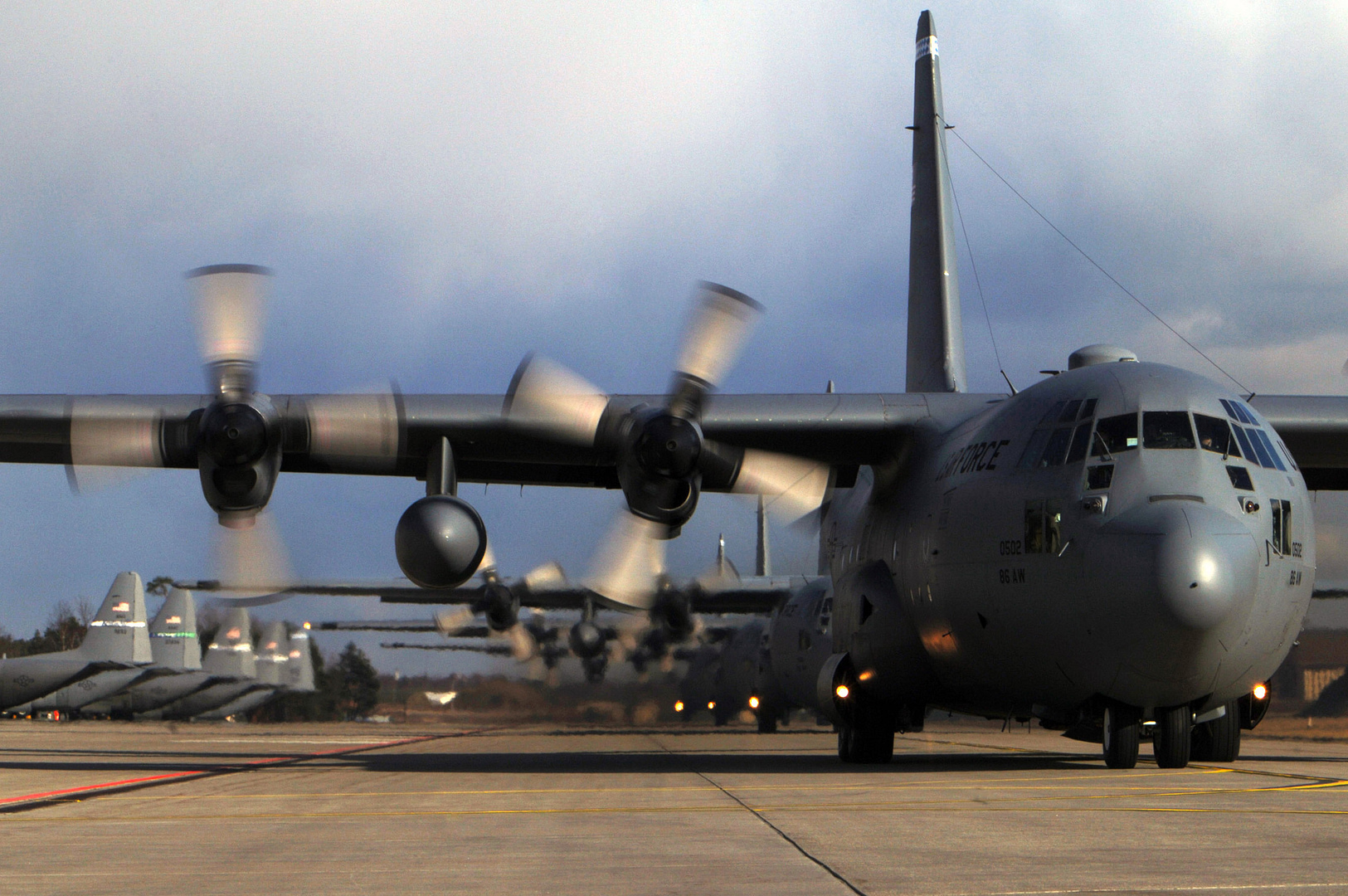
Lockheed C-130 Hercules
The airlifter that never stopped flying
The four-engine tactical transport that has hauled troops, tanks, paratroopers and disaster relief into the world’s roughest airstrips since the 1950s — and, more than seventy years on, is still rolling off the line.
The Lockheed C-130 Hercules: the workhorse that outlived its own era
In 1951 the United States Air Force, absorbing the hard lessons of the Korean War, issued a requirement for a new kind of transport aircraft. It wanted a turboprop-powered workhorse that could carry troops and heavy cargo, drop paratroopers and supplies, and — crucially — operate from short, unpaved, front-line airstrips. Lockheed’s design team answered with an aircraft that broke sharply with the airliner-derived transports of the day, and on 23 August 1954 the first YC-130 prototype took to the air from Burbank, California. It was the beginning of the longest continuous production run in the history of military aviation.
Almost everything about the design was shaped by that rough-field brief. The high wing kept the four engines and propellers clear of debris and let the fuselage sit low to the ground. A rear cargo ramp that lowered to truck-bed height turned loading and airdrop into fast, routine work. Sturdy multi-wheel landing gear and enormous flaps let the aircraft claw its way into and out of dirt strips that no jet transport could touch. And in place of the piston engines of its predecessors sat four Allison T56 turboprops — lighter, more powerful and more reliable, giving the Hercules both real lifting power and the low-speed control that short-field flying demands.
The C-130A entered US Air Force service in December 1956, and the type never looked back. Successive versions — the C-130B, the widely exported C-130E and the definitive C-130H — added range, power and payload while keeping the same rugged, unglamorous formula. Where a purpose-built airliner might be optimised for one job, the Hercules was designed to do almost anything, almost anywhere, and that is exactly what it went on to do.
What sets the C-130 apart from nearly every other aircraft is the sheer breadth of its family. Over the decades Lockheed and its operators turned the basic airframe into more than seventy distinct variants: the KC-130 aerial tanker, the HC-130 combat search-and-rescue and refuelling aircraft, the MC-130 special-operations infiltrator, the EC-130 electronic-warfare and broadcast platform, the ski-equipped LC-130 that resupplies research stations in Antarctica and Greenland, the WC-130 “Hurricane Hunter” that flies deliberately into tropical storms, and the heavily armed AC-130 gunship. That last variant became a legend in its own right — you can read its story on our dedicated AC-130 gunship page.
The Hercules also proved endlessly adaptable to peace. Fitted with the Modular Airborne Fire Fighting System (MAFFS), C-130s become airborne fire tankers, dropping retardant on wildfires. They fly humanitarian relief into earthquake and famine zones, carry out medical evacuation, support scientific expeditions to the poles, and haul everything from helicopters to armoured vehicles. Few aircraft have touched so many different missions, and fewer still have done so for so long.
In the 1990s Lockheed Martin comprehensively re-engineered the design as the C-130J Super Hercules: new Rolls-Royce turboprops driving distinctive six-blade composite propellers, a modern glass cockpit and a two-pilot crew, and a substantial jump in speed, range and payload. The J-model keeps the same unmistakable silhouette but is effectively a new aircraft inside, and it has kept the production line in Marietta, Georgia running into an eighth decade. Delivered to more than sixty nations and operated by around seventy air arms worldwide, the Hercules is that rarest of machines: a Cold War design that is still being built, still being bought, and still doing the job it was drawn up for.
01The Lockheed C-130 Hercules’s name and origins: how a 1951 airlift requirement created a legend
The C-130 grew out of a US Air Force requirement issued in 1951 for a turboprop tactical transport able to carry up to 92 troops or heavy cargo, drop paratroopers, and operate from short, rough airstrips near the front line. Lockheed won the competition, and its chief designer’s team deliberately rejected the sleek, airliner-style transports of the day in favour of a boxy, high-wing, ramp-loading aircraft built purely around the mission.
The name Hercules — after the hero of Greek myth famed for his strength and endurance — suited the aircraft so well that it stuck permanently, though crews the world over simply call it the “Herc.” The prototype first flew in 1954, production deliveries began in 1956, and the design has been in continuous production ever since, a record no other military aircraft can match.
What makes the Lockheed C-130 Hercules special
The high wing and rear ramp that redefined airlift
The Hercules was built around its cargo hold. A high-mounted wing keeps the engines clear of the ground and leaves the fuselage floor low and unobstructed, while a full-width rear ramp lowers to truck-bed height so vehicles can drive straight in and pallets or paratroopers can leave in seconds. That pressurised, straight-through cargo box — loaded from the back, not the side — became the template that virtually every military airlifter since has copied.
Four turboprops and genuine rough-field muscle
Four Allison (later Rolls-Royce) T56 turboprops give the C-130 the combination that jets struggle to match: strong low-speed thrust, excellent control at slow approach speeds, and the ability to reverse the propellers to stop short. Paired with rugged multi-wheel landing gear and huge flaps, that lets a fully loaded Hercules operate from short, unpaved, dirt or steel-mat strips where no jet transport could ever go.
One airframe, more than seventy missions
No other aircraft has been adapted so many ways. The same basic Hercules serves as tanker, gunship, hurricane hunter, ski-plane, electronic-warfare platform, search-and-rescue aircraft, air ambulance, firefighting tanker and special-operations transport. That extraordinary versatility — one cheap-to-run, easy-to-maintain airframe filling role after role — is exactly why so many were built and why around seventy nations still fly them.
02The Lockheed C-130J Super Hercules: how Lockheed rebuilt a legend for the 21st century
Launched in the 1990s, the C-130J Super Hercules is the most thorough modernisation in the type’s history. It replaces the classic T56 engines with more powerful and efficient Rolls-Royce AE 2100 turboprops driving six-blade composite propellers, adds a fully digital glass cockpit with head-up displays, and reduces the flight crew from a traditional four or five down to two pilots. The result is meaningfully faster, longer-legged and able to carry more, while burning less fuel. A stretched C-130J-30 variant adds nearly five metres of fuselage for even greater capacity. Outwardly almost identical to the original, the J-model is effectively a new aircraft under the skin — and it is what has kept the Marietta, Georgia production line running past seventy years.
03The Lockheed C-130 Hercules’s variants: gunship, tanker, hurricane hunter and more
The C-130 family is one of the largest of any aircraft. Beyond the standard transport, the major military variants include the KC-130 aerial-refuelling tanker; the HC-130 combat search-and-rescue and tanker aircraft; the MC-130 special-operations infiltrator for low-level clandestine flights; the EC-130 electronic-warfare, command and broadcast platform; the ski-equipped LC-130 that supports polar research; the WC-130 “Hurricane Hunter” weather-reconnaissance aircraft; and the side-firing AC-130 gunship. Civil and firefighting operators fly further versions, including the L-100 commercial Hercules and MAFFS-equipped fire tankers. Lockheed and its operators have fielded more than seventy distinct variants in all — for the full gunship story, see our AC-130 gunship page.
04The Lockheed C-130 Hercules’s engines: why the T56 turboprop was the right choice
The Hercules was one of the first transports designed around the turboprop — a turbine engine driving a propeller. Compared with the piston engines it replaced, the Allison T56 was lighter, more powerful and far more reliable, and compared with a pure jet it delivered much stronger thrust at low speed, which is exactly what short-field takeoffs and slow, precise airdrops demand. Early C-130A aircraft used the T56-A-1A of around 3,750 shaft horsepower; the classic C-130H flew behind four T56-A-15 engines of roughly 4,590 shp each. The modern C-130J switched to the Rolls-Royce AE 2100 with six-blade props for still more power and efficiency. The T56 itself became one of the most successful turboprops ever built, also powering the P-3 Orion and the E-2 Hawkeye.
Full Lockheed C-130H Hercules specifications
Airframe & Performance (C-130H)
- Mürettebat
- 5 (two pilots, navigator, flight engineer, loadmaster); C-130J: 3
- Capacity
- Up to 92 troops, 64 paratroopers or 74 litters
- Max payload
- ~19,000 kg (~42,000 lb) of cargo
- Uzunluk
- 29.79 m (97 ft 9 in)
- Kanat açıklığı
- 40.41 m (132 ft 7 in)
- Yükseklik
- 11.66 m (38 ft 3 in)
- Kanat alanı
- ~162.1 m²
- Boş ağırlık
- ~34,400 kg (~75,800 lb)
- Max takeoff weight
- ~70,300 kg (155,000 lb)
- Max speed
- ~592 km/h (320 kn / 368 mph)
- Seyir hızı
- ~540 km/h (~336 mph)
- Servis tavanı
- ~10,060 m (33,000 ft)
- Menzil
- ~3,800 km with max payload (ferry range far greater)
Propulsion, Production & Cost
- Motor
- 4 × Allison T56-A-15 turboprops (C-130H)
- Power
- ~4,590 shp each (~3,750 shp on the original C-130A)
- Propellers
- Four-blade (C-130H); six-blade composite on the C-130J
- First flight
- 23 August 1954 (YC-130 prototype)
- Entered service
- December 1956 (C-130A)
- Main variants
- C-130A/B/E/H; C-130J; KC/HC/MC/EC/LC/WC/AC-130
- Operators
- ~70 nations; 2,700+ delivered to 63 countries
- Built
- More than 2,500 (commonly cited; 2,700+ ordered/delivered per Lockheed)
- Unit cost
- C-130J ~USD 100–110 million; legacy C-130H ~USD 30 million (varies by year and source)
- Cost per flight hour
- C-130H roughly USD 15,000–16,000/hr; C-130J roughly USD 10,000/hr (US DoD reimbursable rates; estimates, exclude crew & basing)
05The Lockheed C-130 Hercules’s operating costs: what it takes to keep a Herc flying
Because the C-130 has served for seven decades in dozens of versions, there is no single authoritative cost figure — treat every number as an estimate. Published US Department of Defense reimbursable rates put the cost per flying hour of the legacy C-130H in the region of USD 15,000–16,000, while the modern C-130J is markedly cheaper to operate at roughly USD 10,000 per hour — one of the headline savings that justified the J-model programme. These figures typically cover fuel and maintenance but exclude aircrew pay, basing and other overheads, so true all-in ownership costs are higher. On the purchase side, a new C-130J has recently cost on the order of USD 100–110 million per aircraft as a complete weapon system, whereas a legacy C-130H was quoted at around USD 30 million in earlier-year dollars. As always with military aircraft, figures vary widely by variant, year, currency and accounting method.
06The Lockheed C-130 Hercules’s numbers: how many were built and who flies them
The Hercules is one of the most successful military aircraft ever produced. Lockheed Martin states that more than 2,700 C-130s have been ordered or delivered to 63 nations, and that around 70 countries currently operate the type — figures widely cited across the industry. Production has run continuously since the mid-1950s, making the C-130 the holder of the longest continuous military aircraft production run in history, now past seventy years. The worldwide C-130J fleet alone has logged more than one million flight hours. Exact totals vary depending on which variants and export machines are counted, so the numbers are best read as authoritative estimates rather than precise counts.
The Lockheed C-130 Hercules from requirement to living legend
The requirement
The US Air Force issues a requirement for a turboprop tactical transport able to carry troops and cargo, drop paratroopers and operate from short, rough airstrips. Lockheed wins the competition.
First flight
The YC-130 prototype makes its maiden flight from Burbank, California, on 23 August 1954, powered by the new Allison T56 turboprop.
Enters service
The C-130A enters US Air Force service in December 1956, beginning the longest continuous production run in military aviation history.
The C-130E and combat airlift
The longer-range C-130E is widely exported and proves itself in Vietnam, flying resupply into besieged airstrips such as Khe Sanh and cementing the Hercules as the backbone of tactical airlift.
The gunship is born
Armed AC-130 gunship trials begin, turning the transport into a devastating side-firing fire-support aircraft — a role the type still fills today.
The definitive C-130H
The uprated C-130H enters service and becomes the most widely produced and exported version, serving air forces around the world for decades.
The Entebbe raid
Israeli C-130s fly a long-range special-operations mission to Entebbe, Uganda, to rescue hostages — one of the most famous Hercules operations ever flown.
The C-130J Super Hercules
The comprehensively modernised C-130J flies for the first time, with new Rolls-Royce engines, six-blade propellers and a glass cockpit, keeping the line alive into a new century.
From Desert Storm to disaster relief
C-130s fly combat airlift in the Gulf, Afghanistan and Iraq, and humanitarian relief after earthquakes, hurricanes and famines worldwide — the type’s two enduring faces.
Still in production
More than seventy years after its first flight, the C-130J is still being built and delivered, and around seventy nations keep the Hercules on the front line and the flight line.
From the flight line: twelve Lockheed C-130 Hercules stories
A transport built for dirt strips
The 1951 brief that rejected the airliner formula.
Read the full story
Why it is called Hercules
A mythic name that actually fit.
Read the full story
The engines that made it possible
Why four propellers beat pure jets for this job.
Read the full story
Loading from the back
The rear ramp that changed how armies move.
Read the full story
Backbone of combat airlift
Keeping besieged airstrips alive under fire.
Read the full story
The rescue at Entebbe
A long-range raid that stunned the world.
Read the full story
From transport to AC-130
How a cargo plane became a fearsome gunship.
Read the full story
Flying into the storm
The WC-130 that chases what everyone else flees.
Read the full story
The ski-equipped LC-130
The Hercules that lands on snow.
Read the full story
An airborne fire tanker
MAFFS turns transports into water bombers.
Read the full story
The relief flight of choice
First in after the disaster.
Read the full story
Seventy years and counting
A Cold War design still rolling off the line.
Read the full story
The Lockheed C-130 Hercules in pictures
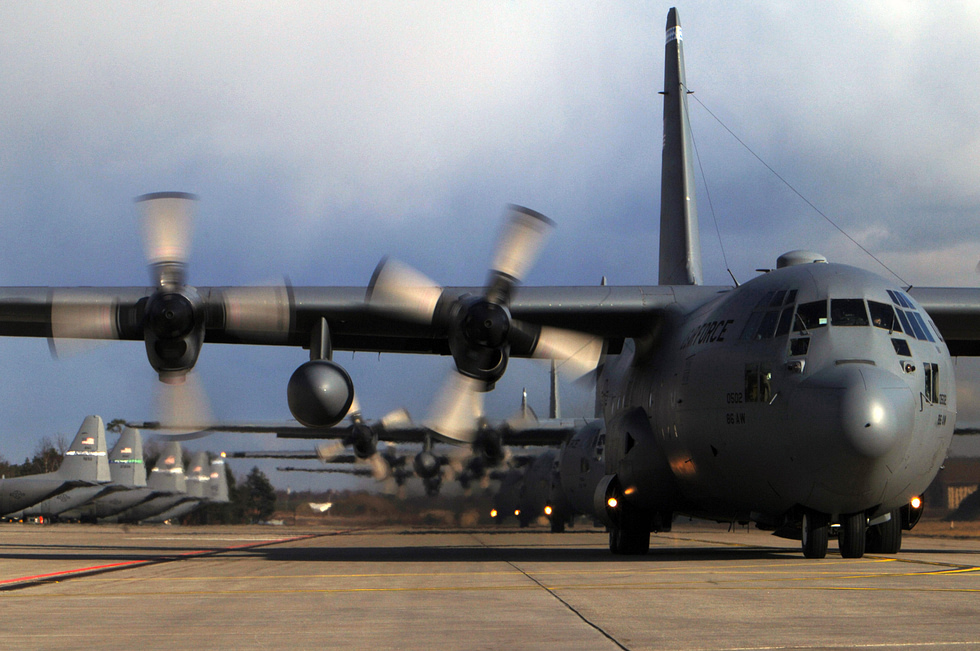
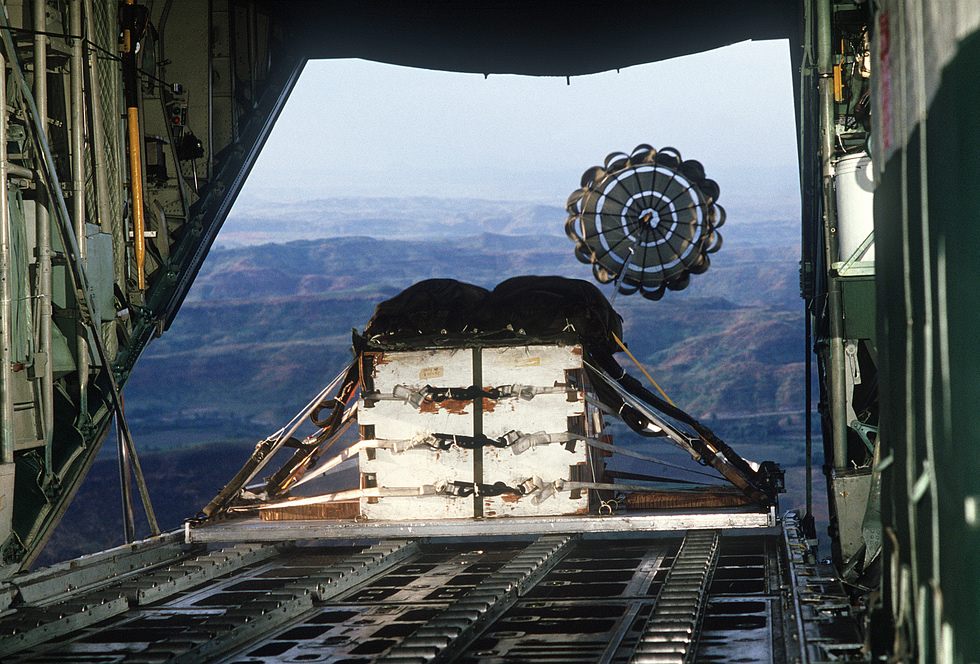
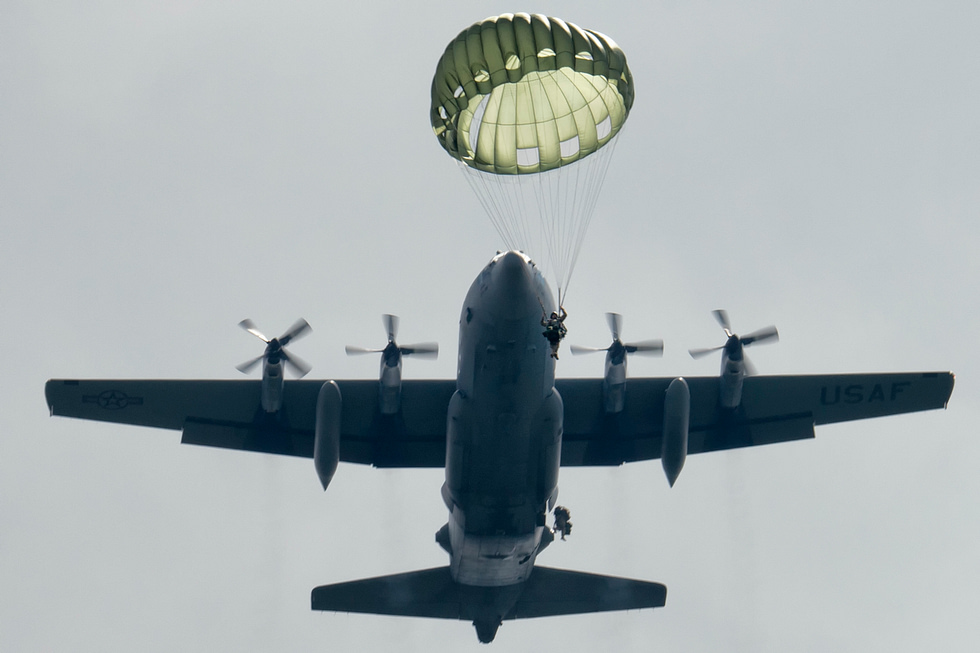
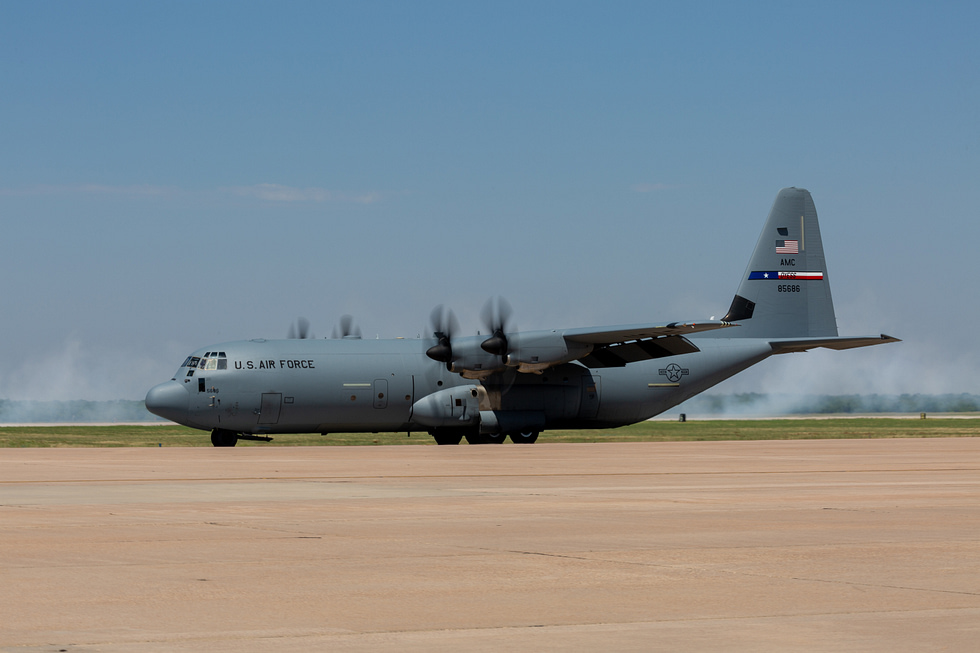
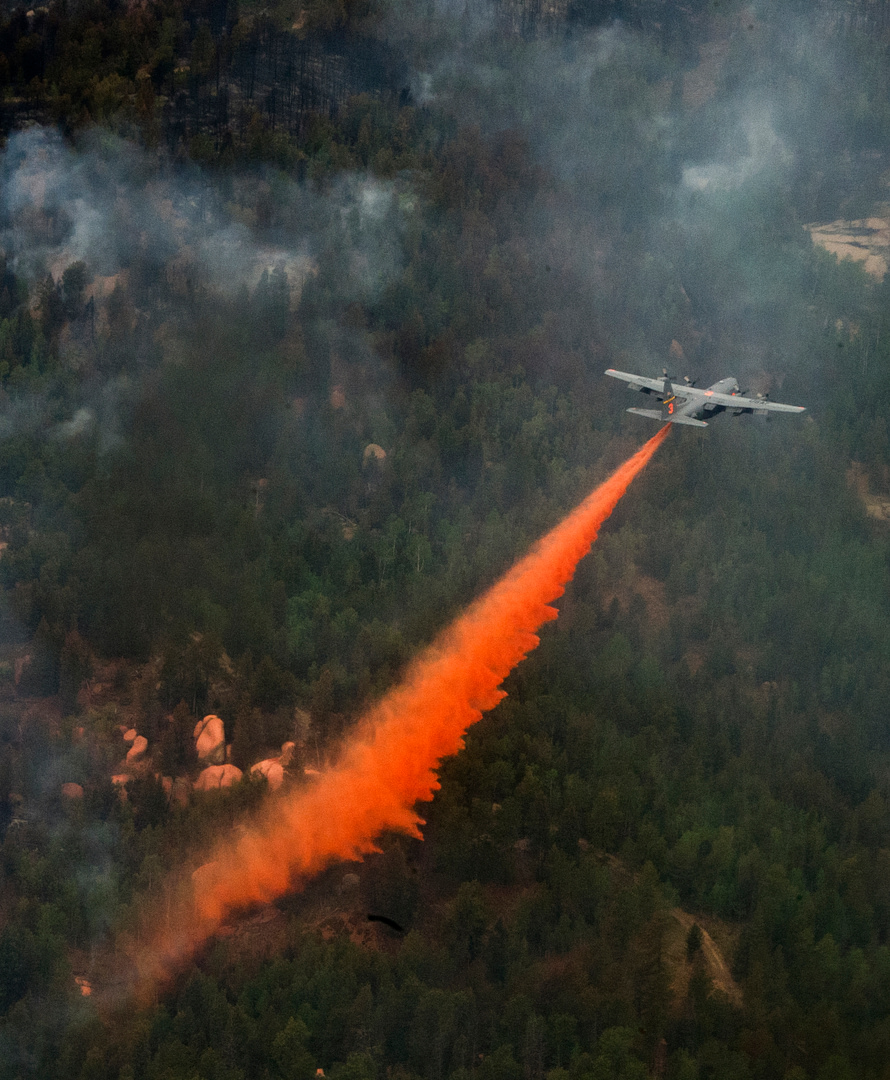
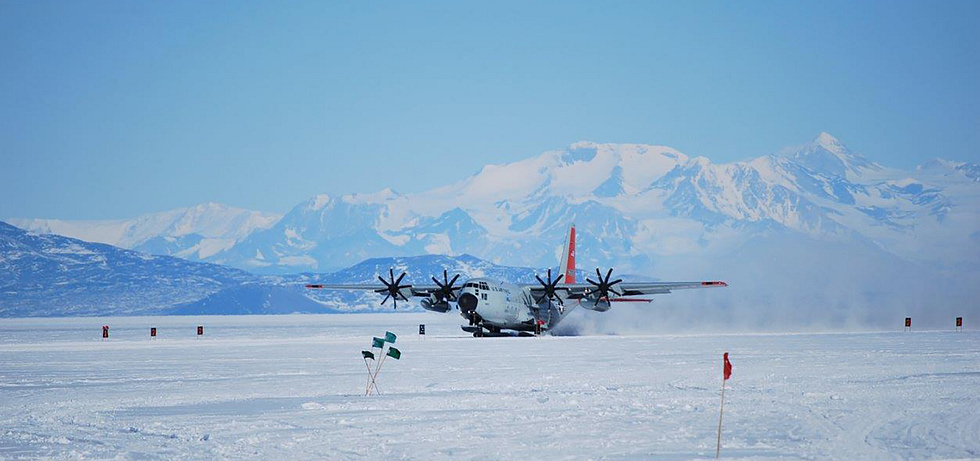
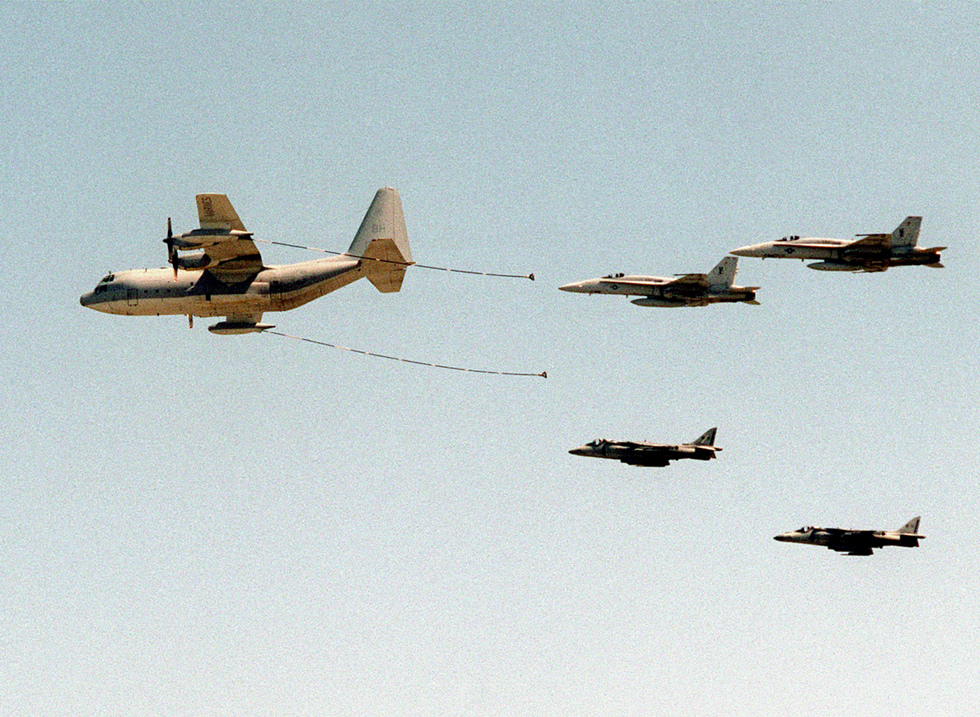
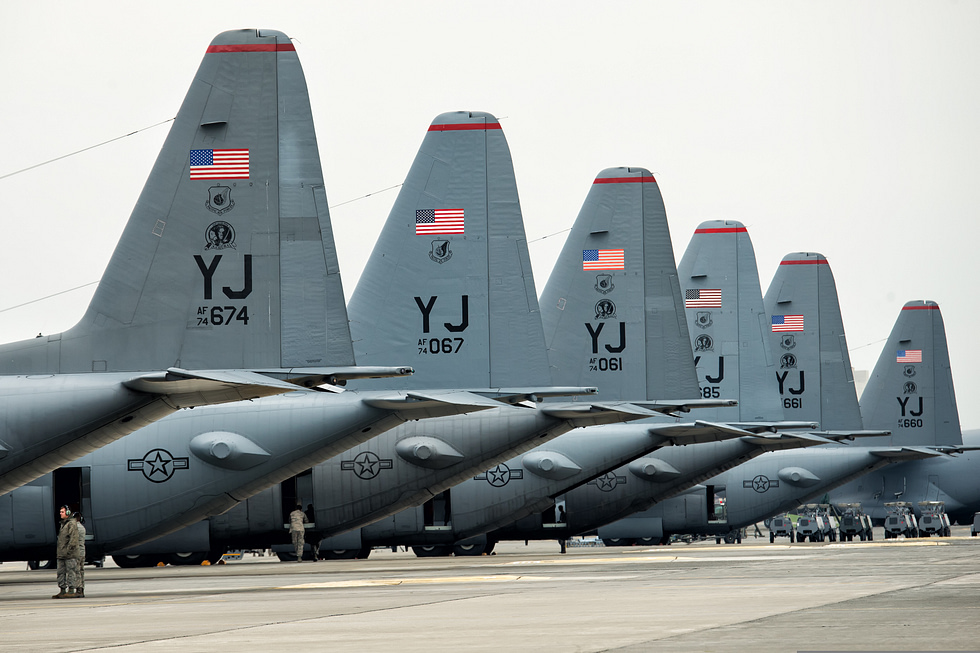
The Lockheed C-130 Hercules in motion
The History of the C-130 Hercules — from Popular Mechanics, a look at how Lockheed’s tactical transport was designed and why it has stayed in service and production for more than seventy years.
Where the Lockheed C-130 Hercules flies
The Lockheed C-130 Hercules’s record: the airlifter that goes everywhere
The Hercules is not measured in dogfights but in missions flown, tonnes carried and lives moved. Since 1956 it has been the backbone of Western tactical airlift, flying combat resupply into besieged strips in Vietnam, sustaining the Gulf, Iraq and Afghanistan campaigns, and carrying humanitarian relief into virtually every major disaster of the past half-century. Along the way the same airframe has served as tanker, gunship, hurricane hunter, ski-plane and firefighter. These roles are as varied as any aircraft has ever filled.
One of its most famous offspring is the side-firing gunship — read the full story of the AC-130 gunship, and see the rugged US types that flew alongside it, the A-10 Warthog ve UH-1 Huey.
Everything people ask about the Lockheed C-130 Hercules
Can I fly in a C-130 Hercules?
What is the Lockheed C-130 Hercules?
When did the C-130 first fly?
Why is it called the Hercules?
What engines does the C-130 have?
How much can a C-130 carry?
How many C-130s have been built?
What are the main C-130 variants?
Is the AC-130 gunship the same aircraft?
Can the C-130 really land on short, unpaved runways?
Is the C-130 still in production?
What does the C-130 do besides carry cargo?
You can’t fly the C-130 Hercules.
These, you can.
Some legends only live in museums — others are fuelled and waiting. MiGFlug has put civilians in real military jet cockpits since 2004.
 Fly the L-39 AlbatrosThe world’s most-flown jet trainer — aerobatics included
 Fly the F-104 Starfighter“The missile with a man in it”
 Fly the MiG-21The Cold War’s most-produced jet
 T-33 Shooting Star'ı uçurunAmerica’s first jet trainer
 Fly the DH VampireA piece of early jet history
 Fly the S.211Agile Italian jet trainer
 Fly the MB-326The classic Aermacchi jet
 Fly the MiG-15The Soviet legend of the Korean War
Continue the tour
Every fact, checked
- Lockheed MartinThe manufacturer’s official C-130 history, production and operator figures.
- National Museum of the U.S. Air ForceFact sheet on the C-130 and its Air Force service and specifications.
- Smithsonian National Air and Space MuseumCollection background on the Lockheed C-130 Hercules.
- Air Mobility Command MuseumHistory and specifications of the C-130E Hercules.
- Rolls-RoyceBackground on the T56 and AE 2100 turboprop engines that power the Hercules.
- U.S. Air ForceOfficial service fact sheet for the C-130 Hercules.
- U.S. National Science FoundationThe LC-130 ski-plane in Antarctic and Greenland research support.
- Air & Space Forces MagazineSeventy years of the C-130 since its first flight.