
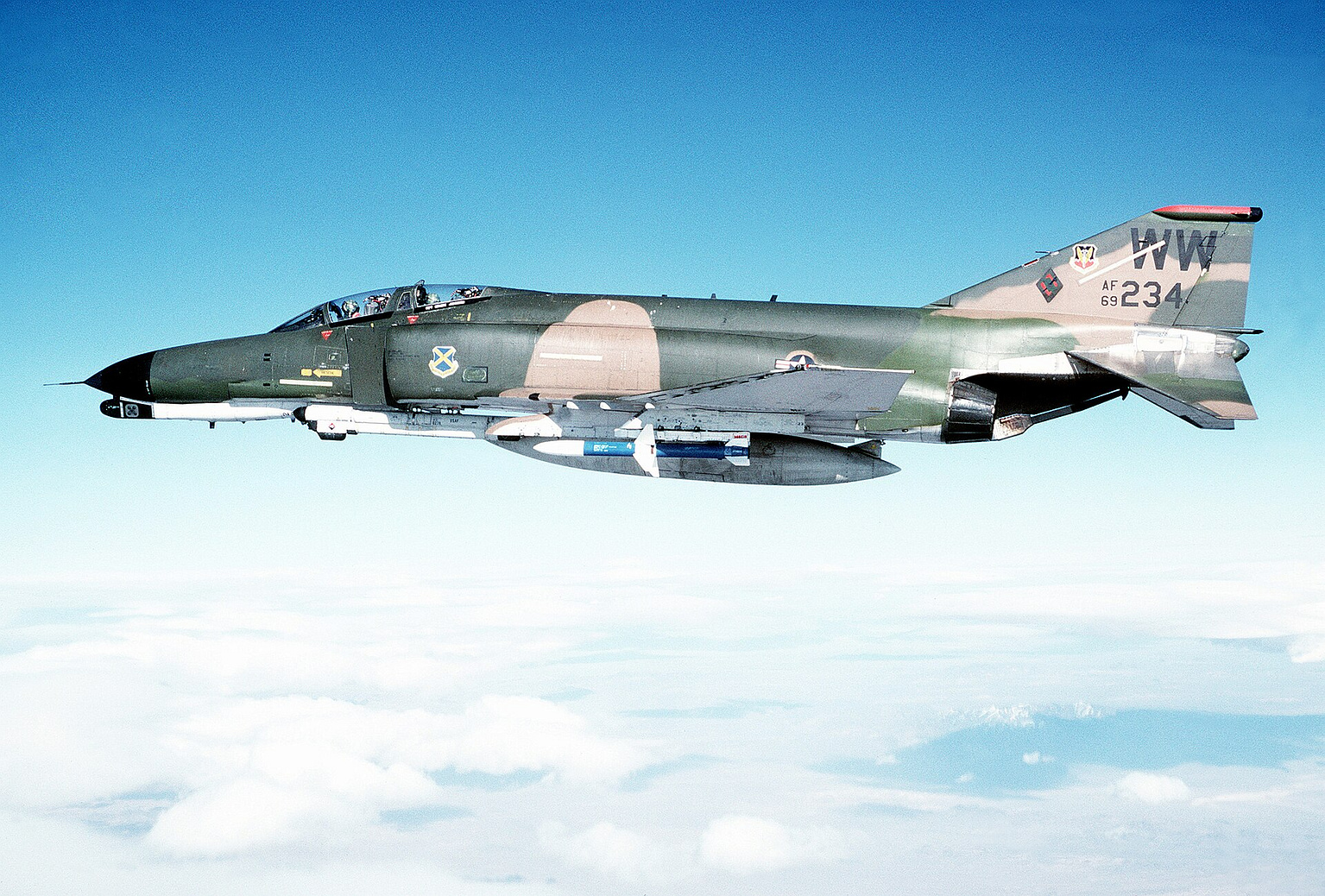
McDonnell Douglas F-4
“Phantom II”
The brute-force icon of the Cold War — a big, smoke-trailing twin-J79 fighter that served the US Navy, Air Force and Marines at once, produced every American ace of Vietnam, was exported across three continents, and still flies front-line missions in 2026, more than six decades after its first flight.
The Phantom: the brute-force icon of the Cold War
The Phantom is the brute-force icon of the Cold War: a big, heavy, smoke-trailing twin-J79 workhorse that muscled its way to Mach 2 and dominated the skies over Vietnam in USAF, Navy and Marine hands at once. Born as a US Navy fleet-defence interceptor, its raw performance was so far ahead of contemporaries that the Air Force adopted it too — a rare cross-service success — followed by the Marine Corps.
Early Phantoms carried only missiles — the era’s doctrine held that the guided missile had made the dogfight obsolete. Combat proved otherwise: against nimble MiG-17s and MiG-21s, unreliable early Sparrows and Sidewinders and the lack of a gun cost kills, and the lesson was written into the F-4E, which added an internal M61 Vulcan cannon in a reshaped nose.
Crews joked the Phantom was “proof that, given enough thrust, even a brick can fly,” and — for the many MiGs it downed and the many airframes shot down over North Vietnam — that McDonnell was “the world’s leading distributor of MiG parts.” Loved for its power, it remains the definitive multirole fighter of its generation.
01The F-4 Phantom’s numbers: how 5,195 airframes made it the most-produced US supersonic jet
Production ran from 1958 to 1981, with 5,195 built — 5,057 in St. Louis plus 138 assembled under licence in Japan by Mitsubishi. That makes the Phantom the most-produced American supersonic jet in history. Major variants spanned the F-4B/N (Navy), F-4C/D (USAF), the definitive gun-armed F-4E, o F-4G Wild Weasel SAM-hunter, the camera-nosed RF-4 reconnaissance jets and the upgraded Navy F-4J/S.
The type was exported very widely — to NATO air forces, the Middle East and East Asia — which is why, decades after US retirement, Phantoms still fly for a handful of operators around the world.
What makes the F-4 Phantom special
Twin J79 turbojets and raw thrust
A pair of afterburning General Electric J79 axial-flow turbojets — about 17,900 lbf each in the F-4E — gave the Phantom overwhelming thrust and climb. Between 1959 and 1962 it set 16 world records for speed, altitude and time-to-climb, several unbeaten until the F-15. The trade-off was the J79’s signature dark smoke trail, which made Phantoms visible for miles.
The unmistakable “bent” airframe
To fix stability problems without a full redesign, engineers gave the outer wing panels 12° dihedral (upturned tips) and the all-moving tailplane a pronounced 23° anhedral (downward droop). This aggressive, unmistakable silhouette became the Phantom’s visual trademark.
Heavy radar and missiles — then a gun
A large nose radar and a dedicated back-seat operator let the Phantom fight beyond visual range with AIM-7 Sparrow radar missiles, backed by AIM-9 Sidewinder heat-seekers. The gunless doctrine’s failure over Vietnam led to the F-4E’s built-in M61A1 20 mm Vulcan cannon.
02The F-4 Phantom’s bent wings: engineering fixes that became a trademark
The Phantom’s upturned wingtips and drooping tailplane were not styling — they were cheap fixes for stability problems found during development. Rather than redesign the whole wing, engineers cranked the outer panels up 12° and drooped the stabilator 23° to restore handling. The awkward geometry stuck, and became one of aviation’s most recognisable silhouettes.
03The F-4 Phantom’s gunless gamble: the doctrine Vietnam disproved
Early Phantoms carried only missiles, on the theory that dogfighting was dead in the missile age. Against agile MiG-17s and MiG-21s the theory failed: early Sparrows and Sidewinders were unreliable, and pilots caught in a close turning fight had nothing to shoot. Crews begged for a gun, and the F-4E answered with an internal M61 Vulcan in a reshaped nose — a hard-won lesson still taught in fighter design.
Full F-4 Phantom specifications
Airframe & Performance (F-4E)
- Mürettebat
- 2 (pilot + weapon systems officer)
- Uzunluk
- ~19.2 m (63 ft 0 in)
- Kanat açıklığı
- ~11.7 m (38 ft 5 in)
- Yükseklik
- ~5.0 m (16 ft 6 in)
- Max takeoff weight
- ~28,030 kg (~61,795 lb)
- Max speed
- Mach 2.23 · ~2,370 km/h
- Servis tavanı
- ~18,000 m (~58,750 ft)
- Built (all variants)
- ~5,195 (F-4E: ~1,370)
Propulsion & Armament
- Motor
- 2 × GE J79-GE-17 turbojets
- Thrust
- ~17,900 lbf each (afterburner)
- Gun
- 1 × M61A1 Vulcan 20 mm (F-4E)
- Missiles
- AIM-7 Sparrow, AIM-9 Sidewinder
- External stores
- up to ~8,480 kg
- First flight
- 27 May 1958
- Production
- 1958–1981
- Unit cost
- ~US$2.4M (1965 flyaway)
- Cost per flight hour
- ~$15,000–25,000 (late-service estimates)
04The F-4 Phantom’s cost: what a Cold War workhorse was worth
A 1965 flyaway F-4 is commonly cited at around US$2.4 million, though figures vary widely by source, variant and year — other citations put it nearer $3 million. Adjusted for inflation that is a fraction of what a modern multirole fighter costs, which helps explain how so many air forces could afford and sustain the type for decades. Treat any single dollar figure as an approximation: procurement costs shifted across the long 1958–1981 production run.
Seven decades of the F-4 Phantom
First flight
The XF4H-1 prototype takes to the air, flown by McDonnell test pilot Robert C. Little.
Sixteen world records
The Phantom sets 16 speed, altitude and time-to-climb records — Top Flight, Skyburner, LANA and Sageburner among them.
Enters Navy service
The type joins the US Navy fleet; the USAF and Marine Corps soon adopt it too.
Tri-service redesignation
Under the new joint system the Navy F4H-1 becomes the F-4B and the USAF version the F-4C.
Combat debut over Vietnam
The Phantom becomes the principal US air-superiority and strike fighter of the war.
The F-4E arrives
The definitive USAF version enters service with an internal M61 Vulcan cannon and slatted wing.
The first US aces
Navy crew Cunningham and Driscoll become the first US aces of the Vietnam War with five kills.
Kurnass at war
Israeli F-4E “Kurnass” Phantoms fight through the Yom Kippur War.
Last US active-duty Phantoms retire
The F-4G Wild Weasel bows out; QF-4 target drones fly on until 2016.
From the flight line: twelve Phantom stories
The five who made ace
Vietnam’s only US aces all flew Phantoms — three USAF, two Navy.
Read the full story
The gunless Phantom
Early F-4s carried only missiles, on the theory dogfighting was dead.
Read the full story
Britain’s Spey Phantoms
The RAF and Royal Navy flew unique Rolls-Royce Spey-engined F-4K/M variants.
Read the full story
Project Top Flight
A Phantom zoom-climbed to 98,557 ft in 1959, smashing the altitude record.
Read the full story
Wild Weasel
The F-4G hunted enemy radar and surface-to-air missile sites.
Read the full story
The QF-4 target drones
Retired Phantoms flew on pilotless as full-scale aerial targets.
Read the full story
Kurnass — Sledgehammer
Israel’s F-4E was a workhorse of the War of Attrition and 1973.
Read the full story
The Phantoms that won’t quit
Iran flew F-4s hard in the 1980s — and still flies them in 2026.
Read the full story
Distributor of MiG parts
Crews called the Phantom “the world’s leading distributor of MiG parts.”
Read the full story
The camera-nosed RF-4
Unarmed RF-4s swapped guns for cameras in a lengthened nose.
Read the full story
Fifty years and counting in Turkey
Turkey modernised its F-4Es into the F-4E/2020 “Terminator.”
Read the full story
The bent-wing brute
The upturned tips and drooping tail were stability fixes turned trademark.
Read the full story
The Phantom in pictures
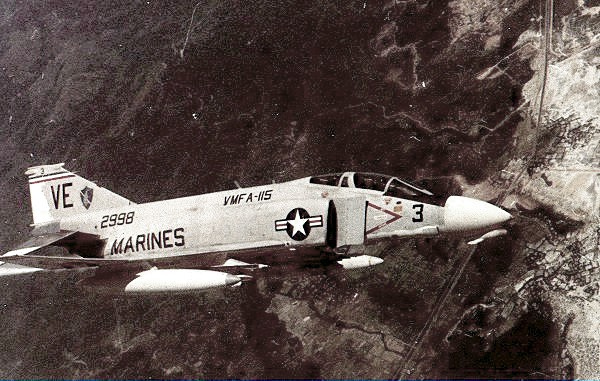
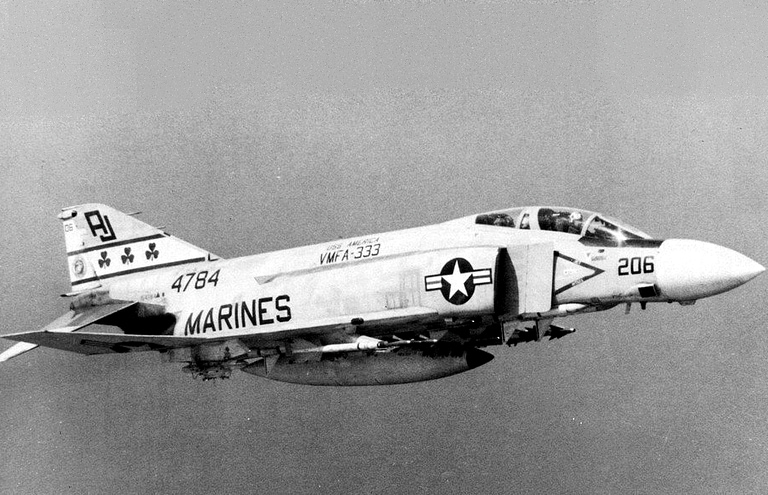
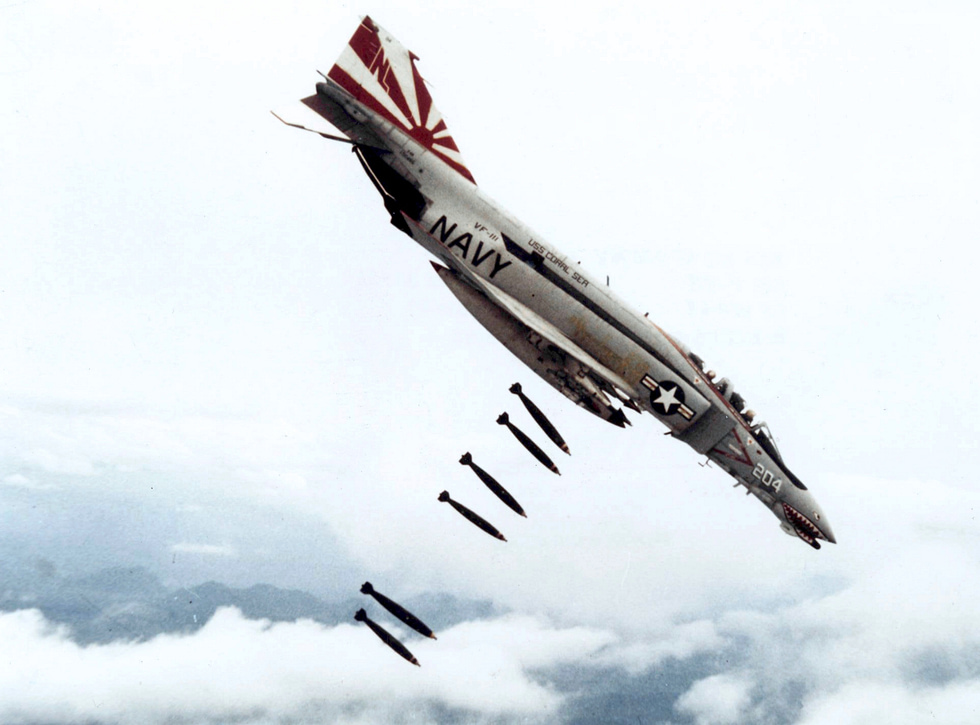
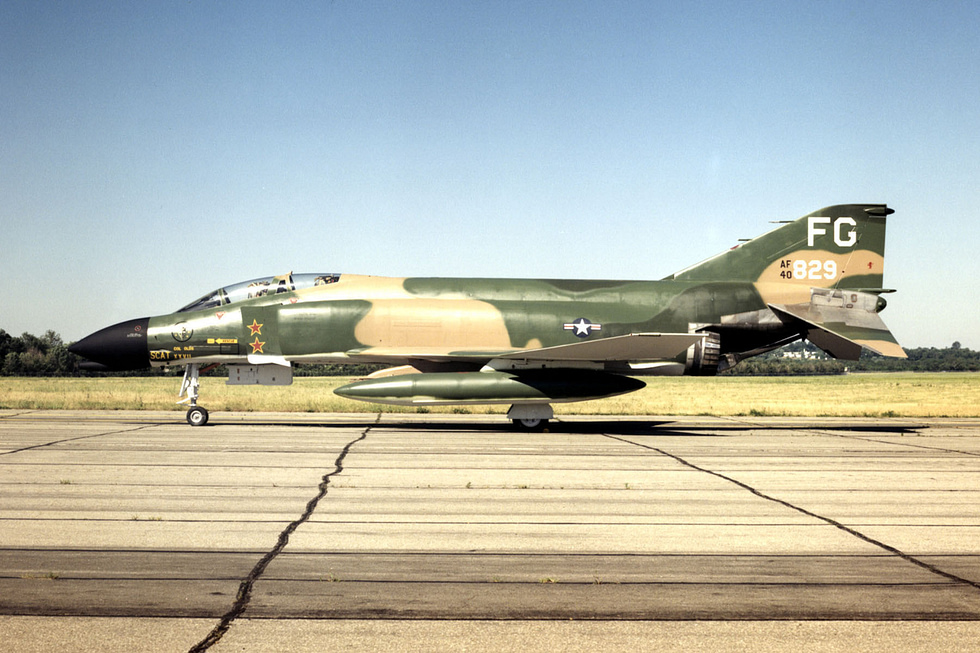
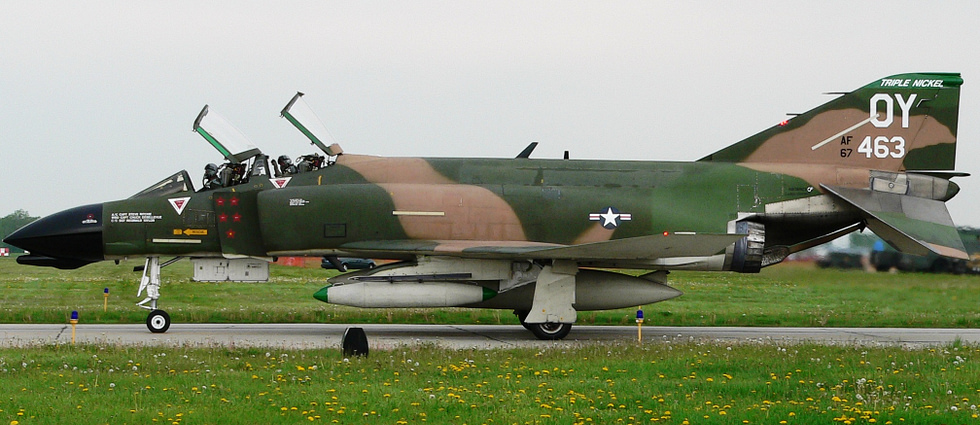
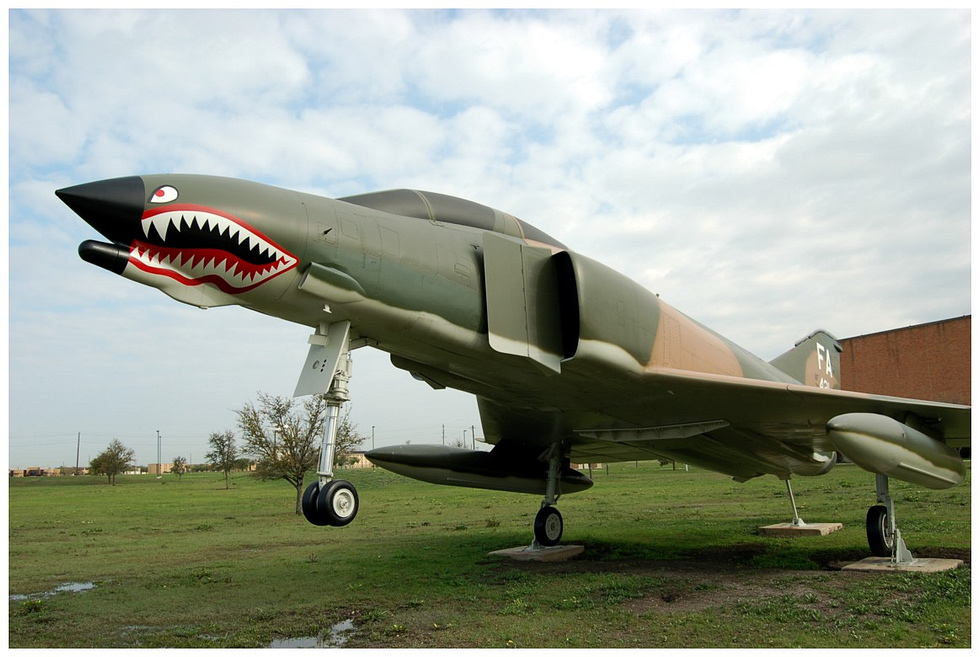
The F-4 Phantom in motion
Video coming soon — we’re sourcing a properly licensed clip of the F-4 Phantom and the unmistakable sound of its twin J79s. Check back shortly.
The F-4 Phantom II in motion
Extreme Mysteries — one of the most-watched F-4 Phantom II films on YouTube.
Where the Phantom flew
The F-4 Phantom’s combat record
The Phantom was the principal US air-superiority and strike fighter over Vietnam, and fought in the Arab–Israeli and Iran–Iraq wars too. Its Vietnam kill and loss tallies are genuinely contested between sources — always cite them as claims, not settled scores. What is beyond dispute is the breadth of its fighting career.
Compare the combat record of every military aircraft. Figures as of July 2026.
Everything people ask about the F-4 Phantom
Can I fly in an F-4 Phantom?
How fast is the F-4 Phantom?
Is the F-4 Phantom still in service?
What was the gun controversy?
What was its Vietnam record?
How many F-4 Phantoms were built?
What is a Wild Weasel?
You can’t fly the F-4 Phantom.
These, you can.
Some legends only live in museums — others are fuelled and waiting. MiGFlug has put civilians in real military jet cockpits since 2004.
 Fly the L-39 AlbatrosThe world’s most-flown jet trainer — aerobatics included
 Fly the F-104 Starfighter“The missile with a man in it”
 Fly the MiG-21The Cold War’s most-produced jet
 T-33 Shooting Star'ı uçurunAmerica’s first jet trainer
 Fly the DH VampireA piece of early jet history
 Fly the S.211Agile Italian jet trainer
 Fly the MB-326The classic Aermacchi jet
 Fly the MiG-15The Soviet legend of the Korean War
Continue the tour
Every fact, checked
- GlobalMilitary.net — F-4 Phantom IISpecifications and operator overview (2026).
- 163d Attack Wing (US Air National Guard)Official F-4E Phantom II fact sheet.
- The AviationistRecords set by the F-4, and South Korea’s final Phantom retirement (2024).
- 19FortyFiveTurkey flying the F-4E/2020 “Terminator” until 2030 (Feb 2026).
- Naval History and Heritage CommandF-4N Phantom II service history.
- Key.AeroHow the Hellenic Air Force is still flying F-4 Phantoms after 50 years.
- The Aviation Geek ClubThe F-4 set 16 world records between 1959 and 1962.