
Soko J-22 Orao
The “Eagle” — a twin-jet close-support and reconnaissance aircraft built by Yugoslavia and Romania together, a rare combat jet co-developed by two socialist states outside the Soviet umbrella.
Hikaye
The Soko J-22 Orao: an eagle built by two nations
The Soko J-22 Orao — “Eagle” in Serbo-Croatian — is one of the more unusual combat aircraft of the Cold War, not so much for what it was as for who built it. A twin-engined subsonic jet for close air support, ground attack and reconnaissance, it was developed jointly by Yugoslavia and Romania in the 1970s: two socialist states, one non-aligned and one an unusually independent-minded member of the Warsaw Pact, pooling their resources to build a combat aircraft together, outside the Soviet Union’s design bureaus and its control. That collaboration, as much as the aircraft itself, is what makes the Orao remarkable.
The programme was known as “YuRom”, a contraction of Yugoslavia and Romania, and it was a genuinely shared effort. Neither country, on its own, had the industrial base to develop a modern jet combat aircraft cheaply, but together they could. Yugoslavia’s Soko works built the aircraft as the J-22 Orao; Romania’s Avioane Craiova built an essentially identical machine as the IAR-93 Vultur — “Vulture”. The two aircraft were, to all intents and purposes, the same design under two names and two flags, a striking symbol of cooperation between neighbours who each valued their independence from Moscow.
For two countries of their size, this was an ambitious undertaking. Designing a jet combat aircraft demands mastery of aerodynamics, structures, engines, avionics and weapons integration, and few nations attempt it alone. By pooling their industries — Yugoslavia’s at Soko, Romania’s at Craiova — the two partners spread the cost, the risk and the technical burden, and gave each a domestic combat-aircraft capability it would otherwise have struggled to build or sustain.
“Two socialist states, outside the Soviet umbrella, built a combat jet together — the Orao in Yugoslavia, the Vultur in Romania.”— the Orao’s place in history, in a sentence
Power came from two Rolls-Royce Viper turbojets, built under licence in both countries. The Viper was a well-proven British engine, and using it — rather than a Soviet powerplant — underlined the programme’s deliberate independence. The earliest versions were not afterburning, and the Orao was resolutely subsonic, a straightforward, rugged workhorse designed to carry ordnance to a target and come home. Later development added afterburners to the Vipers, giving the aircraft a useful boost in power and, in a low-level dash, the ability to nudge past the speed of sound for short bursts — though it remained fundamentally a transonic strike aircraft, not a supersonic fighter.
The Viper’s modest thrust was the Orao’s chief limitation. Two of them gave adequate rather than sparkling performance, and the early aircraft could feel underpowered, especially when heavily laden on a hot day. This was in part the price of independence: a Soviet engine might have offered more power, but it would have tied the programme to Moscow, which was exactly what both countries were trying to avoid. Better a self-controlled aircraft that was merely adequate than a more powerful one on someone else’s leash.
The Orao’s job was to support the army. Its primary roles were close air support and battlefield interdiction — attacking troops, vehicles and armour — and tactical reconnaissance, for which a dedicated camera-equipped version was produced. It was armed with two 23mm cannon and could carry a substantial load of bombs, rockets and guided weapons on underwing and underfuselage hardpoints. It was not a glamorous aircraft, and it was never intended to be: it was a practical tool for a specific, gritty job, built to operate from the dispersed airfields of a country that expected, if war came, to have to defend its own mountainous territory.
That defensive philosophy was central to both nations’ thinking. Yugoslavia, under Tito, had built its entire military doctrine around the idea of resisting invasion from any direction — including from the Soviet bloc — through a combination of a regular army and a vast territorial-defence system. A home-built strike aircraft that did not depend on any foreign supplier for its existence fitted that doctrine perfectly. Romania, too, under its own independent line within the Warsaw Pact, valued the self-reliance the joint programme offered. The Orao and the Vultur were, in a real sense, aircraft of national self-determination.
To survive in wartime, the Orao was meant to operate from dispersed, sometimes improvised airfields rather than a handful of large, vulnerable bases — scattering the force so that it could not be wiped out on the ground in a first strike. This shaped the aircraft: it had to be rugged, simple to service in the field and able to get in and out of shorter strips. It was, in every respect, a tool tailored to a specific national way of war.
The prototypes first flew in 1974, and after an extended development the Orao entered Yugoslav service from the late 1970s, with the afterburning versions following in the 1980s. Across the two countries, on the order of 170 aircraft were built in the various single-seat attack, reconnaissance and two-seat training versions. Through the 1980s the Orao and the Vultur equipped ground-attack and reconnaissance units in both air forces, a domestically produced backbone for the tactical strike mission.
Coordinating a joint programme across two countries, two languages and two industrial systems was not simple, and the Orao’s development stretched over years. Prototypes, test aircraft and pre-series machines gradually refined the design, its systems and its weapons fit, and the mid-programme switch to afterburning engines amounted to a substantial re-engineering rather than a minor tweak. That the two nations saw the effort through to a mature, operational aircraft was itself a mark of the partnership’s seriousness.
The Orao’s history took a darker turn with the violent break-up of Yugoslavia in the 1990s. As the country fragmented into war, the Orao was used in the ground-attack role in the conflicts that followed, and aircraft were lost to ground fire and other causes. These were tragic and contested events, and we describe the aircraft’s involvement only in factual, neutral terms, with respect for all those affected; the politics and the human cost of the Yugoslav Wars lie far beyond the scope of an aircraft profile. What can be said plainly is that the Orao saw real combat, in difficult and dangerous circumstances, and that some aircraft and crews did not return.
After the wars, the aircraft continued in service with the successor states’ air forces. Serbia — the principal successor to what remained of Yugoslavia — kept the Orao in service well into the twenty-first century, and undertook upgrade and refurbishment work to extend the life and capability of a portion of its fleet. Romania, for its part, retired its IAR-93 Vultur fleet earlier, as it reoriented its forces and eventually moved toward Western equipment. The shared aircraft thus had two divergent later careers, one in each of the countries that had built it.
Those divergent fates mirrored the wider histories of the two nations. Romania eventually joined NATO and reoriented toward Western aircraft, letting its home-grown Vultur lapse. Serbia, more internationally isolated through the 1990s and after, leaned on the Orao for longer — precisely because it was a domestic asset that sanctions and embargoes could not touch. The very independence the aircraft had been built to provide proved its worth again, in circumstances its designers could never have foreseen.
Today the Orao is a rare and historically interesting type: a reminder that advanced combat aircraft were not only built by the superpowers and their closest allies, but also, occasionally, by smaller nations determined to provide for themselves. A number survive in museums and collections in the region, and the type retains a following among aviation enthusiasts drawn to its unusual origins. The Soko J-22 Orao is remembered less as a world-beating warplane than as a genuine achievement of cooperation and self-reliance — an eagle built, against the grain of Cold War alignments, by two nations working together.
01The YuRom programme: a Yugoslav-Romanian partnership+
The Orao was the product of “YuRom”, a joint development programme between Yugoslavia and Romania launched in the early 1970s. The name is a contraction of the two countries, and it reflects a genuinely shared effort to design and build a modern strike aircraft that neither could easily have afforded to develop alone.
This was an unusual arrangement for the era. Combat aircraft in the socialist world overwhelmingly came from the Soviet Union or were built under Soviet licence. For a non-aligned state and an independent-minded Warsaw Pact member to jointly develop their own combat jet, outside Soviet control, was a deliberate assertion of autonomy — and a practical way to share the enormous cost and risk of a national aircraft programme.
02Two names, one aircraft: Orao and Vultur+
The same basic aircraft was built in both countries under different names. In Yugoslavia, the Soko company produced it as the J-22 Orao — “Eagle”. In Romania, Avioane Craiova built the essentially identical aircraft as the IAR-93 Vultur — “Vulture”. Allowing for minor national differences in equipment and production, they were the same design.
This two-name, two-flag arrangement is one of the Orao’s most distinctive features. It meant that each country had full domestic production of its own combat aircraft, with the development cost and effort shared. Enthusiasts sometimes treat the Orao and the Vultur as separate types, but they are best understood as two national expressions of a single joint design.
03Self-reliance outside the Soviet umbrella+
Both countries had strong reasons to want a combat aircraft they controlled themselves. Yugoslavia, under Tito, was the leading non-aligned nation, standing apart from both NATO and the Warsaw Pact, and its defence doctrine assumed it might have to resist invasion from any direction, including from the Soviet bloc. Romania, though a Warsaw Pact member, pursued a notably independent foreign policy and likewise prized self-reliance.
For both, a home-built strike aircraft that depended on no foreign government for its supply was strategically valuable. It could not be withheld in a crisis, and it kept advanced aerospace skills and production within national borders. The Orao programme was, in this sense, as much about political independence as about air power — a way of not being beholden to Moscow for a key military capability.
04The licence-built Rolls-Royce Viper engines+
The Orao was powered by two Rolls-Royce Viper turbojets, a British engine built under licence in both Yugoslavia and Romania. The Viper was a simple, robust and well-understood powerplant, widely used in trainers and light combat aircraft around the world, which made it a sensible choice for a first joint combat-aircraft programme.
Choosing a Western engine, rather than a Soviet one, was itself significant — another mark of the programme’s independence from Moscow. It did, however, impose a limitation: the early non-afterburning Vipers gave the Orao adequate but not outstanding performance, and the aircraft was firmly subsonic in its first versions. Getting more out of the design would mean getting more out of the Viper.
05Afterburners and the low-level supersonic dash+
The most important evolution of the Orao was the addition of afterburners to its Viper engines in the later versions. Afterburning — injecting extra fuel into the jet exhaust for a burst of additional thrust — significantly improved the aircraft’s performance, its takeoff, its climb and its ability to carry a heavy load out of shorter or higher airfields.
It also gave the Orao a modest supersonic capability: in a low-level dash the afterburning versions could briefly nudge past the speed of sound. This should not be overstated — the Orao was not a supersonic fighter, and for most of its flight it remained transonic — but the ability to accelerate hard for a fast run-in to a target, or a quick escape, was a genuine improvement for a strike aircraft operating in a dangerous environment.
06The close-support and anti-armour mission+
The Orao’s primary reason for existing was to support ground forces. Its core mission was close air support and battlefield interdiction — attacking enemy troops, vehicles, supply lines and, crucially, armour, in the zone of battle and just behind it. This was a demanding, dangerous role that called for a rugged aircraft able to carry a useful load and absorb punishment.
For this it could carry bombs, unguided rockets and guided weapons on multiple hardpoints, delivering them against battlefield targets. In the defensive doctrines of both Yugoslavia and Romania — which anticipated resisting an armoured invasion of their own territory — an anti-armour strike aircraft was a key capability. The Orao was built to blunt an advancing enemy, working in close cooperation with the ground forces it supported.
07The tactical-reconnaissance role+
Alongside the strike mission, reconnaissance was a core Orao role, and a dedicated reconnaissance version was produced, fitted with cameras and sensors to gather battlefield intelligence. Fast, low-level photographic reconnaissance was a vital capability for armies of the era, providing commanders with timely imagery of enemy movements and positions.
Using the same basic airframe for both strike and reconnaissance made good sense for air forces of limited size: it simplified training, maintenance and logistics. The reconnaissance Orao could dash across a battlefield at low level, capture its imagery and return, giving Yugoslav and Romanian commanders an organic, home-built means of seeing what lay ahead — another expression of the self-reliant philosophy behind the whole programme.
08Armament: cannon and external ordnance+
The Orao was armed with two 23mm cannon, twin-barrel weapons firing a heavy, hard-hitting round well suited to strafing ground targets and engaging light armour and vehicles. Built into the aircraft, the cannon gave it an always-available weapon for close-in attack and for self-defence.
For its main striking power the Orao relied on external ordnance carried on underwing and underfuselage hardpoints — a mix of bombs, rocket pods and guided weapons totalling a useful war load. Later aircraft could carry guided air-to-ground weapons and, for self-defence against enemy fighters, short-range infrared air-to-air missiles. The combination made the Orao a flexible tactical striker, able to tailor its load to the mission at hand.
09First flight in 1974 and service entry+
The Orao and Vultur prototypes first flew in 1974, a milestone for both countries’ aviation industries. Development was lengthy — integrating the engines, systems and weapons of a joint programme across two nations was complex — but the aircraft was steadily matured, and the initial non-afterburning versions entered Yugoslav service from the late 1970s.
The afterburning versions, with their improved performance, followed through the 1980s, becoming the definitive production standard. Getting a joint, two-nation combat aircraft from first flight to operational service was a considerable achievement for two comparatively small aerospace industries, and it gave both air forces a modern, domestically produced strike capability.
10Combat in the Yugoslav Wars: a factual note+
With the violent break-up of Yugoslavia in the 1990s, the Orao was drawn into combat. It was used in the ground-attack role during the conflicts of that decade, and aircraft were lost — to ground fire and to other causes — in the course of that fighting. These were painful and deeply contested events.
We record the aircraft’s involvement only in neutral, factual terms, and take no position on the wider conflicts, their causes or their conduct, which lie entirely outside the scope of an aircraft profile and are covered far better by dedicated historical sources. Our concern here is simply the aircraft: the Orao saw genuine combat in a dangerous environment, some were shot down, and crews were lost. We note this with due care and with respect for all those affected by the wars.
11Serbian and Romanian service and upgrades+
After the wars, the Orao continued to serve in the successor states. Serbia, as the principal successor to the rump Yugoslavia, retained the Orao in its air force well into the twenty-first century, and carried out upgrade and overhaul work on part of the fleet — refurbishing airframes and improving systems to keep a useful number of aircraft operational.
Romania took a different path with its IAR-93 Vultur fleet, retiring the type earlier as it restructured its armed forces and gradually shifted toward Western equipment following its later accession to NATO. The two national fleets, once identical, thus diverged in their final years — a reflection of the different directions the two countries took after the Cold War ended.
12Retirement, legacy and the Soko story+
The Orao’s active career wound down over the 2000s and 2010s as the surviving aircraft aged and as newer or refurbished types took over. It was never exported beyond the two partner nations, and it was built in relatively modest numbers, so its footprint was always regional rather than global.
Its legacy, though, is real. The Orao was the most ambitious product of Yugoslavia’s Soko company, whose lighter Galeb and Super Galeb jets are also well remembered, and it stands as proof that a determined smaller nation — or two working together — could design, build and field a genuine combat aircraft. For students of Cold War aviation it remains a fascinating case study in independence and cooperation.
13Surviving Oraos and where to see them+
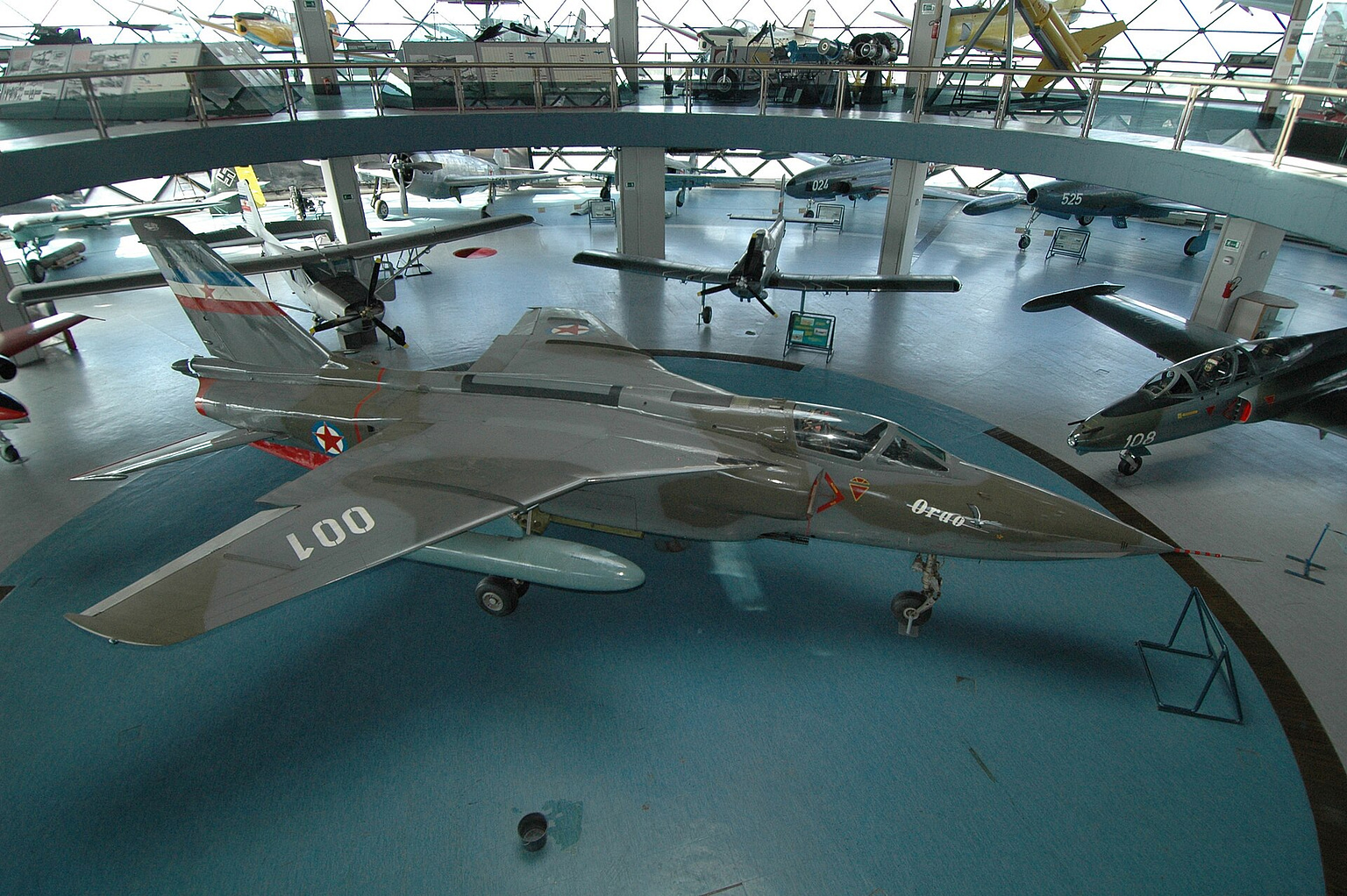
A number of Oraos and Vulturs survive, preserved in museums and collections primarily in the countries that built and flew them — Serbia and Romania above all. The Serbian aviation museum and various military collections hold examples, and the type’s distinctive twin-engine attack-jet shape makes it a recognisable exhibit.
Because the aircraft served relatively recently and in modest numbers, and because some remained in Serbian service into recent years, the Orao is a comparatively fresh piece of aviation history rather than a distant relic. For anyone interested in the aircraft of the former Yugoslavia and of Romania, the preserved Oraos are the best way to encounter this unusual, twice-named eagle in the metal.
Design & Engineering
How the Orao was built: a shared strike aircraft
Two nations, two names, one design — a rugged twin-Viper strike jet built for close support and reconnaissance, and for the self-reliant defence of two countries that prized their independence from Moscow.
Twin licence-built Vipers
Two Rolls-Royce Viper turbojets, built under licence in both countries and later fitted with afterburners for a low-level supersonic dash.
Built for the battlefield
Two 23mm cannon and multiple hardpoints for bombs, rockets and guided weapons — a rugged close-support, anti-armour and reconnaissance striker.
One design, two flags
Built as the J-22 Orao by Soko in Yugoslavia and the essentially identical IAR-93 Vultur by Avioane Craiova in Romania — the YuRom partnership.
Teknik Özellikler
Soko J-22 Orao specifications: dimensions, performance and cost
| Türü | Twin-engine close-support / ground-attack / reconnaissance jet |
| Mürettebat | 1 (single-seat); 2 (two-seat trainer / some recon) |
| Uzunluk | ~14.9 m (48 ft 11 in) — approx. |
| Kanat açıklığı | ~9.3 m (30 ft 6 in) — approx. |
| Yükseklik | ~4.5 m (14 ft 9 in) — approx. |
| Boş ağırlık | ~5,750 kg (~12,700 lb) — approx. |
| Max takeoff weight | ~11,250 kg (~24,800 lb) — approx. |
| Engines | 2 × licence-built Rolls-Royce Viper turbojets (afterburning in later versions) |
| Max speed | ~1,130 km/h (~700 mph); brief low-level supersonic dash in afterburning versions — approx. |
| Savaş yarıçapı | ~450 km on a low-level mission — approx., varies by load |
| Servis tavanı | ~13,500 m (~44,000 ft) — approx. |
| Silahlanma | 2 × 23mm cannon; bombs, rockets & guided weapons on hardpoints; self-defence IR missiles |
| First flight | 1974 (prototypes) |
| Introduced | late 1970s (Yugoslavia); 1980s (afterburning) |
| Number built | ~170 across both countries (J-22 Orao & IAR-93 Vultur) |
| Main variants | J-22 Orao (attack, recon, two-seat); IAR-93 Vultur (Romania) |
| Operators | Yugoslavia / Serbia; Romania (as the IAR-93) |
| Unit cost | not reliably recorded (Cold War state programme) |
| Cost per flight hour | not reliably recorded |
14The Orao’s variants, from early attack to recon and trainer+
The Orao was built in several versions. Early single-seat aircraft used non-afterburning Viper engines and were purely subsonic; the definitive later single-seaters had afterburning Vipers for improved performance. A dedicated reconnaissance version carried cameras and sensors, and a two-seat variant served for conversion training while retaining a combat capability.
The Romanian IAR-93 Vultur followed a parallel path, with its own progression from early non-afterburning to later afterburning versions and its own two-seat trainer. Between them, the two national lines covered the attack, reconnaissance and training needs of both air forces from a single shared design — an efficient outcome for the YuRom partnership.
15The Soko J-22 Orao’s cost: what the records show+
There is no reliable, transparent public figure for the Orao’s unit cost, cost per flight hour or total programme cost. It was developed and built within the state-planned economies of Yugoslavia and Romania, where military aircraft were costed in ways that do not translate into meaningful market prices, and the joint, two-nation nature of the programme makes any single figure especially hard to pin down.
Rather than repeat an invented number, we list the cost fields here as “not reliably recorded.” What can be said is that sharing the development between two countries was, in large part, a way of making the programme affordable at all: neither nation could easily have justified the full cost of a national combat-aircraft programme alone, and pooling the effort was central to the whole idea.
16The Orao among Cold War strike aircraft+
The Orao belongs to a family of twin-engined tactical strike aircraft of its era, and it is instructive to compare it with the Anglo-French SEPECAT Jaguar, another combat jet born of a bi-national partnership and built for much the same close-support and reconnaissance roles. Like the Jaguar, the Orao was a product of two countries sharing the cost and effort of a national strike aircraft.
Judged against larger and more powerful Western and Soviet types, the Orao was modest in performance — subsonic in its early forms, transonic later, with a limited war load and range. But it was never meant to compete with the heavyweights. It was a right-sized, affordable, self-controlled tool for two specific national defence problems, and by that measure it succeeded.
17Surviving Oraos and Vulturs+
Because the type served relatively recently and only with the two nations that built it, surviving Oraos and Vulturs are concentrated in Serbia and Romania. Museums and military collections in both countries hold examples, and the aircraft’s distinctive twin-engine attack-jet profile makes it easy to recognise.
For enthusiasts of the aviation of the former Yugoslavia and of Romania, these preserved aircraft are the best way to see the Orao at first hand. As a comparatively recent and regionally significant type, it holds a particular place in the aviation heritage of both countries — a tangible reminder of a rare and successful international partnership.
Timeline
The Soko J-22 Orao through the years
Yugoslavia and Romania launch a joint programme to develop a twin-engine strike aircraft, sharing the cost and effort.
The prototypes fly for the first time — built as the J-22 Orao in Yugoslavia and the IAR-93 Vultur in Romania.
The initial non-afterburning versions enter Yugoslav service in the close-support and reconnaissance roles.
Afterburners are added to the Viper engines, improving performance and giving a brief low-level supersonic dash.
Around 170 aircraft across both countries equip ground-attack, reconnaissance and training units in both air forces.
With the break-up of Yugoslavia, the Orao is used in combat in the ground-attack role; some aircraft are lost. (Described factually and neutrally.)
Romania retires its IAR-93 Vultur fleet as it restructures its forces and shifts toward Western equipment.
Serbia keeps the Orao in service and refurbishes and upgrades part of its fleet to extend its life.
The ageing Orao fleet is steadily reduced as airframes reach the end of their service lives.
Surviving Oraos and Vulturs are preserved in museums and collections in Serbia and Romania.
Stories & Eyewitnesses
The Soko J-22 Orao in stories: the moments that defined it
A combat jet built by two nations, powered by British engines, flown for close support and reconnaissance, and marked by the wars that broke up the country that created it — the Orao’s history told through the moments that stuck.
YuRom
Two nations, one jet
Yugoslavia and Romania built it together.
The Orao came from “YuRom”, a joint Yugoslav-Romanian programme to build a strike aircraft neither could easily afford alone.
A rare combat jet co-developed by two socialist states outside Soviet control.
Two Names
Orao and Vultur
The same aircraft under two flags.
Yugoslavia’s Soko built it as the J-22 Orao (“Eagle”); Romania’s Avioane Craiova built the identical IAR-93 Vultur (“Vulture”).
Two national names for a single shared design.
Independence
Outside the umbrella
Self-reliance from Moscow.
Non-aligned Yugoslavia and independent-minded Romania both wanted a combat aircraft they controlled themselves, free of Soviet supply.
The Orao was as much about political independence as air power.
Total Defence
Built to resist invasion
A home-built jet for a defensive doctrine.
Yugoslavia’s doctrine assumed it might have to resist invasion from any direction, and a strike aircraft it built and controlled itself fitted that perfectly.
Romania, on its own independent line, valued the same self-reliance.
Viper Power
British engines
Two licence-built Rolls-Royce Vipers.
The Orao used two Rolls-Royce Viper turbojets, built under licence — a Western engine, another mark of independence from Moscow.
Simple and robust, if modest in the early non-afterburning form.
The Dash
Afterburners added
A brief low-level supersonic dash.
Later versions added afterburners to the Vipers, improving performance and allowing a short supersonic dash at low level.
Still a transonic striker, not a supersonic fighter — but a real improvement.
Battlefield
Supporting the army
Close support and anti-armour.
The Orao’s job was close air support and battlefield interdiction — hitting troops, vehicles and armour to blunt an advance.
A rugged tool for a gritty, dangerous mission.
Eyes
The recon Orao
A camera-equipped version.
A dedicated reconnaissance version carried cameras for fast, low-level battlefield photography.
One airframe for strike and recon simplified training and logistics.
Armed
Cannon and ordnance
Two 23mm cannon plus external stores.
Two built-in 23mm cannon for strafing, plus bombs, rockets and guided weapons on multiple hardpoints.
A flexible war load tailored to each mission.
1974
First flight
Prototypes fly in both countries.
The prototypes first flew in 1974; after a lengthy joint development, the type entered service from the late 1970s.
A considerable feat for two smaller aerospace industries.
The 1990s
Drawn into war
Combat in the Yugoslav Wars.
With Yugoslavia’s violent break-up, the Orao was used in the ground-attack role, and aircraft were lost.
We note this factually and neutrally, with respect for all those affected.
Two Paths
Serbia and Romania
Divergent later careers.
Serbia kept and upgraded the Orao into the 21st century; Romania retired its IAR-93 earlier as it moved toward Western equipment.
Once-identical fleets took different roads after the Cold War.
Legacy
An eagle preserved
Survivors in regional museums.
The Orao survives in museums in Serbia and Romania — proof that smaller nations, working together, could build a real combat aircraft.
A fascinating study in independence and cooperation.
Photo Gallery
The Soko J-22 Orao in photographs
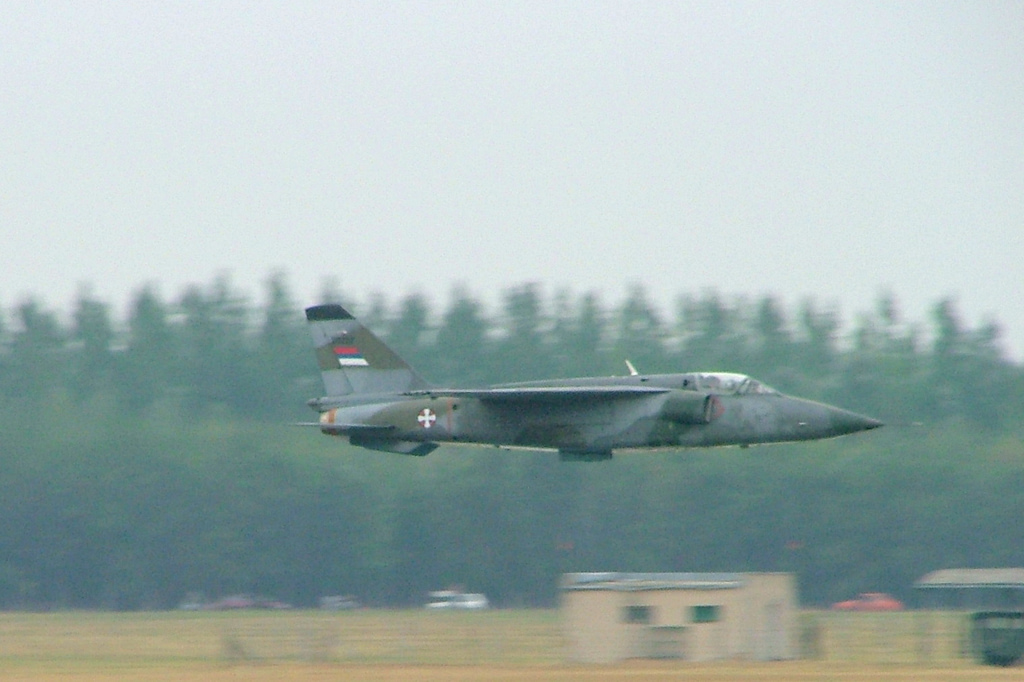
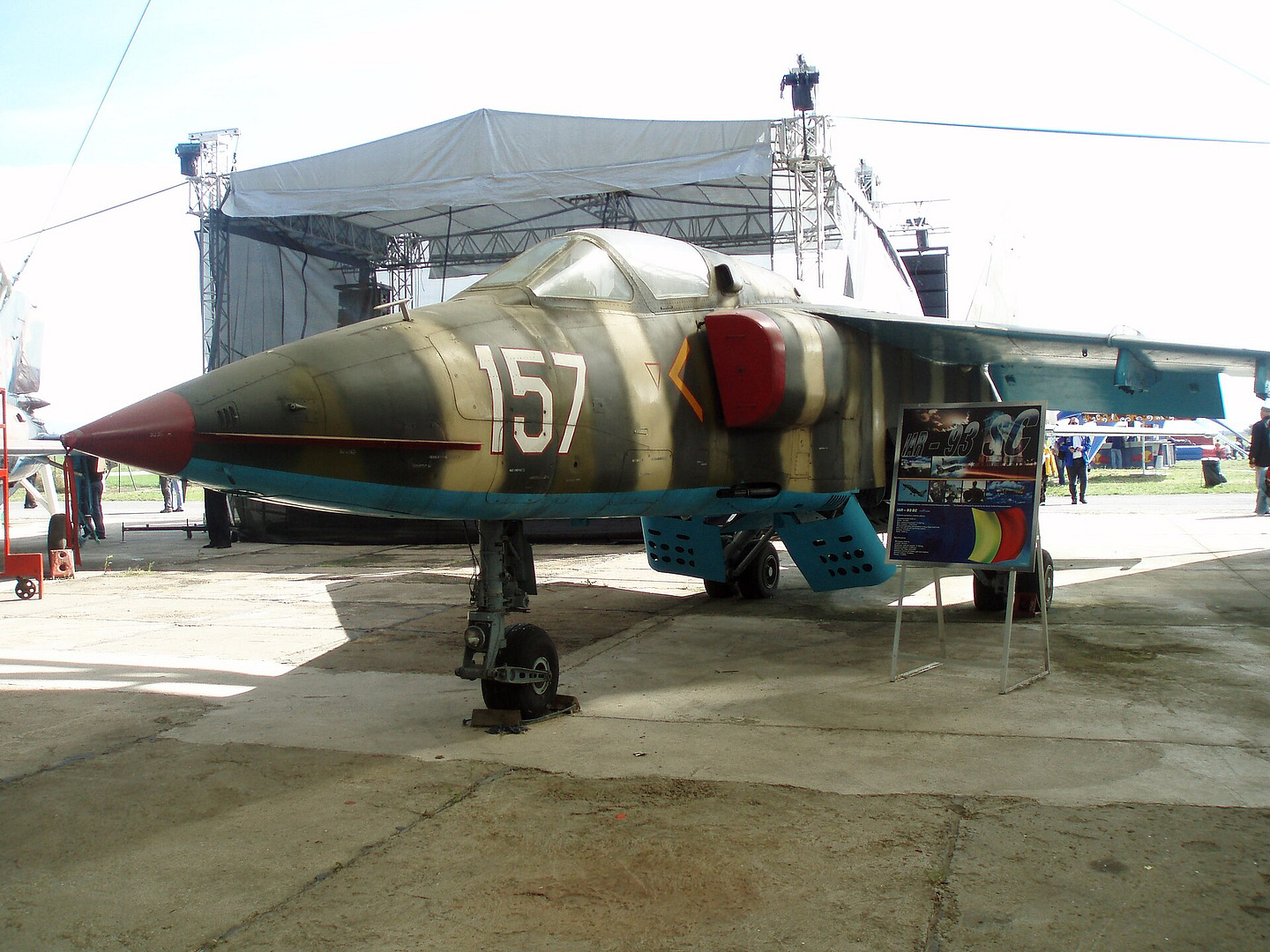
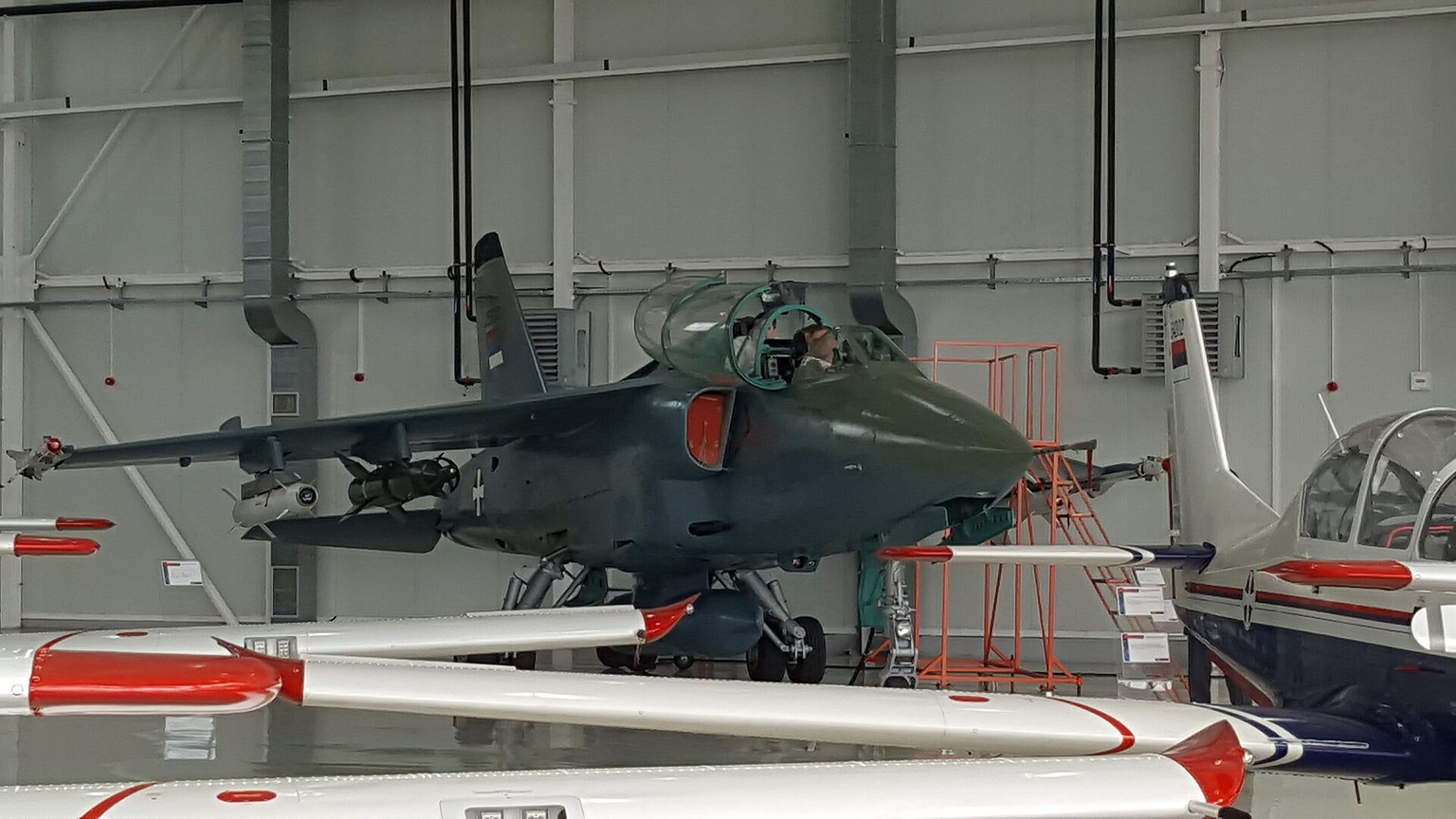
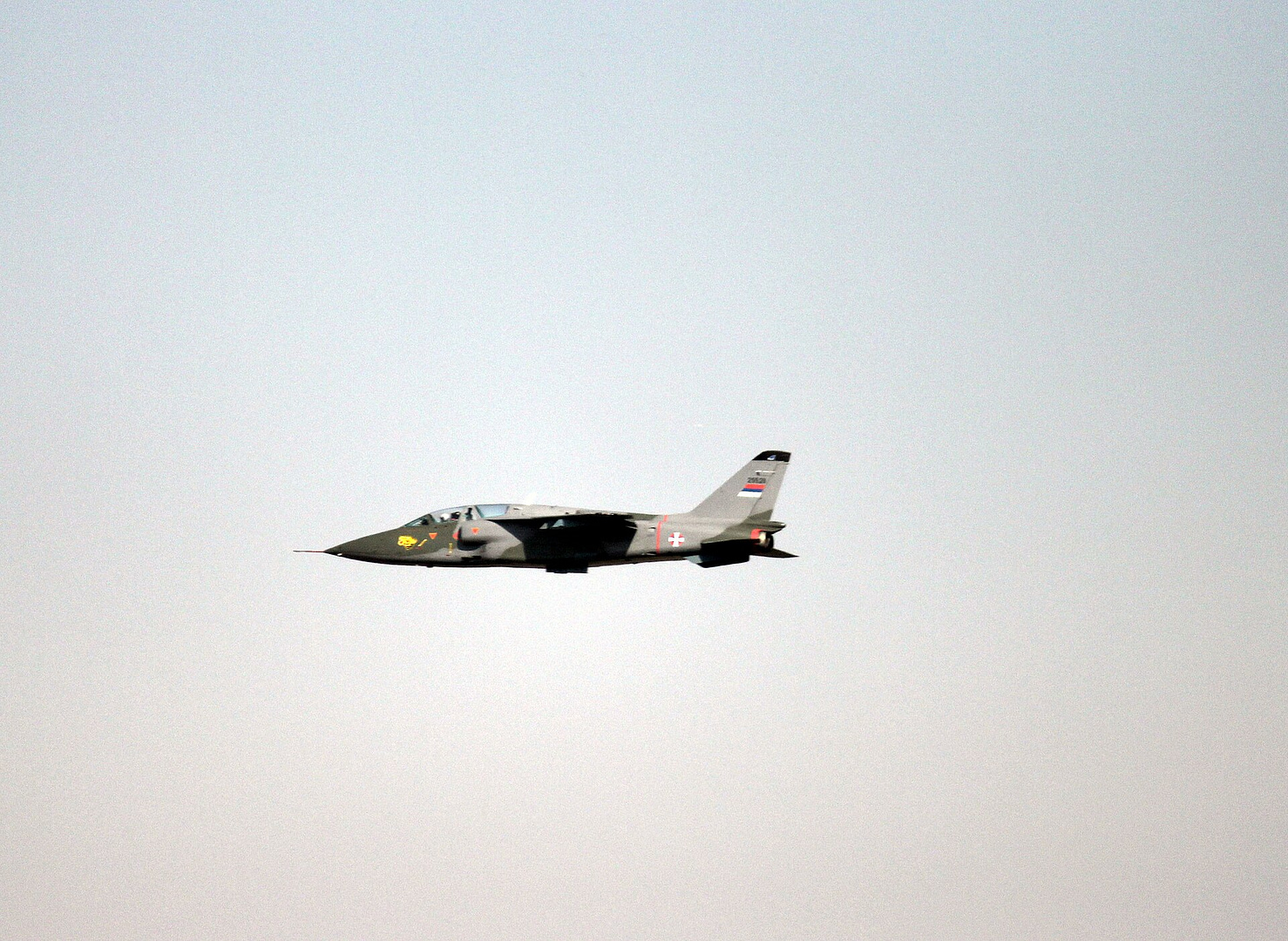
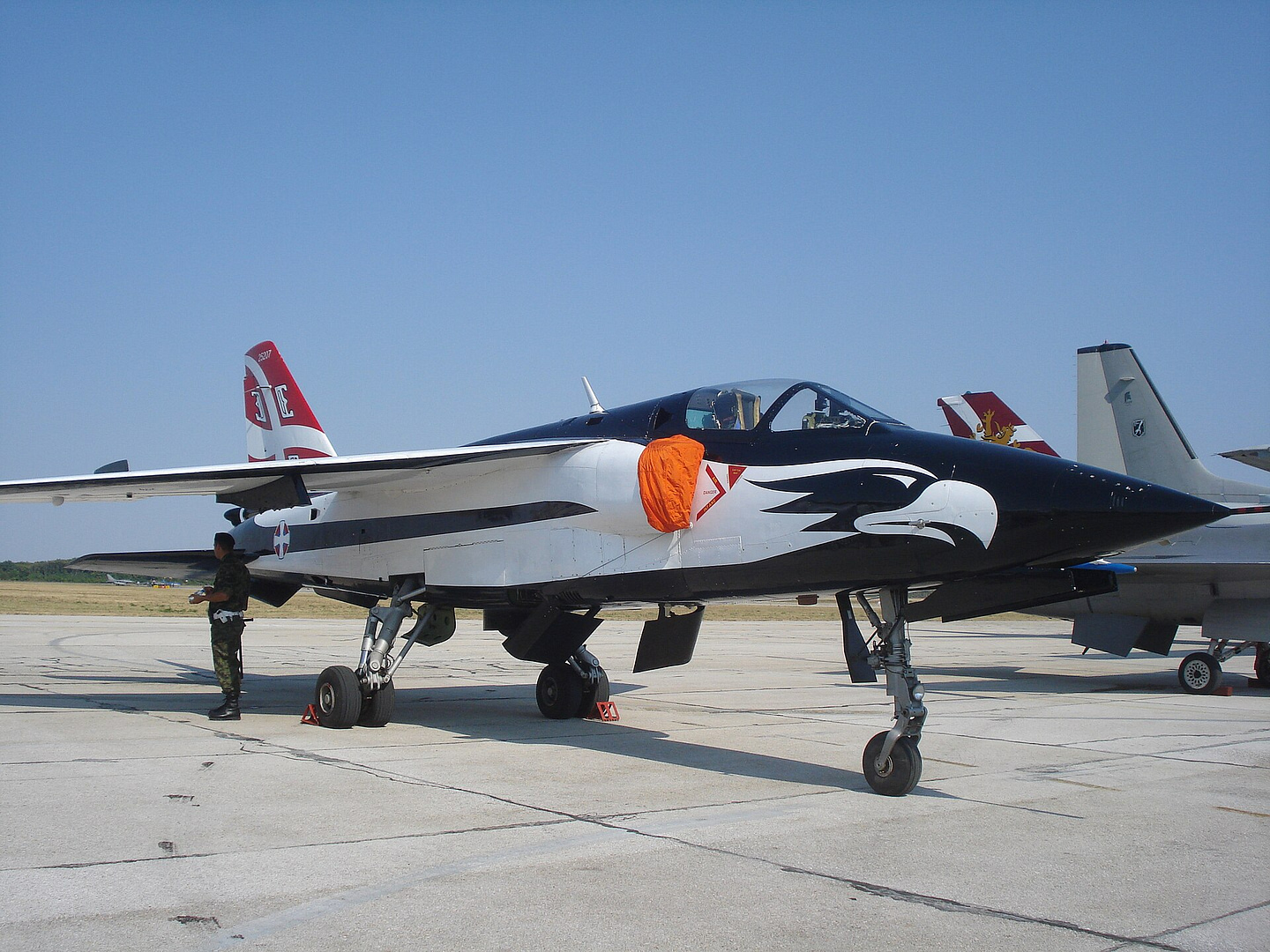
Museum and service photographs of the Orao and its Romanian IAR-93 Vultur counterpart, each credited to its source and licence. Click any photo to enlarge.


On Film
The Soko J-22 Orao on video: the twin-nation eagle
A look at the Soko J-22 Orao — the Yugoslav-Romanian strike jet, its co-development, its design and its service.
“IAR-93 Vultur and J-22 Orao | The Eagle of the Balkans” by Weapon Detective (approx. 122,000 views at time of writing; running time ~15 minutes) — a documentary on the Yugoslav-Romanian strike jet, its co-development and its service.
Operations Overview
Where the Soko J-22 Orao flew: an operator map
Developed jointly by Yugoslavia and Romania and flown by both. Because Yugoslavia no longer exists as a state, its origin role is shown on modern Serbia, its principal successor. Hover or tap a country for detail.
Categories: Origin & Yugoslav / Serbian Air Force (shown on Serbia, successor to Yugoslavia) · Joint Development & Operator (Romania, which built and flew the aircraft as the IAR-93 Vultur) · Surviving Airframes (Serbia and Romania). Successor states stand in for the former Yugoslavia.
Service Record
The Orao’s record: cooperation in the air
The Orao’s significance lies in its origins — a genuine combat aircraft built by two smaller nations together, outside the Soviet umbrella, for their own self-reliant defence.
Questions & Answers
Soko J-22 Orao: your questions answered
Can I fly in a Soko J-22 Orao?
No — there is no bookable Orao flight experience, and MiGFlug does not offer one. The type is retired or in very limited service, and the survivors are museum aircraft, not available for civilian rides. If what you actually want is the real thing — strapping into a genuine military jet and flying it — you very much can do that today in other types. MiGFlug arranges flights in real fighter jets and warbirds around the world. Start here: migflug.com/flights-prices.
Why is the Soko J-22 Orao historically important?
The Orao is significant chiefly for how it was made: it was co-developed by Yugoslavia and Romania under the “YuRom” programme, a rare case of two socialist states building a combat aircraft together outside the Soviet Union’s control. It gave both countries a home-built, self-controlled strike and reconnaissance aircraft, and it stands as a notable example of smaller nations achieving an advanced combat-aircraft capability through cooperation and self-reliance.
What is the difference between the J-22 Orao and the IAR-93 Vultur?
Essentially none in design — they are the same aircraft built in two countries under two names. Yugoslavia’s Soko company built it as the J-22 Orao (“Eagle”); Romania’s Avioane Craiova built the essentially identical machine as the IAR-93 Vultur (“Vulture”). There were minor national differences in equipment and production, and the two fleets diverged in their later careers, but as a design they are two national expressions of a single joint aircraft.
Was the Orao supersonic?
Only just, and only in the later versions. The early Oraos used non-afterburning Viper engines and were firmly subsonic. Later versions added afterburners, which improved performance and allowed the aircraft to briefly exceed the speed of sound in a low-level dash. But the Orao was fundamentally a transonic strike aircraft, not a supersonic fighter — the supersonic dash was a short-burst capability, not a sustained one.
What engines did the Orao use?
Two Rolls-Royce Viper turbojets, built under licence in both Yugoslavia and Romania. The Viper was a proven, robust British engine, and choosing it — rather than a Soviet powerplant — was a deliberate mark of the programme’s independence from Moscow. The early versions used non-afterburning Vipers; the later, definitive versions added afterburners for significantly better performance.
Did the Orao see combat?
Yes. During the break-up of Yugoslavia in the 1990s, the Orao was used in the ground-attack role in the conflicts of that decade, and some aircraft were lost. These were painful and deeply contested events, and we describe the aircraft’s involvement only in neutral, factual terms, taking no position on the wider wars and their causes, which lie outside the scope of an aircraft profile. What can be stated plainly is that the Orao saw real combat and that some aircraft and crews were lost.
Who operated the Orao?
The aircraft was operated by Yugoslavia and, after its break-up, by Serbia as the J-22 Orao, and by Romania as the IAR-93 Vultur. It was not exported beyond the two partner nations. Serbia retained and upgraded the Orao into the twenty-first century, while Romania retired its Vultur fleet earlier as it shifted toward Western equipment.
Was the Soko J-22 Orao a good aircraft?
Judged against the larger and more powerful strike aircraft of the superpowers, the Orao was modest — subsonic early on, transonic later, with limited range and war load. But that is the wrong yardstick. It was designed to be an affordable, self-controlled close-support and reconnaissance aircraft for two smaller nations, built through cooperation to serve their specific defensive needs. By that measure it was a real success, and a genuine achievement for the aerospace industries of Yugoslavia and Romania.
Fly For Real
You can’t fly the Orao — but these, you can
No J-22 Orao is a bookable ride today. The urge behind it — to strap into a real military aircraft and actually fly — is very much still bookable. MiGFlug puts you in genuine fighters and warbirds around the world.
Fighter Jet Flights
Take the controls of a real ex-military jet with an experienced pilot.
L-39 Albatros
The classic Eastern Bloc jet trainer — aerobatics and high-speed passes.
All flights are operated by MiGFlug’s vetted partners with professional pilots. Browse every option and current pricing at migflug.com/flights-prices. MiGFlug does not operate Soko J-22 Orao flights — no bookable example exists.
Related Aircraft
If the Soko J-22 Orao interests you, explore these
Sources & Further Reading
Where this Soko J-22 Orao history comes from
Note on figures: dimensions, performance and production numbers for the Orao vary between sources and by variant, and are hedged here as approximate. Cost fields are listed as not reliably recorded because meaningful figures from the two countries’ state programmes are not available. The aircraft’s use in the Yugoslav Wars of the 1990s is described strictly factually and neutrally, with due care and respect for all those affected; this profile takes no position on those conflicts, which are covered properly by dedicated historical sources. Yugoslavia no longer exists as a state; on the map, its origin role is shown on modern Serbia, its principal successor. Surviving aircraft are preserved in Serbia and Romania.