
Soko J-22 Orao
The “Eagle” — a twin-jet close-support and reconnaissance aircraft built by Yugoslavia and Romania together, a rare combat jet co-developed by two socialist states outside the Soviet umbrella.
The Story
The Soko J-22 Orao: an eagle built by two nations
The Soko J-22 Orao — “Eagle” in Serbo-Croatian — is one of the more unusual combat aircraft of the Cold War, not so much for what it was as for who built it. A twin-engined subsonic jet for close air support, ground attack and reconnaissance, it was developed jointly by Yugoslavia and Romania in the 1970s: two socialist states, one non-aligned and one an unusually independent-minded member of the Warsaw Pact, pooling their resources to build a combat aircraft together, outside the Soviet Union’s design bureaus and its control. That collaboration, as much as the aircraft itself, is what makes the Orao remarkable.
The programme was known as “YuRom”, a contraction of Yugoslavia and Romania, and it was a genuinely shared effort. Neither country, on its own, had the industrial base to develop a modern jet combat aircraft cheaply, but together they could. Yugoslavia’s Soko works built the aircraft as the J-22 Orao; Romania’s Avioane Craiova built an essentially identical machine as the IAR-93 Vultur — “Vulture”. The two aircraft were, to all intents and purposes, the same design under two names and two flags, a striking symbol of cooperation between neighbours who each valued their independence from Moscow.
For two countries of their size, this was an ambitious undertaking. Designing a jet combat aircraft demands mastery of aerodynamics, structures, engines, avionics and weapons integration, and few nations attempt it alone. By pooling their industries — Yugoslavia’s at Soko, Romania’s at Craiova — the two partners spread the cost, the risk and the technical burden, and gave each a domestic combat-aircraft capability it would otherwise have struggled to build or sustain.
“Two socialist states, outside the Soviet umbrella, built a combat jet together — the Orao in Yugoslavia, the Vultur in Romania.”— the Orao’s place in history, in a sentence
Power came from two Rolls-Royce Viper turbojets, built under licence in both countries. The Viper was a well-proven British engine, and using it — rather than a Soviet powerplant — underlined the programme’s deliberate independence. The earliest versions were not afterburning, and the Orao was resolutely subsonic, a straightforward, rugged workhorse designed to carry ordnance to a target and come home. Later development added afterburners to the Vipers, giving the aircraft a useful boost in power and, in a low-level dash, the ability to nudge past the speed of sound for short bursts — though it remained fundamentally a transonic strike aircraft, not a supersonic fighter.
The Viper’s modest thrust was the Orao’s chief limitation. Two of them gave adequate rather than sparkling performance, and the early aircraft could feel underpowered, especially when heavily laden on a hot day. This was in part the price of independence: a Soviet engine might have offered more power, but it would have tied the programme to Moscow, which was exactly what both countries were trying to avoid. Better a self-controlled aircraft that was merely adequate than a more powerful one on someone else’s leash.
The Orao’s job was to support the army. Its primary roles were close air support and battlefield interdiction — attacking troops, vehicles and armour — and tactical reconnaissance, for which a dedicated camera-equipped version was produced. It was armed with two 23mm cannon and could carry a substantial load of bombs, rockets and guided weapons on underwing and underfuselage hardpoints. It was not a glamorous aircraft, and it was never intended to be: it was a practical tool for a specific, gritty job, built to operate from the dispersed airfields of a country that expected, if war came, to have to defend its own mountainous territory.
That defensive philosophy was central to both nations’ thinking. Yugoslavia, under Tito, had built its entire military doctrine around the idea of resisting invasion from any direction — including from the Soviet bloc — through a combination of a regular army and a vast territorial-defence system. A home-built strike aircraft that did not depend on any foreign supplier for its existence fitted that doctrine perfectly. Romania, too, under its own independent line within the Warsaw Pact, valued the self-reliance the joint programme offered. The Orao and the Vultur were, in a real sense, aircraft of national self-determination.
To survive in wartime, the Orao was meant to operate from dispersed, sometimes improvised airfields rather than a handful of large, vulnerable bases — scattering the force so that it could not be wiped out on the ground in a first strike. This shaped the aircraft: it had to be rugged, simple to service in the field and able to get in and out of shorter strips. It was, in every respect, a tool tailored to a specific national way of war.
The prototypes first flew in 1974, and after an extended development the Orao entered Yugoslav service from the late 1970s, with the afterburning versions following in the 1980s. Across the two countries, on the order of 170 aircraft were built in the various single-seat attack, reconnaissance and two-seat training versions. Through the 1980s the Orao and the Vultur equipped ground-attack and reconnaissance units in both air forces, a domestically produced backbone for the tactical strike mission.
Coordinating a joint programme across two countries, two languages and two industrial systems was not simple, and the Orao’s development stretched over years. Prototypes, test aircraft and pre-series machines gradually refined the design, its systems and its weapons fit, and the mid-programme switch to afterburning engines amounted to a substantial re-engineering rather than a minor tweak. That the two nations saw the effort through to a mature, operational aircraft was itself a mark of the partnership’s seriousness.
The Orao’s history took a darker turn with the violent break-up of Yugoslavia in the 1990s. As the country fragmented into war, the Orao was used in the ground-attack role in the conflicts that followed, and aircraft were lost to ground fire and other causes. These were tragic and contested events, and we describe the aircraft’s involvement only in factual, neutral terms, with respect for all those affected; the politics and the human cost of the Yugoslav Wars lie far beyond the scope of an aircraft profile. What can be said plainly is that the Orao saw real combat, in difficult and dangerous circumstances, and that some aircraft and crews did not return.
After the wars, the aircraft continued in service with the successor states’ air forces. Serbia — the principal successor to what remained of Yugoslavia — kept the Orao in service well into the twenty-first century, and undertook upgrade and refurbishment work to extend the life and capability of a portion of its fleet. Romania, for its part, retired its IAR-93 Vultur fleet earlier, as it reoriented its forces and eventually moved toward Western equipment. The shared aircraft thus had two divergent later careers, one in each of the countries that had built it.
Those divergent fates mirrored the wider histories of the two nations. Romania eventually joined NATO and reoriented toward Western aircraft, letting its home-grown Vultur lapse. Serbia, more internationally isolated through the 1990s and after, leaned on the Orao for longer — precisely because it was a domestic asset that sanctions and embargoes could not touch. The very independence the aircraft had been built to provide proved its worth again, in circumstances its designers could never have foreseen.
Today the Orao is a rare and historically interesting type: a reminder that advanced combat aircraft were not only built by the superpowers and their closest allies, but also, occasionally, by smaller nations determined to provide for themselves. A number survive in museums and collections in the region, and the type retains a following among aviation enthusiasts drawn to its unusual origins. The Soko J-22 Orao is remembered less as a world-beating warplane than as a genuine achievement of cooperation and self-reliance — an eagle built, against the grain of Cold War alignments, by two nations working together.
01The YuRom programme: a Yugoslav-Romanian partnership+
The Orao was the product of “YuRom”, a joint development programme between Yugoslavia and Romania launched in the early 1970s. The name is a contraction of the two countries, and it reflects a genuinely shared effort to design and build a modern strike aircraft that neither could easily have afforded to develop alone.
This was an unusual arrangement for the era. Combat aircraft in the socialist world overwhelmingly came from the Soviet Union or were built under Soviet licence. For a non-aligned state and an independent-minded Warsaw Pact member to jointly develop their own combat jet, outside Soviet control, was a deliberate assertion of autonomy — and a practical way to share the enormous cost and risk of a national aircraft programme.
02Two names, one aircraft: Orao and Vultur+
The same basic aircraft was built in both countries under different names. In Yugoslavia, the Soko company produced it as the J-22 Orao — “Eagle”. In Romania, Avioane Craiova built the essentially identical aircraft as the IAR-93 Vultur — “Vulture”. Allowing for minor national differences in equipment and production, they were the same design.
This two-name, two-flag arrangement is one of the Orao’s most distinctive features. It meant that each country had full domestic production of its own combat aircraft, with the development cost and effort shared. Enthusiasts sometimes treat the Orao and the Vultur as separate types, but they are best understood as two national expressions of a single joint design.
03Self-reliance outside the Soviet umbrella+
Both countries had strong reasons to want a combat aircraft they controlled themselves. Yugoslavia, under Tito, was the leading non-aligned nation, standing apart from both NATO and the Warsaw Pact, and its defence doctrine assumed it might have to resist invasion from any direction, including from the Soviet bloc. Romania, though a Warsaw Pact member, pursued a notably independent foreign policy and likewise prized self-reliance.
For both, a home-built strike aircraft that depended on no foreign government for its supply was strategically valuable. It could not be withheld in a crisis, and it kept advanced aerospace skills and production within national borders. The Orao programme was, in this sense, as much about political independence as about air power — a way of not being beholden to Moscow for a key military capability.
04The licence-built Rolls-Royce Viper engines+
The Orao was powered by two Rolls-Royce Viper turbojets, a British engine built under licence in both Yugoslavia and Romania. The Viper was a simple, robust and well-understood powerplant, widely used in trainers and light combat aircraft around the world, which made it a sensible choice for a first joint combat-aircraft programme.
Choosing a Western engine, rather than a Soviet one, was itself significant — another mark of the programme’s independence from Moscow. It did, however, impose a limitation: the early non-afterburning Vipers gave the Orao adequate but not outstanding performance, and the aircraft was firmly subsonic in its first versions. Getting more out of the design would mean getting more out of the Viper.
05Afterburners and the low-level supersonic dash+
The most important evolution of the Orao was the addition of afterburners to its Viper engines in the later versions. Afterburning — injecting extra fuel into the jet exhaust for a burst of additional thrust — significantly improved the aircraft’s performance, its takeoff, its climb and its ability to carry a heavy load out of shorter or higher airfields.
It also gave the Orao a modest supersonic capability: in a low-level dash the afterburning versions could briefly nudge past the speed of sound. This should not be overstated — the Orao was not a supersonic fighter, and for most of its flight it remained transonic — but the ability to accelerate hard for a fast run-in to a target, or a quick escape, was a genuine improvement for a strike aircraft operating in a dangerous environment.
06The close-support and anti-armour mission+
The Orao’s primary reason for existing was to support ground forces. Its core mission was close air support and battlefield interdiction — attacking enemy troops, vehicles, supply lines and, crucially, armour, in the zone of battle and just behind it. This was a demanding, dangerous role that called for a rugged aircraft able to carry a useful load and absorb punishment.
For this it could carry bombs, unguided rockets and guided weapons on multiple hardpoints, delivering them against battlefield targets. In the defensive doctrines of both Yugoslavia and Romania — which anticipated resisting an armoured invasion of their own territory — an anti-armour strike aircraft was a key capability. The Orao was built to blunt an advancing enemy, working in close cooperation with the ground forces it supported.
07The tactical-reconnaissance role+
Alongside the strike mission, reconnaissance was a core Orao role, and a dedicated reconnaissance version was produced, fitted with cameras and sensors to gather battlefield intelligence. Fast, low-level photographic reconnaissance was a vital capability for armies of the era, providing commanders with timely imagery of enemy movements and positions.
Using the same basic airframe for both strike and reconnaissance made good sense for air forces of limited size: it simplified training, maintenance and logistics. The reconnaissance Orao could dash across a battlefield at low level, capture its imagery and return, giving Yugoslav and Romanian commanders an organic, home-built means of seeing what lay ahead — another expression of the self-reliant philosophy behind the whole programme.
08Armament: cannon and external ordnance+
The Orao was armed with two 23mm cannon, twin-barrel weapons firing a heavy, hard-hitting round well suited to strafing ground targets and engaging light armour and vehicles. Built into the aircraft, the cannon gave it an always-available weapon for close-in attack and for self-defence.
For its main striking power the Orao relied on external ordnance carried on underwing and underfuselage hardpoints — a mix of bombs, rocket pods and guided weapons totalling a useful war load. Later aircraft could carry guided air-to-ground weapons and, for self-defence against enemy fighters, short-range infrared air-to-air missiles. The combination made the Orao a flexible tactical striker, able to tailor its load to the mission at hand.
09First flight in 1974 and service entry+
The Orao and Vultur prototypes first flew in 1974, a milestone for both countries’ aviation industries. Development was lengthy — integrating the engines, systems and weapons of a joint programme across two nations was complex — but the aircraft was steadily matured, and the initial non-afterburning versions entered Yugoslav service from the late 1970s.
The afterburning versions, with their improved performance, followed through the 1980s, becoming the definitive production standard. Getting a joint, two-nation combat aircraft from first flight to operational service was a considerable achievement for two comparatively small aerospace industries, and it gave both air forces a modern, domestically produced strike capability.
10Combat in the Yugoslav Wars: a factual note+
With the violent break-up of Yugoslavia in the 1990s, the Orao was drawn into combat. It was used in the ground-attack role during the conflicts of that decade, and aircraft were lost — to ground fire and to other causes — in the course of that fighting. These were painful and deeply contested events.
We record the aircraft’s involvement only in neutral, factual terms, and take no position on the wider conflicts, their causes or their conduct, which lie entirely outside the scope of an aircraft profile and are covered far better by dedicated historical sources. Our concern here is simply the aircraft: the Orao saw genuine combat in a dangerous environment, some were shot down, and crews were lost. We note this with due care and with respect for all those affected by the wars.
11Serbian and Romanian service and upgrades+
After the wars, the Orao continued to serve in the successor states. Serbia, as the principal successor to the rump Yugoslavia, retained the Orao in its air force well into the twenty-first century, and carried out upgrade and overhaul work on part of the fleet — refurbishing airframes and improving systems to keep a useful number of aircraft operational.
Romania took a different path with its IAR-93 Vultur fleet, retiring the type earlier as it restructured its armed forces and gradually shifted toward Western equipment following its later accession to NATO. The two national fleets, once identical, thus diverged in their final years — a reflection of the different directions the two countries took after the Cold War ended.
12Retirement, legacy and the Soko story+
The Orao’s active career wound down over the 2000s and 2010s as the surviving aircraft aged and as newer or refurbished types took over. It was never exported beyond the two partner nations, and it was built in relatively modest numbers, so its footprint was always regional rather than global.
Its legacy, though, is real. The Orao was the most ambitious product of Yugoslavia’s Soko company, whose lighter Galeb and Super Galeb jets are also well remembered, and it stands as proof that a determined smaller nation — or two working together — could design, build and field a genuine combat aircraft. For students of Cold War aviation it remains a fascinating case study in independence and cooperation.
13Surviving Oraos and where to see them+
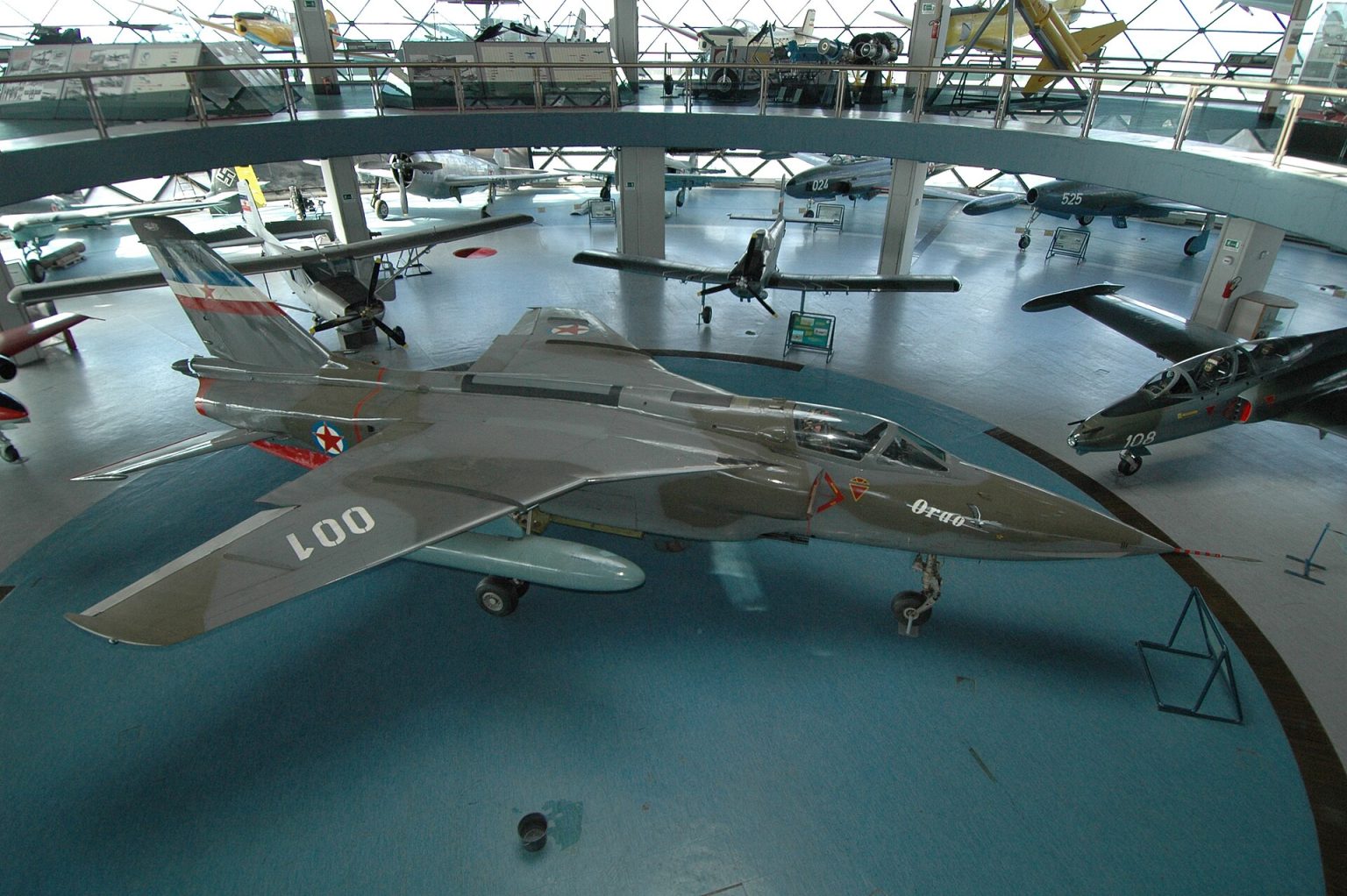
A number of Oraos and Vulturs survive, preserved in museums and collections primarily in the countries that built and flew them — Serbia and Romania above all. The Serbian aviation museum and various military collections hold examples, and the type’s distinctive twin-engine attack-jet shape makes it a recognisable exhibit.
Because the aircraft served relatively recently and in modest numbers, and because some remained in Serbian service into recent years, the Orao is a comparatively fresh piece of aviation history rather than a distant relic. For anyone interested in the aircraft of the former Yugoslavia and of Romania, the preserved Oraos are the best way to encounter this unusual, twice-named eagle in the metal.
Design & Engineering
How the Orao was built: a shared strike aircraft
Two nations, two names, one design — a rugged twin-Viper strike jet built for close support and reconnaissance, and for the self-reliant defence of two countries that prized their independence from Moscow.
Twin licence-built Vipers
Two Rolls-Royce Viper turbojets, built under licence in both countries and later fitted with afterburners for a low-level supersonic dash.
Built for the battlefield
Two 23mm cannon and multiple hardpoints for bombs, rockets and guided weapons — a rugged close-support, anti-armour and reconnaissance striker.
One design, two flags
Built as the J-22 Orao by Soko in Yugoslavia and the essentially identical IAR-93 Vultur by Avioane Craiova in Romania — the YuRom partnership.
Specifications
Soko J-22 Orao specifications: dimensions, performance and cost
Baseline: the afterburning single-seat J-22B Orao 2, the last and best Yugoslav production standard and the one Serbia still flies. Deltas for the non-afterburning Orao 1 family, the two-seat NJ-22 and the Romanian IAR-93A, IAR-93MB and IAR-93B are in grey. Four warnings before the figures. First, the brief for this page credits Romania with roughly 165 IAR-93s. It did not build anything like that. The Romanian variant lists add to 84 series aircraft plus a handful of prototypes, and the most-quoted Romanian total is 116 airframes laid down, of which 87 were completed and flown and 29 were still unfinished when the programme was killed in 1992. The figure of 165 belongs to the Yugoslav line alone. Second, even that 165 is unstable. It is usually printed as the whole Yugoslav output, yet the same references separately list 26 IJ-22 reconnaissance aircraft, 9 INJ-22 two-seaters and 21 NJ-22 trainers, which would push the Yugoslav total past 220. No reconciled airframe-by-airframe list has ever been published, and the Mostar factory records did not survive 1992. Third, the two national specification tables do not agree, and the gaps are too large to be rounding: Romania quotes an empty weight 250 kg heavier, a service ceiling 1,400 m lower and a top speed 44 km/h slower for an aeroplane that was meant to be identical. Both sets are given below rather than averaged. Fourth, the widely repeated maximum external load of 2,800 kg is a structural figure, not an operational one. Fuel, ammunition, runway length and air temperature all bit into it long before the pylons did, and the non-afterburning aircraft could rarely approach it at all.
Dimensions & weights
- Crew
- 1 the NJ-22 and the Romanian IAR-93DC seated two in tandem on a fuselage stretched to 15.38 m (50 ft 6 in); both were fully combat-capable and were flown on operations as such
- Wingspan
- 9.30 m (30 ft 6 in) identical on every mark of both nationalities. A short, sharply loaded wing, chosen for low-level gust response rather than for turning
- Length
- 14.90 m (48 ft 11 in) including the nose pitot probe, which accounts for well over half a metre of it
- Height
- 4.52 m (14 ft 10 in)
- Wing area
- 26.00 m² (279.9 sq ft) shoulder-mounted and swept, with the pylons hung clear of the main gear track so that stores could be loaded without trestles
- Empty weight
- 5,500 kg (12,125 lb) Romanian figures for the IAR-93B give 5,750 kg (12,680 lb). Some of that is genuine equipment difference and some is almost certainly a different definition of empty
- Take-off weight, clean
- 8,170 kg (18,012 lb) Romania quotes 8,400 kg (18,520 lb) for the same condition
- Max take-off weight
- 11,080 kg (24,427 lb) IAR-93B 10,900 kg (24,030 lb). Either way the aeroplane could take off at more than twice its empty weight, which is a lot of asking from two small turbojets
- Max landing weight
- 9,360 kg (20,640 lb) a Romanian figure; no Yugoslav equivalent could be traced. It implies a jettison-or-dump requirement after an aborted strike
- Internal fuel
- 3,120 litres (690 imp gal; 820 US gal) about 2,430 kg. The Orao 2 gained integral wing tankage that the Orao 1 lacked, which is the quieter half of the reheat upgrade and mattered nearly as much
- Max external stores
- about 2,800 kg (6,170 lb) Romanian sources say 2,500 kg (5,510 lb). Both are paper maxima
- Hardpoints
- 5 — four underwing, one centreline 500 kg (1,100 lb) each wing station, 800 kg (1,760 lb) on the fuselage. The outboard pair were light stations, suitable for rocket pods or an infrared missile and little else
- Wing loading
- 314 kg/m² (64 lb/sq ft) clean; 426 kg/m² (87 lb/sq ft) at maximum weight derived here from the published weights and wing area, not quoted in any source. High for a subsonic attack aircraft, and exactly what was wanted: it rode low-level turbulence far better than the J-21 Jastreb it replaced
Performance
- Max speed, sea level
- 1,130 km/h (702 mph; 610 kt) clean, with reheat Romanian figures give 1,086 km/h (675 mph; 586 kt). Non-afterburning Orao 1 aircraft were slower again, and with a full bomb load neither variant saw much above 900 km/h
- Max Mach, altitude
- Mach 0.96 at 11,000 m (36,100 ft) Romania quotes Mach 0.9. The aeroplane is transonic-limited, not thrust-limited, at height
- Supersonic in a dive
- Mach 1 exceeded on 22 November 1984 aircraft 25101, test pilot Marjan Jelen, in a 25-degree dive over Batajnica. See the note below on what this does and does not mean
- Rate of climb
- 89.0 m/s (17,520 ft/min) at sea level with reheat, at a light weight. The non-afterburning aircraft managed roughly half of it, and the difference is the whole argument for the Orao 2
- Service ceiling
- 15,000 m (49,200 ft) Romanian figures give 13,600 m (44,600 ft). Neither number describes anything the aircraft did operationally; it was a low-level machine
- Stall speed
- 185 km/h (115 mph; 100 kt) with undercarriage and flaps down a Romanian table gives 274 km/h, which almost certainly refers to the clean configuration at a higher weight rather than contradicting the figure above
- Combat range
- about 522 km (324 miles; 282 nm) on a hi-lo-hi profile with ordnance Romanian sources spread this across 260 to 530 km depending on profile. A pure low-level radius was nearer 300 km, which is a tactical aircraft in the most literal sense
- Ferry range
- 1,320 km (820 miles; 710 nm) as published; the figure is usually given without stating whether drop tanks are fitted, and it is short enough to suggest they are not
- g limits
- +8 / −4.2 a genuinely strong airframe for the class, and the reason the type survived heavy manoeuvring at low level over Bosnia and Kosovo without structural losses
- Thrust-to-weight
- 0.55 with reheat, 0.44 dry, at clean take-off weight derived here from 2 × 22.24 kN against 8,170 kg. The dry figure is the honest one for most of the fleet's life, and it explains why the first ten years of the programme were spent chasing an afterburner
- Take-off run
- No consistently published figure could be traced for either nationality the aircraft was designed to work from semi-prepared and dispersed strips, with a low-pressure undercarriage and a brake parachute, and Yugoslav doctrine assumed motorway and cave-shelter operation. The absence of a published figure is itself a comment on how little of this programme was ever documented in the open
Propulsion & systems
- Engines
- Two Rolls-Royce Viper Mk 633-47 turbojets with afterburners Orao 1 and IAR-93A/MB used the non-afterburning Viper Mk 632-41. Britain refused a licence for the more powerful engine the design team actually wanted, because Romania was a Warsaw Pact member; the Viper was the fallback, and it defined the aeroplane
- Licence production
- Built in both countries — by Orao in Bosnia and by Turbomecanica in Bucharest a real manufacturing licence, unlike several other Cold War engine copies. Two engine lines for one aeroplane, in two countries, was characteristic of the whole YUROM arrangement
- Thrust, dry
- 17.79 kN (4,000 lbf) each
- Thrust, reheat
- 22.24 kN (5,000 lbf) each a 25 per cent gain, small by fighter standards. The afterburner took roughly a decade to make work and arrived on production aircraft only in the mid-1980s
- Engine layout
- Single-shaft, seven-stage axial compressor, annular combustor, single-stage turbine a simple, robust 1950s design descended from a target-drone engine, with a published specific fuel consumption around 1.09 lb/hr/lbf for the dry series. Cheap to run, easy to overhaul, and thirsty in reheat
- Ejection seat
- Martin-Baker zero-zero seat a British seat in a Warsaw Pact-adjacent aircraft. It worked: the NJ-22 pilot downed by a Strela over Djakovo in September 1991 ejected successfully
- Navigation
- Honeywell SGP500 twin-gyroscope platform, with Rockwell Collins VIR-30 VOR/ILS DME-40 on some aircraft. Navigation was by stopwatch, map and gyro; there was no inertial platform and no moving map
- Sighting
- Thomson-CSF VE-120T head-up display the aiming system for guns, rockets and bombs alike. No radar was ever fitted to a production Orao of either nationality
- Flight control
- Conventional powered controls with a GEC-Marconi three-axis stability augmentation system added to make the aircraft a steady weapons platform at low level, which is where it lived
- Self-protection
- Iskra SO-1 radar warning receiver, provision for up to three chaff and flare dispensers, and a P10-65-13 passive jammer pod adequate against 1970s radar-guided threats and close to useless against the shoulder-launched infrared missiles that actually shot Oraos down
- Modernised fit
- Safran Sigma 95 inertial navigation, a new mission computer and multi-function displays the first phase of the Serbian programme unofficially called Orao 2.0, fielded from the late 2010s; on two-seaters the new kit went into the rear cockpit first. A second phase for a fully digital cockpit has been announced but not visibly completed
14The Orao’s variants, from early attack to recon and trainer+
The Orao was built in several versions. Early single-seat aircraft used non-afterburning Viper engines and were purely subsonic; the definitive later single-seaters had afterburning Vipers for improved performance. A dedicated reconnaissance version carried cameras and sensors, and a two-seat variant served for conversion training while retaining a combat capability.
The Romanian IAR-93 Vultur followed a parallel path, with its own progression from early non-afterburning to later afterburning versions and its own two-seat trainer. Between them, the two national lines covered the attack, reconnaissance and training needs of both air forces from a single shared design — an efficient outcome for the YuRom partnership.
15The Soko J-22 Orao’s cost: what the records show+
There is no reliable, transparent public figure for the Orao’s unit cost, cost per flight hour or total programme cost. It was developed and built within the state-planned economies of Yugoslavia and Romania, where military aircraft were costed in ways that do not translate into meaningful market prices, and the joint, two-nation nature of the programme makes any single figure especially hard to pin down.
Rather than repeat an invented number, we list the cost fields here as “not reliably recorded.” What can be said is that sharing the development between two countries was, in large part, a way of making the programme affordable at all: neither nation could easily have justified the full cost of a national combat-aircraft programme alone, and pooling the effort was central to the whole idea.
16The Orao among Cold War strike aircraft+
The Orao belongs to a family of twin-engined tactical strike aircraft of its era, and it is instructive to compare it with the Anglo-French SEPECAT Jaguar, another combat jet born of a bi-national partnership and built for much the same close-support and reconnaissance roles. Like the Jaguar, the Orao was a product of two countries sharing the cost and effort of a national strike aircraft.
Judged against larger and more powerful Western and Soviet types, the Orao was modest in performance — subsonic in its early forms, transonic later, with a limited war load and range. But it was never meant to compete with the heavyweights. It was a right-sized, affordable, self-controlled tool for two specific national defence problems, and by that measure it succeeded.
17Surviving Oraos and Vulturs+
Because the type served relatively recently and only with the two nations that built it, surviving Oraos and Vulturs are concentrated in Serbia and Romania. Museums and military collections in both countries hold examples, and the aircraft’s distinctive twin-engine attack-jet profile makes it easy to recognise.
For enthusiasts of the aviation of the former Yugoslavia and of Romania, these preserved aircraft are the best way to see the Orao at first hand. As a comparatively recent and regionally significant type, it holds a particular place in the aviation heritage of both countries — a tangible reminder of a rare and successful international partnership.
Armament & payload
The Orao carried a Soviet gun, British cluster bombs and no radar at all
The Orao was armed like the political compromise it was. Two Soviet-pattern 23 mm cannon sat under a British engine bay; Yugoslav iron bombs and British BL755 cluster weapons hung on the wings; and the last Yugoslav aircraft carried a Soviet infrared air-to-air missile on the outboard rails for self-defence. Five pylons took a nominal 2,800 kg, but no Orao pilot ever planned around that number. With two guns, 400 rounds and full internal fuel, a non-afterburning Orao 1 could not lift a maximum load off a short strip on a warm day, and the entire reheat programme existed to close that gap. What the aircraft never had was a sensor. There was no radar and no laser designator on any production airframe of either nationality, so every weapon it delivered was aimed by a pilot flying the aeroplane onto the target through a Thomson-CSF head-up display, in one pass, at low level, over defended ground. That is a demanding way to fight, and it is exactly the way the type was used in Bosnia and Kosovo. Mark and operator variation here is severe: Romanian and Yugoslav weapon fits diverged from the first production batch, the Yugoslav guided-weapon inventory is poorly documented in open sources, and the 1991 arms embargo froze Serbian integration work for two decades.
Gun
- Two 23 mm Gryazev-Shipunov GSh-23L cannon in the lower forward fuselage, below and behind the intakes, with 200 rounds per gun — 400 rounds total
- The GSh-23L is a twin-barrel Gast-principle weapon: one barrel's recoil loads the other, giving roughly 3,400 rounds per minute from a gun weighing about 50 kg. That is around seven seconds of firing per gun
- The L suffix denotes the muzzle blast deflector fitted for fuselage installations. Mounting both guns low and within half a metre of the centreline removed convergence as a problem and kept gun gas clear of the intakes above
- Romanian IAR-93s could add a further 23 mm gun pod on the centreline station, making a three-gun strafing fit at the price of the heaviest pylon
- The same gun armed the MiG-21 and MiG-23, so ammunition, tooling and armourers were already in place in both countries. This was the one part of the armament that cost nobody anything
Air-to-air
- R-60 and R-60MK (NATO AA-8 Aphid) infrared missiles on the outboard wing stations, on later Yugoslav aircraft
- Romanian IAR-93Bs are recorded with the older and far less agile R-3S / K-13 (NATO AA-2 Atoll), a weapon with a narrow rear-hemisphere engagement envelope
- With no radar of any kind, there was no beyond-visual-range capability and no all-weather interception. These were escape weapons, carried on the assumption that the Orao would be the one being hunted
- In practice the gun was the realistic air-to-air weapon, and it was never used as one. Republika Srpska Oraos flew strike sorties inside a NATO no-fly zone with no serious expectation of surviving an interception, and planned accordingly: low, fast, one pass, home
- Sources disagree on whether R-60 carriage was cleared across the fleet or only on the final production block; no clearance document is public
Air-to-surface guided
- Grom-1 and Grom-B, the Yugoslav radio-command guided missiles derived from the Soviet Kh-23 (NATO AS-7 Kerry). The pilot flew the missile onto the target with a thumb controller while holding the aircraft steady and straight, which over defended ground is an unpleasant thing to be asked to do
- AGM-65B Maverick appears in almost every published weapons list for the type. Yugoslavia did buy a small number of Mavericks, but no evidence of operational Orao carriage could be traced, and the 1991 embargo closed the question permanently
- No laser designator was fitted, so no laser-guided bomb could be self-designated. Buddy designation by another aircraft was not part of Yugoslav practice
- The second phase of the Serbian modernisation is meant to fix precisely this, with a targeting pod and precision munitions. As of the most recent public statements, only navigation, mission computer and display work had actually been fielded
- Verdict: a guided-weapon carrier on paper and an unguided-weapon aeroplane in fact, for the whole of its operational life to date
Bombs
- Yugoslav general-purpose bombs of 50, 100, 250 and 500 kg; the Romanian equivalents were the BE-50, BE-100, BM-250 and BA-500
- BL755 cluster bombs, bought from Britain, each dispensing 147 shaped-charge and fragmentation bomblets. This was the Orao's principal anti-armour store and the reason a single aircraft mattered against a column
- Yugoslav KPT-series cluster dispensers and napalm tanks for area targets
- Matra Durandal runway-cratering bombs are listed against the type. Delivering them means a low, level, high-speed pass down a defended runway — a mission the Orao was better suited to than anything else either air force owned
- Fusing was mechanical and release was by dive or level toss computed through the HUD. Accuracy therefore depended almost entirely on pilot skill and on how straight he was willing to fly
Rockets
- 57 mm unguided rockets in 16-tube pods — the L-57-16MD in Yugoslav service, S-5 rockets in UB-16 and UB-32 pods on Romanian aircraft
- 128 mm heavy unguided rockets in Yugoslav pods, for bunkers, buildings and hardened positions
- Romanian PRND-122, a 122 mm unguided rocket developed for the type
- Rockets were the everyday weapon: cheap, embargo-proof, made at home in both countries, and effective against exactly the soft and lightly armoured targets both air forces expected to attack
- Yugoslav and Romanian rocket designations are transliterated inconsistently across sources and several published lists conflate pod and rocket names; treat individual designations with care
Pods & other stores
- Optical and infrared reconnaissance pods on the centreline. The dedicated IJ-22 carried its camera fit internally instead, which is the main thing that distinguished it
- P10-65-13 passive jammer pod, and provision for up to three chaff and flare dispensers
- An Ericsson Doppler surveillance radar in a belly pod on the single INJ-22M maritime conversion — the only radar ever carried by any Orao, and it was a search set, not a fire-control set
- Drop tanks on the inboard wing stations; the 800 kg centreline took a tank, a gun pod, a reconnaissance pod or the heaviest single bomb, but only one of them at a time
- No targeting pod, no electro-optical sensor turret, no data link, and no in-flight refuelling probe on any variant
Three typical loadouts
- Close air support, Bosnia 1994
- Four 250 kg general-purpose bombs on the inboard and centreline stations, two R-60 outboard, 400 rounds of 23 mm. A short low-level transit from Mahovljani or Udbina, one pass, no loiter and no second run. This is close to the fit flown against the Bugojno and Novi Travnik plants on 28 February 1994.
- Anti-armour strike
- Two BL755 cluster bombs inboard, two 57 mm rocket pods outboard, guns loaded, no external fuel. Radius roughly 300 km flown low throughout. The load that made a single subsonic attack aircraft genuinely dangerous to a moving column.
- Tactical reconnaissance, IJ-22
- Internal camera fit, two drop tanks inboard, no ordnance beyond the guns. Non-afterburning, so the only defences available were height, speed already spent on the run in, and the pilot's route planning.
Sourcing caveat: no Yugoslav or Romanian weapons clearance document for the Orao is in the public domain. The lists above are reconciled from published encyclopedia entries, museum placards and Serbian and Romanian air force material, and several entries — the Maverick above all — describe what the aircraft was designed or offered to carry rather than what it demonstrably carried on operations. Ammunition loads, pylon capacities and pod designations should be treated as well-attested; guided-weapon integration should not.
Variants
Two countries built the same aeroplane on two lines and never quite agreed what it weighed
YUROM is the strangest thing about this aircraft, and the most interesting. On 20 May 1971 Yugoslavia and Romania signed a government-to-government agreement to design and build one ground-attack aeroplane together, under two programme directors — Colonel Vidoje Knezevic for Yugoslavia and Teodor Zanfirescu for Romania — with the work split, the drawings shared, and two entirely separate production lines set up at Mostar and Craiova. Both countries built their own airframes, both licence-built their own Vipers, and both gave the result a different name. Nothing else in Cold War Europe worked quite like it: this was two non-aligned or semi-detached socialist states co-developing a combat aircraft outside both blocs, precisely because neither bloc would sell them what they wanted.
It half worked. The engineering was shared honestly and the aeroplanes really are near-identical. But the programme was crippled at birth by the engine: the team wanted a supersonic single-engine aircraft, Britain refused to licence the engine for it because Romania was in the Warsaw Pact, and the Viper that was available was too weak. Two of them, without reheat, gave a heavy attack aircraft the climb rate of a trainer. It then took the best part of a decade to make an afterburning Viper work, by which time the design was fifteen years old. The first production aircraft in both countries were consequently reconnaissance and light-attack machines that could not carry what the airframe was stressed for.
The symbolic high point came on 22 November 1984, when aircraft 25101, flown by Marjan Jelen, exceeded Mach 1 in a 25-degree dive over Batajnica and became the first aircraft designed in Yugoslavia to go supersonic. Serbian accounts still treat this as a landmark and it genuinely was one. But the claim is regularly stretched in retelling, and it should not be: the Orao is a subsonic aeroplane, limited to about Mach 0.96 at height, and it went through Mach 1 pointing downhill with the engines in reheat. That is a real achievement for a 1974 design on two 5,000 lbf turbojets, and it is not the same thing as a supersonic aircraft. The distinction is the whole dispute, and the honest answer is that both sides of it are right about different things.
The end came from politics, as the beginning had. Romania stopped in 1992 when the Yugoslav wars and the UN embargo removed its partner, its engine supply arrangements and its export prospects at once, leaving 29 airframes unfinished on the line. Yugoslavia stopped because the Mostar factory was in the middle of a war: production halted in 1992, the plant was heavily damaged, and what survived was partially dismantled and moved to Serbia. Series production of the Orao has never resumed anywhere.
- IJ-22 Orao 1 (1978–83, 26 built)
- The first Yugoslav production version: single-seat tactical reconnaissance with an internal camera fit and non-afterburning Viper 632s. One prototype, ten pre-production and fifteen series aircraft. Built first because the reheated engine was not ready.
- INJ-22 Orao 1 (9 built, 1 later converted)
- Two-seat, non-afterburning, combat-capable trainer and reconnaissance aircraft. One airframe became the INJ-22M with an Ericsson Doppler surveillance radar in a belly pod for maritime patrol — a one-off, and the only radar-equipped Orao ever flown.
- J-22A Orao 1 (first flight October 1983)
- Single-seat attack aircraft, still without afterburners. Adequate as a bomb truck from a long runway, badly short of thrust anywhere else. Published totals lump it together with the J-22B.
- J-22B Orao 2 (57 delivered, 42 more cancelled)
- The definitive Yugoslav aircraft: afterburning Viper 633-47s and integral wing tanks, which together transformed both the climb rate and the radius. Combined J-22A and J-22B output is usually printed as 165, though that figure is used inconsistently.
- NJ-22 Orao (from July 1986, 21 delivered, 17 cancelled)
- Two-seat afterburning trainer, fully combat-capable and used as such. The Orao lost over Djakovo on 19 September 1991 was an NJ-22.
- J-22M1A Orao (Serbia, late 2010s, 4 completed by 2023)
- The modernisation unofficially called Orao 2.0: Safran Sigma 95 inertial navigation, a mission computer, multi-function displays, new sensors and external cameras. A navigation and situational-awareness upgrade rather than a weapons one; the promised second, fully digital phase has not visibly appeared.
- IAR-93A (Romania, 1979–82, 26 single-seat and 9 two-seat)
- The first Romanian production standard, non-afterburning, entering service in 1981 after fifteen pre-production aircraft were delivered in 1979. The two-seaters carried the suffix DC, for dubla comanda.
- IAR-93MB (Romania, from 1982, 15 built)
- A hybrid: the refined IAR-93B airframe married to the non-afterburning engine, built while the reheated Viper was still being sorted out. A neat illustration of how far the engine held the whole programme back.
- IAR-93B (Romania, first flight 1985, 27 single-seat and 7 two-seat)
- The Romanian equivalent of the Orao 2, with afterburning Viper 633-47s built by Turbomecanica, in service from 1987. Flown by the 67th Fighter-Bomber Regiment at Craiova and the 49th at Ianca.
- Export proposals (none built)
- Romania negotiated 48 aircraft for Iran and discussed six for Mauritania; a further 125 were ordered domestically in 1989. None of these were delivered. The Orao is one of very few Cold War combat aircraft that was never exported to a single foreign customer.
Closing note on numbers and survivors. No operators chart appears on this page, because current fleet figures for Serbia could not be corroborated against an IISS Military Balance or FlightGlobal World Air Forces entry within the research available here, and a single-row chart built on one uncorroborated figure would be worse than none. What can honestly be said is this. Serbia is the only front-line operator of the type anywhere in the world, with roughly seventeen J-22s and NJ-22s nominally on strength as of 2023, of which four had completed the first modernisation phase; that figure comes from open Serbian reporting rather than an audited inventory, and it certainly overstates how many can fly on a given day. Bosnia and Herzegovina inherited seven airframes from the Republika Srpska Air Force and none has been airworthy since at least 2019. Romania withdrew and mothballed its last IAR-93s in 1998, the final operational flight being made by aircraft 219 on 9 April 1998; something over a dozen survive as museum pieces and gate guardians, chiefly at the Aviation Museum in Bucharest and the Air Force Academy at Brasov. Every surviving Orao and IAR-93 anywhere is an original airframe — no reproduction of either type exists, and given that both production lines and most of their records were destroyed or dispersed in the wars of the 1990s, none ever will. Yugoslavia lost eleven aircraft destroyed on the ground during the 1999 NATO campaign, most of them at Ponikve when a single hangar strike reportedly caught six J-22s and two MiG-21s together.
Timeline
The Soko J-22 Orao through the years
Yugoslavia and Romania launch a joint programme to develop a twin-engine strike aircraft, sharing the cost and effort.
The prototypes fly for the first time — built as the J-22 Orao in Yugoslavia and the IAR-93 Vultur in Romania.
The initial non-afterburning versions enter Yugoslav service in the close-support and reconnaissance roles.
Afterburners are added to the Viper engines, improving performance and giving a brief low-level supersonic dash.
Around 170 aircraft across both countries equip ground-attack, reconnaissance and training units in both air forces.
With the break-up of Yugoslavia, the Orao is used in combat in the ground-attack role; some aircraft are lost. (Described factually and neutrally.)
Romania retires its IAR-93 Vultur fleet as it restructures its forces and shifts toward Western equipment.
Serbia keeps the Orao in service and refurbishes and upgrades part of its fleet to extend its life.
The ageing Orao fleet is steadily reduced as airframes reach the end of their service lives.
Surviving Oraos and Vulturs are preserved in museums and collections in Serbia and Romania.
Stories & Eyewitnesses
The Soko J-22 Orao in stories: the moments that defined it
A combat jet built by two nations, powered by British engines, flown for close support and reconnaissance, and marked by the wars that broke up the country that created it — the Orao’s history told through the moments that stuck.
YuRomTwo nations, one jet
Yugoslavia and Romania built it together.
The Orao came from “YuRom”, a joint Yugoslav-Romanian programme to build a strike aircraft neither could easily afford alone.
A rare combat jet co-developed by two socialist states outside Soviet control.
Two NamesOrao and Vultur
The same aircraft under two flags.
Yugoslavia’s Soko built it as the J-22 Orao (“Eagle”); Romania’s Avioane Craiova built the identical IAR-93 Vultur (“Vulture”).
Two national names for a single shared design.
IndependenceOutside the umbrella
Self-reliance from Moscow.
Non-aligned Yugoslavia and independent-minded Romania both wanted a combat aircraft they controlled themselves, free of Soviet supply.
The Orao was as much about political independence as air power.
Total DefenceBuilt to resist invasion
A home-built jet for a defensive doctrine.
Yugoslavia’s doctrine assumed it might have to resist invasion from any direction, and a strike aircraft it built and controlled itself fitted that perfectly.
Romania, on its own independent line, valued the same self-reliance.
Viper PowerBritish engines
Two licence-built Rolls-Royce Vipers.
The Orao used two Rolls-Royce Viper turbojets, built under licence — a Western engine, another mark of independence from Moscow.
Simple and robust, if modest in the early non-afterburning form.
The DashAfterburners added
A brief low-level supersonic dash.
Later versions added afterburners to the Vipers, improving performance and allowing a short supersonic dash at low level.
Still a transonic striker, not a supersonic fighter — but a real improvement.
BattlefieldSupporting the army
Close support and anti-armour.
The Orao’s job was close air support and battlefield interdiction — hitting troops, vehicles and armour to blunt an advance.
A rugged tool for a gritty, dangerous mission.
EyesThe recon Orao
A camera-equipped version.
A dedicated reconnaissance version carried cameras for fast, low-level battlefield photography.
One airframe for strike and recon simplified training and logistics.
ArmedCannon and ordnance
Two 23mm cannon plus external stores.
Two built-in 23mm cannon for strafing, plus bombs, rockets and guided weapons on multiple hardpoints.
A flexible war load tailored to each mission.
1974First flight
Prototypes fly in both countries.
The prototypes first flew in 1974; after a lengthy joint development, the type entered service from the late 1970s.
A considerable feat for two smaller aerospace industries.
The 1990sDrawn into war
Combat in the Yugoslav Wars.
With Yugoslavia’s violent break-up, the Orao was used in the ground-attack role, and aircraft were lost.
We note this factually and neutrally, with respect for all those affected.
Two PathsSerbia and Romania
Divergent later careers.
Serbia kept and upgraded the Orao into the 21st century; Romania retired its IAR-93 earlier as it moved toward Western equipment.
Once-identical fleets took different roads after the Cold War.
LegacyAn eagle preserved
Survivors in regional museums.
The Orao survives in museums in Serbia and Romania — proof that smaller nations, working together, could build a real combat aircraft.
A fascinating study in independence and cooperation.
Photo Gallery
The Soko J-22 Orao in photographs
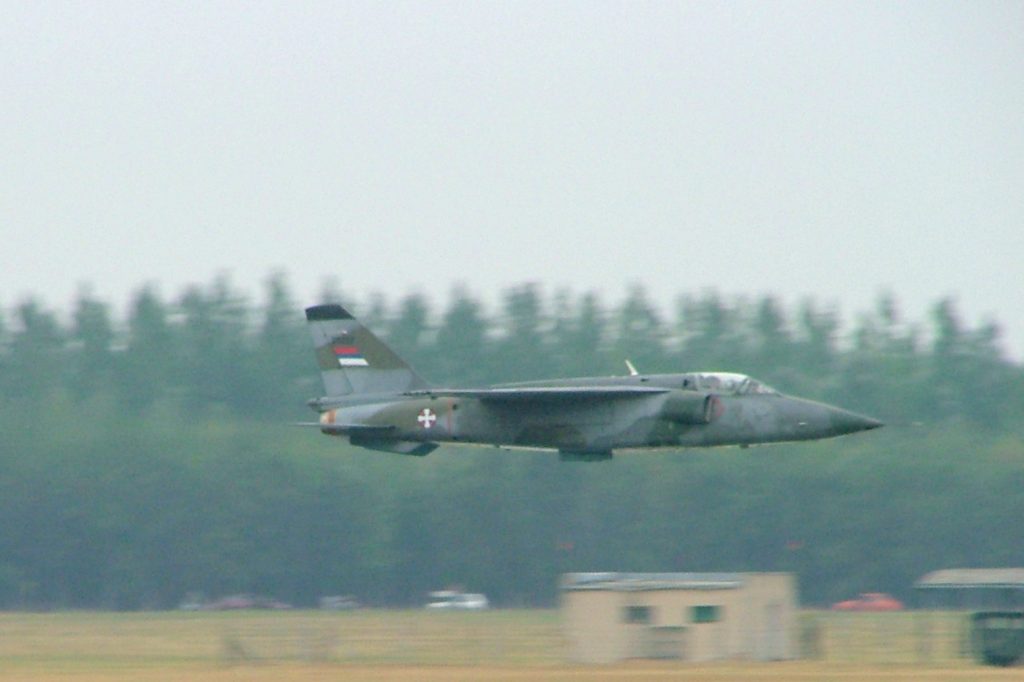
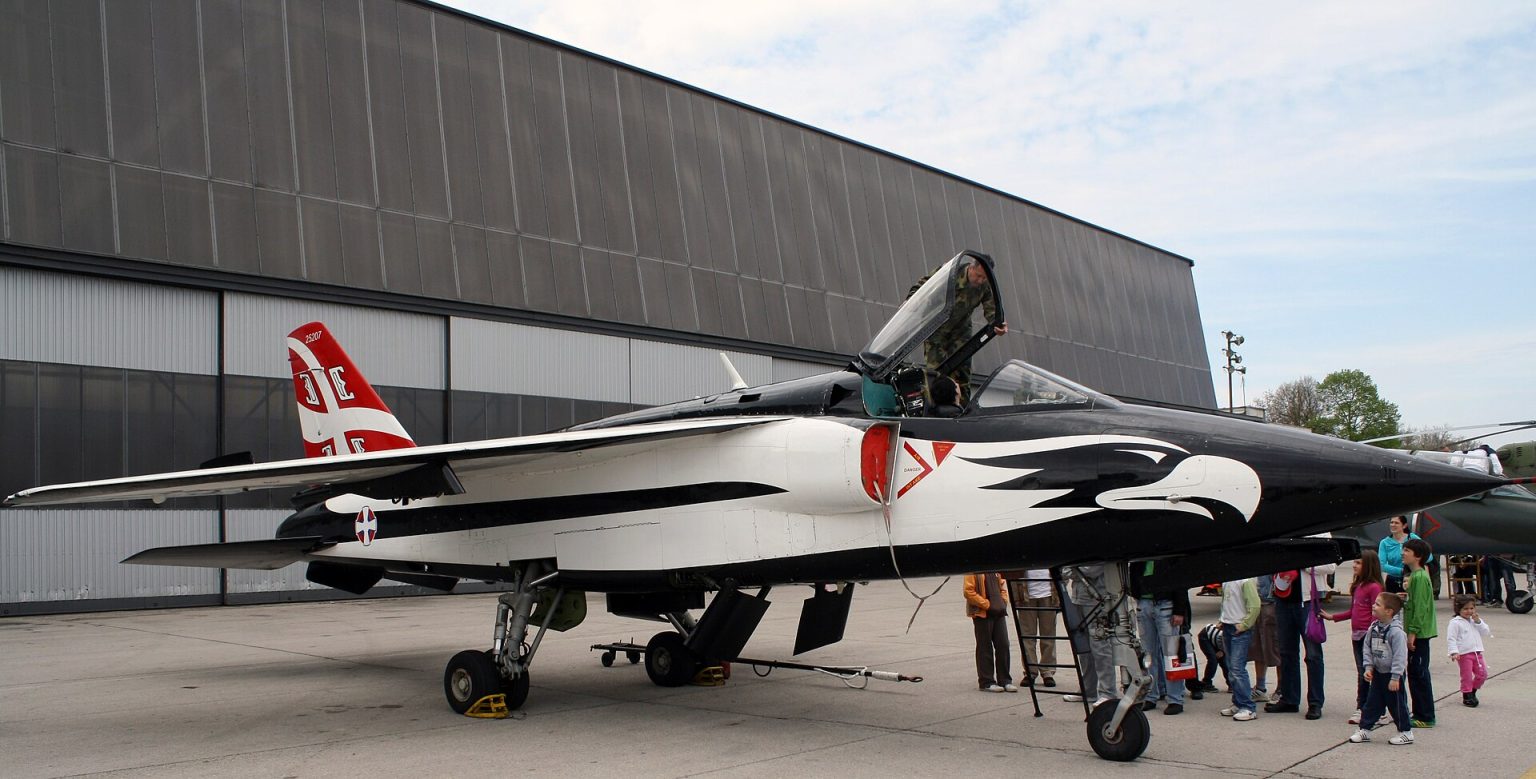
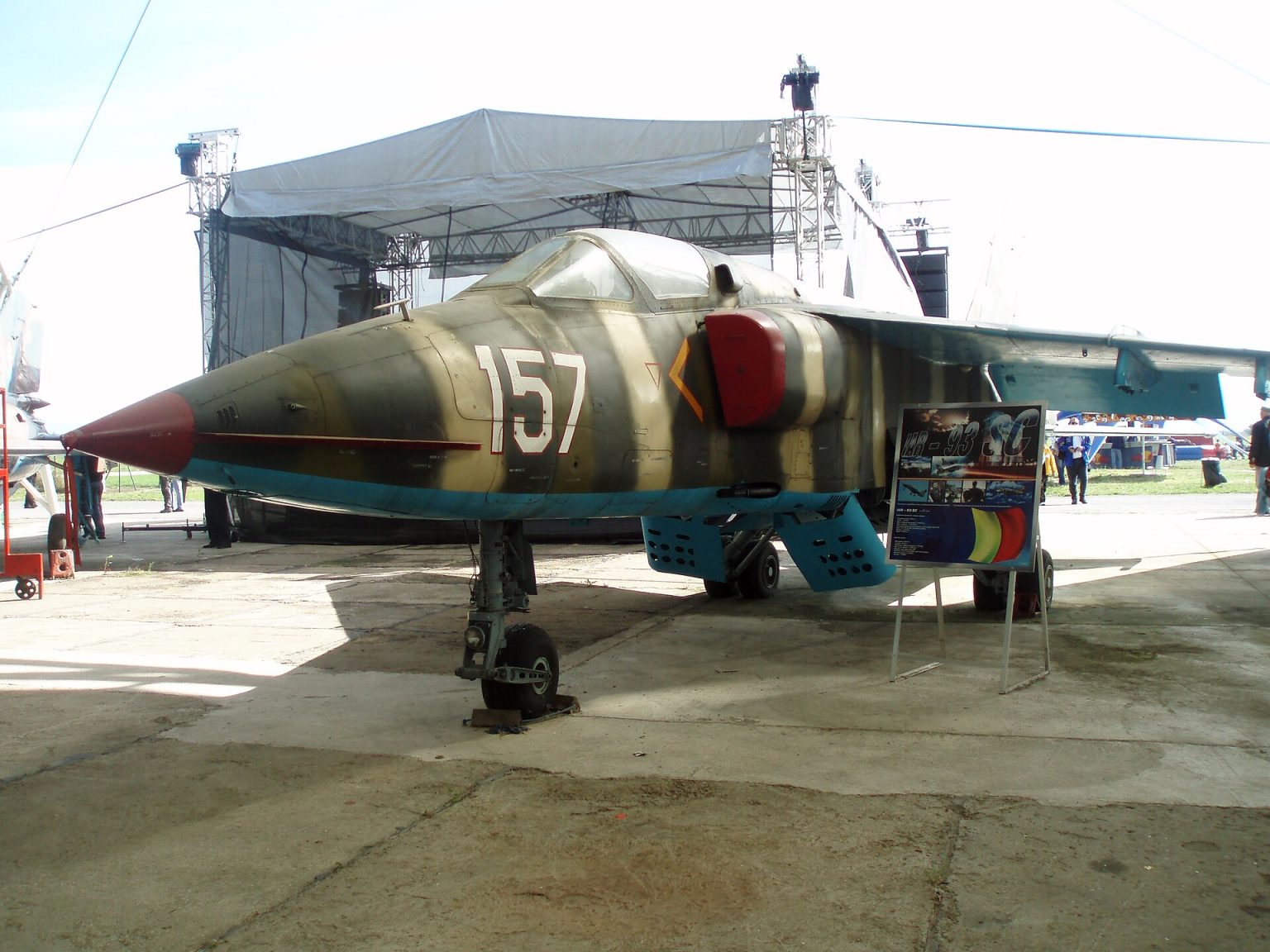
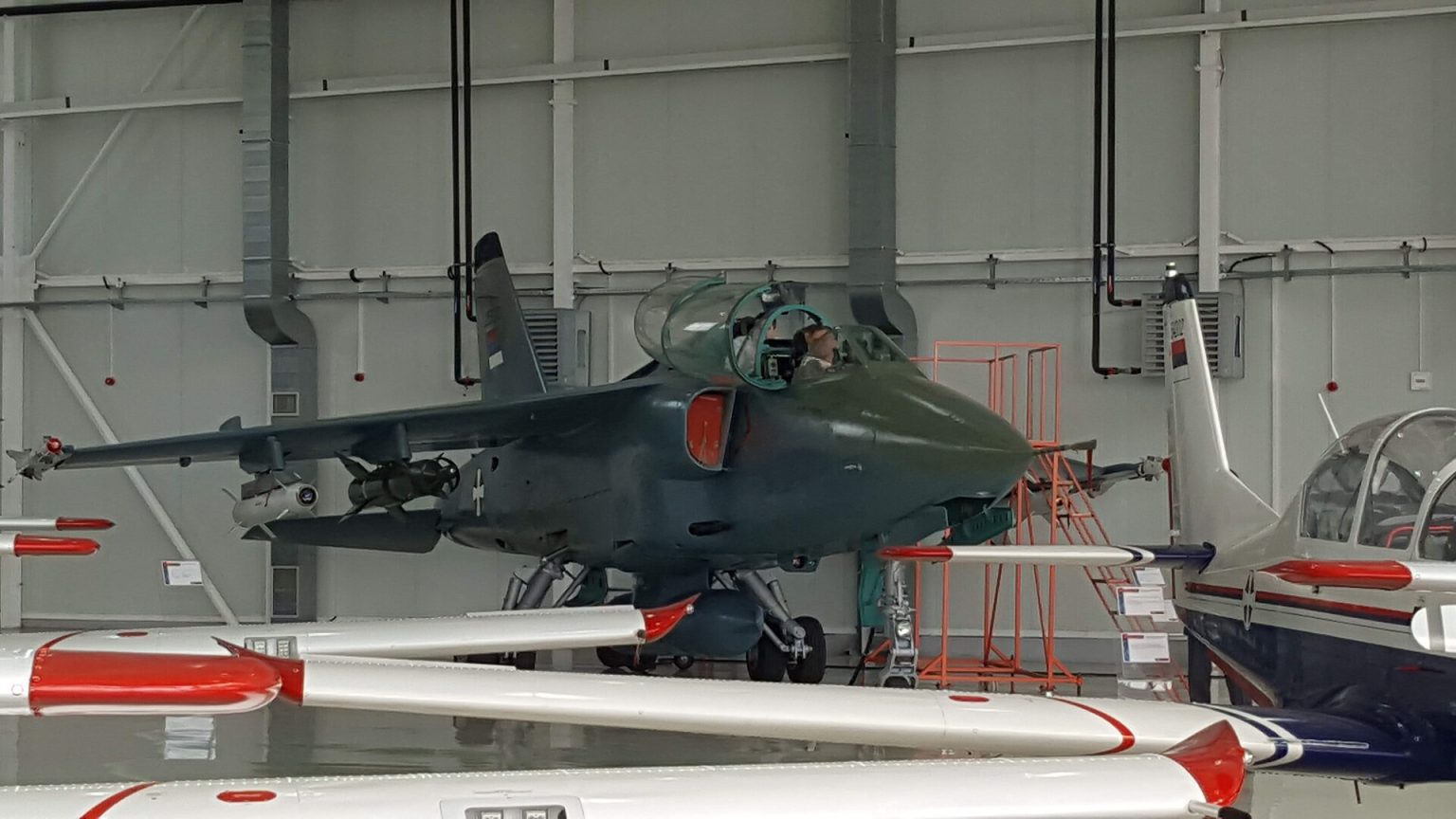
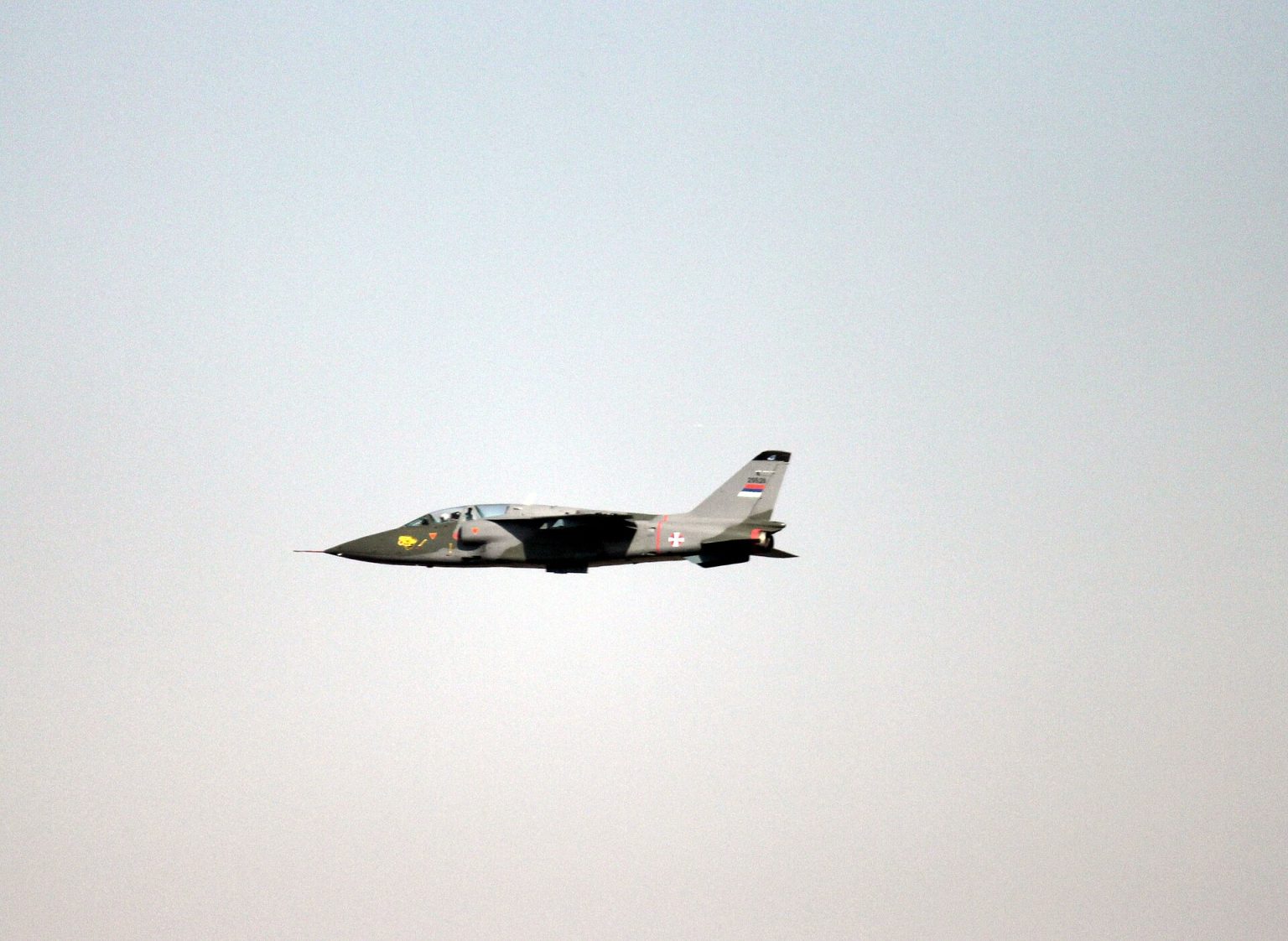
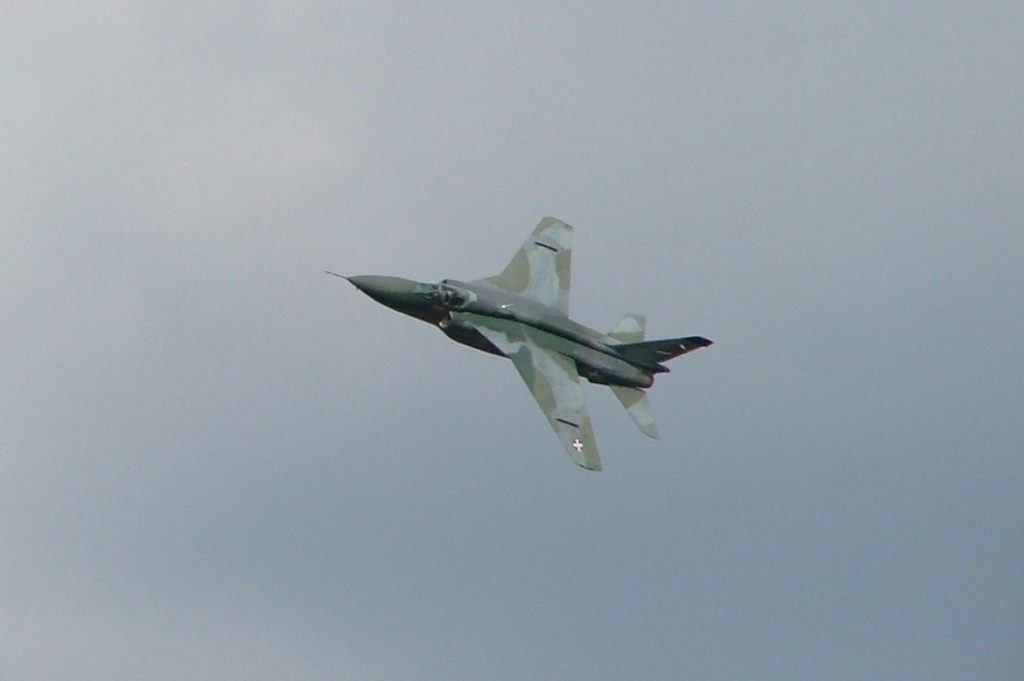
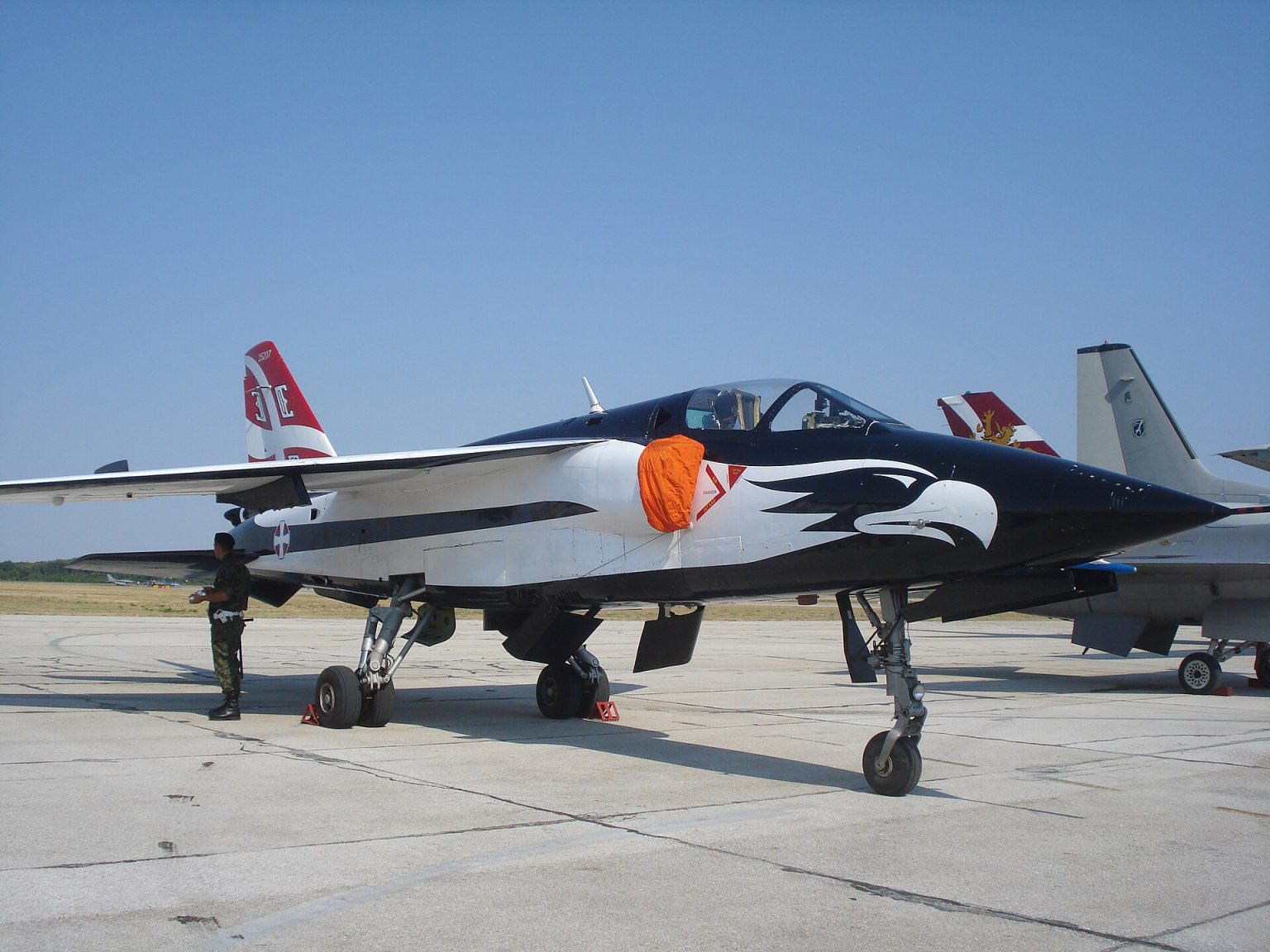
Museum and service photographs of the Orao and its Romanian IAR-93 Vultur counterpart, each credited to its source and licence. Click any photo to enlarge.
On Film
The Soko J-22 Orao on video: the twin-nation eagle
A look at the Soko J-22 Orao — the Yugoslav-Romanian strike jet, its co-development, its design and its service.
“IAR-93 Vultur and J-22 Orao | The Eagle of the Balkans” by Weapon Detective (approx. 122,000 views at time of writing; running time ~15 minutes) — a documentary on the Yugoslav-Romanian strike jet, its co-development and its service.
Operations Overview
Where the Soko J-22 Orao flew: an operator map
Developed jointly by Yugoslavia and Romania and flown by both. Because Yugoslavia no longer exists as a state, its origin role is shown on modern Serbia, its principal successor. Hover or tap a country for detail.
Categories: Origin & Yugoslav / Serbian Air Force (shown on Serbia, successor to Yugoslavia) · Joint Development & Operator (Romania, which built and flew the aircraft as the IAR-93 Vultur) · Surviving Airframes (Serbia and Romania). Successor states stand in for the former Yugoslavia.
Service Record
The Orao’s record: cooperation in the air
The Orao’s significance lies in its origins — a genuine combat aircraft built by two smaller nations together, outside the Soviet umbrella, for their own self-reliant defence.
Questions & Answers
Soko J-22 Orao: your questions answered
Can I fly in a Soko J-22 Orao?
No — there is no bookable Orao flight experience, and MiGFlug does not offer one. The type is retired or in very limited service, and the survivors are museum aircraft, not available for civilian rides. If what you actually want is the real thing — strapping into a genuine military jet and flying it — you very much can do that today in other types. MiGFlug arranges flights in real fighter jets and warbirds around the world. Start here: migflug.com/flights-prices.
Why is the Soko J-22 Orao historically important?
The Orao is significant chiefly for how it was made: it was co-developed by Yugoslavia and Romania under the “YuRom” programme, a rare case of two socialist states building a combat aircraft together outside the Soviet Union’s control. It gave both countries a home-built, self-controlled strike and reconnaissance aircraft, and it stands as a notable example of smaller nations achieving an advanced combat-aircraft capability through cooperation and self-reliance.
What is the difference between the J-22 Orao and the IAR-93 Vultur?
Essentially none in design — they are the same aircraft built in two countries under two names. Yugoslavia’s Soko company built it as the J-22 Orao (“Eagle”); Romania’s Avioane Craiova built the essentially identical machine as the IAR-93 Vultur (“Vulture”). There were minor national differences in equipment and production, and the two fleets diverged in their later careers, but as a design they are two national expressions of a single joint aircraft.
Was the Orao supersonic?
Only just, and only in the later versions. The early Oraos used non-afterburning Viper engines and were firmly subsonic. Later versions added afterburners, which improved performance and allowed the aircraft to briefly exceed the speed of sound in a low-level dash. But the Orao was fundamentally a transonic strike aircraft, not a supersonic fighter — the supersonic dash was a short-burst capability, not a sustained one.
What engines did the Orao use?
Two Rolls-Royce Viper turbojets, built under licence in both Yugoslavia and Romania. The Viper was a proven, robust British engine, and choosing it — rather than a Soviet powerplant — was a deliberate mark of the programme’s independence from Moscow. The early versions used non-afterburning Vipers; the later, definitive versions added afterburners for significantly better performance.
Did the Orao see combat?
Yes. During the break-up of Yugoslavia in the 1990s, the Orao was used in the ground-attack role in the conflicts of that decade, and some aircraft were lost. These were painful and deeply contested events, and we describe the aircraft’s involvement only in neutral, factual terms, taking no position on the wider wars and their causes, which lie outside the scope of an aircraft profile. What can be stated plainly is that the Orao saw real combat and that some aircraft and crews were lost.
Who operated the Orao?
The aircraft was operated by Yugoslavia and, after its break-up, by Serbia as the J-22 Orao, and by Romania as the IAR-93 Vultur. It was not exported beyond the two partner nations. Serbia retained and upgraded the Orao into the twenty-first century, while Romania retired its Vultur fleet earlier as it shifted toward Western equipment.
Was the Soko J-22 Orao a good aircraft?
Judged against the larger and more powerful strike aircraft of the superpowers, the Orao was modest — subsonic early on, transonic later, with limited range and war load. But that is the wrong yardstick. It was designed to be an affordable, self-controlled close-support and reconnaissance aircraft for two smaller nations, built through cooperation to serve their specific defensive needs. By that measure it was a real success, and a genuine achievement for the aerospace industries of Yugoslavia and Romania.
Fly For Real
You can’t fly the Orao — but these, you can
No J-22 Orao is a bookable ride today. The urge behind it — to strap into a real military aircraft and actually fly — is very much still bookable. MiGFlug puts you in genuine fighters and warbirds around the world.
Fighter Jet Flights
Take the controls of a real ex-military jet with an experienced pilot.
L-39 Albatros
The classic Eastern Bloc jet trainer — aerobatics and high-speed passes.
All flights are operated by MiGFlug’s vetted partners with professional pilots. Browse every option and current pricing at migflug.com/flights-prices. MiGFlug does not operate Soko J-22 Orao flights — no bookable example exists.
Related Aircraft
If the Soko J-22 Orao interests you, explore these
Sources & Further Reading
Where this Soko J-22 Orao history comes from
Note on figures: dimensions, performance and production numbers for the Orao vary between sources and by variant, and are hedged here as approximate. Cost fields are listed as not reliably recorded because meaningful figures from the two countries’ state programmes are not available. The aircraft’s use in the Yugoslav Wars of the 1990s is described strictly factually and neutrally, with due care and respect for all those affected; this profile takes no position on those conflicts, which are covered properly by dedicated historical sources. Yugoslavia no longer exists as a state; on the map, its origin role is shown on modern Serbia, its principal successor. Surviving aircraft are preserved in Serbia and Romania.