
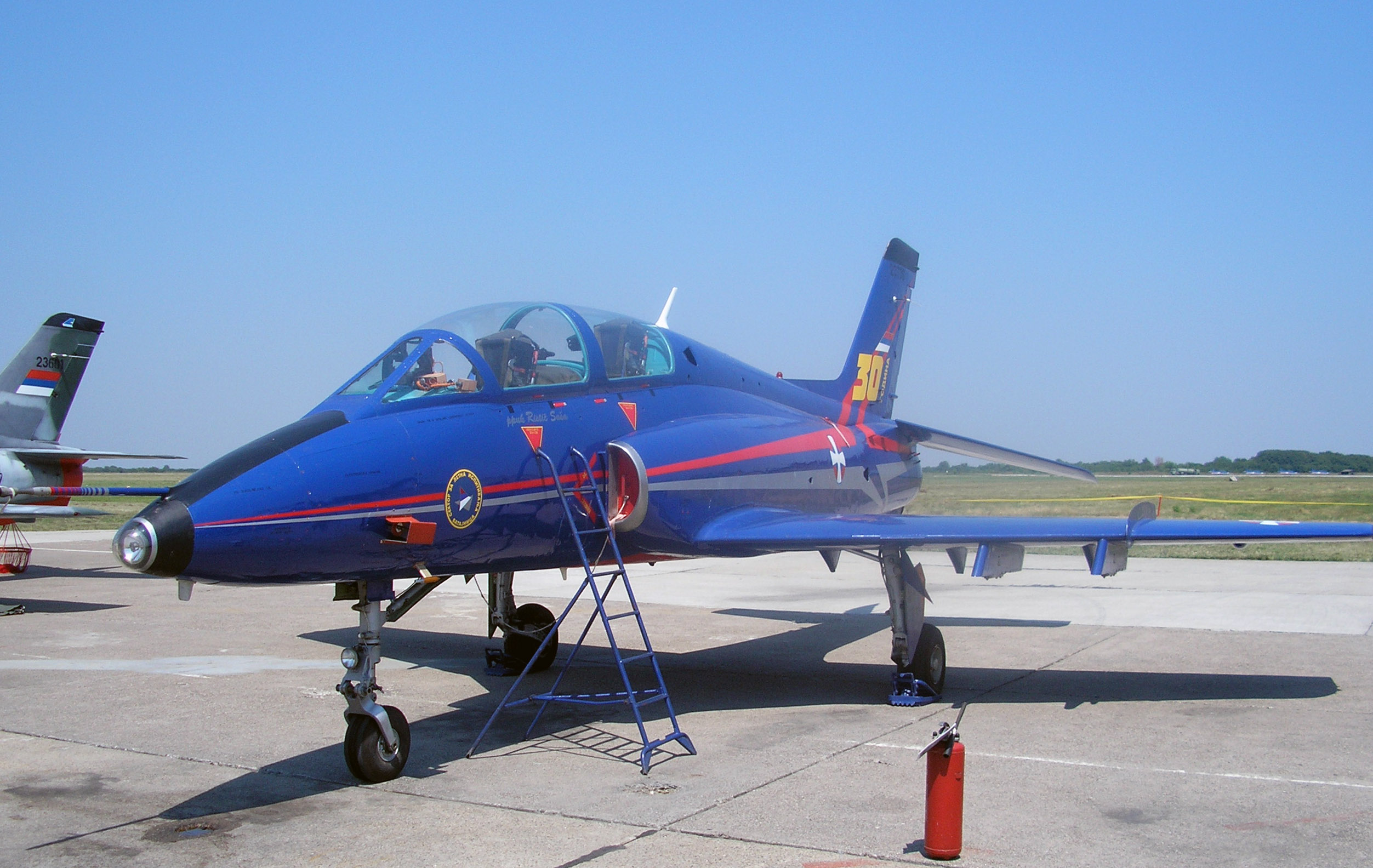
Soko G-4 Super Galeb
“Yugoslavia’s Jet Trainer”
A swept-wing jet built in Mostar to teach a generation of Yugoslav pilots — a home-grown advanced trainer and light-attack aircraft powered by a single licence-built Rolls-Royce Viper.
The Soko G-4 Super Galeb: Yugoslavia’s home-built jet trainer
By the 1970s the Yugoslav air force needed a modern jet to carry pilots from basic flying into fast-jet training. Its straight-wing Soko G-2 Galeb and ageing Lockheed T-33s were falling behind, and buying Western or Soviet trainers sat awkwardly with Yugoslavia’s non-aligned, self-reliant defence policy. The answer was to build one at home. The aircraft manufacturer SOKO, based in Mostar in what is now Bosnia and Herzegovina, developed an all-new swept-wing jet: the G-4 Super Galeb.
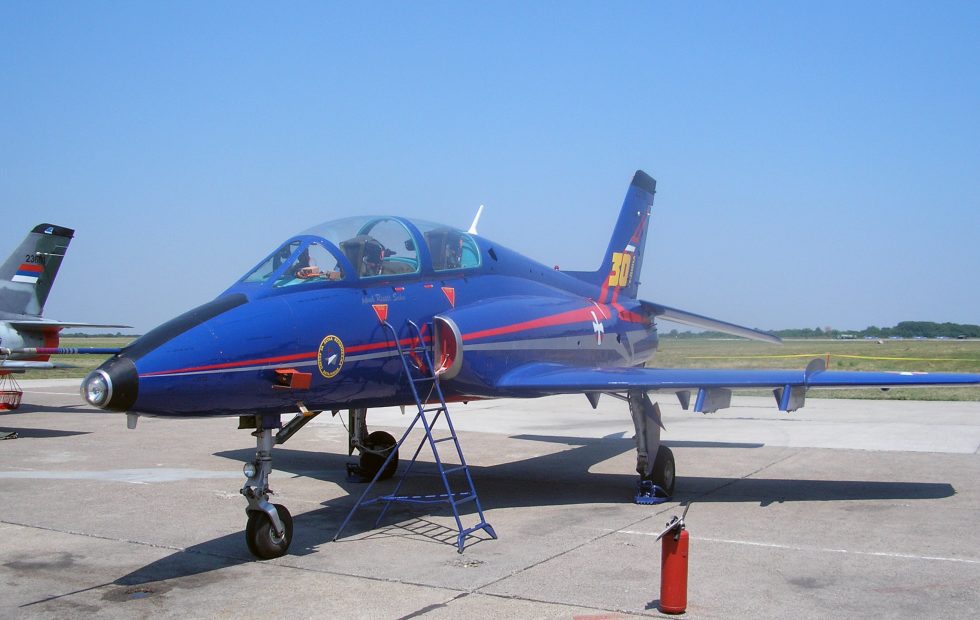
The prototype first flew on 17 July 1978, and series aircraft entered Yugoslav service in the mid-1980s. Where the old G-2 had a straight wing and side-by-side lineage, the G-4 was a cleaner, faster machine — a swept wing, a stepped tandem cockpit with the instructor raised behind the student, and a single licence-built Rolls-Royce Viper turbojet. It was designed to do two jobs: teach advanced and weapons handling, and, with underwing stores, fly as a light ground-attack aircraft. Roughly 85 airframes are commonly reported to have been built, though exact totals vary between sources.
The Super Galeb became a familiar sight at Yugoslav air shows, flown by the Leteće Zvezde (“Flying Stars”) aerobatic team. When Yugoslavia broke apart in the 1990s the fleet passed to the successor air arms — principally FR Yugoslavia (Serbia and Montenegro) — and G-4s were used in a light-attack role during the conflicts of that decade. A number were destroyed on the ground during the 1999 NATO air campaign over Kosovo. A small export batch went to Myanmar. Today the type is largely retired, with surviving airframes in reduced service and in museums.
01The Soko G-4 Super Galeb’s origins: replacing the G-2 Galeb and the T-33
Yugoslavia had a long tradition of building its own combat aircraft, from the J-1 Jastreb to the G-2 Galeb, part of a deliberate policy of defence self-sufficiency for a country that stood between the two Cold-War blocs. By the mid-1970s the first-generation G-2 Galeb — a straight-wing jet dating to the early 1960s — and imported T-33s could no longer bridge the gap to modern fast jets such as the MiG-21 and the home-grown J-22 Orao.
SOKO’s response was not a rework of the Galeb but an essentially new aircraft that kept only the famous name. The G-4 introduced a swept wing, a more powerful Viper engine, modern ejection seats and a proper weapons capability, making it usable as both a lead-in fighter trainer and a light attack platform. The result was one of the more capable indigenous trainers of its generation from outside the major aerospace powers.
What makes the Soko G-4 Super Galeb special
A single licence-built Rolls-Royce Viper
The G-4 is powered by one Rolls-Royce Viper Mk 632 turbojet, built under licence in Yugoslavia and rated at roughly 17.8 kN (about 4,000 lbf) of thrust. The Viper was a proven, forgiving trainer engine used across many Western jets; a single non-afterburning unit kept the Super Galeb simple, robust and cheap to run — exactly what a training fleet needs.
A swept wing and stepped tandem cockpit
Unlike the straight-winged G-2, the Super Galeb has a modestly swept wing for higher subsonic speeds and a stepped tandem cockpit — the instructor sits raised behind the student for a clear forward view. Modern ejection seats and updated avionics made it a genuine lead-in trainer for fast jets rather than a basic hack.
Trainer and light attacker in one
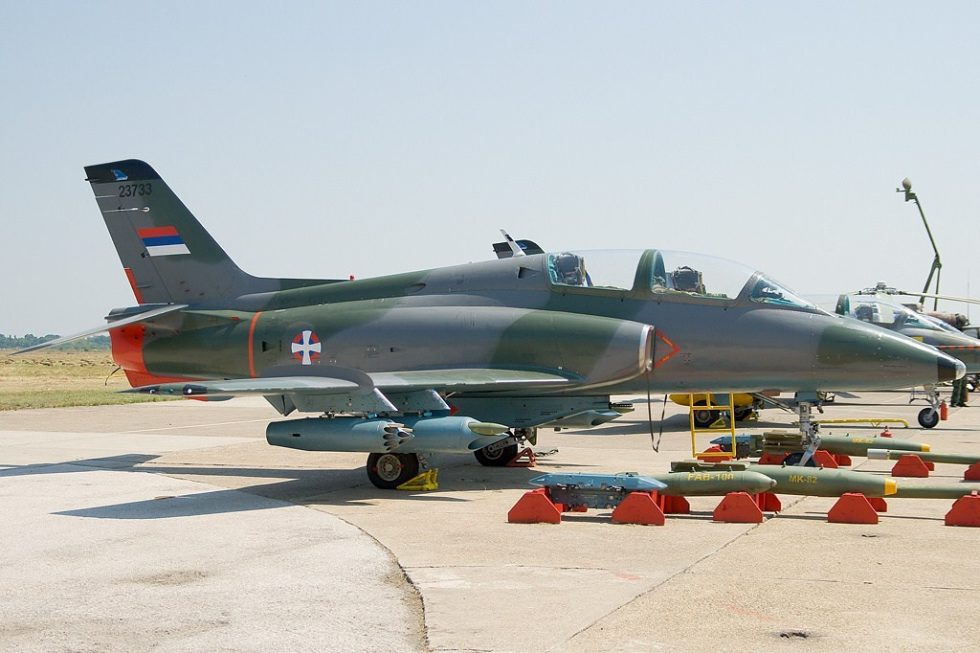
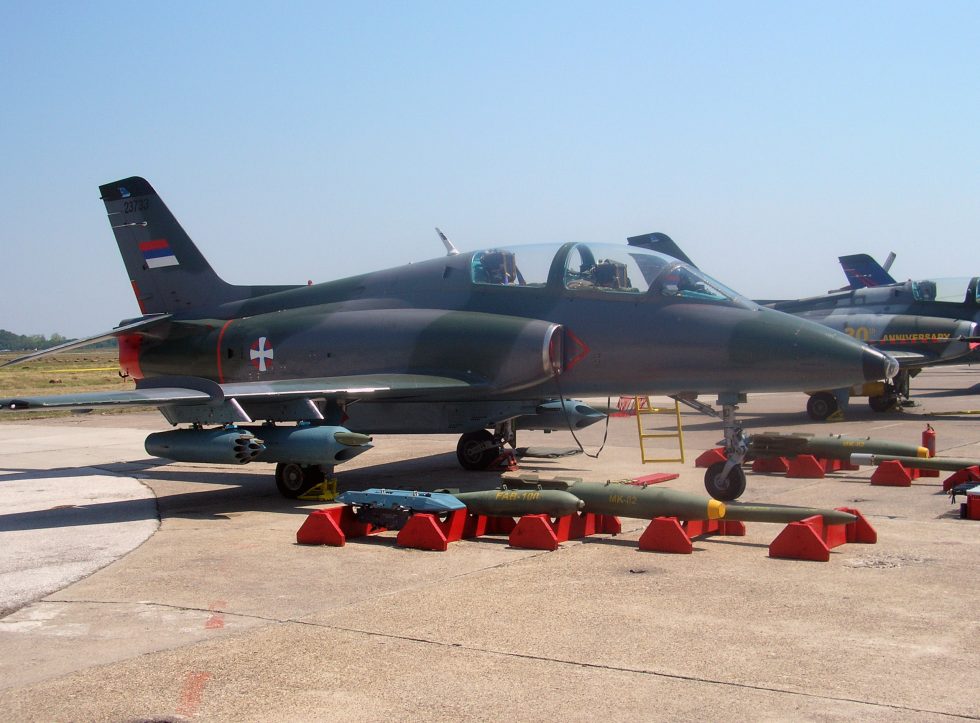
Four underwing hardpoints let the G-4 carry gun pods, unguided rockets, bombs and, in later configurations, guided weapons. That dual capability — teaching by day, striking if needed — is why the type saw combat use in the 1990s despite being designed first and foremost as a school aircraft.
02The Soko G-4 Super Galeb’s engine: the licence-built Rolls-Royce Viper
The Bristol Siddeley (later Rolls-Royce) Viper began life as a British target-drone engine and grew into one of the most widely used trainer turbojets in the world, powering the Jet Provost, Strikemaster, MB-326 and many others. Yugoslavia produced the Viper Mk 632 under licence, giving SOKO a reliable, well-understood powerplant without depending on either Cold-War bloc. The single non-afterburning engine limits the G-4 to high-subsonic speeds — around Mach 0.86 — but delivers the docile handling, low running cost and easy maintenance that a training aircraft is built around.
03The Soko G-4 Super Galeb in the light-attack role: from schoolhouse to strike
Like many jet trainers, the Super Galeb was designed from the start to double as a light-attack and counter-insurgency aircraft. Its underwing stations could carry gun pods, rocket launchers and bombs, and the type was used in ground-attack sorties during the Yugoslav wars of the 1990s. Later upgrade proposals — sometimes referred to as the G-4M — aimed to add modern avionics and guided weapons, though these were produced only in very small numbers. As with any light-attack conversion of a trainer, its combat value lay in low cost and availability rather than survivability against modern air defences.
Soko G-4 Super Galeb: full specifications
Baseline: the production two-seat G-4 Super Galeb in Yugoslav Air Force trainer configuration, powered by a single licence-built Rolls-Royce Viper Mk 632-46. Deltas for the G-4 PPP development aircraft and for the four-aircraft G-4M standard are in grey. Three warnings before the figures. First, the production total is not settled, and the brief for this page is not safe to repeat unexamined. The most-cited number is 85 aircraft, but that cannot be reconciled with the same references' own operator entries: The Military Balance 1991 credits the Yugoslav Air Force with 25 Super Galebs in the ground-attack role and 70 more in training, which is 95 airframes before the six exported to Myanmar are counted at all. Totals of roughly 130 are also published and fit the fleet accounting far better, but 132 is also the number of G-2 Galebs taken by the Yugoslav Air Force out of 248 built, so conflation between the two Galebs is a live risk in every secondary source. The Soko factory records at Mostar did not survive 1992 and no airframe-by-airframe list has ever been published. Second, the widely printed fuel figure of 1,882 kg is stated as internal and external combined; no dependable internal-only figure could be traced, so every range below belongs to a specific and unstated tank fit. Third, the G-4M differs from the baseline aircraft in weights, speeds and pylon ratings by margins too large to average away, so both sets are given rather than blended.
Dimensions & weights
- Crew
- 2 pupil and instructor in tandem under separate side-opening canopies, the rear seat raised. The step is modest next to a Hawk or an Alpha Jet, but it is there, and it was the most visible break from the flat-topped G-2 Galeb it replaced
- Length
- 12.25 m (40 ft 2 in)
- Wingspan
- 9.88 m (32 ft 5 in) no permanent tip tanks, unlike the G-2 Galeb, which never flew without them. The G-4M added short missile rails at the tips instead
- Height
- 4.30 m (14 ft 1 in)
- Wing area
- 19.50 m² (210 sq ft) low-set, slightly tapered and genuinely swept, where the G-2's wing was straight. That single change is most of the reason the G-4 was a useful lead-in to a MiG-21 and the G-2 was not
- Aspect ratio
- 5.01
- Empty weight
- 3,250 kg (7,165 lb)
- Normal take-off weight
- 4,760 kg (10,494 lb) the clean trainer condition. G-4M 4,971 kg (10,960 lb) in the same fit
- Max take-off weight
- 6,330 kg (13,955 lb) G-4M 6,400 kg (14,110 lb) in the maximum attack configuration
- Fuel capacity
- 1,882 kg (4,149 lb) published as internal plus external combined. Treat it as the ferry figure, not the internal one
- Max external stores
- about 1,200 kg (2,650 lb) four wing pylons rated 2 × 350 kg inboard and 2 × 250 kg outboard. The G-4M uprated these to 500 kg and 350 kg and added a 400 kg centreline station, giving a quoted maximum disposable load of some 1,800 kg (3,970 lb)
- Wing loading
- 244 kg/m² (50.0 lb/sq ft) at normal take-off weight 325 kg/m² (66.6 lb/sq ft) at maximum. Light enough to be forgiving in the circuit, loaded enough to behave like a combat aeroplane in the manoeuvring phase of a course
- Thrust-to-weight
- 0.38 at normal take-off weight 0.29 at maximum. A trainer's numbers, not a fighter's, and the reason a fully armed G-4 on a warm day was a very different aeroplane from a clean one
Performance
- Max speed
- 910 km/h (565 mph; 491 kt) clean at 6,000 m (19,700 ft) about Mach 0.80. G-4M figures run slightly lower: 900 km/h (559 mph) at 4,000 m and 865 km/h (537 mph) at 10,000 m, the price of the extra pylons and the heavier avionics
- Never-exceed speed
- 921 km/h (572 mph; 497 kt) at 11,000 m (36,100 ft) roughly Mach 0.87. The limit here is compressibility on a subsonic wing, not structure
- Cruise speed
- 550 km/h (342 mph; 297 kt) at 6,000 m
- Stall speed
- 180 km/h (112 mph; 97 kt) with flaps and undercarriage down
- Rate of climb
- 31 m/s (6,100 ft/min) at sea level
- Time to 8,000 m
- 6 minutes (26,250 ft)
- Service ceiling
- 12,850 m (42,160 ft) G-4M 12,500 m (41,010 ft)
- Range on internal fuel
- 1,900 km (1,180 miles; 1,030 nmi)
- Range with combat load
- 1,300 km (810 miles; 700 nmi)
- Combat radius
- ~485 km (~300 miles; ~260 nmi) a G-4M figure and the more honest one, since it assumes stores hung on the aeroplane rather than a straight-line cruise
- Ferry range
- 2,500 km (1,550 miles; 1,350 nmi) G-4M 2,900 km (1,800 miles) with drop tanks
- g limits
- +8 / −4.2 generous, and deliberately so. The G-4 was built to teach combat manoeuvring rather than circuits, and its structural envelope is closer to a light fighter's than to a basic trainer's
Propulsion & systems
- Engine
- 1 × Rolls-Royce Viper Mk 632-46 turbojet built under licence in Yugoslavia. Sources differ on how much was genuinely manufactured locally and how much was assembled from British-supplied parts, the same ambiguity that attends the Viper installations in the J-22 Orao
- Rated thrust
- 17.8 kN (4,000 lbf) dry no afterburner and no bypass. A simple single-shaft turbojet of 1950s ancestry, chosen precisely because Yugoslavia already knew how to build, run and repair it
- Intakes
- Fixed lateral intakes on the fuselage sides ahead of the wing root no variable geometry, because nothing about the airframe needed it
- Fuel system
- Gravity refuelling on production aircraft the development machines had pressure refuelling, which filled faster but was dropped as more expensive and more complicated than a training fleet warranted. A small decision, and a very characteristic one
- Ejection seats
- Martin-Baker seats in both cockpits usually reported as the zero-zero Mk 10 family, though the exact mark is not stated consistently in open sources
- Radar
- None fitted, on any mark this is the ceiling on everything the aircraft could do as a combat type, and no amount of avionics upgrade downstream has changed it
- Sighting
- Ferranti ISIS D-282 gyro gunsight in the front cockpit the G-4M substituted a Zrak ENP-MG4 head-up display with a Rudi Čajavec ENS-MG4 electronic sight, a gyro platform and multi-function displays
- Warning receiver
- Iskra SD-1 radar warning receiver passive only. There was no jammer and, on the standard aircraft, no chaff or flare dispenser
- Navigation and comms
- VHF and UHF radio, radio altimeter and a full instrument fit for night and adverse-weather flying this was the whole point of the programme. The G-2 Galeb could not teach instrument or night work to a usable standard and the T-33 fleet was worn out
- Reconnaissance provision
- Pylon-mounted pod carrying cameras and an infrared line scanner a genuine tactical-reconnaissance capability that most accounts of the type overlook entirely
- Field equipment
- Attachment points beneath the fuselage for rocket-assisted take-off bottles; braking parachute for landing both aimed at short, rough or damaged strips, which is what Yugoslav dispersal doctrine assumed a war would leave
- G-4MD fit
- LCD flight displays, HOTAS controls, head-up display, integrated mission computer, GPS navigation, IFF, DME, VOR and ILS planned, not universally delivered. Guided weapons, countermeasures and a targeting system are scheduled as part of the same programme
04The Soko G-4 Super Galeb’s operating costs: why no reliable price exists
The Super Galeb was a product of the Yugoslav state industry, built for the country’s own air force and never marketed on an open Western dollar market, so a firm flyaway unit price simply does not exist in the public record. The one export deal — a small batch to Myanmar in the 1990s — was not accompanied by reliably published per-aircraft figures. No credible cost-per-flight-hour number exists for the type in open sources either. As a rule of thumb a single-engine subsonic trainer like the G-4 is far cheaper to operate than a supersonic fighter, but any precise dollar figure attached to a Super Galeb should be treated as an estimate rather than a sourced fact.
Armament & payload
The Super Galeb had no gun of its own and spent its best station buying one
The G-4 was armed the way a trainer is armed: lightly, cheaply and on the assumption that a pilot would learn on it long before he fought in it. There was no internal cannon on any mark. The single 23 mm GSh-23L arrived in a detachable ventral pod, so an armed Super Galeb had already given up its fuselage station before a bomb was hung anywhere. Four wing pylons took a nominal 1,200 kg, there was no radar and no laser designator, and every weapon the type delivered was aimed through a Ferranti gyro gunsight by a pilot flying the aeroplane at the target in a single low pass. That is a perfectly reasonable armament for teaching weaponeering over a Yugoslav range. It is a thin one for the wars the aircraft was actually sent to fight, and the G-4's combat record reflects that more than it reflects any failing of the airframe. Fits varied by unit and by mark; the four G-4Ms were effectively a separate standard with uprated pylons and wingtip rails; and Yugoslav store designations are transliterated inconsistently and rarely agree between English-language sources.
Gun
- One 23 mm Gryazev-Shipunov GSh-23L twin-barrel cannon in a detachable ventral pod, 200 rounds
- The GSh-23L works on the Gast principle, one barrel's recoil loading the other, at roughly 3,400 rounds per minute. Two hundred rounds is therefore about three and a half seconds of firing, and the pilot who did not think about that before pressing the trigger came home with nothing left
- Podded carriage costs the aircraft its centreline station entirely on the standard G-4, and the heaviest of its five stations on the G-4M. That is the single most consequential armament decision on the type
- The same gun armed the Yugoslav MiG-21, MiG-23 and J-22 Orao, so ammunition, tooling and armourers already existed. This part of the fit cost the air force nothing
- No internal gun on any variant, and the unarmed G-4Š had the pod provision deleted along with the pylons
Air-to-air
- Wingtip launch rails on the four G-4M aircraft only. The standard production G-4 had no air-to-air provision whatsoever
- The weapon usually named for those rails is the R-60 / R-60MK (NATO AA-8 Aphid) infrared close-combat missile, already in Yugoslav service on the MiG-21 and J-22. No clearance document is public and the attribution should be treated as probable rather than certain
- With no radar of any kind there was no beyond-visual-range capability and no all-weather engagement. The fit was a last-resort measure for an aircraft that expected to be hunted, not to hunt
- No G-4 has ever been credited with an air-to-air engagement. The claim repeated on the type's English Wikipedia article, that three G-4s were shot down by NATO on 28 February 1994, is false: the Banja Luka incident involved six Republika Srpska J-21 Jastrebs escorted by two J-22 Oraos, five Jastrebs were destroyed by USAF F-16s, and no Super Galeb took part
- Serbian G-4MD planning lists guided-weapon integration in general terms, but nothing air-to-air has been publicly confirmed as cleared
Air-to-surface guided
- Essentially none on the production aircraft. That is the honest answer and it deserves stating plainly rather than being padded out
- The baseline G-4 had a gyro gunsight, no laser designator, no data link and no missile control panel. That combination rules out every guided air-to-surface weapon then in the Yugoslav inventory, including the Grom radio-command missiles the J-22 Orao carried
- The G-4M's ENP-MG4 head-up display, gyro platform and multi-function displays supplied the symbology and the wiring a guided store would need. Only four aircraft were built to that standard, and no clearance list has been published
- Brochure-derived accounts crediting the type with "Western and Eastern European air-to-ground missiles" are describing marketing capability offered to prospective buyers, not a fielded fit on a squadron aeroplane
- The G-4MD upgrade proposed since 2008 explicitly schedules guided weapons and a targeting system. That remains a statement of intent, and after more than fifteen years it is a slow one
Bombs
- Yugoslav general-purpose bombs in the 50 kg, 100 kg and 250 kg classes on the four wing pylons, the ordinary currency of Yugoslav close support
- BL755 cluster bombs of British origin, the same weapon the J-22 Orao carried. This was the heaviest single store the type could realistically take and the one that made it genuinely dangerous to soft targets in the open
- Napalm and incendiary tanks appear in Yugoslav ground-attack fits of the period and are within the pylon ratings, though specific clearance for the G-4 is not separately documented
- Practice bomb carriers were the everyday reality. The overwhelming majority of live G-4 weapon sorties over its whole career were range details with 25 lb-class practice stores, not war loads
- Load limits bit long before pylon count did. With full internal fuel, the gun pod fitted and a warm day, a G-4 could not approach its structural maximum off a short strip, which is exactly why rocket-assisted take-off provision exists on the airframe
Rockets
- 57 mm rocket pods of the Yugoslav L-57 family, typically sixteen rounds a pod, on the wing pylons. The characteristic G-4 weapon
- Heavier 128 mm unguided rockets on multiple-rail launchers, the standard Yugoslav heavy air-to-ground rocket of the era, on the inboard stations
- Rockets rather than bombs defined how the type was actually used in anger, in Bosnia and in Myanmar alike: a shallow dive, a ripple, and away before anyone on the ground had a firing solution
- Aiming was through the fixed gyro sight. That is accurate enough against a vehicle park or a treeline and not accurate enough against anything smaller, and no version of the aircraft ever improved on it in service
- Designations here need care. Yugoslav rocket and pod marks are transliterated inconsistently and few English-language sources agree on precisely which were cleared for the G-4 as opposed to the Orao or the Jastreb
Pods & other stores
- The GSh-23L gun pod itself, ventral, and the reason the centreline is usually unavailable for anything else
- Drop tanks on the inboard wing stations, the standard fit for ferry flights and long navigation exercises and the configuration behind the 2,500 km ferry figure
- A reconnaissance pod with cameras and an infrared line scanner, giving the type a real tactical-reconnaissance role that most published accounts skip over entirely
- Optional chaff and flare dispensers on the G-4M. The standard aircraft had none, which in 1999 mattered a great deal less than it should have, because almost nothing survived long enough to be shot at
- Rocket-assisted take-off bottles beneath the fuselage and a braking parachute at the other end of the runway, both there to let the type work from short, rough or bomb-damaged strips under Yugoslav dispersal doctrine
Three typical loadouts
- Advanced flying training
- Clean: no pylons, no gun pod, internal fuel only. This is the condition the 4,760 kg normal take-off weight and the 31 m/s climb rate describe, and by an enormous margin the most common way a Super Galeb was ever flown.
- Weapons and gunnery training
- GSh-23L pod on the centreline, two 57 mm rocket pods or practice-bomb carriers inboard, outboard stations empty. A forty-minute range detail, the sortie the aircraft was designed around and the one it did superbly.
- Counter-insurgency strike
- GSh-23L pod, two 250 kg bombs or 128 mm rocket launchers inboard, 57 mm pods outboard, internal fuel reduced to stay inside the take-off run. The Bosnian and Myanmar profile: low, one pass, home, with no sensor beyond the pilot's eyes.
Sourcing: pylon ratings and the 1,800 kg G-4M disposable load are manufacturer figures. Individual Yugoslav store designations are drawn from secondary English-language accounts that do not consistently agree with one another. No Yugoslav or Serbian weapons clearance list for the type has been published, and the 1991 arms embargo froze integration work for roughly two decades, so the gap between what the aircraft could carry on paper and what a squadron could actually load is wider here than for most types.
Variants
The Super Galeb has a short variant list and a production total nobody can agree on
The G-4 has a short variant list because the programme itself was short. The Aeronautical Technical Institute at Žarkovo did the design, Soko at Mostar did the manufacturing, the first prototype flew on 17 July 1978, series production ran from 1983, and by 1992 the factory was inside a war zone and never built another aeroplane. What was planned as a twenty-year line with export legs became an eight-year domestic one, and every branch of the family tree stops abruptly in the same place.
What it replaced tells you what it was for. The G-4 took over from the straight-winged G-2 Galeb and from the tired Lockheed T-33s the Yugoslav Air Force had flown since the 1950s. Swept wing and tail, an all-moving anhedral tailplane on production aircraft, a stepped tandem cockpit and an avionics fit that could teach night and instrument flying properly: for a country of twenty-three million with one airframe factory, this was a genuinely modern aeroplane, competitive on capability with the Aermacchi MB-339 and the Aero L-39 Albatros and substantially cheaper to buy than the Dassault/Dornier Alpha Jet. It deserves to be judged on that, not on how its career ended.
The export campaign was energetic and almost entirely fruitless. The type was pitched to Libya, Nigeria, Iraq, Malaysia, Indonesia and Turkey, and was evaluated in the United States under the JPATS competition. Only Myanmar signed, and even that order was cut short by the collapse of the country that was building the aircraft. Everything after 1991 is subtraction: attrition in Bosnia, twenty-three airframes destroyed on the ground by NATO in 1999, and a long, slow Serbian effort to keep the remainder flying.
- G-4 PPP (1978–1983; 1 prototype and 6 pre-production aircraft)
- The development standard. Fixed tailplane with inset elevators and no anhedral, pressure refuelling, basic avionics. First flight 17 July 1978; the first pre-production machine followed on 17 December 1980.
- G-4 Super Galeb (first flight 1983, production 1984–1991; the great bulk of the run)
- The production standard, and the second prototype retrospectively. All-moving anhedral tailplane, revised avionics for night and instrument work, gravity refuelling, Ferranti ISIS D-282 gunsight, Iskra SD-1 warning receiver, four wing pylons and provision for the ventral gun pod.
- G-4Š (5 aircraft)
- Unarmed trainer with pylons and gun-pod provision deleted, for the pure flying-training syllabus. The Š is for škola, school.
- G-4T (quantity not published)
- Target tug conversion for gunnery and missile practice. Rarely photographed and poorly documented; no reliable production figure exists.
- G-4M (4 aircraft, late production)
- The one genuine capability upgrade ever built. Zrak ENP-MG4 head-up display with a Rudi Čajavec ENS-MG4 electronic sight, gyro platform, multi-function displays, wingtip missile rails, a 400 kg centreline pylon, inboard pylons uprated to 500 kg and outboard to 350 kg, optional chaff and flare dispensers, and a quoted maximum disposable load of about 1,800 kg.
- G-4MD (Serbian modernisation, proposed from 2008; 15 aircraft planned)
- LCD flight displays, HOTAS, head-up display, integrated mission computer, GPS navigation, IFF, DME, VOR and ILS, with guided weapons, countermeasures and a targeting system scheduled. Intended to hold the type in Serbian service into the 2030s. Progress has been slow and independent confirmation of how many aircraft have actually been completed to the standard is thin.
- Turga (project only, late 1980s)
- Unofficial designation for a version worked up against a Turkish requirement. Nothing was ever built to the standard and the requirement went elsewhere.
- Myanmar export aircraft (contracted 1990, 6 delivered 1991)
- The only export sale the type ever made. Sources give the order variously as twelve or twenty aircraft; six arrived before Yugoslavia's collapse and the arms embargo ended deliveries. Used in the counter-insurgency role, and five were still carried on Myanmar's books at the end of 2025.
Closing caveats. The production total remains unresolved: 85 is the most-repeated figure and cannot be squared with The Military Balance 1991, which put 95 Super Galebs in Yugoslav service before the six Myanmar aircraft are added; totals near 130 are also published and fit the fleet arithmetic better, but risk conflation with the 132 G-2 Galebs the Yugoslav Air Force took out of 248 built. Wartime accounting is firmer and grimmer. Four G-4s were lost to ground fire during the Yugoslav wars, and G-4s flew low-level strike sorties alongside J-22 Oraos in Kosovo in 1999, some twenty to thirty combat missions between the two types. In the same campaign 23 Super Galebs were destroyed on the ground by NATO air attack and 23 more were damaged, several of the damaged airframes being scrapped afterwards. Seven of the destroyed aircraft belonged to the Leteće zvezde display team and were caught together at Golubovci, which finished the team; it was later revived on older G-2 Galebs rather than G-4s. Montenegro inherited 17 airframes on separation, transferred six to Serbia and had sold seven to a private operator by 2012; Bosnia and Herzegovina inherited a single aircraft; four are preserved at the Aeronautical Museum in Belgrade. Finally, the claim repeated on the type's English Wikipedia article that three G-4s were shot down by NATO on 28 February 1994 is false, and is corrected in the armament section above.
Operators today
Serbia and Myanmar are the last two air forces flying the Super Galeb
More than thirty years after the last airframe left Mostar, the G-4 is down to two operators and roughly twenty aircraft between them. Serbia holds the larger share, inherited from the Yugoslav fleet and topped up by six airframes transferred from Montenegro, and flies them in the advanced training and light attack roles; the G-4MD upgrade is meant to keep part of that fleet current into the 2030s. Myanmar's handful are the survivors of the only export sale the type ever made, and their continued presence on the books after three and a half decades without a manufacturer says as much about Myanmar's procurement position as about the aeroplane. Montenegro sold its remaining Super Galebs to a private operator by 2012 and Bosnia and Herzegovina's single inherited airframe has not appeared in recent inventories, so neither is counted here.
These are estimates. Many airframes counted on paper are stored, in deep overhaul, or not operational, a caveat that bites unusually hard for a 1980s type whose factory no longer exists and whose spares increasingly come from cannibalising other airframes. Sources: IISS The Military Balance and FlightGlobal World Air Forces (Hoyle, World Air Forces 2026, figures dated December 2025); entries that could not be corroborated are omitted.
The Soko G-4 Super Galeb: from Yugoslav school jet to Cold-War relic
A swept-wing successor is sought
The Yugoslav air force looks for a modern jet to replace the straight-wing G-2 Galeb and imported T-33s in advanced training.
First flight
The SOKO prototype makes its maiden flight on 17 July 1978 from Mostar.
Enters service
Series Super Galebs join the Yugoslav air force as advanced trainers and light-attack aircraft.
The Flying Stars
The Leteće Zvezde (“Flying Stars”) aerobatic team adopts the G-4, making it a fixture of Yugoslav air shows.
The Yugoslav wars
As the federation breaks apart, G-4s are used in light ground-attack sorties by the successor air arms.
NATO air campaign
During Operation Allied Force over Kosovo, a number of G-4s are destroyed on the ground at their airfields.
Export to Myanmar
A small batch of Super Galebs is delivered to the Myanmar air force, the type’s only foreign operator.
Twilight
Largely withdrawn from front-line use, the Super Galeb survives in reduced numbers and in museums across the former Yugoslavia.
Twelve stories of the Soko G-4 Super Galeb
The name that outlived the aircraft
“Galeb” means seagull — a name SOKO kept even though the G-4 was an all-new design.
Read the full story
Why Yugoslavia built its own trainer
Non-aligned and self-reliant, Yugoslavia preferred to design its own aircraft rather than depend on either Cold-War bloc.
Read the full story
A British engine, built in Yugoslavia
The G-4’s Rolls-Royce Viper was a British design produced under licence in Yugoslavia.
Read the full story
The Flying Stars
The Leteće Zvezde aerobatic team made the Super Galeb a star of Yugoslav air shows.
Read the full story
A stepped tandem cockpit
The instructor sits raised behind the student — a layout built for teaching.
Read the full story
Trainer by day, striker if needed
Four underwing hardpoints let the school jet carry gun pods, rockets and bombs.
Read the full story
A fleet divided
When Yugoslavia fell apart, its Super Galebs were split among the successor states.
Read the full story
Losses on the ground
During the 1999 NATO air campaign, a number of G-4s were destroyed at their airfields.
Read the full story
The Myanmar customer
The Super Galeb’s only foreign operator was the Myanmar air force.
Read the full story
The G-4M that barely was
A modernised Super Galeb with new avionics and guided weapons was built only in tiny numbers.
Read the full story
The factory and its fate
SOKO’s Mostar plant, where the G-4 was born, did not survive the wars intact.
Read the full story
Where the Super Galebs are now
Retired G-4s survive in reduced service and in museums across the region.
Read the full story
The Soko G-4 Super Galeb in pictures
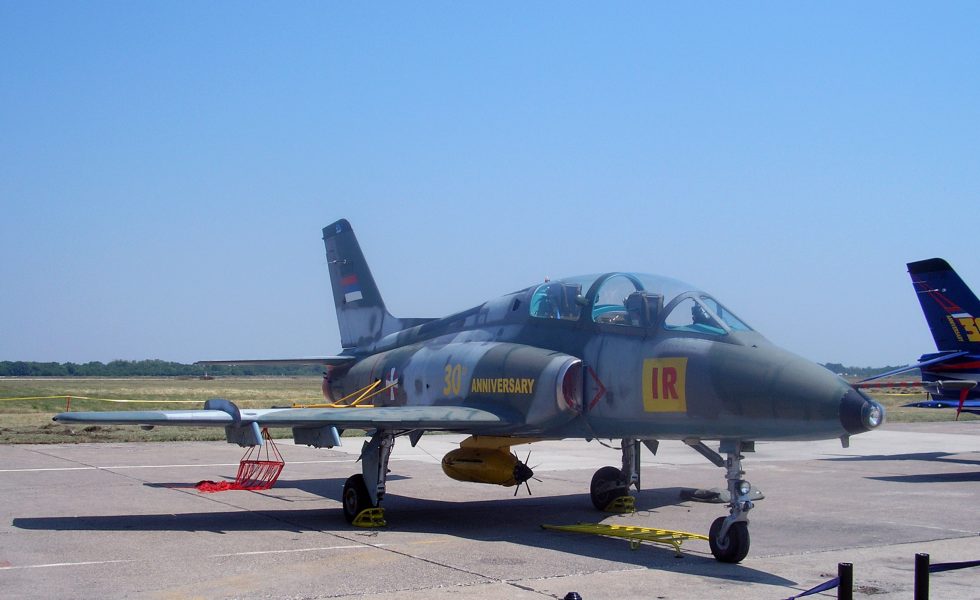
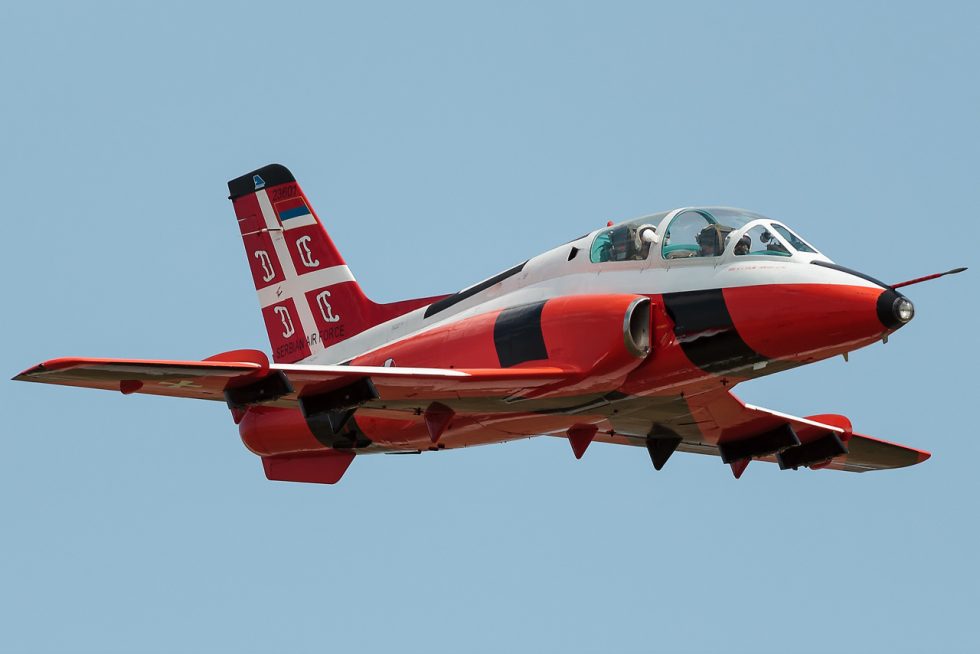
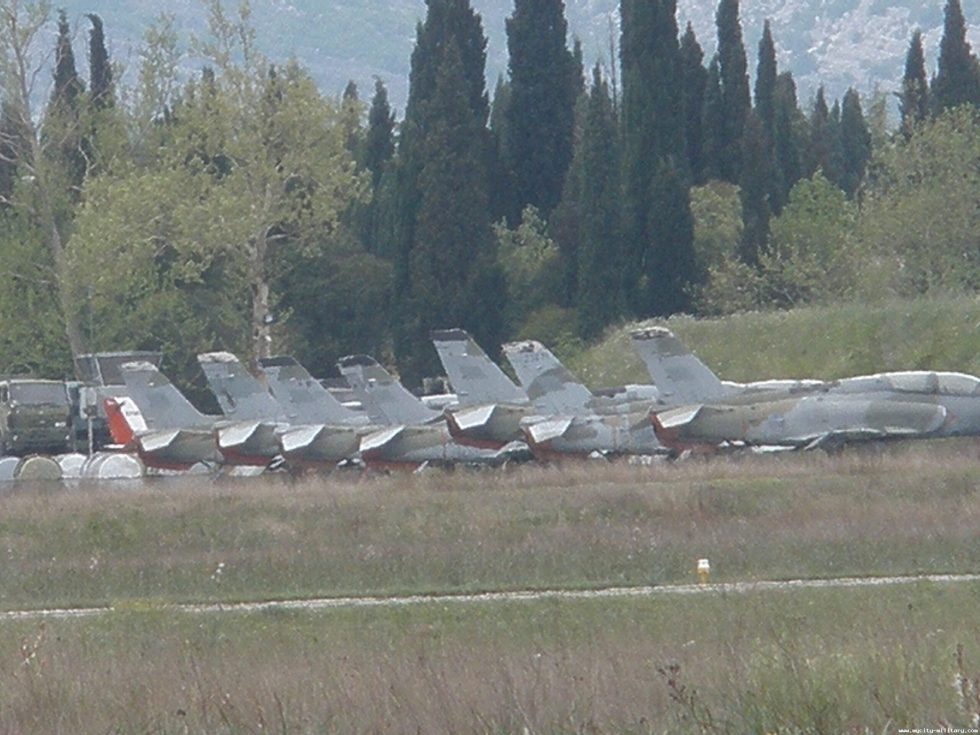
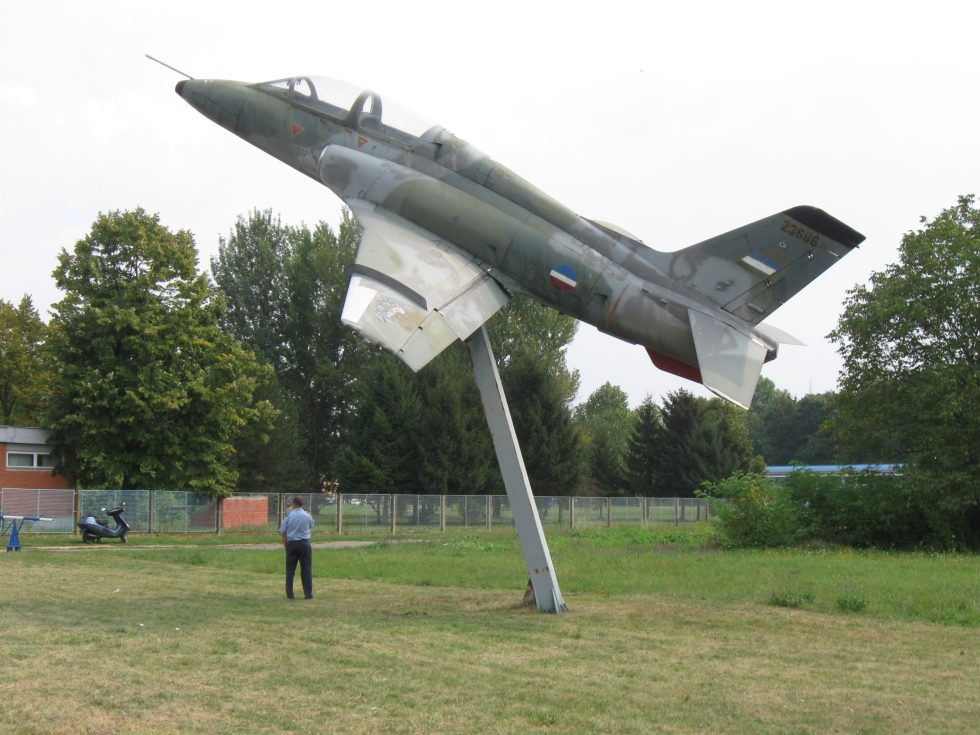
The Soko G-4 Super Galeb in motion
Serbian Air Force Soko G-4 Super Galebs at work — formation flying, low passes and pattern work at Batajnica. Footage via the Gouto aviation channel.
Where the Soko G-4 Super Galeb flew
The Soko G-4 Super Galeb in service and combat
The Super Galeb was built to teach, not to fight, and it has no confirmed air-to-air victories. Its combat use came in the light-attack role during the Yugoslav wars of the 1990s, flying ground-attack sorties with gun pods, rockets and bombs. Its heaviest losses were suffered on the ground — a number of airframes were destroyed at their airfields during the 1999 NATO air campaign rather than in the air.
Compare the combat record of every military aircraft. Figures are best-available estimates and vary between sources.
Everything people ask about the Soko G-4 Super Galeb
Can I fly in a Soko G-4 Super Galeb?
What is the Soko G-4 Super Galeb?
How fast is the Soko G-4 Super Galeb?
What is the difference between the G-2 Galeb and the G-4 Super Galeb?
How many Soko G-4 Super Galebs were built?
Did the Soko G-4 Super Galeb see combat?
Who operated the Soko G-4 Super Galeb?
Is the Soko G-4 Super Galeb still in service?
You can’t fly the Soko G-4 Super Galeb.
These, you can.
Some legends only live in museums — others are fuelled and waiting. MiGFlug has put civilians in real military jet cockpits since 2004.
 Fly the L-39 AlbatrosThe world’s most-flown jet trainer — aerobatics included
 Fly the F-104 Starfighter“The missile with a man in it”
 Fly the MiG-21The Cold War’s most-produced jet
 Fly the T-33 Shooting StarAmerica’s first jet trainer
 Fly the DH VampireA piece of early jet history
 Fly the S.211Agile Italian jet trainer
 Fly the MB-326The classic Aermacchi jet
 Fly the MiG-15The Soviet legend of the Korean War
Continue the tour
Every fact, checked
- Museum of Aviation, BelgradePreserved Yugoslav aircraft, including the SOKO Galeb family, and their service context.
- The Aviation Geek ClubDevelopment and service history of the SOKO G-4 Super Galeb.
- Key.AeroProfiles of Yugoslav and Serbian air power and the Super Galeb trainer/light-attack role.
- Scramble — Dutch Aviation SocietyOperator, serial and fleet reference for the former Yugoslav and successor air arms.
- AirVectors (Greg Goebel)Technical overview of the SOKO jet trainers and the Rolls-Royce Viper engine.
- FlightGlobal / Flight International archivePeriod reporting on the G-4 programme and the licence-built Viper.
- AerobaticTeams.netThe Leteće Zvezde (Flying Stars) display team and their Super Galebs.
- The AviationistThe 1999 NATO air campaign and the loss of Yugoslav aircraft on the ground.