
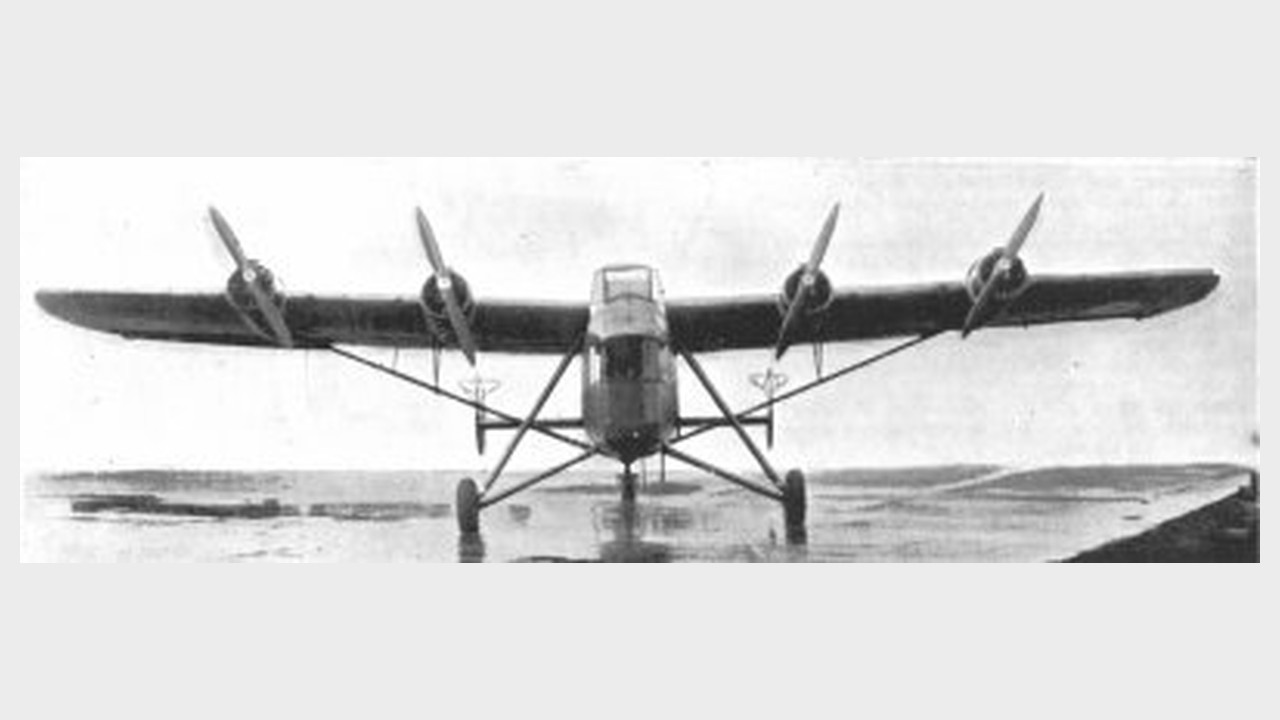
Picture a moonless night in the North Sea. Somewhere below, an enemy battle squadron is steaming hard, blacked out. Above it, at little more than 40 knots, a strange four-engined monoplane drifts along at 1,500 feet, its crew peering into the dark and quietly radioing the fleet's position back to the Admiralty.
That was the plan behind the Airspeed AS.39 Fleet Shadower, which made its first flight on 17 October 1940, 86 years ago this week. It was built to be slow, quiet and patient, and to operate from an aircraft carrier. It was also obsolete almost before its wheels left the ground.
Only one was ever completed. Four months after it first flew, the Royal Navy cancelled the whole programme and ordered the aircraft scrapped. The reason was not a design flaw but a new invention: radar.
Quick Facts
- Type: Carrier-capable night fleet-shadowing aircraft
- Requirement: Operational Requirement OR.52, Specification S.23/37
- Engines: Four Pobjoy Niagara V seven-cylinder radials
- Crew: Three: pilot, observer, radio operator
- First flight: 17 October 1940
- Maximum speed: 126 mph at 5,000 ft
- Stall speed: 33 mph
- Built: One completed, second unfinished
- Cancelled: 17 February 1941; both airframes scrapped
A Requirement to Fly Slowly
In the late 1930s the Royal Navy worried about losing contact with enemy capital ships after dark. Its answer was Operational Requirement OR.52, written up as Specification S.23/37: an aircraft that could find a hostile fleet and then simply stay with it through the night.
The numbers were unusual. The specification asked for a speed of just 38 knots at 1,500 feet, held for not less than six hours. The aircraft had to be quiet at cruising speed, give the observer a good view, and operate from a carrier, which meant folding wings for the hangar deck.
Five companies showed interest: Percival, Short Brothers, Fairey Aviation, General Aircraft and Airspeed. General Aircraft and Airspeed were each contracted to build two prototypes. Airspeed's contract was dated 10 August 1938.
Four Tiny Engines and a Glass Nose
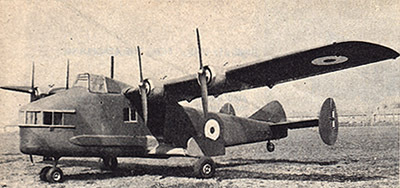
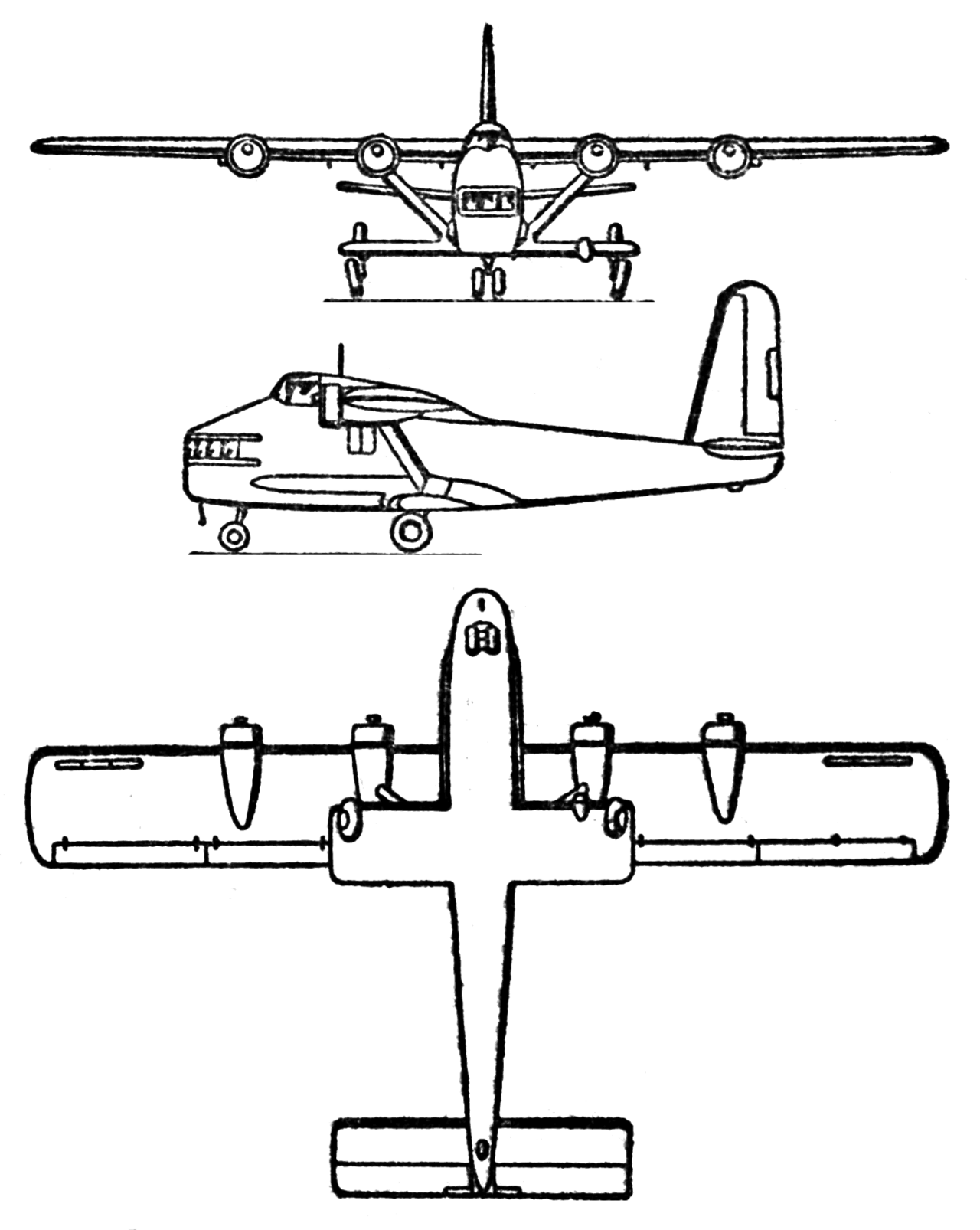
Airspeed's answer was a high-wing, strut-braced monoplane with wooden wings and tail and an all-metal monocoque fuselage. It sat on fixed, divided main landing gear with a tailwheel. The wingspan was 55 ft 4 in.
The crew of three was stacked inside the fuselage. The observer sat in the nose behind windows on three sides. The pilot's compartment was raised so that there was a passage back to the radio operator's station.
Power came from four Pobjoy Niagara V seven-cylinder radials, small engines more at home on light aircraft. Spreading them across the wing was deliberate: their propwash blew over the wing and generated extra lift at low speed. The listed stall speed was just 33 mph.
Rex's Hangar walks through both Fleet Shadower designs, the Airspeed AS.39 and the General Aircraft GAL.38, and why neither entered service.
17 October 1940: A Troubled First Flight
The first flight slipped because the Niagara V engines suffered from vibration problems. When the single completed AS.39 finally took to the air on 17 October 1940, Britain was already a year into the war.
The prototype was not a happy aircraft. It showed stability problems and poor stall handling, and the low power of its four engines made both worse. With all four running it could reach 126 mph at 5,000 feet, cruise at 113 mph and stay up for six hours.
Airspeed was asked to look at re-engining the design with two Armstrong Whitworth Cheetah XI radials and adding rear-facing machine guns. The second prototype was still unfinished when, on 17 February 1941, the Navy cancelled the Fleet Shadower programme. Airspeed was told to scrap both airframes.
The Rival From General Aircraft
General Aircraft built its GAL.38 to the same requirement, and the two designs looked like cousins. Because of development problems with the Niagara V, the GAL.38 first flew on 13 May 1940 with lower-powered Niagara III engines, five months before the Airspeed machine.
Its propwash over full-span flaps gave a minimum speed of 39 mph. It too had stability problems, though not as bad as the AS.39's. Rebuilt with Niagara V engines and a single large fin in place of its original three, it flew again in June 1941.
Test flying continued until September 1941, with the incomplete second airframe used for spares. In March 1942 General Aircraft was instructed to scrap the prototype as well. Neither Fleet Shadower ever reached a squadron of the Fleet Air Arm.
Killed by Radar
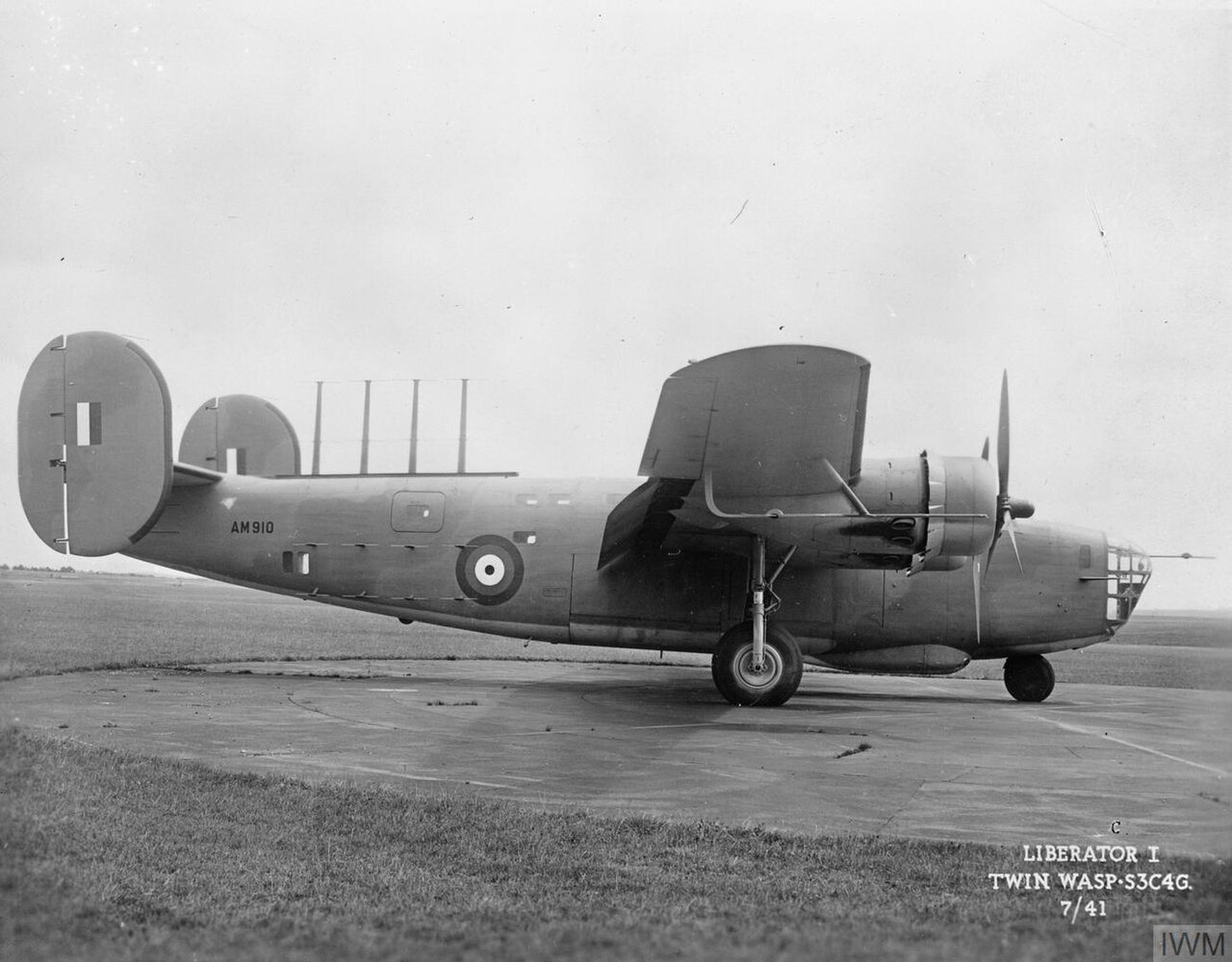
Why did the Navy give up on the idea so quickly? Wikipedia and the British Aviation Resource Center give the same answer: the requirement had been made obsolete by the introduction of radar on long-range patrol aircraft such as the Liberator I.
Air-to-Surface Vessel radar, ASV for short, grew out of an accident. In 1937 a team testing an experimental air-to-air set noticed returns from the docks and cranes at Harwich. Follow-up trials in Avro Anson aircraft found shipping, and on 4 September 1937 the system picked up Royal Navy ships on manoeuvres in almost complete overcast.
Production ASV sets entered operational service in early 1940, the first radar to be fitted to an aircraft in a combat setting. An improved Mark II followed from late 1940. A radar-equipped patrol aircraft did not need to fly slowly or quietly over a fleet. It could find ships at night and through cloud, from a distance, and stay out of gun range while doing it.
Robert Beckhusen, writing in Trench Art, adds a second reason. By 1940 the main threat at sea was the U-boat rather than the surface battle fleet, and land-based maritime patrol bombers fitted with radar far exceeded the Fleet Shadowers' range and spotting ability.
What the Fleet Shadower Tells Us
The Fleet Shadower was not a foolish idea. Carrier aircraft of the period, such as the Fairey Swordfish, were expected to find and track ships by eye, and keeping contact through a night was a real problem. The specification solved it in the only way 1937 technology allowed: put trained eyes over the target and keep them there.
What changed was the sensor. Once a radar set could see through darkness and cloud, the airframe no longer had to be built around the observer's eyeballs. That shift from airframe to sensor has shaped maritime patrol aircraft ever since.
A wartime training film explaining ASV radar to technical personnel, largely through animated diagrams. Footage: Huntley Film Archives.
The AS.39 left no survivors and few photographs. Its legacy is a lesson in timing: a carefully engineered answer to the 1937 problem that arrived in the air in late 1940, just as a box of electronics made the question irrelevant.
Sources: Wikipedia (Airspeed Fleet Shadower; General Aircraft Fleet Shadower; Air-to-surface-vessel radar), British Aviation Resource Center (Warbirds Resource Group), Trench Art (Robert Beckhusen), Aeroplane Monthly via Aviadejavu
0 Comments