
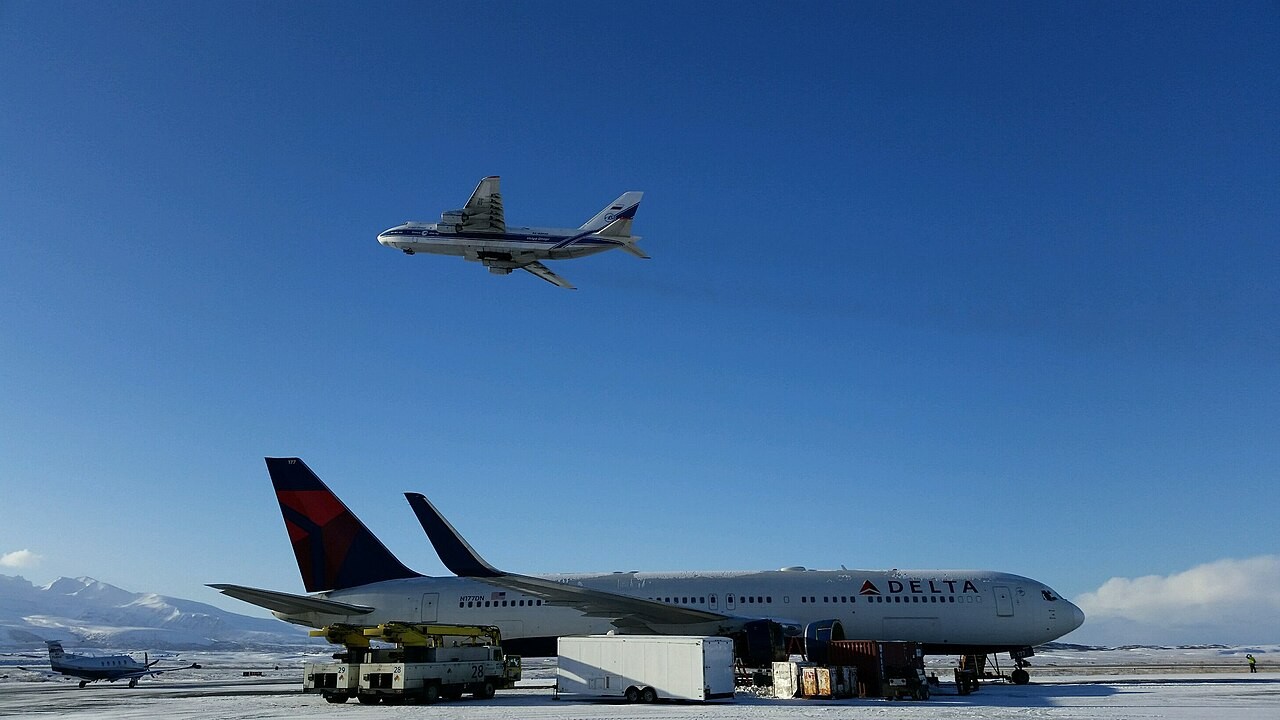
In the winter of 2016–17, Delta flight 68 diverted to Cold Bay, a tiny airfield on the Alaska Peninsula, with a possible problem with one of its engines. The passengers were flown on to Portland in another Boeing 767. The aircraft they left behind, which Delta calls Ship 177, was going nowhere.
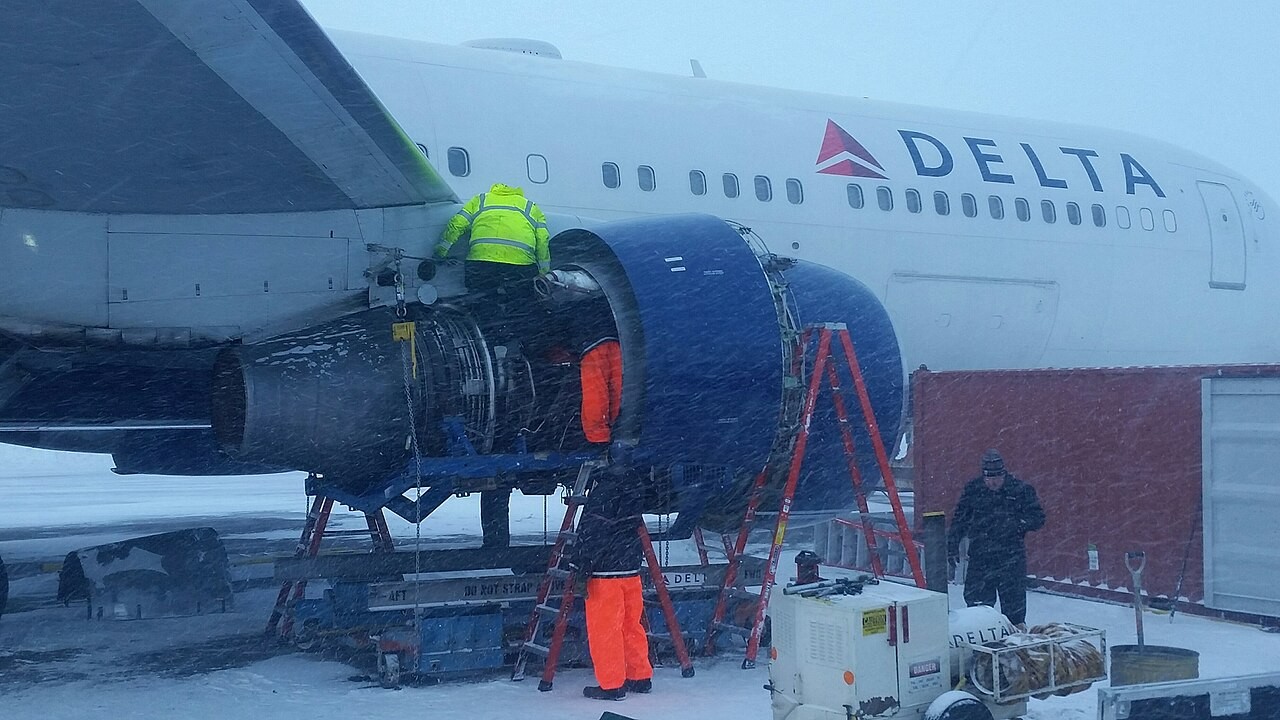
What followed was a textbook rescue. Technicians flew in from Seattle and Minneapolis. A Russian-built Antonov An-124, one of the largest freighters in the world, landed with crucial cargo. And in 30 mph winds, snow and freezing cold, the crews swapped the 767’s No. 2 engine on an open ramp. In airline language, Ship 177 was AOG.
Quick Facts
- AOG: Aircraft on Ground: an aircraft unable to continue in service because of a technical or maintenance problem
- Typical cause: Often a minor fault in a back-up system or minor structural damage, according to Boeing
- Cost: About $10,000 for a 1–2 hour AOG delay, up to $150,000, by Boeing’s estimate
- AOG desk: 24/7 single point of contact that sources parts and support
- Go-team: Mechanics, engineers and inspectors flown to the grounded aircraft
- Flying spares: Express, courier or even chartered freighter delivery of the part
- Market: AOG logistics worth $3.1 billion in 2025 (Intel Market Research, via Air Cargo News)
What AOG means
AOG stands for Aircraft on Ground. It is the airline term for an aircraft that cannot continue in service because of a technical, maintenance or engineering problem. It is not the same as an aircraft that is simply parked. An AOG aircraft is meant to be flying and cannot.
The cause can be dramatic: a failed engine, a tail strike, wing damage from a ground collision. But Boeing has said that most AOG situations involve something far smaller, typically a minor technical problem with a back-up system or minor structural damage. The point is not how big the fault is. The point is that the aircraft cannot go back into service until the problem is resolved.
The label matters because it changes the priority of everything that follows. A part ordered as “AOG” is not a routine order. At Satair, the Airbus parts distributor, customers ordering online are told to set the shipping priority to “AOG” when an aircraft is grounded.
Why every hour counts
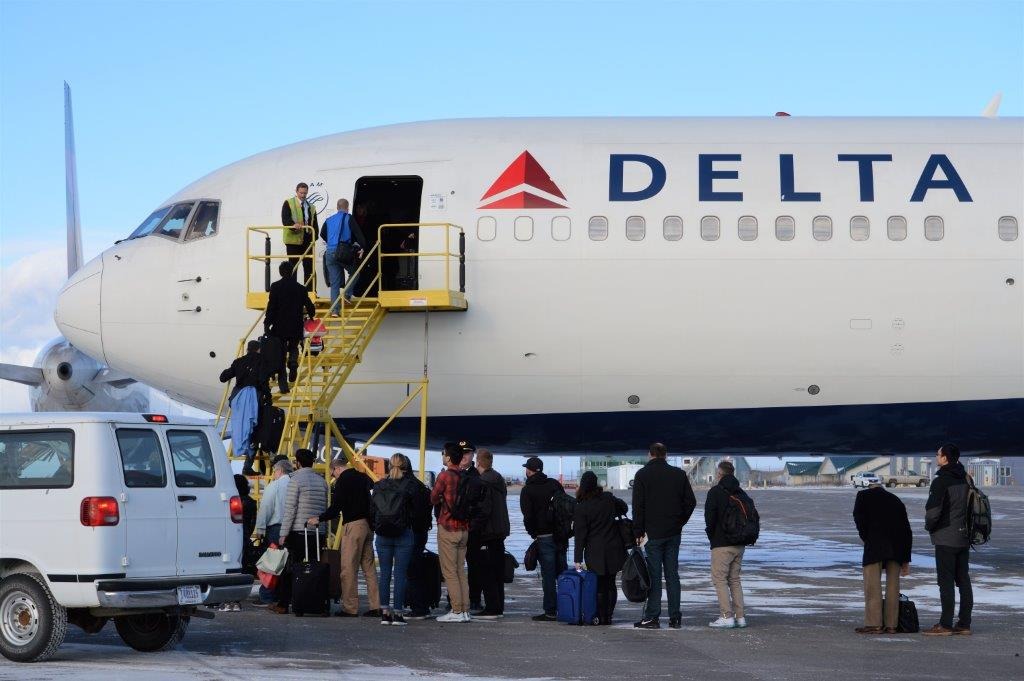
A grounded airliner earns nothing, but it can still cost its operator lease payments, crew, hotels for stranded passengers, rebooking and, often, a replacement aircraft. Boeing has estimated that a one-to-two-hour AOG delay costs an airline about $10,000 in downtime, and that the real cost can run as high as $150,000 depending on the aircraft model and the airline.
Across the industry, the numbers get large quickly. A 2023 AeroTime report cited an estimate that unscheduled AOG events cost aviation some $6 billion a year in lost potential revenue. Even allowing for uncertainty in such estimates, the logic is simple: once an aircraft is on the ground, the part is rarely the expensive bit. Time is.
Aviation logistics firm B&H Worldwide explains why speed and a trusted partner matter when an aircraft is on the ground.
The AOG desk: one phone number, 24 hours a day
That is why airlines, manufacturers and maintenance companies run AOG desks: round-the-clock teams whose only job is to get grounded aircraft back into the air. Boeing opened a Rapid Response Center in 1999 to help airlines with “airplane-on-ground” situations at night, at weekends and on holidays, and in December 2005 built on it with a 24-hour Operations Center in Seattle.
At Lufthansa Technik, the AOG Materials Desk acts as a single point of contact for line replaceable units, the components designed to be swapped quickly on the line, as well as consumables and expendables. It runs desks in Hamburg, Miami and Bangalore. The company says it is ready to dispatch in 90 percent of cases, and that its staff have unrestricted access to all of its global material warehouses.
Behind the phone line sits a warehouse problem. Few airlines can afford to stock a spare of every expensive component at every airport they serve, so many join pools. Lufthansa Technik says its component pool holds $2.3 billion worth of parts, which members draw on 24/7 and pay for on a cost-per-flight-hour basis rather than buying their own spares.
Go-teams: when the fix has to fly to the aircraft
Sometimes the part alone is not enough. If the aircraft is stuck somewhere without the right engineers, tooling or approvals, the repair team has to travel. Lufthansa Technik’s Airline Support Teams of mechanics, engineers, material suppliers and inspectors can be sent to wherever an aircraft is grounded, 24 hours a day, 365 days a year. For major damage such as wing damage, a tail strike or structural problems, it assembles a dedicated AOG Major Repairs team for each case.
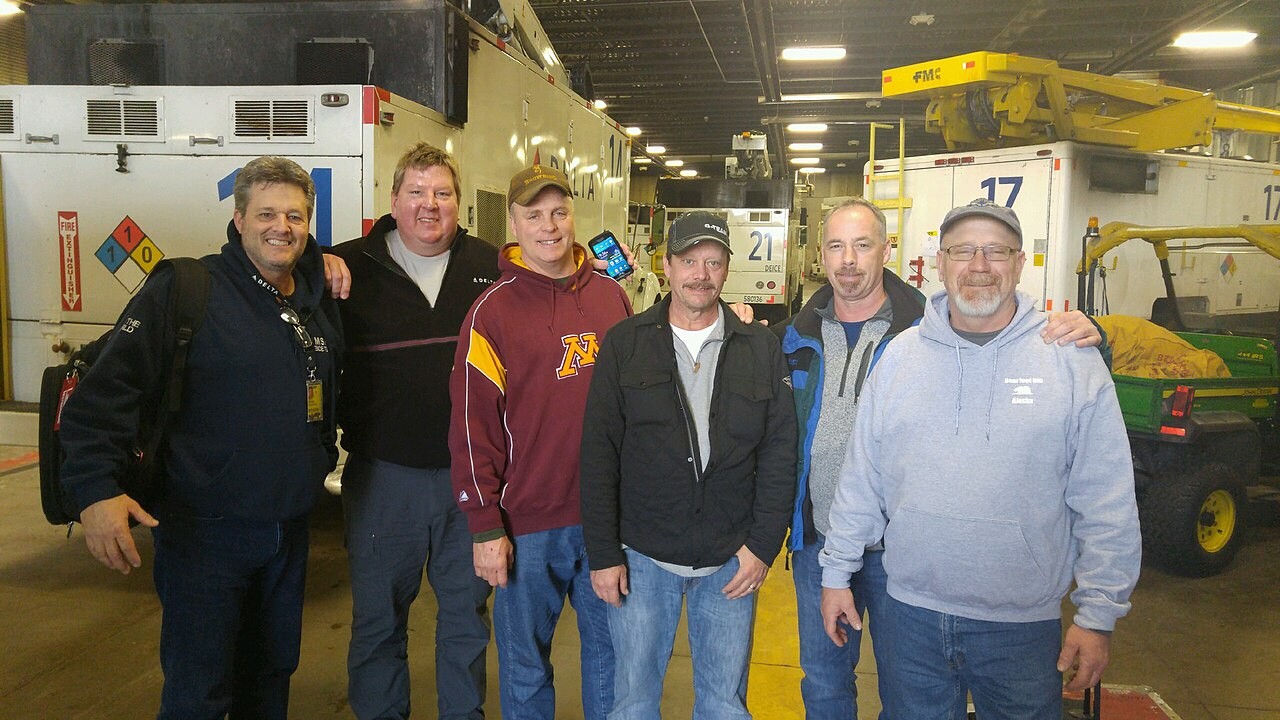
Cold Bay shows how that works in practice. Delta’s photos of the operation, published in January 2017, show a six-strong team of technicians from Minneapolis preparing to fly out to help recover Ship 177, alongside the Seattle-based crew already working in the snow. The engine change took place on the open apron, with the An-124 that delivered the cargo departing overhead.
Flying spares: the most urgent cargo in the sky
Getting the part there is a business of its own. In February 2026, IAG Cargo launched a dedicated AOG product across its network of 250 destinations, with specialist teams on duty around the clock. According to Air Cargo News, which cited Intel Market Research, the AOG logistics sector was worth $3.1 billion in 2025.
At the extreme end, an operator charters a whole aircraft. On 4 August 2026, National Airlines flew Boeing 777 freighter N795CA nonstop from Prestwick in Scotland to Melbourne, 9,849 nautical miles in 19 hours and 23 minutes. A National Airlines spokesperson later told AeroTime the freighter carried AOG parts for another airline, and that the whole mission was planned and flown within 30 hours of the customer’s first enquiry.
Why AOG parts cost a premium
An AOG order pays for more than the part. It pays for a stocked spare sitting ready somewhere in the world, for people answering the phone at 3am, for the first available flight or a dedicated courier and, if needed, for engineers flown in with it. Lufthansa Technik’s pitch for pooling is precisely that guaranteed availability is cheaper than owning every spare yourself.
Against Boeing’s estimate of up to $150,000 for a delay of an hour or two, those extras are often the cheaper option. That is the uncomfortable maths of AOG: an airline will pay almost anything to stop the clock on a grounded jet.
STAT Publishing on National Airlines’ nonstop 777 freighter flight from Prestwick to Melbourne with urgently needed AOG parts.
The dark side of urgency
Urgency can also be exploited. In one of the strangest coincidences in aviation, the company at the centre of the CFM56 fake-parts scandal was called AOG Technics. In 2023, CFM International identified 126 engines suspected of being fitted with parts supplied with falsified documentation, and aircraft were grounded while airlines checked their records. On 1 December 2025, the company’s director pleaded guilty in London to operating the company for a fraudulent purpose.
The lesson for anyone sourcing parts in a hurry is that the paperwork matters as much as the part. A component without a traceable, genuine certificate does not end an AOG. It can start a whole fleet’s worth of them.
Kuehne+Nagel’s overview of aerospace spare parts logistics, the supply chain that sits behind every AOG recovery.
Most passengers never hear the term. They just see a delay on the departures board or a replacement aircraft at the gate. Behind it, somewhere, an AOG desk is already on the phone, a part is already moving, and a team may already be packing for a long, cold night on someone else’s ramp.
Sources: Boeing (Commercial Airplanes Operations Center, archived), Lufthansa Technik, Satair, Air Cargo News, AeroTime, National Airlines, Delta News Hub, Wikipedia (Aircraft on ground)

0 Comments